
Scheduling techniques for procrastination work best when they account for how your brain actually resists tasks, not just how you wish it would behave. For introverts and highly sensitive people especially, procrastination rarely comes from laziness. It comes from emotional weight, sensory overload, or the paralysis of perfectionism. The right scheduling approach addresses that root cause directly.
I spent two decades running advertising agencies, and I watched procrastination quietly sabotage some of the most talented people I ever worked with. It wasn’t the loud, obvious kind of avoidance. It was the kind that hid behind endless preparation, inbox management, and the convincing story that conditions weren’t quite right yet. I recognized it because I lived it myself.
If that pattern sounds familiar, you’re in the right place. The mental health dimension of procrastination, particularly for introverts, is something I explore across the Introvert Mental Health Hub, where you’ll find a full range of resources on anxiety, emotional processing, and the specific pressures that come with being wired for depth in a loud world.

Why Do Introverts Procrastinate Differently Than Extroverts?
Procrastination gets misread constantly. The standard narrative frames it as a time management problem, something you fix with a better calendar app or a stricter morning routine. That framing misses almost everything that matters, particularly for people who process the world deeply.
Career Coaching for Introverts
One-on-one career strategy sessions with Keith Lacy. 20 years of Fortune 500 leadership as an introvert, now helping others build careers that work with their wiring.
Learn More50-minute Zoom session · $175
Introverts tend to think in layers. Before starting a task, many of us are already running mental simulations of how it might go wrong, who might critique the output, whether the approach is truly the best one, and what the downstream consequences of each decision might be. That internal processing isn’t a flaw. It’s actually how we produce thoughtful, considered work. But when it runs unchecked before a task even begins, it becomes a wall.
Highly sensitive people face an additional layer. The sensory and emotional overload that HSPs experience can make the environment itself feel like an obstacle. A cluttered workspace, a tense team dynamic, background noise, even the wrong lighting can make it genuinely difficult to begin. That’s not an excuse. That’s neurobiology.
At my agency, I had a senior copywriter who was extraordinary at her craft. She also had a reputation for missing first drafts. What I eventually understood, after many frustrating conversations, was that she wasn’t avoiding the work. She was avoiding the feeling of having started something imperfect. Her procrastination was anxiety wearing a productivity costume. Once I understood that, we restructured how she received briefs and gave her a private block of time before any draft was due. Her output changed completely.
The National Institute of Mental Health notes that anxiety and avoidance are deeply connected, and that avoidance behaviors tend to reinforce anxiety over time rather than relieve it. Procrastination, in that sense, is a short-term emotional regulation strategy with long-term costs.
What Makes a Scheduling Technique Actually Work for Deep Thinkers?
Most productivity systems were designed by and for people who respond well to urgency and external accountability. They assume motivation comes from deadlines, competition, or visible progress. For introverts, that model often backfires.
Effective scheduling techniques for procrastination, when applied to introverted and highly sensitive people, share a few common characteristics. They create structure without rigidity. They protect cognitive and emotional energy rather than drain it. They make starting feel smaller than finishing.
That last point is worth sitting with. One of the core reasons introverts procrastinate is that we mentally conflate “starting a task” with “completing it perfectly.” The full weight of the finished product lands on the moment we try to begin. Breaking that association is where most effective scheduling work happens.
There’s also the matter of anxiety that builds around high-stakes tasks, which is particularly common among HSPs and introverts who are deeply invested in the quality of their work. Scheduling techniques that reduce the perceived stakes of beginning, rather than increasing pressure to finish, tend to produce better results.

Which Specific Techniques Actually Move the Needle?
Over the years, I’ve tested most of what the productivity world has to offer, both on myself and through watching how my team members worked. Some approaches created genuine momentum. Others just added a new layer of guilt when they weren’t followed. consider this I’ve found actually works, particularly for people who think and feel deeply.
Time Blocking With Intentional Buffers
Time blocking, the practice of assigning specific tasks to specific windows of time rather than maintaining an open to-do list, works well for introverts because it removes the constant decision of what to work on next. That decision fatigue is real, and it quietly drains the mental energy introverts need for deep work.
What most time blocking guides miss is the buffer. Introverts and HSPs need transition time between tasks. Moving from a client call directly into a writing project without any decompression window doesn’t just feel uncomfortable. It actively degrades the quality of the second task. I started building 15-minute buffers between every major block in my own schedule after noticing that my best strategic thinking always happened when I wasn’t rushing from one thing to the next.
The buffers also serve as a pressure valve. Knowing there’s breathing room after a hard task makes it easier to start that task. The dread of the task is partly the dread of what comes immediately after it.
The Two-Minute Commitment (Not Rule)
You’ve probably heard of the two-minute rule, the idea that if a task takes less than two minutes, do it immediately. That’s useful for small tasks, but it doesn’t address the deeper procrastination problem. What works better for introverts is the two-minute commitment: committing to spend just two minutes on a task you’ve been avoiding, with explicit permission to stop after those two minutes if you want to.
The psychology here is about reducing the activation energy required to begin. A task that feels overwhelming at full scale feels approachable at two minutes. And once you’ve started, the brain’s natural tendency toward completion often takes over. You continue not because you have to, but because starting broke the inertia.
I used a version of this during one of the most stressful periods of my agency career, when we were simultaneously pitching three major accounts and I kept avoiding the financial projections I needed to review. Every time I sat down to look at the numbers, I’d find something else to do. Eventually I told myself I’d open the spreadsheet for two minutes and do nothing else. That was it. Most of the time, I worked for another hour. The spreadsheet wasn’t the problem. The story I was telling myself about the spreadsheet was the problem.
Energy-Based Scheduling Instead of Clock-Based Scheduling
Clock-based scheduling says: do this task at 9 AM because that’s when it’s scheduled. Energy-based scheduling says: do cognitively demanding work when your mental energy is highest, and schedule low-stakes tasks for your natural low-energy windows.
For most introverts, peak cognitive energy arrives in the morning, before social interactions have depleted the reserves. Meetings, check-ins, and collaborative work tend to drain introverts more than extroverts. Scheduling your most avoided, most important tasks before the day’s social demands hit is one of the most practical scheduling adjustments you can make.
This matters even more for HSPs, whose deep emotional processing means they’re often carrying the emotional weight of interactions long after those interactions have ended. A difficult conversation at 10 AM can still be affecting concentration at 3 PM. Building your schedule around that reality, rather than pretending it doesn’t exist, is what makes energy-based scheduling effective.
The Reverse Calendar Method
Most people schedule forward: they look at what needs to happen and assign time slots working from today toward the deadline. The reverse calendar method starts at the deadline and works backward, identifying every prerequisite step and assigning it a date.
This approach is particularly effective for introverts who procrastinate because a project feels too large to start. Working backward breaks the project into its actual components, rather than leaving it as one intimidating mass. It also reveals, often surprisingly early, that you have less time than you thought. That’s not meant to create panic. It’s meant to make the cost of continued avoidance concrete rather than abstract.
Abstract consequences are easy to ignore. Concrete ones are harder. When I ran agency pitches, I always built the project timeline backward from the presentation date. It was the only way to make the team understand that the creative brief wasn’t just a formality, it was the foundation everything else depended on.

Themed Days and Protected Deep Work Time
Themed days assign categories of work to specific days of the week. Mondays for strategy, Tuesdays for client communication, Wednesdays for creative work, and so on. The benefit for introverts is reduced context switching, which is one of the most significant productivity drains for people who work best in focused, immersive states.
Context switching costs more than most people realize. Moving between different types of tasks requires the brain to reorient, reload context, and shift cognitive modes. For introverts who do their best work when fully immersed, frequent switching doesn’t just slow things down. It prevents the depth of focus that produces genuinely good work.
Protected deep work time takes this further. Blocking two to four hours where no meetings can be scheduled, no messages need to be answered, and the only obligation is the work in front of you creates the conditions introverts need to produce at their highest level. At my last agency, I protected my Tuesday mornings for strategic thinking regardless of what else was happening. My team knew not to schedule anything before noon on Tuesdays. That boundary was one of the best productivity decisions I ever made.
How Does Perfectionism Fuel Procrastination, and What Do You Do About It?
Perfectionism and procrastination are so frequently paired that many people assume they’re the same thing. They’re not, but they feed each other in a particularly vicious cycle. Perfectionism raises the standard a task must meet before it feels complete. Procrastination delays starting until the conditions feel right enough to meet that standard. Neither condition ever fully arrives.
The perfectionism trap that many HSPs fall into is especially relevant here. High sensitivity often comes with a heightened awareness of how things could be better, which is a genuine creative strength. But that same awareness makes it hard to release work that feels incomplete, and it makes starting feel like a commitment to a standard you’re not sure you can meet.
Scheduling techniques alone won’t fix perfectionism-driven procrastination. What they can do is create structural guardrails. Setting a “good enough” checkpoint in your schedule, a specific time by which a draft must exist regardless of its quality, separates the act of producing from the act of refining. Those are two different cognitive modes, and conflating them is where perfectionist procrastination lives.
A piece worth reading on this comes from Ohio State University’s research on perfectionism, which found that perfectionist tendencies often create more anxiety than the imperfect outcomes people are trying to avoid. That insight applies well beyond parenting contexts. The fear of imperfection generates more suffering than the imperfection itself.
One practical scheduling technique for perfectionism-driven procrastination is time-boxing your refinement phase. Give yourself a fixed window to improve something, and when that window closes, the work ships. Knowing the refinement window exists makes it easier to produce a rough version, because you’ve already built in time to make it better.
What Role Does Emotional Weight Play in Procrastination?
Some tasks get avoided not because they’re difficult but because they carry emotional freight. A difficult email to a client. A performance review conversation. A creative project that feels personally exposing. The task itself might take twenty minutes. The emotional preparation for it can take days.
This is where the empathic sensitivity many HSPs carry becomes a scheduling challenge. When you’re attuned to how others might receive your work or your words, the anticipation of that reception becomes its own task. You’re not just doing the work. You’re also managing the imagined responses to it, and that invisible labor takes real time and energy.
Scheduling techniques that help here include what I think of as “emotional pre-processing.” Before a high-stakes task, build in time that isn’t about the task itself but about settling the emotional static around it. A short walk, a few minutes of writing about what you’re anxious about, even just sitting quietly for ten minutes before beginning. That pre-processing time isn’t wasted. It’s what makes the actual task possible.
I learned this the hard way during a new business pitch for a Fortune 500 retail brand. I kept putting off the final run-through of our presentation because I was dreading the feedback from my creative director, who had strong opinions about the strategic framing. Instead of addressing that anxiety directly, I avoided the whole thing until the night before. The pitch was fine, but it was nowhere near what it could have been if I’d had the emotional clarity to prepare properly. That experience changed how I structure my own schedule around high-stakes deliverables.
There’s also the dimension of rejection sensitivity, which affects many introverts and HSPs more acutely than they often acknowledge. The experience of rejection and the anticipation of it can make tasks feel riskier than they are, which drives avoidance. Scheduling techniques that normalize imperfect outputs and build in reflection time after difficult tasks can reduce that anticipatory dread over time.
How Do You Build a Schedule That Protects Your Energy Over Time?
A schedule that works once isn’t a system. A system is something that holds up across different seasons, different stress levels, and different demands on your attention. Building one requires understanding your own energy patterns well enough to design around them rather than against them.
Psychological research on self-regulation, including work published in PubMed Central on executive function and self-control, consistently points to the finite nature of willpower and cognitive resources across a day. Scheduling techniques that assume unlimited mental energy will fail. Ones that treat energy as a resource to be managed will hold.
A few principles I’ve found reliable over time:
Schedule your hardest task first. Not because morning is magical, but because your decision-making capacity and emotional regulation are typically strongest before the day’s demands have accumulated. Putting your most avoided task at the start of the day means it gets your best self, not your depleted one.
Build recovery into the structure itself. Recovery isn’t a reward for completing work. It’s a prerequisite for continuing to do good work. Lunch away from your desk, an afternoon walk, a brief period of unscheduled time mid-afternoon. These aren’t luxuries. They’re the maintenance that keeps the system running.
Review and adjust weekly. A schedule that worked in January may not work in March. Life changes, projects change, your emotional state changes. A weekly fifteen-minute review where you look at what worked, what didn’t, and what the coming week requires keeps your system responsive rather than rigid.
Additional research on cognitive load and sustained attention, available through PubMed Central’s work on attention and mental fatigue, supports the idea that scheduled rest and task variation improve overall performance more than extended focused effort without breaks.
What About the Days When No Technique Seems to Work?
There are days when every scheduling technique feels hollow. You’ve blocked the time, you’ve set the intention, you’ve done the pre-processing, and you still can’t make yourself begin. Those days are real, and pretending they don’t happen does more harm than good.
On those days, the most useful thing you can do is get honest about what’s actually happening. Sometimes the procrastination is signaling something important: that you’re depleted, that the task genuinely needs to be reconsidered, that something in your emotional landscape needs attention before work can happen. The American Psychological Association’s framework on resilience emphasizes the importance of self-awareness and adaptive coping, which sometimes means recognizing when to push through and when to rest.
A useful distinction I’ve come to rely on is the difference between resistance and depletion. Resistance is the normal friction of starting something hard. It’s uncomfortable but workable, and the two-minute commitment usually breaks through it. Depletion is something different. It’s the state where your cognitive and emotional resources are genuinely insufficient for the task at hand. Pushing through depletion doesn’t produce good work. It produces exhausted, resentful work that usually needs to be redone anyway.
Learning to tell the difference takes time and honest self-observation. But it’s one of the most valuable scheduling skills you can develop, because it lets you make better decisions about when to push and when to step back without guilt.
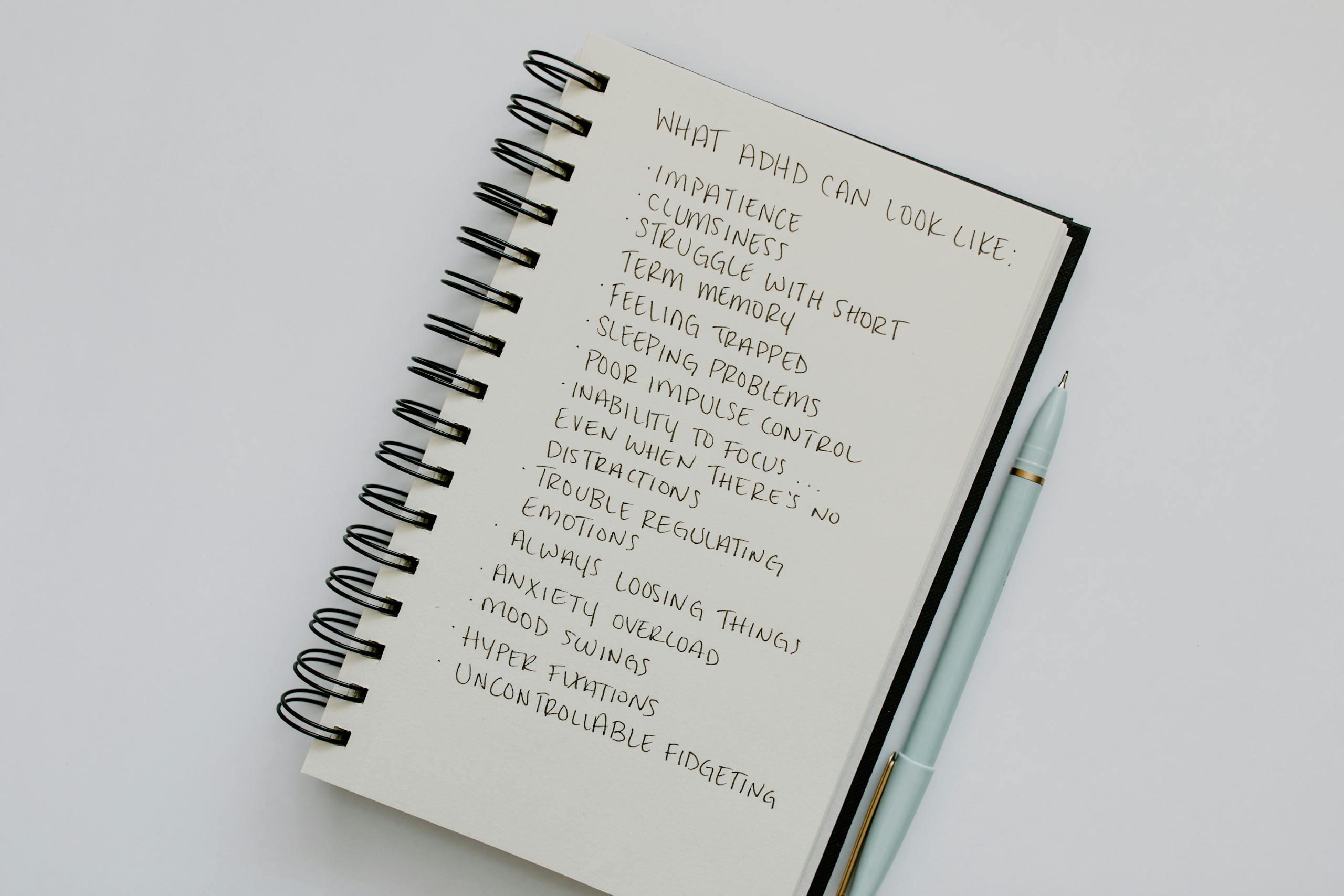
It’s also worth noting that chronic procrastination can sometimes be a symptom of something deeper, including anxiety, depression, or ADHD. If avoidance is persistent and pervasive across most areas of your life, that’s worth exploring with a professional. Resources on cognitive behavioral approaches to avoidance and anxiety offer a useful clinical framework for understanding when procrastination has moved beyond a scheduling problem into a mental health concern.

How Do You Start Building Your Own System This Week?
The gap between knowing what works and actually doing it is where most scheduling advice falls apart. So rather than ending with a list of everything you could implement, I want to suggest something smaller: pick one technique from this article and apply it to one specific task you’ve been avoiding.
Not your whole week. Not a new productivity system. One technique, one task, this week.
If you’ve been avoiding a project because it feels too large, try the reverse calendar method. If you can’t seem to start despite knowing what needs to happen, try the two-minute commitment. If your schedule is reactive and fragmented, try blocking one morning for deep work and protecting it completely.
The goal isn’t a perfect schedule. A schedule you actually follow is worth infinitely more than an optimized one you abandon by Wednesday. Start with what’s workable, observe what happens, and adjust from there. That iterative approach, grounded in honest self-awareness, is how introverts build systems that actually last.
There’s a broader conversation about introvert mental health, including how anxiety, perfectionism, sensory sensitivity, and emotional processing all interact with how we work and rest. You’ll find much more of that in the Introvert Mental Health Hub, where these threads come together in one place.
About the Author
Keith Lacy is an introvert who’s learned to embrace his true self later in life. After 20 years in advertising and marketing leadership, including running agencies and managing Fortune 500 accounts, Keith now channels his experience into helping fellow introverts understand their strengths and build fulfilling careers. As an INTJ, he brings analytical depth and authentic perspective to every article, drawing from both professional expertise and personal growth.
Frequently Asked Questions
Why do introverts tend to procrastinate more on emotionally loaded tasks?
Introverts and highly sensitive people process emotional information more deeply than most, which means tasks that carry interpersonal stakes, potential criticism, or personal exposure require more emotional preparation. The procrastination isn’t avoidance of the task itself but avoidance of the emotional experience surrounding it. Scheduling pre-processing time before high-stakes tasks, and separating the producing phase from the refining phase, helps reduce this pattern significantly.
What is the most effective scheduling technique for overcoming procrastination?
There’s no single technique that works for everyone, but energy-based scheduling combined with the two-minute commitment addresses the most common procrastination patterns for introverts. Energy-based scheduling ensures your hardest tasks get your best cognitive state. The two-minute commitment breaks the activation barrier that prevents starting. Together, they address both the structural and psychological dimensions of procrastination.
How is procrastination different from needing recovery time as an introvert?
Procrastination is avoidance of a specific task, usually driven by anxiety, perfectionism, or emotional weight. Recovery time is a legitimate need for introverts to replenish cognitive and emotional resources after social or demanding work. The difference lies in what follows the pause: recovery time produces renewed capacity, while procrastination typically produces more anxiety and a harder return to the task. Learning to distinguish the two is a valuable self-awareness skill that improves scheduling decisions over time.
Can perfectionism actually cause procrastination even in high-achieving introverts?
Yes, and it’s one of the most common patterns among high-achieving introverts. Perfectionism raises the internal standard a task must meet before it feels acceptable to release. That standard can feel unreachable before you’ve even begun, which makes starting feel like a commitment to potential failure. Time-boxing the refinement phase and separating “good enough to exist” from “good enough to share” are two scheduling approaches that directly counter perfectionist procrastination.
When should procrastination be treated as a mental health concern rather than a scheduling problem?
When avoidance is persistent across most areas of life, when it’s causing significant distress or functional impairment, or when it’s accompanied by symptoms of anxiety, depression, or difficulty concentrating, it’s worth speaking with a mental health professional. Scheduling techniques are effective tools for everyday procrastination patterns, but they’re not a substitute for clinical support when the underlying issue is more complex. Chronic procrastination can sometimes be a symptom of anxiety disorders or ADHD, both of which respond well to professional treatment.