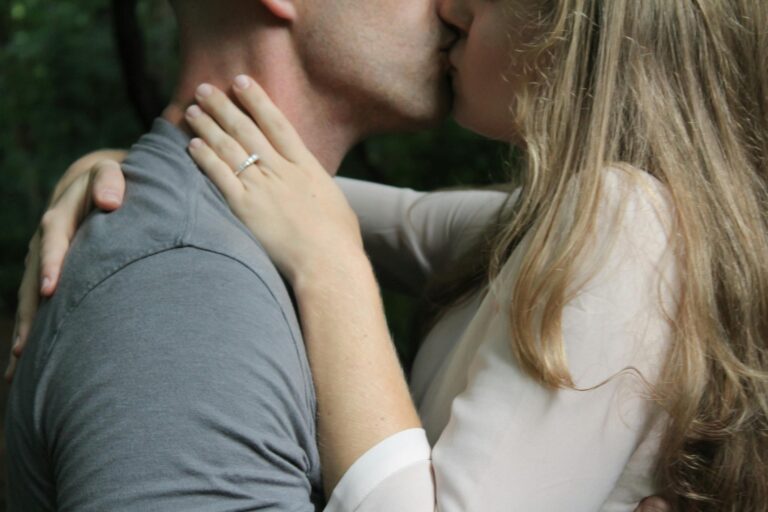

Secure attachment style vs insecure attachment style comes down to one fundamental difference: how safe you feel depending on another person. Securely attached people can lean into closeness without losing themselves, and they can tolerate distance without spiraling into fear. People with insecure attachment styles, whether anxious, avoidant, or fearful, carry nervous system patterns that make intimacy feel either threatening or desperately urgent, sometimes both at once.
These patterns aren’t character flaws. They’re survival strategies that made sense at some point, usually early in life, and then quietly followed you into every relationship you’ve had since.

I spent the better part of my thirties running advertising agencies and genuinely believing that my discomfort with emotional dependency, in work relationships, in personal ones, was just how I was built. INTJs are independent. We don’t need much. That was the story I told myself. What I didn’t understand yet was that independence and avoidance can look almost identical from the outside, and sometimes from the inside too. It took me longer than I’d like to admit to start separating the two.
Our Introvert Dating and Attraction hub covers the full landscape of how introverts connect romantically, but attachment theory adds a layer that goes deeper than personality type alone. It gets at the emotional architecture underneath, the part that determines whether closeness feels like safety or like a trap.
What Does Secure Attachment Actually Look Like in Practice?
Secure attachment isn’t the absence of conflict or the presence of a perfect relationship. Securely attached people still argue, still misread their partners, still have hard seasons. What they carry is a set of internal tools that makes repair possible. They can say “I was wrong” without it feeling like annihilation. They can hear criticism without immediately collapsing or counterattacking. They can tolerate a partner needing space without interpreting it as rejection.
What’s your personality type?
Take our free 40-question assessment and get a detailed personality profile with dimension breakdowns, context analysis, and personalised insights.
Discover Your Type8-12 minutes · 40 questions · Free
In practical terms, a securely attached person tends to communicate needs directly rather than hinting and hoping. They trust that the relationship can hold disagreement. They don’t need constant reassurance that their partner loves them, and they don’t disappear emotionally when things get complicated.
One of the clearest signals of secure functioning I’ve ever observed came not in a relationship but in a business context. I had a creative director at one of my agencies, someone I’ll call Marcus, who had this remarkable ability to receive hard feedback without either shutting down or getting defensive. He’d listen, sit with it for a moment, and then actually engage with the substance of what I’d said. At the time I thought it was just professional maturity. Looking back, I think it was secure attachment showing up at work. He had enough internal stability that external criticism didn’t threaten his sense of self.
That’s what security looks like. Not invulnerability. Stability.
How Does Anxious Attachment Shape the Experience of Love?
Anxious attachment, sometimes called preoccupied attachment in the clinical literature, sits in a specific place on the attachment map: high anxiety, low avoidance. People with this style desperately want closeness and are terrified of losing it. Their attachment system is essentially running on high alert, scanning constantly for signs that the relationship is in danger.
This gets mischaracterized as neediness or clinginess, which is both inaccurate and unkind. What’s actually happening is a nervous system that learned, usually through inconsistent early caregiving, that love is not reliable. So it developed a strategy: stay hypervigilant, protest loudly when connection feels threatened, do whatever it takes to keep the attachment figure close. That strategy was adaptive once. In adult relationships, it tends to create the very distance it’s trying to prevent.
Anxiously attached people often struggle with what psychologists call protest behavior: calling repeatedly when a partner doesn’t respond, escalating emotionally during conflict, or becoming preoccupied with the relationship to the point where it crowds out everything else. None of this is a character flaw. It’s a nervous system response, not a choice.
Understanding how introverts experience and process love feelings becomes especially important here, because an anxiously attached introvert may feel all of that internal urgency while simultaneously struggling to express it clearly. The internal experience is loud. The external expression can be confusing to partners who don’t know what they’re seeing.
What Makes Dismissive-Avoidant Attachment So Difficult to Recognize?
Dismissive-avoidant attachment is the one I spent years accidentally mistaking for healthy independence. Low anxiety, high avoidance. On the surface, dismissive-avoidants appear self-sufficient, emotionally stable, and unbothered by relationship drama. They genuinely believe they don’t need much from others. They pride themselves on not being “too emotional.”
What’s actually happening is more complicated. The feelings are there. Physiological research using measures like heart rate and skin conductance has shown that dismissive-avoidants have internal arousal responses to attachment-related stress that mirror those of anxiously attached people. They just don’t consciously register or report those feelings. The deactivation happens below the level of awareness. The nervous system learned to suppress emotional experience as a way of maintaining connection with caregivers who were uncomfortable with emotional expression.
So when a dismissive-avoidant partner pulls back during conflict, goes quiet, or suddenly becomes absorbed in work, they’re not being deliberately cruel. They’re doing what their nervous system learned to do when emotional demands feel overwhelming: shut the system down and create distance.
I recognize some of this in myself, honestly. As an INTJ who spent two decades in high-pressure agency environments, I got very good at compartmentalizing. Emotional content went into a drawer. The work got done. It felt like strength. And some of it was. But some of it was also avoidance wearing the costume of discipline.
One important distinction worth making: introversion and dismissive-avoidant attachment are not the same thing. An introvert who needs solitude to recharge is responding to energy management, not emotional defense. A dismissive-avoidant who creates distance during conflict is suppressing emotional experience to avoid vulnerability. Those are different mechanisms, even when the external behavior looks similar. Healthline’s breakdown of common introvert misconceptions touches on exactly this kind of confusion, where introversion gets conflated with emotional unavailability when they’re actually independent traits.
What Is Fearful-Avoidant Attachment and Why Is It the Most Complex?
Fearful-avoidant attachment, sometimes called disorganized attachment, occupies the most difficult position on the attachment map: high anxiety and high avoidance simultaneously. People with this style both desperately want connection and are genuinely frightened of it. Closeness feels necessary and dangerous at the same time.
This often develops in early environments where the caregiver was also the source of fear, which creates an impossible bind. The attachment system is activated by distress, but the attachment figure is the source of distress. There’s no coherent strategy available. The result in adulthood is a push-pull dynamic that can be deeply confusing for partners and for the person themselves.
It’s worth being precise here: fearful-avoidant attachment is sometimes incorrectly equated with borderline personality disorder. There is overlap and correlation between the two, but they are distinct constructs. Not everyone with fearful-avoidant attachment has BPD, and not everyone with BPD is fearfully attached. Collapsing those categories does a disservice to people in both groups.
People with this attachment style often describe relationships as simultaneously the thing they want most and the thing they find most destabilizing. They may feel flooded during conflict in ways that make clear communication nearly impossible. They may withdraw sharply after moments of real intimacy, not because the connection wasn’t meaningful, but because it was, and that felt terrifying.
Highly sensitive people often handle this territory with particular intensity. The complete HSP relationships dating guide explores how that heightened emotional processing intersects with the vulnerabilities that come with deep attachment wounds.

How Does the Anxious-Avoidant Dynamic Actually Play Out in Relationships?
The pairing that gets the most attention in attachment discussions is the anxious-avoidant combination, and for good reason. It has a self-reinforcing quality that can make both people feel like they’re going slightly mad.
Here’s the basic loop: the anxiously attached partner feels the avoidant pulling back and escalates, seeking reassurance. The avoidant partner feels overwhelmed by that escalation and withdraws further. The anxious partner’s worst fears are confirmed. The avoidant partner’s need for space is violated. Both people are now in their worst selves, doing the exact things that make the other person more activated.
What makes this dynamic so sticky is that it can feel, especially early in a relationship, like chemistry. The avoidant’s emotional unavailability reads as mysterious and intriguing. The anxious partner’s intensity reads as passionate and devoted. The attraction is real. The underlying incompatibility of nervous system strategies is also real.
That said, this pairing isn’t automatically doomed. Anxious-avoidant couples can develop secure functioning over time, particularly with mutual awareness and often with professional support. The work requires the anxious partner to develop more self-soothing capacity and the avoidant partner to develop more tolerance for emotional closeness. Neither is a small ask. Both are possible.
Understanding the relationship patterns that emerge when introverts fall in love can help clarify which dynamics are about personality and which are about attachment, because those two lenses sometimes point in different directions.
Can Introverts With Insecure Attachment Find Stable Love?
Yes. Emphatically. And I want to be careful here about something that often gets muddled in popular attachment content: attachment styles are not fixed destinies. The concept of “earned secure” attachment is well-documented in the psychological literature. People who started with insecure attachment patterns can develop secure functioning through therapy, through corrective relationship experiences, and through conscious self-development over time.
Therapeutic approaches like Emotionally Focused Therapy, schema therapy, and EMDR have meaningful track records with attachment-related patterns. They work at the level of the nervous system, not just the intellect, which matters because attachment is fundamentally a physiological experience, not just a cognitive one.
What I’ve noticed in my own life is that the shift doesn’t happen all at once. It happens in small moments of choosing differently. Saying something vulnerable when the old pattern would have been to go quiet. Staying in a difficult conversation instead of retreating into work. Letting someone’s care actually land instead of deflecting it with humor or analysis.
For introverts specifically, the path toward secure attachment often runs through learning to trust that solitude doesn’t mean abandonment, for themselves or for their partners. An introvert who needs three hours alone on a Sunday isn’t withdrawing from the relationship. A partner who understands that doesn’t need to interpret it as rejection. Both of those things can be true at the same time.
The way introverts show love is also worth examining through an attachment lens. How introverts express affection often looks quieter than the cultural script for romance, and partners with anxious attachment can sometimes misread that quietness as distance when it’s actually a form of presence.
What Happens When Two Insecurely Attached Introverts Find Each Other?
Two introverts in a relationship can create something genuinely beautiful, a shared understanding of the need for quiet, for depth, for meaningful conversation over small talk. But attachment patterns don’t cancel each other out just because two people share a personality orientation.
Two dismissive-avoidants together can create a relationship that looks stable but is actually just two people maintaining comfortable emotional distance. Nobody pushes for more closeness. Nobody rocks the boat. The relationship can feel peaceful in a way that’s actually just mutual avoidance of intimacy.
Two anxiously attached people can create a different kind of intensity, one where both partners are hypervigilant about the relationship’s status, both prone to escalation during conflict, and both struggling to self-soothe independently. The emotional temperature can run very high.
The dynamics that emerge when two introverts fall in love are worth understanding on their own terms, separate from attachment style, because the combination of introversion and attachment creates its own specific texture in relationships.
What 16Personalities notes about introvert-introvert relationships is that the shared preference for depth and quiet can be a profound strength, but it also requires both people to actively invest in connection rather than assuming that compatibility means the relationship will take care of itself.
How Does Conflict Reveal Attachment Patterns?
Conflict is where attachment patterns become visible. In calm moments, most people can approximate secure behavior. Add stress, perceived rejection, or unmet needs, and the underlying attachment strategy tends to surface.
Anxiously attached people in conflict often escalate. The volume goes up, emotionally if not literally. There’s urgency to resolve things immediately, to get reassurance that the relationship is okay, to not be left alone with the discomfort of disconnection. The fear driving this is real, even when the behavior is counterproductive.
Dismissive-avoidants in conflict often go the other direction. They get quieter, more logical, more distant. They may stonewall or withdraw entirely. From the inside, this can feel like self-regulation. From the outside, it can feel like abandonment.
Fearful-avoidants can oscillate unpredictably between both of those patterns, which is part of what makes conflict with them so disorienting for partners.
Highly sensitive people often find conflict particularly activating, regardless of attachment style, because their nervous systems process emotional input more intensely. Working through conflict peacefully as an HSP requires strategies that account for that heightened processing, not just good communication skills.
One thing I had to learn, slowly and imperfectly, was that going quiet during conflict wasn’t the same as being calm. In agency settings, I had a reputation for being unflappable in a crisis. What I eventually recognized was that I was often just suppressing. My team would be in the room trying to work through something difficult and I’d be thinking three steps ahead, already in problem-solving mode, completely skipping over the emotional reality of what was happening. That’s not stability. That’s avoidance with a productivity mask on.
What Does Moving Toward Secure Attachment Actually Require?
People often want a framework for this, a set of steps. The honest answer is that it’s less linear than that. Moving toward secure functioning is more like gradually building a new default than following a protocol.
For anxiously attached people, the work often involves developing the capacity to self-soothe without requiring external reassurance. That means building a relationship with your own emotional experience that doesn’t depend on your partner to regulate it. Therapy helps. So does developing interests, friendships, and a sense of self that exists independently of the relationship.
For dismissive-avoidants, the work tends to involve increasing tolerance for emotional closeness and learning to recognize feelings that the system has been suppressing. This is genuinely uncomfortable at first. Emotions that have been deactivated don’t come back online gently. They often arrive with some intensity. That’s part of the process.
For fearful-avoidants, the work is more complex because it involves both of those things simultaneously, plus often some processing of earlier experiences that created the bind in the first place. This is where professional support tends to be most valuable, not because it’s required, but because the terrain is genuinely difficult to map alone.
What all three paths share is this: they require a willingness to be seen. To let someone know what you actually need, what you’re actually afraid of, what you’re actually feeling. That’s the core vulnerability that secure attachment is built on. And for introverts who are already inclined to process internally, who have spent years being misunderstood in a world that rewards extroversion, that kind of openness can feel like a significant risk.
It is a risk. It’s also, in my experience, the only way through.
The research published in PubMed Central on attachment and relationship outcomes supports what therapists have observed clinically for decades: the quality of emotional communication within a relationship is one of the strongest predictors of long-term stability and satisfaction. Attachment style shapes that communication, but it doesn’t determine it permanently.
A separate PubMed Central study examining adult attachment patterns reinforces the point that attachment orientations can and do shift across the lifespan, particularly in response to significant relationship experiences and therapeutic intervention.
How Do You Actually Identify Your Own Attachment Style?
Online quizzes can give you a rough starting point. They’re worth taking as a first orientation, not as a definitive diagnosis. The more formal assessment tools used in research settings, like the Adult Attachment Interview or the Experiences in Close Relationships scale, are more reliable, and they’re also more likely to catch the patterns that dismissive-avoidants in particular tend to miss in self-report. People who suppress emotional experience are, by definition, not great at reporting it accurately.
A more accessible approach is to pay attention to your patterns in relationships rather than your answers to hypothetical questions. What happens in your body when your partner doesn’t respond to a message for a few hours? What do you do when a conversation gets emotionally intense? What’s your first impulse when someone gets too close, too fast? Those behavioral and physiological patterns tend to be more revealing than abstract self-assessment.
It’s also worth remembering that attachment styles exist on a spectrum, not in rigid categories. Most people have a primary style with elements of others. Context matters too. You might function more securely in a long-term relationship than in the early stages of dating, or more securely with a partner who has a particular style than with one who activates your patterns more directly.
Psychology Today’s piece on dating as an introvert touches on some of the ways that introversion and emotional style intersect in early relationship stages, which is often when attachment patterns are most visible and most consequential.
And if you’re specifically wondering how your attachment style intersects with being a romantic introvert, Psychology Today’s exploration of romantic introversion offers a useful parallel lens on how introverts experience and express love in ways that don’t always fit the dominant cultural script.
There’s a lot more to explore about how introverts connect, date, and build lasting relationships. Our full Introvert Dating and Attraction hub covers everything from first impressions to long-term partnership, with the depth and nuance that these questions deserve.
About the Author
Keith Lacy is an introvert who’s learned to embrace his true self later in life. After 20 years in advertising and marketing leadership, including running agencies and managing Fortune 500 accounts, Keith now channels his experience into helping fellow introverts understand their strengths and build fulfilling careers. As an INTJ, he brings analytical depth and authentic perspective to every article, drawing from both professional expertise and personal growth.
Frequently Asked Questions
Can you have a secure attachment style as an introvert?
Absolutely. Introversion and attachment style are completely independent dimensions. An introvert can be securely attached, meaning comfortable with both closeness and solitude, without those two things contradicting each other. Secure attachment doesn’t require constant togetherness. It requires trust that the relationship is stable even during periods of independence. Many introverts find that secure attachment actually fits their natural rhythm quite well, because a secure partner can hold space for their need for alone time without interpreting it as rejection.
What’s the difference between dismissive-avoidant attachment and just being introverted?
Introversion is about energy: introverts recharge through solitude and find extended social interaction draining. Dismissive-avoidant attachment is about emotional defense: avoidants create distance as a strategy for managing the discomfort of emotional vulnerability and dependency. An introvert who needs quiet time after a social event is managing their energy. A dismissive-avoidant who goes cold after a moment of genuine intimacy is deactivating their attachment system to avoid feeling exposed. The behavior can look similar from the outside, but the underlying mechanism is different. Many introverts are securely attached. Avoidance is not a personality trait; it’s a relational defense strategy.
Is it possible to change your attachment style as an adult?
Yes, and this is one of the most important things to understand about attachment theory. The concept of “earned secure” attachment is well-documented: people who developed insecure attachment patterns early in life can shift toward secure functioning through therapy, through sustained corrective relationship experiences, and through intentional self-development. Approaches like Emotionally Focused Therapy, schema therapy, and EMDR have meaningful track records with attachment-related patterns. The change isn’t usually fast or linear, but it is genuinely possible. Attachment orientation is not a fixed trait.
Do anxious and avoidant attachment styles attract each other?
They often do, and the attraction is real even when the dynamic is difficult. The avoidant’s emotional independence can read as confidence and mystery. The anxious partner’s intensity can read as passion and devotion. Early on, the combination can feel like chemistry. Over time, the self-reinforcing loop tends to emerge: the anxious partner escalates when they feel distance, which causes the avoidant to withdraw further, which confirms the anxious partner’s fears. Awareness of this pattern is the first step toward interrupting it. These pairings can develop secure functioning over time, particularly with mutual commitment and often with professional support.
How does attachment style affect conflict in relationships?
Conflict is often where attachment patterns become most visible. Anxiously attached people tend to escalate during conflict, pushing for immediate resolution and reassurance. Dismissive-avoidants tend to withdraw, going quiet or logical in ways that can feel like stonewalling to their partners. Fearful-avoidants may oscillate between both patterns, which can be particularly disorienting. Securely attached people aren’t immune to conflict, but they tend to have better capacity for repair: they can stay present during disagreement, take responsibility without collapsing, and return to connection after a rupture. Attachment style shapes the conflict pattern, but communication skills, self-awareness, and sometimes professional support can meaningfully shift how those patterns play out.