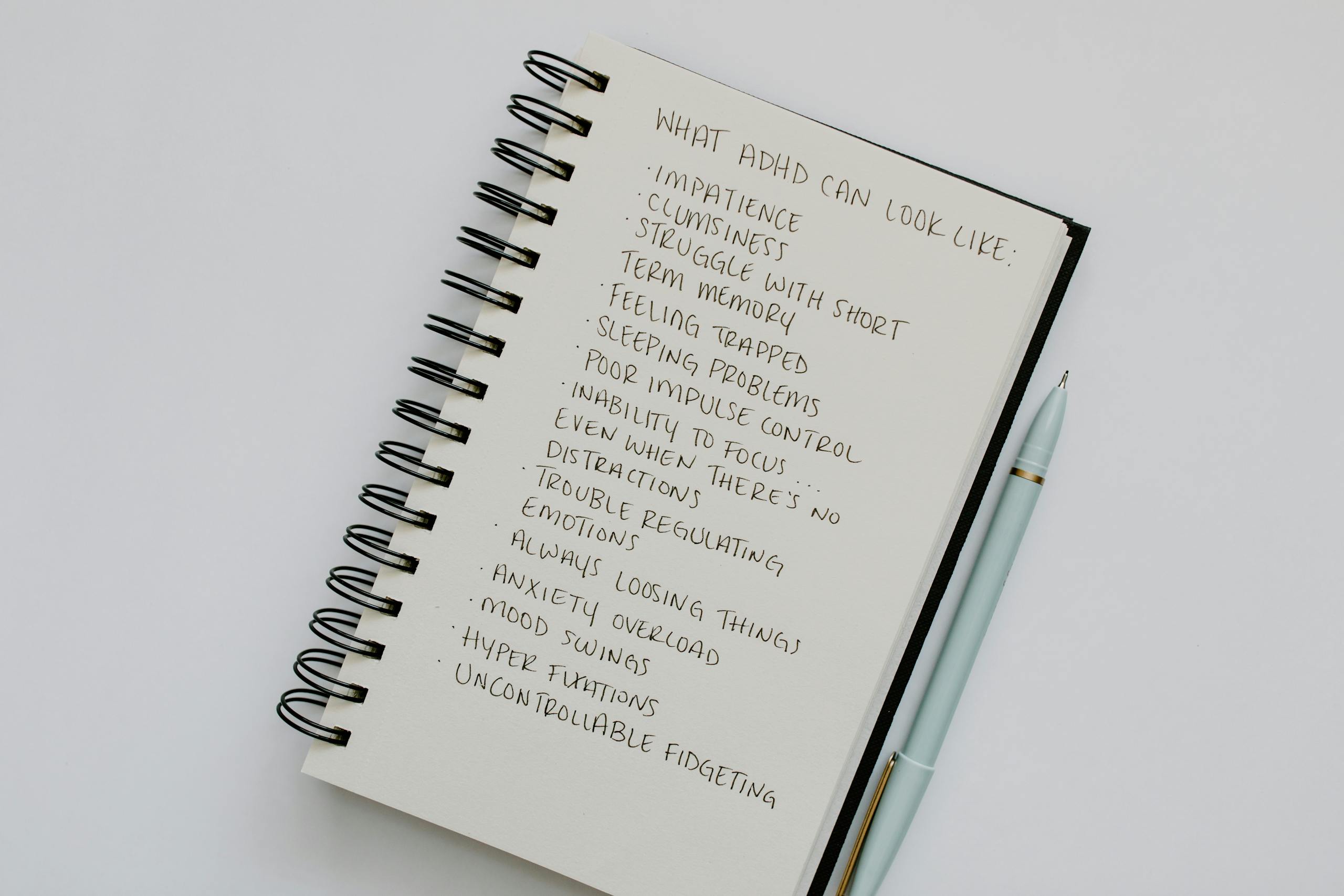
The Self-Compassion Scale Short Form is a 12-item psychological assessment developed by Kristin Neff and colleagues as a condensed version of the original 26-item scale. It measures six core components of self-compassion: self-kindness, self-judgment, common humanity, isolation, mindfulness, and over-identification, giving you a reliable snapshot of how gently or harshly you treat yourself when things go wrong.
What makes this tool genuinely useful isn’t just the score it produces. It’s the mirror it holds up. And for introverts, especially those of us who’ve spent years running on internal criticism as fuel, what that mirror reflects can be both uncomfortable and quietly liberating.
My own relationship with self-compassion has been, to put it plainly, complicated. Running advertising agencies for over two decades meant operating in an environment where self-criticism was practically a professional virtue. You analyzed every campaign post-mortem. You second-guessed every pitch. You held yourself to standards that would exhaust most people. I thought that relentless internal scrutiny was what made me good at my work. What I didn’t realize until much later was how much of it was actually just suffering dressed up as diligence.
If you’re exploring the broader landscape of introvert mental health, including anxiety, emotional processing, and the particular ways quiet minds can turn against themselves, our Introvert Mental Health Hub covers these themes in depth and might be a helpful place to ground your reading.
What Does the Self-Compassion Scale Short Form Actually Measure?
Before we talk about what your score means, it helps to understand what the assessment is actually tracking. The Self-Compassion Scale Short Form, often abbreviated as SCS-SF, pairs opposing subscales against each other. Self-kindness is measured alongside self-judgment. Common humanity sits opposite isolation. Mindfulness is contrasted with over-identification.
Career Coaching for Introverts
One-on-one career strategy sessions with Keith Lacy. 20 years of Fortune 500 leadership as an introvert, now helping others build careers that work with their wiring.
Learn More50-minute Zoom session · $175
That pairing matters. Self-compassion isn’t just about being nice to yourself in a vague, feel-good way. It’s about a specific orientation toward your own pain, one that acknowledges suffering without amplifying it, recognizes shared human experience without minimizing your individual struggle, and holds difficult emotions without either suppressing them or drowning in them.
According to work published through PubMed Central examining self-compassion measurement, the short form demonstrates strong reliability and validity compared to the full scale, making it a practical tool for both clinical and personal use. The six subscales load onto a single higher-order factor, meaning your overall score gives a meaningful composite picture of your self-compassion orientation.
Each item is rated on a five-point scale from “almost never” to “almost always.” Some items are positively worded, some are reverse-scored. The final calculation averages your responses, with higher scores indicating greater self-compassion. Most people score somewhere between 2.5 and 3.5, though that range shifts depending on population and context.
What I find most interesting about the structure is how it catches the sneaky ways we disguise self-criticism. Over-identification, for instance, isn’t obvious cruelty toward yourself. It’s the quieter pattern of getting so absorbed in painful feelings that you lose perspective entirely. I recognized that one immediately. After a major client presentation fell flat at one of my agencies, I didn’t just feel disappointed. I replayed every moment for days, convinced the failure said something fundamental and permanent about my abilities. That’s over-identification in action.
Why Do Introverts and HSPs Often Score Lower Than They Expect?
Here’s something I’ve noticed in conversations with introverts about self-compassion work: many are surprised by their scores. Not because they score particularly low, but because they assumed their capacity for introspection would translate naturally into self-compassion. It often doesn’t, and understanding why is worth sitting with.
Introverts, particularly those who are also highly sensitive, tend to process experiences with unusual depth and thoroughness. That depth is genuinely valuable. It produces insight, empathy, and careful judgment. But it also means that when something goes wrong, the internal processing doesn’t stop at “that was hard.” It keeps going, layering analysis on top of analysis, often circling back to self-blame.
For highly sensitive people specifically, the experience of HSP emotional processing means that difficult emotions don’t just pass through quickly. They settle in and expand. A criticism that another person might shake off within hours can reverberate for days in a sensitive nervous system. That extended emotional residency creates more opportunities for self-judgment to take hold.

There’s also a perfectionism thread running through many introverted and sensitive personalities that complicates self-compassion considerably. When your internal standards are exceptionally high, falling short of them feels more significant than it might for someone with a more flexible relationship to their own expectations. The HSP perfectionism trap is real, and it shows up clearly in self-compassion scores, particularly in the self-judgment subscale.
I managed a creative director at my last agency who was one of the most gifted conceptual thinkers I’ve ever worked with. She was also a highly sensitive person who held herself to standards that made our client requirements look modest by comparison. When a campaign she’d poured herself into received mixed feedback, she didn’t just feel disappointed. She concluded, with complete conviction, that she was fundamentally not good enough for the work she loved. Her self-compassion score, had she taken the assessment then, would have told a very specific story about where her inner critic was sharpest.
The isolation subscale is another area where introverts sometimes score in ways that surprise them. Isolation in the self-compassion framework doesn’t mean preferring solitude. It refers to the feeling that your struggles are uniquely yours, that others don’t experience what you experience, that your particular brand of difficulty is somehow more shameful or more permanent than what other people face. Introverts, who often process privately and share selectively, can develop this sense of isolation around their struggles simply because they don’t talk about them enough to discover how widely shared those struggles actually are.
How Does Self-Compassion Connect to Anxiety and Overwhelm?
One of the most consistent findings in self-compassion research is its relationship to anxiety. People with higher self-compassion scores tend to experience lower levels of anxiety, not because they care less about outcomes, but because they’ve developed a more stable internal foundation from which to face uncertainty.
The National Institute of Mental Health’s overview of generalized anxiety disorder describes the pattern of excessive worry and difficulty controlling anxious thoughts that many introverts recognize intimately. Self-compassion doesn’t eliminate anxiety, but it does change the relationship to it. Instead of responding to anxious thoughts with additional self-criticism, “Why am I like this? Why can’t I just relax?”, a more self-compassionate orientation can hold the anxiety with something closer to understanding.
For sensitive people dealing with HSP anxiety, the self-compassion framework offers something particularly valuable: it interrupts the secondary suffering that often compounds the primary one. The anxiety itself is hard enough. The self-judgment about having anxiety, the shame about being “too sensitive” or “not coping well,” adds a second layer of pain that can be more debilitating than the original experience.
Sensory overwhelm works similarly. Highly sensitive people who experience HSP overwhelm from sensory overload often compound their discomfort with self-criticism about needing to leave the party early, or needing quiet after a full day, or finding certain environments genuinely painful. Self-compassion, as measured by the SCS-SF, tracks whether you can respond to that need for recovery with understanding rather than judgment.
At one of my agencies, we went through a period of rapid expansion that required near-constant client entertainment. Long dinners, industry events, award shows, networking receptions stacked back to back across weeks. As an INTJ who was already running on a depleted social battery most of the time, I found myself not just exhausted but ashamed of the exhaustion. My internal monologue was brutal. Everyone else seems fine. You’re supposed to be the leader. Pull it together. That voice wasn’t motivating me. It was just adding weight to an already heavy load.
What Do Your Subscale Scores Actually Tell You?
Looking at your overall SCS-SF score is useful, but the subscale breakdown is where the real insight lives. Each of the six subscales points to a specific dimension of your inner life, and for introverts especially, the pattern of highs and lows often tells a coherent story.
Self-Kindness vs. Self-Judgment
Self-kindness asks whether you treat yourself with warmth when you’re struggling. Self-judgment captures how critical and impatient you become with your own perceived failures. Many introverts score reasonably well on self-kindness in theory, they understand the concept, they’d apply it to a friend without hesitation, but score higher on self-judgment in practice because the internal critic operates faster than the compassionate voice can respond.
Common Humanity vs. Isolation
Common humanity is the recognition that suffering and imperfection are part of shared human experience. Isolation is the belief that you are uniquely flawed or uniquely alone in your struggles. Introverts who rarely share their inner world, even with people they trust, often score lower on common humanity simply because they haven’t had enough experiences of recognizing themselves in others’ struggles.
Mindfulness vs. Over-Identification
Mindfulness in this context means holding painful thoughts and feelings in balanced awareness, neither suppressing them nor exaggerating them. Over-identification is the opposite: getting so swept up in difficult feelings that they consume your perspective entirely. Given that introverts tend to process deeply and thoroughly, over-identification is a common pattern, particularly after experiences of criticism or rejection.
Speaking of rejection, the way highly sensitive people process social pain deserves particular attention here. The experience of HSP rejection can be intense enough that over-identification becomes almost automatic. A critical email, a social slight, a professional setback can trigger a cascade of painful feelings that, without self-compassion, can spiral into extended suffering. The mindfulness subscale of the SCS-SF specifically tracks whether you’ve developed the capacity to observe those feelings without being consumed by them.
How Does Empathy Factor Into Self-Compassion Scores?
One of the more counterintuitive patterns in self-compassion work is the relationship between empathy and self-compassion. You might assume that people with high empathy would naturally extend that same care inward. The reality is more complicated.
Highly empathic people, particularly those who are sensitive to others’ emotional states, sometimes develop what amounts to a double standard. They respond to others’ pain with warmth, patience, and understanding. They respond to their own pain with criticism, impatience, and demands for better performance. The same person who would sit with a friend for hours after a difficult experience will spend those same hours berating themselves for having the experience at all.
The experience of HSP empathy as a double-edged sword captures this tension well. The capacity to feel deeply for others is a genuine strength, but it can also become a mechanism for emotional depletion when it’s not matched by an equivalent capacity for self-care. Self-compassion work, including using the SCS-SF as a diagnostic tool, helps identify where that imbalance is most pronounced.
A study published through PubMed Central examining self-compassion and emotional regulation found that self-compassion was associated with healthier emotional responses to difficult situations, particularly in reducing the tendency toward rumination. For empathic introverts who tend to absorb both their own and others’ emotional experiences, that reduction in rumination represents a meaningful quality-of-life shift.
What Can You Actually Do With Your Score?
Taking the Self-Compassion Scale Short Form and getting a score is useful. Knowing what to do with that score is where the real work begins.
First, resist the temptation to treat a low score as evidence that you’re failing at yet another thing. That reaction, using a self-compassion assessment to fuel self-criticism, is so common it’s almost a cliché, but it’s also genuinely counterproductive. A low score isn’t a verdict. It’s information about where your inner critic has the most traction.
The American Psychological Association’s framework for resilience emphasizes that self-compassion is one of the core capacities that supports psychological resilience, particularly in the face of ongoing stress. That framing is helpful because it positions self-compassion not as a luxury or a soft skill but as a functional capacity that directly affects how well you recover from difficulty.
For introverts working on the self-judgment subscale specifically, one practice that tends to be effective is what researchers sometimes call the “friend letter” exercise. You write to yourself about a situation you’re struggling with, but you write it as if you were a wise, compassionate friend writing to someone you love. The shift in perspective is often startling. Things that felt unforgivable from the inside look very different when you’re writing from outside yourself.
I started doing a version of this during a particularly difficult stretch when I was managing a major account transition that didn’t go smoothly. The client was frustrated. My team was stressed. I was running a continuous internal loop of everything I should have done differently. Writing it out as if I were advising a colleague I respected, rather than prosecuting myself, genuinely changed the texture of how I was processing the experience. Not immediately, and not completely. But enough to matter.
For the over-identification subscale, mindfulness practices that specifically target defusion from thoughts can help. success doesn’t mean stop having painful thoughts. It’s to create enough distance from them that they don’t automatically define your entire experience. Noting “I’m having the thought that I’m not good enough” rather than simply experiencing “I’m not good enough” sounds subtle but creates meaningful cognitive space.
Research available through PubMed Central’s examination of mindfulness-based interventions supports the effectiveness of these approaches for reducing the kind of ruminative thinking that tends to keep self-criticism active. Mindfulness doesn’t require extensive practice to show effects, even brief, consistent attention to present-moment experience can shift patterns over time.
Work published in graduate research examining self-compassion interventions also points to the value of common humanity practices specifically, exercises that deliberately connect your experience to the broader human experience of imperfection and struggle. For introverts who process privately, this often means intentionally seeking out accounts of others who’ve experienced similar challenges, not to compare suffering, but to dissolve the isolation that makes self-criticism feel more permanent than it is.
Does Self-Compassion Actually Affect Performance?
One of the most persistent objections I hear when self-compassion comes up in professional contexts is the concern that it will make people complacent. If you’re too easy on yourself, won’t you stop pushing for better results? Won’t you accept mediocrity?
This concern is understandable, especially in high-performance environments like the advertising industry where I spent most of my career. The culture of that world actively valorizes self-criticism as a driver of quality. You’re supposed to be your own harshest critic. That’s how you stay sharp.
The evidence, though, points in a different direction. People with higher self-compassion scores don’t become less motivated or less committed to quality. They become more willing to acknowledge mistakes clearly, because they’re not as threatened by them. They’re more likely to try again after failure, because failure doesn’t carry the same existential weight. They’re more able to receive feedback without becoming defensive, because their sense of worth isn’t entirely contingent on being right.
Research highlighted through Ohio State University’s work on perfectionism and performance suggests that the relentless self-criticism associated with perfectionism doesn’t actually produce better outcomes. It produces more anxiety, more avoidance, and more burnout. Self-compassion, by contrast, supports the kind of psychological safety that allows genuine learning and improvement to happen.
What I’ve found in my own experience is that self-compassion didn’t make me less rigorous. It made me more honest. When I stopped treating every mistake as evidence of fundamental inadequacy, I could actually look at what went wrong and understand it clearly. The self-criticism wasn’t making me sharper. It was making me defensive, which is the opposite of useful.

How Often Should You Retake the Assessment?
The SCS-SF isn’t meant to be a one-time measurement. Self-compassion is a capacity that shifts over time, in response to practice, life circumstances, and the particular pressures any given period brings. Retaking the assessment every three to six months gives you a meaningful picture of movement without the noise of day-to-day fluctuation.
Pay attention to which subscales shift and which remain stable. For many introverts, the mindfulness and common humanity subscales tend to respond relatively quickly to intentional practice. Self-judgment is often stickier, particularly for people who’ve spent decades in environments that rewarded harsh self-evaluation.
Context matters too. A score taken during a particularly stressful period, a major work transition, a health challenge, a significant loss, will naturally look different from a score taken during a more stable time. That’s not a flaw in the measurement. It’s useful information about how your self-compassion capacity holds up under pressure, which is precisely when it matters most.
One thing worth noting: the SCS-SF is a self-report measure, which means it captures your perception of your own self-compassion rather than an objective external assessment. For introverts who tend toward rigorous self-analysis, there’s sometimes a gap between how self-compassionate you believe you’re being and how self-compassionate your behavior actually is. Journaling about specific situations alongside your scores can help bridge that gap.
The Psychology Today’s Introvert’s Corner has long explored how introverts process their inner world differently from extroverts, and that difference extends to how we engage with self-assessment tools. We tend to take them more seriously, sit with results longer, and sometimes over-analyze them. That depth of engagement can be an asset in self-compassion work, as long as it doesn’t become another avenue for self-criticism.
Self-compassion isn’t a destination you arrive at once and stay. It’s a practice, and the SCS-SF is one of the better tools available for tracking where you are in that practice and where the most meaningful work remains. For introverts especially, people who already bring depth and honesty to their inner lives, the assessment has a particular power: it names what’s happening inside with enough precision to make it workable.
If you want to continue exploring the mental health dimensions of introversion and sensitivity, including anxiety, emotional depth, perfectionism, and overwhelm, our complete Introvert Mental Health Hub brings all of those threads together in one place.
About the Author
Keith Lacy is an introvert who’s learned to embrace his true self later in life. After 20 years in advertising and marketing leadership, including running agencies and managing Fortune 500 accounts, Keith now channels his experience into helping fellow introverts understand their strengths and build fulfilling careers. As an INTJ, he brings analytical depth and authentic perspective to every article, drawing from both professional expertise and personal growth.
Frequently Asked Questions
What is the Self-Compassion Scale Short Form and how does it differ from the full scale?
The Self-Compassion Scale Short Form is a 12-item assessment that measures the same six components as the original 26-item scale: self-kindness, self-judgment, common humanity, isolation, mindfulness, and over-identification. It was developed to provide a reliable and valid measure of self-compassion in contexts where the full scale isn’t practical. Research confirms that the short form produces scores that correlate strongly with the full version, making it a dependable tool for both personal reflection and research purposes.
Why do introverts sometimes struggle with self-compassion despite being highly self-aware?
Self-awareness and self-compassion are related but distinct capacities. Introverts often develop strong self-awareness through their natural tendency toward introspection, but that same depth of inner focus can amplify self-criticism rather than soften it. The thoroughness with which introverts process experiences means that mistakes and shortcomings get examined in considerable detail, and without a self-compassionate orientation, that examination can become a cycle of judgment rather than a path toward understanding.
Can taking the Self-Compassion Scale Short Form actually help improve self-compassion?
The assessment itself is a diagnostic tool rather than an intervention, but awareness is genuinely the starting point for change. Seeing which subscales score lowest gives you specific, actionable information about where your inner critic operates most actively. Many people find that simply naming the pattern, recognizing “I score low on common humanity, meaning I tend to experience my struggles as uniquely mine,” begins to loosen its hold. Pairing the assessment with specific practices targeting those subscales tends to produce more meaningful shifts over time.
Is self-compassion the same as self-esteem?
Self-compassion and self-esteem are meaningfully different. Self-esteem is typically contingent on performance and comparison, it rises when things go well and falls when they don’t. Self-compassion is more stable because it doesn’t depend on outcomes. It’s the capacity to treat yourself with care precisely when things aren’t going well, which is when self-esteem tends to be lowest. For introverts in high-performance environments, self-compassion often proves more durable than self-esteem as a psychological foundation.
How long does it take to see meaningful changes in self-compassion scores?
Change in self-compassion tends to be gradual rather than sudden. Most people who engage consistently with self-compassion practices notice meaningful shifts over a period of several months. Some subscales, particularly mindfulness and common humanity, often respond relatively quickly to intentional practice. Self-judgment tends to be more persistent, especially for people with long histories of self-critical thinking. Retaking the SCS-SF every three to six months gives a clearer picture of movement than more frequent assessments, which can capture day-to-day mood variation rather than genuine change in underlying patterns.