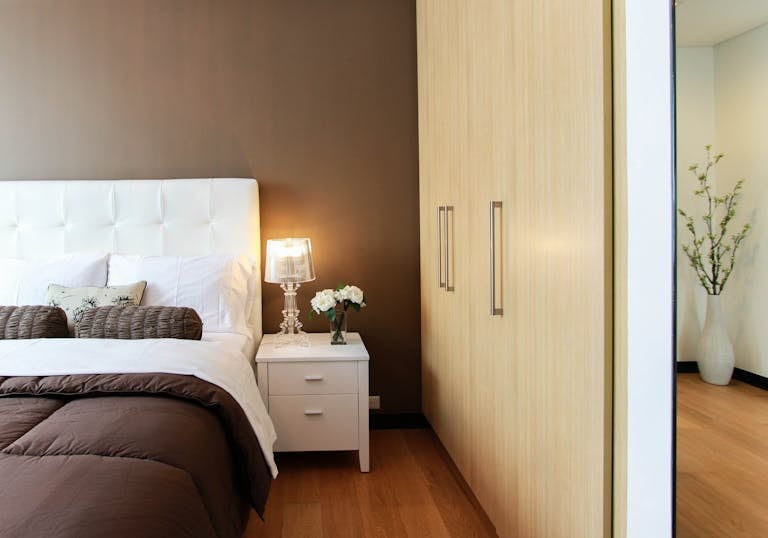

Setting boundaries in a shared living space is one of the most personal challenges an introvert can face, because home is supposed to be where you recover, not where you perform. When you share walls, kitchens, and common areas with other people, protecting your mental and emotional reserves requires more than good intentions. It requires honest conversations, clear expectations, and a willingness to advocate for your own needs even when that feels deeply uncomfortable.
My own experience with this came not from a college dorm or a shared apartment in my twenties, but from the years I spent running advertising agencies where the boundaries between professional and personal space constantly blurred. We had open-plan offices before they were fashionable, team retreats that turned into extended social obligations, and a culture that treated constant availability as a virtue. I watched myself, and the introverts on my teams, slowly erode under the pressure of never having a corner that was truly ours. What I learned in those environments about claiming space and protecting energy has shaped how I think about shared living to this day.
Shared living amplifies everything. The sounds, the light, the unexpected social interruptions, and the subtle but constant awareness that someone else is always nearby. Understanding how that affects you is the first step toward changing it.
If you’ve been exploring how social exposure affects your energy more broadly, our Energy Management and Social Battery hub is a good place to build that foundation. The dynamics of shared living sit squarely within that larger picture of how introverts sustain themselves through daily life.

Why Does Shared Living Feel So Uniquely Draining for Introverts?
Most conversations about introvert energy focus on work or social events. Shared living rarely gets the same attention, yet it’s often where the deepest depletion happens, precisely because there’s no clear end point. At a party, you know you can leave. In a shared home, the social environment is continuous.
What’s your personality type?
Take our free 40-question assessment and get a detailed personality profile with dimension breakdowns, context analysis, and personalised insights.
Discover Your Type8-12 minutes · 40 questions · Free
Introverts process stimulation differently than extroverts. Cornell University research on brain chemistry has pointed to differences in how introverts and extroverts respond to dopamine, which helps explain why environments that energize one person can exhaust another. A roommate who thrives on spontaneous conversation at 10 PM isn’t being inconsiderate. They’re operating from a completely different neurological baseline.
That gap in baseline experience is what makes shared living so tricky. Your need for quiet isn’t a preference in the casual sense of preferring one coffee shop over another. It’s a functional requirement. Without genuine downtime in your own home, you can’t recover. Truity’s breakdown of why introverts need downtime puts this well: solitude isn’t a luxury for introverts, it’s how the nervous system resets.
One thing I noticed during the agency years was how the introverts on my team handled the open office differently from their extroverted colleagues. The extroverts would arrive energized, feeding off the morning buzz. My introverted copywriters and strategists would come in already bracing themselves, scanning for a quiet desk, putting on headphones before they’d even sat down. They weren’t being antisocial. They were managing a resource that the office layout was constantly depleting. Shared living creates the same dynamic, just in the space that’s supposed to offer relief.
The compounding effect is real. As I’ve written about in depth elsewhere, an introvert gets drained very easily, and shared living removes the natural recovery windows that most introverts rely on without even realizing it.
What Makes the Boundary Conversation So Hard to Start?
Most introverts I know, myself included, are not conflict-averse because we’re weak. We’re conflict-averse because we process consequences deeply. Before we say anything, we’ve already played out seventeen versions of how the conversation could go wrong. We’ve considered how it will affect the relationship, whether we’re being unreasonable, and whether the discomfort of speaking up is really worse than the discomfort of staying silent.
In shared living situations, this calculus gets even more complicated. You see this person every day. You share a kitchen. You can’t simply avoid them after a difficult conversation. The stakes feel high because the proximity is unavoidable.
There’s also a layer of self-doubt that many introverts carry. We’ve been told, in various ways throughout our lives, that our need for quiet is excessive, that we’re too sensitive, that we should just be more flexible. So when we finally feel the need to speak up about noise or shared space or social expectations in the home, we often undercut ourselves before we even begin. We frame our needs as apologies. We ask for less than we actually need. We over-explain.
I did this for years in agency settings. When I needed to close my office door and think without interruption, I’d leave it open out of some misplaced obligation to appear accessible. When a client dinner stretched into a second round of drinks I had no energy for, I’d stay because leaving felt like a statement. The cost of all that silent accommodation was enormous, and it took me a long time to recognize that advocating for my needs wasn’t selfishness. It was sustainability.

How Do You Actually Identify What You Need Before You Can Ask for It?
Before any boundary conversation can happen, you need clarity on what you’re actually asking for. This sounds obvious, but many introverts skip this step. We know we feel drained, but we haven’t traced the specific causes clearly enough to articulate them.
Spend a week paying attention to the moments in your shared home when your energy drops sharply. Is it the noise from the common areas when you’re trying to wind down? Is it the expectation of spontaneous socializing when you walk through the kitchen? Is it the lighting in shared spaces that’s too harsh for your nervous system? Is it the physical closeness of communal living, the shared surfaces, the lack of a space that feels entirely yours?
Each of these has a different solution, and each requires a different conversation. Noise sensitivity, for example, is a specific and often underestimated challenge for highly sensitive introverts. The strategies for addressing it are practical and learnable. If noise in your shared home is a primary stressor, the guidance in this piece on HSP noise sensitivity and coping strategies offers a useful framework for both managing your own responses and thinking through what environmental changes might help.
Light sensitivity is another factor that doesn’t get much airtime in conversations about shared living, but it’s genuinely significant for many introverts and highly sensitive people. Overhead fluorescent lighting in a shared kitchen, or a roommate who keeps the living room blazing at midnight, can create a level of sensory stress that compounds everything else. Understanding HSP light sensitivity and how to manage it can help you identify whether this is part of your equation and what adjustments are worth requesting.
Touch sensitivity is subtler but equally real. Shared living involves a lot of incidental physical contact: shared blankets left on the couch, communal items handled by multiple people, the general texture of spaces that aren’t quite yours. If you find yourself feeling vaguely unsettled in shared spaces in ways you can’t fully explain, it’s worth reading about HSP touch sensitivity and tactile responses to see whether that resonates.
The more precisely you can identify what’s actually draining you, the more specific and reasonable your requests will sound, both to your housemates and to yourself.
What Does a Workable Boundary Actually Look Like in a Shared Home?
A boundary in a shared living space isn’t a rule you impose on someone else. It’s an agreement you reach together about how to coexist in a way that works for both parties. That framing matters, because it shifts the conversation from confrontation to collaboration.
Some boundaries are spatial. Designating your bedroom as a fully private space, off-limits for casual drop-ins, is one of the most effective things you can do. It gives you at least one room where you can close the door and genuinely decompress. This seems like a low bar, but many introverts in shared living situations never explicitly establish it and then wonder why they never feel truly alone.
Some boundaries are temporal. Agreeing on quiet hours, or simply communicating that you’re not available for conversation after a certain time in the evening, creates predictability that benefits everyone. You’re not asking your housemate to be quiet forever. You’re asking for a window of recovery time that you can count on.
Some boundaries are social. Shared living often comes with an unspoken expectation that housemates will socialize together regularly. Opting out of that expectation, or scaling it back to a level that actually works for you, is legitimate. You can be warm and respectful and still choose not to watch television together every night or participate in every communal meal.
During the agency years, I had a version of this challenge with a business partner who was a classic extrovert. He wanted to debrief every client meeting immediately, while the energy was still high. I needed thirty minutes of quiet processing before I could think clearly about what had just happened. We eventually landed on a simple agreement: thirty minutes, then we’d talk. It was a small adjustment, but it changed the quality of every conversation we had afterward. Boundaries in shared living work the same way. Small, specific, mutual agreements compound into something genuinely livable.

How Do You Handle a Housemate Who Doesn’t Understand Why You Need Space?
This is where many introverts get stuck. You’ve identified what you need. You’ve framed it as a request rather than a demand. And your housemate’s response is something like, “I just don’t get why you need so much alone time. Are you upset with me?”
That response, however frustrating, is usually genuine. Extroverts often interpret a desire for solitude as a social signal, as withdrawal, as unhappiness, as something they’ve done wrong. They’re not being obtuse. They’re reading the situation through their own framework, where wanting to be alone usually does mean something is wrong.
The most effective thing you can do is explain the mechanism, not just the preference. Something like: “When I’ve been around people all day, my brain is genuinely overloaded. It’s not about you. Quiet time is how I recharge, the same way sleep recharges everyone. Without it, I’m not at my best for anyone, including you.”
That kind of explanation, grounded in how your nervous system actually works, tends to land better than a simple “I just need space.” It gives your housemate something to understand rather than something to interpret. Psychology Today’s piece on why socializing drains introverts more than extroverts is worth sharing with a housemate who genuinely wants to understand. Sometimes an outside source makes the point more credibly than you can in the moment.
What you want to avoid is over-justifying to the point where you undermine your own request. You don’t need to earn the right to need what you need. Explain it once, clearly and warmly. Then hold the boundary without apologizing for it.
What If the Shared Space Itself Is the Problem?
Sometimes the issue isn’t one specific housemate behavior. It’s the cumulative sensory load of the environment itself. Too much stimulation from too many directions, for too long, with no real break.
Highly sensitive introverts are particularly vulnerable to this. The research on high sensitivity, associated with the trait Elaine Aron identified as sensory processing sensitivity, suggests that HSPs process environmental input more deeply and thoroughly than non-HSPs. That depth of processing is a genuine strength in many contexts, but in an overstimulating shared environment, it becomes a significant source of fatigue.
Managing your overall stimulation load, not just the social component, becomes essential. Finding the right balance with HSP stimulation is something worth thinking through carefully, especially if you find that even quiet time in a shared home doesn’t fully restore you. The problem may be that the environment itself, its sounds, textures, lighting, and social unpredictability, is keeping your nervous system in a low-level alert state even when no one is actively bothering you.
Practical adjustments to the physical environment can help significantly. Noise-canceling headphones are one of the most effective tools available to introverts in shared living situations. Controlling the lighting in your personal space, even just with a small lamp that replaces overhead lighting, can reduce sensory load meaningfully. Creating a corner or a chair or a section of your room that is specifically yours and specifically calm gives your nervous system a signal that recovery is possible here.
Managing the reserves that sustain you through all of this is a longer-term project. The framework in this piece on HSP energy management and protecting your reserves offers a structured way to think about how you budget and replenish your energy across the full texture of your daily life, not just in the moments of obvious depletion.

How Do You Sustain Boundaries Over Time Without Constant Renegotiation?
One of the quieter challenges of shared living is that boundaries tend to drift. You establish something, it works for a while, and then gradually the exceptions accumulate until the boundary has effectively dissolved. This happens with the best intentions on both sides.
The way to prevent drift is to treat your boundaries as ongoing agreements rather than one-time conversations. That doesn’t mean revisiting them constantly. It means noticing when they’ve slipped and addressing it before the drift becomes the new norm.
It also means being consistent in your own behavior. If you’ve communicated that you’re not available for social interaction after 9 PM but you regularly come out of your room to chat, you’ve effectively communicated that the boundary is negotiable. Consistency isn’t rigidity. It’s the thing that makes your boundaries legible to the people you live with.
There’s a version of this I had to learn the hard way in agency life. I’d set a clear expectation with my team that Friday afternoons were protected for independent work, no meetings, no drop-ins. Then a client would call with an urgent request on a Friday afternoon, and I’d immediately fold. Within a month, my team had learned that “protected” meant “negotiable under pressure.” Rebuilding that expectation took far longer than it would have taken to hold it the first time.
Shared living works the same way. The initial conversation matters, but the consistency of your behavior after that conversation is what actually shapes the dynamic.
It’s also worth remembering that you’ll need to re-establish boundaries when living situations change. A new housemate means starting fresh. A housemate who starts working from home changes the entire texture of the shared environment. Research published in BMC Public Health has explored how living arrangements affect mental health and wellbeing, and the findings underscore what most introverts already know intuitively: the quality of your home environment has a direct impact on your psychological state. Getting the boundaries right isn’t a one-time task. It’s an ongoing practice.
What Role Does Self-Compassion Play in All of This?
Here’s something I wish someone had told me earlier: needing space is not a character flaw. It’s not something to manage your way out of or apologize for. It’s a feature of how you’re wired, and it deserves the same respect you’d extend to any other legitimate human need.
Many introverts carry a quiet but persistent sense of guilt about their need for solitude. We feel bad for not wanting to hang out. We feel bad for closing our doors. We feel bad for not being the kind of easygoing housemate who’s always up for company. That guilt is corrosive, and it makes every boundary conversation harder than it needs to be, because we’re arguing against ourselves before we’ve even started.
Self-compassion in this context means recognizing that your needs are real, that they’re not excessive, and that advocating for them is an act of care for everyone involved, not just yourself. A depleted, resentful housemate who never speaks up is not easier to live with than one who asks clearly for what they need.
PubMed Central research on social behavior and personality has explored how individual differences in social processing shape the way people experience shared environments. The science supports what introverts often sense but struggle to claim: different nervous systems genuinely require different conditions to function well. You’re not making excuses. You’re describing a real phenomenon.
The introvert experience of needing genuine solitude to feel whole is well-documented and well-supported. Harvard Health’s guide on introverts and socializing frames this clearly: solitude isn’t withdrawal from life. It’s a necessary part of how certain people engage with it fully. Claiming that for yourself in a shared living situation isn’t antisocial. It’s honest.

When Shared Living Isn’t Working: Knowing When to Change the Situation
Sometimes you do everything right. You identify your needs clearly. You have honest conversations. You establish reasonable boundaries. And it still doesn’t work, because the fit between you and your housemate, or between you and the physical environment, is genuinely incompatible.
Recognizing this isn’t failure. It’s information.
Shared living situations that chronically drain you, where you never feel genuinely at home, where the social and sensory demands of the environment consistently outpace your ability to recover, are not situations you’re obligated to endure indefinitely. Research from PubMed Central on environment and psychological wellbeing supports the view that our physical surroundings have a measurable impact on mental health outcomes. Choosing a living situation that supports your wellbeing is a legitimate priority, not a luxury.
This might mean having a more direct conversation with your housemate about whether the arrangement is working for both of you. It might mean looking for a different living situation. It might mean negotiating a different room or a different layout within the same space. The point is that “this isn’t working” is a valid conclusion, and reaching it doesn’t mean you failed to adapt well enough.
I’ve made decisions throughout my career based on this same principle. There were clients whose working styles were so misaligned with how I operate that no amount of boundary-setting made the relationship sustainable. Recognizing that and making a change wasn’t giving up. It was respecting both parties enough to stop pretending the fit was something it wasn’t.
Your home should be a place where recovery is possible. If it consistently isn’t, that’s worth taking seriously.
If you want to go deeper on how introverts manage energy across every dimension of daily life, the full collection of resources in our Energy Management and Social Battery hub covers everything from sensory sensitivity to social recovery in practical, grounded terms.
About the Author
Keith Lacy is an introvert who’s learned to embrace his true self later in life. After 20 years in advertising and marketing leadership, including running agencies and managing Fortune 500 accounts, Keith now channels his experience into helping fellow introverts understand their strengths and build fulfilling careers. As an INTJ, he brings analytical depth and authentic perspective to every article, drawing from both professional expertise and personal growth.
Frequently Asked Questions
How do I bring up boundaries with a housemate without making it feel like an accusation?
Frame the conversation around your needs rather than their behavior. Instead of “you’re too loud,” try “I need quiet evenings to recover from the day, and I’d love to figure out how we can make that work for both of us.” Focusing on what you need, rather than what they’re doing wrong, keeps the conversation collaborative and makes it much easier for the other person to respond without becoming defensive.
Is it reasonable to ask for private time in a shared home?
Completely reasonable. Everyone in a shared home deserves some degree of personal space and uninterrupted time, and for introverts this isn’t a preference so much as a functional need. Asking for your bedroom to be a private space, or for quiet hours in the evening, is a normal part of establishing a livable shared arrangement. what matters is asking clearly and early, rather than waiting until resentment has built up.
What if my housemate takes my need for alone time personally?
This is common, especially with extroverted housemates who associate solitude with social signals. Explain the mechanism directly: your need for alone time is about how your nervous system recharges, not a reflection of how you feel about them. Reassure them that you value the relationship, and then hold the boundary consistently. Over time, most people adjust once they understand that your withdrawal isn’t personal.
How do I protect my energy when I have no private space in a shared home?
Start with what you can control. Noise-canceling headphones create acoustic privacy even without physical separation. Adjusting the lighting in your area reduces sensory load. Establishing a consistent routine, such as a walk alone each morning or a quiet hour before bed, gives your nervous system predictable recovery windows even in a crowded environment. If possible, designate one chair, corner, or area of your room as your personal recovery space and treat it as such.
When should I consider that a shared living situation simply isn’t a good fit?
If you’ve communicated your needs clearly, made reasonable adjustments, and you still consistently feel unable to recover at home, that’s meaningful information. Chronic depletion in your own living space affects your mental health, your work, and your relationships in ways that compound over time. A living situation that persistently prevents recovery isn’t a matter of trying harder. It may simply be an incompatible fit, and recognizing that is a reasonable conclusion, not a failure.