

Setting boundaries with addicted loved ones is one of the most emotionally costly things a person can do, and for introverts, the cost runs even deeper. Addiction warps the people we care about, and our natural tendency to absorb, analyze, and feel everything quietly means we often carry the weight of someone else’s chaos long before we recognize how much it’s draining us.
Boundaries aren’t walls. They’re the honest expression of what you can and cannot sustain. And when someone you love is struggling with addiction, learning to hold that line without guilt, without apology, and without losing yourself in the process may be the most important thing you ever do for both of you.

Much of what makes this so hard connects directly to how introverts manage their energy. Our social battery operates differently from an extrovert’s. We process emotion internally, we notice things others miss, and we feel the pull of relational tension in ways that are genuinely exhausting. If you want to understand the broader landscape of how energy depletion shows up in introvert life, our Energy Management and Social Battery hub covers the full range of what we’re up against.
Why Does Addiction Hit Introverts So Differently?
Addiction in a loved one creates a specific kind of noise. Not always the loud, obvious kind. Sometimes it’s the quiet dread of not knowing what version of someone you’ll encounter when you walk through the door. It’s the hypervigilance of tracking moods, monitoring behavior, and constantly recalibrating your own responses to manage someone else’s instability.
What’s your personality type?
Take our free 40-question assessment and get a detailed personality profile with dimension breakdowns, context analysis, and personalised insights.
Discover Your Type8-12 minutes · 40 questions · Free
For introverts, that kind of sustained alertness is exhausting at a cellular level. Psychology Today has explored why social engagement drains introverts more than extroverts, and the underlying neurological differences are real. Our brains process stimulation more deeply and require more recovery time. When the stimulation is emotionally charged, unpredictable, and ongoing, the depletion isn’t just inconvenient. It becomes a health issue.
I ran advertising agencies for over two decades, and I managed teams through some genuinely difficult situations. Clients in crisis, campaigns that collapsed, creative directors who burned out spectacularly. But nothing in that professional world prepared me for the experience of watching someone I cared about spiral into addiction. The difference between managing a difficult client and loving a person in active addiction is that you can fire a client. You can set a professional boundary and enforce it with distance. With family, or with someone woven into your personal life, the emotional architecture is completely different.
What I noticed in myself, and what I hear from introverts who reach out to me, is that we tend to process the early signs of addiction privately. We observe. We analyze. We build internal models of what’s happening before we say a word out loud. That’s not weakness. That’s how our minds work. But it also means we can spend months, sometimes years, carrying knowledge that we haven’t yet translated into action.
What Does “Enabling” Actually Feel Like from the Inside?
There’s a word that gets thrown around a lot in conversations about addiction: enabling. It’s often delivered with a kind of clinical detachment, as though the person doing the enabling is simply making a bad choice they could easily stop making. That framing misses almost everything important about why it happens.
Enabling, from the inside, feels like love. It feels like protecting someone you care about from consequences that seem too harsh. It feels like keeping the peace because the alternative, confrontation, conflict, the possibility of losing the relationship entirely, feels unbearable. For introverts who already find conflict deeply uncomfortable and who process relational pain with unusual intensity, the pull toward enabling is genuinely powerful.
One of the people on my agency team years ago had a family member in active addiction. She was one of the most capable account managers I’ve ever worked with, sharp, empathetic, deeply attuned to client needs. But she was also quietly falling apart. She’d arrive early, stay late, produce flawless work, and then disappear into her car at lunch to take phone calls that left her visibly shaken. She never asked for help because she’d built an entire internal system around managing the situation herself. That’s a pattern I recognize deeply. Introverts often manage their hardest problems in silence, which means the problems compound before anyone even knows they exist.
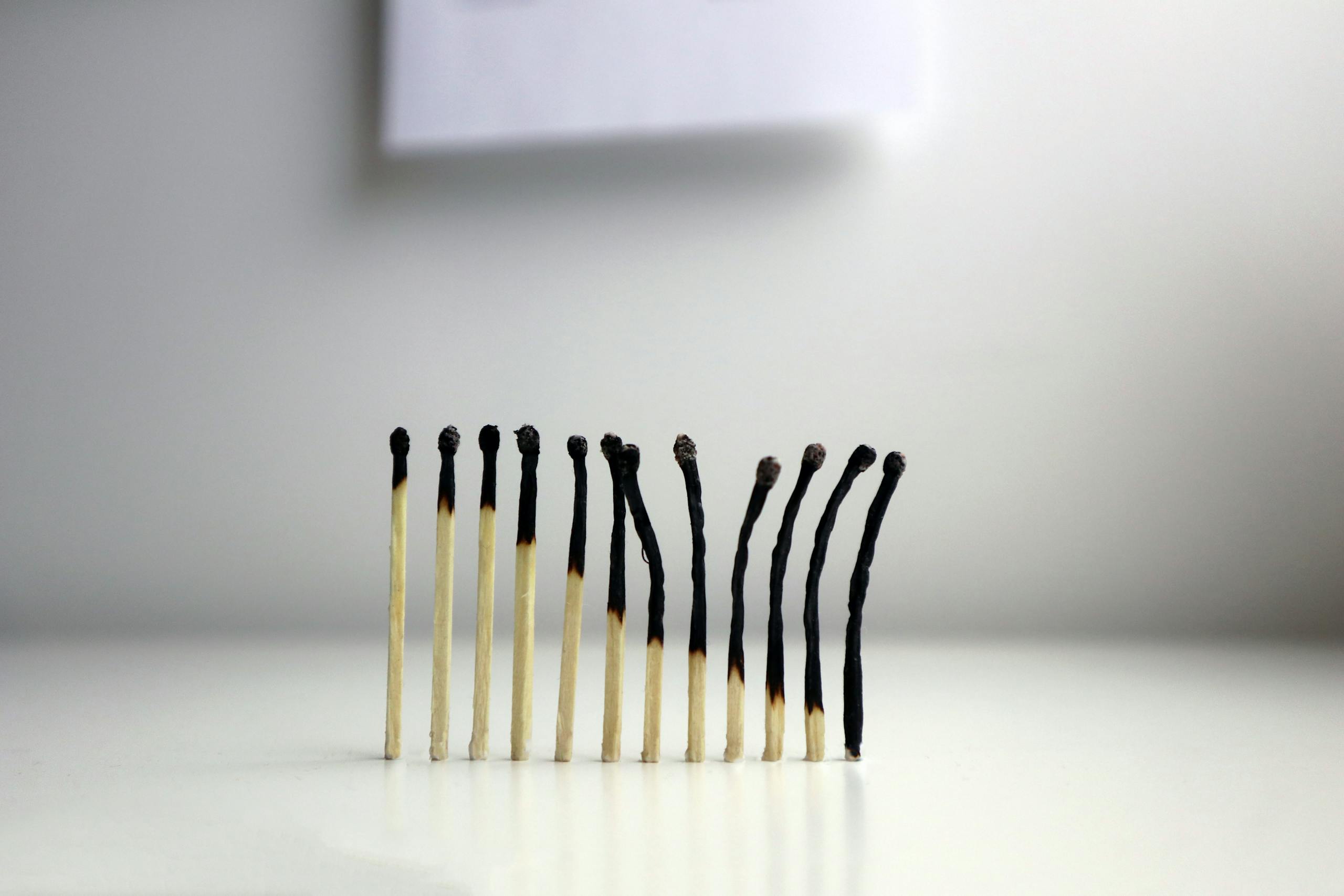
The biology of this matters too. Research published through PubMed Central on emotional processing and stress response helps explain why chronic relational stress doesn’t just feel bad. It changes how we function. The body keeps score in ways that eventually show up as anxiety, disrupted sleep, physical illness, and a kind of emotional numbness that feels like the opposite of who you are.
Highly sensitive people, a group that overlaps significantly with introverts, are especially vulnerable here. If you’ve ever wondered why certain environments or emotional situations affect you so much more intensely than they seem to affect others, the article on HSP stimulation and finding the right balance offers a useful framework. Living with a loved one’s addiction is a master class in overstimulation, and understanding your own thresholds is part of building a sustainable response.
How Do You Know When a Boundary Is Actually Necessary?
Not every difficult behavior from a loved one requires a formal boundary. People have bad days, go through hard seasons, and sometimes act in ways that are frustrating without those behaviors rising to the level of something you need to protect yourself from. Addiction, though, is different. The patterns are persistent, escalating, and they tend to pull everyone close to the person into the orbit of the disease.
A boundary becomes necessary when a pattern of behavior is consistently costing you something you can’t afford to keep losing. That might be sleep. It might be your sense of safety in your own home. It might be financial stability, your ability to be present at work, or the mental quiet that introverts need to function at their best. When you find yourself reorganizing your entire inner life around someone else’s addiction, that’s the signal.
Some specific signs that a boundary is overdue:
- You’ve started lying to others to cover for your loved one’s behavior.
- You feel a persistent low-level dread that you can’t fully name.
- Your own needs, including rest, solitude, and creative restoration, have become secondary to managing their crisis.
- You’ve had the same conversation multiple times with no change in behavior.
- You feel responsible for outcomes that are genuinely outside your control.
That last one is worth sitting with. As an INTJ, I have a strong drive to solve problems. I see patterns, I identify solutions, and I move toward resolution. What addiction taught me, the hard way, is that some problems cannot be solved by the people standing next to them. The only person who can address the addiction is the person living with it. Everything you do to soften the consequences of that addiction, however loving your intention, may actually be delaying the moment of reckoning that your loved one needs.
What Makes Boundary-Setting So Hard for Introverts Specifically?
Introverts often have a complicated relationship with direct communication. We tend to process deeply before speaking, which means we’re often extraordinarily thoughtful in how we approach difficult conversations. That’s a strength. It also means we can overthink a boundary conversation to the point of paralysis, rehearsing every possible response, anticipating every objection, and in the end deciding that the timing isn’t right, or the words aren’t perfect, or the other person isn’t in a good place to hear it.
There’s also the sensory and emotional dimension. Introverts get drained very easily, and a boundary conversation with someone in active addiction is among the most draining interactions imaginable. The person may become defensive, angry, manipulative, or tearful. They may say things designed to make you feel guilty. They may promise change in ways that feel genuine in the moment. All of that requires enormous emotional regulation on your part, and emotional regulation burns energy.

There’s something else worth naming. Many introverts have a deep aversion to being perceived as cold or uncaring. We know that the world sometimes misreads our quietness as indifference, and we’ve often worked hard to prove otherwise. Setting a firm boundary with someone we love can feel like confirming the worst thing people have ever assumed about us: that we don’t really care.
That fear is worth examining directly, because it’s not accurate. Setting a boundary with an addicted loved one is not an act of indifference. It’s often the most loving thing available to you. It communicates that you take their life seriously enough to stop participating in the patterns that are destroying it.
The physical toll is real too. Highly sensitive introverts often experience the stress of these relationships in their bodies in very specific ways. The connection between emotional overload and sensory sensitivity is something I’ve written about elsewhere, including in the context of HSP noise sensitivity and coping strategies and HSP light sensitivity and how to manage it. When your nervous system is already running hot from emotional stress, your sensory thresholds drop. Things that wouldn’t normally bother you become genuinely overwhelming.
How Do You Actually Set a Boundary Without Losing the Relationship?
First, a difficult truth: you may not be able to guarantee that the relationship survives. Some people in active addiction will respond to a boundary by escalating their behavior, withdrawing entirely, or attempting to punish you for holding the line. That possibility is real, and pretending otherwise doesn’t serve you.
What you can control is how you approach the conversation and what you’re willing to do if the boundary is crossed. Those two things matter enormously.
A boundary that works has a few consistent elements. It’s specific rather than general. “I won’t lend you money” is a boundary. “I need you to be more responsible” is a wish. It has a clear consequence that you are genuinely willing to follow through on. And it’s delivered from a place of calm rather than anger, because anger gives the other person something to react to rather than something to hear.
Timing matters for introverts in a particular way. We do our best communicating when we’ve had time to prepare, when we’re not depleted, and when we’re in an environment that feels safe. Don’t have the boundary conversation at the end of a long day, in the middle of a crisis, or in a location where you feel exposed. Give yourself the conditions you need to communicate clearly.
Writing it out first can help. I’ve always found that my thinking clarifies when I put it on paper. When I was handling a particularly difficult client relationship at the agency, one where the client’s behavior had crossed professional lines repeatedly, I wrote out exactly what I needed to say before I ever picked up the phone. Not a script, more like a map. I knew where I was starting, where I needed to end up, and what I wasn’t willing to compromise on. That same approach applies here.
Consider also what support you need before and after the conversation. Managing your energy reserves as a highly sensitive person isn’t a luxury in situations like this. It’s a prerequisite for showing up in the way you intend to. You cannot hold a difficult boundary from a place of depletion.
What Happens to Your Body and Mind When You Don’t Set Boundaries?
The cost of not setting boundaries with an addicted loved one is rarely dramatic in the short term. It accumulates. Each time you absorb a crisis, cover a consequence, or swallow your own needs to manage someone else’s instability, the toll is small. Over months and years, those small tolls add up to something significant.
For introverts, the accumulation often shows up first as a kind of chronic flatness. The things that used to restore you, solitude, creative work, meaningful conversation, stop working as well. You find yourself needing more recovery time after ordinary interactions. Your capacity for empathy, which was once a genuine strength, starts to feel like a liability because it’s been stretched so thin for so long.
Evidence from PubMed Central on chronic stress and health outcomes makes clear that sustained relational stress has measurable effects on physical health, not just emotional wellbeing. This isn’t about being fragile. It’s about recognizing that the human system has limits, and that repeatedly pushing past those limits without recovery has consequences.

There’s also a subtler cost that I think introverts feel especially acutely: the erosion of your own sense of self. When you spend enough time orienting your entire inner life around someone else’s chaos, you can lose track of who you are outside of that relationship. Your preferences, your values, your instincts about what you need, all of it gets subordinated to the management of someone else’s addiction.
Reclaiming that sense of self is part of what boundary-setting makes possible. It’s not just about protecting yourself from harm. It’s about reestablishing that you exist as a full person with legitimate needs, not just as a support system for someone else’s struggle.
Physical sensitivity often intensifies under this kind of chronic stress. Many introverts find that their tactile responses become heightened when they’re emotionally overloaded. The article on HSP touch sensitivity and understanding tactile responses speaks to how this kind of sensitivity shows up and what you can do about it. It’s one more signal that your system is telling you something needs to change.
How Do You Take Care of Yourself While Loving Someone in Addiction?
Self-care in this context isn’t a spa day. It’s the unglamorous, ongoing work of protecting your capacity to function. For introverts, that means being ruthless about protecting solitude, even when guilt tries to convince you that taking time for yourself is selfish.
Groups like Al-Anon exist specifically for the people who love someone with an addiction. Many introverts resist group settings, and that resistance is worth examining. The format isn’t for everyone, and that’s legitimate. But the underlying principle, that you need people who understand your specific situation, is sound. Whether that’s a therapist, a trusted friend, a support group, or a combination, isolation in this situation compounds the damage.
Harvard Health has written about how introverts can approach social connection in ways that work with their nature rather than against it. That same principle applies to seeking support. Find the format that fits how you’re wired, and then actually use it.
Therapy, particularly approaches grounded in cognitive behavioral work or acceptance and commitment therapy, can be genuinely useful for people in this situation. Not because something is wrong with you, but because having a space to process the complexity of loving someone in addiction, without having to manage the other person’s reaction to your honesty, is valuable. Introverts often do their best processing in one-on-one settings with someone they trust. Therapy can be exactly that.
There’s also something important about maintaining the parts of your life that have nothing to do with the addiction. The creative work, the professional engagement, the friendships that exist outside the relationship with your loved one. When addiction becomes the organizing principle of your entire life, you’ve already lost something significant. Protecting the other parts isn’t abandonment. It’s survival.
A study published in BMC Public Health examined the relationship between social support and mental health outcomes, and the findings reinforce what many introverts already sense: the quality of your support matters more than the quantity. One or two relationships where you can be genuinely honest about what you’re going through are worth more than a dozen where you’re performing okay.
What Does Recovery Look Like for the Person Setting Boundaries?
There’s a version of this story that ends with the addicted person getting help, the relationship healing, and everyone from here with hard-won wisdom. That version is real. It happens. It’s worth hoping for.
There’s also a version where the boundary costs you the relationship, at least for a time. Where the person you love chooses the addiction over the connection. Where you have to grieve not just the relationship but the person you thought you knew, and the future you imagined together.
Both versions require recovery on your part. And recovery, for introverts, looks like a slow rebuilding of internal resources. It’s not linear. There will be days when the grief is sharp and the second-guessing is loud. There will also be days when you feel more like yourself than you have in years, when the quiet of your own mind feels like a gift rather than an absence.

What I’ve come to believe, both from my own experience and from watching people I care about work through this, is that setting a boundary with an addicted loved one is an act of profound respect. It respects the other person’s agency. It communicates that you believe they are capable of facing their own life. And it respects yourself enough to stop participating in a dynamic that is costing you more than you have to give.
That’s not coldness. That’s clarity. And for introverts who have spent years being told they’re too sensitive, too quiet, too internal, finding that kind of clarity and holding it under pressure is one of the most powerful things we can do.
Truity’s breakdown of why introverts need downtime offers useful context for understanding why recovery from emotionally intensive relationships takes the time it takes. Your nervous system isn’t being dramatic. It’s doing exactly what it’s designed to do, and it needs real space to reset.
If you want to go deeper into how energy depletion, social battery, and emotional recovery connect across introvert life, the Energy Management and Social Battery hub is a good place to continue. Everything we’ve covered here sits within a larger picture of how introverts sustain themselves through the hardest parts of being human.
About the Author
Keith Lacy is an introvert who’s learned to embrace his true self later in life. After 20 years in advertising and marketing leadership, including running agencies and managing Fortune 500 accounts, Keith now channels his experience into helping fellow introverts understand their strengths and build fulfilling careers. As an INTJ, he brings analytical depth and authentic perspective to every article, drawing from both professional expertise and personal growth.
Frequently Asked Questions
Why do introverts struggle more with setting boundaries with addicted loved ones?
Introverts tend to process emotion deeply and internally, which means they often carry the weight of a loved one’s addiction for a long time before taking action. The prospect of conflict is genuinely draining for many introverts, and the fear of damaging a meaningful relationship can feel overwhelming. Combined with a natural tendency toward empathy and a discomfort with being perceived as cold or uncaring, introverts often delay boundary-setting well past the point where it’s needed.
What is the difference between a boundary and an ultimatum?
A boundary is a statement of what you will and won’t participate in, with a clear consequence that you control and are willing to follow through on. An ultimatum is typically a demand that the other person change their behavior or face a consequence. The distinction matters because boundaries are about your own actions, not attempts to control someone else. “I won’t provide money that I believe is being used for substances” is a boundary. “You have to get sober or I’m leaving” is an ultimatum. Boundaries tend to be more sustainable because they don’t depend on the other person’s choices.
Can setting boundaries actually help the person with the addiction?
Boundaries can remove the protective buffer between an addicted person and the natural consequences of their behavior. When those consequences are consistently softened by people who love them, the urgency to change is reduced. Holding a firm boundary doesn’t guarantee that your loved one will seek help, but it does stop the dynamic in which others absorb the costs of the addiction on their behalf. Many people in recovery have identified a specific moment when the people around them stopped enabling as a turning point in their own decision to get help.
How do you handle the guilt that comes with setting a boundary?
Guilt in this context is almost universal, and it doesn’t mean you’ve done something wrong. It often means you care deeply about someone who is suffering. What helps is distinguishing between guilt that signals a genuine ethical misstep and guilt that is simply the emotional cost of doing something hard. Therapy, support groups like Al-Anon, and honest conversations with people who understand addiction can all help you hold the boundary while processing the feelings that come with it. The guilt tends to ease over time, especially when you can see that the boundary is protecting both of you.
What should you do if your loved one reacts with anger or manipulation when you set a boundary?
Anger and manipulation are common responses when a boundary disrupts a dynamic that has been working in someone’s favor. The most important thing is to stay calm and not engage with the emotional escalation. State the boundary clearly, acknowledge that you understand they’re upset, and then disengage from the argument. You don’t need to defend the boundary or convince them it’s fair. Repeating yourself calmly, without elaborating or apologizing, is often called the “broken record” technique and it can be effective. If the situation becomes threatening or unsafe, prioritize your physical safety above the conversation.