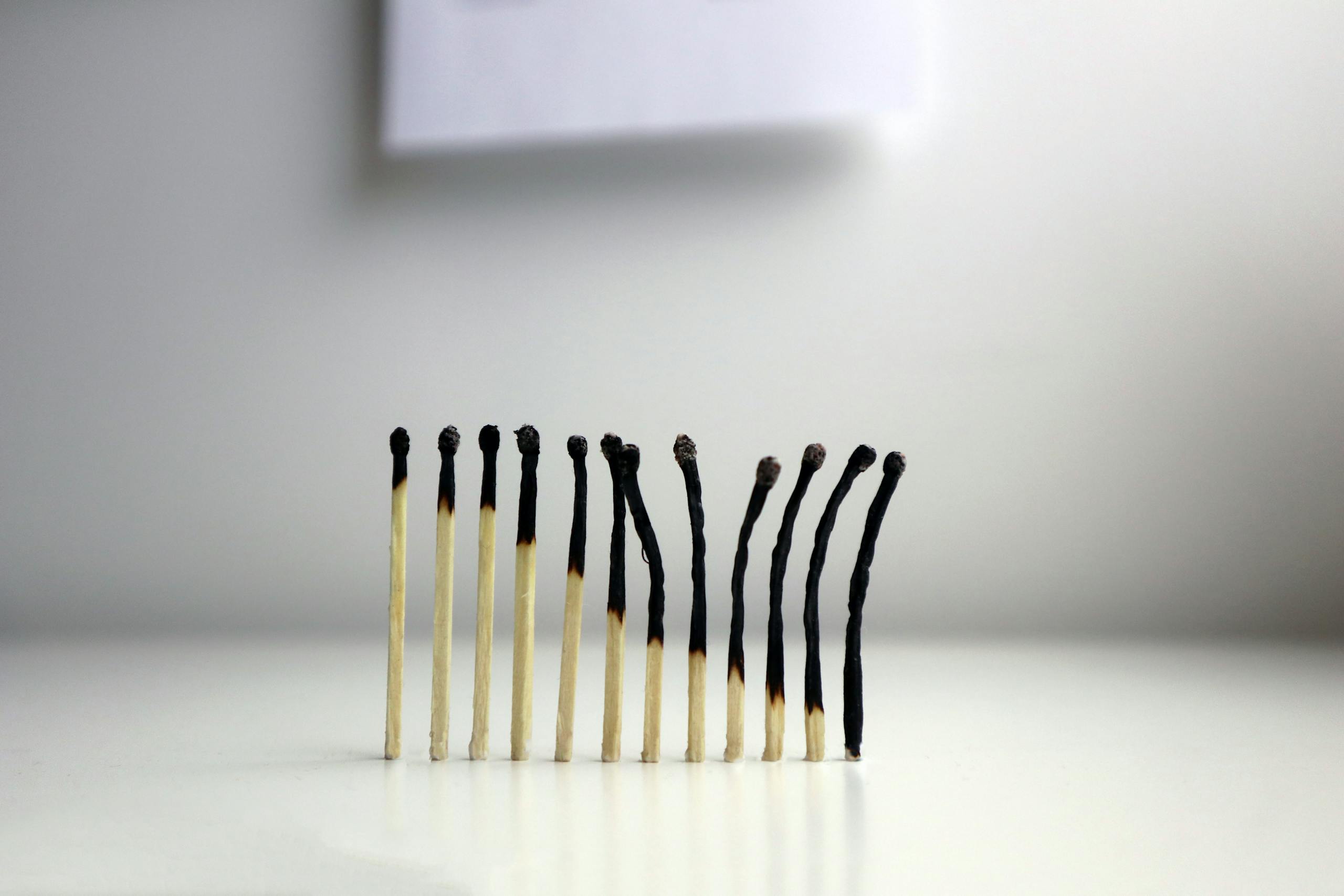

Setting boundaries with dysfunctional family members is one of the most emotionally costly things an introvert can do, and also one of the most necessary. Unlike workplace conflicts that end when you leave the office, family dynamics follow you home, into your thoughts, and into the quiet spaces where introverts go to recover.
What makes this so hard is not just the emotional weight of the relationships. It is the way family dysfunction targets the exact qualities that make introverts who they are: the deep loyalty, the preference for harmony, the tendency to process conflict internally before ever speaking it aloud. Dysfunctional family members often exploit those qualities, sometimes deliberately, sometimes without even realizing they are doing it.
Boundaries are not walls. They are the honest communication of what you can and cannot sustain. For introverts, that distinction matters enormously.
Much of what I write about on this site connects back to a single theme: how introverts manage their energy in a world that was not designed with us in mind. Our Energy Management and Social Battery hub covers that territory broadly, from daily recharging strategies to the cumulative toll of overstimulation. Family boundaries live squarely in that conversation, because no relationship drains an introvert’s reserves faster than one that is broken at its foundation.

Why Does Family Dysfunction Hit Introverts So Differently?
There is a particular kind of exhaustion that comes from family gatherings where something is always slightly wrong. Not dramatically wrong, not the kind of thing you can point to and name. Just the low-grade tension of a parent who makes every conversation about their own grievances, or a sibling who turns every holiday into a referendum on old wounds, or an extended family that operates on unspoken rules nobody ever agreed to but everyone is expected to follow.
What’s your personality type?
Take our free 40-question assessment and get a detailed personality profile with dimension breakdowns, context analysis, and personalised insights.
Discover Your Type8-12 minutes · 40 questions · Free
Introverts process the world differently than extroverts do. Psychology Today describes introversion as a preference for environments with less external stimulation, and a tendency to process experience more deeply before responding. That depth of processing is a genuine strength in most contexts. In a dysfunctional family system, it becomes a vulnerability.
When I was running my first agency, I had a senior creative director who reminded me, in certain ways, of my own family dynamics. He was talented and volatile, and he had a gift for making every critique feel personal. I noticed that the introverts on my team, the ones who processed deeply and chose their words carefully, were the ones who left meetings looking genuinely depleted. The extroverts bounced back faster. They could shake off the friction and move on. My quieter team members were still turning it over hours later, still feeling the emotional residue of what had happened in that room.
That is not a weakness. That is how deep processing works. But it does mean that introverts carry the weight of difficult relationships differently, and family relationships are the heaviest weight most of us carry.
Part of what makes this harder is the physical dimension. Dysfunctional family gatherings are rarely calm environments. They tend to be loud, crowded, and overstimulating in ways that compound the emotional stress. If you are someone who already finds noise sensitivity a genuine challenge to manage, a holiday dinner with raised voices and competing conversations is not just emotionally taxing. It is physically draining in ways that are difficult to explain to people who do not experience it.
What Does a Dysfunctional Family System Actually Look Like?
The word “dysfunctional” gets used loosely, and I want to be specific about what I mean. Every family has friction. Every family has members who are difficult at times. That is not dysfunction. Dysfunction is a pattern, not an incident.
Dysfunctional family systems tend to share certain characteristics. Communication is indirect or dishonest. Roles are rigid and often assigned without consent. Conflict is either avoided entirely or expressed through escalation rather than resolution. Individual needs are subordinated to the family’s collective image or the needs of one dominant member. Boundaries, when someone tries to establish them, are treated as betrayals.
For introverts, that last point is particularly significant. In a healthy family, saying “I need some time alone to recharge after the party” is a normal, unremarkable statement. In a dysfunctional one, it becomes evidence of something. You are being antisocial. You think you are better than everyone else. You never loved us the way we loved you.
The manipulation may not even be conscious. Many dysfunctional family members genuinely believe their reactions are reasonable. That does not make those reactions less damaging.
There is good documentation on how chronic stress from difficult relationships affects physical and mental health. The National Institute of Mental Health has written extensively about the relationship between ongoing interpersonal stress and anxiety, depression, and other mental health outcomes. The research on family-based stress is consistent: relationships we cannot escape, or feel we cannot escape, carry a particular psychological weight.

Why Do Introverts Struggle Specifically With Family Boundaries?
Boundary-setting is hard for most people. For introverts, there are a few specific reasons it tends to be harder, and understanding those reasons is the first step toward working through them.
First, introverts tend to rehearse difficult conversations extensively before having them. We play out the scenarios, anticipate the responses, and often conclude, before we have said a single word, that the conversation will go badly. That rehearsal can be useful. It can also become a reason to never have the conversation at all.
Second, many introverts have a strong aversion to conflict, not because we are passive, but because we have already processed the emotional cost of conflict more thoroughly than the other person has. We know how bad it is going to feel. We would rather absorb the discomfort of an unresolved situation than create the acute discomfort of a confrontation.
Third, and this is the one I have wrestled with personally, introverts often carry a quiet belief that our needs are less legitimate than other people’s. We have been told, in a hundred subtle ways, that needing quiet is being difficult. That preferring to skip the party is being antisocial. That processing things slowly is being oversensitive. After enough repetitions, some part of us starts to believe it.
I spent the better part of my thirties managing a large agency team while running on empty. I had learned to perform extroversion so convincingly that even the people closest to me did not fully understand how much energy it cost. My family certainly did not. When I started pulling back from certain obligations, the pushback was immediate. I was accused of changing, of becoming cold, of not caring anymore. What I was actually doing was learning, very late, that introverts drain very easily and that pretending otherwise does not protect anyone. It just delays the collapse.
The neurological basis for introvert-extrovert differences is well-documented. Introverts and extroverts respond differently to dopamine stimulation, which helps explain why social environments that energize extroverts can genuinely deplete introverts. This is not a preference or a mood. It is a physiological reality. Dysfunctional family environments add emotional stress on top of that neurological reality, which is why the combination is so particularly exhausting.
How Does the Energy Cost of Dysfunction Compound Over Time?
One of the things I have noticed, both in my own life and in conversations with other introverts, is that the energy cost of dysfunctional family relationships is not linear. It compounds.
A single difficult phone call with a critical parent costs you an hour of recovery time. Two calls a week for six months costs you something harder to name. It is not just the accumulated hours. It is the way the anticipation of those calls starts to colonize your mental space. You are not just drained after the call. You are pre-drained before it, and post-drained processing it afterward.
Many introverts are also highly sensitive people, and for those individuals, the compounding effect is even more pronounced. If you recognize yourself in what HSP energy management research describes, that careful, intentional approach to protecting your reserves is not optional. It is essential. Dysfunctional family dynamics can deplete those reserves faster than almost any other source of stress.
What happens when introverts run chronically low on energy is not just fatigue. Cognitive function suffers. Emotional regulation becomes harder. The ability to do the deep, thoughtful work that introverts are genuinely good at starts to erode. You become a less effective version of yourself in every area of your life, not just in the family relationship that is draining you.
There is also a physical dimension that often goes unacknowledged. Chronic stress has well-documented effects on the body. The CDC has written about the connection between ongoing stress and physical health outcomes including sleep disruption, immune function, and cardiovascular health. The stress of handling a dysfunctional family system is not just an emotional inconvenience. It is a health issue.

What Does an Actual Boundary Look Like in Practice?
Most of what gets called “setting a boundary” in popular culture is actually just expressing a preference. A boundary is different. A boundary is a statement about what you will do, not what you want the other person to do.
“Please stop criticizing my parenting” is a request. “When you criticize my parenting, I will end the call” is a boundary. The distinction matters because you cannot control what other people do. You can only control your own behavior. A boundary that depends on the other person changing is not really a boundary. It is a wish.
For introverts, this reframe is genuinely useful. We are not asking anyone to be different. We are not demanding that the dysfunctional family member suddenly become healthy. We are simply describing what we are going to do. That is a much more manageable proposition.
Here is what this looked like in my own life. I have a family member who has a pattern of turning every conversation into a recitation of grievances, some decades old, some invented entirely. For years, I managed this by staying on the phone longer than I wanted to, saying less than I felt, and spending the rest of the day processing the conversation in the background of everything else I was trying to do.
The boundary I eventually set was simple. When the conversation shifted into that pattern, I would say, clearly and without hostility, that I needed to get off the phone and that we could talk again when things were calmer. Then I would do exactly that. Not as a punishment. Not as a dramatic exit. Just as a straightforward consequence of what I had said I would do.
The first several times, it was uncomfortable. The reaction was not gracious. But over time, the pattern shifted. Not because the other person became healthy, but because I had changed the dynamic by changing my own behavior.
Highly sensitive introverts may find that the physical environment of family gatherings also requires its own form of boundary. If you are someone for whom finding the right level of stimulation is a genuine daily consideration, then a crowded, emotionally charged family event is a double stressor. Giving yourself permission to step outside for ten minutes, to arrive late or leave early, to sit at the quieter end of the table, these are not antisocial choices. They are sensible ones.
How Do You Handle the Guilt That Comes With Pulling Back?
Guilt is the tax on every boundary an introvert sets with family. It arrives reliably, regardless of whether the boundary was reasonable, clearly communicated, or long overdue. Understanding where that guilt comes from does not make it disappear, but it does make it easier to sit with.
Much of the guilt is inherited. Dysfunctional family systems are maintained, in part, by the guilt they generate in members who try to step outside the established roles. If your role in the family system has been the accommodating one, the one who absorbs tension and keeps the peace, then any deviation from that role will be experienced by the system as a problem. The guilt you feel is often the system’s way of pulling you back into position.
Recognizing this does not mean dismissing the guilt entirely. Some of it is legitimate. Relationships are complex, and pulling back from family does carry real costs, to the relationship, to other family members who are not the source of the dysfunction, sometimes to your own sense of who you are in relation to your family of origin. Those costs deserve honest acknowledgment.
What the guilt does not deserve is the power to override every boundary you set. Feeling guilty about a boundary does not mean the boundary was wrong. It often means the boundary was necessary.
One thing that helped me was distinguishing between guilt and grief. Guilt says I did something wrong. Grief says I am losing something I valued, or something I wished could have been different. A lot of what introverts experience when pulling back from dysfunctional family relationships is grief, not guilt. Grieving the family dynamic you wished you had. Grieving the relationship that could have existed if things had been different. That grief is real and worth honoring. It is also not a reason to keep absorbing what is harming you.

What About the Physical Toll of Dysfunctional Family Environments?
I want to spend a moment on something that does not get discussed enough in conversations about family boundaries: the physical experience of being in a dysfunctional family environment, not just the emotional one.
Many introverts, and particularly those who identify as highly sensitive, experience family dysfunction in their bodies as much as in their minds. The tension before a difficult phone call. The physical tightening during a confrontation. The headache that reliably follows a long holiday gathering. These are not imaginary. They are your nervous system responding to a genuinely stressful environment.
For introverts who are sensitive to sensory input, the physical environment of family gatherings compounds the emotional stress considerably. Bright lighting, multiple conversations happening simultaneously, physical contact that feels unwanted or intrusive, these all register differently for people with heightened sensory sensitivity. If you find that managing light sensitivity is part of how you take care of yourself, then a chaotic family gathering is adding visual stress on top of emotional stress. And if tactile sensitivity is something you live with, the obligatory hugs and physical contact that family gatherings often involve can be genuinely dysregulating, not just uncomfortable.
Acknowledging this physical dimension is not complaining. It is being honest about the full cost of what you are managing. And it is relevant to boundary-setting because it means that for some introverts, the boundary is not just about emotional protection. It is about physical sustainability.
There is solid evidence connecting introversion with deeper sensory processing and a more reactive nervous system. Research published in PubMed Central has explored the relationship between sensory processing sensitivity and stress reactivity, finding that individuals with higher sensitivity show more pronounced physiological responses to environmental stressors. A dysfunctional family gathering is, by definition, a high-stress environment. For sensitive introverts, the physical response to that environment is real and measurable, not a character flaw.
How Do You Protect Your Recovery Time After Difficult Family Interactions?
One of the most practical things introverts can do when managing dysfunctional family relationships is to treat recovery time as non-negotiable, not as a luxury or a reward for getting through something hard, but as a structural requirement.
In my agency days, I learned to build recovery time into my schedule the same way I built in client meetings. After a particularly draining presentation or a difficult internal conflict, I would block time on my calendar for something quiet and restorative, even if it was just thirty minutes of reading or a walk. My team thought I was unusually disciplined about protecting my calendar. What I was actually doing was managing the energy I needed to function at the level my work required.
The same principle applies to family interactions. If you know that a Sunday dinner with a difficult family member will cost you two hours of recovery time, then those two hours need to be accounted for. You do not schedule a demanding work call for Monday morning the way you might if Sunday had been restful. You do not agree to another social obligation for Sunday evening. You plan for the depletion the way you would plan for any other predictable demand on your resources.
There is a reason introverts genuinely need downtime in a way that is not simply preference. The neurological differences between introverts and extroverts mean that social stimulation, and especially emotionally charged social stimulation, requires real recovery. Treating that recovery as optional is a little like telling someone with a physical injury that they should just push through it. You can do it for a while. Eventually, something gives.
Psychology Today has covered the physiological reasons why socializing drains introverts more than extroverts, connecting it to differences in how introverts and extroverts process dopamine and respond to external stimulation. Dysfunctional family interactions add an emotional layer on top of that baseline depletion. The combination is not trivial.
Protecting your recovery time is itself a form of boundary. It is saying, to yourself as much as to anyone else, that your capacity to function matters and that you are going to protect it. That is not selfishness. That is sustainability.
What If the Dysfunction Is Deeply Entrenched, Not Just Occasional?
Some family systems are not just occasionally difficult. They are structured around dysfunction in ways that have been operating for generations. Addiction, untreated mental illness, narcissistic patterns, trauma that has never been processed, these create environments where the dysfunction is not a feature of certain interactions. It is the operating system.
In those situations, the question is not just how to set better boundaries. It is whether the relationship, in its current form, is sustainable at all. That is a harder question, and one that deserves honest engagement rather than easy reassurance.
There is a spectrum of options between full engagement and complete estrangement, and most introverts who are dealing with entrenched family dysfunction will find themselves somewhere in that middle territory. Reduced contact. Structured visits with clear time limits. Communication through channels that are easier to manage, like written messages rather than phone calls or in-person interactions. Relationships maintained at a level of engagement that is sustainable rather than at the level the family system demands.
None of these choices are painless. All of them involve loss of some kind. What they offer in return is the possibility of functioning, of having enough energy and emotional stability to show up for the people and work and experiences that genuinely matter to you.
Professional support is worth mentioning here, not as a last resort, but as a legitimate resource. A therapist who understands both introversion and family systems dynamics can be genuinely useful in working through the specific challenges that introverts face in these situations. The evidence base for therapy in addressing interpersonal stress and family conflict is solid. There is no prize for managing this alone.
What I have come to believe, after years of managing my own family dynamics and watching others manage theirs, is that the introverts who do this best are the ones who stopped treating their own needs as negotiable. Not the ones who became cold or cut everyone off, but the ones who got clear, finally, about what they could actually sustain and what they could not. That clarity is not a failure of love. It is a precondition for it.
If you want to read more about how introverts manage energy across all the relationships and environments that demand it, our full Energy Management and Social Battery hub covers the topic in depth, from daily recharging habits to the longer-term strategies that make sustainable engagement possible.
About the Author
Keith Lacy is an introvert who’s learned to embrace his true self later in life. After 20 years in advertising and marketing leadership, including running agencies and managing Fortune 500 accounts, Keith now channels his experience into helping fellow introverts understand their strengths and build fulfilling careers. As an INTJ, he brings analytical depth and authentic perspective to every article, drawing from both professional expertise and personal growth.
Frequently Asked Questions
Why do introverts find it harder to set boundaries with family than with coworkers?
Family relationships carry a different emotional weight than professional ones. Introverts often have deep loyalty to family and a strong desire for relational harmony, which makes the prospect of conflict feel particularly costly. There is also a history element: family members have years of established patterns and expectations to draw on when pushing back against a new boundary. Coworkers can be managed at a professional distance that family rarely allows. For introverts who process conflict deeply and feel its emotional cost acutely, that combination makes family boundaries significantly harder to establish and maintain.
What is the difference between a boundary and an ultimatum?
A boundary is a statement about your own behavior: what you will do when a certain situation arises. An ultimatum is a demand about someone else’s behavior, with a threatened consequence attached. The distinction matters because boundaries are entirely within your control. You are not asking the other person to change. You are simply describing how you will respond. Ultimatums depend on the other person’s compliance and often escalate conflict. Boundaries, communicated clearly and followed through consistently, change the dynamic without requiring the other person to agree with you.
How do you set a boundary without it turning into a major confrontation?
The tone and timing of how you communicate a boundary matters as much as the content. State it simply, without extensive justification or apology. Keep it specific rather than general. “When the conversation becomes critical, I’m going to end the call” is more useful than “I need you to stop being so negative.” Follow through consistently when the situation arises, without drama or extended explanation. Many introverts over-explain their boundaries in an attempt to make them more acceptable, which often invites more argument. A clear, calm statement followed by consistent action is more effective than a lengthy negotiation.
Is it normal to feel guilty after setting a boundary with a family member?
Guilt after setting a boundary is extremely common, particularly for introverts who have spent years prioritizing family harmony over their own needs. Much of that guilt is a learned response, the result of growing up in a system that treated accommodation as loyalty and self-protection as selfishness. Feeling guilty does not mean you did something wrong. It often means you did something unfamiliar. Over time, as you follow through on boundaries consistently and observe that the relationships you value can survive them, the guilt tends to diminish. It rarely disappears entirely, but it becomes easier to act in spite of it.
How much recovery time should an introvert plan for after a difficult family interaction?
There is no universal answer, because recovery needs vary significantly between individuals and depend on the intensity of the interaction. What matters is treating recovery time as a genuine requirement rather than an optional indulgence. A useful approach is to pay attention to your own patterns: how long does it typically take you to feel like yourself again after a difficult family conversation? Use that as your baseline and build it into your schedule proactively. For interactions you know will be particularly draining, plan for more buffer than you think you need. Underestimating recovery time consistently is one of the main ways introverts end up running on empty.