
Shyness is a fear of social judgment. It’s the anxiety that tightens in your chest before you speak in a meeting, the hesitation before you introduce yourself at a party, the worry that others are evaluating you and finding you lacking. Shyness is an emotional response rooted in self-consciousness, and it can affect anyone, regardless of whether they’re introverted or extroverted.
That distinction matters more than most people realize. Shyness is about fear. Introversion is about energy. Conflating the two does a real disservice to people trying to understand themselves, and I spent a good chunk of my career operating under that confusion before I finally sorted it out.
Much of the confusion around personality traits stems from treating them as interchangeable when they describe completely different things. Our Introversion vs Other Traits hub explores the full range of how introversion relates to shyness, extroversion, and everything in between, but shyness deserves its own focused examination because it’s so consistently misunderstood.
What Does Shyness Actually Feel Like From the Inside?
Shyness has a particular texture. It’s not just quietness. It’s the internal noise that accompanies that quietness. The second-guessing before you speak. The replay reel after a conversation where you catalogue everything you said that might have landed wrong. The preemptive embarrassment that arrives before anything embarrassing has even happened.
What’s your personality type?
Take our free 40-question assessment and get a detailed personality profile with dimension breakdowns, context analysis, and personalised insights.
Discover Your Type8-12 minutes · 40 questions · Free
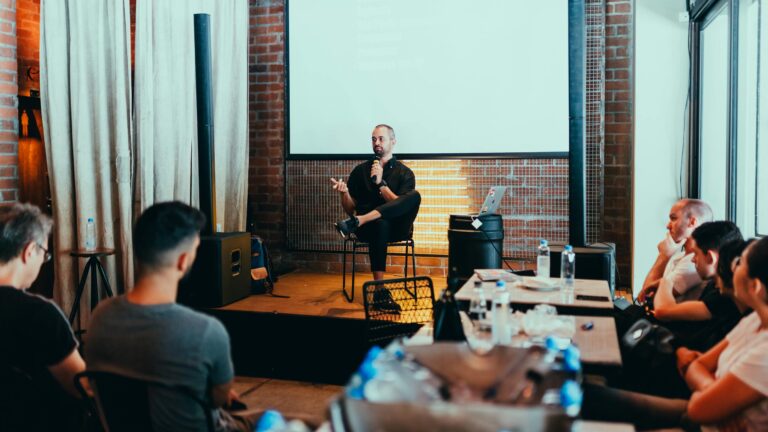
Early in my career, I managed a copywriter named Daniel who was extraordinarily talented but would physically freeze during client presentations. His ideas were the best in the room. His written work was sharp, confident, even bold. But the moment he had to defend his concepts in front of a client, something would shut down. His voice would drop. He’d qualify every statement. He’d apologize for ideas that didn’t need apologizing for. That was shyness in action. Not a lack of ideas. Not a preference for solitude. A fear of judgment from the people in that room.
What made Daniel’s situation particularly instructive was that he was not introverted in the traditional sense. Outside of client-facing moments, he was animated, social, and genuinely energized by the creative team around him. His shyness was situational and specific. It showed up in high-stakes moments where he felt evaluated. Once he understood that distinction, he could work on the fear directly rather than assuming his personality was the problem.
Shyness research has long distinguished between the emotional discomfort of social evaluation and the energy preferences that define introversion. If you want to understand where you actually fall on the personality spectrum, taking an introvert, extrovert, ambivert, and omnivert test can help you see your traits more clearly, separate from the anxiety layer that shyness often creates.
Why Do People Confuse Shyness With Introversion?
The overlap is understandable on the surface. Both shy people and introverts can appear quiet in social settings. Both might decline invitations to large gatherings. Both might seem reserved to an outside observer. But the reasons are entirely different, and those different reasons lead to very different paths forward.
An introvert who declines a party invitation is making an energy decision. They know that a room full of people will drain them, and they’re choosing to protect their capacity. There’s no fear involved. No anxiety about what people will think of them for not being there. It’s a preference, not an avoidance.
A shy person who declines the same invitation is making a fear-based decision. They might actually want to go. They might crave the connection. But the anticipatory anxiety of walking into a room full of people who might judge them feels like too much to manage. The desire and the fear are pulling in opposite directions, and the fear wins.

That distinction becomes even more complicated when you consider that shyness and introversion can coexist. Some introverts are also shy. Some extroverts are also shy. To understand what being extroverted actually means at its core, you have to strip away the shyness variable entirely, because extroversion is about energy sourcing, not social confidence. A shy extrovert is someone who craves social stimulation but fears social judgment simultaneously. That’s a genuinely exhausting combination, and it’s more common than people acknowledge.
I watched this play out repeatedly in my agency years. Some of my most outgoing account managers, the ones who seemed to thrive on client lunches and team happy hours, would confess in private that they spent the entire drive home replaying conversations and worrying about whether they’d said something wrong. That’s shyness operating underneath an extroverted surface. The social energy was real. So was the anxiety.
Where Does Shyness Come From?
Shyness doesn’t have a single origin. Some of it appears to be temperamental. Certain people seem to arrive in the world with a nervous system that responds more intensely to novelty and social evaluation. You can see it in infants who react strongly to strangers, in toddlers who cling to familiar adults in new environments. That early behavioral inhibition doesn’t guarantee adult shyness, but it does create a foundation that certain experiences can build on.
Environment shapes the rest. A child who grows up in a household where mistakes are met with criticism rather than curiosity may develop a heightened sensitivity to being evaluated. A teenager who experiences public humiliation, social exclusion, or consistent ridicule can develop a deep wariness around social judgment that follows them into adulthood. Shyness, in many cases, is a learned protective response to environments that felt unsafe.
There’s meaningful work in the field of social anxiety that explores how the fear of negative evaluation operates neurologically. Research published in PubMed Central has examined how social anxiety involves heightened threat detection in social contexts, which maps closely to what shy individuals describe experiencing. The brain essentially treats social judgment as a potential danger, triggering responses that are designed to protect rather than connect.
Understanding this matters because it reframes shyness from a character flaw into a comprehensible response. Shy people aren’t weak or antisocial. Their nervous systems have learned to be vigilant in social situations, often for reasons that made sense at some point in their history.
Can Shyness Be Worked Through?
Yes, and this is where shyness fundamentally differs from introversion. Introversion isn’t a problem to solve. It’s a trait to understand and work with. Shyness, when it’s causing genuine distress or limiting someone’s ability to pursue what they actually want, can be addressed directly.
The approaches that tend to work involve gradual exposure to feared situations rather than avoidance, along with shifting the internal narrative from “they’re judging me” to something more grounded. Cognitive behavioral approaches have a solid track record with social anxiety, which sits at the more intense end of the shyness spectrum. Additional research from PubMed Central has explored how anxiety responses in social contexts can be modified through consistent, supported exposure over time.
What doesn’t work is simply telling shy people to “just be more confident” or “put yourself out there.” That advice ignores the actual mechanism. Shyness isn’t a decision. You can’t think your way out of it through willpower alone. What you can do is build experiences that gradually teach your nervous system that social situations are survivable, and even worthwhile.

I saw this work firsthand with Daniel, the copywriter I mentioned earlier. We started small. Instead of putting him in front of a full client team, we had him present to just two people at a time, colleagues he trusted. Then we added one unfamiliar face. Then two. Over about eight months, he built enough experience with being heard and not destroyed that the anxiety started to recede. He never became someone who loved presenting. But he stopped dreading it in a way that was shutting him down.
It’s also worth noting that shyness doesn’t have to be “cured” to live a full life. Many shy people find ways to create environments that work for them, careers, relationships, and communities where the demand for constant social performance is lower. Psychology Today has explored how deeper, more meaningful conversations often feel more natural and satisfying than surface-level social performance, which resonates with many shy individuals who thrive in one-on-one settings even when group situations feel overwhelming.
How Shyness Shows Up Differently Across Personality Types
One of the more interesting things about shyness is how differently it manifests depending on someone’s underlying personality. A shy introvert and a shy extrovert are dealing with the same fear, but it sits inside very different frameworks.
For the shy introvert, there’s often a kind of double layer at work. They already prefer smaller social circles and quieter environments. Add shyness on top of that, and the pull toward isolation can become quite strong. The challenge is distinguishing between genuine preference and fear-driven avoidance. Wanting to stay home because you’re energized by solitude is healthy. Staying home because you’re afraid of what people might think of you if you went out is something worth examining.
For the shy extrovert, the tension runs in the opposite direction. They genuinely want more social connection. They feel the pull toward people and activity. But the fear of judgment creates a barrier that can make socializing feel exhausting in a way that has nothing to do with their energy preferences. They leave gatherings drained not because of introversion but because they spent the entire time monitoring themselves for potential missteps.
Then there are the people who don’t fit neatly into either category. The distinction between omniverts and ambiverts is useful here because it highlights how personality doesn’t always operate in clean, predictable patterns. Some people’s social energy fluctuates significantly depending on context, mood, and environment. When shyness is layered onto that kind of variability, the result can feel genuinely confusing from the inside.
If you’re not sure where you fall, and whether what you’re experiencing is shyness, introversion, or something else entirely, it helps to get a clearer baseline. There’s also a meaningful difference between being fairly introverted versus extremely introverted, and understanding your actual position on that spectrum can help you separate the introversion piece from the anxiety piece.
Shyness in Professional Settings: What I Watched Happen in Agency Life
Running advertising agencies for over two decades gave me a front-row seat to how shyness operates in professional environments. The advertising world is loud. It rewards confident pitching, quick verbal wit, and the ability to hold a room. That environment is genuinely hard for shy people, regardless of how talented they are.
What I noticed over time was that shyness often got misread as arrogance or disengagement. A shy employee who went quiet in a brainstorm wasn’t withholding. They were managing the fear of saying something that would be judged. A shy account manager who avoided eye contact in client meetings wasn’t being dismissive. They were overwhelmed by the evaluative weight of the room. But from the outside, those behaviors could look like indifference or even contempt.
As an INTJ, I’m not naturally effusive or socially performative. I don’t find small talk energizing, and I’ve never been someone who fills silence with noise. But my quietness has always come from preference, not fear. The difference in how I experienced meetings versus how some of my shy colleagues experienced them was significant. I was conserving energy. They were managing terror.
That distinction shaped how I tried to lead. Shy team members needed different things than introverted ones. They needed more explicit reassurance that their contributions were valued. They needed lower-stakes opportunities to speak before being asked to perform in high-stakes settings. They needed to know that a stumble in a presentation wasn’t going to define how I saw them. Some leaders create environments that accidentally punish shyness by rewarding only the loudest voices. I tried hard not to do that, though I’m sure I didn’t always succeed.
There’s also something worth saying about how shyness intersects with negotiation. Harvard’s Program on Negotiation has examined how introverts approach negotiation differently, but shy individuals face a distinct additional challenge: the fear of asserting their own interests in front of someone who might judge them for it. That fear can lead to accepting less than they deserve, not because they don’t know their value, but because advocating for themselves feels too exposed.

The Language We Use Around Shyness Matters
One thing I’ve become more attuned to over the years is how casually people weaponize the word “shy” against children and adults alike. “Oh, she’s just shy” gets said with a kind of gentle dismissal that implies shyness is a minor inconvenience, a phase to be grown out of, or a quirk that doesn’t require any real attention.
For some people, shyness is mild and situational. It shows up in a few specific contexts and doesn’t significantly limit their lives. For others, it’s genuinely debilitating. Social anxiety disorder, which sits at the more severe end of the shyness continuum, can make ordinary interactions feel like ordeals and can prevent people from pursuing careers, relationships, and experiences they genuinely want. Treating that as “just shyness” misses the weight of what someone is carrying.
The language we use also shapes how people understand themselves. A child told repeatedly that they’re shy may internalize that as a fixed identity rather than a pattern that can shift. A teenager who hears “you’re so quiet” as a criticism rather than an observation may spend years trying to perform extroversion rather than examining whether their quietness is preference or fear.
Understanding the difference between personality traits that are stable and tendencies that are responsive to experience is genuinely important. If you’re curious about how these patterns play out across the full personality spectrum, exploring the otrovert versus ambivert distinction can add another layer of nuance to how you think about your own social patterns.
Conflict between shy and non-shy people in relationships and workplaces also benefits from clearer framing. Psychology Today’s four-step conflict resolution framework for introvert-extrovert dynamics offers useful ground rules, and many of those same principles apply when one person in a relationship is managing shyness while the other isn’t.
What Shyness Isn’t: Clearing Up the Myths
Shyness isn’t a personality type. It’s a trait, and a variable one at that. Someone can be shy in professional settings but completely at ease among close friends. Someone can be shy with strangers but bold within their area of expertise. Shyness is contextual in a way that personality type generally isn’t.
Shyness isn’t the same as being antisocial. Antisocial, in the clinical sense, refers to a disregard for others’ rights and social norms. Shy people are often intensely socially aware, sometimes painfully so. They care enormously about what others think. That’s the opposite of antisocial indifference.
Shyness isn’t a lack of confidence in all areas. Some of the most professionally confident people I’ve worked with were shy in social settings. Their confidence in their craft was solid. Their confidence in how they’d be received by a room full of strangers was not. Those are different things.
And shyness definitely isn’t the same as introversion, though I’ve already made that case at length. If you’re still trying to sort out where you fall, an introverted extrovert quiz can help you get a clearer sense of your actual social energy patterns, separate from whatever anxiety might be layered on top of them.
The therapeutic and counseling field has also done meaningful work on helping people understand and work through shyness. Point Loma Nazarene University’s counseling psychology resources offer perspective on how personality traits and social anxiety intersect in professional helping contexts, which is relevant for anyone considering whether their shyness is something to work through with professional support.

Making Peace With Shyness Without Surrendering to It
There’s a version of accepting shyness that becomes an excuse to never push against its edges. And there’s a version of fighting shyness that becomes a relentless self-improvement project that misses the point entirely. Neither extreme serves people well.
What seems to work better is a kind of honest accounting. Where does shyness genuinely limit something you want? That’s worth addressing. Where does it simply mean you prefer smaller, more intimate settings? That might just be who you are, and there’s nothing to fix.
I’ve watched people exhaust themselves trying to become someone who loves networking events when what they actually needed was to find a career path where networking events weren’t the primary vehicle for advancement. Rasmussen University’s work on marketing approaches for introverts is a good example of how professional strategies can be adapted to work with quieter personalities rather than against them. The same principle applies to shyness: you can build a professional life that doesn’t constantly require you to perform in the situations that trigger your anxiety most.
That’s not giving up. That’s intelligent design.
My own experience as an INTJ taught me to distinguish between the discomfort of doing something that doesn’t align with my personality and the discomfort of doing something that triggers genuine anxiety. The first kind of discomfort is often worth pushing through because growth lives there. The second kind deserves more careful attention. Not avoidance, but attention.
Shyness, at its core, is a signal. It’s telling you something about how your nervous system has learned to respond to social evaluation. That signal is worth listening to, even if you in the end decide to act against it. The people I’ve seen make the most progress with shyness weren’t the ones who ignored it or surrendered to it. They were the ones who got curious about it.
If you’re still sorting through how your personality traits connect and overlap, our complete Introversion vs Other Traits hub is a good place to keep exploring. There’s a lot of nuance in this territory, and understanding the full picture tends to be more useful than settling for the first label that almost fits.
About the Author
Keith Lacy is an introvert who’s learned to embrace his true self later in life. After 20 years in advertising and marketing leadership, including running agencies and managing Fortune 500 accounts, Keith now channels his experience into helping fellow introverts understand their strengths and build fulfilling careers. As an INTJ, he brings analytical depth and authentic perspective to every article, drawing from both professional expertise and personal growth.
Frequently Asked Questions
What is a short paragraph about shyness?
Shyness is a fear of social judgment that creates anxiety before, during, and after social interactions. Unlike introversion, which is about energy preferences, shyness is rooted in self-consciousness and the worry that others are evaluating you negatively. It can affect people of any personality type, including extroverts, and ranges from mild situational discomfort to significant social anxiety that limits daily life. Shyness is not a character flaw or a fixed identity. It’s a learned response that, with the right support and gradual exposure, can become more manageable over time.
Is shyness the same as introversion?
No. Shyness and introversion are distinct traits that are frequently confused because they can produce similar-looking behaviors. Introversion is about where you draw your energy: introverts recharge through solitude and find extended social interaction draining. Shyness is about fear of social evaluation and the anxiety that comes with it. An introverted person who declines a party invitation is making an energy-based choice. A shy person who declines the same invitation is avoiding the anxiety of being judged. The two traits can coexist, but they don’t have to. Many introverts are not shy at all, and many shy people are actually extroverted.
Can shyness be overcome?
Shyness can be significantly reduced, though “overcome” implies a more complete elimination than most people experience. What tends to work is gradual exposure to feared social situations in low-stakes environments, combined with shifting the internal narrative around social judgment. Cognitive behavioral approaches have a strong track record with social anxiety, which sits at the more intense end of the shyness spectrum. Many people find that their shyness becomes less limiting over time as they accumulate evidence that social situations are survivable and even rewarding. Professional support from a therapist familiar with social anxiety can accelerate that process considerably.
What causes shyness in some people but not others?
Shyness appears to have both temperamental and environmental roots. Some people seem to be born with a nervous system that responds more intensely to novelty and social evaluation, a trait sometimes called behavioral inhibition that can be observed in infants and young children. Environmental experiences then shape whether that early sensitivity develops into lasting shyness. Childhood environments where mistakes were harshly criticized, experiences of social humiliation or exclusion, and repeated situations where social evaluation felt threatening can all reinforce shyness over time. It’s rarely a single cause. It’s usually a combination of how someone is wired and what they’ve experienced.
How do you tell the difference between shyness and social anxiety disorder?
Shyness exists on a continuum, and social anxiety disorder sits at the more severe end of that continuum. The key difference is the degree to which the fear of social judgment interferes with daily functioning. Shyness might make someone uncomfortable at parties or hesitant to speak up in meetings, but it doesn’t necessarily prevent them from going to the party or attending the meeting. Social anxiety disorder, by contrast, can make ordinary interactions feel genuinely unbearable and may lead someone to avoid situations they need or want to be in. If social fear is significantly limiting your ability to pursue work, relationships, or daily activities, that’s worth discussing with a mental health professional rather than treating as ordinary shyness.