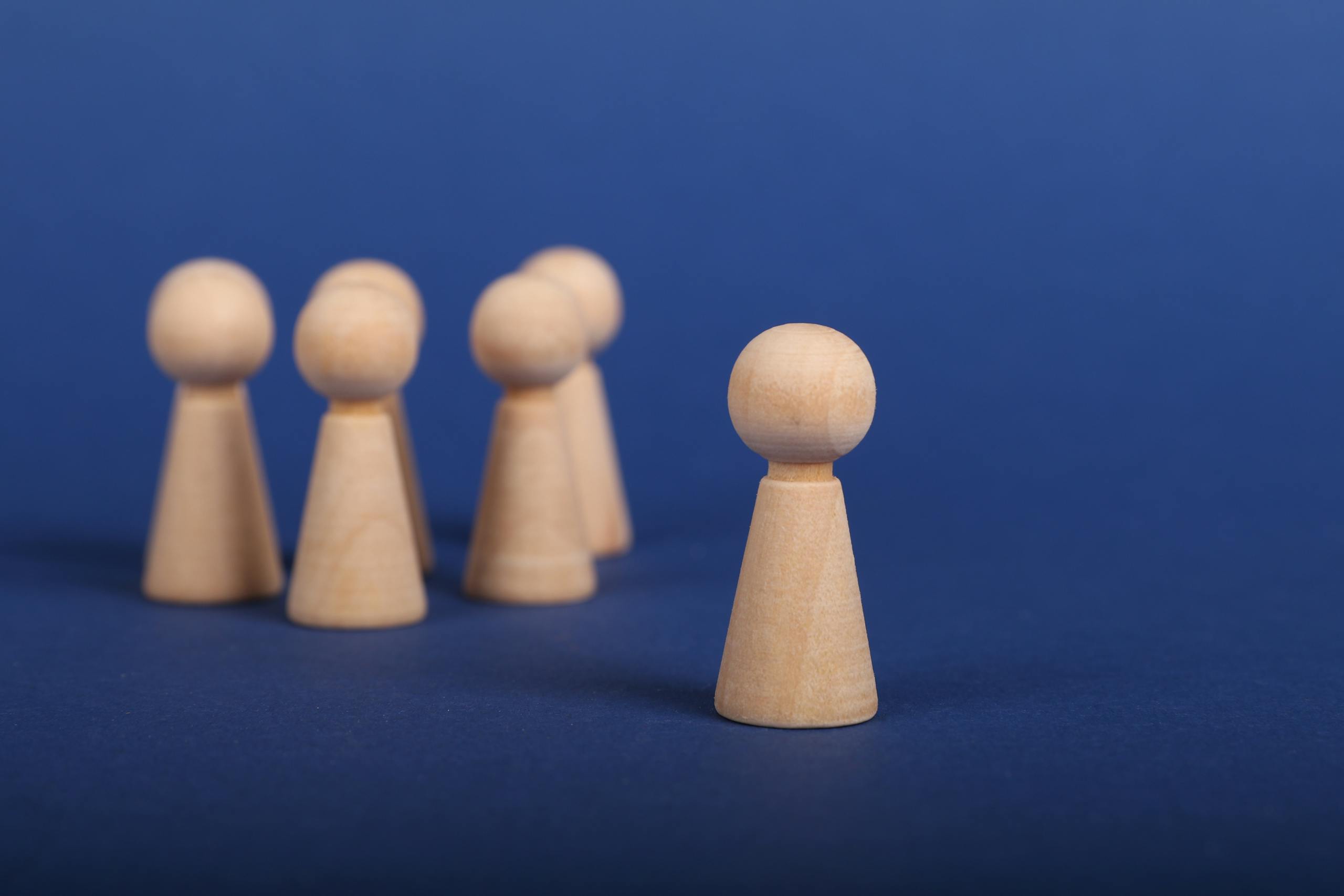

Shyness is one of the most misunderstood traits in the personality landscape, and that misunderstanding has real consequences for the people carrying it. At its core, shyness is a fear of negative social evaluation, a discomfort that arises specifically around other people and their judgments. It is not the same as introversion, not a character flaw, and not something that needs to be fixed before you can live a full life.
Most people experience shyness at some point. A new job, a first date, a room full of strangers, these situations trigger a version of social anxiety in almost everyone. What varies is how intense that feeling is, how long it lasts, and whether it holds you back from things you actually want to do.

Personality traits exist on spectrums, and shyness sits alongside introversion, extroversion, and social anxiety in ways that overlap but never perfectly align. If you’ve spent time sorting through where you actually land on those spectrums, our Introversion vs Other Traits hub is worth bookmarking. It covers the full range of personality distinctions that tend to get tangled together in everyday conversation.
Why Do So Many People Confuse Shyness With Introversion?
Honestly, I spent years confusing them myself. As an INTJ running advertising agencies, I preferred working alone, processing ideas quietly, and limiting social interaction to what felt purposeful. People around me assumed I was shy. I let them believe it because it was easier than explaining that I simply didn’t find small talk energizing. Those are two completely different things.
What’s your personality type?
Take our free 40-question assessment and get a detailed personality profile with dimension breakdowns, context analysis, and personalised insights.
Discover Your Type8-12 minutes · 40 questions · Free
Introversion is about energy. Introverts recharge through solitude and find extended social interaction draining, not because they fear people, but because their nervous systems process stimulation differently. Shyness, in contrast, is about fear. A shy person may desperately want to engage socially but feel held back by anxiety about how others will perceive them.
You can be an extrovert who is also shy. You can be an introvert who has zero shyness. You can be both introverted and shy, or neither. The traits don’t travel together by default, even though they look similar from the outside. Someone who declines a party invitation might be doing so because they need quiet time, or because they’re afraid of being judged, or both. The behavior looks identical. The internal experience is completely different.
Part of the confusion comes from how we describe personality in everyday language. When someone says “he’s shy,” they often mean “he doesn’t talk much,” which could describe an introvert, a shy person, someone with social anxiety, or simply a person who’s having a quiet day. Precision matters here, because the path forward looks different depending on what’s actually driving the behavior.
If you’re trying to figure out where you actually land, an introverted extrovert quiz can be a useful starting point. It helps separate the energy-based dimension of personality from the fear-based one, which is exactly the distinction that gets blurred when people conflate shyness with introversion.
What Does Shyness Actually Feel Like From the Inside?
I’ve managed teams of thirty or more people across multiple agency offices. I’ve presented to CMOs at Fortune 500 companies and negotiated contracts with clients who had more leverage than I did. And I can tell you that even as an INTJ with no particular fear of conflict or evaluation, there were moments when the social stakes felt high enough to produce something that looked a lot like shyness.
The first time I pitched a major automotive account, I felt a version of that constriction, the awareness that I was being assessed, that the room was forming opinions, that what I said in the next sixty seconds would shape how this relationship would unfold. That’s a mild, situational form of the experience that chronically shy people carry into most social interactions.
For people with significant shyness, the internal experience often includes physical symptoms: a racing heart, flushed skin, a dry mouth, a sudden inability to recall words that were available five minutes ago. There’s a cognitive layer too, a running commentary of self-evaluation happening in real time. “Did that come out wrong? Are they bored? Why did I say it that way?” That internal noise is exhausting in a way that introversion alone never is.

One of the members of a creative team I managed years ago was a copywriter who produced exceptional work but would go visibly pale before any group presentation. She’d rehearse her lines, do the presentation well enough, and then spend the next hour replaying every moment looking for what she’d done wrong. Her shyness wasn’t stopping her from doing the work. It was costing her enormous energy that her less shy colleagues didn’t have to spend.
That’s the real weight of shyness. Not that it prevents action entirely, but that it taxes every social interaction at a rate that makes the same activities significantly harder than they are for people without it.
Is Shyness a Personality Trait or a Learned Response?
Both, and the proportion varies by person. There’s meaningful evidence that some people come into the world with a nervous system that’s more reactive to social novelty and potential threat. Behavioral inhibition in infancy, the tendency to withdraw from unfamiliar people and situations, appears to be at least partly temperament-based. Some children are simply more cautious in social environments from very early on.
But temperament is not destiny. A child with a reactive nervous system who grows up in an environment that consistently validates their worth and gives them positive social experiences will develop very differently from a child with the same temperament who faces repeated social rejection, criticism, or humiliation. Experience shapes how shyness expresses itself and how deeply it becomes embedded in someone’s sense of self.
The relationship between biology and environment is explored in detail in research published through PubMed Central on behavioral inhibition and social anxiety, which points to how early temperamental patterns interact with life experience to produce the adult personality. What that means practically is that shyness is neither purely chosen nor purely fixed. It’s a trait that can be worked with.
This matters because people with shyness often carry a story that they’re broken or deficient in some fundamental way. That story is inaccurate. Shyness is a trait that sits at the intersection of temperament and experience, and both of those things can be understood and, over time, influenced.
It also matters for how we think about personality typing more broadly. If you’ve taken a personality assessment and landed somewhere unexpected, it might be worth exploring the full range of what those results mean. A comprehensive introvert extrovert ambivert omnivert test can give you a more nuanced picture of where your social tendencies actually come from, separating the energy dimension from the anxiety dimension.
Where Does Shyness End and Social Anxiety Begin?
This is a question worth sitting with carefully, because the answer has real implications for how someone approaches their own experience. Shyness and social anxiety exist on a continuum, and the line between them is one of degree and interference rather than kind.
Shyness, at its milder end, is a common human experience. Feeling nervous before a job interview, hesitating before speaking up in a group, feeling self-conscious at a party where you don’t know many people. These experiences are widespread and don’t typically prevent people from living the lives they want.
Social anxiety disorder is a clinical condition characterized by intense, persistent fear of social situations that is disproportionate to the actual threat and that significantly interferes with daily functioning. Someone with social anxiety disorder may avoid entire categories of activity, relationships, or career opportunities because the fear is too overwhelming to push through. The anxiety often persists even when they know, rationally, that their fear is excessive.

The useful question isn’t “am I shy or do I have social anxiety?” but rather “is this trait limiting my life in ways I don’t want it to?” If shyness costs you relationships you want, opportunities you’re qualified for, or experiences you’d value, that’s worth addressing, regardless of where it falls on a diagnostic spectrum. Additional PubMed Central research on social anxiety and its treatment approaches is helpful for anyone trying to understand the clinical end of this spectrum.
What I’ve noticed in my own experience, and in watching people on my teams over the years, is that the people most helped by understanding this distinction are the ones who’ve been carrying the weight of shyness while telling themselves it’s just “who they are” and therefore unchangeable. It’s not unchangeable. It’s a trait that responds to attention, practice, and sometimes professional support.
Can You Be Shy and Extroverted at the Same Time?
Yes, and this combination is more common than most people realize. An extroverted shy person is someone who genuinely craves social connection and feels energized by being around others, but who simultaneously fears judgment and evaluation in social settings. The desire and the fear coexist, which creates a particular kind of internal tension.
I’ve seen this play out in client relationships throughout my agency years. Some of the most socially hungry people I worked with, the ones who clearly wanted to be in the room, to be liked, to be part of the conversation, were also the most visibly anxious about how they were coming across. The extroversion pulled them toward people. The shyness made every interaction feel like a performance review.
Understanding what extroverted actually means at a deeper level helps clarify why this combination exists. Extroversion describes where you get your energy. It says nothing about your relationship with social evaluation or fear. Those are separate systems, and they can operate independently of each other.
On the other side of the spectrum, many introverts are not shy at all. They simply prefer less social stimulation. Give them a small, meaningful conversation with someone they trust and they’re completely comfortable. Put them in a large networking event and they’ll leave early, not because they’re afraid, but because the energy cost isn’t worth the return. That’s introversion without shyness, which looks very different from shyness without introversion.
The personality landscape gets even more layered when you factor in traits like being an omnivert or ambivert. Some people don’t fit neatly into introvert or extrovert categories at all, and their relationship with shyness can be equally variable. Understanding the difference between omniverts and ambiverts adds another dimension to how we think about social behavior and where shyness fits within it.
How Does Shyness Show Up Differently Across Life Stages?
Shyness is not static. It shifts across the lifespan in ways that are worth understanding, because the experience of being a shy child is meaningfully different from the experience of being a shy adult, and the resources available are different too.
In childhood, shyness often shows up as behavioral inhibition around unfamiliar people and situations. Shy children may cling to caregivers, take longer to warm up in new environments, and avoid social risks that their peers take more easily. This isn’t a failure of development. It’s a temperamental style that many children grow through with time and the right environment.
Adolescence tends to be the period when shyness feels most acute. The social environment becomes intensely evaluative, peer relationships become central to identity, and the stakes of social failure feel enormous. Many adults who describe themselves as shy trace the intensity of that experience back to their teenage years, when social judgment felt like it carried permanent consequences.
What’s interesting, and encouraging, is that many people report their shyness diminishing significantly in adulthood. Not disappearing, but becoming more manageable. Part of that is accumulated experience, the gradual recognition that social situations are survivable and that most people are far less focused on evaluating you than your anxious mind suggests. Part of it is the increased control adults have over their social environments. You can choose your social contexts in ways that children and teenagers simply can’t.
I was more guarded in my early career than I am now. Not because I was afraid of people, but because I hadn’t yet learned to trust my own judgment about which social risks were worth taking. That’s a version of the same calibration that shy people go through, learning over time which situations genuinely warrant caution and which ones the nervous system is simply overcalling.

What Helps Shy People Without Trying to Erase the Trait Entirely?
There’s a version of the conversation about shyness that treats it purely as a problem to be solved, a deficiency to be corrected until the shy person becomes indistinguishable from their more socially confident peers. That framing is both inaccurate and unhelpful.
Shyness, particularly at its milder levels, comes with some genuine advantages. Shy people tend to be careful observers. They listen more than they speak, which means they often understand social dynamics with greater depth than people who are quicker to fill silence. They tend to be thoughtful before acting, which reduces impulsive social errors. Many shy people develop a rich inner life precisely because they spend more time in their own heads, and that depth can translate into creativity, empathy, and insight.
What actually helps is not eliminating shyness but reducing the degree to which it interferes with what you want. That’s a different goal, and it’s more achievable. A few things that tend to make a genuine difference:
Gradual exposure matters more than forcing yourself into overwhelming situations. The nervous system learns safety through repeated low-stakes positive experiences, not through white-knuckling your way through situations that feel unbearable. Starting with smaller social contexts and building from there is more effective than throwing yourself into the deep end and hoping fear eventually gives way.
Shifting the focus from self-monitoring to genuine curiosity also helps significantly. Much of the exhaustion of shyness comes from the internal commentary running alongside every social interaction. When you redirect attention toward the other person, toward actual interest in what they’re saying and thinking, the self-conscious loop has less room to operate. This is something I’ve used in client meetings for years, not as a social strategy, but because genuine curiosity produces better conversations than performance does.
For shyness that has moved into clinical social anxiety territory, professional support is worth taking seriously. Cognitive behavioral approaches have a solid track record with social anxiety, and the Psychology Today resources on introvert-extrovert dynamics offer some useful frameworks for thinking about how personality and anxiety interact in social situations.
It’s also worth understanding that shyness doesn’t disqualify you from roles that seem to require social confidence. Introverted therapists, shy marketers, reserved leaders, these aren’t contradictions. They’re people who’ve found ways to work with their traits rather than against them. The Point Loma University resource on introverts in therapy roles makes this case clearly, and it applies to shyness as much as to introversion.
Does Being Shy Mean You’re More or Less Introverted?
Not necessarily either. Shyness and introversion are correlated in the general population, meaning they tend to appear together more often than chance would predict, but the correlation is far from perfect. Plenty of introverts have no shyness at all, and plenty of shy people are actually extroverted by temperament.
What creates the correlation is probably a combination of factors. People who are more sensitive to social stimulation may find both the energy drain of extended interaction and the evaluative pressure of social situations more intense. The same underlying sensitivity that makes someone introverted may also make them more attuned to potential social threat, which can tip toward shyness.
But that’s a tendency, not a rule. And it’s worth being clear-eyed about which trait is actually operating in any given situation, because the response that helps with introversion (more solitude, more selective social engagement) is different from what helps with shyness (gradual exposure, cognitive reframing, building evidence that social situations are survivable).
There’s also the question of where you fall on the introversion spectrum itself. Someone who is fairly introverted will have a different relationship with social situations than someone who is extremely introverted, and understanding the difference between fairly introverted and extremely introverted can help clarify how much of your social discomfort is about energy and how much might be about anxiety.
The personality landscape also includes people who don’t fit cleanly into any single category. If you’ve ever wondered whether you might be an otrovert rather than a standard ambivert, exploring the distinctions between otrovert and ambivert traits might give you a more accurate picture of your social patterns. Sometimes the categories we’ve been given just don’t fit, and finding a better framework makes the whole picture clearer.

What Shy People Actually Need to Hear
After more than two decades in environments that rewarded extroverted performance, I’ve watched a lot of people carry unnecessary shame about traits that were never the problem they thought they were. Shyness is one of those traits.
The message most shy people have absorbed, from school, from workplaces, from a culture that treats social confidence as the baseline for competence, is that their shyness is a deficit. That they need to “come out of their shell,” “put themselves out there,” or “stop being so quiet.” That framing misses the point entirely.
Shyness is a normal variation in human temperament. It becomes a problem only when it prevents someone from living the life they want to live. And even then, success doesn’t mean become a different person. It’s to build enough comfort with social situations that the fear stops making decisions for you.
One of the most useful things I’ve read on this topic touches on the value of depth in conversation, which shy people often bring naturally. The Psychology Today piece on why deeper conversations matter resonates with me because it validates something shy people often do well. They tend toward meaningful exchange rather than surface-level performance, and that’s not a limitation. It’s a strength that gets overlooked when we treat social confidence as the only valid way to connect.
There’s also practical reassurance in knowing that shyness doesn’t close professional doors the way people fear it does. Rasmussen’s resource on marketing for introverts is a good example of how quiet, careful, observant personalities can bring genuine value to fields that appear to demand extroverted energy. The same logic applies to shy people across professions.
And for anyone who wants to understand the neurological underpinning of why some people are more socially reactive than others, Frontiers in Psychology’s 2024 research on personality and social processing offers a rigorous look at how individual differences in brain function shape social experience. Knowing there’s a biological basis for shyness doesn’t eliminate it, but it does make it easier to stop treating it as a personal failing.
What I’d want any shy person to take from this is simple: you are not broken, you are not behind, and you are not obligated to perform social confidence you don’t feel. What you are is someone with a particular relationship to social evaluation, one that can be understood, worked with, and in many cases, quietly turned into an asset.
For more on how shyness, introversion, and extroversion relate to each other across the full personality spectrum, the Introversion vs Other Traits hub pulls together the complete picture in one place.
About the Author
Keith Lacy is an introvert who’s learned to embrace his true self later in life. After 20 years in advertising and marketing leadership, including running agencies and managing Fortune 500 accounts, Keith now channels his experience into helping fellow introverts understand their strengths and build fulfilling careers. As an INTJ, he brings analytical depth and authentic perspective to every article, drawing from both professional expertise and personal growth.
Frequently Asked Questions
Is shyness the same thing as introversion?
No. Introversion is about energy, specifically where you recharge and how much social stimulation feels comfortable. Shyness is about fear, specifically the anxiety around being evaluated or judged by others. You can be introverted without being shy, extroverted and shy at the same time, or any combination of the two. The traits are related but they operate independently.
Is shyness a normal trait or a sign of a problem?
Shyness is a normal and common human trait. Most people experience some degree of social nervousness in unfamiliar or high-stakes situations. It only becomes a concern when it consistently prevents someone from doing things they genuinely want to do, like forming relationships, pursuing career opportunities, or participating in experiences they value. At that point, it may have moved into social anxiety territory, which responds well to professional support.
Can shy people become less shy over time?
Yes. Many people report that shyness diminishes meaningfully across adulthood, often through accumulated positive social experiences, greater control over their social environments, and a gradual shift in how they interpret social situations. Shyness is not a fixed trait. It responds to experience, practice, and in more significant cases, therapeutic approaches like cognitive behavioral therapy. success doesn’t mean eliminate shyness entirely but to reduce the degree to which it interferes with what you want.
What’s the difference between shyness and social anxiety disorder?
Shyness and social anxiety disorder exist on a continuum. Shyness at its milder end is a common, manageable experience of social nervousness. Social anxiety disorder is a clinical condition where the fear of social situations is intense, persistent, and significantly interferes with daily life, often leading people to avoid entire categories of activity or relationship. The distinction matters because social anxiety disorder responds to specific clinical treatments that go beyond what general self-help strategies can address.
Does shyness hold people back professionally?
It can, but it doesn’t have to. Shy people often bring genuine strengths to professional settings, including careful observation, thoughtful listening, and a preference for meaningful exchange over surface-level performance. The challenge is when shyness prevents someone from advocating for themselves, speaking up in meetings, or pursuing opportunities they’re qualified for. Building awareness of where shyness is costing you something you actually want is the starting point for addressing it in a professional context.