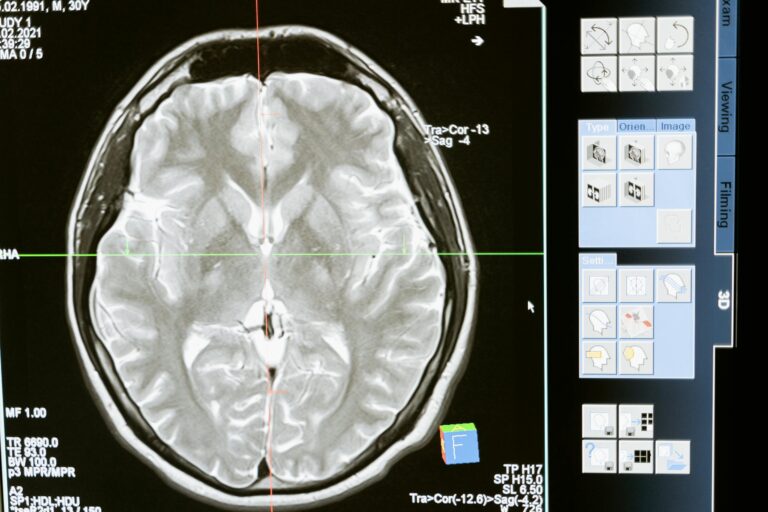

Shyness in adults is a persistent pattern of anxiety, self-consciousness, and behavioral inhibition in social situations, often rooted in early experiences, temperament, or learned fear responses. Unlike introversion, which reflects a preference for quieter environments, shyness involves genuine distress around social interaction, and it can quietly shape careers, relationships, and self-perception for decades. Understanding where it comes from, and what it costs, is the first step toward living on your own terms.
Most people assume shyness fades with age. You grow up, gain confidence, and eventually stop dreading the phone call or the crowded room. That’s not always how it works. For a lot of adults, shyness doesn’t disappear. It just gets better at hiding.
I know this because I spent a long time confusing my own shyness with introversion, treating them as interchangeable when they’re actually quite different animals. My introversion is about energy and preference. My shyness, when it showed up, was about fear. And in the advertising world, where client dinners and pitch rooms and industry events were the currency of success, that fear had real consequences.
Before we get into the roots and costs of adult shyness, it’s worth placing this conversation in a broader context. Shyness is just one trait that gets tangled up with introversion, and the full picture of how personality types relate to one another is worth exploring. Our Introversion vs Other Traits hub covers the full spectrum, from what extroversion actually means to how ambiverts and omniverts fit into the picture. Shyness is a thread in that larger tapestry.
What Actually Causes Shyness in Adults?
The origins of adult shyness are rarely simple. They tend to be layered, built over years from a combination of temperament, environment, and experience. Most adults who struggle with shyness didn’t choose it. It was shaped into them.
What’s your personality type?
Take our free 40-question assessment and get a detailed personality profile with dimension breakdowns, context analysis, and personalised insights.
Discover Your Type8-12 minutes · 40 questions · Free
Temperament plays a significant role. Some people are born with a nervous system that responds more intensely to novelty and uncertainty. Jerome Kagan’s decades of research on behavioral inhibition in children pointed to a biological predisposition in some individuals toward wariness in unfamiliar situations. That early-life pattern doesn’t automatically become adult shyness, but it creates fertile ground for it, especially when the environment reinforces the fear rather than gradually building confidence.
Early social experiences matter enormously. A child who is repeatedly embarrassed, criticized, or rejected in social settings learns that social situations are dangerous. The brain is good at pattern recognition, and if the pattern it learns is “people are unpredictable and interaction leads to pain,” it will carry that lesson forward. Adults who grew up in environments where they were frequently judged, mocked, or compared unfavorably to siblings or peers often carry a residual social wariness that looks and feels like shyness.
Parenting style also contributes. Overprotective parenting, where a child is shielded from social challenges rather than supported through them, can prevent the development of social confidence. So can harsh, critical parenting that makes a child feel perpetually evaluated. Neither extreme gives a child the secure base they need to take social risks and recover from the inevitable stumbles.
Trauma and social failure can trigger shyness even in adults who were previously confident. A painful public humiliation, a workplace incident that went badly wrong, or a period of social isolation can reset someone’s baseline anxiety around social interaction. I’ve seen this happen with people in my agencies. A talented account manager who was perfectly comfortable presenting to clients would sometimes go through a rough patch, maybe a campaign that failed publicly, a client who dressed them down in front of the team, and come out the other side noticeably more hesitant. Shyness isn’t always something you’re born with. Sometimes it’s something that happens to you.
Cultural factors add another layer. Growing up in an environment that prizes social performance, where being likable, outgoing, and verbally quick is the measure of worth, can make quieter, more internally oriented people feel fundamentally inadequate. If you’d like to understand what that cultural pressure actually looks like from the other side, what extroversion actually means as a personality trait is worth reading. The gap between what extroversion is and what culture demands of everyone is wider than most people realize.
Is Shyness the Same as Introversion?
No, and this distinction matters more than people give it credit for.
Introversion is about where you get your energy. Introverts recharge in solitude and find sustained social interaction draining, not because they fear it, but because that’s how their nervous system works. An introvert can walk into a room full of people, feel perfectly comfortable, hold meaningful conversations, and then need time alone afterward to recover. The discomfort comes after, from depletion, not from anxiety.
Shyness is about fear. A shy person wants social connection, often genuinely craves it, but feels anxious, self-conscious, or inhibited when attempting it. The distress comes before and during interaction, not after. It’s anticipatory dread, not post-event depletion.
You can be shy and extroverted. You can be introverted and completely unshy. You can be both shy and introverted, which is probably the combination most people picture when they think of a “shy person.” And you can be neither.
As an INTJ, I’m deeply introverted. I prefer depth to breadth in conversation, I need significant alone time to function well, and I find small talk genuinely exhausting. But I’m not particularly shy. I can walk into a pitch meeting with a Fortune 500 client and feel calm, focused, prepared. What drains me is the two hours of post-meeting socializing that some clients expected. That’s introversion, not shyness.
The confusion between these two traits is worth unpacking because treating them as the same leads to the wrong solutions. Telling a shy person to “just recharge alone more” misses the point entirely. And telling an introvert that they need to “push through their fear” pathologizes something that isn’t a fear at all.
If you’re not sure where you fall on the introversion spectrum, the introvert extrovert ambivert omnivert test can help clarify your baseline. Knowing your actual type makes it much easier to figure out what you’re working with.

How Does Shyness Show Up Differently Across the Personality Spectrum?
One thing that surprised me when I started paying closer attention to personality dynamics in my agencies was how differently shyness manifested depending on someone’s broader personality type.
A shy introvert often becomes almost invisible. They avoid situations where they might be called on, speak very little in group settings, and their competence can go unrecognized simply because they never put themselves forward. I managed a strategist early in my career who was genuinely one of the sharpest minds I’d ever encountered. Her analysis was extraordinary. But she was both introverted and shy, and in agency culture, where the loudest voice often got the credit, she was consistently overlooked. It took deliberate effort on my part as her manager to create conditions where her thinking could surface without requiring her to perform extroversion.
A shy extrovert presents differently. They have the social drive and the desire for connection, but they’re held back by anxiety. This combination can look like someone who seems gregarious in safe, familiar settings but freezes or becomes awkward in new social environments. They might talk too much when nervous, fill silences compulsively, or come across as self-absorbed when they’re actually just managing anxiety.
Then there are people who fall somewhere in the middle of the introvert-extrovert spectrum. Ambiverts and omniverts experience shyness differently than people at either end. An ambivert might find that their shyness is highly context-dependent, strong in professional settings but absent in personal ones, or vice versa. An omnivert, whose social energy fluctuates more dramatically, might experience shyness in waves that correlate with their current energy state. The distinction between these middle-spectrum types is explored in detail in this piece on omnivert vs ambivert differences, and it’s a genuinely useful read if you’ve ever felt like you don’t fit neatly into the introvert or extrovert category.
What this variation tells us is that shyness isn’t a monolithic experience. It takes different shapes in different people, and understanding the specific form it takes in your own life is more useful than applying a one-size-fits-all framework.
What Are the Real Consequences of Untreated Shyness in Adulthood?
This is where I want to be honest, because the costs of chronic shyness are often minimized or dismissed. People treat it as a quirk, a personality flavor, something to smile about. But when shyness persists into adulthood without being addressed, it carries genuine weight.
Career consequences are real and measurable. Shy adults are less likely to advocate for themselves in salary negotiations, less likely to speak up in meetings where ideas are evaluated, and less likely to pursue visible opportunities that require self-promotion. Harvard’s Program on Negotiation has examined how personality traits affect negotiation outcomes, and the pattern is consistent: people who struggle with social anxiety tend to leave value on the table, not because they lack skill, but because the anxiety of the interaction overrides their strategic thinking.
In advertising, where relationships are the business, I watched this play out repeatedly. Shy account managers lost clients not because their work was inferior but because clients interpreted their reticence as disinterest. Shy creatives had their ideas dismissed in brainstorms because they waited too long to speak, and by the time they found the courage to share their concept, the room had moved on. The work suffered, and so did the people doing it.
Relationship consequences are equally significant. Shyness can create a persistent loneliness even for people surrounded by others. When you consistently hold back, don’t initiate, or retreat from the vulnerability of real connection, you end up with a lot of surface-level relationships and very few deep ones. Psychology Today has written thoughtfully about why depth in conversation matters so much for wellbeing, and the argument resonates: shallow connection doesn’t actually satisfy the human need for belonging. Shy adults often have that need acutely but struggle to meet it precisely because the behaviors required feel too risky.
There’s also a cumulative psychological cost. Chronic shyness tends to reinforce negative self-perception. Every avoided situation feels like evidence of inadequacy. Every interaction that goes awkwardly confirms the internal narrative that something is wrong with you. Over time, this can develop into something more serious. Research published in PubMed Central has examined the relationship between social inhibition and broader anxiety and mood outcomes, finding meaningful connections between persistent social avoidance and diminished wellbeing over time. Shyness left unaddressed doesn’t tend to stay static. It often deepens.

When Does Shyness Cross Into Social Anxiety Disorder?
This question comes up often, and it’s worth addressing directly because the line matters both practically and clinically.
Shyness exists on a spectrum. At the mild end, it’s a temperamental tendency toward caution in social situations that causes some discomfort but doesn’t significantly impair functioning. At the severe end, it shades into social anxiety disorder, a clinical condition characterized by intense, persistent fear of social situations, anticipatory anxiety that can start days before an event, and avoidance behaviors that meaningfully restrict a person’s life.
The key distinction is impairment. Shyness becomes a clinical concern when it consistently prevents someone from doing things they genuinely want or need to do. If you feel nervous at parties but still go and generally enjoy yourself once you’re there, that’s shyness. If the fear of the party causes days of dread, physical symptoms, and you cancel more often than you attend, that’s moving toward social anxiety disorder territory.
Social anxiety disorder is one of the more common anxiety conditions in adults, and it’s significantly underdiagnosed because many people attribute their symptoms to “just being shy” and never seek support. Additional PubMed Central research on social anxiety in adults highlights how frequently the condition goes unrecognized and untreated, often for years or decades, because the person has normalized their avoidance patterns.
If your shyness is causing consistent distress or preventing you from living the life you want, that’s worth talking to a professional about. Cognitive behavioral therapy has a strong track record with social anxiety, and there’s no virtue in suffering through something that’s treatable.
It’s also worth noting that personality type doesn’t determine whether someone develops social anxiety. Introverts are not inherently more prone to social anxiety than extroverts. The overlap exists, but they’re distinct phenomena. If you’re curious about whether your personality leans more introverted or extroverted as a baseline, the introverted extrovert quiz can help you get a clearer read on where you actually sit.
How Does Shyness Interact With Where You Fall on the Introvert-Extrovert Spectrum?
One of the more interesting questions I’ve sat with over the years is how shyness feels different depending on your baseline personality orientation. And I think the answer matters for how you approach it.
For someone who is fairly introverted, shyness can be almost invisible to others because the behaviors look similar from the outside. An introverted person who prefers small groups and quiet environments doesn’t look obviously different from a shy person who avoids large groups out of anxiety. Both might decline the party invitation. Both might sit quietly in a meeting. The internal experience is completely different, but the external behavior can be nearly identical.
This overlap creates a particular challenge: shy introverts often don’t get the support they need because everyone, including themselves, assumes their avoidance is just preference. “Oh, she’s just introverted” becomes a way of explaining away what might actually be anxiety that deserves attention. The piece on fairly introverted vs extremely introverted is worth reading in this context because it helps clarify what introversion actually looks like at different intensities, which makes it easier to spot when something beyond introversion might be at play.
For shy extroverts, the experience is often more visibly distressing because there’s a real mismatch between what they want and what they’re able to do. They have the drive for social connection but the anxiety gets in the way, and that gap can feel genuinely painful. They might overcompensate in familiar settings, becoming the loudest person in the room with people they trust, while freezing completely with strangers.
People who fall between the poles, the otroverts and ambiverts of the personality world, experience shyness in more situational ways. Their social confidence fluctuates based on context, energy, and familiarity, which can make shyness feel inconsistent and confusing. The nuances of how these middle-spectrum types experience social situations are worth exploring, and the comparison of otrovert vs ambivert traits offers some useful clarity on how these types differ in their social orientation.

What Does Shyness Cost You That You Might Not Have Named Yet?
Beyond the obvious costs, there are quieter ones that rarely get named. These are the things shyness takes from you so gradually that you stop noticing the absence.
Spontaneity. Shy adults often develop elaborate mental scripts before any social interaction. They rehearse conversations, anticipate questions, prepare responses. This reduces anxiety in the moment, but it also means they’re rarely fully present. They’re running the script rather than actually connecting. Spontaneous, unplanned connection, the kind that produces the best conversations and the most meaningful relationships, becomes difficult to access.
Visibility. In professional settings, visibility is often the difference between being recognized for your contributions and being overlooked. Shy adults frequently do excellent work that goes unattributed because they don’t claim it. They don’t speak up in the meeting where the idea gets credited. They don’t follow up with the stakeholder who could champion their project. They do the work and then wait for someone to notice, and often, no one does. I watched this happen with some of the most talented people who ever worked in my agencies. Their shyness wasn’t a character flaw. It was a real professional liability.
Authenticity. There’s a particular kind of exhaustion that comes from managing your presentation constantly, from monitoring how you’re coming across, editing yourself before you speak, and calculating the social risk of every contribution. Shy adults often spend so much energy on this management that they never fully show up as themselves. The relationships they build are real, but they’re built on a carefully managed version of themselves rather than the full picture. Over time, that gap between the managed self and the actual self becomes its own source of loneliness.
Conflict resolution. Shy adults frequently avoid necessary conflict because the discomfort of confrontation feels too high. They let resentments accumulate, don’t address problems directly, and often find that relationships deteriorate slowly from the weight of unspoken things. Psychology Today’s framework for introvert-extrovert conflict resolution is worth reading here, not because it’s specific to shyness, but because the underlying challenge of engaging with interpersonal friction is one that shy adults face acutely.
Opportunity. Some of the most significant professional and personal opportunities in life come through social connection. They come from the conversation at the end of the conference, the follow-up email you send after meeting someone interesting, the willingness to introduce yourself to someone whose work you admire. Shy adults systematically miss these openings, not because they don’t see them, but because the anxiety of reaching out feels greater than the potential reward. Over a career, that adds up.
Can Adult Shyness Actually Change?
Yes, meaningfully. Not necessarily completely, and not overnight, but the evidence that shyness can shift in adulthood is solid. The brain retains plasticity throughout life, and the patterns that produce shy behavior are patterns, not permanent fixtures.
Gradual exposure is one of the most well-supported approaches. The principle is straightforward: carefully structured, repeated exposure to feared social situations, starting with lower-stakes ones and building incrementally, reduces the anxiety response over time. The brain learns, through experience, that the feared outcome doesn’t materialize, and the alarm system slowly recalibrates. This isn’t about forcing yourself into overwhelming situations. It’s about consistent, manageable stretching.
Cognitive work matters too. Much of what sustains shyness is a particular set of beliefs about social situations, beliefs that others are highly critical, that mistakes are catastrophic, that you are more visible and more scrutinized than you actually are. Examining these beliefs, testing them against reality, and gradually replacing them with more accurate ones changes the experience of social situations from the inside out. Frontiers in Psychology has published recent work on cognitive approaches to social anxiety that’s worth reading if you want to understand the mechanisms behind this kind of change.
Professional support accelerates the process considerably. Therapists who specialize in anxiety, particularly those trained in cognitive behavioral approaches, can provide structured guidance that makes the work more efficient and less painful than going it alone. Point Loma Nazarene University’s counseling psychology resources offer some useful context on how personality and anxiety intersect in therapeutic settings.
What doesn’t work, at least not on its own, is sheer willpower. Deciding to “just be more confident” or “push through it” without addressing the underlying anxiety tends to produce short-term compliance and long-term exhaustion. You can white-knuckle your way through a networking event, but if you haven’t changed anything about how your nervous system responds to that environment, you’ll dread the next one just as much.
I’ve seen shy people in my professional world make real, lasting changes when they approached it with patience and the right support. One of my former account directors was genuinely shy when she joined my agency, visibly uncomfortable in client meetings, prone to going quiet at exactly the wrong moments. Over a couple of years, through a combination of deliberate practice, good mentorship, and, I later learned, some work with a therapist, she became one of the most confident client-facing people on my team. She didn’t become an extrovert. She became a confident version of herself. That distinction matters.

What Shyness Isn’t Telling You About Yourself
One of the most damaging things about chronic shyness is the story it tells. Not the shyness itself, but the meaning people attach to it.
Shyness often gets interpreted as evidence of fundamental inadequacy. As proof that you’re less interesting, less capable, less worthy than the people around you who seem to move through social situations with ease. That interpretation is wrong, and it does real harm.
Shyness is a learned pattern. In many cases, it’s a learned pattern that made complete sense given the environment in which it developed. A child who learned to be cautious in social situations because those situations were genuinely unpredictable or painful was being adaptive, not defective. An adult who developed social anxiety after a humiliating professional experience was responding appropriately to real harm. The pattern may no longer serve you, but it wasn’t evidence of weakness when it formed, and it isn’t evidence of weakness now.
Shyness also doesn’t say anything about your intelligence, your creativity, your capacity for connection, or your potential for leadership. Some of the most compelling people I’ve worked with over twenty years were shy. Their shyness made them careful listeners, thoughtful observers, and deeply empathetic collaborators. The same sensitivity that made social situations uncomfortable also made them extraordinarily good at their work.
What shyness does tell you is that your nervous system learned to treat certain social situations as threatening. That’s useful information. It tells you where the work is. It doesn’t tell you who you are.
If you’ve been treating your shyness as a character flaw rather than a pattern to work with, that reframe alone can change how you approach it. You’re not broken. You’re working with a nervous system that learned some lessons it no longer needs.
For anyone who wants to keep exploring how shyness fits into the broader picture of personality and social orientation, the full range of comparisons and frameworks lives in our Introversion vs Other Traits hub. It’s a good place to build a more complete picture of where you sit and what that means for how you engage with the world.
About the Author
Keith Lacy is an introvert who’s learned to embrace his true self later in life. After 20 years in advertising and marketing leadership, including running agencies and managing Fortune 500 accounts, Keith now channels his experience into helping fellow introverts understand their strengths and build fulfilling careers. As an INTJ, he brings analytical depth and authentic perspective to every article, drawing from both professional expertise and personal growth.
Frequently Asked Questions
Is shyness in adults a personality trait or a mental health condition?
Shyness itself is a personality trait, not a clinical diagnosis. It exists on a spectrum from mild social caution to significant social inhibition. When shyness becomes severe enough to consistently impair daily functioning, relationships, or career, it may overlap with social anxiety disorder, which is a recognized clinical condition. The difference lies in the degree of distress and impairment, not in the nature of the experience itself.
Can you be introverted and shy at the same time?
Yes, absolutely. Introversion and shyness are separate dimensions, but they can and do co-occur. An introverted shy person prefers solitude for energy reasons and also experiences anxiety in social situations. This combination can make social avoidance feel doubly reinforced, both by preference and by fear. Recognizing which is driving behavior in any given situation is important because the approaches for addressing them are quite different.
What are the most common causes of shyness developing in adulthood rather than childhood?
Adult-onset shyness most commonly develops after a significant social failure or humiliation, a period of prolonged social isolation, or a major life transition that removes someone from familiar social environments. Starting a new job, moving to a new city, ending a long-term relationship, or experiencing a public professional setback can all trigger shyness in adults who were previously confident. The nervous system responds to these experiences as social threat and generalizes that wariness to future situations.
How does shyness affect career advancement specifically?
Shyness affects career advancement primarily through reduced visibility and self-advocacy. Shy adults are less likely to speak up in meetings where ideas get credited, less likely to negotiate assertively for raises or promotions, less likely to build the professional relationships that create opportunity, and more likely to let their work go unrecognized because claiming credit feels socially risky. These patterns compound over time, creating meaningful gaps between contribution and recognition.
Does shyness get better on its own as people age?
For some people, shyness does ease naturally with age as accumulated social experience builds confidence and reduces novelty-driven anxiety. Many adults report feeling less shy in their thirties and forties than they did in their twenties. That said, shyness doesn’t automatically resolve with time, particularly when it’s rooted in deeper anxiety patterns or negative self-perception. Without some deliberate work, whether through gradual exposure, cognitive reframing, or professional support, shyness can persist or even deepen as avoidance patterns become more entrenched.