

Shyness and faith share something most people never talk about: both ask you to be vulnerable in a world that rewards confidence. Shyness is a fear response to social evaluation, a real and often painful experience of anxiety around how others perceive you. Faith, in many traditions, calls people to show up anyway, to speak, to gather, to witness. For those of us who feel both deeply, the tension can feel like a contradiction. It isn’t.
Shyness can be part of a faithful life, not as a flaw to overcome, but as a particular kind of tenderness that shapes how a person encounters the sacred and the communal. Many people who struggle with shyness find that their inner life is extraordinarily rich, and that richness often feeds a depth of spiritual experience that louder personalities rarely access.

Before we go further, it helps to understand where shyness fits among the broader landscape of personality traits. My Introversion vs Other Traits hub examines how introversion, shyness, sensitivity, and social anxiety each operate differently, and why collapsing them into one category does a disservice to everyone trying to understand themselves. Shyness and introversion are not the same thing, and faith communities often conflate them in ways that create unnecessary shame.
What Is Shyness, Really?
Shyness is not introversion, though they often travel together. Introversion is about energy: where you recharge, how you process information, what drains you. Shyness is about fear: specifically, the fear of negative social evaluation. A shy person might desperately want connection but feel paralyzed by the worry that they’ll say something wrong, be judged, or embarrass themselves.
What’s your personality type?
Take our free 40-question assessment and get a detailed personality profile with dimension breakdowns, context analysis, and personalised insights.
Discover Your Type8-12 minutes · 40 questions · Free
I’ve watched this play out in my own life in ways I didn’t fully understand until much later. Running advertising agencies for over two decades, I spent years in rooms full of people, pitching campaigns to Fortune 500 clients, leading teams, facilitating brainstorms. From the outside, I looked completely at ease. On the inside, I was running constant calculations about how I was being perceived. That’s not introversion. That’s shyness layered on top of introversion, and the combination is exhausting in a way that’s hard to explain to someone who hasn’t felt it.
Shyness exists on a spectrum. Some people experience mild social hesitation that fades once they’re comfortable. Others carry a persistent, almost physical dread of being seen. If you’ve ever wondered where you fall on that spectrum, tools like this introvert extrovert ambivert omnivert test can help you get a clearer picture of your baseline social orientation, which is a useful starting point for understanding how shyness intersects with your broader personality.
What shyness is not, and this matters enormously in a faith context, is a moral failing. It is not pride in reverse. It is not selfishness. It is not a lack of love for others. Those characterizations show up in religious communities more often than they should, and they cause real harm to people who are already struggling.
Why Do Faith Communities Struggle With Quiet People?
Most religious communities are built around communal expression. Singing together. Testifying. Greeting strangers with warmth. Small group discussions. Volunteering at events that require sustained social interaction. These are beautiful practices, genuinely. But they’re also practices that assume a particular kind of social ease that not everyone possesses.
A shy person in a faith community often receives one of two responses: either they’re pushed to “come out of their shell” as if their shell were the problem, or they’re left alone and quietly assumed to be unengaged. Neither response honors what’s actually happening inside them.
I’ve seen this dynamic play out beyond religious settings too. In the advertising world, I managed creative teams where the quieter members were consistently underestimated in group settings. One copywriter I worked with, an extraordinarily gifted thinker, would sit through brainstorms saying almost nothing. Clients sometimes questioned whether she was contributing. What they didn’t see was that her written work was always the most theologically precise, the most emotionally resonant, the most carefully considered of anyone on the team. She was processing. She was present. She was just doing it quietly.
Faith communities make the same mistake. They measure engagement by visibility, and visibility by volume. The person raising their hands and calling out amens gets seen as spiritually alive. The person in the back row, eyes closed, genuinely moved but physically still, gets overlooked or, worse, approached afterward with concern about whether they’re “doing okay.”

Part of understanding why this happens requires understanding what extroversion actually looks like and how deeply it’s been encoded as the default. What does extroverted mean, exactly? At its core, extroversion is a genuine orientation toward the external world: energy drawn from social interaction, processing done out loud, comfort with spontaneity and stimulation. Faith communities, particularly in American evangelical and charismatic traditions, have often built their entire culture around extroverted expression. That’s not inherently wrong. It becomes a problem when it’s treated as the only valid form of spiritual engagement.
Is Shyness Incompatible With a Calling?
One of the most painful questions a shy person of faith can carry is whether their quietness disqualifies them from meaningful service or calling. If faith asks you to speak, to witness, to gather, and speaking terrifies you, where does that leave you?
It leaves you in very good company, historically speaking. Moses told God he wasn’t a good speaker. Jeremiah protested that he was too young and didn’t know how to speak. Elijah, after one of the most dramatic public moments in the Hebrew scriptures, retreated to a cave and asked to die. The pattern of the reluctant, quiet, even fearful servant appears throughout religious literature not as an exception but as something closer to a recurring theme.
What these stories have in common is that the calling doesn’t go away because the person is shy. It gets rerouted. It finds expression through the particular gifts that quieter people tend to carry: attentiveness, depth of preparation, the ability to sit with someone in silence, the capacity to notice what others miss.
Shyness and introversion often travel together, but they’re not identical, and the distinction matters here. Someone might be fairly introverted vs extremely introverted and experience shyness very differently depending on where they fall on that spectrum. A mildly introverted person with significant shyness might find public service genuinely difficult but manageable with preparation. A deeply introverted person with the same level of shyness might find it almost unbearable. Both are valid. Both can find meaningful ways to live out a calling.
The error is in assuming that calling always looks like the most visible expression of it. A shy person who writes letters of encouragement to people in crisis is doing something profound. A shy person who shows up consistently, week after week, to do the quiet work that no one photographs or applauds, is expressing faithfulness in a form that the community genuinely needs, even if it rarely celebrates it.
How Does Shyness Shape Spiritual Experience?
There’s something worth naming here that doesn’t get said enough: shyness, for all its difficulty, can create conditions for a particular kind of spiritual depth.
When you’re not performing for others, when social anxiety has made you acutely aware of the gap between your inner life and your outer presentation, you develop a heightened sensitivity to authenticity. Shy people often have finely tuned radar for what’s real and what’s performed in a room. That’s not a small thing in a spiritual context. It’s actually a form of discernment.
I’ve thought about this in relation to my own INTJ wiring. As an INTJ, I’ve always processed meaning internally before I can articulate it externally. My spiritual life has always been primarily interior: more journal than sermon, more contemplation than celebration. That’s not a lesser form of faith. It’s a different form, and one that certain traditions have honored explicitly. Monastic spirituality, contemplative prayer, the Quaker tradition of silent worship, these aren’t fringe practices. They’re ancient and they’re serious, and they were built for people whose relationship with the sacred is fundamentally interior.
Shyness often intensifies that interiority. When the external world feels threatening, the inner world becomes more vivid. A shy person of faith may develop an extraordinarily rich prayer life not in spite of their shyness but because of it. The inner conversation becomes more elaborate, more honest, more sustained, because it’s the one conversation that doesn’t carry the risk of judgment.

Psychology has documented that people with richer inner lives tend to seek deeper, more meaningful conversations rather than surface-level social exchange. Psychology Today notes that this preference for depth over breadth in conversation is a genuine personality orientation, not a social deficit. In a faith context, that preference is often exactly what the community needs, even if it doesn’t always know how to receive it.
Can Shy People Lead in Faith Communities?
Short answer: yes. Longer answer: it depends enormously on how leadership is defined.
In my agency years, I learned that leadership doesn’t require extroversion. It requires clarity of vision, the ability to build trust, and the willingness to make decisions under uncertainty. Some of the most effective leaders I observed were people who spoke infrequently but precisely, who created space for others rather than filling it themselves, who led through consistency and depth rather than charisma and volume.
Shy leaders in faith communities often excel at pastoral care, at one-on-one conversations, at the kind of listening that makes people feel genuinely heard. They tend to be thorough preparers, which means their teaching or preaching, when they do it, carries substance. They’re less likely to shoot from the hip in ways that create theological messes to clean up later.
The challenge is that many faith communities have a very specific image of what a leader looks like, and it’s almost always extroverted. Confident. Gregarious. Comfortable in front of crowds. Able to work a room. When shy people are placed in leadership roles, they sometimes try to perform that extroverted style rather than leading from their actual strengths. The results are usually mixed, because performing a personality type you don’t have is exhausting and in the end unconvincing.
The personality spectrum is more varied than most people realize. Someone who seems outgoing in certain contexts might actually be what’s called an omnivert, someone who shifts between social orientations depending on environment. Understanding the difference between omnivert vs ambivert can help faith communities recognize that social flexibility doesn’t always mean someone is extroverted at their core, and that the person who seems comfortable leading a meeting might still need significant recovery time afterward.
Shy leaders who thrive are usually those who’ve found communities or roles that allow them to lead in ways that align with how they’re actually wired. That might mean leading through writing rather than speaking. Through mentorship rather than mass communication. Through the kind of steady, faithful presence that doesn’t announce itself but becomes indispensable over time.
What Happens When Shyness Gets Misread as Spiritual Coldness?
This is where things get genuinely painful, and it’s worth sitting with for a moment.
Shy people in faith communities are frequently misread. Their quiet presence gets interpreted as disengagement. Their reluctance to speak in group settings gets read as having nothing to contribute. Their discomfort with physical demonstrations of emotion gets labeled as spiritual coldness or even pride. And because faith communities often operate on the assumption that authentic spiritual experience is visibly demonstrable, the shy person who experiences faith deeply but quietly can end up feeling like an outsider in the very community that’s supposed to be their home.
I’ve worked with people across many personality types in my career, and I’ve seen this same misreading happen in professional settings. An introverted team member who doesn’t speak up in meetings gets labeled as passive or unengaged, when in reality they’re processing more carefully than anyone else in the room. The misread costs the team their perspective, and it costs the individual their sense of belonging.
In a faith context, the stakes feel higher. Being misread professionally is demoralizing. Being misread spiritually touches something much deeper. It can create a crisis of belonging that takes years to resolve.
Some people resolve it by finding communities that operate differently, that value contemplative practice, that don’t require visible emotional expression as proof of genuine faith. Others find ways to communicate their inner experience more explicitly to the people around them, not performing extroversion, but translating their interior life into forms the community can receive. Neither path is easy. Both are worth pursuing.
It’s also worth noting that not every quiet person in a faith community is an introvert. Some are extroverts who are genuinely shy. Some are ambiverts whose social energy varies. Understanding your actual personality orientation can help you figure out what you need. An introverted extrovert quiz can help clarify whether what you’re experiencing is introversion, shyness, or some combination of both, which matters when you’re trying to figure out what kind of community and what kind of role will actually work for you.

How Can Shy People of Faith Find Their Place?
Finding your place as a shy person of faith is less about changing who you are and more about finding contexts where who you are is actually useful.
Some practical observations from someone who spent decades figuring out how to operate in environments not designed for people like me:
Preparation is your superpower. Shy people often struggle with spontaneous social interaction but do remarkably well when they’ve had time to prepare. In faith contexts, this might mean volunteering for roles that allow preparation: writing, teaching from notes, leading small groups where you know the people well, organizing events rather than facilitating them in real time.
One-on-one is your natural environment. Most shy people are far more comfortable in individual conversations than in groups. Faith communities have endless need for people who will show up for someone individually, who will make the phone call, visit the hospital, sit with someone who’s grieving. That work doesn’t happen in front of an audience. It happens in the quiet, and it’s often the work that matters most.
Your attentiveness is a gift. Shy people notice things. They track the person who seems off, the undercurrent in a room, the thing that wasn’t said. In a community context, that attentiveness can translate into extraordinary pastoral sensitivity if it’s recognized and valued rather than overlooked.
Finding the right community matters enormously. Not every faith community is built the same way. Some are high-stimulation, high-performance environments where extroversion is essentially the price of admission. Others are quieter, more contemplative, more comfortable with silence and with people who process internally. Personality type research suggests that people function better in environments that align with their natural orientation. Work published through PubMed Central on personality and well-being consistently finds that person-environment fit has significant effects on psychological health. For shy people of faith, finding a community where your particular way of being is genuinely welcome, not just tolerated, is worth the search.
What Does Healthy Faith Look Like for a Shy Person?
Healthy faith for a shy person looks like faith that doesn’t require you to perform extroversion as proof of your sincerity. It looks like a community that makes room for the full range of human personality rather than defaulting to one style as the spiritual standard.
It also looks like personal honesty about where shyness ends and something else begins. Shyness can shade into social anxiety that benefits from professional support. Research documented through PubMed Central has explored the relationship between social anxiety and avoidance behaviors, and it’s worth understanding whether what you’re experiencing is shyness, which is a personality trait, or anxiety, which is a clinical condition that responds well to treatment. Conflating the two can lead shy people to avoid support that would genuinely help them, or to pathologize a trait that doesn’t need to be fixed.
Healthy faith for a shy person also looks like grace toward yourself. This is the part that took me the longest to find. As an INTJ who spent years measuring myself against extroverted leadership models, I was remarkably unkind to myself about the ways I didn’t fit the expected mold. In faith contexts, that self-criticism can take on a moral dimension that makes it even harder to shake. The shy person who berates themselves for not being more outgoing in service of their faith is adding a spiritual weight to an already heavy load.
Personality type isn’t destiny, but it is real. The difference between being otrovert vs ambivert in how you process social experience is meaningful, and understanding it can help you extend to yourself the same compassion you’d extend to someone else who was built differently than the room expected.
Some of the most faithful people I’ve known in my life were quiet. They weren’t quiet because they had nothing to say. They were quiet because they understood that not everything worth saying needs to be said loudly, and not every meaningful act of faith needs an audience. That’s not a lesser form of faith. It’s a different register of the same deep frequency.
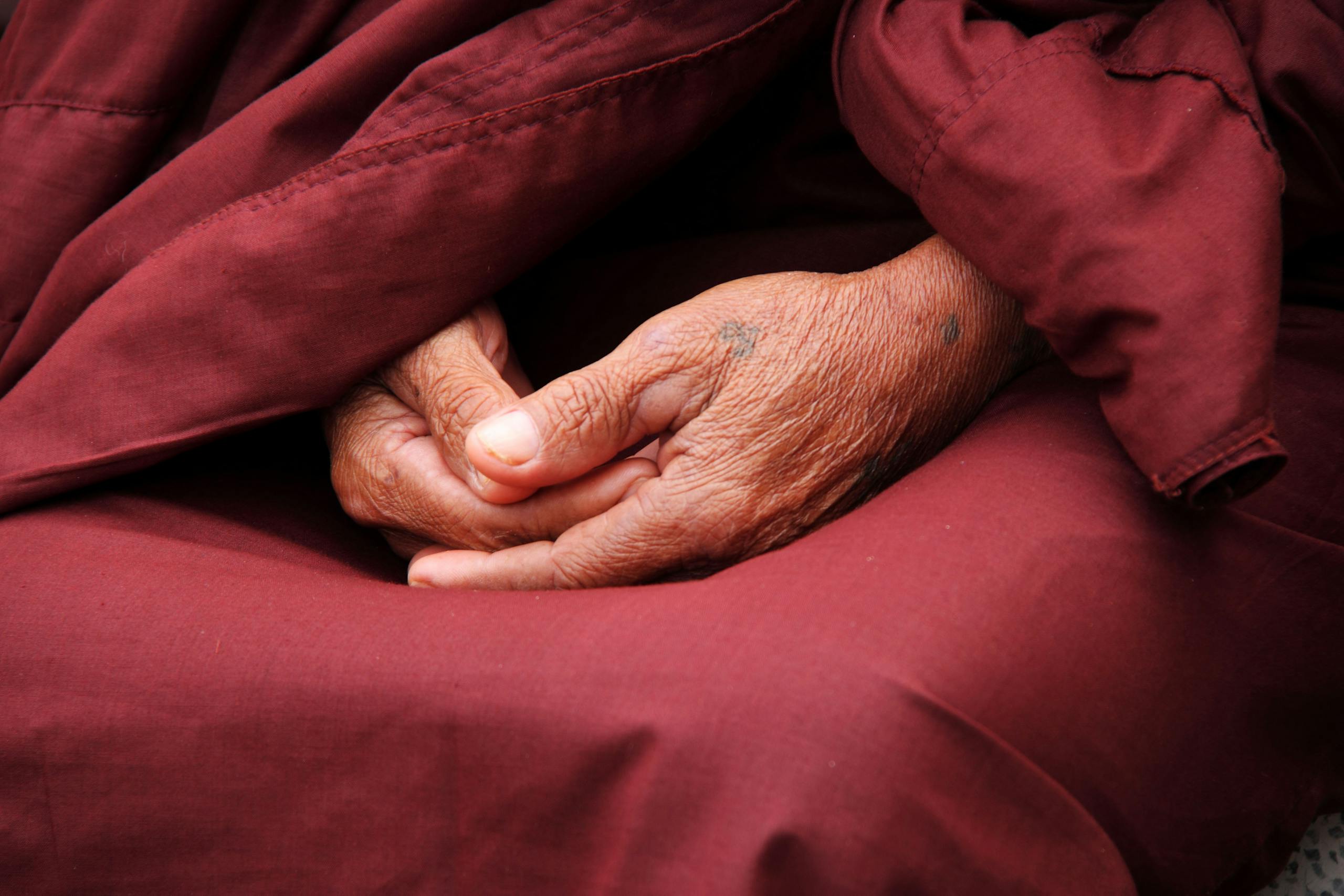
Shyness doesn’t disqualify anyone from a meaningful spiritual life. It shapes the form that life takes, and sometimes it shapes it in ways that are genuinely beautiful. The contemplative who prays for hours. The listener who holds space without filling it. The writer who finds words for what the community is feeling but can’t quite articulate. These are not consolation prizes for people who couldn’t manage to be more outgoing. They are vocations in their own right.
Understanding where shyness fits among the broader range of personality traits is part of understanding yourself clearly enough to stop fighting what you are. The full picture of introversion, shyness, extroversion, and everything in between is something I explore throughout the Introversion vs Other Traits hub, and it’s worth spending time there if you’re still working out where you land and what that means for how you live.
About the Author
Keith Lacy is an introvert who’s learned to embrace his true self later in life. After 20 years in advertising and marketing leadership, including running agencies and managing Fortune 500 accounts, Keith now channels his experience into helping fellow introverts understand their strengths and build fulfilling careers. As an INTJ, he brings analytical depth and authentic perspective to every article, drawing from both professional expertise and personal growth.
Frequently Asked Questions
Is shyness the same as introversion?
No. Introversion is about energy: introverts recharge through solitude and process information internally. Shyness is about fear, specifically the fear of negative social evaluation. A person can be introverted without being shy, and extroverted while still experiencing significant shyness. The two traits often appear together, but they have different roots and respond to different approaches.
Can a shy person have a strong faith life?
Absolutely. Many spiritual traditions have deep roots in contemplative, interior practice that aligns naturally with how shy people experience the world. The assumption that authentic faith requires visible, expressive, communal participation reflects a cultural preference rather than a universal spiritual truth. Shy people often develop rich inner lives and deep attentiveness to others, both of which support meaningful spiritual engagement.
How can faith communities better support shy members?
Communities can help by expanding their definition of engagement beyond visible participation. Creating smaller group settings, honoring written and behind-the-scenes contributions, avoiding pressure to perform emotional expression, and genuinely welcoming quiet presence as a valid form of community membership all make a meaningful difference. The goal is building a community where a wide range of personalities can contribute authentically rather than performing a single style of engagement.
Is shyness something that should be overcome in a faith context?
Shyness that causes significant suffering or prevents someone from living the life they want to live is worth addressing, often with professional support. That said, shyness as a personality trait doesn’t need to be eliminated. Many shy people find ways to live fully faithful, connected, and purposeful lives by working with their temperament rather than against it. The distinction is between managing shyness that limits you and accepting shyness as part of how you’re wired.
What kinds of roles in faith communities suit shy people well?
Shy people often thrive in roles that involve preparation, one-on-one connection, and behind-the-scenes contribution. Writing, pastoral care, teaching in small groups, administrative organization, and quiet service roles tend to align well with the strengths that shyness often accompanies: attentiveness, depth of preparation, sensitivity to others, and the capacity to hold space without filling it. The most important thing is finding roles that allow authentic contribution rather than requiring performance of a personality type that doesn’t fit.