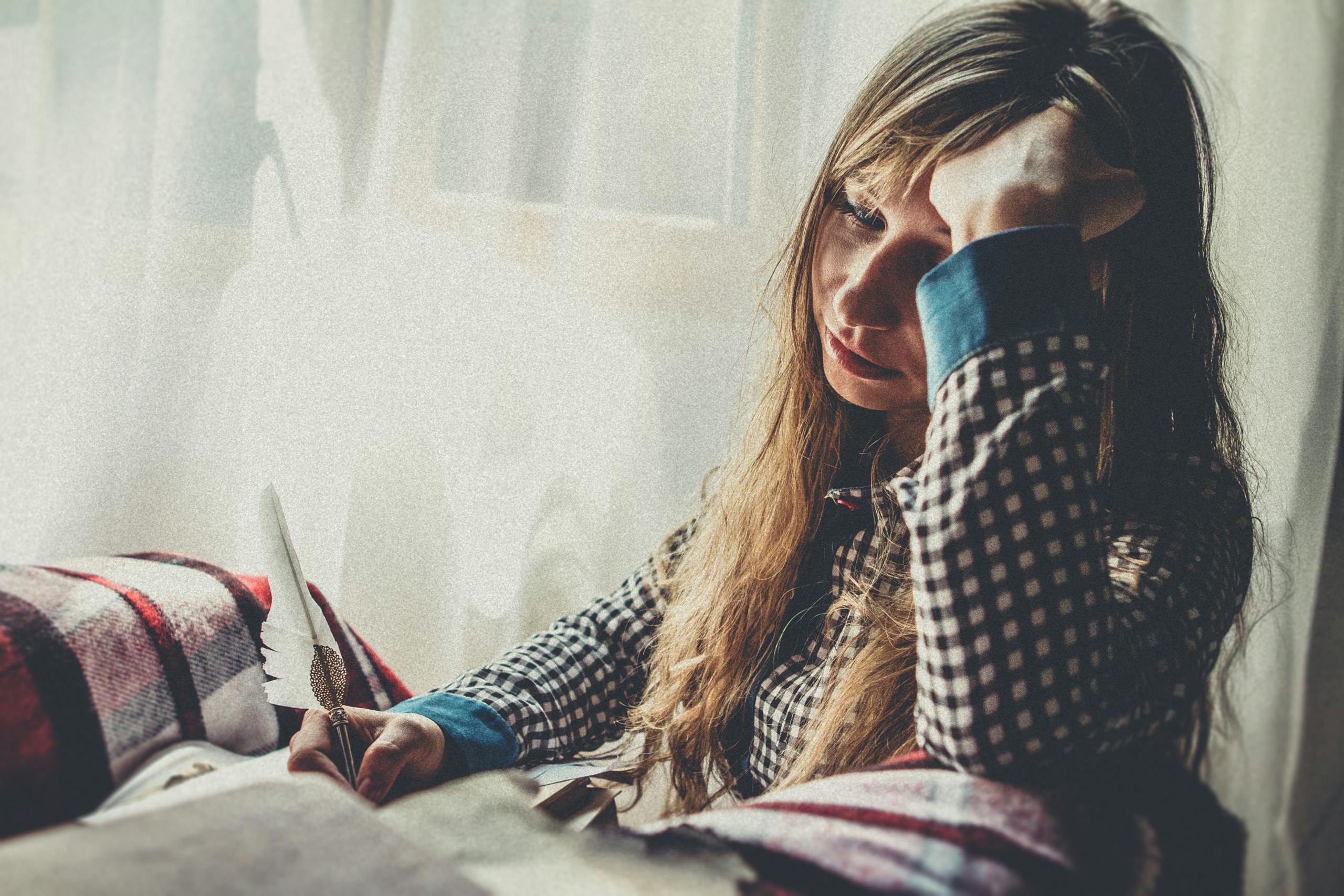

Shyness is thought to be the result of fear, specifically the fear of negative social evaluation and the anxiety that comes from anticipating judgment in social situations. Unlike introversion, which is a preference for quieter, less stimulating environments, shyness is rooted in distress. A shy person doesn’t simply prefer solitude; they often want connection but feel held back by worry about how others will perceive them.
That distinction matters more than most people realize. Conflating shyness with introversion has caused a lot of unnecessary confusion, and honestly, a fair amount of personal suffering for people who’ve been mislabeled their whole lives. I know, because I spent years trying to sort out which one I actually was.

If you’ve ever wondered whether your quietness comes from preference or from fear, you’re asking exactly the right question. And the answer shapes everything about how you understand yourself. Our Introversion vs Other Traits hub explores the full landscape of personality distinctions, and shyness sits at the center of some of the most persistent misunderstandings in that space.
Where Does Shyness Actually Come From?
Shyness has roots in both biology and experience. Some people seem to arrive in the world with a nervous system that responds more intensely to new people and unfamiliar social situations. Developmental psychologists have observed this kind of behavioral inhibition in infants and toddlers, a tendency to withdraw from novelty rather than approach it. That early temperament doesn’t automatically become shyness, but it can, particularly when early social experiences reinforce the idea that other people are threatening or unpredictable.
What’s your personality type?
Take our free 40-question assessment and get a detailed personality profile with dimension breakdowns, context analysis, and personalised insights.
Discover Your Type8-12 minutes · 40 questions · Free
Environmental factors layer on top of temperament in complicated ways. A child who gets laughed at during a class presentation, or who grows up in a home where criticism is constant, learns to associate social visibility with danger. The body starts treating ordinary interactions like potential threats. That’s not a character flaw. It’s an adaptive response that got stuck.
What distinguishes shyness from general social anxiety is partly a matter of degree and context. Shyness tends to be more situational. A shy person might feel completely at ease with close friends but freeze when meeting strangers. Social anxiety disorder, by contrast, tends to be broader and more debilitating, often requiring professional support. The line between them isn’t always clean, but understanding that shyness is fundamentally about fear of evaluation rather than a preference for quiet helps clarify where someone actually sits on that spectrum.
There’s a helpful body of work on this in the psychological literature. A PubMed Central review examining temperament and social behavior found that the emotional underpinnings of shyness are distinct from traits like introversion, with shyness being more closely tied to negative affect and threat sensitivity. That’s a meaningful distinction, not just academic hair-splitting.
Why Shyness and Introversion Keep Getting Confused
Both shy people and introverts can appear quiet in social settings. Both might decline a party invitation or sit at the edge of a crowded room. From the outside, the behavior looks similar. But the internal experience is completely different.
An introvert who skips a networking event is making an energy calculation. They know large group interactions drain them, and they’re choosing to protect their reserves. A shy person who skips the same event might desperately want to go but feel paralyzed by the anticipation of judgment. One is a preference. The other is avoidance driven by fear.
Running advertising agencies for over two decades, I watched this confusion play out in hiring decisions constantly. We’d interview a candidate who was quiet during the meeting, and someone on the team would say, “They seemed shy.” What they often meant was “they seemed introverted,” but those words got used interchangeably. The shy candidate might have been holding back because they were terrified of saying the wrong thing. The introverted candidate might have been perfectly composed, simply choosing their words carefully and not feeling the need to fill every silence with noise.
As an INTJ, I process information internally before speaking. In meetings with extroverted clients, that pause before I responded was sometimes read as hesitation or lack of confidence. It wasn’t. It was deliberation. But I’ve also seen genuinely shy people in those same rooms, people whose silence came from a very different place, from a quiet fear that whatever they said would be wrong. Learning to distinguish between those two experiences made me a better manager and a more empathetic colleague.
If you’re trying to figure out where you fall on this spectrum, taking something like the Introvert Extrovert Ambivert Omnivert Test can be a useful starting point. It won’t diagnose shyness, but it can help you get clearer on your baseline social orientation before you start sorting out what fear might be layered on top of it.

Can You Be Both Introverted and Shy at the Same Time?
Yes, absolutely. And plenty of people are. But it’s worth understanding that these are independent traits that just happen to coexist in the same person. An introvert can be completely free of shyness, confident in social situations, and simply prefer smaller settings and more time alone. An extrovert can be genuinely shy, craving social connection but feeling anxious and self-conscious when they pursue it. Both combinations exist, and both are more common than people expect.
The shy extrovert is one of the more counterintuitive personality combinations, and it’s worth pausing on. If you want to understand what extroversion actually looks like at its core, separate from shyness or confidence, it helps to get clear on what being extroverted means at a fundamental level. Extroversion is about where you draw energy, not about how comfortable you feel in social situations. A shy extrovert might feel energized by people in theory but held back by fear in practice. That gap between desire and action is one of the hallmarks of shyness regardless of where someone falls on the introvert-extrovert spectrum.
I’ve managed people across this whole range. One of my account directors was unmistakably extroverted, lit up by client meetings, energized by big rooms, always the first one to suggest a group dinner after a pitch. But put her in front of a camera for a video presentation, and she’d freeze. That specific fear of being recorded and judged later was its own flavor of shyness, completely separate from her extroverted nature. She wasn’t introverted. She was shy in a very particular context.
Personality is rarely one-dimensional. Most people contain multitudes, and the introvert-extrovert spectrum has more texture to it than a simple binary. Some people shift significantly depending on context, which is where concepts like omniversion come in. If you’re curious about the difference between people who genuinely fluctuate and those who land somewhere in the middle, the comparison of omnivert vs ambivert traits is worth exploring.
How Shyness Shows Up Differently Than Introversion in Real Life
The practical differences between shyness and introversion become most visible under pressure. When I was running agency pitches for Fortune 500 accounts, the room was always high-stakes. Dozens of people, big money on the table, clients who’d heard a hundred pitches before. My introversion meant I’d prepared obsessively, knew the material cold, and would have preferred to present to a smaller group. But I wasn’t afraid of the room. I was just aware that it cost me energy in a way it didn’t cost my extroverted colleagues.
A shy person in that same room might know the material just as well, but the fear of being judged, of stumbling over a word or being caught without an answer, would be running in the background the entire time. That’s a fundamentally different kind of cognitive load. Introversion asks you to manage your energy. Shyness asks you to manage your fear.
Shyness also tends to be more context-specific in ways that introversion isn’t. An introvert needs recovery time after most social interactions, whether they went well or badly. Shyness tends to spike in particular scenarios, usually ones involving evaluation, performance, or meeting strangers. A shy person might be completely relaxed and talkative at home with family, then become visibly withdrawn at a work event where their professional reputation feels on the line.
There’s also a meaningful difference in how each trait responds to positive social experiences. When an introvert has a great conversation, they still need quiet time afterward to recharge. When a shy person has a great social experience, the fear often decreases. Success builds evidence against the threat. That’s one of the reasons that exposure-based approaches tend to help with shyness in ways they simply don’t apply to introversion. You can’t “treat” introversion because there’s nothing wrong with it. Shyness, when it’s causing real distress and limiting someone’s life, can genuinely be worked through.
The Role of Self-Perception in Shyness
One of the things that makes shyness particularly sticky is how much it’s tied to how we see ourselves in relation to other people. At its core, shyness often involves a belief that other people are judging us more harshly than they actually are, and that we’ll fall short of what’s expected. Psychologists sometimes call this the “spotlight effect,” the tendency to overestimate how much attention others are paying to our mistakes and awkward moments.
That self-perception piece is worth sitting with, because it explains why shyness can feel so irrational even to the person experiencing it. You can know intellectually that nobody at the party is analyzing your every word, and still feel the anxiety as if they are. The fear isn’t responding to evidence. It’s responding to a story.
Introversion, by contrast, doesn’t involve that kind of distorted self-perception. An introvert might prefer not to go to the party, but they’re not usually operating under the belief that they’ll be found lacking if they do. Their preference is about energy and environment, not about protecting a fragile self-image from scrutiny.
This is part of why Psychology Today’s work on deeper conversations resonates so much with introverts specifically. Introverts often find that one-on-one depth actually energizes them, while small talk drains them. Shy people might crave those deeper conversations too, but the fear of being seen and judged can make even intimate connection feel risky. The desire is there. The fear gets in the way.
Does Shyness Change Over Time, or Is It Fixed?
Shyness is not a life sentence. That’s probably the most important thing I can say on this topic, and I say it as someone who spent years believing my own quietness was a fixed, immovable thing. Shyness can and does shift, often significantly, across a lifetime. Many people who describe themselves as shy in childhood or adolescence find that it softens as they accumulate positive social experiences and develop a more grounded sense of who they are.
The developmental trajectory of shyness is genuinely interesting. Adolescence tends to be peak shyness territory for a lot of people, because the social environment is particularly evaluative and the stakes of peer judgment feel enormous. As people move into adulthood and find communities where they belong, the fear often loses some of its grip. Not always, and not automatically, but the possibility for change is real.
Introversion, by contrast, tends to be more stable across time. It’s a fundamental aspect of how the nervous system processes stimulation. You might get better at managing your introversion, at setting boundaries, at building careers and relationships that suit your wiring, but the underlying preference for depth over breadth and quiet over noise tends to persist. That stability is actually one of the clearest ways to distinguish the two traits in your own experience. If your quietness has shifted significantly over time in response to confidence and positive experiences, shyness was probably part of the picture. If the preference for solitude and depth has been consistent regardless of how confident you feel, that’s more likely introversion doing its thing.
A PubMed Central study on personality development supports the general finding that while temperamental traits show continuity, behavioral expressions of those traits are more malleable than people often assume. That’s encouraging, particularly for anyone who’s carried shyness as an identity rather than a tendency.
How Introverts Who Are Also Shy Can Find Their Footing
If you’re introverted and shy, the path forward involves two separate but related kinds of work. One is about honoring your introversion, building a life that doesn’t constantly demand you perform extroversion. The other is about gently challenging the fear-based patterns that shyness creates, not to become someone you’re not, but to give yourself access to the connections and opportunities you actually want.
Some of the most effective approaches involve starting small and building evidence. Every positive social interaction that doesn’t end in catastrophe is data against the threat narrative. Over time, that data accumulates. The fear doesn’t disappear overnight, but it can lose its authority.
Preparation also helps, and this is where introversion and shyness can actually work together rather than against each other. Introverts tend to prepare thoroughly. That same preparation instinct, when applied to social situations, can reduce the uncertainty that feeds shyness. Knowing what you want to say, having a few topics ready, understanding the context of a gathering before you walk in, these things reduce the number of unknowns that trigger the fear response.
One of my creative directors early in my agency career was both introverted and visibly shy in client settings. She was extraordinarily talented, but the fear of being judged professionally made her almost invisible in meetings. What helped her wasn’t forcing herself to become more extroverted. It was preparation and small wins. We started having her present to internal teams before client meetings, building her evidence base that she could hold a room. Over two years, the shyness in professional settings decreased substantially. The introversion stayed exactly where it was, and that was fine. She still recharged alone. She still preferred depth to small talk. But the fear stopped running the show.
If you’re curious about where your own introversion sits on the spectrum, it’s worth thinking about whether you’re fairly introverted or extremely introverted, because that distinction affects how much shyness might be layered on top of a genuine preference for solitude versus how much the fear itself is driving the withdrawal.
What Shyness Costs When It Goes Unexamined
Unexamined shyness has real costs. I don’t say that to be harsh. I say it because I’ve watched talented people limit themselves significantly by never questioning whether the fear was telling them the truth.
In professional settings, shyness can masquerade as humility or professionalism, right up until it starts costing someone opportunities. The person who never speaks up in meetings because they’re afraid of sounding stupid. The analyst who doesn’t pitch their idea because they assume it will be dismissed. The manager who avoids difficult conversations because the anticipation of conflict feels unbearable. These aren’t introvert problems. They’re shyness problems, and they require different solutions than simply honoring your need for quiet.
Research from Harvard’s Program on Negotiation suggests that introverts aren’t necessarily at a disadvantage in negotiation, but the dynamics shift when fear enters the picture. A shy person who avoids asserting their position because they’re afraid of the other party’s reaction is operating from a fundamentally different place than an introvert who simply prepares differently and communicates more deliberately. The outcomes can diverge significantly.
Shyness also tends to limit the range of relationships available to someone. When fear of judgment filters every potential connection, it’s hard to build the kind of depth that introverts particularly value. The irony is that shy introverts often crave exactly the kind of meaningful, substantive connection that their fear makes hardest to reach. Addressing the shyness isn’t about becoming someone who loves small talk. It’s about clearing the path to the depth you actually want.
Some people find it useful to explore whether they might sit in a more complex position on the personality spectrum before drawing conclusions about shyness. If you’ve ever felt like you don’t fit neatly into introvert or extrovert categories, understanding the difference between otrovert and ambivert tendencies might add some useful nuance to how you’re reading your own social behavior.
Reframing Shyness Without Dismissing It
There’s a version of the “shyness vs introversion” conversation that can feel dismissive of shyness, as if the goal is to prove that you’re not shy, just introverted, because shyness is somehow lesser. That’s not what I’m going for here. Shyness is a real human experience with real roots, and it deserves to be understood on its own terms, not just used as a foil to make introversion look better.
Some of the most perceptive, thoughtful people I’ve known have carried genuine shyness alongside remarkable gifts. The shyness didn’t cancel out the gifts. It just meant they had to work through an extra layer of fear to share them. That’s not a character flaw. It’s a challenge, and one that’s worth meeting with curiosity rather than shame.
What matters is getting the diagnosis right, not in a clinical sense, but in a personal one. If you’ve been calling yourself an introvert when shyness is actually the bigger factor, you might be trying to honor a preference that isn’t quite the real issue. If you’ve been calling yourself shy when you’re actually just introverted, you might be carrying unnecessary shame about a trait that’s simply part of how you’re wired.
Both introversion and shyness deserve honest examination. Neither benefits from being confused with the other. And the clearer you get on which one is actually driving your experience, the better equipped you are to respond to it in ways that actually help.
If you’re still working out where you land, the Introverted Extrovert Quiz can help you get a clearer read on your baseline social orientation, which is a useful foundation before you start separating out how much fear might be shaping your behavior on top of your natural temperament.

Sorting through these distinctions is exactly the kind of work our Introversion vs Other Traits hub is built for. If this article raised more questions than it answered, that’s a good sign. The more precisely you can name what you’re experiencing, the more clearly you can see what it actually needs.
About the Author
Keith Lacy is an introvert who’s learned to embrace his true self later in life. After 20 years in advertising and marketing leadership, including running agencies and managing Fortune 500 accounts, Keith now channels his experience into helping fellow introverts understand their strengths and build fulfilling careers. As an INTJ, he brings analytical depth and authentic perspective to every article, drawing from both professional expertise and personal growth.
Frequently Asked Questions
Is shyness the same thing as introversion?
No, shyness and introversion are distinct traits that often get conflated because both can result in quieter or more reserved behavior. Shyness is rooted in fear of negative social evaluation, the worry that others will judge you harshly. Introversion is a preference for less stimulating environments and a tendency to recharge through solitude rather than social interaction. An introvert can be completely confident and unshy. An extrovert can be genuinely shy. The two traits operate independently of each other.
What causes shyness to develop in the first place?
Shyness is thought to result from a combination of temperament and experience. Some people are born with a nervous system that responds more intensely to unfamiliar social situations, a trait researchers call behavioral inhibition. When that temperament meets early experiences that reinforce the idea that social situations are threatening, such as being criticized, embarrassed, or rejected, shyness tends to take hold. It’s an adaptive response to perceived social danger, not a character flaw or a permanent condition.
Can someone be both introverted and shy at the same time?
Yes, and many people are. Introversion and shyness can coexist in the same person, but they require different responses. Someone who is both introverted and shy needs to honor their genuine preference for quieter environments while also working through the fear-based patterns that shyness creates. The work looks different for each trait. Introversion calls for building a life that fits your energy needs. Shyness calls for gradually building evidence that social situations are safer than the fear suggests.
Does shyness go away on its own as people get older?
Shyness often does soften over time, particularly as people accumulate positive social experiences and develop a more stable sense of identity. Many people who were significantly shy in adolescence find that it decreases meaningfully in adulthood. That said, shyness doesn’t automatically resolve on its own. It tends to decrease when people have repeated experiences that contradict the fear narrative, when social situations go well more often than not. Without those corrective experiences, shyness can persist well into adulthood.
How can I tell whether my quietness comes from introversion or shyness?
The clearest way to distinguish them is to examine the internal experience rather than the external behavior. Ask yourself: when you avoid a social situation, is it because you genuinely prefer the alternative, or because you’re afraid of what might happen if you go? Introversion feels like preference. Shyness feels like avoidance driven by fear. Another useful question is whether positive social experiences change how you feel about future interactions. If they do, shyness is likely part of the picture. If your preference for solitude stays consistent regardless of how well social interactions go, that points more clearly toward introversion.