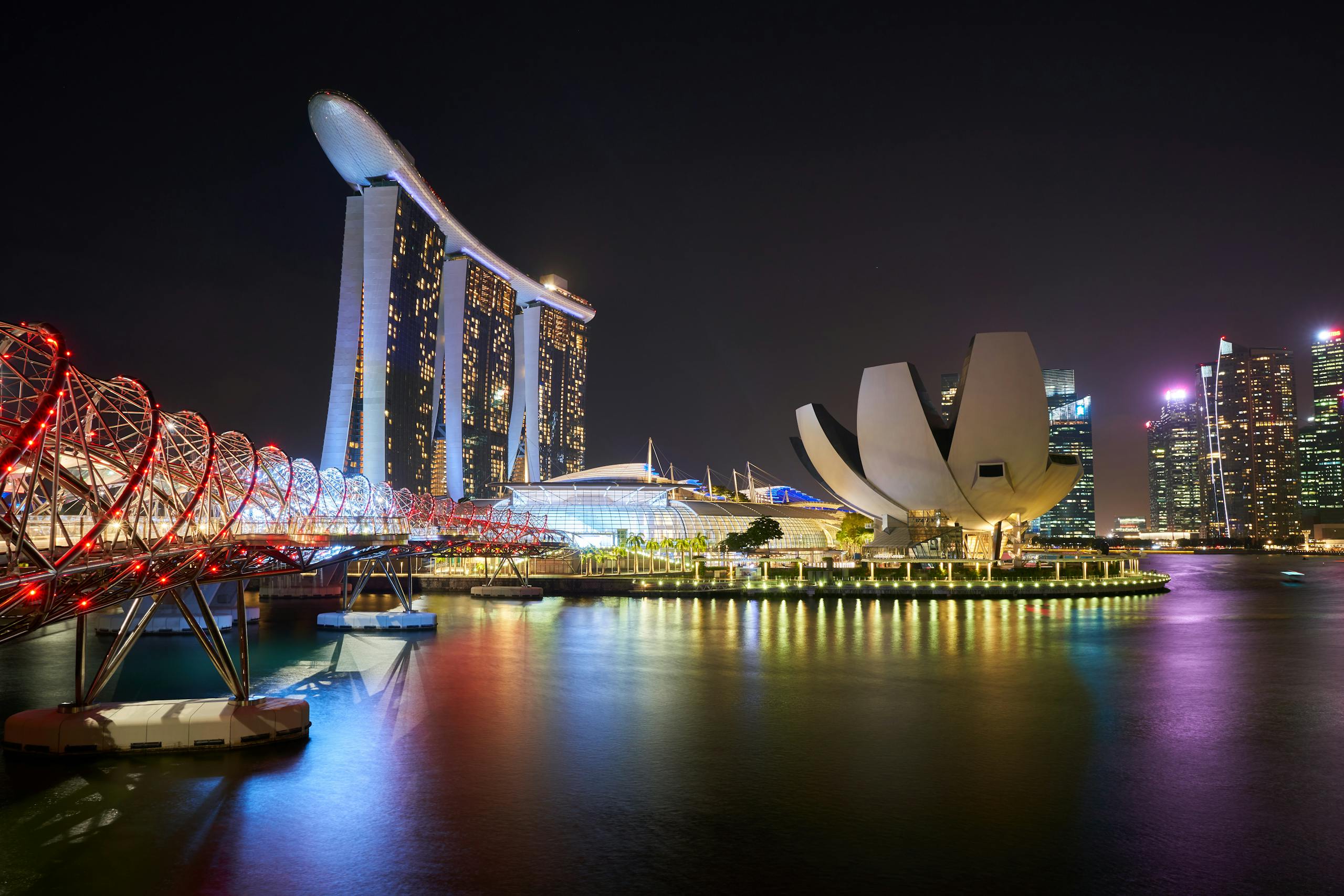

Singapore works for introverts because the city is built on systems, not small talk. Reliable public transit, clear social codes, quiet libraries and hawker centres that don’t demand conversation, and a culture that respects focused effort over performative energy. For introverts who feel drained by unpredictability, Singapore offers something rare: a city that operates on your terms.
Everyone I knew in advertising assumed I loved the chaos. The pitches, the client dinners, the agency-wide brainstorms that filled entire afternoons with noise and very few ideas. I played along for years, convincing myself that exhaustion was just the cost of ambition. What I didn’t understand then was that I wasn’t drained by the work itself. I was drained by environments that never gave me room to think. Singapore, when I first visited on a client trip, felt different in a way I couldn’t name at the time. Orderly. Predictable. Quiet in the right places. It took me years to understand why that mattered.
If you’ve ever wondered whether a city could actually suit your personality type, Singapore makes a compelling case. And if you’ve searched for stories about the “lonely guy SG” experience, or wondered whether Singapore’s structured environment helps or isolates introverts, you’re asking exactly the right question.

There’s a broader conversation happening about how introverts build meaningful lives in cities that weren’t designed with them in mind. Our introvert lifestyle hub explores that territory in depth, covering everything from social energy management to finding community without burning out. Singapore sits at an interesting intersection of all those themes.
- Singapore’s predictable systems and orderly infrastructure reduce cognitive load for introverts who process sensory input deeply.
- Design quiet spaces into your work environment to access the focused thinking where introverts produce their best ideas.
- Respect for personal space and minimal small talk in Singapore’s culture allows introverts to conserve social energy.
- Environmental unpredictability drains introverts more than extroverts; seek cities or spaces built on reliable systems and clear codes.
- Stop equating visible busyness with productivity; structured environments that enable deep work suit introvert nervous systems better.
Why Do Introverts Feel at Home in Singapore?
Singapore is a city that rewards systems thinking. Buses run on schedule. Queues are orderly. Public spaces are clean and well-designed. There’s a social contract here that most residents quietly honor: don’t impose, don’t intrude, respect the space of others. For someone whose nervous system is wired to notice everything and process it deeply, that kind of environmental predictability is genuinely restorative.
What’s your personality type?
Take our free 40-question assessment and get a detailed personality profile with dimension breakdowns, context analysis, and personalised insights.
Discover Your Type8-12 minutes · 40 questions · Free
A 2021 study published by the American Psychological Association found that environmental unpredictability significantly increases cognitive load for people who score high on introversion, because they process sensory input more thoroughly than their extroverted counterparts. Singapore reduces that load. The city’s infrastructure does a lot of the mental heavy lifting that chaotic environments force you to do yourself.
I think about the agency I ran in the early 2000s. Open plan office, no quiet rooms, a culture where visible busyness was treated as a proxy for productivity. My best thinking never happened there. It happened on the train home, or at my desk at 7 AM before anyone else arrived. Singapore’s design philosophy, prioritizing function, flow, and order, mirrors the conditions under which introverts actually do their best work.
The city also has an unusually strong library system. The National Library Board runs 27 public libraries across the island, many open late, with quiet study zones, private reading rooms, and digital resources that rival university libraries. For an introvert who recharges through solitary learning, that infrastructure is not a small thing.
Is Singapore Actually Lonely for Introverts, or Does That Reputation Miss Something?
The “lonely guy SG” search query tells a real story. Singapore has a reputation, particularly among expats, for being difficult to penetrate socially. Locals have established friend groups from school and national service. The pace of professional life is intense. And the city’s efficiency-first culture doesn’t always leave obvious room for the kind of slow, unplanned connection that builds genuine friendship.
That experience is real. And for extroverts who rely on spontaneous social energy to feel connected, Singapore can feel cold. But the lonely guy SG narrative often conflates two different things: the difficulty of building a social life in Singapore, and the experience of being an introvert in Singapore. Those aren’t the same problem.
Introverts don’t need constant social contact to feel connected. What they need is meaningful contact, on their own schedule, in environments that don’t demand performance. Singapore actually provides that, if you know where to look. Structured interest groups, hobby communities, professional networks built around shared focus rather than social obligation. The Singapore I’ve experienced is not a city that forces you into small talk. That’s a feature, not a flaw.

The Psychology Today resource on introversion and loneliness draws a useful distinction here. Loneliness is the gap between the social connection you want and what you have. Solitude is chosen aloneness that restores rather than depletes. Many introverts who move to Singapore and initially feel lonely are actually experiencing culture shock and adjustment, not a fundamental mismatch between their personality and the city. Once they stop trying to replicate the social patterns of their home country and start building connection in ways that suit how they’re wired, the experience shifts.
What Makes Singapore’s Physical Environment Work for Introverted People?
Spend a week in Singapore and you start to notice something. The city has an extraordinary number of places where you can simply exist without being expected to perform. Hawker centres where solo dining is completely normal. MRT carriages where silence is the default. Parks and nature reserves that are genuinely quiet on weekday mornings. Coffee shops where a single person with a laptop is not a curiosity.
Compare that to cities where eating alone draws looks, or where coffee shops play music loud enough to prevent thought, or where public transit is so crowded and unpredictable that it becomes its own source of stress. Singapore’s physical environment is unusually compatible with the way introverts prefer to move through the world: independently, at their own pace, with access to beauty and calm without having to fight for it.
The green spaces matter more than people realize. The Singapore Botanic Gardens, MacRitchie Reservoir, Bukit Timah Nature Reserve. These aren’t just tourist attractions. They’re genuinely accessible, genuinely quiet places where an introvert can spend a Saturday morning thinking without spending social energy. After particularly draining client presentations in my agency days, I’d have given anything for that kind of accessible restoration. Singapore builds it into the city’s fabric.
The National Institute of Mental Health has documented the restorative effects of green space access on stress and cognitive fatigue. For introverts who are managing the particular kind of depletion that comes from sustained social performance, that access isn’t a luxury. It’s part of what makes a city livable.
How Does Singapore’s Work Culture Affect Introverted Professionals?
Singapore’s professional culture is demanding. Long hours are common. Hierarchy is respected. Performance expectations are high. None of that is inherently introvert-friendly. But there are structural features of Singapore’s work environment that actually suit how introverts operate at their best.
Singapore workplaces tend to value precision, preparation, and expertise. The premium is on doing excellent work, not on being the loudest voice in the room. A 2022 Harvard Business Review analysis of high-performance workplace cultures found that environments emphasizing expertise and preparation over social dominance tend to produce better outcomes for introverted contributors, who often do their best thinking before the meeting, not during it.
I spent two decades in advertising, where the meeting was often the product. Ideas were expected to emerge in real time, in front of clients, under pressure. That’s a brutal format for someone who processes deeply and slowly. Singapore’s more formal professional culture, where proposals are prepared in advance and expertise is demonstrated through documentation and precision, suits a different kind of intelligence. The kind that introverts often carry.

Singapore also has a strong culture of individual accountability. You’re expected to deliver, and how you get there is largely your own business. That autonomy is something introverts thrive on. Micromanagement and constant check-ins are draining in a specific way, because they interrupt the deep focus that introverts need to produce their best work. Singapore’s professional culture, for all its intensity, tends to leave that space intact.
Can Introverts Build Genuine Community in Singapore?
Yes. But it requires a different approach than most expats expect when they arrive.
The mistake most newcomers make, introverted or not, is trying to build a broad social network quickly. They attend every expat event, join every group, say yes to every invitation. That approach is exhausting for anyone, and for introverts it’s particularly counterproductive, because the energy spent on surface-level connection leaves nothing for the deeper relationships that actually matter.
Singapore rewards a different strategy: narrow and deep. Find one or two communities organized around something you genuinely care about. A running club that meets at MacRitchie on Saturday mornings. A book group at one of the library branches. A professional association in your field. A volunteer organization. Show up consistently. Let relationships build slowly. That’s how introverts build community anywhere, and Singapore’s structured community landscape makes it easier, not harder, than most cities.
The city has a genuinely impressive range of organized interest groups. Meetup.com Singapore lists hundreds of active groups across photography, hiking, language exchange, board games, creative writing, and dozens of other niches. Many of these groups are small enough to allow real conversation and structured enough that you’re not walking into an unstructured social situation with no clear purpose. That’s an introvert’s ideal social environment.
What I’ve learned from my own experience building professional relationships as an INTJ is that I do best when there’s a shared task or shared interest at the center of the interaction. Pure socializing, where the only agenda is to be social, has always felt performative to me. Singapore’s community culture tends to organize around shared activity rather than shared obligation. That’s a meaningful difference.
What Are the Real Challenges Introverts Face Living in Singapore?
Honesty matters here. Singapore isn’t a perfect fit for every introvert, and pretending otherwise would be doing you a disservice.
The cost of living is high. Private space is expensive and often limited. Many apartments are small, and the density of the city means that true solitude requires deliberate effort. For introverts who need significant alone time at home to recharge, a 500-square-foot apartment in a dense residential block can feel constraining, particularly during the early adjustment period.
The heat and humidity are also factors that don’t get discussed enough. Singapore sits one degree north of the equator. The climate is relentlessly warm and wet. Outdoor restoration, which many introverts rely on heavily, requires adaptation. Early mornings and evenings are manageable. Midday is not. Building a restorative outdoor practice in Singapore means adjusting your schedule, not abandoning the practice.

The social adjustment is also real. Singapore’s local culture has its own rhythms and codes that take time to read. Expat communities can provide a bridge, but they can also become a bubble that prevents genuine integration. Introverts who are patient and willing to invest in understanding the culture, rather than expecting it to adapt to them, tend to find their footing. Those who aren’t willing to do that work can spend years feeling like outsiders.
The Mayo Clinic’s research on social adjustment and mental health is relevant here. Sustained feelings of social disconnection, even in introverts who need less social contact than average, carry real psychological costs. Building even a small network of meaningful relationships isn’t optional. It’s a health requirement. Singapore makes that possible. It doesn’t make it automatic.
How Does Singapore Compare to Other Cities for Introverted Expats?
The comparison that comes up most often is Singapore versus Tokyo. Both cities are orderly, safe, and built on strong social codes that discourage intrusion. Both have excellent public transit and abundant quiet spaces. Tokyo arguably has a deeper culture of solitude and individual focus. Singapore has better English infrastructure, which matters enormously for expats who aren’t prepared to invest years in language acquisition.
Compared to cities like New York, London, or Sydney, Singapore is dramatically less socially demanding. Those cities reward extroverted energy. The social scenes are loud, fast, and built around spontaneous connection. Singapore’s social fabric is more deliberate, more structured, and more forgiving of people who don’t want to perform constantly.
Compared to smaller cities, Singapore offers something that matters: genuine world-class infrastructure combined with genuine quiet. You don’t have to sacrifice access to excellent libraries, museums, restaurants, and professional opportunities to live somewhere that doesn’t exhaust you. That combination is rarer than it sounds.
When I was running accounts for Fortune 500 clients, I traveled constantly. Cities that seemed exciting in the abstract were often exhausting in practice, because they demanded constant social performance just to function in them. Singapore was one of the few places I visited where I felt like I could actually think. That’s not a small thing when your work depends on the quality of your thinking.
What Practical Steps Help Introverts Settle Into Singapore Life?
The first thing that helps is giving yourself permission to settle slowly. Singapore’s expat community has a tendency to front-load social activity, filling the first weeks with networking events and group outings. That approach works for some people. For introverts, it often leads to early burnout and a distorted impression of what life in Singapore actually feels like day to day.
A more sustainable approach: spend the first month learning the city on your own terms. Walk the neighborhoods. Find your coffee shop. Identify the parks and libraries that will become your restorative spaces. Let the city become familiar before you start building your social life into it.
Choose your community deliberately. One or two groups organized around genuine interest will serve you better than a dozen loose connections built on geographic proximity. Singapore’s community infrastructure makes that selective approach viable. The groups exist. You just have to be willing to prioritize depth over breadth.
Build recovery time into your schedule structurally, not aspirationally. One of the patterns I see most often in introverts who struggle in demanding environments is the tendency to treat recovery as something they’ll get to when the schedule allows. It never allows. You have to protect that time the same way you protect meeting time or deadline time. Singapore’s efficient transit and predictable infrastructure actually make scheduling easier than in more chaotic cities. Use that.
Finally, find one local. Not a network of locals, just one person who grew up in Singapore and is willing to help you read the culture. That relationship will do more for your sense of belonging than any number of expat events. Singapore’s local culture is genuinely warm once you’re inside it. Getting inside it requires patience and a willingness to listen more than you speak, which, honestly, is something introverts tend to be better at than they give themselves credit for.
The American Psychological Association’s resources on acculturation and adjustment are worth reading if you’re planning a move. The adjustment process is real for everyone, and understanding it as a process rather than a verdict about whether you belong helps enormously.
Singapore won’t fix the things that are hard about being an introvert in a world built for extroverts. What it will do is reduce the environmental friction that makes those things harder. That’s not nothing. For many introverts, it’s exactly enough.
Explore more introvert lifestyle resources in our complete Introvert Living Hub.
About the Author
Keith Lacy is an introvert who’s learned to embrace his true self later in life. After 20 years in advertising and marketing leadership, including running agencies and managing Fortune 500 accounts, Keith now channels his experience into helping fellow introverts understand their strengths and build fulfilling careers. As an INTJ, he brings analytical depth and authentic perspective to every article, drawing from both professional expertise and personal growth.
Frequently Asked Questions
Is Singapore a good place for introverts to live?
Singapore suits introverts well because the city’s infrastructure reduces social friction rather than amplifying it. Reliable transit, quiet public spaces, a culture that respects individual focus, and a strong library and park system give introverts consistent access to restoration. The social adjustment takes time, but the environmental fit is strong.
Why do some people describe feeling like a lonely guy in Singapore?
The “lonely guy SG” experience is real, particularly for expats in the early months. Singapore’s social culture is structured around long-established relationships built through school and national service, which can be hard to penetrate quickly. Introverts who approach community-building with patience and focus on depth over breadth tend to find their footing more successfully than those who try to replicate the social patterns of their home country.
What parts of Singapore are best for introverts who need quiet spaces?
The National Library and its 26 branch libraries offer genuine quiet and excellent resources. MacRitchie Reservoir, Bukit Timah Nature Reserve, and the Singapore Botanic Gardens provide accessible green space for outdoor restoration. Hawker centres during off-peak hours are comfortable for solo dining. Residential neighborhoods like Tiong Bahru and Joo Chiat have quieter coffee shop cultures than the central business district.
How do introverts handle Singapore’s demanding work culture?
Singapore’s professional culture values preparation, expertise, and individual accountability, all of which suit introverted working styles. The challenge is managing energy across long working hours. Introverts who build recovery time into their schedules deliberately, rather than treating it as optional, tend to sustain performance better. The city’s efficient transit also reduces commute stress, which matters for managing daily energy.
Can introverts find meaningful community in Singapore without constant socializing?
Yes. Singapore has a well-developed ecosystem of interest-based community groups across hiking, reading, photography, professional development, and dozens of other areas. These structured environments suit introverts better than unstructured social events because they center a shared activity rather than social performance. Consistent participation in one or two groups tends to build more meaningful connection than broad, surface-level networking.