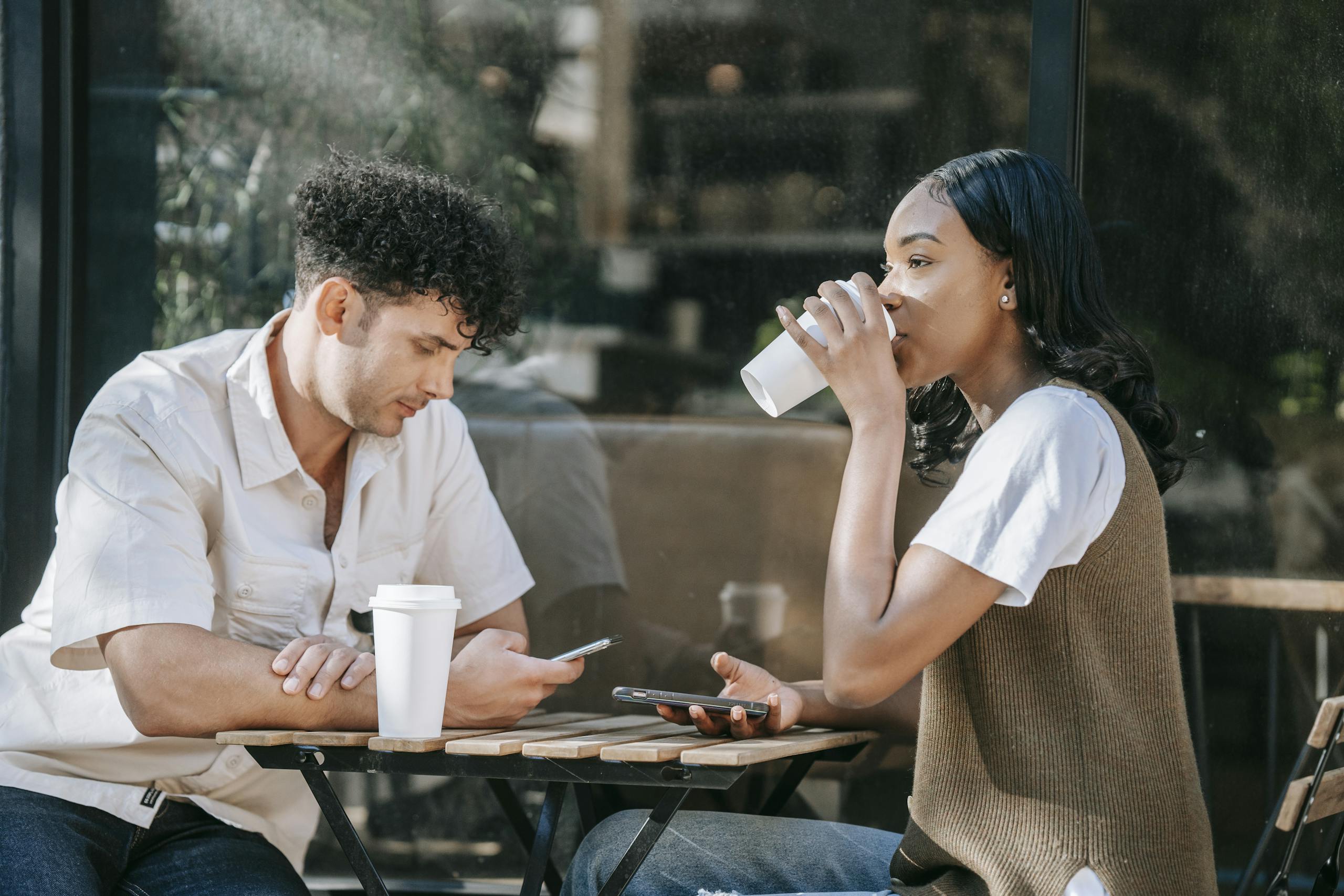
Social anxiety after hanging out with friends is that unsettling wave of worry, self-doubt, or emotional heaviness that arrives after a social event you actually enjoyed. It’s not about the night going badly. It’s the quiet aftermath, the mental replay, the creeping sense that something you said landed wrong or that you somehow failed to show up as your best self.
Many introverts experience this as a distinct pattern, separate from simple tiredness. The exhaustion they expect. What catches them off guard is the anxiety layered on top of it, arriving hours later or the morning after, coloring what should have been a good memory.
If that pattern feels familiar, you’re in good company. And more importantly, there are reasons it happens that have nothing to do with you being broken or socially defective.
Much of what I cover here connects to a broader set of questions about how introverts experience friendship, including the emotional cost, the meaning we draw from it, and the ways our wiring shapes every interaction. Our Introvert Friendships hub pulls that full picture together if you want the wider context alongside this specific angle.
Why Does Social Anxiety Hit After the Fun Part Is Over?
There’s a specific kind of discomfort that waits until you’re home, changed into comfortable clothes, and finally alone. The event was fine. Maybe it was genuinely good. Yet something shifts once the social performance ends and your mind gets quiet enough to start reviewing the footage.
What’s your personality type?
Take our free 40-question assessment and get a detailed personality profile with dimension breakdowns, context analysis, and personalised insights.
Discover Your Type8-12 minutes · 40 questions · Free
I know this pattern well. After client dinners during my agency years, I’d often feel a low-grade unease on the drive home that had nothing to do with how the dinner actually went. We’d landed the presentation. The client was happy. My team performed well. And still, my brain would locate the one moment I’d stumbled over a word, or the laugh that felt slightly forced, and treat it like evidence of something larger.
What’s happening in those moments is a delayed processing response. During social events, introverts are often managing a significant cognitive load: reading the room, tracking conversations, calibrating tone, monitoring their own reactions. There isn’t always bandwidth to process emotions in real time. Once the event ends and external demands drop away, the internal processing begins. And for people who are already prone to self-monitoring, that processing can tip into rumination.
Psychologists sometimes call this “post-event processing,” and it’s closely associated with social anxiety as a pattern. The mind replays social interactions looking for evidence of negative evaluation from others. Even when no such evidence exists, the search itself generates anxiety. You can read more about how cognitive patterns like this connect to social anxiety disorder in Healthline’s overview of CBT for social anxiety, which covers how these thought loops form and how they can be interrupted.
What makes this particularly confusing for introverts is that the anxiety doesn’t feel proportional. You didn’t dread the event. You weren’t paralyzed beforehand. You showed up, engaged, maybe even had a good time. Then the anxiety arrives after, which makes it harder to identify as anxiety at all. It feels more like vague regret, or low mood, or a nameless sense that something went wrong.
Is This Actually Introversion, or Is It Social Anxiety?
This is a question worth taking seriously, because introversion and social anxiety are genuinely different things that can look similar from the inside.
Introversion is a preference for quieter, less stimulating environments and a tendency to recharge through solitude rather than social interaction. It’s a personality orientation, not a disorder. Social anxiety is a pattern of fear or distress specifically tied to social situations, often driven by worry about being judged, embarrassed, or evaluated negatively by others.
The two can coexist, and often do. But they’re not the same. An introvert who declines a party because they genuinely prefer a quiet evening isn’t experiencing social anxiety. An introvert who wants to attend but spends the following day convinced they embarrassed themselves might be dealing with something more than preference.
Healthline’s breakdown of introversion versus social anxiety draws this distinction clearly: introverts may prefer less social activity, but they don’t typically experience significant distress from the social activity they do engage in. When distress is present, especially the after-the-fact kind, it’s worth paying attention to.
For me, sorting this out took years. I spent a long time attributing everything I felt after social situations to introversion, which meant I never examined the anxiety piece. The recharge I needed after a full day of client meetings made sense. What didn’t fully make sense was lying awake replaying a conversation from a networking event, wondering if I’d come across as arrogant or distant. That wasn’t just introversion doing its thing. That was something else.

The distinction matters because the solutions differ. Introversion calls for rest, space, and honoring your natural rhythm. Social anxiety often calls for something more targeted, whether that’s cognitive work, gradual exposure, or professional support. Treating anxiety as a recharge problem means you never actually address it.
What Role Does Self-Monitoring Play in Post-Social Anxiety?
One of the things I’ve noticed in myself, and in watching how other introverts move through social situations, is how much mental energy goes into self-monitoring. Not just awareness, but active management of how you’re coming across, whether you’re talking too much or too little, whether your reaction to something was appropriate, whether the group energy shifted in a way you caused.
This kind of heightened self-monitoring is common in people with social anxiety, and it creates a particular problem: when you’re focused on monitoring your own behavior, you have less capacity to actually read the room accurately. You end up working from incomplete information, which your anxious brain then fills in with worst-case assumptions.
There’s also something worth naming about the introvert tendency toward depth and internal reflection. Many of us process meaning through observation and quiet analysis. We notice things others miss, including subtle shifts in tone, body language, and conversational dynamics. In most contexts, that’s a genuine strength. In the aftermath of a social event, it can become a liability, because you have a lot of material to work with and a mind that’s wired to find the signal in the noise.
A former creative director at my agency was an INFJ who I watched absorb the emotional undercurrents of every room she entered. She was extraordinary at reading clients, at sensing what wasn’t being said. After major presentations, though, she’d often need a day to decompress from the emotional residue she’d picked up. Her sensitivity was the same trait in both cases. What changed was the context and whether that sensitivity was pointing outward or turning inward.
Post-social anxiety in introverts often works the same way. The same capacity for depth and observation that makes you a thoughtful friend and a perceptive colleague can fuel the internal replay reel when there’s nothing external left to focus on.
Some research on self-focused attention and social anxiety, including work available through PubMed Central, suggests that shifting attention outward during social situations can reduce post-event anxiety. The mechanism makes sense: if you’re genuinely engaged with the people around you rather than monitoring your own performance, there’s less material for the post-event review.
How Does Friendship Quality Change the Anxiety Equation?
Not all social situations produce the same aftermath. I’ve noticed that the post-social anxiety I experience is significantly shaped by who I was with, not just how long I was with them or how stimulating the environment was.
Spending an evening with close friends who know me well rarely triggers the next-morning replay. There’s less performance involved, less calibration, less worry about being misread. The social cost is lower because the psychological safety is higher. Compare that to a large gathering with acquaintances, or a work social event where professional stakes are mixed in, and the aftermath is a completely different experience.
This is one of the reasons why quality matters so much in introvert friendships. It’s not just about preference or depth of connection for its own sake. High-quality friendships actually reduce the emotional overhead of social interaction. When you trust the people you’re with, your nervous system doesn’t have to work as hard. And when your nervous system isn’t working as hard, there’s less residue to process afterward.
The anxiety that follows a night with people you’re still figuring out, where you’re still establishing how you fit and what’s safe to say, is qualitatively different from the tiredness that follows a night with people who genuinely know you. Both might leave you needing rest. Only one is likely to leave you anxious.
There’s also something worth considering about the specific dynamics of different friendship structures. Introverts who maintain a few close long-distance friendships sometimes find those relationships carry less post-social anxiety than frequent local socializing, precisely because the contact is intentional and the connection is deep. Less contact can actually work better when the quality of that contact is high, and the lower frequency means each interaction feels more natural and less like a performance.
Does the Type of Social Group Affect How You Feel Afterward?
Group composition matters more than most people realize when it comes to post-social anxiety. Spending time with people who are very similar to you in personality and communication style is comfortable in ways that can feel almost invisible until you contrast it with the alternative.
When I ran my first agency, most of my social events were industry gatherings with extroverted salespeople, loud creatives, and clients who expected energy and enthusiasm. I spent years trying to match that register, which meant I was performing a version of myself that required enormous effort to sustain. The anxiety afterward wasn’t just about worrying whether I’d been evaluated negatively. It was the accumulated cost of spending hours being someone I wasn’t quite.
That’s a different kind of post-social anxiety than the rumination-driven kind, though the two can overlap. It’s more like the emotional hangover of sustained inauthenticity, even when that inauthenticity was relatively minor.
The question of whether to seek out friends who are similar to you or to maintain a more varied social circle is genuinely complex. There are real benefits to both, and the answer isn’t obvious. Friendships with similar personality types offer comfort, but they can also become echo chambers, and that trade-off is worth thinking through carefully rather than defaulting to whichever feels easier in the moment.
What I’ve found personally is that the anxiety I feel after social events correlates less with the personality types of the people I was with and more with whether I felt free to be myself. Some of my most energizing social experiences have been with people very different from me, when the environment was psychologically safe enough that I wasn’t managing my presentation. Some of my most draining have been with people exactly like me, when the stakes somehow still felt high.
What Happens When Life Circumstances Amplify the Anxiety?
Post-social anxiety doesn’t exist in a vacuum. It’s shaped by everything else going on in your life, and certain life circumstances seem to make it significantly worse.
Periods of high stress, major transitions, sleep deprivation, or emotional depletion from other sources all lower your threshold for post-social anxiety. When your internal resources are already strained, the processing demands of social interaction hit harder, and the aftermath is more pronounced.
Parents, particularly those with young children, often describe a version of this that’s almost paradoxical: they finally get a rare evening out with friends, they genuinely enjoy it, and then they feel worse the next day than they did before they went. Part of that is the contrast effect, the return to exhausting circumstances after a brief reprieve. Part of it is that their baseline is already so depleted that even positive social activity costs more than it normally would. The way friendships strain and sometimes fall apart when kids arrive is connected to this same dynamic, where social energy is already running low before any given interaction begins.
For introverts who also have ADHD, the picture gets more complicated still. ADHD affects emotional regulation, impulse control during conversations, and the ability to accurately read social cues in real time. That combination can mean more material for the post-event review, more moments that felt off, more uncertainty about whether you came across the way you intended. Why friendship feels so difficult for ADHD introverts is a question worth sitting with separately, because the anxiety that follows social events for this group often has additional layers that standard introvert advice doesn’t fully address.
There’s also the matter of what you’re carrying into social situations from earlier in the day or week. I’ve noticed that when I’ve had a difficult client conversation or a stretch of high-pressure decision-making, I show up to social events with less of myself available. Not less willingness, less capacity. And when capacity is low, the performance gap between who I’m trying to be and who I actually am in that moment widens, which gives the post-event anxiety more to work with.

What Actually Helps When the Anxiety Arrives the Next Morning?
Knowing why post-social anxiety happens is useful. Knowing what to do when you’re in the middle of it is more immediately useful.
One of the most effective things I’ve found is to interrupt the replay loop with a reality check that’s grounded in specifics rather than feelings. When I notice myself replaying a moment from the night before, I try to ask: what did the other person actually do or say in response? Not what I feared they thought, but what observable evidence I actually have. Usually the answer is “nothing that indicates a problem,” which doesn’t always stop the loop immediately but gives it less fuel.
Cognitive behavioral approaches to social anxiety address this kind of loop directly. success doesn’t mean tell yourself everything was fine, but to examine the evidence more honestly and challenge the automatic assumption that discomfort means something went wrong. Research published in Springer’s Cognitive Therapy and Research points to the role of post-event processing in maintaining social anxiety, and the value of disrupting that processing rather than letting it run its course unchecked.
Physical grounding helps too, and I don’t mean that in a vague wellness-culture way. I mean that getting your body engaged in something concrete, a walk, cooking, physical work, tends to interrupt the ruminative loop more effectively than sitting quietly with it. The mind needs somewhere else to be.
There’s also something to be said for building friendships that are deep enough to absorb honest conversation about this. If you have a friend you trust enough to say “I always feel weird the day after we hang out and I don’t know why,” that conversation itself can be disarming. Often the other person has felt something similar and the shared acknowledgment reduces the shame around it. Deepening friendships doesn’t require more time, it requires more honesty, and this kind of honesty is exactly what that looks like in practice.
For those whose post-social anxiety is persistent and significantly affecting their quality of life or their willingness to maintain friendships, professional support is worth considering. CBT has a strong track record with social anxiety specifically. Findings available through PubMed support its effectiveness for reducing post-event processing and the broader anxiety patterns that drive it. There’s no version of this where asking for help is the wrong call.
Can You Change Your Relationship to Post-Social Anxiety Over Time?
Yes. Not by eliminating the pattern entirely, but by changing what it means to you and how much power it has over your decisions.
For most of my forties, I managed post-social anxiety by avoiding the situations that triggered it. Fewer events, fewer people, tighter control over my social calendar. That worked in the sense that I felt less anxious. It didn’t work in the sense that my friendships gradually thinned and I started to feel isolated in ways that cost me more than the anxiety ever had.
What actually helped was two things happening in parallel. First, getting clearer on the difference between introversion and anxiety, so I stopped using one as cover for the other. Second, building a smaller number of friendships that were genuinely deep enough that showing up didn’t require performance. When the social interaction itself costs less, the aftermath costs less too.
There’s also something to be said for accumulated evidence. Every time you go to a social event, feel the post-event anxiety, and discover that nothing actually went wrong, you’re adding to a body of evidence that the anxiety is not a reliable signal. Over time, that evidence base matters. Your nervous system doesn’t update instantly, but it does update.
Some introverts find that understanding the neurological side of social processing helps reframe the experience. Psychology Today’s piece on why socializing drains introverts more than extroverts offers a useful lens: the introvert nervous system processes social stimulation more thoroughly, which is why the aftermath feels heavier. That’s not a flaw. It’s a feature that comes with costs, and understanding the mechanism makes it easier to work with rather than against.
success doesn’t mean stop feeling anything after social events. It’s to be able to have a good night with people you care about and let it remain a good memory, without the morning-after anxiety rewriting it into something to regret.
There’s also a broader conversation worth having about how introverts experience the full arc of friendship, not just individual interactions but the ongoing patterns, the investments, the ways our wiring shapes who we stay close to and why. The Introvert Friendships hub covers that wider territory if you want to keep pulling at these threads.

Curious about your personality type?
Our free MBTI assessment goes beyond the four letters. Get a full breakdown of your scores, see how your type shows up at work and in relationships.
Take the Free Test8-12 minutes · 40 questions · Free
About the Author
Keith Lacy is an introvert who’s learned to embrace his true self later in life. After 20 years in advertising and marketing leadership, including running agencies and managing Fortune 500 accounts, Keith now channels his experience into helping fellow introverts understand their strengths and build fulfilling careers. As an INTJ, he brings analytical depth and authentic perspective to every article, drawing from both professional expertise and personal growth.
Frequently Asked Questions
Why do I feel anxious after spending time with friends even when I had a good time?
Post-social anxiety often arrives after the event ends because your mind begins processing everything it didn’t have bandwidth to process in real time. During social interaction, introverts manage significant cognitive and emotional load. Once external demands drop away, internal review begins, and for those prone to self-monitoring, that review can tip into anxious rumination about how they came across, even when nothing actually went wrong.
Is social anxiety after hanging out with friends the same as introvert recharge?
No. Introvert recharge is the normal need for solitude after social stimulation. Post-social anxiety is a distinct pattern involving worry, self-doubt, or mental replay of the event, often focused on fear of negative evaluation. Both can occur together, but they’re different experiences with different causes and different solutions. Treating anxiety as simply a recharge problem means the anxiety piece never gets addressed directly.
What is post-event processing and how does it connect to social anxiety?
Post-event processing is the mental tendency to replay social interactions after they’ve ended, searching for evidence of negative evaluation from others. It’s closely associated with social anxiety as a pattern. Even when no evidence of a problem exists, the search itself generates anxiety. Cognitive behavioral approaches to social anxiety specifically target this loop by helping people examine the actual evidence rather than letting the replay run unchecked.
Does the quality of my friendships affect how anxious I feel after social events?
Significantly, yes. High-quality friendships with people who know you well reduce the psychological overhead of social interaction. When trust and psychological safety are present, there’s less performance involved, less calibration, and less worry about being misread. That lower emotional cost translates directly into less post-event anxiety. Shallow or newer social connections tend to generate more aftermath because more of yourself was at stake during the interaction.
When should I consider getting professional support for post-social anxiety?
Professional support is worth considering when post-social anxiety is persistent, significantly affecting your quality of life, or causing you to withdraw from friendships you value. Cognitive behavioral therapy has a strong evidence base for social anxiety specifically, including the post-event processing patterns that drive it. There’s no threshold of severity you need to reach before asking for help. If the anxiety is making your social life smaller than you want it to be, that’s reason enough.