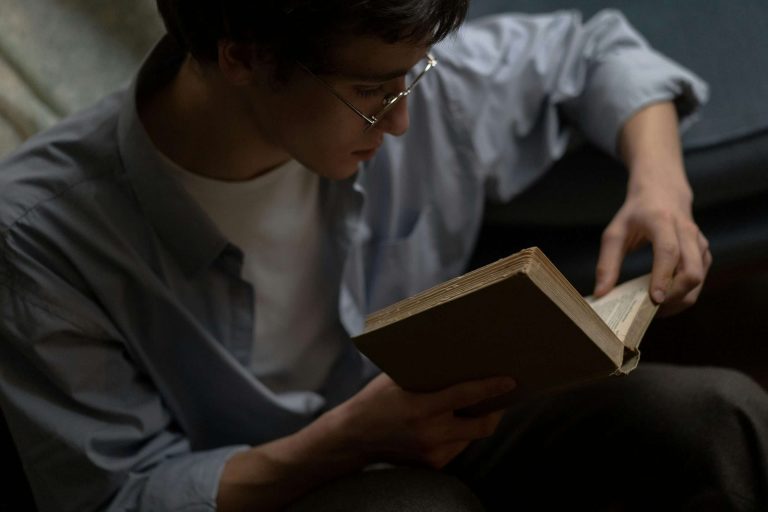
Sol travel, the practice of traveling solo with full intentionality, offers something that group trips rarely can: the chance to be completely, unapologetically yourself in an unfamiliar place. For introverts, that freedom is not just appealing, it is often deeply necessary.
What makes sol travel different from ordinary solo travel is the orientation behind it. You are not filling a gap in your social calendar. You are choosing solitude as the point, and building the entire experience around what genuinely restores you.
I came to this understanding slowly, over many years of traveling for work in ways that left me more depleted than when I left. It took a long time to realize that travel could be something other than exhausting.

If you are working through bigger questions about identity, lifestyle, or what you actually want from your days, sol travel often shows up as part of that process. Our Life Transitions and Major Changes hub covers many of those crossroads moments, and intentional solo travel is one of the more powerful ways introverts move through them.
Why Does Traveling Alone Feel So Different from Traveling in Groups?
My agency years involved a lot of travel. Client summits in Chicago, creative reviews in New York, pitch trips to Los Angeles. I was rarely alone on any of them. There were always colleagues, clients, dinners that stretched past ten o’clock, and breakfast meetings that started before I had fully processed the previous day.
What drains your social battery?
Not all social exhaustion is the same. Our free quiz identifies your specific drain pattern and gives you personalised recharging strategies.
Find Your Drain PatternUnder 2 minutes · 8 questions · Free
What I noticed, even then, was how differently I moved through cities when I had a few hours to myself. A quiet museum on a Tuesday morning. A long walk with no destination. A meal at the bar of a small restaurant where no one expected conversation. Those pockets of solitude were the parts of work travel I actually remembered.
Group travel, even with people you like, requires constant negotiation. Where to eat, when to leave, how long to stay. For introverts, that negotiation is a form of low-grade social labor that accumulates across days. By the end of a group trip, many of us feel like we need a vacation from the vacation.
Sol travel eliminates that overhead entirely. You move at your own pace. You linger where you want and leave when you are ready. Nobody needs to know your itinerary, because there may not be one. That absence of social obligation is not loneliness. It is a specific kind of freedom that introverts tend to experience as genuinely restorative.
There is also something about being anonymous in a new place that quiets the internal noise. At home, you are someone’s colleague, neighbor, family member. Abroad, or even in an unfamiliar city a few hours from home, you are simply a person in a place. That anonymity gives the introvert mind room to breathe in a way that is hard to manufacture otherwise.
What Does the Introvert Brain Actually Do with Unstructured Time Abroad?
One thing I have noticed about myself, and about introverted colleagues and friends over the years, is that we tend to process experience with a time delay. Something happens, and we do not fully understand what it meant to us until hours or days later, when we have had time to sit with it quietly.
Travel accelerates this process in an interesting way. When you are in an unfamiliar environment, your senses are more alert. You notice more. And if you are traveling alone, without the social buffer of companions, all of that input lands directly. There is no one to immediately talk it through with, which means you are left to observe and absorb on your own terms.
For introverts, that is not a deficiency. It is closer to an ideal condition. The introvert mind, as research on introversion and cortical arousal has suggested, tends to process stimulation more thoroughly than the extroverted brain, which is part of why we reach saturation faster in busy social environments. Sol travel, when done thoughtfully, keeps stimulation at a level that feels rich rather than overwhelming.
What fills that unstructured time? More than you might expect. Observation, mostly. Sitting in a square and watching how a city moves. Reading for hours without guilt. Writing in a notebook. Wandering into a church or a market or a used bookshop because something about it looked interesting. Following curiosity without needing to justify it to anyone.
These are not activities that require company. They are activities that are often better without it.
How Do You Plan a Sol Trip That Actually Restores You?
Planning is where many introverts either over-engineer their trips or under-prepare and then spend the first two days anxious about logistics. Both extremes get in the way of the actual experience.
What I have found works better is a light structure with built-in flexibility. You want enough of a framework that you are not burning mental energy on basic decisions every hour, but not so much that the trip becomes a series of obligations.
Practically, that means booking accommodation in advance, having a rough sense of the neighborhood you want to be in, and identifying two or three things you genuinely want to see or do. Everything else can remain open. That openness is not a planning failure. It is the actual point.
Accommodation choice matters more than most travel advice acknowledges. For sol travelers who are introverted, a small apartment rental or a quiet guesthouse will almost always serve better than a social hostel or a large hotel with a busy lobby bar. You want a home base that feels like a retreat, somewhere you can return to mid-afternoon if the city gets loud and your reserves start to drop.
Destination rhythm matters too. Cities with distinct neighborhoods that each have their own quieter corners tend to work well. Places with a strong café culture, where sitting alone for two hours is unremarkable, are often ideal. Markets, botanical gardens, coastal paths, small museums with low visitor counts: these are the kinds of environments where introverts tend to feel genuinely at ease rather than merely tolerating the surroundings.
Your personality type shapes more of these preferences than you might realize. The way I approach a trip as an INTJ, with a tendency toward systems thinking and a preference for depth over breadth, is genuinely different from how an introverted feeler might approach the same destination. If you want to think through how your type shapes these kinds of major lifestyle decisions, the framework in MBTI Life Planning: How Your Type Shapes Every Major Decision is worth reading before you book anything.
What Happens to Sensitivity When You Travel Alone?
Many introverts, and especially those who identify as highly sensitive, find that their sensitivity shifts in interesting ways during sol travel. Some things that would normally feel overwhelming become manageable. Others that seem minor at home land with unexpected weight.
I managed a creative director at my agency for several years who was both introverted and highly sensitive. She found client presentations genuinely draining, not because she lacked confidence, but because she was absorbing the emotional undercurrents of every person in the room simultaneously. She once told me that traveling alone to visit a vendor in Portugal had been the first time in years she had felt like herself for an extended stretch. The sensitivity was still there, but without the social complexity of office dynamics, it became an asset rather than a burden. She noticed things about the culture, the light, the pace of the city that she brought back and channeled directly into her work.
That experience resonated with me because I had seen a version of it in myself. When I travel alone, I notice more. I am more present to the texture of a place. A conversation with a shopkeeper, a piece of music drifting from an open window, the specific quality of afternoon light in a city I have never been to before: these things register differently when there is no social layer filtering them.
Sensitivity, in this context, is not a vulnerability. It is a form of perceptiveness that makes the experience richer. How sensitivity develops and changes over a lifetime is something worth understanding, especially if you have spent years treating your own sensitivity as a problem to manage rather than a quality to work with.
Sol travel has a way of making that reframe concrete. You stop managing your sensitivity for an audience and start letting it do what it does naturally. The result is often a level of presence and absorption that group travel rarely allows.
How Do You Handle the Social Moments That Come Up Anyway?
Sol travel is not hermitage. Even the most introverted traveler will interact with people, and some of those interactions will be unexpectedly meaningful. A conversation with a museum guide who turns out to share your obscure interest. A local at a café who gives you a restaurant recommendation that becomes the best meal of the trip. A fellow solo traveler at a guesthouse who you end up walking with for an afternoon.
What makes these interactions work in a sol travel context is that they are entirely voluntary and usually brief. You are not obligated to sustain them. You can engage fully for twenty minutes and then return to your own company without any social awkwardness. That low-stakes quality is what allows introverts to actually enjoy these encounters rather than enduring them.
There is also something about the depth of conversation that tends to happen between strangers who will likely never see each other again. Introverts tend to gravitate toward deeper, more substantive conversations rather than surface-level small talk, and the anonymity of travel creates conditions where those conversations happen more naturally. You are not performing a role for someone who knows your professional history. You are just two people talking, which is often exactly what introverts prefer.
I had a conversation like that on a long train ride through the Scottish Highlands about fifteen years ago, on a trip I had added a solo week to after a client conference in Edinburgh. A retired engineer sat across from me and we talked for three hours about systems, design, and what it means to build something that lasts. I have never seen him since. That conversation still comes back to me.
That is the paradox of sol travel for introverts. You go alone to be alone, and sometimes you have the most genuine human connection of the year.
What Does Sol Travel Teach You That Staying Home Cannot?
There is a particular kind of self-knowledge that only comes from being in an unfamiliar environment without your usual support structures. At home, you have routines, people, and familiar contexts that shape your behavior in ways you are often not even aware of. Remove all of that, and you start to see yourself more clearly.
I spent a long time in my agency years performing a version of leadership that did not fit me particularly well. I was good at it, in the way that a person can be good at something that costs them more than it should. The extroverted model of the agency CEO, always on, always available, always generating energy in a room, was the dominant template, and I worked hard to approximate it.
It was not until I started taking solo trips, initially just long weekends and then eventually a full week at a time, that I began to understand what my actual preferences and rhythms looked like. How I moved through a day when no one was watching. What I chose to do with free time when the choice was entirely mine. What genuinely energized me versus what I had been telling myself energized me.
That kind of self-observation is harder to do at home, where the pull of habit and obligation is constant. Travel breaks the pattern long enough for you to notice the pattern.
For introverts who have spent years adapting to environments that were not built for them, sol travel can be the first sustained experience of simply being yourself without apology. Making genuine peace with solitude is a process, and sol travel accelerates it in a way that reading about introversion rarely does. You do not just understand it intellectually. You feel it in your body, in the quality of your sleep, in the way you return home.

How Do You Return from a Sol Trip Without Losing What You Found?
Coming home is its own challenge. You have spent days or weeks in a state of relative quiet and self-direction, and then you walk back into a life that has not paused while you were away. The emails, the obligations, the social calendar, the noise: all of it reasserts itself quickly.
What I have found useful is treating the return as a transition that deserves some intentionality, rather than just flipping a switch back to normal. A day at home before returning to work if the schedule allows. Time to process what the trip meant before you are immediately required to perform for others again. Some deliberate carry-forward of the habits that served you while traveling, the slower mornings, the longer walks, the meals without screens.
There is also value in writing down what you noticed about yourself while you were away, before the clarity fades. Not a travel journal in the conventional sense, but a record of the self-observations that surfaced. What did you choose when you had complete freedom? What did you avoid? What surprised you about your own preferences? That record becomes something you can return to when the noise of daily life makes it hard to remember what you actually want.
Some introverts find that sol travel changes their relationship to their home environment in lasting ways. They come back with a clearer sense of which parts of their life feel genuinely chosen and which parts they have simply inherited by default. That clarity can be uncomfortable, but it is usually productive.
Highly sensitive introverts in particular often find that the recalibration from a sol trip carries into their professional lives in meaningful ways. I have seen this in people who work in mentorship and support roles, where the depth of attention they bring to others is directly connected to how well they are tending to their own inner life. The connection between deep listening and genuine support is something that resonates across many contexts, and sol travel has a way of sharpening that capacity.
The introverted mind, when it has been properly rested and given room to breathe, tends to bring more to every relationship and every room it enters. Sol travel is one of the more reliable ways to get there.
What Makes Sol Travel Sustainable as a Long-Term Practice?
One of the things I hear from introverts who have taken one meaningful solo trip is that they want to make it a regular part of their lives but are not sure how. The logistics feel complicated, the cost feels prohibitive, or the social pressure to always travel with others makes it hard to claim solo time without explanation.
Sustainability comes from treating sol travel as a legitimate form of self-maintenance rather than an indulgence that requires justification. That mental reframe matters more than any logistical strategy. When you understand that you function better, think more clearly, and show up more fully for the people in your life after periods of genuine solitude and restoration, the argument for making space for it becomes easier to hold.
Practically, sol travel does not have to mean international flights and extended leave. A long weekend in a city two hours away, a few nights at a quiet inn in a place you have never explored, even a single day trip taken entirely alone: these all carry some of the same restorative quality when approached with the right intention. The scale matters less than the orientation.
Findings on restorative environments and attention recovery point toward the value of environments that are coherent, fascinating, and low in social demand, a description that fits the kind of places introverted sol travelers tend to seek out naturally. You do not need research to tell you this works. Most introverts already know it from experience. What helps is having language for why it works, so you can defend the practice to yourself and others without apologizing.
The introverts I know who have made sol travel a consistent part of their lives tend to be clearer about their values, more deliberate in their choices, and more comfortable in their own company than those who have not. That is not a coincidence. Repeated exposure to your own unmediated preferences has a way of making those preferences legible to you over time.
And there is something about the act of choosing yourself, booking the trip, getting on the plane, sitting in the café alone without anxiety, that accumulates into a kind of confidence that is hard to build any other way. Not the loud confidence of the extrovert who fills a room, but the quieter, more durable confidence of someone who knows exactly who they are and has stopped needing to prove it to anyone.

If sol travel is something you are considering as part of a broader shift in how you live or what you prioritize, you will find more context and support across the full range of articles in our Life Transitions and Major Changes hub.
Running on empty?
Five drain profiles, each with specific triggers, warning signs, and a recharging playbook.
Take the Free QuizUnder 2 minutes · 8 questions · Free
About the Author
Keith Lacy is an introvert who’s learned to embrace his true self later in life. After 20 years in advertising and marketing leadership, including running agencies and managing Fortune 500 accounts, Keith now channels his experience into helping fellow introverts understand their strengths and build fulfilling careers. As an INTJ, he brings analytical depth and authentic perspective to every article, drawing from both professional expertise and personal growth.
Frequently Asked Questions
What is sol travel and why do introverts tend to be drawn to it?
Sol travel is intentional solo travel where solitude is the goal rather than a circumstance. Introverts are often drawn to it because it removes the social negotiation and energy expenditure of group travel, replacing it with freedom to move at your own pace, follow your own curiosity, and restore rather than deplete your reserves.
How is sol travel different from just being lonely while traveling alone?
Loneliness is the painful absence of desired connection. Sol travel is the chosen presence of solitude. The difference is intention. When you travel alone on purpose, with a clear sense of what you are seeking from the experience, aloneness feels like freedom rather than isolation. Most introverts who try sol travel report feeling more themselves than they do in their regular social environments.
What kinds of destinations work best for introverted sol travelers?
Places with strong café culture, walkable neighborhoods, low-key museums, natural landscapes, and a general tolerance for people sitting alone tend to work well. Cities where solo diners are unremarkable, where public transport is reliable, and where there are pockets of quiet within the larger environment are particularly well-suited. The specific destination matters less than how it is approached.
How do you manage anxiety or discomfort during the first sol trip?
Light structure helps. Booking accommodation in advance, having a rough neighborhood orientation, and identifying a few things you genuinely want to see reduces the decision fatigue that can fuel anxiety. Beyond that, giving yourself permission to have a slow start, to spend the first day simply getting comfortable in a place, removes the pressure to maximize every hour and allows the restorative quality of the experience to emerge naturally.
Can sol travel really change how you see yourself as an introvert?
Many introverts report that extended solo travel is one of the clearest mirrors they have encountered for understanding their own preferences, rhythms, and values. Without the social context that usually shapes behavior, you see what you actually choose when the choice is entirely yours. That self-knowledge tends to carry back into daily life in meaningful ways, making it easier to design a life that fits who you actually are rather than who you have been performing.