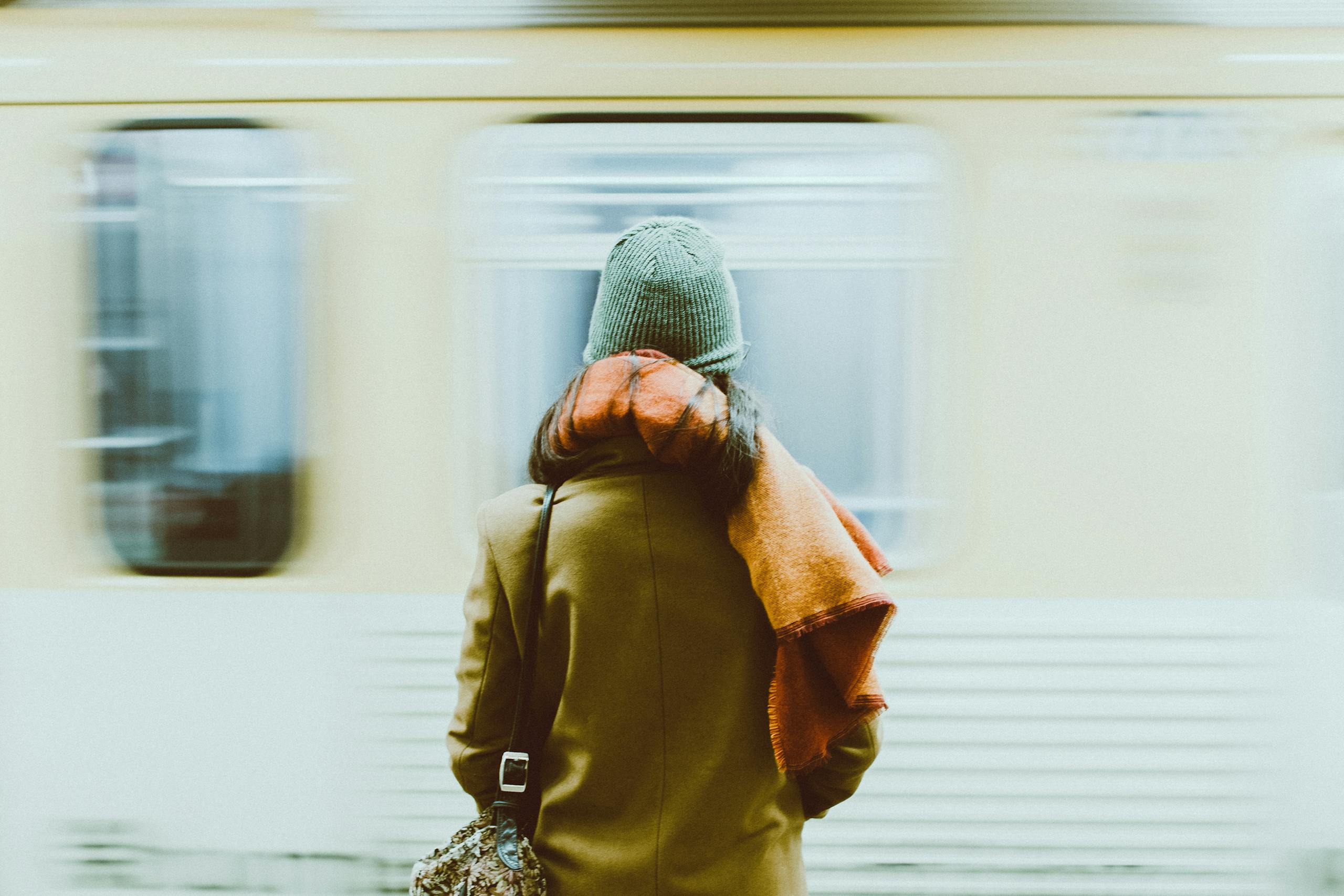
Solo travel in winter hits differently when you’re wired for quiet. The crowds thin out, the pace slows, and the world seems to exhale. For introverts planning a winter getaway alone, the season itself becomes an ally, offering natural permission to slow down, go inward, and move through the world on your own terms.
Solo travel winter vacation ideas work best when they align with how you actually process the world, not how travel marketing tells you a vacation should look. The destinations and approaches that genuinely restore introverts tend to share a few qualities: space for reflection, low social pressure, and an environment that rewards observation over performance.
Solo travel in winter isn’t just a vacation choice. For many introverts, it’s one of the most meaningful decisions they’ll make in a given year, one that ripples into how they see themselves and what they want next. That’s why I’ve woven this piece into our Life Transitions and Major Changes hub, because choosing to travel alone, especially in winter, often marks something larger shifting beneath the surface.

What Makes Winter the Introvert’s Secret Travel Season?
Every seasoned traveler has a theory about the best time to visit somewhere. Mine is simple: go when the extroverts don’t.
What drains your social battery?
Not all social exhaustion is the same. Our free quiz identifies your specific drain pattern and gives you personalised recharging strategies.
Find Your Drain PatternUnder 2 minutes · 8 questions · Free
Winter travel strips away the performance layer that summer tourism adds. There are no lines snaking around famous landmarks at 8 AM. Museum galleries hold actual breathing room. Café owners have time to talk, or more importantly, to leave you alone with your coffee and your thoughts. The social contract of off-season travel quietly shifts in your favor.
I spent a lot of years in advertising running campaigns for travel brands, and I noticed something consistent in how those campaigns were built. They sold the crowd. The beach packed with laughing strangers. The rooftop bar buzzing at golden hour. The group tour with matching lanyards. That imagery works for a large segment of the population. It never worked for me, and I suspect it doesn’t work for you either.
What actually restores an introvert on vacation is harder to photograph. It’s the stillness of a cathedral on a Tuesday morning in January. It’s reading for three uninterrupted hours in a rented apartment while snow falls outside. It’s walking through a market without someone trying to pull you into a group activity. Winter makes all of that easier to find.
There’s also something about the sensory texture of winter travel that suits the way introverts tend to process experience. The muted light, the quieter streets, the way cold air sharpens your attention to small details. Many introverts are also highly sensitive people, and the way sensitivity evolves across a lifetime often means that as we get older, we become more attuned to these subtler layers of experience, and more willing to seek them out deliberately.
Which Types of Destinations Actually Restore Rather Than Drain?
Not all quiet destinations are created equal. A remote cabin sounds restorative in theory, but if it’s three hours from the nearest town and you’re anxious about logistics, it creates a different kind of exhaustion. The destinations that genuinely work for introverted solo travelers in winter tend to share a specific profile.
They have infrastructure without chaos. Walkable city centers where you can spend a full day without needing to interact with anyone beyond a brief transaction. Strong café culture, good public transit, and the kind of ambient social life that lets you feel present without being required to participate. Think Lisbon in January, Kyoto in February, or Reykjavik on a dark December afternoon.
They have depth. Winter travel rewards destinations with layers, places where you can keep finding new things to notice rather than checking off a list of famous sights. A city with strong museum culture, literary history, or an interesting food scene gives the introvert mind something to engage with at its own pace.
They have natural environments worth sitting inside. A destination near mountains, water, or old forests gives you somewhere to go that requires nothing of you socially. Nordic countries do this particularly well in winter. The landscape itself becomes the activity, and nobody expects you to narrate your experience of it.
One of the most useful frameworks I’ve found for thinking about destination fit is understanding how your personality type shapes what you need from an experience. Our piece on MBTI life planning and how your type shapes major decisions gets into this at a level that goes well beyond travel, but the core insight applies directly here: when you understand how you’re wired, you stop choosing vacations based on what looks impressive and start choosing based on what actually works.

How Do You Build an Itinerary That Honors Your Energy?
Most travel advice is built around maximizing. See as much as possible. Hit every landmark. Fill every hour. That approach is exhausting for anyone, and for introverts traveling alone in winter, it completely defeats the purpose.
The itinerary structure that actually works for introverted solo travelers looks something like this: one anchor activity per day, with everything else left deliberately open. The anchor might be a museum visit, a cooking class, a long walk to a specific neighborhood. Everything around it stays flexible, which means you can follow your energy rather than fight it.
I used to run my agency calendar the same way I now run my travel days. Back then, I packed every hour because I thought that’s what effective leaders did. It took me years to understand that my best thinking, and my best work, happened in the spaces between scheduled things. The same principle applies to travel. The unplanned afternoon in a city you don’t know often produces the experience you’ll remember longest.
Winter makes this easier because daylight is shorter. In Lisbon in January, the sun sets around 5:30 PM. That natural boundary gives you permission to wrap up early, return to your accommodation, and spend the evening reading or writing or simply processing the day. There’s no guilt about missing golden hour because golden hour is already gone by dinnertime. The season enforces the pace you actually need.
A few structural principles worth building into your planning:
- Book accommodation with a kitchen or kitchenette. The ability to eat at least one meal alone in your own space each day dramatically reduces social fatigue.
- Choose neighborhoods over city centers. Staying in a residential area means your daily environment is quieter, and you get a more authentic sense of how people actually live in a place.
- Build in at least one full day with no plans. Not a “flexible day.” A day with genuinely nothing scheduled, where you wake up and decide based entirely on how you feel.
- Research your anchor activities in advance, but resist over-researching everything else. Over-planning creates its own pressure.
What Are the Best Solo Travel Winter Vacation Ideas by Destination Type?
Rather than a generic list of everywhere worth visiting in winter, here are destination categories that consistently deliver for introverted solo travelers, along with what makes each one work.
Cold-Weather Cities with Strong Interior Culture
Cities that have adapted to long, dark winters tend to develop exceptional interior life. Copenhagen, Vienna, Prague, and Edinburgh all fall into this category. The café culture is serious. The museums are world-class and rarely overcrowded in January. The architecture rewards slow walking even when the weather doesn’t.
Vienna in particular has always struck me as a city built for the introvert’s pace. The coffee house tradition there is genuinely different from anywhere else. You order one coffee and you can sit for three hours without anyone bothering you. That’s not rudeness. That’s a cultural institution. The Viennese invented the concept of the coffee house as a place to read, think, and exist without obligation. I spent a long weekend there between client meetings years ago and came back to the office feeling more restored than I had after any beach vacation I’d taken.
Warm Destinations with Low-Season Quiet
Southern Europe and parts of Southeast Asia offer something different: warmth without the summer crowds. Lisbon, Seville, and Porto in January are almost unrecognizable compared to their August selves. The locals reclaim their city. Prices drop significantly. And the quality of solitude you can find, even in places that are famously beautiful, is remarkable.
In Southeast Asia, the calculus is different. Places like Chiang Mai in northern Thailand or Hoi An in Vietnam have distinct low seasons that bring cooler temperatures and fewer tourists. The cultural depth of these destinations, the temples, the food markets, the craft traditions, gives the introvert mind exactly the kind of layered experience worth sitting inside for days at a time.

Nature-Centered Retreats
For introverts who find their deepest restoration in natural environments, winter offers some genuinely extraordinary options. Iceland in January or February is one of the most singular experiences available to a solo traveler. The landscape is otherworldly. The population density is among the lowest in Europe. And the possibility of seeing the northern lights adds a dimension of wonder that’s hard to replicate anywhere else.
The Canadian Rockies in winter, particularly around Banff and Jasper, offer a different version of the same principle. The summer crowds are gone. The mountains are still there. Cross-country skiing, snowshoeing, and long walks through frozen landscapes give you physical activity that also happens to be completely solitary. Your mind has space to work through whatever it needs to work through.
Japan’s rural onsen towns in winter deserve special mention. The combination of thermal baths, minimalist accommodation, and winter landscapes creates an environment that seems purpose-built for introverted restoration. There’s a cultural concept in Japan, ma, that describes the value of negative space and pause. Spending time in that culture during its quietest season has a way of giving you permission to value your own need for pause more deeply.
How Does Traveling Alone in Winter Change How You See Yourself?
There’s a version of solo travel that’s purely logistical, getting from one place to another, seeing things, eating well, coming home. And then there’s the version that does something else entirely.
Spending time alone in an unfamiliar environment, especially in winter when the world is quieter and the days are shorter, has a way of surfacing things. You notice what you actually think about when there’s no one to perform for. You discover what your energy looks like when it’s not being managed around other people’s needs. You find out what genuinely interests you when no one is watching.
As an INTJ, I’ve always been more comfortable with solitude than most people around me seemed to be. But it took me a long time to stop treating that comfort as something to apologize for. The advertising world I worked in for two decades had a particular culture around socializing, around being “on,” around reading every room and performing ease in every interaction. I got reasonably good at it. I also found it quietly exhausting in ways I didn’t fully name until I started taking solo trips and noticed how differently I felt at the end of them.
What I’ve come to understand, both from my own experience and from conversations with introverts who’ve written to me after reading something on this site, is that solo travel often becomes a form of identity work. You’re not just visiting places. You’re spending extended time with yourself, which is something most of us rarely do with any real intentionality. That process connects directly to what embracing solitude actually looks like when you stop fighting it, and how that shift changes what you’re able to offer the world when you return.
The psychological literature on this is interesting. There’s solid evidence that solitude and time spent in reflection contribute to emotional processing and self-understanding in ways that social interaction doesn’t replicate. For introverts, who tend to process internally rather than out loud, extended time alone in a new environment can produce a kind of clarity that’s difficult to find in ordinary life.
What Should You Actually Pack, Mentally and Practically?
Packing for a solo winter trip as an introvert involves two parallel lists. The practical one is straightforward. The mental one is where most of the real preparation happens.
On the practical side, winter travel demands more planning than warm-weather trips because the stakes of being underprepared are higher. Layering systems matter. Waterproof footwear matters. A quality day bag that fits everything you need for six hours outside matters. Beyond that, the specifics depend entirely on where you’re going.
What matters more, in my experience, is the mental preparation. Specifically, giving yourself permission to do less than you think you should. Solo winter travel has a particular temptation to over-justify itself. Because you’re alone, you might feel pressure to prove the trip was “worth it” by cramming in experiences. Resist that impulse directly. The trip is worth it because you went. The experiences you have will be proportional to how present you allow yourself to be, and presence requires space, not density.
A few things worth thinking through before you leave:
- What do you actually want to feel at the end of this trip? Rested? Inspired? Clearer about something? Naming that intention shapes every decision you make once you’re there.
- What’s your recharge threshold? How many hours of social interaction in a day can you handle before you need to withdraw? Build that awareness into your planning.
- What will you do with difficult moments? Solo travel in winter occasionally produces loneliness, or unexpected emotion, or simply a bad day in an unfamiliar place. Having a plan for that, even if it’s just “I’ll go find a café and read for two hours,” matters.
- What do you want to bring back, not souvenirs, but ideas, intentions, or shifts in perspective? Having a journal practice during the trip gives those things somewhere to land.
How Do You Handle the Social Moments That Are Unavoidable?
Solo travel doesn’t mean zero human contact. It means choosing the nature and amount of that contact deliberately. That distinction matters.
Even the most introverted traveler will have moments of connection on a solo trip, and many of those moments turn out to be the best parts. The difference is that they happen on your terms. You can end a conversation when you want to. You can choose to eat at the bar and talk to the person next to you, or you can choose a corner table and read. Nobody is waiting for you to perform sociability.
One thing I’ve noticed about the quality of conversation that happens in solo travel is that it tends to be better than the social interaction you get in group travel. When you’re alone, strangers engage with you differently. They ask real questions. They share things they might not say to a group. There’s something about the openness of a solo traveler that invites a different kind of exchange. Introverts often crave deeper conversations over surface-level small talk, and solo travel, perhaps counterintuitively, tends to produce more of them.
The moments that are harder are the ones with low-grade social pressure that’s hard to name. A hostel common room where everyone seems to know each other. A tour group where you’re the only person traveling alone. A restaurant where the host seats you at a communal table without asking. These situations aren’t dangerous, but they can drain energy quickly if you’re not prepared for them.
Having a few simple scripts helps. “I’m enjoying some time to myself” is a complete sentence that most people respect. “I’m a writer” or “I’m working on a project” gives curious strangers a satisfying answer that also creates space. And sometimes, simply having earbuds in (whether or not you’re listening to anything) signals that you’re not available for conversation without requiring any explanation at all.
There’s also something worth saying about the kind of connection that happens in structured settings, classes, tours, workshops, cooking lessons. These work well for introverts because the interaction has a clear purpose and a defined endpoint. You’re not expected to keep the conversation going indefinitely. You show up, you participate in the activity, you leave. Many introverts find these settings far more comfortable than open-ended socializing, and they often produce genuine connection precisely because the structure removes the performance pressure.
What Does Winter Solo Travel Teach You That Summer Crowds Can’t?
There’s a particular kind of attention that winter travel develops. When the environment is quieter and the pace is slower, you start noticing things that get drowned out in peak season. The way light falls on old stone in the late afternoon. The sound a city makes at 7 AM before the day has fully started. The way locals move through their own neighborhoods when tourists aren’t watching.
My mind has always worked this way, noticing the detail others walk past, finding meaning in the texture of things rather than the headline of them. Running advertising agencies, that tendency was genuinely useful. I could walk into a client’s office and read the room in ways that told me things the briefing documents didn’t. I could watch how a team interacted for twenty minutes and understand the dynamics that were shaping their output. That same capacity for observation, when pointed at a winter city rather than a conference room, produces a quality of experience that’s hard to replicate any other way.
There’s also something about the emotional register of winter that suits introverted processing. The season has a natural gravity to it. It encourages introspection in ways that summer resists. A beach in July is a place to be present in your body. A snowy city in January is a place to be present in your mind. Both have value, but for introverts who spend much of their year managing the demands of an extroverted world, the second kind of presence is often the one they’re most starved for.
Neurological research has explored how environment shapes cognitive state, and the relationship between physical environment and mental restoration is well-documented. What’s less often discussed is how seasonal context amplifies this. Winter environments, particularly those with natural quiet and reduced stimulation, tend to support the kind of deep processing that introverts do best.
That processing, when given enough time and space, often produces something unexpected. Not just rest, but clarity. Not just recovery, but a kind of reorientation. You come back from a solo winter trip knowing something you didn’t know before, about where you want to go next, about what matters to you, about who you are when nobody needs anything from you.
That’s why the conversations happening in spaces like academic advising and mentorship are so relevant here. Advisors who listen deeply understand that the most important questions people carry aren’t always the ones they articulate out loud. Solo winter travel creates the conditions where those quieter questions finally get heard.

How Do You Make the Most of the Return Home?
The end of a solo trip is its own kind of experience. There’s the re-entry into ordinary life, which can feel jarring after days or weeks of moving at your own pace. And there’s the question of what to do with everything the trip stirred up.
One thing I’ve learned from my own solo travel is to build a buffer into the return. If I fly home on a Sunday, I don’t schedule anything for Sunday evening or Monday morning. That transition time isn’t wasted. It’s where the integration happens, where the insights from the trip get absorbed into ordinary life rather than immediately buried under the next set of demands.
Writing helps. Not necessarily formal journaling, though that works too, but any form of capturing what the trip produced. What did you notice? What surprised you? What do you want to carry forward? These questions are worth sitting with while the experience is still fresh, before the ordinary world reasserts itself completely.
The deeper question that solo winter travel often raises is about what comes next. Not just the next trip, but the next chapter. Many introverts find that time alone in an unfamiliar place clarifies things they’d been avoiding thinking about at home. Career questions. Relationship questions. Questions about how they want to spend their time and energy going forward. That’s not a side effect of solo travel. For many people, it’s the whole point.
Frontiers in Psychology has published interesting work on how solitary experiences contribute to personal growth and identity development, which aligns with what many introverted solo travelers describe when they reflect on what their trips actually gave them. The destination matters less than the conditions it creates for that internal work to happen.
If you find that your solo winter trip raises bigger questions about direction and change, you’re in good company. Our Life Transitions and Major Changes hub is built around exactly those moments, when a trip, or a quiet season, or a long walk through a winter city makes something shift that you can’t quite shift back.
Running on empty?
Five drain profiles, each with specific triggers, warning signs, and a recharging playbook.
Take the Free QuizUnder 2 minutes · 8 questions · Free
About the Author
Keith Lacy is an introvert who’s learned to embrace his true self later in life. After 20 years in advertising and marketing leadership, including running agencies and managing Fortune 500 accounts, Keith now channels his experience into helping fellow introverts understand their strengths and build fulfilling careers. As an INTJ, he brings analytical depth and authentic perspective to every article, drawing from both professional expertise and personal growth.
Frequently Asked Questions
What are the best solo travel winter vacation ideas for introverts who want genuine quiet?
The destinations that consistently deliver for introverted solo travelers in winter share a few qualities: walkable infrastructure, strong café or library culture, and natural environments worth sitting inside. Vienna, Lisbon, Kyoto, Reykjavik, and Chiang Mai all work well for different reasons. Vienna offers coffee house culture where you can sit for hours undisturbed. Lisbon gives you warmth and beauty without summer crowds. Kyoto and Chiang Mai offer cultural depth with a slower pace. Reykjavik delivers dramatic landscape and genuine solitude. The best choice depends on whether you restore more easily in cold, atmospheric cities or in warm, low-key environments.
How do you handle loneliness during solo winter travel?
Loneliness on a solo trip is real and worth planning for, rather than hoping to avoid. The most effective approach is distinguishing between productive solitude and genuine loneliness, which feel different. Productive solitude feels spacious. Genuine loneliness feels contracted. When the second feeling arrives, the best response is usually a change of environment, a café with ambient noise, a bookshop, a structured activity like a cooking class or a museum tour. Having a few anchor connections at home, someone you can send a voice message to, also helps. Winter travel can intensify feelings because the shorter days create a more interior atmosphere, so building in small social touchpoints, even brief ones, provides balance without compromising the solitude you came for.
Is solo winter travel safe for someone traveling alone for the first time?
Safety in solo winter travel depends significantly on destination choice and preparation. For first-time solo travelers, cities with strong tourism infrastructure, good public transit, and English-language accessibility reduce the logistical challenges considerably. Western Europe, Japan, Canada, and New Zealand all score well on these dimensions. Beyond destination choice, the practical safety considerations for winter specifically include weather preparedness, having offline maps downloaded, keeping accommodation and emergency contact information accessible, and understanding local emergency services. Solo travel in winter is genuinely safe in most popular destinations, and the lower crowd levels often make it feel more manageable than peak-season travel, not less.
How should an introvert structure their days during a solo winter trip?
The structure that works best for introverted solo travelers in winter is built around one anchor activity per day with everything else left open. Choose one thing you genuinely want to do, a specific museum, a neighborhood walk, a food market, and let the rest of the day respond to your energy. Build in at least one meal per day in your accommodation or in a genuinely quiet space. Plan at least one full day with nothing scheduled at all. Keep mornings slow, since winter light is often worth experiencing before the day gets busy. And resist the urge to optimize every hour. The unplanned afternoon in an unfamiliar city frequently produces the experience you’ll remember most clearly.
Can solo winter travel genuinely help with burnout or a major life transition?
Solo winter travel can be genuinely restorative for introverts dealing with burnout, though it works best when approached with realistic expectations. It’s not a solution to structural problems, but it creates conditions for the kind of internal processing that’s difficult to access in ordinary life. The combination of physical distance from familiar demands, extended time in your own company, and the quieter pace of winter travel tends to surface clarity that gets buried under daily noise. Many introverts find that a solo winter trip clarifies something they’d been circling around for months, a career question, a relationship pattern, a sense of what they actually want next. That clarity doesn’t come from the destination. It comes from the quality of attention the trip makes possible.