
Sometimes you need alone time, and that need is not a flaw or a social failure. For introverts, solitude is the mechanism that keeps everything else functioning. Without it, the clarity fades, the patience thins, and the version of yourself that shows up in the world starts to feel like a performance you can barely sustain.
Most of us know this on some level. What takes longer to accept is that the need is legitimate, non-negotiable, and worth protecting with the same seriousness you’d give any other health requirement.
Alone time sits at the center of how introverts manage energy, and our Energy Management and Social Battery hub explores the full range of what that means, from daily recharge habits to the deeper patterns that shape how we move through social and professional life. This article focuses on something more foundational: why the need for solitude exists at all, what happens when it goes unmet, and how to stop treating it like an inconvenient personality quirk.
Why Does Alone Time Feel So Necessary for Introverts?
There is a neurological dimension to this that is worth understanding. Cornell University research on brain chemistry has shown that extroverts and introverts respond differently to dopamine, the neurotransmitter associated with reward and stimulation. Extroverts tend to seek out more stimulation because their brains respond to it with heightened energy. Introverts, by contrast, are often already operating near their optimal stimulation threshold, which means additional social input doesn’t energize them. It costs them.
What’s your personality type?
Take our free 40-question assessment and get a detailed personality profile with dimension breakdowns, context analysis, and personalised insights.
Discover Your Type8-12 minutes · 40 questions · Free
That cost accumulates. A meeting, a phone call, a hallway conversation, a lunch with a client: each one draws from the same reserve. By the time I was deep into running my first agency, I had a full calendar that looked impressive from the outside and felt like a slow drain from the inside. I didn’t have language for it then. I just knew that by Thursday afternoon, I was producing worse work, making shorter decisions, and snapping at people I genuinely liked.
What I was experiencing is something Psychology Today describes as characteristic of introversion: the tendency to feel depleted by social interaction and restored by time spent alone. It is not shyness. It is not misanthropy. It is a fundamental difference in how the nervous system processes external stimulation.
And for those who are also highly sensitive, that depletion can arrive faster and cut deeper. If you recognize yourself in the idea that sensory and emotional input hits harder than it seems to hit other people, the connection between why introverts get drained so easily and the specific experience of high sensitivity is worth examining closely.
What Actually Happens When You Don’t Get Enough Alone Time?
The effects are not subtle once you know what to look for. Cognitively, the thinking gets muddier. I noticed this most clearly during new business pitches. When I had protected time to think before a presentation, my ideas were sharper, my instincts were reliable, and I could read the room with some precision. When I’d come into a pitch after three days of back-to-back client work with no recovery space, I was operating on fumes. I could still perform, but the real-time synthesis that made me good at my job was significantly impaired.
Emotionally, the depletion tends to manifest as irritability or withdrawal. People around you notice a flatness, a reduced warmth, a shorter fuse. You might recognize it as a version of yourself you don’t particularly like, but feel unable to correct in the moment because the very resource you’d need to course-correct is the one that’s been depleted.
Physically, chronic overstimulation without recovery takes a toll that many introverts don’t connect to their social patterns. Sleep quality suffers. Headaches become more frequent. The body carries tension that doesn’t fully release because the nervous system never fully downshifts. Research published in PubMed Central has explored the relationship between social stress, nervous system activation, and physical health outcomes, and the picture it paints is consistent with what many introverts describe anecdotally: sustained overstimulation is not just uncomfortable, it is physiologically costly.
For highly sensitive people, that cost is amplified further. The nervous system of an HSP processes stimulation more thoroughly, which means noise, light, and sensory input all contribute to depletion in ways that can feel disproportionate to others. If you’re dealing with sensory overload as part of your experience, the strategies in this piece on HSP noise sensitivity and coping strategies speak directly to that layer of the experience.
Why Is It So Hard to Give Yourself Permission to Be Alone?
Even when we understand the need intellectually, acting on it runs into a wall of cultural messaging that frames solitude as avoidance, withdrawal, or antisocial behavior. In professional environments, visible presence is often equated with engagement and commitment. Closing your door, skipping the team lunch, or leaving a social event early can feel like a statement you’re making about your investment in the work or the people around you.
I felt this acutely for most of my agency years. There was an unspoken expectation that leaders were available, energetic, and visibly present. Needing to disappear for an hour to think was not something I saw modeled by anyone I worked with or for. So I didn’t do it. I stayed in the open, stayed accessible, stayed “on,” and quietly paid for it in the quality of my thinking and the consistency of my temperament.
Part of what makes this hard is that the need for alone time can feel selfish in a way that other needs don’t. Nobody feels guilty about eating lunch or going to the bathroom. But stepping away from social interaction to recharge carries a vague sense of obligation being shirked, as if your presence is owed to the people around you in a way that your hunger or fatigue is not.
That framing is worth challenging directly. Your capacity to think clearly, contribute meaningfully, and treat people well is directly tied to whether your reserves are adequate. Protecting your alone time is not a withdrawal from your responsibilities. It is what makes it possible to meet them well.
What Does Restorative Alone Time Actually Look Like?
Not all solitude is equally restorative, and this is something I got wrong for a long time. Early in my career, I would spend “alone time” scrolling through emails, reviewing decks, or mentally rehearsing conversations I needed to have. Technically I was by myself. Practically, I was still fully engaged with external demands. My nervous system didn’t know the difference.
Restorative alone time has a different quality. It involves reducing stimulation rather than redirecting it. For me, that has meant long walks without headphones, sitting with a book that has nothing to do with work, or simply being in a quiet room without an agenda. The mind doesn’t go blank in those moments. If anything, it becomes more active in a productive way, making connections, processing experiences, surfacing ideas that were buried under the noise of the day.

The science of this connects to what recent research on rest and cognitive restoration describes as the default mode network, the brain’s activity during unstructured, inward-focused time. Far from being idle, the brain during genuine rest is consolidating information, generating insight, and regulating emotion. For introverts, who do much of their processing internally, this kind of unstructured mental space is not a luxury. It is when a significant portion of actual thinking happens.
For highly sensitive people, the environment matters considerably. Overly bright light, persistent background noise, and even certain textures can prevent the nervous system from fully settling. If you find that your “alone time” still leaves you feeling wired or unsettled, it may be worth looking at the sensory conditions of that space. The guidance on HSP light sensitivity and how to manage it and the deeper look at tactile sensitivity in highly sensitive people both address how environmental factors shape whether rest is actually restorative.
How Do You Build Alone Time Into a Life That Keeps Demanding Your Presence?
This is where the practical work happens, and it is genuinely harder than it sounds. Especially in roles where your presence is expected, your accessibility is valued, and your schedule is shaped by other people’s needs.
What eventually worked for me was treating alone time with the same structural seriousness I gave client meetings. That meant blocking it on the calendar with the same commitment I’d give a presentation. Not “if I have time” but “this is already spoken for.” When I started doing that consistently, something shifted. People adjusted. The sky did not fall. And my Thursday afternoons stopped feeling like I was running on empty.
A few approaches that tend to work well in practice:
Anchor your mornings before the demands begin. Even thirty minutes of quiet before the first email or the first conversation can set a different tone for the entire day. I spent years skipping this in favor of getting an early start on work, and I consistently underestimated how much that morning quiet was worth.
Build transition buffers between social engagements. Back-to-back meetings are particularly costly for introverts because there is no space to process what just happened before the next thing begins. Even a ten-minute gap can make a meaningful difference in how you show up for the second conversation.
Create physical signals that communicate unavailability without requiring explanation. A closed door, headphones, a specific location where you work alone: these cues help others understand your availability without you having to justify it repeatedly.
Protect the end of your day with the same intention you bring to the beginning. The evening hours are often when introverts do their best thinking and their deepest recovery. Filling them with social obligations by default, rather than by genuine choice, is one of the more common ways the recharge cycle gets disrupted.
What About the Guilt That Comes With Needing Space From People You Love?
This is the layer that rarely gets talked about, and it is one of the more emotionally complicated aspects of introversion. Needing alone time from colleagues or acquaintances is one thing. Needing it from family, close friends, or a partner is something that can carry real weight.
My wife is not an introvert. She processes externally, finds energy in conversation, and genuinely enjoys being around people in ways that I admire and occasionally find baffling. Early in our relationship, my need for quiet time after a long week felt to her like a comment on how much I valued her company. It took real conversation, and some honest vulnerability on my part, to explain that the need had nothing to do with her and everything to do with how my nervous system works.
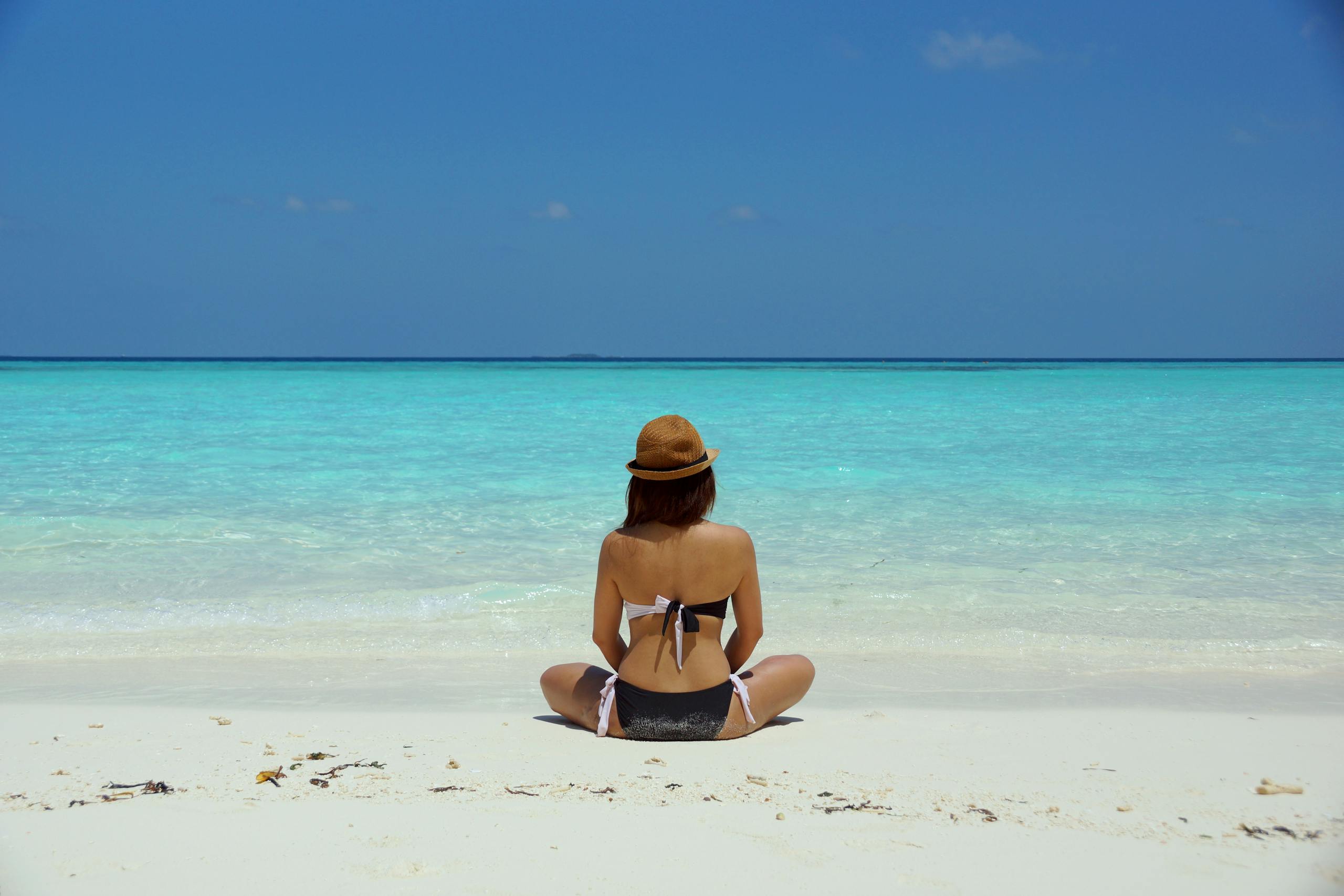
What helped was framing it accurately: alone time makes me a better partner, not a more distant one. When I have adequate solitude, I come to the people I love with more patience, more genuine presence, and more capacity for connection. When I don’t, I’m physically present but emotionally somewhere else, which is a worse version of the same absence.
That reframe, from “I need space from you” to “I need space so I can fully be with you,” is not just rhetorical. It reflects something real about how introvert energy management actually works. The Psychology Today overview of highly sensitive people touches on this dynamic as well, noting that HSPs in particular often need significant recovery time after intense emotional or social engagement, not because they care less, but because they process more deeply.
Is There a Difference Between Healthy Solitude and Unhealthy Isolation?
Yes, and it matters to be honest about this distinction. Healthy solitude is chosen, purposeful, and restorative. It leaves you more capable of connection afterward. Unhealthy isolation tends to be avoidant, driven by anxiety or overwhelm rather than genuine restoration, and it tends to compound rather than resolve the underlying difficulty.
The practical difference often shows up in how you feel after the time alone. Restorative solitude produces a sense of having returned to yourself, a quiet readiness to re-engage. Avoidant isolation tends to leave anxiety intact or heightened, with the added layer of having missed something or let someone down.
Another signal worth paying attention to: whether you’re withdrawing from specific situations that feel overwhelming, or from connection itself. Needing to skip a loud party because your reserves are low is reasonable self-awareness. Consistently avoiding any situation where you might be seen, challenged, or emotionally vulnerable is something worth examining more carefully, possibly with professional support.
The National Institutes of Health has published extensively on the relationship between social connection and mental health, and the picture is consistent: humans need both solitude and connection. The introvert’s work is not to eliminate one in favor of the other but to find the ratio that keeps both dimensions of wellbeing intact.
For those who find the balance genuinely difficult to calibrate, particularly when sensory overload is part of the picture, the framework in this piece on finding the right stimulation balance for HSPs offers a useful lens. And if you’re thinking about this in terms of broader energy reserves, the approach outlined in protecting your reserves as a highly sensitive person addresses the long-term management side of this challenge.
What Shifts When You Finally Stop Treating Alone Time as Optional?
Something genuinely changes. Not overnight, and not without some awkward conversations along the way, but the cumulative effect of consistently protecting your recovery time is significant.
My thinking got clearer. My patience extended. I stopped arriving at the end of the week feeling like I’d been wrung out, and started arriving with something left in reserve. The work got better because I was bringing a more complete version of myself to it, not the depleted, slightly resentful version that had become my default by midweek.
There was also something more personal in it. Spending time alone, genuinely alone and present with my own thoughts, gave me back a relationship with myself that years of constant external engagement had eroded. I had opinions I’d forgotten I held. I had interests that had gone dormant. I had a quality of attention that only showed up when there was nothing competing for it.

That is, I think, what alone time is really for. Not just recovery, though it is certainly that. It is the space in which you remain a person with an interior life rather than a function that responds to external demands. For introverts, that interior life is not incidental. It is the source of most of what makes us valuable, in our work, in our relationships, and to ourselves.
Treating that source as something worth protecting is not indulgence. It is the most practical thing you can do.
There is a lot more to the way introverts manage energy across different contexts, and the full picture lives in our Energy Management and Social Battery hub, where you’ll find connected pieces on social depletion, recovery strategies, and the specific challenges that come with being an introvert in a world that doesn’t always make space for your needs.
About the Author
Keith Lacy is an introvert who’s learned to embrace his true self later in life. After 20 years in advertising and marketing leadership, including running agencies and managing Fortune 500 accounts, Keith now channels his experience into helping fellow introverts understand their strengths and build fulfilling careers. As an INTJ, he brings analytical depth and authentic perspective to every article, drawing from both professional expertise and personal growth.
Frequently Asked Questions
Is needing alone time a sign that something is wrong with me?
No. Needing alone time is a characteristic feature of introversion, not a disorder or a deficiency. It reflects how your nervous system processes stimulation and restores itself. The need becomes worth examining only if it tips into consistent avoidance of connection or anxiety that doesn’t resolve with rest.
How much alone time do introverts actually need?
There is no universal number, and the amount varies by individual, by the intensity of recent social engagement, and by other factors like stress levels and overall health. A useful signal is whether you feel genuinely restored after your solitude or still depleted. If you consistently need more time alone than your life currently allows, that gap is worth taking seriously.
How do I explain my need for alone time to people who don’t understand it?
The most effective framing tends to be practical rather than personality-based. Saying “I need some quiet time to think and recharge so I can be fully present with you afterward” is more accessible than explaining introversion from scratch. Connecting your alone time to the quality of your presence in relationships tends to land better than framing it as a preference or a limit.
Can you be an introvert and still enjoy being around people?
Absolutely. Introversion describes how you process energy, not how much you value or enjoy human connection. Many introverts have rich social lives and genuinely love the people in them. The distinction is that social engagement costs energy rather than generating it, which means recovery time is necessary regardless of how enjoyable the interaction was.
What is the difference between introversion and being a highly sensitive person?
Introversion and high sensitivity are related but distinct traits. Introversion refers specifically to how social interaction affects energy levels. High sensitivity describes a more thorough processing of sensory, emotional, and environmental input across all contexts, not just social ones. Many people are both introverted and highly sensitive, which can intensify the need for alone time and make the conditions of that solitude more important.