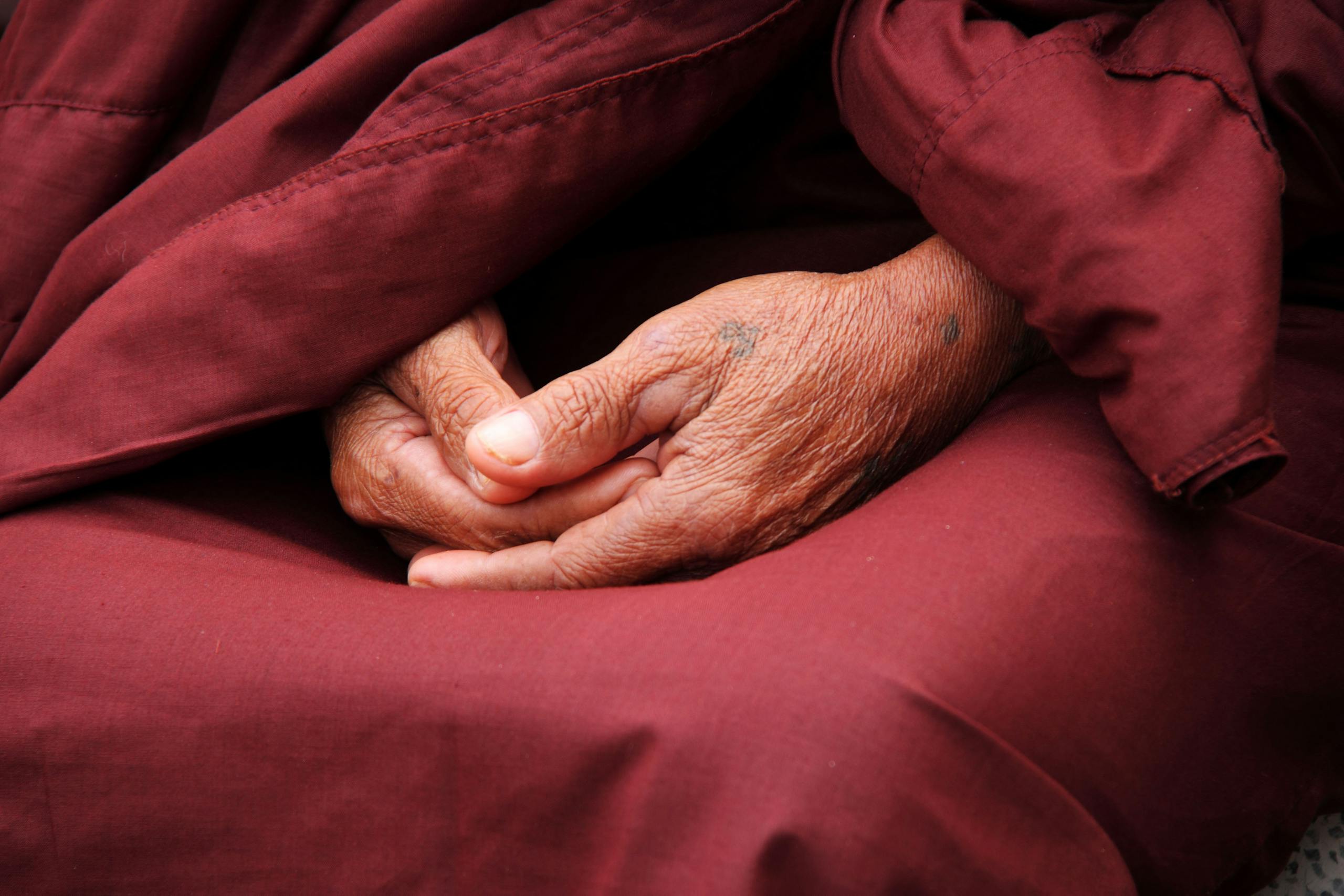
ISFJ spirituality tends to be quiet, grounded, and deeply personal. People with this personality type often experience the sacred not through grand revelation but through faithful repetition, service to others, and a profound attunement to the needs of those around them.
If you’ve ever wondered why some people seem to find God in the ordinary, in the same prayer said every morning, in the meal cooked for a grieving neighbor, in the small act of showing up again and again, you’re probably observing an ISFJ at their spiritual center.

Over at our ISFJ Personality Type hub, we cover the full landscape of what makes this type tick, from how they communicate to how they lead. But spirituality adds a particular layer worth exploring on its own, because for ISFJs, the inner life and the outer life of service are rarely separate things.
What Does Spirituality Actually Look Like for an ISFJ?
Before we get into the specific texture of ISFJ spiritual experience, it helps to understand the cognitive architecture driving it. The ISFJ’s dominant function is introverted sensing, or Si. Introverted sensing isn’t simply memory or nostalgia, as it’s often mischaracterized. It’s a deep, subjective relationship with internal sensory impressions, a way of comparing present experience against a rich internal library of past ones, noticing what resonates, what feels true, what feels safe or meaningful.
For ISFJs, this means spiritual life is often rooted in continuity. The same hymn sung for forty years carries weight not because it’s new but because it’s layered with every moment it’s been sung before. A rosary, a Friday evening Shabbat, a morning meditation practice, these aren’t ruts. They’re anchors. The repetition itself is the point.
Their auxiliary function, extraverted feeling (Fe), then turns that inner experience outward. Fe attunes to group dynamics, shared values, and the emotional needs of the people around them. So the ISFJ’s spirituality rarely stays private for long. It wants to express itself through care, through presence, through making sure everyone at the table has enough to eat.
I’ve worked alongside ISFJs in agency settings, and what always struck me was how their reliability carried a kind of moral weight. One account manager I worked with for years had this quality of showing up that felt almost devotional. Every deadline met. Every client call returned. Every team member checked on before a big presentation. As an INTJ, I tend to see systems and efficiency. What she had was something different, a faithfulness that had its own spiritual grammar.
Why Do ISFJs Gravitate Toward Structured Religious Traditions?
Not every ISFJ is religious, and not every religious person is an ISFJ. But there’s a notable affinity between this personality type and structured faith traditions, and it makes sense when you look at how their dominant Si function operates.
Structured religion offers exactly what Si craves: established ritual, historical continuity, a clear framework of meaning that connects the individual to something larger and older than themselves. The Catholic Mass, the Buddhist sangha, the evangelical small group, the Jewish High Holy Days, these traditions provide a scaffolding of practice that Si can inhabit deeply over time.
There’s also the community dimension. Fe-driven types generally find spiritual meaning amplified through shared experience. Worshipping alone can feel incomplete. The congregation, the choir, the communal meal after services, these aren’t optional extras for many ISFJs. They’re where the spiritual experience becomes whole.
That said, ISFJs can be fiercely private about the interior dimensions of their faith. They might sit in the same pew every Sunday and sing every hymn with genuine feeling while keeping the most personal aspects of their belief carefully guarded. This isn’t hypocrisy. It’s the Si-Fe combination at work: communal on the outside, deeply personal on the inside.

Understanding how personality type shapes spiritual expression also requires some honesty about the challenges this type faces. ISFJs can struggle with difficult conversations, particularly when their people-pleasing tendencies lead them to suppress their own spiritual doubts or disagree with community norms they’ve outgrown. Faith communities can become places of quiet suffering when an ISFJ can’t find a way to voice what they actually believe.
How Does Service Become a Spiritual Practice for This Type?
Ask many ISFJs what their spiritual practice looks like, and they won’t describe a meditation cushion or a prayer journal, though some certainly use those. More often, they’ll describe what they do for other people. Caring for an aging parent. Volunteering at the food bank. Being the person who always remembers what you’re going through and calls to check in.
This isn’t accidental. For Fe-dominant and Fe-auxiliary types, meaning is often constructed relationally. The ISFJ’s Fe isn’t just emotional attunement; it’s a moral compass oriented toward the wellbeing of others. When that compass aligns with a spiritual framework that elevates service, something clicks into place that feels like vocation rather than obligation.
Many spiritual traditions across cultures have recognized this orientation. The concept of seva in Hindu and Sikh traditions, the Christian idea of agape love expressed through works, the Buddhist practice of dana (generosity), these frameworks give ISFJs a theological home for what they were already doing naturally.
The risk, and this is worth naming honestly, is that service becomes self-erasure. ISFJs can give until there’s nothing left, not because they’re martyrs but because their own needs register more quietly than others’ needs do. Their conflict avoidance tendencies can make it hard to set limits even in spiritual contexts, leading to burnout dressed up as devotion.
Genuine spiritual health for an ISFJ often involves learning that receiving care is also a spiritual act. That being still, being tended to, being the one whose needs matter, this too is part of the sacred.
What Happens When an ISFJ Experiences Spiritual Doubt?
Doubt is part of any serious spiritual life, regardless of personality type. But ISFJs experience it in a particular way that’s worth understanding.
Because their dominant Si function is so oriented toward continuity and established frameworks, disruption to a long-held belief system can feel genuinely destabilizing. It’s not just an intellectual problem. It’s a felt sense that the ground has shifted. The rituals that provided comfort may suddenly feel hollow. The community that felt like home may feel alienating. The internal library of meaningful experiences that Si maintains starts to feel like it’s being rewritten.
Their tertiary function, introverted thinking (Ti), tends to emerge during these periods. Ti is analytical and precision-oriented, and when an ISFJ starts pulling on a theological thread, they can pull hard. They may spend months quietly researching, reading, examining the logical consistency of what they’ve always believed. This process is largely invisible to those around them. They may continue showing up to services, continuing their service roles, while internally processing a significant reckoning.
What ISFJs often need during spiritual doubt isn’t to be talked out of it or reassured too quickly. They need space to process at their own pace, and ideally one or two trusted people who can hold that space without judgment. Their inferior function, extraverted intuition (Ne), makes them somewhat uncomfortable with open-ended uncertainty, so the doubt period can feel more threatening than it might for an intuitive type who finds possibility in ambiguity.
I’ve seen this pattern play out in professional contexts too, not with spiritual doubt specifically but with the particular kind of quiet crisis that happens when someone’s foundational assumptions get challenged. An ISFJ colleague of mine spent nearly a year processing a major organizational change that contradicted everything she’d believed about how our agency operated. She kept showing up. She kept doing excellent work. And she was quietly devastated the entire time. The external continuity was her way of maintaining stability while the internal work happened.

How Do ISFJs Compare to Similar Types in Their Spiritual Lives?
It’s worth placing ISFJ spirituality in context alongside the types they’re often compared to, particularly the ISTJ.
ISFJs and ISTJs share dominant introverted sensing, which means both types tend toward structured, tradition-rooted spiritual expression. Both find meaning in continuity. Both can be deeply loyal to their faith communities. But the auxiliary function diverges significantly, and that divergence shapes the spiritual experience in important ways.
The ISTJ’s auxiliary is extraverted thinking (Te), which gives their spirituality a more systematic, duty-oriented quality. Where an ISFJ might experience faith through relationship and emotional resonance, an ISTJ is more likely to experience it through adherence to principle and the fulfillment of clear obligations. As explored in discussions of how ISTJs handle hard conversations, their directness can sometimes read as cold, and that same quality can make their spiritual expression feel more austere and less emotionally warm than the ISFJ’s.
The ISTJ’s spiritual life often centers on structure as a form of integrity, where doing the right thing according to a clear framework is itself the spiritual act. There’s real beauty in that approach. It’s just a different beauty than the ISFJ’s relational warmth.
Where the ISTJ might lead a faith community through quiet reliability and principled consistency, the ISFJ tends to lead through attentiveness to individual needs, the kind of pastoral care that notices who’s struggling before anyone has said a word. Both are forms of spiritual leadership. Neither requires a title or a pulpit.
If you’re still figuring out whether you’re an ISFJ, an ISTJ, or another type entirely, our free MBTI personality test is a good place to start. Understanding your type can open up a lot of clarity about why you experience things, including spiritual things, the way you do.
What Role Does Nature Play in ISFJ Spiritual Experience?
Many ISFJs report that nature functions as a spiritual space for them, sometimes more reliably than formal religious settings. This makes a certain kind of sense through the lens of introverted sensing.
Si is deeply attuned to sensory experience, but in a subjective, internally registered way. The feel of cold air, the smell of rain on dry earth, the quality of light through leaves in autumn, these sensory inputs don’t just register as pleasant. They connect to a rich internal archive of similar experiences, creating a layered sense of meaning that can feel genuinely sacred. The body itself becomes a site of spiritual knowing.
There’s a growing body of psychological thinking around what’s sometimes called awe experience, the sense of being in the presence of something vast and meaningful. Psychological research on awe suggests it can shift attention away from the self and toward something larger, which aligns well with the ISFJ’s natural orientation toward others and toward the transcendent.
For ISFJs who have complicated relationships with organized religion, or who are in periods of doubt, nature often becomes the fallback sanctuary. The ritual of a morning walk. The same trail walked in every season. The garden tended year after year. These aren’t substitutes for spirituality. For many ISFJs, they are the spirituality.

How Does ISFJ Spirituality Shape Their Relationships and Communities?
One of the most distinctive aspects of ISFJ spiritual life is how thoroughly it bleeds into their relationships. For this type, faith is rarely a private compartment. It’s the water they swim in, shaping how they show up for people, what they consider their obligations, and what they hope for on behalf of others.
The Fe function gives ISFJs a particular sensitivity to the emotional atmosphere of a group. In faith communities, this often means they’re the ones who notice when someone is struggling before that person has said anything. They remember who lost a parent last year and who’s going through a divorce and who’s been absent for a few weeks. They bring food. They send cards. They pray specifically, not generally.
This attentiveness is a form of spiritual practice in itself. Psychological research on compassion and prosocial behavior points to the health benefits of other-oriented care, including reduced stress and greater sense of meaning. ISFJs tend to embody this orientation naturally, though as noted earlier, the challenge is ensuring the care flows in both directions.
Within their communities, ISFJs often carry a kind of quiet influence that’s easy to underestimate. They’re rarely the ones giving the sermon or leading the committee. They’re more likely to be the person everyone turns to when things go sideways, the one whose opinion actually matters even without a formal role. Understanding this quiet power ISFJs hold is important, because it shapes how their spiritual values ripple outward through the people around them.
There’s also a shadow side worth naming. ISFJs can struggle to separate their spiritual identity from their role as caretaker. When someone they love leaves a faith tradition, or when the community they’ve invested in deeply disappoints them, the grief can be profound. It’s not just a loss of belief. It’s a loss of the relational architecture that gave the belief its texture and meaning.
Can ISFJs Grow Spiritually Without Losing Their Grounded Nature?
Growth for ISFJs doesn’t look like dismantling the old to make room for the new. It looks more like deepening, like the way a tree sends roots further down rather than simply growing taller. Their spiritual development tends to honor what came before while gradually expanding its scope.
One of the most meaningful areas of growth for ISFJs involves learning to bring their spiritual values into difficult relational situations rather than avoiding those situations entirely. Many ISFJs hold profound convictions about compassion, fairness, and care, and yet struggle to apply those convictions when conflict arises. The values are there. The willingness to act on them in uncomfortable moments is what develops over time.
This is where the connection between spirituality and interpersonal courage becomes important. An ISFJ who has done genuine spiritual work starts to recognize that avoiding conflict isn’t always the loving choice. Sometimes the most caring thing is the harder thing. Psychological work on emotional regulation supports the idea that avoidance, while it reduces short-term discomfort, often increases long-term relational and emotional costs.
The ISFJ’s spiritual maturity often shows up in their willingness to stay present in difficult moments rather than smoothing them over. To say the true thing gently. To hold someone accountable because they love them, not despite it. This is the territory explored in depth when we look at how ISFJs can stop people-pleasing in hard conversations, and it’s deeply connected to spiritual integrity.
I’ve watched this kind of growth happen in people I’ve managed over the years. One ISFJ project manager on my team spent years absorbing everyone’s frustrations and presenting a calm surface to the world. Over time, as she found her footing in her own values, she started speaking up. Not loudly. Not dramatically. But clearly. That shift, from accommodating to grounded, felt to me like watching someone come into their own spiritual authority.
Spiritual growth for ISFJs also involves a gradual softening of their relationship with certainty. Their inferior Ne function tends to find open-ended ambiguity uncomfortable, and many ISFJs hold tightly to established frameworks as a result. Genuine spiritual maturity often involves learning to sit with mystery, to hold questions without demanding immediate resolution, to find the sacred in the not-yet-known as well as in the well-worn and familiar.

There’s something personality-aware frameworks recognize about how different types approach growth differently. For ISFJs, the path tends to be incremental, relational, and grounded in practice rather than revelation. That’s not a limitation. It’s a form of wisdom that our culture, which prizes dramatic transformation, often misses entirely.
If you want to explore more about what makes ISFJs tick across all areas of life, from how they handle conflict to how they exercise influence, our complete ISFJ Personality Type hub brings it all together in one place.
About the Author
Keith Lacy is an introvert who’s learned to embrace his true self later in life. After 20 years in advertising and marketing leadership, including running agencies and managing Fortune 500 accounts, Keith now channels his experience into helping fellow introverts understand their strengths and build fulfilling careers. As an INTJ, he brings analytical depth and authentic perspective to every article, drawing from both professional expertise and personal growth.
Frequently Asked Questions
Are ISFJs naturally religious?
Not necessarily, though many ISFJs do find a strong affinity with structured religious traditions. Their dominant introverted sensing function creates a deep appreciation for ritual, continuity, and frameworks that connect them to something larger than themselves. These qualities align well with established faith traditions. That said, plenty of ISFJs find their spiritual center outside of formal religion, through nature, community service, or personal practice. What tends to be consistent is that their spirituality is grounded, relational, and expressed through how they care for others.
How does the ISFJ’s Fe function affect their spiritual life?
The ISFJ’s auxiliary function, extraverted feeling (Fe), orients them toward the emotional and relational dimensions of experience. In spiritual terms, this means their faith tends to express itself through care for others, sensitivity to communal atmosphere, and a deep attunement to the needs of those around them. Fe attunes to shared values and group dynamics, which is why ISFJs often find worship most meaningful in community rather than in solitude. It also means their spiritual values aren’t abstract. They show up in concrete acts of care, presence, and faithfulness to the people in their lives.
What happens when an ISFJ loses faith or experiences spiritual doubt?
Spiritual doubt can be particularly destabilizing for ISFJs because their dominant Si function is so oriented toward continuity and established meaning frameworks. When foundational beliefs shift, it’s not just an intellectual disruption. It’s a felt sense that the ground has moved. ISFJs often process doubt quietly, continuing their external routines while doing significant internal work. Their tertiary Ti function may emerge during this period, driving careful, analytical examination of what they believe and why. What helps most is trusted relationships where doubt can be voiced without judgment, and enough time to process at their own pace.
How is ISFJ spirituality different from ISTJ spirituality?
Both types share dominant introverted sensing, which gives them a similar appreciation for tradition, ritual, and continuity in spiritual life. The key difference lies in their auxiliary functions. ISFJs lead with extraverted feeling (Fe), making their spirituality more relationally oriented, emotionally warm, and expressed through care for others. ISTJs lead with extraverted thinking (Te), giving their spirituality a more duty-oriented, systematic quality, where adhering to principle and fulfilling clear obligations is itself the spiritual act. Both approaches are genuine. They simply have a different texture and emphasis.
Can an ISFJ’s spiritual life become unhealthy?
Yes, and it’s worth being honest about this. ISFJs can fall into patterns where service becomes self-erasure, where their spiritual identity becomes so tied to caretaking that their own needs go chronically unmet. Their tendency to avoid conflict can also make it difficult to voice doubts, set limits within faith communities, or leave traditions that no longer fit. Spiritual health for ISFJs often involves learning that receiving care is also a spiritual act, that honest disagreement can coexist with genuine love, and that their own wellbeing matters as much as the wellbeing of those they serve.