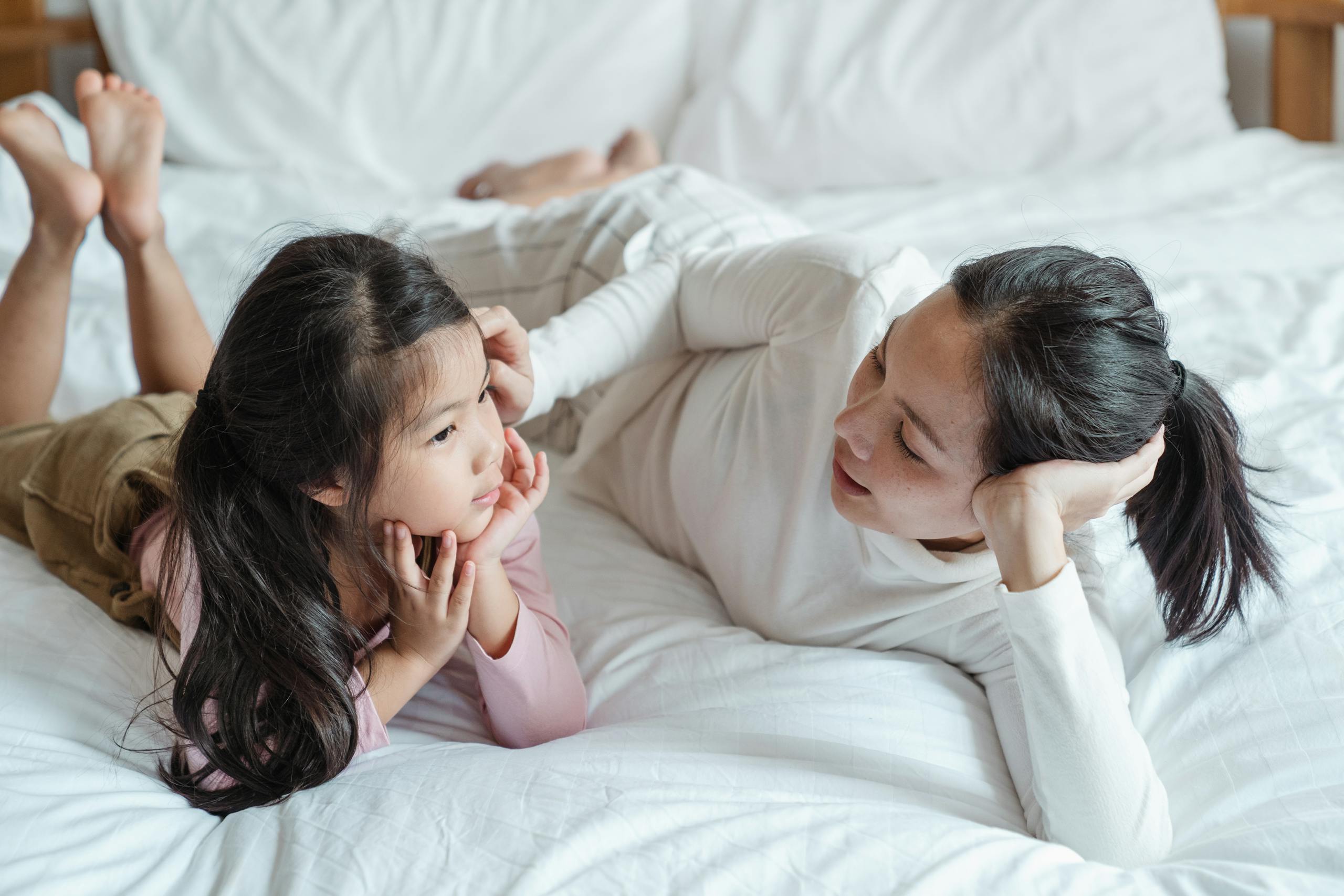

A stay at home mom who needs alone time isn’t asking for too much. She’s asking for something her nervous system genuinely requires to keep functioning well, to stay patient, to remain present, and to actually enjoy the people she loves most.
Solitude isn’t a luxury for introverted mothers. It’s closer to oxygen. Without it, the warmth drains out, the patience thins, and the version of herself she most wants to be quietly disappears under the weight of constant togetherness.
If you’re a stay at home mom who feels guilty for craving quiet, or a partner trying to understand why someone who chose this life still needs to escape it sometimes, what follows is an honest look at what’s really happening and what actually helps.
Our Introvert Family Dynamics and Parenting hub covers a wide range of experiences introverts face inside their families, and the stay at home mom experience sits right at the center of that conversation. Few situations test an introvert’s need for solitude more consistently than full-time caregiving with no built-in escape.

Why Does Being Home All Day Still Feel Exhausting?
People assume that staying home means resting. They picture slow mornings, comfortable routines, and the absence of a boss. What they don’t picture is the unrelenting social demand of small children who need you to be fully present, emotionally available, and physically accessible from the moment they wake up until they finally fall asleep.
What’s your personality type?
Take our free 40-question assessment and get a detailed personality profile with dimension breakdowns, context analysis, and personalised insights.
Discover Your Type8-12 minutes · 40 questions · Free
For an introverted mother, that sustained demand isn’t just tiring. It’s neurologically costly in a way that’s hard to explain to someone who doesn’t experience it the same way. Introverted brains process stimulation differently. Cornell researchers have found that differences in brain chemistry influence how people respond to stimulation, with introverts generally reaching their threshold sooner and needing recovery time that extroverts simply don’t require at the same rate.
I think about this often when I reflect on my years running advertising agencies. The work was relentless and social in ways I didn’t fully anticipate. Client calls, team meetings, presentations, creative reviews, all of it stacked on top of each other. By Thursday afternoon, I was running on fumes that had nothing to do with how many hours I’d worked. My team saw a calm exterior. Inside, every conversation felt like it was pulling from a reserve that wasn’t getting replenished fast enough.
Stay at home moms live that Thursday afternoon feeling every single day, except there’s no weekend coming. There’s no commute home where the radio fills the silence and nobody needs anything from them. There’s just tomorrow, which looks exactly like today.
The exhaustion isn’t about loving their children less. It’s about the biological reality of how their nervous systems process constant social engagement. Understanding that distinction matters enormously, both for the mother trying to stop feeling guilty and for the people around her trying to help.
What Does “Alone Time” Actually Mean for an Introverted Mom?
Alone time for an introverted mother isn’t just the absence of noise. It’s the absence of expectation. That’s the part that often gets lost in translation.
A partner might offer to take the kids to the park while mom stays home, but then text three times asking where the sunscreen is. A well-meaning grandparent might come over to help, but their presence alone adds a social layer that doesn’t actually give mom the reset she needs. Even a quiet house where she’s still “on call” doesn’t fully count, because part of her brain stays alert, waiting.
True alone time for an introvert means being genuinely off the hook. Nobody needs anything. Nobody is about to need anything. The mental space is clear enough to actually hear her own thoughts again.
What she does with that time varies. Some introverted mothers read. Some walk. Some sit in a coffee shop and stare at nothing in particular. Some reorganize a closet or work on something creative. The activity matters less than the condition: she is the only person she is responsible for in this moment.
I’ve noticed that when I finally got real solitude during my agency years, not just a closed office door but genuine uninterrupted time, I didn’t always do anything productive with it. Sometimes I just sat with my own thoughts and let them sort themselves out. That process looked like nothing from the outside. Inside, it was essential maintenance.
Introverted mothers need that same maintenance. And they need it without having to justify it as productive.

Is Needing Alone Time a Sign That Something Is Wrong?
Mothers who crave solitude often wonder if something is broken in them. They compare themselves to friends who seem energized by playdates, who genuinely enjoy group activities, who don’t feel a creeping dread at the thought of another birthday party. The comparison feels damning.
Nothing is broken. Personality differences are real, measurable, and deeply ingrained. If you’ve ever taken a Big Five personality traits test, you’ll recognize introversion as one of the five core dimensions of human personality, not a flaw or a preference that can be overridden with enough willpower.
That said, it’s worth being honest with yourself about the difference between introvert recharge needs and something that runs deeper. Persistent numbness, a sense of complete disconnection from your children, or feelings that go beyond tiredness into genuine despair deserve attention beyond what a quiet afternoon can fix. Harvard Health’s mental health resources offer a thoughtful starting point for understanding where normal introvert depletion ends and something that warrants professional support begins.
Some mothers also find it useful to explore whether highly sensitive traits are amplifying their experience. If loud environments, emotional undercurrents in the household, or the sheer sensory load of young children feels overwhelming rather than just tiring, the experience of HSP parenting and raising children as a highly sensitive parent may resonate in ways that pure introversion frameworks don’t fully capture.
And for a smaller number of mothers, emotional dysregulation that feels much more intense than typical introvert overwhelm might point toward something worth examining more closely. The borderline personality disorder test isn’t a diagnostic tool, but it can help someone recognize patterns that might benefit from professional conversation.
Most of the time, though, a stay at home mom who needs alone time is simply an introvert doing a job that was designed without her in mind. She’s not broken. She’s depleted. Those are very different problems with very different solutions.
Why Does Guilt Make Everything Harder?
Guilt is the shadow that follows introverted mothers everywhere. They feel guilty for wanting to be alone. They feel guilty when they finally get time alone and spend part of it worrying about whether they should be with their kids. They feel guilty for not feeling guilty enough.
The cultural story around motherhood doesn’t help. There’s a persistent idea that a good mother is always available, always engaged, always drawing energy from her children rather than needing to recover from them. That story was written without introverts in mind, and introverted mothers absorb it anyway.
What I’ve seen in my own experience is that guilt is often a signal that someone’s internal needs are in direct conflict with an external expectation they’ve accepted as truth. During my agency years, I felt guilty for not being the kind of leader who thrived in every social situation. I’d watch extroverted colleagues work a room effortlessly and assume I was doing something wrong by finding it draining. That guilt cost me energy I couldn’t afford to spend. It didn’t make me more effective. It just added another layer of depletion on top of the existing one.
Introverted mothers carry that same weight. The guilt doesn’t make them better mothers. It makes them more tired, more resentful, and less capable of being present during the time they do spend with their children.
Releasing the guilt isn’t about lowering standards. It’s about recognizing that a mother who gets her genuine needs met is a more patient, more engaged, more connected parent than one who runs herself into the ground trying to match an extroverted ideal she was never built for.
Personality research supports this intuition. Work published in Frontiers in Psychology examining personality and wellbeing consistently points toward the importance of person-environment fit, the idea that people function best when their environment aligns with their natural traits rather than requiring constant suppression of them.

How Do Partners and Family Members Actually Help?
Good intentions don’t always translate into effective support. Partners who genuinely want to help their introverted spouses often miss the mark because they don’t fully understand what’s being asked for.
Offering to “help more around the house” is kind, but it doesn’t address the core issue. What an introverted stay at home mom needs isn’t less housework. She needs time that belongs entirely to her, with no social obligations attached. Those are related but different problems.
The most effective thing a partner can do is take full ownership of the children for a defined period of time, not partial ownership where mom is still the backup resource, but genuine, complete responsibility where she is truly off the clock. That means not texting to ask questions. Not calling her back into the room. Not narrating the afternoon to her when she returns. Just handling it, completely, so she can be genuinely gone even if she’s still in the house.
Extended family members can help too, but they need to understand that their presence doesn’t automatically equal mom’s rest. If grandma comes over and mom ends up hosting a conversation, that’s not a break. A break means mom leaves, or mom is genuinely undisturbed, and everyone who remains understands and respects that boundary.
I managed a team of about twenty people at one of my agencies, and I learned early that supporting someone well means understanding what they actually need, not what you assume they need. One of my strongest account managers was an introvert who needed thirty minutes of quiet after a major client presentation before she could debrief effectively. I used to push for immediate post-mortem meetings. Once I understood her pattern and built in that buffer, her analysis was sharper and her contributions more valuable. The accommodation cost me nothing and gained me a lot.
The same principle applies at home. Understanding the specific shape of what your introverted partner needs, rather than offering a generic version of support, is what actually makes the difference.
What Happens When Alone Time Is Consistently Denied?
Chronic depletion in introverted mothers doesn’t announce itself dramatically. It tends to accumulate quietly, showing up first as irritability, then as emotional flatness, then as a kind of detached going-through-the-motions that everyone in the household eventually feels even if nobody names it.
Children feel the difference between a mother who is present and one who is physically there but internally somewhere else. Partners feel the emotional distance without always understanding its source. And the mother herself often can’t articulate what’s happening because she’s too depleted to process it clearly.
The irony is that the people who most resist giving an introverted mother alone time are often the ones who would benefit most from her having it. A mother who gets genuine recovery time comes back warmer, more patient, more playful, and more capable of the connection her family is actually looking for. The version of her that emerges after real solitude is the version everyone in the house prefers, including her.
Chronic sleep deprivation is one dimension of this that research published in PubMed Central has linked to measurable impacts on emotional regulation and cognitive function. But even beyond sleep, the kind of social saturation that full-time caregiving creates can produce similar effects in introverted individuals. The brain needs downtime to consolidate, process, and restore. When that downtime is consistently absent, the costs compound.
This isn’t a warning meant to alarm anyone. It’s an honest acknowledgment that the need for solitude is real, the consequences of ignoring it are real, and treating it as a priority isn’t selfish. It’s sensible.
How Can an Introverted Stay at Home Mom Advocate for Herself?
Advocating for your own needs when you’ve been socialized to put everyone else’s needs first is genuinely hard. It requires a kind of self-knowledge and self-respect that can feel almost countercultural in the context of motherhood.
Start by getting specific about what you actually need. “I need more alone time” is harder to act on than “I need two hours on Saturday mornings where I’m completely off the clock.” Specificity removes ambiguity and makes it easier for the people in your life to actually deliver what you’re asking for.
Frame it in terms of outcomes, not just needs. Many partners respond better to “I come back from those Saturday mornings feeling like myself again, and that makes the rest of the weekend better for all of us” than to “I need this for my mental health.” Both are true. The first one also speaks to what’s in it for the family.
Build it into the schedule rather than waiting for permission. When alone time is a standing appointment rather than something you have to negotiate for each time, it stops feeling like a special request and starts feeling like a normal part of how the household functions. That normalization is important for your own psychology as much as for everyone else’s expectations.
Some mothers also find it helpful to connect with others who understand this experience. Online communities for introverted parents, local parenting groups with a more reflective culture, or even a therapist or counselor who gets introversion can provide both validation and practical strategies. If you’re curious about the kind of support roles that work well for introverts in caregiving contexts, the personal care assistant test online offers some interesting insight into how different personality types approach sustained caregiving work and what support structures tend to help them thrive.
Finally, be willing to let the guilt be there without letting it make the decision. You can feel guilty and still take the time. The guilt doesn’t mean you’re wrong. It means you’re human and you’ve absorbed some messages that don’t serve you. Over time, as you see the positive effects of consistent solitude on your mood, your patience, and your presence, the guilt tends to quiet down.
Does Introversion Change How a Mom Experiences Her Role Over Time?
Parenting is a long arc, and introversion shapes the experience differently at different stages. The early years, with infants and toddlers who need constant physical contact and have no concept of a closed door, tend to be the hardest for introverted mothers. The sensory and social demands are at their peak, and the child’s developmental stage makes boundaries genuinely impossible to maintain.
As children grow older and develop more independence, the calculus shifts. School-age children can entertain themselves. They can understand “Mom needs some quiet time.” They can learn, through example, that adults have needs too and that honoring those needs is part of a healthy household.
That modeling matters more than most parents realize. A mother who takes her own needs seriously and communicates about them clearly is teaching her children something valuable about self-knowledge, boundaries, and the relationship between taking care of yourself and taking care of others. Children who grow up watching a parent honor their own limits tend to develop a healthier relationship with their own needs.
There’s also something worth saying about how personality type can influence parenting strengths that are easy to overlook. Introverted mothers often bring extraordinary depth to one-on-one time with their children. They listen carefully. They notice things. They create space for conversation that doesn’t feel rushed or performative. Those qualities are gifts, even if they come packaged with a need for recovery that more socially oriented mothers don’t share.
Some introverted mothers find that understanding their own personality more clearly helps them recognize and lean into those strengths. Research on personality and parenting behavior suggests that self-awareness is one of the stronger predictors of parenting satisfaction, not the specific traits a parent has, but how well they understand and work with those traits.
Understanding yourself well enough to know what you need is the foundation of parenting sustainably. Not perfectly. Sustainably.
What About the Social Pressure From Other Moms?
Mom culture can be its own particular kind of exhausting for introverts. The group texts, the playdate circuits, the school volunteer committees, the neighborhood gatherings where everyone seems to know everyone and conversation flows effortlessly. For an introverted mother, that social landscape can feel like a second job she never signed up for.
There’s real pressure to participate, both explicit and implied. Opting out of the group can feel like opting out of community, and community genuinely matters, especially for mothers who spend most of their time at home. The tension between needing connection and finding the typical forms of it draining is one of the more uncomfortable paradoxes of introverted motherhood.
What tends to work better than forcing participation in every social format is finding the specific social contexts that feel sustainable. One-on-one coffee with another mother who gets you is worth more than ten group events you attend out of obligation. Smaller gatherings with a few families you genuinely like tend to leave introverted mothers feeling connected rather than depleted.
Being likeable as an introvert doesn’t require matching extroverted social output. It requires being genuinely present and warm in the interactions you do choose. If you’ve ever been curious about how your natural social tendencies come across to others, the likeable person test offers an interesting lens on that question. Many introverts discover they come across as far more engaging than they assumed, precisely because their focused attention and genuine interest in others reads as warmth.
success doesn’t mean become a social butterfly. It’s to build enough genuine connection that the isolation of full-time caregiving doesn’t tip into loneliness, while still protecting the solitude that keeps you functioning.
That balance is personal. It looks different for every introverted mother. But finding it, rather than defaulting to either total withdrawal or exhausting overparticipation, is worth the effort.

What Does a Sustainable Rhythm Actually Look Like?
Sustainability in introverted motherhood isn’t a fixed destination. It’s a rhythm you build and adjust over time as your children grow, your circumstances shift, and your self-knowledge deepens.
Some introverted mothers find that micro-moments of solitude scattered through the day are enough to keep them regulated. Five minutes of quiet while the kids watch something. Ten minutes in the car after dropping them at school before driving home. A few pages of a book after bedtime before anyone else comes to talk. These small pockets don’t replace deeper restoration, but they prevent the kind of acute depletion that makes everything harder.
Others need longer, less frequent blocks of genuine alone time. A few hours on a weekend. An evening out by themselves once a week. A solo overnight trip a couple of times a year. The specific structure matters less than whether it’s consistent and protected.
What I’ve noticed in my own life is that when I tried to manage my introvert needs reactively, waiting until I was already depleted to seek recovery, everything was harder. The depletion made me less effective at communicating what I needed, less pleasant to be around, and less capable of the work I cared about. Building recovery into the structure proactively, before I hit the wall, changed the quality of everything else.
For introverted stay at home moms, the same principle applies. Don’t wait until you’re running on empty to ask for what you need. Build it in. Protect it. Treat it with the same seriousness you’d treat any other essential part of keeping the household running, because that’s exactly what it is.
There are also professional roles built around sustained caregiving that attract introverts who find meaning in deep, focused care. If you’re exploring whether caregiving work in a more structured context might suit you, or if you’re thinking about the kind of support roles that might complement your introverted strengths, taking a look at the certified personal trainer test or similar self-assessment tools can help clarify where your natural strengths align with different caregiving and support contexts.
Understanding family dynamics through the lens of personality can also help introverted mothers make sense of why their household feels the way it does, and what adjustments might create more sustainable patterns for everyone involved.
The introverted stay at home mom who needs alone time isn’t failing at her role. She’s being honest about what her role requires of her nervous system, and that honesty is the starting point for building something that actually works.
There’s more to explore on these themes across our full Introvert Family Dynamics and Parenting hub, where we look at how introversion shapes the experience of family life from multiple angles, including parenting styles, partner dynamics, and the unique pressures introverted parents carry.
About the Author
Keith Lacy is an introvert who’s learned to embrace his true self later in life. After 20 years in advertising and marketing leadership, including running agencies and managing Fortune 500 accounts, Keith now channels his experience into helping fellow introverts understand their strengths and build fulfilling careers. As an INTJ, he brings analytical depth and authentic perspective to every article, drawing from both professional expertise and personal growth.
Frequently Asked Questions
Is it normal for a stay at home mom to need alone time?
Yes, and it’s especially common among introverted mothers. Full-time caregiving involves sustained social and sensory engagement that depletes introverted nervous systems in ways that sleep alone doesn’t fully restore. Needing solitude isn’t a sign of poor attachment or insufficient love for your children. It’s a reflection of how introverted brains are wired to process and recover from stimulation.
How much alone time does an introverted stay at home mom actually need?
There’s no universal answer, because introversion exists on a spectrum and individual needs vary considerably. Some introverted mothers feel adequately restored with small daily pockets of quiet. Others need longer, more protected blocks of genuine solitude several times a week. The best approach is to pay attention to your own patterns, noticing when you feel most depleted and what kinds of recovery actually help, rather than comparing yourself to what others seem to need.
How do I explain my need for alone time to a partner who doesn’t understand introversion?
Frame it in concrete, observable terms rather than abstract personality language. Instead of “I’m an introvert and I need to recharge,” try describing what happens when you don’t get recovery time versus what you’re like after you do. Most partners respond to the practical reality: when you get the solitude you need, you come back more patient, more present, and more engaged. Connect the need to outcomes the whole family experiences, and make the ask specific rather than open-ended.
Can wanting alone time mean something is seriously wrong emotionally?
Wanting alone time as an introvert is normal and healthy. That said, if what you’re experiencing goes beyond tiredness into persistent numbness, complete disconnection from your children, or feelings of despair that don’t lift even after rest, those experiences deserve professional attention. The distinction worth paying attention to is whether solitude actually helps you feel better. If genuine alone time restores you, that’s introvert depletion. If nothing seems to help, that’s worth exploring with a mental health professional.
Will my children be harmed by having a mother who needs a lot of alone time?
Children are not harmed by having a mother with real needs. They’re shaped by how those needs are handled. A mother who models self-awareness, communicates her limits clearly, and returns from recovery time genuinely present is demonstrating something valuable: that adults take care of themselves, that needs are worth acknowledging, and that presence matters more than quantity of time. Children raised by parents who honor their own limits tend to develop a healthier relationship with their own needs as they grow.