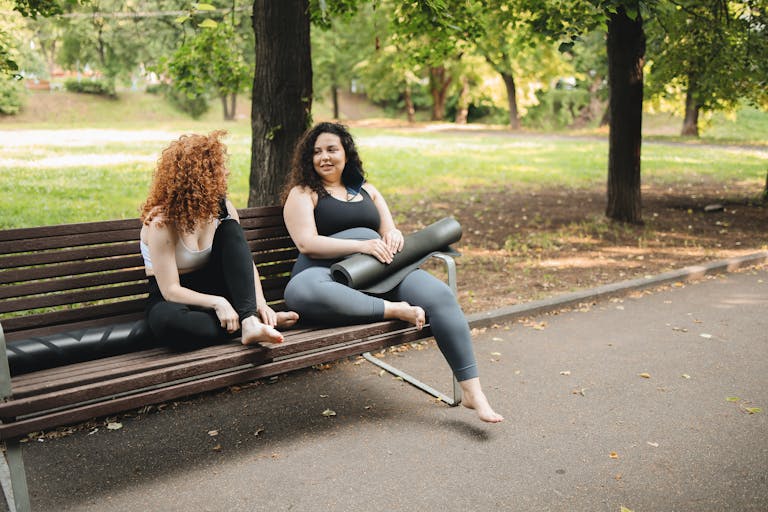
Sympathy and being an empath are not the same thing, even though the words get tangled together constantly. Sympathy means feeling concern or sorrow for someone else’s situation from the outside, while being an empath means absorbing and actually feeling the emotions of others as though they were your own. One creates distance with kindness; the other collapses the distance entirely.
Most people assume they understand the difference until they sit with someone in real pain and realize they have no idea which side of the line they’re standing on. That confusion matters more than it seems, because how you process other people’s emotions shapes nearly every relationship, career decision, and recovery pattern in your life.
If you’ve ever walked away from a difficult conversation feeling like you’d absorbed the entire weight of it, or if you’ve noticed that your emotional state shifts dramatically depending on who’s in the room, you’re probably not dealing with ordinary sympathy. Something deeper is happening, and naming it correctly changes how you care for yourself and others.
Sensitivity, empathy, and emotional depth are threads that run through so much of what I explore in the HSP and Highly Sensitive Person hub, where you’ll find a fuller picture of how emotional wiring affects everything from sleep to career to identity. This article adds a specific layer to that conversation: the practical, lived difference between sympathizing and being an empath, and what it means for people who feel things intensely.
What Does It Actually Feel Like to Sympathize Versus Experience Empathy?
Sympathy is standing at the edge of a pool watching someone struggle in the water. You feel genuine concern. You want them to be okay. You might even throw them a rope. Empathy, in its truest form, is jumping in with them, feeling the cold water, the weight of their clothes, the disorientation of being pulled under. Being an empath takes that even further: you feel the water before you even get to the pool. You sense the struggle before anyone says a word.
What drains your social battery?
Not all social exhaustion is the same. Our free quiz identifies your specific drain pattern and gives you personalised recharging strategies.
Find Your Drain PatternUnder 2 minutes · 8 questions · Free
I ran advertising agencies for over two decades, and I sat across from hundreds of clients in difficult moments. Brands losing market share. Campaigns that failed publicly. Leadership teams in quiet crisis. Sympathy was something I could offer professionally, a kind of structured acknowledgment that things were hard. Empathy was different. There were meetings where I’d walk in and feel the tension in the room before anyone spoke, where the emotional temperature registered somewhere in my chest before my brain had processed a single word. That wasn’t a skill I’d developed. It was just how I was wired.
A 2024 study published in Frontiers in Psychology explored the relationship between emotional sensitivity and interpersonal processing, finding that individuals with higher sensitivity thresholds tend to process social and emotional cues at a significantly deeper level than the general population. What that looks like in practice is that some people aren’t just noticing that someone is upset. They’re registering the specific texture of that upset, the shame underneath the frustration, the grief underneath the anger.
Sympathy can be learned and practiced. It’s a social skill with real value. Being an empath isn’t a skill set in the same way. It’s a trait, something closer to a sensory experience that happens whether or not you want it to. That distinction shapes everything about how empaths need to manage their emotional lives.
Where Does the Empath Experience Overlap With High Sensitivity?
The overlap between empaths and highly sensitive people is real and significant, though they’re not identical categories. High sensitivity, as a trait studied by psychologist Elaine Aron, refers to a nervous system that processes sensory and emotional information more deeply than average. Empaths share that depth of processing but often describe something additional: a felt sense of merging with another person’s emotional state, not just noticing it but temporarily inhabiting it.
An important clarification worth making here: high sensitivity is not a trauma response. Psychology Today addressed this directly, noting that the trait appears to be neurobiological in origin, present from birth, and not caused by adverse experiences even though sensitive people may respond to those experiences more intensely. Empaths, similarly, aren’t sensitive because something happened to them. They’re sensitive because that’s how their nervous system is built.
What this means practically is that if you identify as an empath, you’re not broken and you’re not overreacting. You’re operating with a different kind of perceptual range. The challenge is that most environments, workplaces, social structures, and even relationships are calibrated for people who don’t feel quite so much, which creates a persistent friction that can be exhausting to manage.
If you’re curious whether your sensitivity extends into your professional life, the HSP Career Survival Guide offers a thorough look at how highly sensitive professionals can build careers that work with their wiring instead of against it. The same principles apply whether you identify primarily as an HSP or as an empath.

Why Do Empaths Struggle With Emotional Boundaries in Ways Sympathetic People Don’t?
Someone who sympathizes can feel genuine compassion and then go home and eat dinner without carrying the weight of the person they were compassionate toward. That’s not coldness. That’s a natural boundary that exists because their emotional processing stays in the observational register. They felt for you. They didn’t feel as you.
Empaths don’t have that automatic separation. The emotional content of an interaction doesn’t stay in the room where it happened. It travels home with them, shows up in their dreams, colors their mood the next morning. What looks like moodiness or oversensitivity from the outside is often the residue of absorbed emotion that hasn’t been processed yet.
I felt this acutely during a particularly brutal pitch season early in my agency career. We were competing for a major account, and the client team was visibly stressed, fractured, and anxious. I walked out of that pitch not just tired but genuinely depleted in a way that went beyond the normal exhaustion of a high-stakes presentation. I’d absorbed the emotional chaos in that room and hadn’t realized it until I was sitting in my car in the parking garage unable to figure out what I was actually feeling versus what I’d picked up from them. That was a turning point in understanding that my emotional processing wasn’t typical.
The research on this is worth taking seriously. A study referenced in Psychology Today’s Empath’s Survival Guide draws a clear distinction between HSPs and empaths, noting that empaths specifically tend to absorb the emotions and physical sensations of others into their own bodies, a phenomenon that goes beyond emotional attunement into something more like involuntary merger.
Boundaries for empaths aren’t about caring less. They’re about learning to differentiate between what’s yours and what belongs to someone else. That’s a skill that takes real practice, and it starts with understanding that the emotional weight you’re carrying often has multiple authors.
How Does Personality Type Shape Whether You’re More of a Sympathizer or an Empath?
Personality type isn’t destiny, but it does create patterns in how we process emotional information. As an INTJ, I was supposed to be the analytical one, the strategist who kept feelings at arm’s length. And in many ways I fit that profile. My first instinct in any situation is to understand the structure of it, to find the pattern, to figure out what’s actually happening beneath the surface. What I didn’t expect was that the same depth of processing that makes INTJs good at systems thinking also makes us absorb emotional data in ways we don’t always recognize as emotional.
Feeling types in the MBTI framework, particularly INFJs and INFPs, are more commonly identified as empaths, and that tracks with how those types are described: deeply attuned to the emotional undercurrents of situations, oriented toward understanding people from the inside out. But thinking types aren’t immune. The processing depth is there. It just gets filtered through a different lens, sometimes showing up as a strong intuition about what’s really going on in a room rather than an explicit emotional resonance.
Worth noting: if you’ve ever been told you seem like both an introvert and an extrovert depending on the context, the ambivert conversation is worth reading, because the same kind of misclassification can happen with empathy. People assume that because you’re not visibly emotional, you’re not deeply feeling. That assumption misses a lot.
Personality type development over time also matters here. My MBTI development guide covers how our relationship with our feeling functions tends to deepen as we age, which may explain why many people don’t recognize their empathic tendencies until midlife, when the defenses they’ve built around emotional processing start to soften.
What Happens to Empaths in High-Stimulation Environments?
Crowded spaces, loud offices, emotionally charged meetings, and constant social demands don’t just drain empaths the way they drain introverts. They overwhelm the emotional processing system in a way that can feel almost physical. Noise isn’t just noise. It carries emotional data. A colleague’s frustration, a manager’s anxiety, a client’s desperation, all of it registers and accumulates.
There’s a reason nature consistently shows up as a restorative environment for highly sensitive people and empaths. Yale’s e360 publication has covered the research on ecopsychology extensively, showing that immersion in natural environments reduces cortisol levels and restores attention in ways that urban or office environments simply don’t replicate. For empaths, the absence of other people’s emotional fields is itself a form of recovery.
I didn’t understand this about myself for most of my career. I thought the exhaustion I felt after long days of client meetings and agency management was just normal work fatigue. Everyone was tired. I was tired. What I eventually understood was that my tired had a different quality. It wasn’t muscle fatigue or mental depletion in the ordinary sense. It was something more like emotional saturation, as if every container I had for other people’s feelings was full and nothing more could go in.
Sleep becomes particularly important in this context. Empaths often struggle to decompress before bed because the emotional residue of the day doesn’t simply switch off. If you’re dealing with that specific kind of overstimulation at night, the white noise machine testing I did for sensitive sleepers might be more relevant to your situation than you’d expect. Creating an auditory environment that signals safety to an overstimulated nervous system can make a real difference in recovery quality.
A 2024 study in Nature examined environmental factors and their effects on sensitive nervous systems, reinforcing what many empaths already know intuitively: the environment you inhabit is not neutral. It either supports your processing or taxes it, and managing that proactively is not a luxury. It’s a necessity.
Can Sympathy Become Empathy, or Are These Fixed Traits?
Sympathy can deepen into empathy through experience, attention, and relationship. Someone who starts with a sympathetic orientation can develop greater emotional attunement over time, particularly through close relationships, therapy, or simply paying closer attention to what they’re actually feeling versus what they think they should be feeling. The direction of travel is possible.
What’s less clear is whether someone who is genuinely empathic can simply choose to be less so. The involuntary absorption of emotional content doesn’t seem to work like a dial that can be turned down through willpower. What empaths can develop is a more sophisticated relationship with what they’re absorbing, better tools for identifying when they’re carrying someone else’s emotion, more practiced methods for releasing it, and stronger boundaries around which environments and relationships they engage with and for how long.
A PubMed study on emotional processing and interpersonal sensitivity found that individuals with higher baseline sensitivity showed consistent patterns of deeper emotional encoding, suggesting that the depth of processing is a relatively stable neurological feature rather than a learned behavior. That doesn’t mean empaths are stuck. It means the work isn’t about changing how you process. It’s about building a life that accommodates and honors that processing.
Some of the rarest personality types carry particularly intense versions of this emotional depth. The science behind what makes personality types rare gets into why certain combinations of traits show up less frequently in the population, and the types most associated with deep empathic processing tend to cluster among those rarer profiles. If you’ve always felt like you process the world differently from most people around you, that may be more than a feeling.

What Does Healthy Empathy Look Like Versus Empathy That’s Become a Problem?
Healthy empathy is a remarkable capacity. It allows for genuine connection, nuanced understanding of other people’s needs, and a kind of relational intelligence that most environments desperately need. Empaths often make exceptional listeners, counselors, creative collaborators, and leaders, precisely because they can feel the gap between what someone is saying and what they actually need.
Empathy becomes problematic when the absorption has no release valve, when every emotional encounter adds to a load that never gets put down. Chronic empathic overload looks a lot like burnout, and it gets misdiagnosed as burnout constantly, which means the treatment people reach for, rest, time off, better work-life balance, addresses the surface without touching the actual mechanism. An empath who takes a vacation but spends it surrounded by emotionally intense people hasn’t actually recovered. They’ve just changed locations.
I’ve watched this play out in my own life in ways I’m not particularly proud of. There were years in my agency career where I absorbed the stress of everyone around me, clients, staff, partners, and told myself it was just the demands of leadership. The reality was that I had no system for distinguishing between the pressure that was genuinely mine to carry and the pressure I was taking on because I couldn’t help feeling it. That distinction matters enormously, and I didn’t learn it early enough.
The workplace dimension of this is worth examining separately. Rare personality types often struggle at work precisely because the environments they’re placed in aren’t designed for their kind of processing. Empaths in high-conflict, high-stimulation workplaces face a version of this challenge every single day, and understanding why the struggle is structural rather than personal can be genuinely clarifying.
Healthy empathy includes the capacity to be moved by someone’s experience without being swept away by it. That’s not a natural state for most empaths. It’s a practiced one, built through self-awareness, intentional recovery, and a clear understanding of what you’re actually experiencing and where it came from.
How Should Empaths Think About Relationships With Sympathetic People?
One of the more interesting tensions I’ve observed is between empaths and people who are sympathetic but not empathic. From the outside, sympathetic people can seem emotionally cool to empaths, not cold exactly, but somehow at a remove that feels like they’re not fully present. From the inside, sympathetic people often feel like they’re offering genuine care and can’t understand why the empath still seems unsatisfied or unmet.
Neither of them is wrong. They’re operating from genuinely different emotional architectures, and the mismatch creates friction that can erode relationships if it’s not named and understood. Empaths often need to be felt with, not just responded to. Sympathetic people are often doing exactly what they’re capable of doing, and asking them to do more is like asking someone with normal hearing to perceive frequencies outside their range.
What works better is building relationships where both people understand the difference. When a sympathetic partner or colleague knows that an empath needs space to decompress after social events, not because they’re antisocial but because they’ve absorbed the emotional content of the room, that understanding changes the dynamic. It stops being a character flaw and becomes a trait to work with.
My wife has a sympathetic orientation. I’m the one who comes home from a dinner party needing an hour of silence before I can hold a conversation. For years that created low-grade friction because she read my withdrawal as disengagement. Once we had the vocabulary to describe what was actually happening, the friction largely dissolved. Naming the difference between sympathy and empathy was itself a relational tool.
There’s more depth on the full range of sensitivity, emotional processing, and what it means to live as a highly attuned person in the HSP and Highly Sensitive Person hub. If this article has raised more questions than it’s answered, that hub is a good place to keep going.
Running on empty?
Five drain profiles, each with specific triggers, warning signs, and a recharging playbook.
Take the Free QuizUnder 2 minutes · 8 questions · Free
About the Author
Keith Lacy is an introvert who’s learned to embrace his true self later in life. After 20 years in advertising and marketing leadership, including running agencies and managing Fortune 500 accounts, Keith now channels his experience into helping fellow introverts understand their strengths and build fulfilling careers. As an INTJ, he brings analytical depth and authentic perspective to every article, drawing from both professional expertise and personal growth.
Frequently Asked Questions
What is the core difference between sympathy and being an empath?
Sympathy involves feeling concern or sorrow for someone else’s situation while remaining emotionally separate from it. Being an empath means actually absorbing and feeling the emotions of others as if they were your own, often involuntarily. Sympathy observes from outside the experience; empathy collapses the distance between self and other entirely.
Can someone be both sympathetic and an empath?
Yes. Empaths are almost always sympathetic as well, but the reverse isn’t necessarily true. Sympathy is the broader capacity and can exist without the deeper absorption that defines empathic experience. An empath will typically feel genuine sympathy and then go further, merging with the emotional state of the person they’re connecting with in ways that a sympathetic but non-empathic person simply doesn’t experience.
Are empaths the same as highly sensitive people?
There’s significant overlap but they’re not identical. Highly sensitive people, as described by researcher Elaine Aron, process sensory and emotional information more deeply than average. Empaths share that depth but often describe an additional experience of absorbing others’ emotions directly into their own physical and emotional state. All empaths tend to be highly sensitive, but not all highly sensitive people identify as empaths.
Why do empaths struggle so much in busy workplaces?
Empaths absorb the emotional content of their environment continuously, which means a high-conflict, high-stimulation workplace isn’t just tiring in the ordinary sense. It’s a source of constant emotional input that accumulates without a natural release. Colleagues’ stress, management anxiety, interpersonal tension, all of it registers and compounds throughout the day. Without deliberate recovery strategies, this leads to a specific kind of depletion that goes beyond standard work fatigue.
How can an empath protect themselves without shutting people out?
The most effective approach involves building awareness of what’s yours versus what you’ve absorbed, creating intentional recovery time after emotionally intense interactions, and being selective about which environments you spend extended time in. Physical boundaries, like spending time in nature or creating quiet spaces at home, support emotional regulation without requiring emotional withdrawal from relationships. The goal is differentiation, knowing where you end and another person begins, not disconnection.