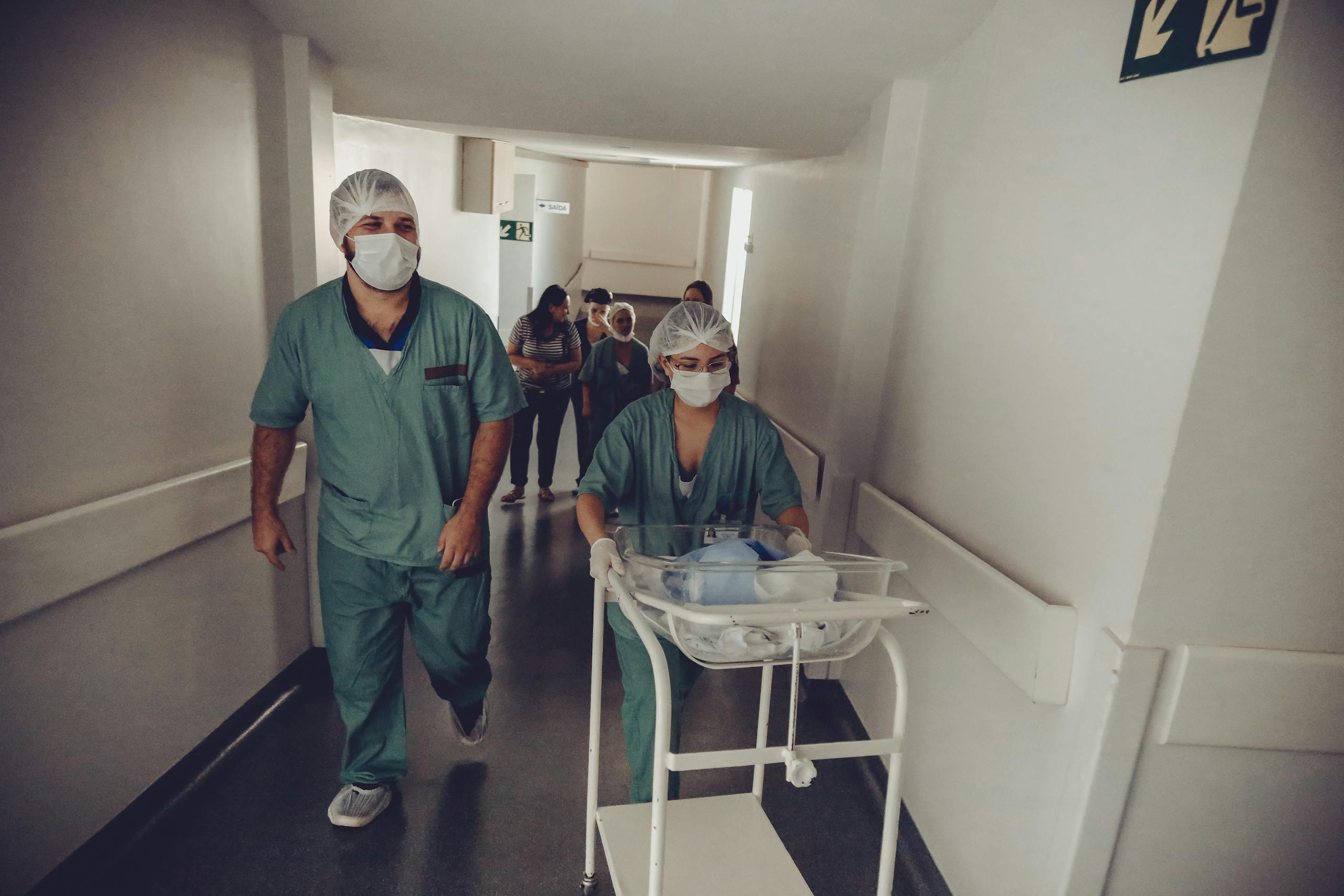
Medical professionals considering tattooing as a career change bring something most aspiring tattoo artists spend years trying to develop: a steady hand, a deep understanding of human anatomy, and a clinical comfort with the body that translates directly into exceptional technical work. The transition from healthcare to tattooing is more logical than it might first appear, and for introverts in medical fields who crave focused, creative, one-on-one work, it can feel like finally finding the right fit.
Tattooing for medical professionals looking for a career change represents one of the more compelling pivots available in the skilled trades. Your existing knowledge of skin layers, sterile technique, and patient communication does not disappear when you hang up your stethoscope or set down your surgical instruments. It follows you into the studio and gives you a foundation that most apprentices spend their first two years trying to build from scratch.
If you are weighing this path, our Career Paths and Industry Guides hub covers the full landscape of introvert-friendly careers, but the medical-to-tattooing transition adds a layer of nuance worth examining on its own terms.

What Makes Medical Training Such a Strong Foundation for Tattooing?
Spend enough time in healthcare and you develop a relationship with precision that most people never cultivate. I think about this often when I reflect on the kind of focused, detail-oriented work that introverts tend to thrive in. During my years running advertising agencies, I noticed that the team members who produced the most meticulous work were almost always the quieter ones. They were the people who had trained themselves to slow down, look closely, and care about the details that others glossed over. Medical professionals carry that same quality into everything they do.
What’s your introvert superpower?
Every introvert has a quiet strength others overlook. Our free quiz identifies yours and shows you how to leverage it in your career and relationships.
Discover Your Superpower2-3 minutes · 10 questions · Free
Tattooing demands an understanding of the dermis and epidermis that most artists learn through trial and error over years of practice. A nurse who has administered thousands of injections already understands needle depth intuitively. A surgical technician knows sterile field protocol better than any tattooist who learned it from a YouTube tutorial. A phlebotomist has spent years reading veins, understanding skin elasticity across different body types, and working with clients who are anxious or in discomfort. All of that transfers.
Beyond the technical overlap, there is a psychological dimension worth naming. Medical work requires a particular kind of presence, calm under pressure, attentiveness to nonverbal cues, and the ability to make someone feel safe in a vulnerable moment. Tattooing asks for exactly the same thing. Clients sit in your chair for hours, often nervous, often sharing personal stories about why the piece matters to them. The ability to hold space for that conversation while maintaining technical focus is a skill that healthcare professionals have already developed, often without realizing it.
According to Psychology Today’s exploration of how introverts process information, people with introverted tendencies tend to think carefully before acting and process experiences through a longer internal loop. In a field where a single misplaced line is permanent, that cognitive style is not a liability. It is exactly what you want in the person holding the machine.
Which Medical Backgrounds Translate Most Directly into Tattooing?
Not every medical role creates the same level of readiness for tattooing, though most create more than people expect. Some backgrounds offer a particularly clean line of transfer.
Nurses and nurse practitioners bring wound care experience, an understanding of how skin heals, and years of patient communication. They know what compromised skin looks like, which matters enormously when a client comes in with a history of keloid scarring or a skin condition that affects how ink will settle. That clinical judgment protects both the client and the artist.
Surgeons and surgical assistants carry fine motor precision that is genuinely difficult to teach. The control required to work in a surgical field translates almost directly to the control required to pull clean linework at consistent depth. Several well-known tattoo artists have medical backgrounds, and the technical quality of their work tends to reflect that foundation.
Paramedics and emergency medical technicians bring composure. They are trained to function at a high level when clients are in distress, and that composure matters in a tattoo studio more than most people realize. A client who goes into vasovagal syncope mid-session needs someone who knows exactly what to do without panicking. A paramedic-turned-tattooist has that handled before it becomes a problem.
Phlebotomists and medical assistants understand needle mechanics and sterile protocol at a level that gives them an immediate advantage in the technical and sanitation aspects of tattooing. The research published in PubMed Central on focused attention and skilled performance supports what practitioners in both fields already know intuitively: precision work builds on itself, and training in one fine-motor domain accelerates learning in related ones.

How Do You Actually Make the Transition Without Starting From Zero?
One of the things I have watched introverts struggle with in career transitions is the assumption that they have to erase everything they have built and start as a beginner. That thinking is both inaccurate and expensive. Your medical background is not a liability to be apologized for. It is a differentiator that most studios will recognize immediately once you learn to frame it correctly.
The traditional path into tattooing runs through an apprenticeship, and that remains the most respected route. An apprenticeship typically lasts one to three years, involves working under an established artist, and covers everything from machine setup and ink mixing to client consultation and studio management. For medical professionals, the learning curve on the technical side tends to be compressed. Your needle knowledge, your sterile technique, your understanding of skin are already there. What you are learning is the artistic language of tattooing: composition, style, flow, and how to translate a client’s idea into a design that will age well on a body.
Finding the right apprenticeship matters enormously. Walk into studios whose aesthetic resonates with you. Bring a portfolio of your drawings or digital work, because artistic ability matters even if your technical foundation is strong. Be honest about your medical background and frame it as an asset. Many established artists will see the value immediately, particularly in shops that serve clients with complex medical histories or who specialize in medical tattooing, a growing niche that covers scar camouflage, areola restoration after mastectomy, and paramedical procedures like scalp micropigmentation.
Medical tattooing deserves particular attention as a career direction for healthcare professionals making this pivot. It sits at the intersection of your existing expertise and your new craft. Clients in this space are often recovering from surgeries, managing chronic skin conditions, or processing significant emotional experiences. Your clinical background gives you credibility and competence that most tattoo artists simply cannot offer. The demand for skilled practitioners in this area is growing, and the income potential reflects that specialization.
A thoughtful career pivot strategy matters here because you are not just changing jobs. You are repositioning an entire professional identity, and doing that well requires more than enthusiasm. It requires a clear narrative about who you are, what you bring, and where you are headed.
What Are the Financial Realities of This Career Change?
I will be honest with you the way I wish someone had been honest with me during my own career transitions. The financial picture during an apprenticeship is not comfortable. Most apprenticeships are unpaid or minimally compensated. You may work part-time in your medical role while apprenticing, or you may draw down savings while you build toward licensure and your own client base. That period requires planning.
Building a solid financial cushion before you make the full transition is not optional. The Consumer Financial Protection Bureau’s guidance on emergency funds is a useful starting point for thinking about how much runway you actually need. For most people making this kind of pivot, three to six months of living expenses as a minimum is a reasonable target, though a year is more comfortable given the variable income of the early tattooing years.
Once you are established, the income potential in tattooing is genuinely strong. Experienced tattoo artists in major markets earn well, and those who specialize in medical or fine-line work command premium rates. The business model, whether you rent a booth in an established studio or eventually open your own space, affects your income trajectory significantly. Booth rental gives you more autonomy and a higher percentage of your earnings. Working as an employee of a studio offers more stability and mentorship during the early years.
When the time comes to discuss compensation with a studio owner, whether you are negotiating your apprenticeship terms, your booth rental rate, or a potential employment arrangement, your medical background gives you real leverage. You are not an unknown quantity. You bring demonstrable skills that reduce the studio’s risk. Understanding how to articulate that value in a negotiation matters, and the principles covered in a solid salary negotiation guide for introverts apply directly here, even when the conversation is about rates rather than a traditional salary.
Harvard’s Program on Negotiation notes that preparation and framing are the most powerful tools in any compensation conversation. Knowing your value, articulating it clearly, and entering the conversation with specific anchors rather than vague hopes applies whether you are negotiating a Fortune 500 contract or a booth rental agreement in a tattoo studio.

How Does Introversion Shape the Day-to-Day Experience of Tattooing?
There is a version of tattooing that looks exhausting to introverts from the outside: a loud studio, constant client interaction, a social environment that never really quiets down. That version exists, and it is not the only version.
Many tattoo artists work in relatively quiet studios with a handful of clients per day. The interaction is deep rather than broad. You spend three hours with one person, learning their story, understanding what this piece means to them, and doing focused creative work together. That is a fundamentally different social experience than managing a team meeting or presenting to a room of thirty executives. I spent years in those rooms, and I can tell you that the depth-over-breadth model of client interaction is something many introverts find genuinely sustainable in a way that high-volume social environments are not.
The creative focus of tattooing also suits how many introverts work best. There is a long preparation phase: sketching, refining, consulting, planning the session. Then there is the execution phase, which requires full concentration and a kind of meditative presence. Then there is the follow-up: aftercare instructions, healing check-ins, booking the next session. That rhythm, preparation, focused execution, and thoughtful follow-through, maps well onto how introverts tend to approach complex work.
Client consultations do require communication skills, and for introverts who find one-on-one conversations draining, it is worth building structures that make those conversations more manageable. Many tattoo artists use detailed intake forms, email consultations before in-person meetings, and clear session frameworks that reduce the ambiguity of the interaction. Those structures are not crutches. They are professional tools that happen to align with how introverts communicate most effectively.
There are moments, particularly early in your career, when you will need to put yourself forward in ways that feel uncomfortable. Studio events, flash days, and social media presence all require a kind of visibility that does not come naturally to most introverts. The strategies in a public speaking guide for introverts translate surprisingly well to the challenge of presenting your work and your personality in public-facing contexts, whether that is an in-person event or an Instagram profile that represents your artistic voice.
Walden University’s overview of introvert strengths highlights focused attention, careful preparation, and deep listening as core advantages. All three show up directly in what makes a great tattoo artist. The ability to truly hear what a client wants, to prepare thoroughly before picking up the machine, and to maintain concentration through a long session are not incidental qualities. They define the difference between good work and exceptional work.
What Does Building a Tattooing Business Actually Look Like for Introverts?
Eventually, many tattoo artists reach a point where working within someone else’s studio no longer fits. The booth rental model is often the first step toward independence, but some artists go further and open their own space. That decision carries real weight, and for introverts who have spent years in medical environments with institutional support structures, the shift to full entrepreneurship can feel both liberating and disorienting.
My experience running advertising agencies taught me that building something from scratch is fundamentally different from excelling within an existing structure. The skills overlap, but the demands on your time, your energy, and your identity do not. When you own the studio, you are also managing the booking system, the supply orders, the lease negotiation, the social media presence, the client complaints, and the tax filings. That is a lot of surface area for someone who does their best work in focused, quiet conditions.
fortunately that tattooing as a business can be structured to minimize the parts that drain introverts most. A solo studio or a small suite shared with one or two other artists gives you control over your environment in a way that a large open shop does not. You set your own hours, you choose your clients, and you design the space to reflect how you work best. That autonomy is one of the genuine advantages of building your own practice rather than remaining an employee indefinitely.
The guide to starting a business as an introvert covers the structural and psychological dimensions of this decision in depth, and it is worth reading before you commit to any particular model. The framing that resonates most with me, drawn from my own experience building agencies, is that introverts often build better businesses than they expect to, because they plan carefully, avoid unnecessary risk, and create systems that do not depend on constant personal energy expenditure.
Marketing your tattooing practice as a medical professional adds a dimension that most artists cannot replicate. Your credentials are real, your understanding of skin health is genuine, and your ability to work with clients who have complex medical histories is documented. That is a marketing story that writes itself, and it attracts a client base that values precision and professionalism over flash and novelty.

How Do You Manage the Professional and Social Demands of Being New in a Studio?
Walking into a new professional environment as an experienced adult is a particular kind of uncomfortable. You carry years of expertise in one domain, and you are suddenly the least knowledgeable person in the room in another. I have been in that position more than once, and the discomfort is real regardless of how confident you are in your overall professional identity.
Tattoo studios have their own culture, their own hierarchy, and their own unwritten rules. As an apprentice or a new booth renter, you are entering an established social ecosystem. For introverts, that process of reading a new environment, figuring out who the key players are, understanding the norms before you violate them, is actually something we tend to do well. We observe before we act. We listen before we speak. Those instincts serve you in a new studio context.
The challenge comes in the moments that require you to advocate for yourself or contribute to group dynamics in visible ways. Studio meetings, collaborative events, and the informal social fabric of a shared workspace all require a level of participation that introverts sometimes underestimate as a professional obligation. The strategies that help introverts manage team meetings effectively apply here, particularly the practice of preparing specific contributions in advance rather than trying to generate them spontaneously in the moment.
Your medical background can actually ease some of the social friction of being new. It gives you a clear identity and a clear value proposition from day one. You are not just another apprentice trying to figure out your aesthetic. You are a medical professional bringing specific knowledge that benefits the whole studio. That framing shifts the dynamic from supplicant to collaborator, which is a much more comfortable position for most introverts.
When the time comes for performance conversations with a mentor or studio owner, knowing how to represent your growth and your goals clearly makes a significant difference. The approach outlined in a performance review guide for introverts is directly applicable, even in a non-corporate context. The ability to articulate what you have accomplished, what you are working toward, and what support you need is a professional skill that transfers across every industry.
What Does the Licensing and Regulatory Landscape Look Like?
One area where medical professionals have a genuine advantage is in understanding and respecting regulatory environments. Healthcare is one of the most heavily regulated industries in existence, and if you have spent years working within those frameworks, the licensing requirements for tattooing will feel familiar rather than burdensome.
Tattooing regulations vary significantly by state and country. In the United States, most states require tattoo artists to complete a bloodborne pathogen training course, obtain a tattooing license through their state health department, and work in a licensed facility. Some states have more extensive requirements, including minimum apprenticeship hours and written examinations. A handful of states have minimal regulation at the state level, pushing oversight to the county or municipal level instead.
For medical professionals, the bloodborne pathogen training is typically redundant with existing certifications. Your OSHA training, your understanding of universal precautions, and your experience with sterile technique already exceed what most tattooing regulations require. That does not exempt you from completing the required courses, but it does mean you will move through them quickly and with genuine comprehension rather than rote memorization.
Medical tattooing, including paramedical procedures like areola restoration and scar camouflage, often operates in a different regulatory category than decorative tattooing. Some states classify these procedures as medical services, which may require additional licensing or a collaborative agreement with a licensed physician. Understanding the specific regulatory framework in your state before you invest in training for this specialty is essential. The Frontiers in Human Neuroscience journal has published work relevant to the psychological dimensions of body modification and healing that can inform how you think about the clinical side of your practice as it develops.
The intersection of medical credentials and tattooing licensure is an area where consulting with a healthcare attorney or a professional association in your state is worth the time and expense. Getting the regulatory picture right before you build your practice around a specific service model protects both you and your clients.

How Do You Build a Portfolio That Reflects Both Your Medical Background and Your Artistic Vision?
Portfolio building is one of the areas where medical professionals sometimes underestimate how much ground they need to cover. Technical skill is necessary but not sufficient. Tattooing is an art form with its own aesthetic traditions, and clients choose artists based on visual style as much as technical reputation. Your portfolio needs to demonstrate both your precision and your artistic voice.
Starting a portfolio before your apprenticeship means drawing. A lot of drawing. Sketching from life, studying tattoo styles you are drawn to, developing a body of work that shows your aesthetic sensibility. Many medical professionals find that the observational skills they developed in clinical settings translate well to representational drawing. You are accustomed to looking closely and rendering accurately. That is a foundation to build on.
As you progress through your apprenticeship, document everything with high-quality photographs. Healed work is particularly valuable in a portfolio because it demonstrates that your technique holds up over time, that your ink saturation is correct, and that your lines stay clean as the skin settles. For medical tattoo work, before-and-after documentation is especially powerful, showing the transformation you can create for clients with scars, surgical sites, or alopecia.
The research from the University of South Carolina on identity and professional presentation touches on something relevant here: how we present ourselves in a new professional context shapes how others receive us, and how we receive ourselves. Building a portfolio is not just a marketing exercise. It is a process of clarifying your own professional identity in a new field, which matters particularly for people making significant career transitions.
Social media is the primary portfolio platform for tattoo artists today, and for introverts who find self-promotion uncomfortable, it requires a specific kind of intentionality. The most effective approach I have seen, both in my agency work managing creative professionals and in observing how skilled tattoo artists build their presence, is to let the work speak and keep the personal commentary minimal and genuine. You do not need to perform extroversion online. You need to show excellent work consistently and be clear about what you do and who you serve.
There is more to explore across the full range of introvert-friendly career options in our Career Paths and Industry Guides hub, including industries and roles that suit different introvert profiles and experience levels.
Know your quiet strength?
Six superpower types, each with career implications and curated reading to develop your specific strength further.
Take the Free Quiz2-3 minutes · 10 questions · Free
About the Author
Keith Lacy is an introvert who’s learned to embrace his true self later in life. After 20 years in advertising and marketing leadership, including running agencies and managing Fortune 500 accounts, Keith now channels his experience into helping fellow introverts understand their strengths and build fulfilling careers. As an INTJ, he brings analytical depth and authentic perspective to every article, drawing from both professional expertise and personal growth.
Frequently Asked Questions
Do medical professionals need to complete a full apprenticeship to become tattoo artists?
Yes, in most cases. While your medical background gives you a significant technical advantage, an apprenticeship is still the standard pathway into professional tattooing and is required for licensure in many states. The apprenticeship period may feel shorter in practice because your needle knowledge, sterile technique, and fine motor skills are already developed. What you are primarily learning is the artistic and stylistic language of tattooing, along with the specific mechanics of tattoo machines and ink behavior. Some states have minimum apprenticeship hour requirements regardless of prior experience, so checking your state’s specific regulations before you begin is essential.
What medical specialties translate most directly into tattooing skills?
Nursing, surgical technology, phlebotomy, and paramedic work all create particularly strong foundations for tattooing. Nurses bring wound care knowledge and skin health expertise. Surgical technicians carry fine motor precision and sterile field discipline. Phlebotomists understand needle mechanics and skin variation across different body types. Paramedics bring composure and emergency response capability that matters when clients experience adverse reactions during sessions. That said, virtually any medical background that involves direct patient care, sterile technique, or fine motor work creates transferable advantages that most apprentices spend years developing.
Is medical tattooing a viable specialty for healthcare professionals making this transition?
Medical tattooing, which includes areola restoration after mastectomy, scar camouflage, scalp micropigmentation, and other paramedical procedures, is a growing and well-compensated specialty that suits healthcare professionals particularly well. Your clinical credibility, your understanding of healing processes, and your experience working with clients in emotionally significant situations all translate directly into this niche. Regulatory requirements vary by state and procedure type, with some paramedical tattooing classified as a medical service requiring additional licensing. Researching the specific framework in your state and potentially consulting a healthcare attorney before building your practice around this specialty is a prudent step.
How long does the financial transition period typically last when moving from healthcare to tattooing?
The financial transition period typically spans two to four years from the start of an apprenticeship to a stable income comparable to a mid-level healthcare salary. Apprenticeships are often unpaid or minimally compensated, and the early years of building a client base involve variable income. Many medical professionals manage this by working part-time in their healthcare role during the apprenticeship, which extends the timeline but preserves financial stability. Medical tattoo specialists who serve a clinical client base often reach income stability more quickly because their services command premium rates and their credentials create immediate credibility with a specific, motivated client population.
How do introverts manage the social demands of working in a tattoo studio environment?
The social model of tattooing actually aligns well with how many introverts work best. Client interaction is deep rather than broad, typically one person for an extended session rather than constant brief interactions with many people. Introverts who find meaning in focused, one-on-one connection often find this model more sustainable than high-volume social environments. The challenges tend to cluster around studio culture, self-promotion, and the informal social dynamics of a shared workspace. Structured approaches to client consultations, clear session frameworks, and intentional social media strategies that let the work speak rather than requiring constant personal performance all help manage the energy demands of the social side of the business.