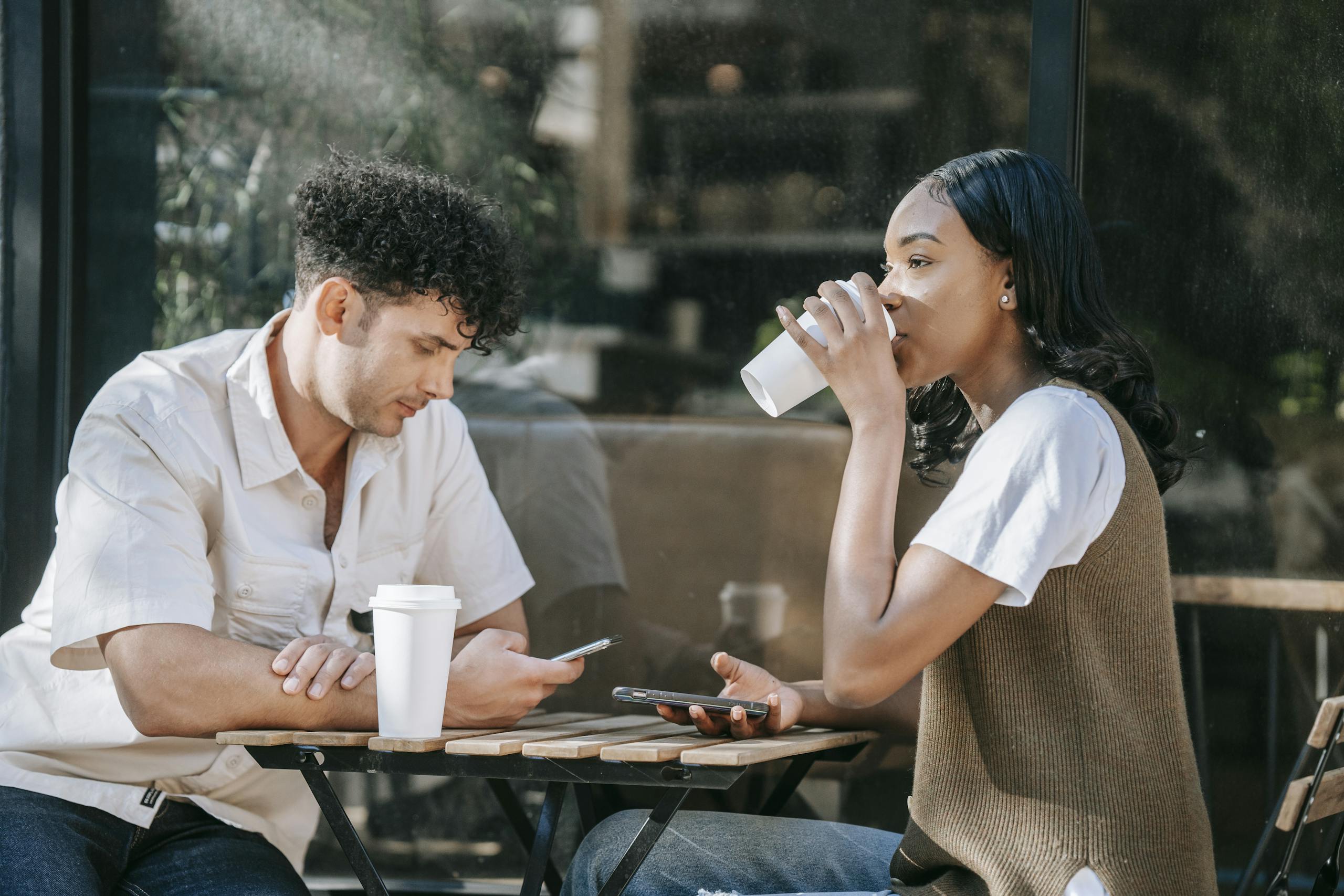

Teenage social media use is strongly linked to anxiety and depression, with mounting evidence pointing to a relationship that goes well beyond ordinary screen time concerns. The pattern shows up consistently: adolescents who spend more hours on social platforms report higher rates of psychological distress, disrupted sleep, and a diminished sense of self-worth. For introverted teens especially, the pressure to perform publicly online can intensify an already complicated relationship with social energy and identity.
My daughter was fourteen when I first noticed the shift. She’d always been a quiet kid, the kind who preferred one good conversation over a room full of noise. Then she got a phone, and something changed. Not dramatically, not all at once, but in the way her eyes moved when she set it down, like she was still partly somewhere else. I recognized that look. It was the same one I used to wear after too many hours in back-to-back client meetings, depleted and vaguely anxious, not quite present anywhere.
That observation sent me down a long road of reading, reflecting, and talking with other parents. What I found wasn’t simple, but it was consistent. And it matters enormously if you’re raising a teenager today, particularly one who’s already wired to process the world more deeply and quietly than most.
If you’re thinking through the broader picture of how introversion shapes family life, our Introvert Family Dynamics and Parenting hub covers everything from communication patterns to how temperament affects the parent-child relationship at every stage. This article fits squarely into that larger conversation.

Why Does Social Media Hit Introverted Teens Differently?
Most conversations about teenagers and social media treat all adolescents as roughly the same. They’re not. Temperament matters enormously here, and introverted teens bring a particular set of vulnerabilities and sensitivities to the digital social world.
What’s your personality type?
Take our free 40-question assessment and get a detailed personality profile with dimension breakdowns, context analysis, and personalised insights.
Discover Your Type8-12 minutes · 40 questions · Free
As an INTJ who spent two decades in advertising, I watched how different personality types processed public-facing pressure. My extroverted account managers thrived on the constant feedback loop of client approval and social validation. Many of my quieter, more introspective team members found that same loop exhausting, even destabilizing. Social media essentially forces that feedback loop onto teenagers twenty-four hours a day.
Introverted teens tend to process experiences more thoroughly before responding. They notice more, feel more, and often carry social interactions with them long after they’ve ended. Psychology Today explains that introverts experience social interaction differently at a neurological level, with higher baseline arousal making additional stimulation more draining rather than energizing. Apply that to an environment that never stops generating social stimulation, and you start to understand why the effect on introverted adolescents can be particularly sharp.
There’s also the question of comparison. Social platforms are built on visibility, performance, and the constant display of social proof. For a teenager who already struggles with feeling like they don’t quite fit the extroverted social template, seeing curated highlights of everyone else’s apparently effortless social lives can feel like confirmation of a fear they already carry. That’s not a small thing. That’s the kind of quiet erosion that shapes identity during some of the most formative years of a person’s life.
Understanding your teenager’s underlying temperament can be genuinely useful here. Tools like the Big Five Personality Traits test offer a research-grounded way to understand where your teen falls on dimensions like neuroticism, openness, and agreeableness, all of which influence how social media pressure lands.
What Does the Evidence Actually Say About Teens and Social Media?
I want to be careful here, because this is an area where a lot of confident-sounding claims get made without solid grounding. The picture is complicated, and it’s worth being honest about that.
What the evidence does support fairly consistently is an association between heavy social media use and higher rates of anxiety and depression in adolescents, particularly among girls. The association is especially pronounced when social media use displaces sleep, in-person connection, and physical activity. Published findings in PubMed point to adolescent social comparison and passive consumption of social content as particularly significant contributors to psychological distress.
What’s less clear is the exact direction of causality. Do teens become anxious because of social media, or do teens who are already anxious gravitate toward social media as a coping mechanism? Most researchers believe the relationship runs in both directions, creating a cycle that’s genuinely difficult to interrupt once it’s established.
What’s also worth noting is the difference between active and passive use. Teens who use social media to actively communicate, create, and connect tend to show fewer negative mental health outcomes than those who primarily scroll and observe. Passive consumption, watching other people’s lives without participating, seems to be the more damaging pattern. For introverted teens who are more comfortable observing than performing, passive scrolling can become a default mode that quietly compounds over time.

A Springer publication on adolescent cognitive behavioral patterns highlights how negative social comparison online activates the same cognitive distortions that therapists treat in anxiety and depression, including catastrophizing, personalization, and all-or-nothing thinking. These aren’t abstract psychological concepts. They’re the mental habits that make a teenager feel like a single embarrassing post defines them permanently.
How Does Social Anxiety Layer Into This for Introverted Teens?
Social anxiety and introversion are not the same thing, and conflating them does a disservice to both. Introversion is a temperament, a preference for less stimulation and more internal processing. Social anxiety is a clinical pattern of fear and avoidance around social situations. They can overlap, but they don’t have to.
That said, introverted teens may be more susceptible to developing social anxiety when placed in environments that consistently reward extroverted behavior and penalize quietness. Social media is one of those environments. The platforms are built around visibility, performance, follower counts, and public approval. An introverted teenager who doesn’t naturally gravitate toward self-promotion can feel like they’re failing at something everyone else seems to do effortlessly.
When that pattern intensifies, it can cross from ordinary introvert discomfort into genuine social anxiety. Healthline’s overview of cognitive behavioral therapy for social anxiety outlines how the avoidance cycle works: fear leads to withdrawal, withdrawal prevents corrective experiences, and the fear deepens. Social media can accelerate this cycle by providing an avoidance mechanism that feels social on the surface but actually reduces real-world connection.
I managed a young creative on my agency team years ago who was clearly introverted and deeply talented. She was also quietly struggling with social anxiety that had developed during her college years. She’d told me once that social media had felt like a safe way to be visible without the vulnerability of real interaction, until it became the primary way she processed her social identity. By the time she was in her mid-twenties, she found in-person client presentations almost paralyzing. The digital substitute hadn’t built her confidence. It had quietly replaced the experiences that would have.
If you’re concerned that what you’re observing in your teenager goes beyond introversion into something more clinically significant, it’s worth looking at resources from the National Institute of Mental Health, which offers clear, accessible information on anxiety disorders in adolescents and when professional support is warranted.
What Are the Warning Signs Parents Should Actually Watch For?
One of the harder things about parenting an introverted teenager is that withdrawal can look like healthy solitude from the outside. Introverted teens often need more alone time, more quiet, more space to process. That’s normal and healthy. The challenge is distinguishing that natural need from withdrawal that signals something is wrong.
There are some patterns worth paying attention to. A teen who was previously engaged in activities they loved and has gradually stopped pursuing them is showing a different kind of withdrawal than a teen who simply recharges in their room after school. Mood changes that seem tied to phone use, irritability after putting the phone down, distress when access is limited, or visible relief when picking it up again, are worth noting. Sleep disruption is another significant signal. Many teens use social media late at night, and the combination of blue light exposure and emotional activation from social content is a reliable recipe for poor sleep, which in turn worsens anxiety and depression.

Physical symptoms matter too. Anxiety in teenagers often shows up somatically, as stomachaches before school, headaches, fatigue, or complaints that seem to have no clear physical cause. These can be easy to dismiss or attribute to other things, but when they cluster with social withdrawal and mood changes, they deserve attention.
For parents who are themselves highly sensitive, this kind of attentive observation can come naturally, though it can also become overwhelming. The article on HSP parenting and raising children as a highly sensitive parent speaks directly to how your own emotional attunement shapes the way you read and respond to your teenager’s signals. That sensitivity is a genuine asset here, as long as it doesn’t tip into anxiety that gets projected onto your child.
Personality patterns also play a role in how mental health challenges present. If you’re trying to understand whether certain traits in your teenager might be pointing toward something that warrants professional evaluation, a resource like the Borderline Personality Disorder test can provide a starting point for understanding emotional dysregulation patterns, though it’s never a substitute for professional assessment.
How Do You Have the Conversation Without Making It Worse?
Talking to a teenager about their mental health and social media use is one of those conversations that can easily backfire if it’s approached with the wrong energy. Most teenagers, and introverted ones especially, will shut down if they feel lectured at, monitored, or like their autonomy is being threatened.
What tends to work better is curiosity over concern. Asking genuine questions about what they enjoy about certain platforms, what they find frustrating, and how they feel after spending time online creates an opening without triggering defensiveness. It also models the kind of reflective self-awareness that you’re hoping they’ll develop.
As an INTJ, I’ve always been more comfortable with direct, analytical conversation than emotional processing. That tendency served me reasonably well in agency boardrooms, but it needed significant adjustment when I was trying to connect with my own kids about something they felt vulnerable about. The instinct to problem-solve immediately, to identify the issue and prescribe the fix, is counterproductive when what a teenager needs first is to feel genuinely heard.
Sharing your own experience without making it about you can also help. Not the “when I was your age” version, but something honest and specific. I’ve told my daughter about the years I spent performing extroversion in professional settings, about how exhausting it was to manage my public persona in rooms full of people who seemed to thrive on the energy I was depleting. That kind of vulnerability, carefully offered, can create more connection than any amount of well-intentioned advice.
It’s also worth thinking about your own social presentation and what it signals. How do you show up in social situations? What do you model about the relationship between online presence and real-world identity? Teenagers are watching all of it, whether or not they appear to be paying attention. A simple reflection tool like the Likeable Person test can prompt some useful self-examination about how you come across in social contexts, and whether your own patterns are ones you’d want your teenager to absorb.

What Practical Steps Actually Help Introverted Teens Manage Social Media’s Impact?
Blanket bans rarely work and often backfire. What tends to be more effective is helping teenagers build a conscious, intentional relationship with their digital social lives, one where they understand what the platforms are designed to do and can make more deliberate choices about how they engage.
For introverted teens specifically, a few approaches seem to make a meaningful difference. Helping them identify the difference between active and passive use is one of the most practical. Passive scrolling, especially late at night, is where most of the damage happens. Active creation, whether that’s writing, photography, music, or even thoughtful commentary, tends to be more energizing and less corrosive to self-worth.
Physical activity also plays a documented role in buffering the mental health effects of social media. PubMed Central research on physical activity and adolescent mental health consistently shows that regular movement reduces anxiety and depression symptoms, and that effect is strong enough to partially offset some of the negative impacts of heavy social media use. For introverted teens who may not gravitate toward team sports, individual pursuits like running, swimming, hiking, or martial arts can provide the same benefit without the social pressure.
Sleep boundaries are non-negotiable. Phones out of the bedroom at night is a simple structural change that removes the late-night scrolling pattern without requiring ongoing willpower from a teenager whose prefrontal cortex is still developing. Frame it as a household norm rather than a punishment, and apply it consistently.
There’s also real value in helping introverted teens find their people online rather than just accumulating followers. Communities built around specific interests, books, art, gaming, science, music, tend to offer the kind of depth-focused connection that introverts find genuinely nourishing. That’s very different from the performance-oriented experience of chasing likes on a general social feed.
For parents who want to support their teenager’s wellbeing more actively, it can help to understand what kind of support role you’re naturally suited for. Tools like the Personal Care Assistant test online explore the caregiving and support dimensions of personality, which can clarify where your natural strengths as a supportive parent actually lie. Similarly, if your teenager is interested in physical wellness as part of managing their mental health, the Certified Personal Trainer test offers insight into fitness aptitude and interest, which might open a conversation about incorporating movement into their routine in a way that feels self-directed rather than imposed.
What Does Healthy Social Development Look Like for Introverted Teens in the Digital Age?
Healthy development for an introverted teenager doesn’t look like becoming more extroverted. It looks like building genuine self-knowledge, developing a few deep relationships, and learning to manage energy and emotional exposure in ways that feel sustainable. Social media can either support or undermine all three of those things, depending on how it’s used.
The teenagers I’ve watched thrive, including my own daughter now that she’s older, tend to share a few qualities. They have a clear sense of what they value that exists independent of online validation. They’ve developed enough self-awareness to notice when digital social exposure is draining them rather than filling them. And they have at least one or two relationships where they feel genuinely known, not just liked.
That last piece is the one that social media most consistently fails to provide. Likes are not the same as being known. Followers are not the same as friends. An introverted teenager who understands that distinction, really understands it, not just intellectually but in their lived experience, is significantly better equipped to use social platforms without being used by them.
The role of personality in shaping social development is also worth acknowledging. PubMed Central’s research on personality and social behavior offers useful context on how individual differences in temperament shape the way people seek and process social connection. Understanding your teenager’s specific personality architecture can help you tailor your support rather than applying generic advice that may not fit how they’re actually wired.
Neurological differences also matter here. Cornell’s research on brain chemistry and extroversion helps explain why the same social environment can feel stimulating to one teenager and overwhelming to another. That’s not weakness or dysfunction. It’s wiring. And the more clearly both parents and teenagers understand that, the more effectively they can design a digital life that works with it rather than against it.
There’s a lot more to explore on this topic as it intersects with family dynamics, parenting temperament, and how introverted parents raise introverted children. The full range of those conversations lives in our Introvert Family Dynamics and Parenting hub, which covers everything from early childhood through the teenage years and beyond.
About the Author
Keith Lacy is an introvert who’s learned to embrace his true self later in life. After 20 years in advertising and marketing leadership, including running agencies and managing Fortune 500 accounts, Keith now channels his experience into helping fellow introverts understand their strengths and build fulfilling careers. As an INTJ, he brings analytical depth and authentic perspective to every article, drawing from both professional expertise and personal growth.
Frequently Asked Questions
Is social media more harmful for introverted teenagers than extroverted ones?
The evidence suggests that introverted teenagers may be more vulnerable to certain specific effects of heavy social media use, particularly the anxiety that comes from social comparison and the pressure to perform publicly. Because introverts process social experiences more deeply and carry them longer, the feedback loops built into social platforms can be more emotionally activating for them. That said, the harm is not exclusive to introverts. Extroverted teens face their own risks, including the compulsive need for validation and the distress that comes when expected social rewards don’t materialize. Temperament shapes the form the harm takes, not necessarily whether it occurs.
How much social media use is too much for a teenager?
There’s no universal threshold that applies to every teenager, but most mental health professionals suggest that concern is warranted when social media use begins displacing sleep, in-person relationships, physical activity, or activities a teenager previously found meaningful. The quality of use matters as much as the quantity. A teenager who spends two hours a day actively creating and connecting with a community around a shared interest is in a very different position than one who spends the same two hours passively scrolling through content that triggers social comparison. Monitoring mood and behavior patterns alongside usage time gives a more complete picture than hours alone.
What should I do if my introverted teenager seems anxious or depressed?
Start with a genuine, low-pressure conversation that prioritizes listening over problem-solving. If the symptoms are significant, persistent, or interfering with daily functioning, a conversation with your teenager’s pediatrician or a mental health professional is the appropriate next step. Social media may be a contributing factor, but anxiety and depression in teenagers have multiple causes, and a professional evaluation can help identify what’s actually driving the distress. Resources from the National Institute of Mental Health offer clear guidance on when and how to seek help for adolescent mental health concerns.
Can social media ever be positive for introverted teens?
Yes, genuinely. For introverted teenagers who struggle to find their people in their immediate physical environment, online communities built around specific interests can provide meaningful connection that might not otherwise be available to them. The key distinction is between platforms and usage patterns that center performance and social comparison versus those that center shared interest and genuine exchange. An introverted teenager who finds a community of people who share their passion for a niche topic, whether that’s a particular genre of writing, a specific area of science, or a creative discipline, can experience real social nourishment online. That’s meaningfully different from the experience of chasing likes on a general social feed.
How do I set social media limits without damaging my relationship with my teenager?
Frame limits as household norms rather than punishments, and apply them consistently to everyone in the home, including yourself. Involve your teenager in setting the boundaries where possible, because limits that a teenager has some ownership over are far more likely to be respected than ones imposed unilaterally. Be clear about the reasoning behind specific boundaries, particularly around sleep, and acknowledge the genuine value your teenager gets from their online social life rather than dismissing it. The goal is to help them develop their own capacity to manage digital social exposure, not to eliminate it entirely. Teenagers who understand why certain patterns are harmful are better positioned to make good choices independently as they get older.