The notification sounds. Your heart rate spikes before you even check what it says. Another social invitation, a work email marked urgent, or maybe just a calendar reminder about tomorrow’s meeting. If you’re an introvert who also experiences anxiety, you recognize this pattern: the same trigger that drains your social battery also activates your worry response.
I spent fifteen years in advertising agencies before understanding this connection. Every client presentation felt like running two separate marathons simultaneously. The introvert part of me needed recovery time from the social interaction. The anxious part replayed every word I’d said, analyzing what might have gone wrong.

When introversion intersects with anxiety, the challenges compound in ways that catch people off guard. Your need for solitude to recharge might trigger anxious thoughts about missing opportunities or disappointing others. Your preference for deep thinking can spiral into rumination. Understanding how these two traits interact makes it possible to work with one while managing the other, rather than feeling trapped by either.
Mental health challenges affect everyone differently, and anxiety paired with introversion creates specific patterns worth examining. Our Introvert Mental Health hub explores the full spectrum of these experiences, and the anxiety-introversion combination deserves particular attention because these traits influence each other in meaningful ways.
What Makes This Combination Challenging
Anxiety and introversion share surface similarities that make them easy to confuse. Social caution appears in both patterns. Group settings create hesitation for both traits. From the outside, these behaviors look like avoidance. That’s where the similarities end.
Introversion represents how you process energy. Social interaction depletes your resources, regardless of whether you enjoy it. A 2019 study from the University of Helsinki found introverts show distinct patterns in dopamine reward processing, explaining why social stimulation feels less rewarding and more draining compared to those with extroverted temperaments.
Anxiety operates through your threat detection system. A 2021 study in the Journal of Anxiety Disorders found anxiety amplifies perceived social threats while simultaneously overestimating the likelihood of negative outcomes. Your brain interprets social situations as potentially dangerous, triggering stress responses designed to keep you safe.
When both traits coexist, they create compounding effects. The introvert needs recovery time after social interaction. The anxiety keeps your mind active during that recovery period, replaying conversations and imagining problems. You can’t recharge effectively because your anxious brain won’t let you rest.

During agency pitches, I noticed how this combination manifested in practical ways. My introversion meant I performed better with thorough preparation and controlled settings. My anxiety meant I needed that preparation to feel excessive by most people’s standards. Three hours of prep for a thirty-minute meeting wasn’t perfectionism. It was the minimum required for both traits to cooperate.
The Energy Depletion Spiral
Social interaction drains introverts through normal mechanisms. Anxiety adds a second layer of exhaustion that operates differently. Think of your energy reserves as a tank with two separate drain valves.
The introvert valve opens during social interaction itself. Conversations, group activities, networking events all create measurable depletion. Research from the American Psychological Association confirms introverts show increased cortisol levels during extended social exposure compared to baseline measurements.
The anxiety valve stays open afterward. Your mind continues processing social information long after the interaction ends. Did that comment land wrong? Should you have mentioned the other project? Why did they look at you that way? These thoughts consume additional energy during time that should restore your reserves.
The spiral accelerates when you can’t recharge between social obligations. One meeting leads to lunch plans. Lunch plans lead to afternoon collaboration. Afternoon work leads to evening commitments. Each interaction depletes you through introversion. Each subsequent rumination session depletes you through anxiety. By week’s end, you’re operating on fumes.
Physical Manifestations
This energy depletion shows up physically in specific ways. Muscle tension concentrates in your neck and shoulders. Digestion becomes unpredictable. Sleep quality deteriorates despite feeling exhausted. These aren’t separate problems. They’re your body’s response to sustained activation of both energy depletion systems.
My own experience included chronic tension headaches that appeared every Thursday afternoon. Not Monday when stress peaked. Thursday, after three days of accumulated depletion without adequate recovery. My body couldn’t sustain the combination anymore.
Distinguishing Avoidance From Preference
People often misidentify introvert preferences as anxiety-driven avoidance. The distinction matters because the solutions differ completely. Understanding which trait drives specific behaviors helps you address the actual need.
Introvert preference involves choice. Genuinely preferring small gatherings over large parties makes the decision feel natural. One-on-one conversations feel more satisfying than group discussions. Solitude recharges effectively. These preferences feel neutral or positive, moving toward something valued rather than away from something feared.
Anxiety avoidance involves threat response. Skipping events happens because imagining them triggers physical discomfort. Phone calls get avoided because the uncertainty feels overwhelming. Canceling plans brings relief, but that relief comes from escaping perceived danger, not from genuine preference satisfaction.

The test lies in your internal experience. Introvert preferences feel calm. Choosing to stay home with a book creates contentment. Anxiety avoidance feels vigilant. Staying home because going out triggers worry creates temporary relief mixed with ongoing tension about future obligations.
Both traits can influence the same decision. You might choose to leave a party early because you’re socially depleted (introversion) and because you’re worried about saying something wrong (anxiety). Recognizing which trait drives which part of your response helps you develop appropriate strategies.
Building Sustainable Coping Strategies
Effective coping requires addressing both traits simultaneously. Strategies that work for anxiety alone might ignore your need for solitude. Approaches designed for introversion might not account for your anxiety’s intensity. The solution involves creating systems that honor both needs.
Energy Budgeting That Accounts for Both Factors
Calculate your social capacity by including both introvert depletion and anxiety taxation. A two-hour networking event doesn’t just cost two hours of social energy. It costs those two hours plus additional recovery time your anxiety requires afterward.
Data from the National Institute of Mental Health suggests anxiety can double recovery time needed after social exposure. Plan accordingly. Schedule significant recovery periods after challenging social obligations. Protect that time as aggressively as you protect the obligation itself.
I learned to treat major presentations like marathon training. Each presentation was race day. Weeks before involved tapering commitments. Days after included mandatory recovery with minimal obligations. The framework acknowledged both the introvert need for energy management and the anxiety need for processing time.
Separating Recharge Time From Rumination Time
Create boundaries between genuine solitude and anxiety-fueled overthinking. True recharge time restores your energy. Rumination time drains it further while pretending to be rest.
Structure your recovery periods with specific activities that prevent rumination from taking over. Reading requires enough cognitive engagement to interrupt worry loops. Physical movement helps discharge the physical activation anxiety creates. Creative projects channel mental energy productively.
Recognize when supposed alone time becomes rumination time. If you’re lying in bed replaying conversations instead of sleeping, you’re not recharging. If solitary activities feel agitated rather than restorative, anxiety has co-opted your recovery period. Shift to activities that better interrupt those patterns.

Exposure That Respects Your Limits
Anxiety treatment often involves graduated exposure to feared situations. For anxious introverts, this exposure needs modification. Standard exposure therapy might push you toward more social interaction than your introvert nature sustainably tolerates.
Design exposure plans that challenge your anxiety without exceeding your introvert capacity. Attend the networking event, but set a firm departure time that protects your energy. Practice conversations, but schedule them during periods when you’re not already depleted. The goal involves expanding what anxiety allows while respecting what introversion requires.
A 2020 study in the Journal of Clinical Psychology found anxiety exposure works more effectively when individuals maintain adequate recovery periods between challenges. Pushing too hard triggers your introvert depletion faster, which then intensifies anxiety symptoms. The combination creates worse outcomes than either factor alone.
Professional Support Considerations
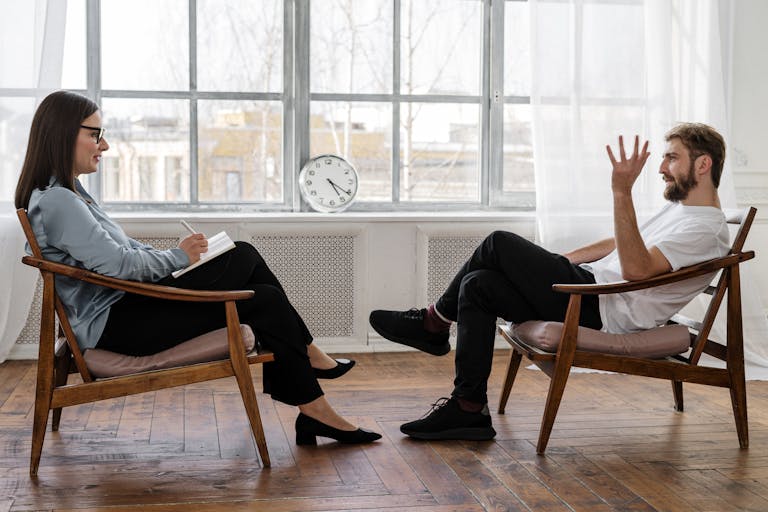
Therapy for anxiety-introversion combinations requires practitioners who understand both traits. Many therapists treat introversion as a problem requiring correction rather than a legitimate trait requiring accommodation. The misunderstanding undermines treatment effectiveness.
Look for mental health professionals who explicitly acknowledge temperament differences in their approach. Cognitive behavioral therapy can address anxiety patterns without trying to transform you into someone more extroverted. Acceptance and commitment therapy helps you build psychological flexibility around both traits.
The Anxiety and Depression Association of America notes effective anxiety treatment should enhance functioning without demanding personality changes. Your introversion isn’t the problem needing treatment. Your anxiety deserves targeted intervention that leaves your introvert preferences intact.
Communicate your needs clearly during initial consultations. Explain that you’re seeking help managing anxiety, not changing your fundamental personality. Effective therapists will understand this distinction immediately. Those who don’t probably aren’t the right fit for your specific situation.
My experience with therapy improved dramatically once I found someone who understood this difference. Previous therapists kept pushing me toward networking groups and social skills workshops. The right therapist helped me reduce anxiety about the social interaction I genuinely wanted while respecting my preference for limited social calendars.
When Anxiety Masquerades As Introversion
Sometimes people misidentify anxiety as introversion because the behaviors look similar from outside. The confusion creates problems because the underlying needs differ completely. Recognizing the distinction helps you address what actually needs attention.
True introversion feels neutral. Preferring solitude because it genuinely restores makes the choice feel natural. Social interaction depletes your energy, but it doesn’t trigger fear responses. Engaging socially when needed happens without experiencing intense physical discomfort or intrusive worried thoughts.
Anxiety disguised as introversion feels tense. Avoiding social situations because thinking about them triggers uncomfortable physical sensations creates a different pattern. You tell yourself you prefer alone time, but that preference comes from escaping perceived threats rather than moving toward genuine restoration. Relief from avoiding the situation dominates your experience more than satisfaction from the activity you chose instead.
The test involves examining situations you theoretically want to attend. An introvert might choose to skip a party because they prefer a quiet evening. Someone with anxiety might desperately want to attend but feel physically unable due to worry about judgment or mistakes. For anxious introverts, the pattern often involves wanting to attend briefly but feeling unable because anxiety has already depleted their limited social capacity.
If you consistently want to participate in activities but feel blocked by worry and physical discomfort, anxiety drives more of your experience than introversion. If you genuinely feel satisfied with limited social contact and your alone time feels restorative, introversion explains more of your pattern. Most anxious introverts experience both influences to varying degrees across different situations.
Practical Adjustments for Daily Life
Managing the anxiety-introversion combination requires specific modifications to your daily routines. Small adjustments compound into meaningful improvements when applied consistently.
Communication Strategies
Establish clear communication about your needs without over-explaining. You don’t owe people detailed justifications for protecting your energy or managing your anxiety. Simple, direct statements work better than lengthy explanations that might feed rumination.
Instead of explaining all the reasons you need to leave early, say you have energy limits and need to maintain them. Instead of detailing your anxiety about a particular situation, state that you’re declining the invitation. Shorter explanations reduce the material your anxiety uses for later rumination.
Practice stating your boundaries without seeking permission. “I’ll need to leave by 8pm” works better than “Would it be okay if I left early?” The first version establishes your boundary. The second version invites negotiation that might compromise what you need.

Environment Design
Structure your physical environment to support both traits simultaneously. Create spaces where recovery happens naturally without requiring additional decision-making. Your anxious brain makes too many decisions already. Your environment should reduce rather than increase cognitive load.
Designate specific areas for specific activities. Reading happens in one spot. Work happens in another. Spatial organization helps your brain switch modes without requiring conscious effort. Research from Stanford University shows physical boundaries between activities reduce mental transition costs significantly.
Control sensory input in your recovery spaces. Lighting, sound, temperature all affect both anxiety levels and recharge effectiveness. Experiment systematically to find combinations that work for you. What reduces one person’s anxiety might increase another’s. Your preferences matter more than general recommendations.
Schedule Architecture
Build your calendar with both factors in mind from the start. Don’t schedule challenging social obligations back-to-back. Include explicit recovery blocks that your calendar treats as seriously as meetings. Protect transition time between different types of activities.
Cluster similar activities when possible. Handle phone calls in one focused session rather than spreading them across the day. Grouping similar tasks reduces the number of transitions your anxiety must manage while making your introvert energy expenditure more predictable.
Review your schedule weekly, not just daily. Daily reviews help you prepare for immediate obligations. Weekly reviews let you spot patterns before they create problems. If three draining events cluster in one week, you can address the situation proactively rather than discovering the problem when you’re already depleted.
Building Sustainable Relationships
Relationships require different approaches when anxiety and introversion both influence your social capacity. People who understand these traits make better long-term connections than those who view them as problems requiring fixes.
Seek relationships with people who respect both your energy limits and your anxiety patterns without treating either as character flaws. These individuals don’t take your need for solitude personally. They understand when anxiety makes you cancel plans without interpreting it as rejection.
Communication becomes especially important in close relationships. Explain how both traits affect your capacity for connection. Help people understand that needing space doesn’t mean you value them less. Clarify that anxiety sometimes interferes with plans you genuinely want to keep.
Research published in the Journal of Social and Personal Relationships found anxiety-introversion combinations affect relationship satisfaction less when partners understand both traits. Misunderstanding creates conflict. Understanding creates space for both people to get their needs met.
In my own relationships, I learned to distinguish between connections that accommodated these traits and those that demanded I overcome them. The difference wasn’t about finding “easier” people. It was about finding people who viewed my traits as information rather than obstacles requiring management.
Related resources on managing specific challenges include our guides on anticipatory anxiety and anxiety attacks in public settings. Understanding what distinguishes introversion from trauma responses also helps clarify where anxiety ends and temperament begins.
Long-Term Management Approaches
Managing the anxiety-introversion combination requires sustained attention rather than quick fixes. Effective long-term approaches involve creating systems that work with both traits instead of fighting either one.
Track patterns over time rather than reacting to individual instances. Keep simple records of what depletes you most severely, what recovery methods work best, and which situations trigger disproportionate anxiety responses. Patterns emerge more clearly with data than with memory alone.
Develop flexibility around both traits. Some periods require more social engagement despite the cost. Other periods allow more solitude. Your capacity varies based on sleep, stress, health, and dozens of other factors. Rigid rules create problems. Flexible frameworks adapt to reality.
Recognize progress in both directions. Anxiety improvement might mean tolerating uncertainty better, not eliminating worry entirely. Introversion management might mean recovering faster from social depletion, not requiring less recovery overall. Success looks like better functioning with both traits, not transcending either one.
Consider medication when appropriate. Anti-anxiety medications don’t change your introversion, but they can reduce the anxiety that amplifies your social exhaustion. Consult with professionals who understand that treating anxiety shouldn’t involve pressuring you toward more extroverted patterns. For more on this topic, our guide on medication versus therapy explores these considerations thoroughly.
Build relationships with others who share this combination. Many people experience both traits simultaneously, and connecting with them reduces the isolation both can create. Online communities, local support groups, or even individual friendships with people who understand this specific challenge all provide valuable perspective.
The combination of introversion and anxiety presents genuine challenges, but those challenges become manageable with appropriate strategies. You’re not weak for finding this difficult. You’re working with two distinct traits that require different approaches while influencing each other in complex ways. That takes more effort than managing either one alone.
Success means honoring both traits without letting either one dominate your life completely. Your introversion deserves protection. Your anxiety deserves treatment. Both can coexist in ways that let you build the life you actually want rather than the one either trait might otherwise dictate.
Explore more mental health resources in our complete Introvert Mental Health Hub.
Frequently Asked Questions
Can you be both introverted and have social anxiety?
Yes, introversion and social anxiety frequently coexist but represent distinct traits. Introversion describes how social interaction affects your energy levels, while social anxiety involves fear of judgment or embarrassment in social situations. Many people experience both simultaneously, with each trait influencing the other in ways that compound the challenges of managing either one alone.
How do I know if I’m avoiding things because of introversion or anxiety?
Examine your internal experience when you decline social opportunities. Introvert preference feels calm and satisfying. You genuinely want solitude and feel restored by it. Anxiety avoidance feels vigilant and tense. You avoid situations because thinking about them triggers physical discomfort, and your relief from avoiding them comes from escaping perceived danger rather than moving toward something you value.
Does treating anxiety make you less introverted?
No, treating anxiety addresses worry and fear responses without changing your fundamental energy processing patterns. Effective anxiety treatment reduces the distress that social situations trigger while leaving your introvert preferences intact. You might feel more capable of handling social interaction when necessary, but you’ll still need recovery time afterward and still prefer smaller gatherings and meaningful one-on-one conversations.
What’s the difference between needing alone time to recharge versus isolating due to anxiety?
Introvert recharging feels restorative and satisfying. You emerge from solitude feeling refreshed and more capable. Anxiety-driven isolation feels defensive and often includes rumination that prevents genuine restoration. If your alone time involves replaying social interactions, worrying about future obligations, or feeling trapped rather than choosing solitude, anxiety drives more of your experience than introvert recovery needs.
Should I push myself to be more social despite being an anxious introvert?
Graduated exposure to anxiety-provoking situations can help reduce fear responses, but this exposure should respect your introvert energy limits. Challenge anxiety patterns without exceeding your sustainable social capacity. The goal involves expanding what anxiety allows while honoring what introversion requires. Pushing too hard triggers introvert depletion faster, which then intensifies anxiety symptoms and creates worse outcomes than addressing either trait alone.
About the Author
Keith Lacy is an introvert who’s learned to embrace his true self later in life. With a background in marketing and a successful career in media and advertising, Keith has worked with some of the world’s biggest brands. As a senior leader in the industry, he has built a wealth of knowledge in marketing strategy. Now, he’s on a mission to educate both introverts and extroverts about the power of introversion and how understanding this personality trait can unlock new levels of productivity, self-awareness, and success.