
Everyday assertiveness isn’t about being louder. It’s about being clear, honest, and willing to hold your ground, even when every instinct tells you to shrink back and let it go. For introverts especially, assertiveness often gets tangled up with aggression or confrontation, two things most of us genuinely want to avoid. But real assertiveness is something quieter and more precise than that.
After two decades running advertising agencies, I learned that the introverts on my teams weren’t lacking confidence. They were lacking permission. Permission to speak without performing. Permission to disagree without apologizing. Permission to be exactly who they were and still be taken seriously. That permission, it turns out, has to come from within.

Assertiveness is one of those social skills that sounds straightforward until you’re actually in the moment, stomach tight, words forming slowly while someone else fills the silence. If you’ve ever walked away from a conversation replaying what you wish you’d said, you already understand why this matters. Our Introvert Social Skills and Human Behavior hub covers a wide range of these real-world challenges, and assertiveness sits at the center of almost all of them.
Why Do Introverts Struggle With Assertiveness in the First Place?
There’s a version of this question I used to ask myself constantly. I’m an INTJ. I’m decisive, strategic, and comfortable with difficult decisions. So why did I find it so hard to simply tell a client their campaign direction was wrong, or tell a team member their work wasn’t good enough, without softening it into near-meaninglessness?
Career Coaching for Introverts
One-on-one career strategy sessions with Keith Lacy. 20 years of Fortune 500 leadership as an introvert, now helping others build careers that work with their wiring.
Learn More50-minute Zoom session · $175
Part of the answer is that introverts process deeply. We don’t just think about what we want to say. We think about how it will land, what it implies, how it might change the relationship, and whether we’ve considered every angle. That depth is genuinely valuable. It also creates a kind of internal traffic jam when fast, direct communication is needed.
The American Psychological Association defines introversion as a tendency toward inward focus, with preference for less stimulating environments. What that definition doesn’t capture is the downstream effect: when you’re wired to process internally, external assertion can feel like a violation of your own nature. Speaking up feels like forcing something out before it’s ready.
There’s also the energy dimension. Social interactions cost introverts more than they cost extroverts, not because we’re fragile, but because we’re wired differently. Assertiveness requires sustained presence in a moment, holding your position while someone pushes back, maintaining eye contact while you say something uncomfortable. That kind of sustained engagement is genuinely taxing. It’s not weakness. It’s physiology.
And then there’s the overthinking spiral. Many introverts don’t just replay conversations after the fact. They pre-play them, running through every possible outcome before saying a word. If you recognize that pattern, overthinking therapy offers some genuinely practical ways to interrupt the cycle before it costs you another opportunity to speak up.
What Does Everyday Assertiveness Actually Look Like?
Assertiveness in the abstract is easy to endorse. Assertiveness in a Tuesday afternoon meeting when your manager misattributes your idea to someone else? That’s where it gets real.
Everyday assertiveness isn’t reserved for dramatic confrontations. It lives in small moments: asking for what you need, declining what you don’t want, correcting a misunderstanding, holding a boundary when someone tests it. These micro-moments accumulate. How you handle them shapes how people perceive you, and more importantly, how you perceive yourself.
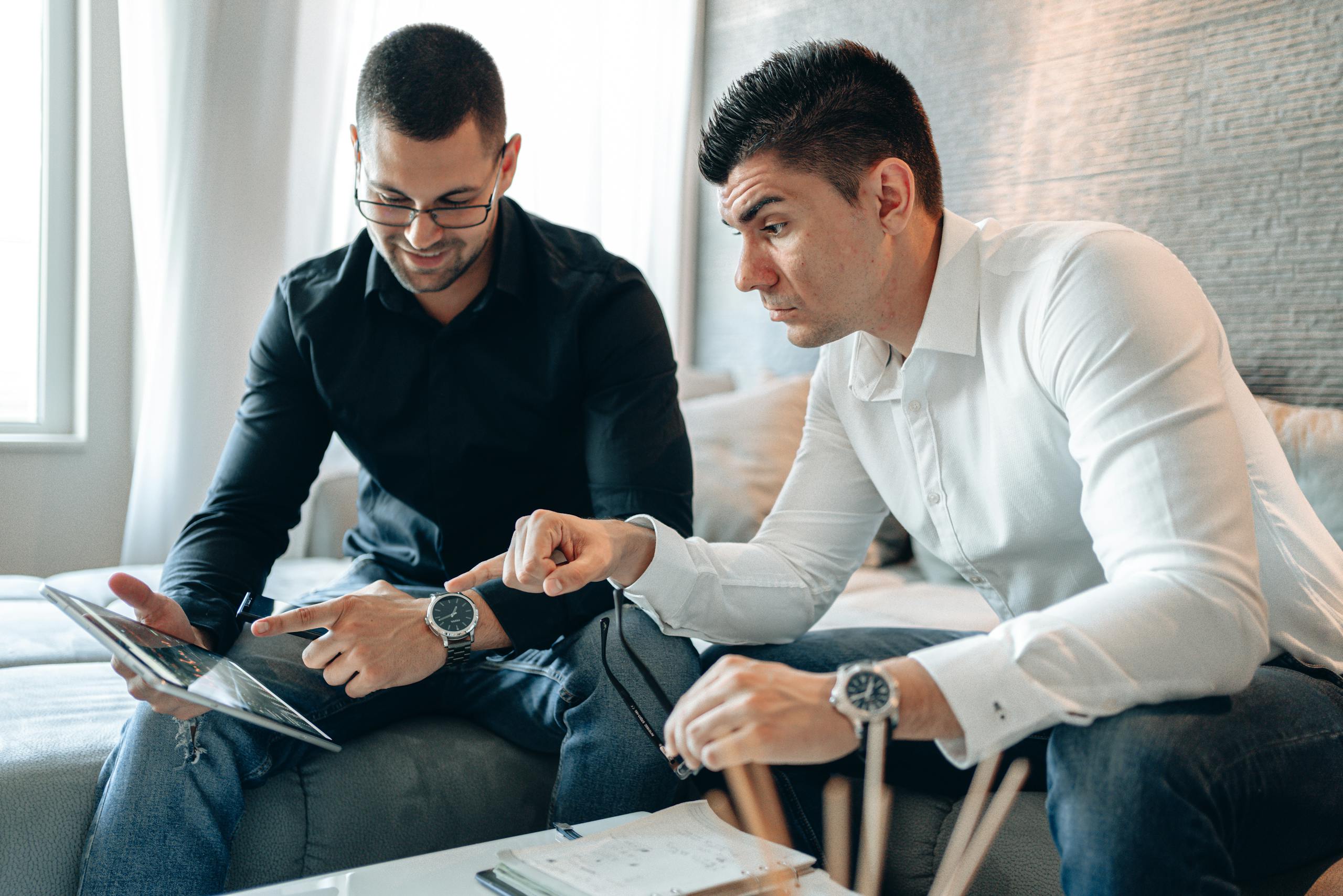
Early in my agency career, I had a client who would routinely dismiss my team’s strategic recommendations in group calls, then circle back privately to ask for exactly what we’d suggested, as if the idea had come from him. For a long time, I let it go. It felt like part of the job. The client was happy. The work moved forward. What did attribution matter?
It mattered to my team. They noticed. And my silence communicated something I didn’t intend: that their contributions weren’t worth protecting. Assertiveness in that moment wasn’t about confronting the client aggressively. It was about saying, clearly and calmly, “I want to make sure the team gets credit for this direction.” That’s it. One sentence. But I had to build up to it, and the building took longer than I’d like to admit.
Everyday assertiveness has a few consistent features. It’s specific rather than vague. It’s calm rather than heated. It focuses on the situation rather than the person’s character. And it happens in real time, or close to it, rather than days later in an email you’ve rewritten seventeen times.
How Does Personality Type Shape Your Assertiveness Style?
Not all introverts struggle with assertiveness in the same way, and understanding your specific wiring helps you work with it rather than against it.
As an INTJ, my assertiveness challenges tend to cluster around emotional delivery. I can be clear and direct in my thinking, but I sometimes underestimate how blunt that clarity sounds to someone who processes things more emotionally. I’ve had to learn to add texture to directness, not to soften the message, but to deliver it in a way that people can actually receive.
INFJs and INFPs on my teams over the years had a different struggle. They often knew exactly what they wanted to say but felt an almost physical resistance to saying anything that might create conflict. One INFJ creative director I worked with was extraordinarily perceptive. She could read a client’s unspoken concerns before anyone else in the room. But she’d absorb those concerns quietly rather than naming them, and the unaddressed tension would eventually surface in ways that were harder to manage. Her assertiveness work wasn’t about finding confidence. It was about trusting that voicing discomfort early was an act of care, not aggression.
ISTJs tend toward a different pattern: they’re often willing to assert themselves on procedural matters (following the right process, meeting a deadline, honoring a commitment) but more reluctant to assert personal preferences or emotional needs. The line between “this is wrong by objective standards” and “this doesn’t work for me personally” can feel very different to a sensing-judging type.
If you’re not sure where your own patterns come from, it helps to start with self-knowledge. Take our free MBTI personality test to get a clearer picture of how your type shapes the way you communicate, assert, and hold back. Knowing your type doesn’t excuse the patterns, but it gives you a map.
What the Psychology Today piece on the introvert advantage captures well is that introversion and assertiveness aren’t opposites. Many introverted leaders are highly assertive. They’ve simply learned to assert in ways that match their temperament, through preparation, precision, and well-timed directness, rather than through volume or dominance.
What Gets in the Way When You Try to Speak Up?
Knowing you should speak up and actually doing it are two very different experiences. Most introverts I’ve talked with don’t lack awareness. They lack the ability to act on that awareness in the moment, when the pressure is live and the window is narrow.
A few specific obstacles come up again and again.
The first is the processing delay. Introverts often need more time to formulate a response than the social pace of a conversation allows. By the time you’ve thought through what you want to say, the moment has passed or someone else has filled it. This isn’t a flaw. It’s a feature of deep processing. The practical fix is preparation: knowing in advance what positions you’re likely to need to defend, and having a few phrases ready that buy you time without signaling retreat. “Let me think about that for a moment” is a complete sentence. So is “I want to come back to that point.”

The second obstacle is the fear of being perceived as difficult. Many introverts, particularly those who’ve spent years adapting to extroverted workplace cultures, have internalized the idea that asserting themselves is somehow demanding or problematic. That fear isn’t irrational. Some environments do penalize directness, especially from people who don’t fit the dominant personality mold. But conflating all assertiveness with being difficult keeps you permanently underselling yourself.
The third obstacle is what I’d call the perfectionism trap. Introverts often want to be completely sure before speaking. Sure that they’re right, sure that their timing is good, sure that they’ve considered every counterargument. That standard is impossibly high, and it produces silence where a voice is needed. Assertiveness doesn’t require certainty. It requires willingness.
There’s a useful connection here to emotional intelligence. Recognizing your own internal states, understanding what’s driving your hesitation, and regulating your response in real time are all components of emotional self-awareness. An emotional intelligence speaker I heard at a leadership conference years ago put it simply: “You can’t manage what you haven’t noticed.” That line stayed with me. Most assertiveness failures start with not noticing the moment you decided to stay quiet.
How Do You Build Assertiveness Without Faking Extroversion?
This is where most assertiveness advice falls flat for introverts. It’s built on an extroverted model: be bold, project confidence, fill the room, speak first. That approach works for some people. For others, it’s a performance that drains energy and produces results that feel hollow.
Authentic assertiveness for introverts looks different, and it works precisely because it’s authentic.
Start with your natural strengths. Introverts tend to be careful observers, thoughtful communicators, and skilled at seeing what others miss. Assertiveness built on those strengths is more sustainable than assertiveness built on mimicking someone else’s style. When I finally stopped trying to be the loudest voice in client presentations and started being the most prepared one, my effectiveness actually increased. I wasn’t performing confidence. I had it, because I’d done the work.
Written communication is an underrated assertiveness tool. Introverts often express themselves more clearly and fully in writing than in real-time conversation. There’s nothing wrong with following up a meeting with a concise email that states your position clearly. That’s not avoiding confrontation. It’s choosing your best medium.
One-on-one conversations are generally easier for introverts than group settings. If you need to address something difficult, requesting a private conversation rather than handling it in front of an audience plays to your strengths. You’ll be more present, more articulate, and more likely to actually say what you mean.
Practice in low-stakes situations. Assertiveness is a skill, and skills develop through repetition. Returning an incorrect order at a restaurant, asking a question in a class or webinar, politely correcting a minor misunderstanding with a friend: these small moments build the neural pathways that make bigger moments easier. The research on skill acquisition consistently points to the same principle: deliberate practice in progressively challenging contexts is how competence develops.
Working on your social skills more broadly creates a foundation that makes assertiveness feel less isolated and more natural. If you’re looking for a structured place to start, improving social skills as an introvert offers practical entry points that don’t require you to become someone you’re not.
What Role Does Self-Awareness Play in Becoming More Assertive?
Assertiveness without self-awareness tends to misfire. You end up asserting the wrong things, at the wrong times, for reasons you haven’t fully examined. Self-awareness is what lets you distinguish between a genuine boundary and a mood, between a principle worth defending and a preference you’re over-investing in.
For introverts, self-awareness is often a natural strength. We spend a lot of time inside our own heads. The challenge is converting that internal richness into useful, actionable insight rather than circular rumination.

A practice that genuinely helped me was reviewing difficult interactions the same day they happened, not to replay them with regret, but to identify the specific moment I chose silence over speech. What was I afraid of? What did I assume would happen if I spoke? Were those assumptions accurate? Over time, those patterns became visible, and visible patterns can be changed.
Meditation and self-awareness practices can accelerate this process significantly. Not because meditation makes you bolder in the moment, but because it trains you to notice your internal states without being immediately controlled by them. When you can feel the anxiety of a potential confrontation without immediately retreating from it, you’ve created space to choose your response rather than just react.
There’s also a values clarification component. Assertiveness is easier when you’re clear on what actually matters to you. When I know I’m defending something I genuinely believe in, not just a preference or an ego investment, the words come more readily. Getting clear on your values isn’t abstract philosophy. It’s practical preparation for every difficult conversation you’ll ever have.
The Harvard Health guide to social engagement for introverts makes a point worth sitting with: introverts often have rich internal lives that don’t automatically translate into external expression. Developing that translation capacity, from internal clarity to external assertion, is the actual work.
How Does Assertiveness Connect to Relationships and Trust?
One of the things I got wrong for a long time was believing that assertiveness was primarily a professional skill. It’s not. It shapes every relationship you have.
Unassertiveness in close relationships creates a slow accumulation of unspoken resentments. You agree to things you don’t want. You stay quiet about things that bother you. You absorb the preferences of others until you’re not sure what your own preferences are. That erosion is quiet and gradual, which makes it easy to miss until the distance it creates becomes hard to close.
Being a good conversationalist and being assertive are more connected than they might seem. When you’re genuinely present in a conversation, listening well and contributing honestly, you’re practicing the same skills that make assertiveness possible. Becoming a better conversationalist as an introvert isn’t just about social comfort. It’s about developing the presence and responsiveness that make real communication possible.
Trust is built through consistency. When the people in your life know that you’ll say what you mean and mean what you say, they can actually rely on you. Paradoxically, being more assertive often makes you easier to be close to, not harder. The people who are hardest to be close to are often the ones who say yes when they mean no, who smile through discomfort, who never let you know where you actually stand with them.
I’ve watched this play out in professional relationships too. The account managers on my teams who were most trusted by clients weren’t the most agreeable ones. They were the ones who would tell a client honestly when an idea wasn’t going to work. That honesty, delivered with care and without drama, built more loyalty than any amount of accommodation ever could.
There’s also a dimension worth acknowledging for anyone rebuilding their sense of self after a relationship has been damaged by betrayal. The instinct to suppress your own needs and voice can intensify after trust has been broken. If you’re working through that kind of experience, managing the overthinking that follows betrayal addresses some of the specific mental patterns that make reclaiming your voice feel so difficult.
What Does Assertiveness Look Like When You’re Tired or Overwhelmed?
Assertiveness is hardest exactly when it’s most needed: at the end of a long day, in the middle of a high-stakes situation, when you’re already running on empty. For introverts, social and emotional depletion directly erodes the capacity to hold a position or speak up clearly.
I noticed this pattern most clearly during long client pitches. By hour three of a presentation day, my ability to push back on unreasonable client requests had measurably declined. Not because I’d changed my mind, but because the energy required to assert had been spent on everything else. Recognizing that pattern was the first step toward managing it.

Strategic energy management isn’t a luxury for introverts. It’s a prerequisite for consistent assertiveness. That means protecting recovery time before high-stakes interactions, not just after them. It means knowing which battles genuinely require your full presence and which ones can wait or be handled in writing. It means building in the quiet time that keeps you resourced enough to show up fully when it matters.
The neurological basis for introvert energy patterns is well-documented. Introverts aren’t imagining their depletion. The cognitive load of sustained social engagement is real, and managing that load is part of managing your effectiveness as a communicator and as someone who needs to hold their ground in a world that often pushes back.
One practical shift that helped me: I stopped scheduling difficult conversations at the end of the day. If I needed to address something with a team member or a client, I’d initiate it in the morning when I was most resourced. That small structural change produced noticeably better outcomes, not because the conversations were different, but because I was.
Assertiveness also looks different under stress than it does in calm moments. Under pressure, the tendency to either over-assert (snapping, being blunt to the point of harshness) or under-assert (going silent, deferring completely) both increase. Knowing your specific stress pattern matters. As an INTJ, my under-stress pattern leans toward abruptness rather than silence, so I’ve had to build in deliberate pauses before responding when I’m already depleted.
The connection between emotional regulation and effective communication is worth understanding in concrete terms. Assertiveness isn’t just about what you say. It’s about the regulated state from which you say it. A well-delivered boundary from a calm place lands completely differently than the same words delivered from a place of exhaustion or frustration.
The long arc of developing assertiveness as an introvert isn’t about becoming someone who never hesitates or always has the perfect response. It’s about shrinking the gap between what you know and what you say. Between what you need and what you ask for. Between the person you are internally and the one you allow the world to see.
That gap closes slowly, through practice and self-awareness and a willingness to be imperfect in the process. But it does close. And every time it does, something that felt like a limitation starts to feel like a choice.
If you want to keep building on these ideas, the full range of topics in our Introvert Social Skills and Human Behavior hub covers everything from managing difficult conversations to understanding your own emotional patterns more deeply.
About the Author
Keith Lacy is an introvert who’s learned to embrace his true self later in life. After 20 years in advertising and marketing leadership, including running agencies and managing Fortune 500 accounts, Keith now channels his experience into helping fellow introverts understand their strengths and build fulfilling careers. As an INTJ, he brings analytical depth and authentic perspective to every article, drawing from both professional expertise and personal growth.
Frequently Asked Questions
Is being assertive harder for introverts than extroverts?
Assertiveness presents specific challenges for introverts, though not because introverts lack confidence. The combination of deep processing, sensitivity to social dynamics, and a higher energy cost for sustained social engagement means that speaking up in real time can feel genuinely difficult. That said, introverts often develop a more precise, considered form of assertiveness once they stop trying to match extroverted communication styles and work with their natural strengths instead.
What is the difference between assertiveness and aggression?
Assertiveness means expressing your needs, opinions, or boundaries clearly and directly while respecting the other person’s perspective. Aggression involves expressing those same things in ways that disregard or override the other person, often through raised voice, threats, or dismissiveness. Many introverts avoid assertiveness because they fear crossing into aggression, but the two are quite different in tone, intent, and impact. Assertiveness can be calm, warm, and even gentle while still being firm and clear.
How can introverts practice assertiveness without draining their energy?
Strategic energy management makes a significant difference. Scheduling important conversations when you’re most resourced (typically earlier in the day), using written communication as an assertiveness tool, and practicing in low-stakes situations all help build the skill without depleting your reserves. Preparation also reduces the energy cost: knowing your position in advance means you’re not processing and asserting simultaneously, which is the most draining combination.
Can my MBTI type predict how I’ll struggle with assertiveness?
Your personality type can offer useful patterns, though it doesn’t determine your outcomes. INFJs and INFPs often struggle with assertiveness around conflict avoidance, while INTJs may struggle more with emotional delivery. ISTJs may assert procedural matters readily but find personal preference assertion harder. Understanding your type gives you a starting map, not a fixed limitation. Many introverts find that knowing their type helps them identify the specific obstacles they’re working with rather than treating assertiveness as a single, uniform challenge.
How does assertiveness affect relationships for introverts?
Assertiveness is foundational to healthy relationships of any kind. Without it, unspoken resentments accumulate, boundaries erode, and the people close to you never quite know where they stand. For introverts who tend toward accommodation and harmony, developing assertiveness often feels counterintuitive at first. But most people find that being more direct and honest, delivered with care, actually deepens trust rather than creating distance. Relationships where both people can say what they mean tend to be more stable and more satisfying over time.