

The homebody club has no membership card, no initiation ritual, and no secret handshake. What it has is a quiet understanding among people who genuinely love being home, not because they’re hiding from the world, but because home is where they do their best living. Belonging to this club means recognizing that staying in isn’t a lesser choice. It’s a different one, and for many of us, it’s the right one.
There’s a version of this conversation that focuses entirely on defending the homebody lifestyle against outside criticism. I’ve had that conversation plenty of times, and I understand why it exists. But what I want to talk about here is something different: what it actually feels like to belong to this club from the inside. What the membership looks like day to day. What draws certain people toward home with such consistency that it stops feeling like a preference and starts feeling like identity.
If you’ve ever felt a quiet sense of relief when plans got cancelled, if your home feels less like a place you return to and more like a place you’re always oriented toward, this is written for you.
Our Introvert Home Environment hub explores the full range of how introverts relate to their physical spaces, but the homebody experience adds a particular layer: it’s not just about designing the right environment. It’s about understanding why home matters so much in the first place.
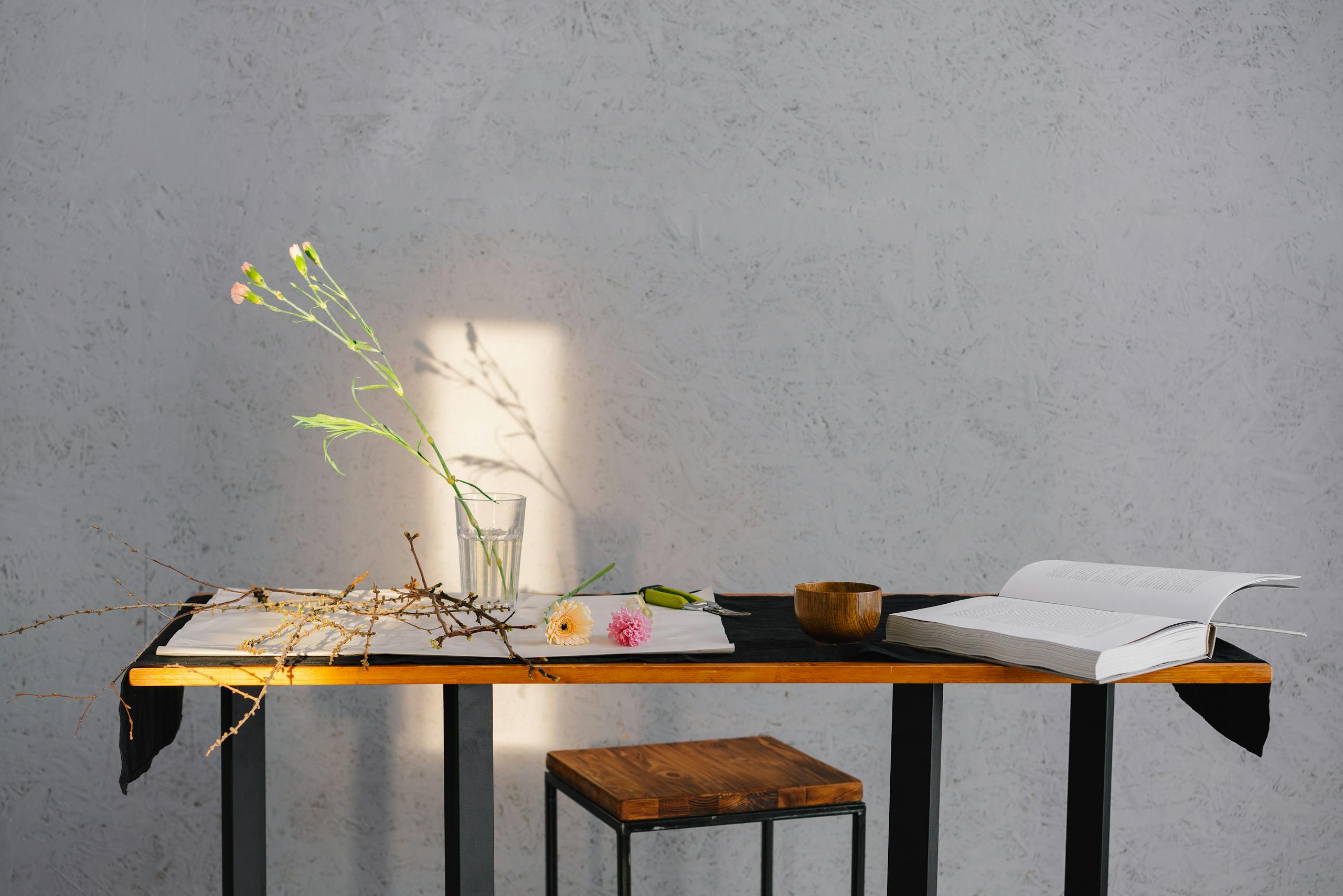
What Does Membership in the Homebody Club Actually Look Like?
Most descriptions of homebodies focus on what they don’t do. They don’t go to parties. They don’t fill their weekends with social engagements. They don’t feel the pull toward novelty and stimulation that seems to drive so much of modern social life. That framing, built entirely around absence, misses what’s actually happening.
What’s your personality type?
Take our free 40-question assessment and get a detailed personality profile with dimension breakdowns, context analysis, and personalised insights.
Discover Your Type8-12 minutes · 40 questions · Free
Being a homebody is a presence, not an absence. It’s the presence of deep comfort in familiar surroundings. The presence of routines that feel genuinely nourishing rather than just habitual. The presence of a rich inner life that doesn’t require external scenery to stay interesting. Homebodies aren’t people who’ve given up on the world. They’re people who’ve built a world that works for them.
I spent the better part of two decades running advertising agencies, which meant my professional life was almost entirely oriented outward. Client dinners, pitch meetings, industry conferences, team offsites. The calendar was always full, always loud, always pulling me somewhere. And I performed that life reasonably well, because I understood what was required and I cared about the work. But I remember the drive home after particularly long days with unusual clarity. Not because anything dramatic happened on those drives, but because of what I felt: a specific, almost physical sense of pressure releasing as I got closer to my own front door.
That feeling wasn’t exhaustion, exactly. It was reorientation. My body and mind shifting back toward the mode they actually preferred. Home wasn’t where I recovered from my real life. Home was my real life. Everything else was the performance.
That distinction matters for understanding what homebody membership means. It’s not about avoiding the world. It’s about knowing where you’re most fully yourself.
Why Do Some People Feel Such a Strong Pull Toward Home?
Not everyone experiences home as a gravitational force. Some people feel restless at home, energized by movement and novelty, genuinely recharged by social stimulation. That’s a real and valid way to be wired. The homebody pull is different, and it’s worth understanding where it comes from.
Part of it is sensory. People who are more sensitive to environmental stimulation, whether that’s noise, crowd density, unpredictability, or the sheer cognitive load of public spaces, find that home offers something genuinely irreplaceable: controlled sensory input. You know what your home sounds like, smells like, feels like. You’ve calibrated it, consciously or not, to suit your nervous system. That calibration has real value.
There’s a meaningful overlap here with high sensitivity. If you’ve explored HSP minimalism, you already know how powerfully the physical environment affects people who process sensory information more deeply. For highly sensitive people, home isn’t just comfortable. It’s protective. The outside world asks a lot of a nervous system that’s tuned to pick up everything.
Part of the pull toward home is also cognitive. Introverts, and homebodies especially, tend to do their best thinking in environments where they control the variables. Creativity, reflection, problem-solving, emotional processing: all of these happen more freely when you’re not managing the competing demands of a public or social setting. Home is where the mental bandwidth gets freed up for the things that actually matter to you.
There’s also something worth naming about depth orientation. Many homebodies are drawn to experiences that reward sustained attention: long books, complex projects, slow cooking, detailed crafts, multi-season television, deep conversations with one or two people rather than surface-level interaction with many. Home is the natural habitat for depth. The outside world tends to reward breadth, speed, and spectacle. Home rewards patience and presence.
A piece published in Psychology Today on depth in conversation captures something I’ve long felt: that the preference for meaningful exchange over small talk isn’t antisocial. It’s a different kind of social orientation, one that home tends to support far better than most public settings.

Is the Homebody Club Just for Introverts?
Honestly, no, though there’s significant overlap. Introversion describes where you get your energy from: internal sources rather than external stimulation. Being a homebody describes where you prefer to spend your time and why. Those two things correlate strongly, but they’re not identical.
There are extroverts who love being home. They might prefer hosting to going out, filling their space with people rather than seeking stimulation in external venues. There are introverts who travel constantly, finding solitude in movement rather than in a fixed domestic space. The categories have real edges, but they’re not rigid.
What the homebody club does share with introversion is a certain relationship to energy. Members of the club tend to find that home replenishes something that the outside world depletes. Whether that’s sensory energy, social energy, cognitive energy, or some combination, the direction of the flow is the same: outward when you’re away, inward when you’re home.
What I’ve noticed, both in myself and in the people I’ve managed over the years, is that the strongest homebodies often have a particular kind of interior richness. Their inner world is genuinely interesting to them. They don’t need external novelty to stay engaged because they’re always working through something internally: a problem, a creative project, an idea they’re turning over slowly. Home gives that inner life room to breathe.
One of my former creative directors was an INFJ, and she described her home as “the only place where my brain stops translating.” She meant that everywhere else, she was constantly reading people, managing impressions, filtering her responses. At home, that translation work stopped. She could just be. That struck me as one of the clearest articulations of the homebody pull I’ve ever heard.
What Does a Homebody Actually Do All Day?
This question gets asked with a skeptical edge sometimes, as if the answer must reveal some kind of emptiness. It doesn’t. What homebodies do at home is usually the same thing everyone else does everywhere else: they live their lives. They just prefer to live them here.
Reading is a common thread. Not just casual reading, but the kind of sustained, immersive reading that requires uninterrupted time and mental quiet. A good homebody book isn’t just entertainment. It’s a whole experience, something you can sink into for hours and emerge from feeling like you’ve been somewhere real.
There’s cooking, often slow and deliberate. There’s creative work of various kinds. There’s the particular pleasure of a well-chosen film or series watched from the exact right spot on a couch that knows you. On that note, the homebody couch deserves more credit than it gets. It’s not a symbol of laziness. It’s command central for a certain kind of rich, interior life.
There’s also connection, which surprises people who assume homebodies are isolated. Many homebodies maintain warm, meaningful relationships. They just prefer to conduct them in ways that suit their nature. Text conversations that unfold over hours. Long phone calls with people they actually want to talk to. Dinner for four rather than parties of forty. And increasingly, digital spaces that allow genuine connection without the sensory and social overhead of physical gatherings. Chat rooms built around shared interests have become a real part of how many homebodies stay connected without depleting themselves.
I want to be careful not to romanticize this into something it isn’t. Being a homebody doesn’t automatically mean your home life is rich and fulfilling. Like any lifestyle, it requires intention. A home that’s cluttered, uncomfortable, or poorly suited to how you actually spend your time can make even the most devoted homebody feel restless and dissatisfied. The environment matters. The activities you choose matter. The relationships you maintain matter.
What distinguishes thriving homebodies from people who are merely stuck at home is agency. The choice to be here, made freely and repeatedly, because here is genuinely where you want to be.

How Do You Build a Home Life That Actually Supports Who You Are?
One of the things I’ve come to understand about introversion, and about being a homebody specifically, is that the environment you inhabit has a disproportionate effect on your wellbeing. Extroverts can often override a suboptimal environment with social energy. Homebodies can’t do that as easily. The space itself carries weight.
A piece in PubMed Central examining environmental psychology touches on how physical spaces affect psychological states in ways most people underestimate. For homebodies, this isn’t abstract. It’s lived experience. A home that feels chaotic or overstimulating doesn’t become a sanctuary just because you’re inside it.
Building a home life that supports you starts with honesty about how you actually use your space. Not how you think you should use it, not how it looks in aspirational photographs, but how you genuinely move through it day to day. Where do you read? Where do you think? Where do you decompress? What parts of your home make you feel good and what parts create low-grade friction?
After I left agency life and started working from home full-time, I had to completely rethink my relationship to my physical space. For twenty years, my home had been a recovery zone, a place I retreated to after the real action happened elsewhere. Suddenly it was everything: office, creative space, social space, sanctuary. The transition required real intention. I had to figure out which parts of my home served which functions, and I had to be willing to invest in making those spaces actually work.
That investment doesn’t have to be expensive. Some of the most meaningful changes I made cost almost nothing. Rearranging furniture to create a reading corner with better light. Removing a television from a room where I wanted to think. Adding a few plants to spaces that felt sterile. Small calibrations with outsized effects.
For people who want to be more intentional about this, thinking carefully about what you actually need in your space is a good starting point. The right gifts for homebodies aren’t random comfort items. They’re things that make specific home activities more enjoyable, more sustainable, more yours. A quality reading lamp. A proper tea setup. Noise-canceling headphones for the hours when you need deep quiet. These aren’t luxuries. They’re infrastructure for a life you’ve chosen.
There’s also something to be said for seasonal intentionality. The way I use my home in January is different from how I use it in July. The homebody club isn’t static. It evolves with you, with your needs, with the rhythms of the year. Staying attentive to what’s working and what isn’t, and being willing to adjust, is part of what makes the lifestyle genuinely sustaining rather than just habitual.
What Does the Homebody Club Offer That the Outside World Doesn’t?
There’s a real answer to this question, and it’s worth stating plainly rather than dressing it up in defensive language.
Home offers continuity. The outside world is relentlessly episodic: meetings, events, encounters, each one demanding its own orientation and energy. Home allows you to maintain a thread. You pick up where you left off. The book is still on the table. The project is still on the desk. The thought you were having before you had to leave is still available to you when you return. For minds that work through depth and sustained attention, that continuity is genuinely valuable.
Home offers self-determination. You decide the temperature, the soundtrack, the schedule, the company. In a world that constantly asks you to adapt to external conditions, the ability to set your own conditions isn’t trivial. It’s restorative in a specific way that’s hard to replicate elsewhere.
Home offers honest relationships with yourself. Away from the performance demands of social and professional life, you get to be exactly who you are. Your actual preferences, your actual pace, your actual interests. For people who spend significant energy managing how they’re perceived in public contexts, this honesty is more than comfort. It’s necessary.
Some research suggests that autonomy over one’s environment is meaningfully connected to psychological wellbeing. A study published in PubMed Central on autonomy and wellbeing points toward what many homebodies already know intuitively: having control over your surroundings isn’t a luxury preference. It has real effects on how you feel and function.
What the outside world offers, and this is worth acknowledging honestly, is exposure, variety, and the kind of serendipitous connection that doesn’t happen in familiar surroundings. Those things have value. Homebodies who never leave home at all, who’ve contracted their world entirely to the domestic, miss something real. The club isn’t about never leaving. It’s about knowing where home is and choosing to return there, often and with intention.

How Do You Share Homebody Life With People Who Are Wired Differently?
This is where the homebody club gets complicated, because most of us don’t live in isolation. We have partners, family members, friends, and colleagues who experience the world differently. handling those differences without losing yourself or dismissing others is real work.
My wife is more socially oriented than I am. Not dramatically so, but meaningfully. Early in our relationship, my preference for staying home read to her as disinterest in shared experiences. Her preference for going out read to me as a failure to appreciate what we’d built together. Neither interpretation was accurate, but both felt true from inside our respective wiring.
What helped was getting specific. Not “I want to stay in more” versus “I want to go out more,” but actual conversations about which specific activities felt energizing versus depleting, which social situations were genuinely enjoyable versus merely tolerable, and what we both actually needed from our shared time. Those conversations required the kind of honesty that’s easier at home, incidentally, than in the middle of a social situation where you’re already managing a dozen other inputs.
A framework I’ve found useful for these conversations comes from Psychology Today’s approach to introvert-extrovert conflict resolution, which focuses on separating the behavior (staying home, going out) from the underlying need (restoration, connection) and finding ways to meet both needs without one person always winning and the other always conceding.
The homebody club isn’t a singles-only membership. Plenty of its most committed members are in relationships, families, households with people who have different preferences. Making that work requires the same thing most things require: honest communication, genuine curiosity about the other person’s experience, and a willingness to find solutions that don’t require anyone to betray their own nature.
When the people in your life want to celebrate you, to acknowledge your homebody identity rather than work around it, there are genuinely good ways to do that. A thoughtful homebody gift guide can point people toward things that actually fit your life, rather than gifts that assume you’d rather be somewhere else.
What Happens When You Finally Stop Apologizing for Being a Homebody?
Something shifts when you stop treating your homebody nature as a problem to manage and start treating it as a feature of who you are. I can tell you from experience that the shift doesn’t happen all at once. It happens in small moments, accumulated over time.
There was a period in my agency years when I spent a lot of energy performing enthusiasm for the social dimensions of the work. The client dinners, the industry events, the casual Friday drinks that somehow lasted until midnight. I went because it was expected, and I worked hard to seem like I was enjoying myself. Some of those evenings were genuinely fine. Many were just exhausting. And the exhaustion wasn’t just physical. It was the particular tiredness of being slightly misrepresented for hours at a stretch.
When I eventually started being more honest, not dramatically, not as a declaration, but just quietly declining things I didn’t want to attend and being straightforward about why, something interesting happened. Most people respected it. A few were surprised. Almost nobody cared as much as I’d imagined they would. The story I’d been telling myself about what would happen if I stopped performing extroversion was significantly more catastrophic than reality.
Stopping the apology doesn’t mean becoming rigid or antisocial. It means being honest about your preferences and trusting that honesty more than the performance. It means saying “I’d rather have you over for dinner than meet you at a bar” and meaning it without subtext. It means building a life that actually reflects who you are rather than who you thought you were supposed to be.
There’s a body of thinking around how personality traits interact with life satisfaction that’s worth engaging with seriously. A 2024 paper in Frontiers in Psychology examining personality and wellbeing outcomes suggests that alignment between your traits and your lifestyle choices is a significant factor in how satisfied you feel. For homebodies, this has a clear implication: the more your actual life resembles the life you’re genuinely suited for, the better you tend to feel in it.
That alignment is what the homebody club is really about. Not the couch, not the cancelled plans, not the preference for staying in. Those are just the surface features. Underneath is something more significant: a life built around your actual nature rather than someone else’s idea of what a good life looks like.

There’s much more to explore about how introverts relate to their physical spaces, from designing environments that support deep work to understanding why certain kinds of homes feel more restorative than others. Our complete Introvert Home Environment hub covers the full range of these topics if you want to go further.
About the Author
Keith Lacy is an introvert who’s learned to embrace his true self later in life. After 20 years in advertising and marketing leadership, including running agencies and managing Fortune 500 accounts, Keith now channels his experience into helping fellow introverts understand their strengths and build fulfilling careers. As an INTJ, he brings analytical depth and authentic perspective to every article, drawing from both professional expertise and personal growth.
Frequently Asked Questions
Is being a homebody the same as being an introvert?
They overlap significantly but aren’t identical. Introversion describes how you gain and spend energy, specifically a preference for internal sources of energy over external stimulation. Being a homebody describes a preference for spending time at home rather than in social or public settings. Many introverts are homebodies, but not all homebodies are introverts, and some introverts prefer to find their solitude through travel or other means rather than staying home. What they share is a common relationship to energy: home tends to replenish what the outside world depletes.
How do I know if I’m a homebody or just avoiding something?
The distinction usually comes down to what’s driving the preference. Genuine homebodies feel drawn toward home by what’s there: comfort, continuity, creative space, restorative quiet. People who are avoiding something feel pushed away from outside situations by anxiety, fear, or unresolved difficulty. Both experiences can look similar from the outside, but they feel very different from the inside. If staying home leaves you feeling genuinely satisfied and replenished, that’s the homebody pull. If it leaves you feeling relieved but also vaguely ashamed or stuck, that might be worth exploring with more attention.
Can you be a homebody and still have an active social life?
Absolutely. Many homebodies have warm, active social lives. They simply prefer to conduct them in ways that suit their nature: hosting rather than attending, smaller gatherings rather than large ones, meaningful one-on-one time rather than group events, and digital connection that allows depth without the overhead of physical settings. The homebody preference is about where and how you connect, not whether you connect. Some of the most socially engaged people I know are committed homebodies who’ve simply found ways to bring their social world to them rather than constantly going out to meet it.
What are some ways to make a home more suited to a homebody lifestyle?
Start with honesty about how you actually use your space rather than how you think you should use it. Create dedicated zones for the activities that matter most to you: reading, creative work, deep thinking, restorative rest. Reduce sensory friction by addressing things that create low-grade irritation, whether that’s lighting, clutter, noise, or furniture that doesn’t quite work. Invest in quality for the things you use most. A good reading chair, proper lighting, a comfortable couch that actually fits how you sit: these aren’t indulgences. They’re the infrastructure of a life you’ve chosen. Small calibrations often have outsized effects.
Is the homebody lifestyle sustainable long-term, or does it lead to isolation?
Sustainable, yes, with intention. Isolation, only if you let the lifestyle become entirely passive and disconnected. The difference is agency. Homebodies who thrive long-term tend to be deliberate about maintaining connections, even if those connections look different from conventional social patterns. They keep investing in their home environment so it continues to support them. They stay curious about their inner life and the projects that engage them. They go out when it genuinely matters to them, rather than never going out at all. The homebody lifestyle isn’t about contracting your world. It’s about knowing where your center is and returning to it with intention.