
The Myers-Briggs personality types represent a system of 16 distinct personality profiles, each defined by a unique combination of four preferences: how you gain energy, how you process information, how you make decisions, and how you structure your life. Built on Carl Jung’s theory of psychological types and developed by Isabel Briggs Myers and her mother Katharine Cook Briggs, the framework has become one of the most widely used personality tools in the world, with millions of people taking assessments each year across corporate boardrooms, university counseling centers, and kitchen tables alike.
What makes it genuinely useful isn’t the four-letter code you end up with. It’s what that code points you toward: a deeper understanding of why you think, communicate, and recharge the way you do.

My own relationship with the Myers-Briggs started somewhere in my mid-thirties, when I was running an advertising agency and struggling to understand why certain leadership approaches felt genuinely exhausting to me, while others felt almost effortless. A consultant brought in a personality assessment as part of a team development workshop. I remember sitting in that conference room, reading my INTJ profile, and feeling something I hadn’t expected: relief. Not because the test told me something flattering, but because it named something I’d been quietly carrying for years without language for it.
If you’re exploring personality theory for the first time, or returning to it with fresh curiosity, our MBTI General and Personality Theory hub covers the full landscape of this topic, from cognitive functions to type dynamics to practical applications. This article focuses on something slightly different: what the 16 types actually reveal, and why that revelation matters more than the label itself.
Where Do the 16 Myers-Briggs Personality Types Come From?
Carl Jung proposed in the early twentieth century that human personality isn’t random. He believed people develop consistent, predictable patterns in how they perceive the world and make judgments about it. Isabel Briggs Myers, a self-taught psychologist with no formal academic credentials but extraordinary intellectual discipline, spent decades translating Jung’s dense theoretical work into something measurable and accessible.
What’s your personality type?
Take our free 40-question assessment and get a detailed personality profile with dimension breakdowns, context analysis, and personalised insights.
Discover Your Type8-12 minutes · 40 questions · Free
She and her mother began developing the Myers-Briggs Type Indicator during World War II, motivated by a practical goal: helping women entering the workforce identify jobs that would suit their personalities. What started as a wartime practical project eventually became one of the most studied personality instruments in psychology, used by organizations ranging from the U.S. military to global Fortune 500 companies.
The 16 types emerge from four binary preference dimensions. Each dimension has two poles, and your type reflects which pole you lean toward on each one. The four dimensions are Extraversion versus Introversion, Sensing versus Intuition, Thinking versus Feeling, and Judging versus Perceiving. Combine one preference from each pair and you get one of 16 possible four-letter combinations, from ISTJ all the way through ENFP.
A 2020 study published in PubMed Central examining personality typologies found that categorical frameworks like MBTI can offer meaningful self-insight when used as a starting point for reflection rather than a fixed diagnostic. That framing matches my own experience exactly. My INTJ result didn’t define me. It gave me a starting point for asking better questions about myself.
What Does Each Preference Dimension Actually Measure?
Most people have heard the shorthand: introvert or extrovert, thinker or feeler. But the actual dimensions are more nuanced than those labels suggest, and understanding what’s really being measured changes how you interpret your type.
The first dimension, Extraversion versus Introversion, is about where you direct your attention and how you restore your energy. It’s not about shyness or social skill. Extraverts tend to think out loud, process through conversation, and feel energized by external engagement. Introverts tend to process internally, think before speaking, and restore energy through solitude. I’ve written more extensively about this distinction in the article on E vs I in Myers-Briggs: Extraversion vs Introversion Explained, because it’s one of the most misunderstood dimensions in the entire framework.
The second dimension, Sensing versus Intuition, describes how you take in information. Sensing types tend to focus on concrete, present-moment details. They trust what they can observe directly. Intuitive types tend to focus on patterns, possibilities, and what isn’t immediately visible. They’re drawn to abstract connections and future-oriented thinking. This dimension has enormous implications for how people communicate, learn, and solve problems.
The third dimension, Thinking versus Feeling, is about decision-making, not emotional capacity. Thinking types prioritize logical consistency and objective criteria when making decisions. Feeling types prioritize values, relationships, and the human impact of choices. Both approaches are rational. They simply weight different inputs.
The fourth dimension, Judging versus Perceiving, describes how you relate to structure and closure. Judging types prefer clear plans, defined outcomes, and resolved decisions. Perceiving types prefer flexibility, open options, and adapting as new information arrives. In agency life, I watched this dimension create more interpersonal friction than almost any other, because a Judging-type project manager and a Perceiving-type creative director often experience the same deadline in completely different ways.
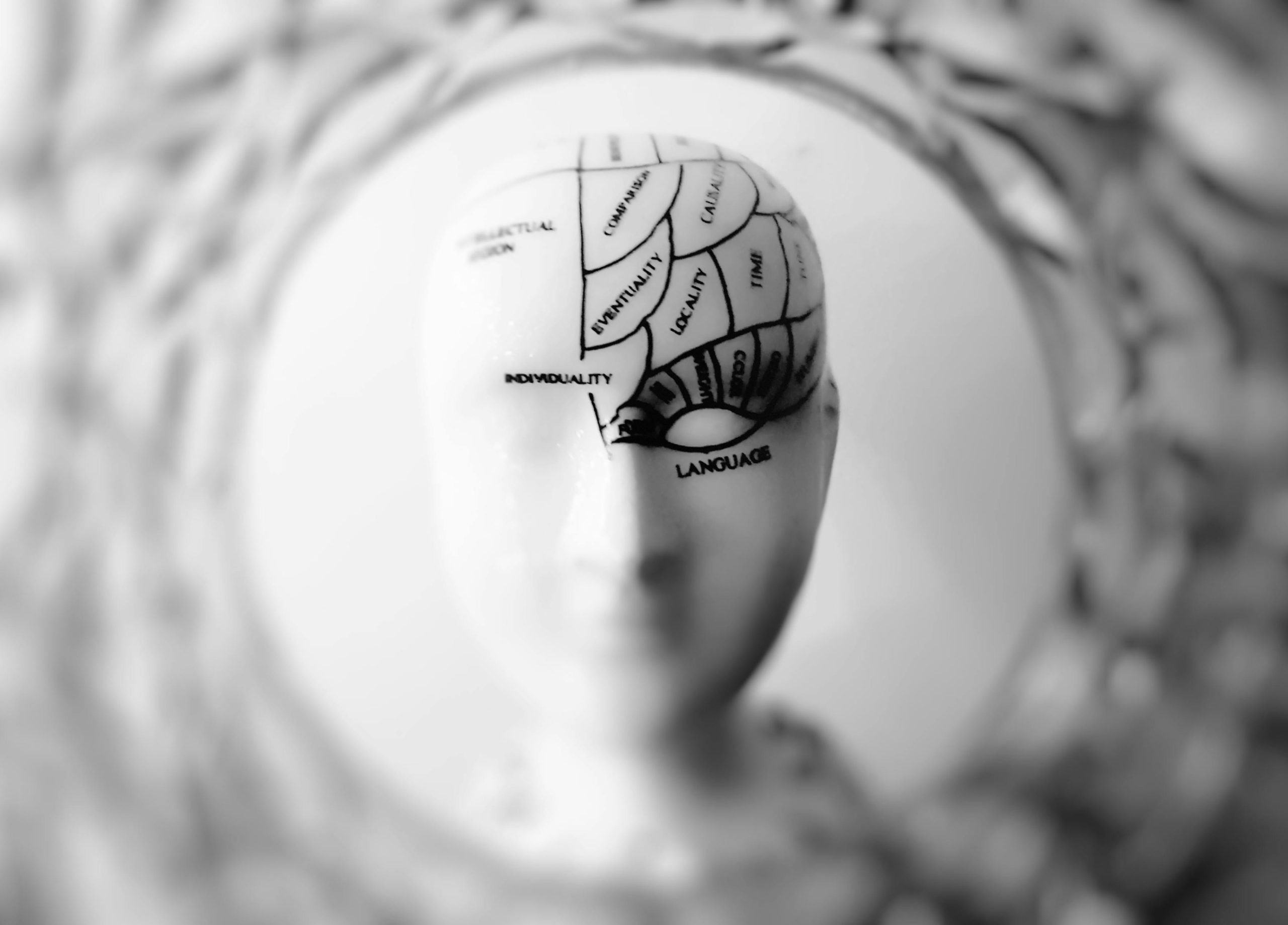
How Cognitive Functions Give the 16 Types Their Real Texture
Here’s where the Myers-Briggs system gets genuinely interesting, and where many people who’ve taken a quick online test stop short of the deeper insight.
Behind the four-letter code is a theory of cognitive functions: eight mental processes that describe not just what you prefer, but how your mind actually operates. Each of the 16 types has a specific “stack” of these functions, ordered from most dominant to least developed. Your dominant function is the mental process you rely on most naturally. Your inferior function is the one that tends to emerge under stress, often in clumsy or exaggerated ways.
Two of the most commonly discussed functions in the context of leadership and decision-making are Extraverted Thinking and Introverted Thinking. Extraverted Thinking (Te) is the function that drives efficiency, external structure, and measurable outcomes. Types with Te high in their stack tend to be decisive, systems-oriented, and focused on getting results through organized action. As an INTJ, Te is my auxiliary function, which means it shows up strongly in how I structure projects and communicate strategy, even though my dominant function is Introverted Intuition.
Introverted Thinking (Ti), by contrast, is about building precise internal frameworks. Types with Ti dominant, like INTPs and ISTPs, aren’t primarily focused on external efficiency. They want to understand how something works at a fundamental level, and they’ll reconstruct their entire mental model if a single piece doesn’t fit. In agency settings, I’ve worked with brilliant INTP strategists who could dismantle a flawed brief in twenty minutes but needed twice as long to explain their reasoning to a client who just wanted a yes or no.
Another function worth understanding is Extraverted Sensing. Extraverted Sensing (Se) is the function that keeps certain types fully present in the physical, immediate environment. Types with Se dominant, like ESTPs and ESFPs, are often gifted at reading a room, responding in real time, and improvising under pressure. In my experience managing creative teams, these were the people who could walk into a client pitch that had gone sideways and salvage it through sheer presence and adaptability. That’s a real skill, and it’s rooted in a specific cognitive function.
Understanding your cognitive function stack changes how you interpret your type. It moves you from “I’m an INTJ” to “I lead with Introverted Intuition, support it with Extraverted Thinking, and my weakest area is Extraverted Sensing, which is why I sometimes miss what’s happening in the room right in front of me.” That second version is genuinely actionable.
Why the Same Four-Letter Type Can Look So Different Across People
One of the most common frustrations people express about the Myers-Briggs is that they meet someone with the same type and feel almost nothing in common with them. Two INFJs who seem to operate on completely different wavelengths. Two ENTPs who approach problems in ways that feel almost opposite. How does that happen?
Several factors account for this variation. First, each preference exists on a spectrum. Someone who tests as a moderate Introvert will look quite different from someone at the extreme end of that dimension. Second, cultural context shapes how personality expresses itself. A 2024 global personality study from 16Personalities found meaningful differences in type distributions across countries, suggesting that cultural norms influence both how people experience their personalities and how they report them on assessments.
Third, and perhaps most significantly, life experience shapes how well-developed each function in your stack becomes. A mature ENFP in their fifties who has spent decades in structured environments will look quite different from a twenty-two-year-old ENFP fresh out of college. The type is the same. The development is not.
I think about this in terms of my own trajectory. At thirty, my INTJ profile showed up mostly as impatience with inefficiency and a preference for working alone. By forty-five, after years of managing large teams and presenting to C-suite clients, those same underlying tendencies had become more refined. The Introverted Intuition that once made me seem aloof had become a genuine strategic asset. The Extraverted Thinking that once made me blunt had developed into something closer to clarity. Same type. Meaningfully different expression.

What the Research Actually Says About Myers-Briggs Validity
Any honest treatment of the Myers-Briggs personality types has to acknowledge the ongoing debate about its scientific validity. Critics point to test-retest reliability issues, noting that a meaningful percentage of people receive different results when retaking the assessment weeks later. Some personality researchers argue that the Big Five model, which measures traits rather than types, offers more predictive validity for outcomes like job performance and relationship satisfaction.
These are legitimate concerns. A 2005 piece from the American Psychological Association noted that while MBTI has widespread organizational use, its scientific standing remains a point of debate among personality researchers. That’s worth knowing going in.
At the same time, the framework’s value isn’t purely about predictive validity in the way that clinical diagnostic tools are evaluated. Its value is largely in the vocabulary it gives people for self-reflection and communication. A 2008 study in PubMed Central examining personality frameworks and self-concept found that structured self-reflection tools can meaningfully improve self-awareness even when their psychometric properties are imperfect.
My own view, shaped by two decades of watching personality tools used and misused in organizational settings: the Myers-Briggs is most valuable as a conversation starter, not a conclusion. When I used it with agency teams, the goal was never to categorize people. It was to give them shared language for discussing differences that were already creating friction. That application works, regardless of where the framework lands in academic debates.
The risk comes when organizations use type results to make hiring decisions, limit career paths, or excuse behavior. “I’m an INTJ, so I don’t do feelings” is a misuse of the framework. So is “We don’t hire Perceivers for project management roles.” Type is descriptive, not prescriptive.
How Knowing Your Type Changes How You Work With Others
The most practical application of the Myers-Briggs personality types isn’t self-understanding in isolation. It’s understanding yourself in relationship to other people, especially people who are wired differently.
Research from 16Personalities on team collaboration suggests that personality-aware teams tend to communicate more effectively and experience less interpersonal friction, not because everyone becomes the same, but because differences become legible rather than mysterious.
Legibility is the word I keep coming back to. In my agency years, some of the most damaging team conflicts I witnessed weren’t about competence or effort. They were about invisible differences in how people processed information and made decisions. A Feeling-type account director who experienced a Thinking-type creative director’s critique as personal rejection. A Judging-type operations manager who experienced a Perceiving-type strategist’s last-minute pivots as disrespect. Neither person was wrong. They were just operating from different cognitive defaults, and nobody had named that.
Naming it doesn’t solve everything. But it does change the conversation from “why is this person being difficult?” to “how does this person’s mind work, and how do I communicate with that in mind?” That shift alone is worth the time it takes to understand the framework.
If you haven’t identified your own type yet, take our free MBTI personality test as a starting point. It’s not a substitute for deeper self-reflection, but it gives you a useful first orientation.

The Hidden Cost of Getting Your Type Wrong
One thing that doesn’t get discussed enough in introductory articles about the Myers-Briggs is how often people misidentify their type, and how much that misidentification costs them in terms of self-understanding.
Mistyping happens for several reasons. Free online assessments vary significantly in quality. People answer based on who they aspire to be rather than who they actually are. Social context shapes responses, so someone who works in a highly extraverted culture might answer questions in ways that push them toward an Extravert result even if they’re naturally introverted. And some types are genuinely difficult to distinguish from each other on surface behavior alone.
I spent a period in my early forties genuinely uncertain whether I was an INTJ or an INFJ. Both types share Introverted Intuition as their dominant function, and in leadership roles, both can present with similar external behavior. What finally clarified it for me was understanding the cognitive function stack more deeply, specifically the difference between how Extraverted Thinking and Extraverted Feeling operate as auxiliary functions. The article on mistyped MBTI and how cognitive functions reveal your true type goes into this in detail, and it’s genuinely worth reading if you’ve ever felt uncertain about your result.
Getting your type right matters because the insights you draw from it depend on the accuracy of the starting point. If you’re an INFP who’s been reading ENFP content because a surface-level test pushed you toward Extraversion, you’re working with a map that doesn’t match your actual terrain. The self-understanding you’re looking for stays just out of reach.
One of the most reliable ways to verify your type is through the cognitive functions rather than the four-letter code. If you want to explore that route, our cognitive functions test can help you identify which mental processes feel most natural and energizing, giving you a more grounded foundation for understanding your type.
What the Myers-Briggs Types Reveal About Introversion Specifically
Eight of the sixteen Myers-Briggs personality types are introverted: ISTJ, ISFJ, INFJ, INTJ, ISTP, ISFP, INFP, and INTP. That’s half the framework, which reflects something important: introversion isn’t a minority quirk. It’s a fundamental dimension of human personality that shapes how roughly a third to a half of the population experiences the world, depending on which population estimates you reference.
What the framework reveals about introversion goes beyond the energy restoration piece that most people already know. Each introverted type has a different dominant cognitive function, and that function shapes what introversion actually looks like from the inside. An INTJ’s introversion is filtered through Introverted Intuition, which means their inner world is primarily one of patterns, frameworks, and long-range vision. An ISTP’s introversion is filtered through Introverted Thinking, which means their inner world is primarily one of precise analysis and systematic understanding. An INFP’s introversion is filtered through Introverted Feeling, which means their inner world is primarily one of values, authenticity, and emotional depth.
These are meaningfully different inner experiences, even though all three types share the introversion preference. Grouping them under a single label misses most of what’s interesting about each one.
Research on deep thinking and introversion from Truity suggests that introverted types tend to score higher on measures of reflective thinking, a pattern consistent with the inward orientation of introverted cognitive functions. That’s not a superiority claim. Extraverted types bring different cognitive strengths that introverts often genuinely lack. It’s simply an observation about what introversion tends to cultivate when it’s given space to develop.
What I’ve noticed in my own life is that embracing my introversion, rather than treating it as a professional liability, changed how I led. Clients who initially experienced me as reserved eventually came to trust that when I spoke, I’d thought it through. The stillness that felt like a weakness in loud brainstorming sessions became a genuine asset in high-stakes client conversations where everyone else was reacting and I was actually listening.
Understanding personality type gave me permission to stop performing extroversion and start optimizing for what I actually do well. That’s not a small thing. For many introverts, it’s the difference between a career that drains them and one that sustains them.
Some introverts also identify strongly with traits associated with empathic sensitivity. If that resonates with you, the WebMD overview of what it means to be an empath offers a useful perspective on how emotional attunement intersects with personality.

Using the 16 Types as a Living Tool, Not a Fixed Label
The most sophisticated users of the Myers-Briggs personality types treat their four-letter code the way a skilled navigator treats a compass: as one instrument among several, useful for orientation but not a substitute for paying attention to the actual terrain.
Your type doesn’t change, in the sense that your core cognitive preferences remain relatively stable across your lifetime. What changes is how well-developed those preferences become, how gracefully you can access your less dominant functions when situations require it, and how clearly you understand the ways your type shows up in different contexts.
A mature Perceiving type learns to meet deadlines without abandoning their flexibility. A mature Thinking type learns to communicate decisions in ways that acknowledge the human dimension without compromising their analytical integrity. A mature Introvert learns to engage effectively in extraverted environments without pretending to be someone they’re not. Growth within type is real, and it’s worth pursuing.
The sixteen types are also most useful when you understand them in relationship to each other. Knowing that your ESFP colleague leads with Extraverted Sensing changes how you interpret their communication style. Knowing that your INFJ manager leads with Introverted Intuition helps you understand why they sometimes seem to know things before the evidence is fully in. These aren’t personality quirks. They’re cognitive patterns with internal logic.
I spent years in environments that rewarded extraverted, high-visibility leadership and quietly penalized the reflective, internally-oriented approach that came naturally to me. Understanding the Myers-Briggs framework didn’t change those environments. But it gave me a clearer picture of what I was actually dealing with, which made it possible to find approaches that worked with my nature rather than against it.
That’s what the Myers-Briggs personality types offer at their best: not a box to live in, but a mirror that shows you something true about yourself, and a vocabulary for making that truth useful.
There’s much more to explore across the full range of personality theory topics. Our MBTI General and Personality Theory hub is a good place to continue if you want to go deeper on cognitive functions, type dynamics, and how this framework connects to broader questions about personality and self-understanding.
Curious about your personality type?
Our free MBTI assessment goes beyond the four letters. Get a full breakdown of your scores, see how your type shows up at work and in relationships.
Take the Free Test8-12 minutes · 40 questions · Free
About the Author
Keith Lacy is an introvert who’s learned to embrace his true self later in life. After 20 years in advertising and marketing leadership, including running agencies and managing Fortune 500 accounts, Keith now channels his experience into helping fellow introverts understand their strengths and build fulfilling careers. As an INTJ, he brings analytical depth and authentic perspective to every article, drawing from both professional expertise and personal growth.
Frequently Asked Questions
How many Myers-Briggs personality types are there?
There are 16 Myers-Briggs personality types, each represented by a four-letter code. The types are created by combining one preference from each of four dimensions: Extraversion or Introversion, Sensing or Intuition, Thinking or Feeling, and Judging or Perceiving. Each combination produces a distinct type with its own characteristic strengths, communication style, and cognitive function stack.
Is the Myers-Briggs personality type system scientifically valid?
The scientific standing of the Myers-Briggs Type Indicator is genuinely debated among personality researchers. Critics note concerns about test-retest reliability, with some studies finding that a notable percentage of people receive different results when retaking the assessment. Supporters point to its widespread organizational use and its value as a self-reflection tool. A reasonable position is that MBTI is most useful as a framework for self-awareness and communication rather than a clinical diagnostic instrument.
Can your Myers-Briggs personality type change over time?
Core type preferences tend to remain relatively stable across a lifetime, though how those preferences express themselves can shift significantly with age, experience, and personal development. Someone may test differently at different life stages, often due to changes in how they answer questions rather than a genuine shift in their underlying cognitive preferences. Developing your less dominant functions is a natural part of psychological growth within your type.
What is the rarest Myers-Briggs personality type?
INFJ is commonly cited as the rarest Myers-Briggs type, appearing in roughly one to two percent of the general population according to various large-scale assessments. INTJ and ENTJ are also relatively rare, particularly among women for INTJ and among introverts generally for ENTJ. Type distribution varies across cultures and demographic groups, so rarity estimates should be understood as approximations rather than fixed statistics.
What’s the difference between Myers-Briggs types and cognitive functions?
The four-letter Myers-Briggs type code describes your preferences across four dimensions. Cognitive functions describe the specific mental processes that underlie those preferences, including how they’re oriented (inward or outward) and how they’re ordered in your psychological stack. Your dominant function is the one you rely on most naturally, while your inferior function tends to emerge under stress. Understanding cognitive functions gives you a more precise and nuanced picture of your type than the four-letter code alone provides.