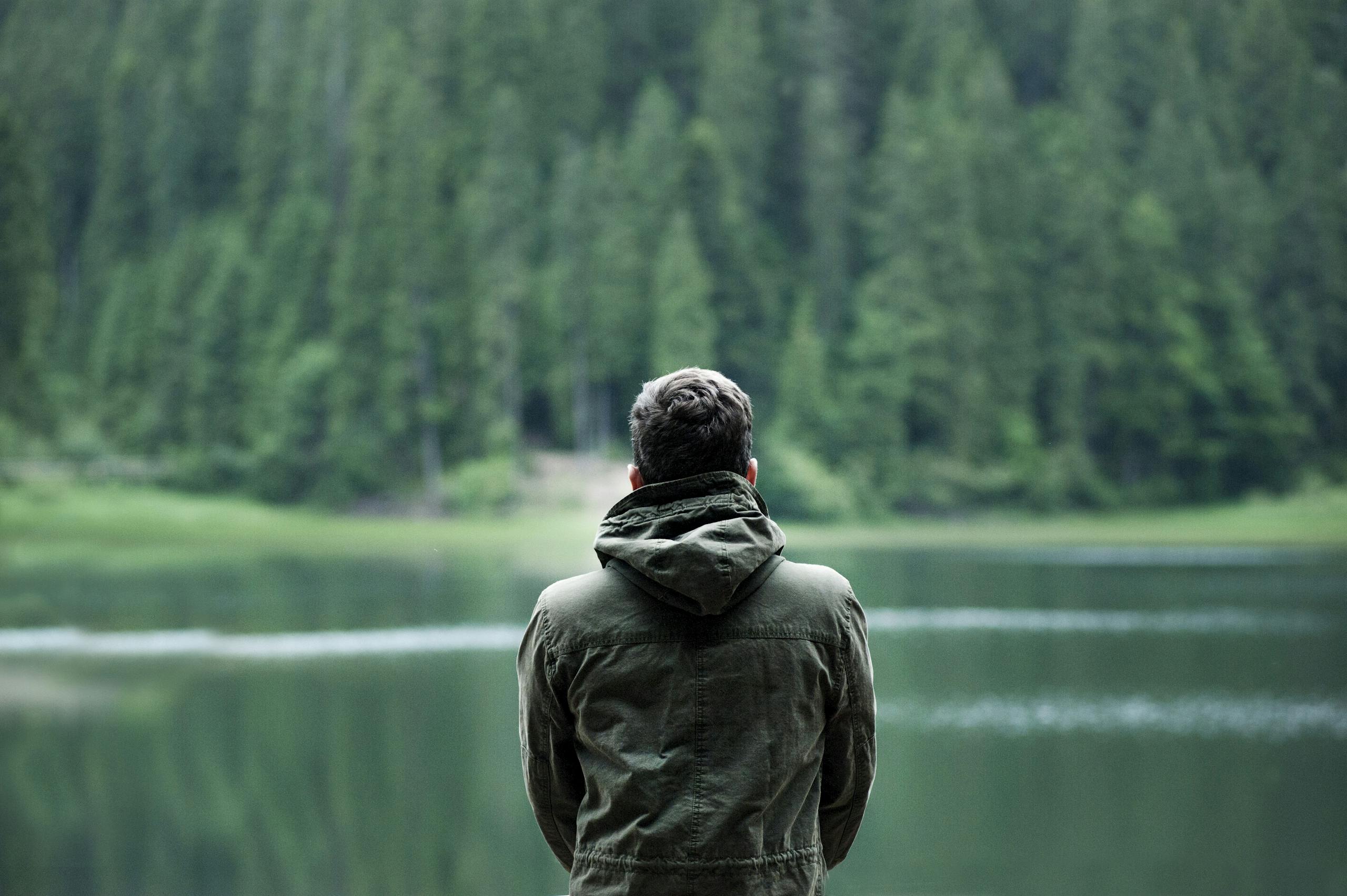

Solitude is not selfishness for introverts. It is the biological and psychological process that restores cognitive function, emotional regulation, and creative capacity. Without regular time alone, introverts accumulate a kind of mental debt that no amount of sleep or weekend rest fully repays. Solitude is how this personality type refills what social interaction depletes.
Quiet is not the absence of something. For me, it has always been the presence of everything I actually need to think clearly. I spent more than two decades running advertising agencies, managing teams, pitching Fortune 500 clients, and sitting in back-to-back meetings that could stretch from 8 AM until the dinner plates were cleared. Nobody ever told me that the cost of all that contact was accumulating somewhere inside me, building pressure I did not know how to release. I just knew that by Thursday of most weeks, I felt scraped hollow.
What I did not understand then, and what took me years to accept, was that the hollowness was not weakness. It was information. My mind was telling me, in the only language it had available, that it needed solitude the way a body needs water. Not as a luxury. Not as an indulgence. As a basic operating condition.

If you have ever felt guilty for wanting to be alone, or apologized for needing a quiet evening instead of a social one, this article is for you. The case for solitude is not philosophical. It is practical, neurological, and deeply personal.
Why Does Solitude Feel So Necessary for Introverts?
The introvert brain processes stimulation differently than an extrovert’s. A 2012 study published in the journal Frontiers in Human Neuroscience found that introverts show greater neural activity in regions associated with internal processing, memory retrieval, and self-reflection. The brain is not underactive in quiet. It is working harder, running deeper processes that require low external noise to function well.
What’s your personality type?
Take our free 40-question assessment and get a detailed personality profile with dimension breakdowns, context analysis, and personalised insights.
Discover Your Type8-12 minutes · 40 questions · Free
The American Psychological Association has written extensively about the distinction between introversion and shyness, a distinction that matters here. Introverts are not necessarily anxious around people. They are energetically depleted by sustained social engagement in a way that extroverts simply are not. The APA’s research on personality and energy confirms that this depletion is real, measurable, and consistent across cultures and age groups.
What that means practically is this: when I sat through a full day of client presentations, agency reviews, and internal strategy sessions, I was not just tired in the way anyone gets tired. I was cognitively overdrawn. The part of my brain that generates ideas, connects patterns, and makes sound decisions had been spending currency all day with no deposits. Solitude was the deposit.
Once I understood that framing, everything changed in how I structured my days, my leadership style, and my relationship with alone time itself.
What Actually Happens in Your Brain During Solitude?
Neuroscience has a name for what happens when the mind is given space to wander without external demands: default mode network activation. The default mode network, or DMN, is a set of brain regions that become most active when we are not focused on the outside world. It is where self-reflection occurs, where we process emotions we did not have time to feel during the day, where creative connections form between seemingly unrelated ideas.
Research from the National Institutes of Health has linked healthy DMN function to emotional regulation, autobiographical memory, and the ability to consider other people’s perspectives with nuance. In other words, the very capacities that make someone a thoughtful leader, a reliable colleague, or a present partner all depend on the brain getting enough time in this restorative state.
The National Institute of Mental Health has also documented links between chronic overstimulation and elevated cortisol levels, disrupted sleep architecture, and reduced prefrontal cortex function. For introverts who spend extended periods without adequate solitude, the effects are not just fatigue. They can include difficulty concentrating, emotional reactivity, and a flattened capacity for the kind of deep thinking that is often their greatest professional asset.
I saw this in myself during the most demanding agency years. A version of me existed on conference calls and in client meetings that was competent, articulate, and professionally reliable. A separate version existed at 10 PM on a Tuesday, sitting alone in my home office with a cup of tea, and that version was where my actual best thinking happened. The strategy that won us a major account. The insight that saved a campaign. The honest self-assessment that helped me grow as a leader. All of it came from solitude, not from the conference room.
Is Wanting to Be Alone a Sign of Something Wrong?
This is the question that sat in the back of my mind for most of my thirties. I had built a career that required constant social engagement, and I had convinced myself that my preference for solitude was a flaw I needed to manage, a professional liability to compensate for. I watched extroverted colleagues light up in the same settings that drained me, and I interpreted the difference as a deficit on my part.
It took a long time, and a lot of reading, and eventually a therapist who specialized in personality types, to understand that wanting solitude is not a symptom of depression, social anxiety, or antisocial tendencies. It is a temperament. A healthy, functional, well-documented one.
Psychology Today has published substantial work on the distinction between solitude-seeking as a personality trait versus social withdrawal as a symptom of distress. The difference lies in whether the alone time is restorative and chosen, or whether it is driven by fear, avoidance, or a sense of disconnection from others. Their coverage of introversion and solitude consistently frames deliberate alone time as a healthy self-regulation strategy, not a red flag.
Many introverts I know, including myself at various points, have spent years apologizing for this preference. To partners who wanted more shared social time. To managers who interpreted quietness as disengagement. To colleagues who read a preference for working alone as unfriendliness. The apologies were exhausting, and they were based on a false premise: that the extroverted model of social engagement was the default, and everything else required justification.
It does not. Solitude is not a deviation from normal human functioning. For introverts, it is central to it.
How Did I Learn to Protect My Alone Time Without Guilt?
Honestly, I did not learn this gracefully. There was no single moment of clarity. It was a slow accumulation of evidence that I could no longer ignore.
Around year fifteen of running agencies, I started noticing a pattern. The quarters where I had protected some form of regular solitude, whether that was early morning walks before the office, a standing lunch break alone on Wednesdays, or simply declining one networking event per week, were the quarters where my work was most focused and my leadership was most steady. The quarters where I let the calendar fill completely, where I said yes to every dinner and every conference and every team happy hour, were the ones where I made my worst decisions and felt most disconnected from my own thinking.
The correlation was undeniable once I looked for it. So I started treating solitude the way I treated client commitments: as a non-negotiable appointment that existed in my calendar and did not get moved unless something genuinely critical required it.
That shift required something harder than scheduling, though. It required letting go of the guilt that had always accompanied my need for alone time. The guilt that said I was being antisocial, or selfish, or difficult. The guilt that said a good leader should be available and present and energized by people at all times.
A 2021 study published through the NIH found that individuals who engage in regular solitary activities report higher levels of autonomy, clearer personal values, and greater emotional resilience compared to those who rarely spend time alone. The NIH’s broader research on well-being and self-regulation supports what I had been discovering through trial and error: solitude is not selfishness. It is stewardship of the cognitive and emotional resources that everything else depends on.

What Are the Real Benefits of Solitude for Introverts?
The benefits are not abstract. They show up in specific, measurable ways that affect both professional performance and personal well-being.
Cognitive clarity. Solitude gives the prefrontal cortex the low-stimulation environment it needs to organize information, weigh competing priorities, and generate original thinking. The best strategic work I ever produced came from long stretches of uninterrupted quiet, not from brainstorming sessions.
Emotional processing. During high-contact days, emotions often get filed away rather than felt. Solitude is when that filing cabinet opens. Introverts who deny themselves regular alone time often find their emotional responses becoming unpredictable, not because they are emotionally unstable, but because they have had no space to process what they have been absorbing.
Identity clarity. Spending extended time in social and professional environments means constantly calibrating to other people’s expectations, preferences, and energy. Solitude is where you return to your own signal. It is where you remember what you actually think, value, and want, separate from what the room is asking of you.
Creative depth. The Harvard Business Review has published research on the relationship between uninterrupted focus time and creative output. HBR’s work on deep work and cognitive performance consistently finds that the most meaningful creative and analytical contributions come from individuals who protect extended periods of focused, solitary concentration.
Relational quality. This one surprised me when I first encountered it. Introverts who get adequate solitude are often more present and more genuinely engaged in their social interactions than those who are chronically overstimulated. When I was running on empty, I was physically present in meetings and conversations but mentally somewhere else. When I had protected enough quiet time, I could actually show up. The solitude made the connection possible.
How Does Solitude Differ From Isolation?
This distinction matters enormously, and it is one I want to address directly because it is the source of a lot of misunderstanding, both from people around introverts and from introverts about themselves.
Solitude is chosen, temporary, and restorative. Isolation is chronic, often involuntary, and depleting. Solitude leaves you feeling more capable of connection. Isolation erodes the capacity for it.
The Mayo Clinic has documented the health risks of chronic social isolation extensively, including links to elevated cardiovascular risk, cognitive decline, and increased rates of depression and anxiety. Mayo Clinic’s research on social connection and health makes clear that humans, including introverts, need meaningful relationships to thrive. The need for solitude does not cancel the need for connection. They coexist.
What introverts need is not to be alone all the time. What they need is enough alone time to show up fully when they are with others. The ratio looks different for every person. Some people find that an hour of solitude each morning is sufficient. Others need entire solitary days built into their week. There is no universal prescription. The measure is whether the alone time is leaving you more capable and more present, or whether it is becoming a way of avoiding the discomfort of connection.
I have been honest with myself about both sides of that line at different points in my life. There were periods where my preference for solitude was genuinely restorative. There were also periods where it was avoidance dressed up as self-care. Learning to tell the difference took time and honesty, but the distinction is real and worth examining.
What Practical Habits Help Introverts Build Solitude Into Real Life?
Building solitude into a life that was not designed with introverts in mind requires some deliberate engineering. Open offices, shared living spaces, social media, and always-on communication tools have made genuine aloneness harder to find than it has ever been. These are the approaches that have worked for me and for many introverts I have spoken with.
Anchor solitude to existing routines. Attaching alone time to something that already happens, a morning coffee, a commute, a walk after dinner, reduces the friction of protecting it. When solitude is embedded in a routine, it requires less active defense.
Communicate your needs without over-explaining. One of the most liberating things I learned was that I did not owe anyone a lengthy justification for needing quiet time. “I need some time to think through this” is a complete sentence. “I’m going to take a quiet lunch today” does not require elaboration. The more matter-of-fact I became about stating my needs, the less resistance I encountered.
Treat solitude as a professional asset, not a personal quirk. When I reframed my need for alone time as the condition that made my best work possible, I stopped apologizing for it and started protecting it the way I protected other professional resources. That reframe was significant for me because it shifted solitude from something I was taking to something I was investing in.
Create physical signals for others. In open office environments, headphones became my signal that I was in focus mode. At home, a closed door served the same purpose. Physical signals reduce the number of interruptions that require verbal negotiation, which in itself saves energy.
Be intentional about digital solitude. Genuine alone time requires genuine disconnection. A solitary hour spent scrolling social media is not the same as an hour of actual quiet. The brain needs input-free space to do its restorative work. Notification-free time, even in short stretches, produces measurably different cognitive outcomes than time that is nominally alone but still receiving a stream of external stimulation.
The World Health Organization’s work on mental health and digital well-being supports this. WHO’s research on mental health and environment has increasingly recognized the cognitive burden of constant connectivity and the restorative value of genuine disengagement from digital stimulation.
How Does Solitude Connect to Introvert Identity and Self-Understanding?
There is a dimension of solitude that goes beyond rest and cognitive recovery. It is the dimension that has to do with knowing yourself.
Introverts tend to process identity internally. We do not figure out who we are through conversation and external feedback the way extroverts often do. We figure it out through reflection, through sitting with an experience long enough to understand what it meant, through returning to our own thoughts after the noise of the day has cleared.
The years I spent trying to match an extroverted leadership style were years I spent largely disconnected from my own signal. I was so busy performing the version of leadership I thought was expected that I had very little time to ask whether it was actually working, whether it was actually me, or whether there might be a different approach that would serve both my team and my own integrity better.
Solitude gave me back that question. Not all at once, and not without discomfort. But gradually, in the quiet hours before the office came alive and in the long walks I started taking on weekends, I began to hear my own thinking again. The INTJ in me, the part that processes the world through frameworks and long-range pattern recognition, had been waiting patiently for me to give it the conditions it needed to operate.
The CDC has documented the relationship between self-awareness and mental health outcomes, noting that individuals who maintain regular reflective practices show greater resilience to workplace stress and interpersonal conflict. The CDC’s mental health resources frame self-reflection not as a passive activity but as an active component of psychological well-being.
For introverts, solitude is where that self-reflection actually happens. It is not optional enrichment. It is how this personality type maintains its sense of self in a world that is constantly asking it to be something else.

What Should You Remember About Solitude the Next Time You Feel Guilty for Needing It?
The guilt is understandable. It comes from a culture that equates busyness with virtue, sociability with health, and availability with commitment. Most introverts have absorbed those messages deeply enough that they feel them even when they know, intellectually, that they are not true.
So when the guilt shows up, here is what I come back to. Solitude is not something I am taking from the people in my life. It is something I am doing so that I can actually be present for them. The hours I spend alone in genuine quiet are what make me capable of showing up with full attention, with warmth, with the kind of considered thinking that produces something worth contributing.
Depleted, I am a diminished version of myself. Restored, I am the person I actually want to be and the leader, partner, and colleague others deserve to have access to. Framing solitude as selfishness gets the logic exactly backwards. Denying yourself the conditions you need to function well and then showing up hollow is the less generous choice, even if it looks like availability from the outside.
Alone time is not a retreat from life. For introverts, it is the foundation that makes a full life possible.
Explore more on introvert well-being, self-understanding, and living authentically in our complete Introvert Life hub at Ordinary Introvert.
About the Author
Keith Lacy is an introvert who’s learned to embrace his true self later in life. After 20 years in advertising and marketing leadership, including running agencies and managing Fortune 500 accounts, Keith now channels his experience into helping fellow introverts understand their strengths and build fulfilling careers. As an INTJ, he brings analytical depth and authentic perspective to every article, drawing from both professional expertise and personal growth.
Frequently Asked Questions
Is needing alone time a sign that something is wrong with me?
No. For introverts, needing regular alone time is a healthy and well-documented aspect of temperament. The American Psychological Association distinguishes introversion clearly from shyness or social anxiety. A genuine preference for solitude, when it is chosen and restorative rather than driven by fear or avoidance, is a sign of self-awareness, not dysfunction.
How much alone time do introverts actually need?
There is no single answer. The amount varies significantly by individual, life circumstances, and the intensity of social demands in a given period. The practical measure is whether your alone time leaves you feeling more capable, clear-headed, and emotionally regulated. If it does, you are likely getting enough. If you are consistently arriving at social situations feeling depleted and scattered, you probably need more.
What is the difference between healthy solitude and unhealthy isolation?
Solitude is chosen, temporary, and restorative. It leaves you more capable of connection, not less. Isolation tends to be chronic, sometimes involuntary, and erodes the capacity for meaningful relationships over time. The Mayo Clinic’s research on social connection makes clear that humans need both adequate alone time and meaningful relational contact. If your alone time is increasing your desire for connection and your capacity to engage with it, it is healthy. If it is shrinking both, that warrants honest examination.
How can I explain my need for solitude to people who do not understand it?
The most effective framing I have found is to connect solitude to performance rather than preference. Saying “I do my best thinking and show up most fully after I have had some quiet time” tends to land better than explaining introversion from scratch. Most people, regardless of personality type, understand the concept of needing the right conditions to do good work. Frame your solitude as one of those conditions and you will encounter far less resistance.
Can introverts get better at protecting their alone time without damaging relationships?
Yes, and in most cases the relationships actually improve when introverts protect their solitude consistently. The version of you that shows up after genuine rest and reflection is more present, more patient, and more engaged than the depleted version. Communicating your needs clearly and matter-of-factly, without over-explaining or apologizing, tends to produce better outcomes than either silently suffering through overstimulation or withdrawing without explanation. Most people in your life will adapt when they understand what you need and why it makes you better to be around.