
Roman Stoicism was never just a philosophy of cold detachment. At its core, it was a disciplined practice of mercy, self-control, and measured emotional response, qualities that map surprisingly well onto how many introverts already move through the world. The Stoics believed that wisdom required sitting with difficult emotions long enough to understand them, not suppressing them, but refusing to be ruled by them.
What strikes me most about Stoic thought is how much of it reads like a manual written specifically for people who process deeply before they speak. Seneca, Marcus Aurelius, Epictetus, these weren’t men who shouted their way through conflict. They wrote in private. They reflected. They wrestled with anger and pity and self-control in journals and letters, not in public performances. Sound familiar?

Much of what I explore in my writing connects to this broader territory of solitude, recovery, and intentional inner life. If this angle resonates with you, the Solitude, Self-Care and Recharging hub is where I collect everything that touches on how introverts restore themselves and build sustainable inner lives.
What Did the Stoics Actually Believe About Anger?
Seneca wrote an entire essay called “On Anger,” and it remains one of the most psychologically precise documents from the ancient world. His argument wasn’t that anger is always wrong. He acknowledged that certain situations warrant a strong response. What he pushed back against was reactive anger, the kind that hijacks your thinking before you’ve had a chance to assess what’s actually happening.
What drains your social battery?
Not all social exhaustion is the same. Our free quiz identifies your specific drain pattern and gives you personalised recharging strategies.
Find Your Drain PatternUnder 2 minutes · 8 questions · Free
He described anger as a brief madness. Not a moral failing, but a cognitive one. When anger takes over, your ability to reason collapses. You say things you don’t mean. You make decisions you’ll spend weeks undoing. The Stoic prescription wasn’t to feel nothing. It was to create a gap between stimulus and response, to pause long enough for reason to catch up with emotion.
As an INTJ who spent two decades in advertising, I watched reactive anger destroy more client relationships than any bad campaign ever did. I had a creative director once, brilliant man, who would receive critical feedback on a pitch and respond within seconds, loudly and defensively. Every time. The feedback was often valid. His reaction made it impossible for anyone to hear the substance beneath his frustration. He wasn’t wrong about the work. He was just unable to pause, and that inability cost him far more than any creative disagreement was worth.
The Stoics would have recognized that pattern immediately. They didn’t see the pause as weakness. They saw it as the entire point.
How Did Stoicism Treat Mercy and Pity Differently?
This is where Stoic philosophy gets genuinely interesting, and where it sometimes surprises people who assume Stoics were emotionally cold. The Stoics made a careful distinction between pity and mercy. Pity, in their framework, was a kind of emotional distress you feel on behalf of someone else’s suffering. Mercy was something different: a rational, active choice to respond to someone’s situation with compassion and leniency, even when you had the power to do otherwise.
Seneca argued that pity could actually get in the way of genuine help. When you’re overwhelmed by someone else’s pain, your own distress can cloud your judgment. You might act impulsively, or avoid the situation altogether because it’s too emotionally costly. Mercy, by contrast, was grounded. It came from understanding, not just feeling.

I think about this distinction often when I consider how introverts process other people’s emotions. Many of the introverts I know, and many who write to me through this site, describe absorbing other people’s distress deeply. They feel it acutely. That sensitivity is real and valuable. But there’s a meaningful difference between being moved by someone’s pain and being destabilized by it. The Stoics were pointing at something important: you can choose to act with compassion without losing your footing in the process.
For highly sensitive people especially, this distinction matters enormously. The kind of HSP self-care practices that actually work tend to build exactly this capacity, the ability to remain present with someone else’s experience without being consumed by it.
Why Does Self-Control Matter More Than Willpower in Stoic Thought?
Modern culture tends to collapse self-control and willpower into the same concept, but the Stoics drew a sharper line. Willpower, in the popular sense, is about forcing yourself to do something against your inclination. It’s effortful and exhausting. Stoic self-control was something quieter. It was about aligning your actions with your values so thoroughly that the conflict between impulse and choice diminishes over time.
Marcus Aurelius wrote extensively in his private journals, what we now call “Meditations,” about returning to his values repeatedly. Not because he’d mastered them, but because he hadn’t. He was reminding himself, daily, of what mattered. That’s not willpower. That’s a practice. And practices, unlike willpower, don’t deplete. They deepen.
Running agencies for twenty years, I found that the leaders who burned out fastest were the ones relying on sheer force of will to get through each day. They pushed harder when they were tired. They ignored signals that they needed rest. They treated exhaustion as a character flaw rather than useful information. The ones who lasted, and who produced genuinely good work over time, had figured out something closer to what the Stoics described. They knew their values clearly enough that many decisions made themselves. They also knew when to stop.
There’s a real connection here to what happens physiologically and psychologically when introverts push past their limits. When we don’t protect our capacity for restoration, the quality of our thinking degrades long before we notice it consciously. Understanding what happens when introverts don’t get alone time makes clear that this isn’t a preference issue. It’s a functional one.
How Did the Stoics Use Solitude as a Philosophical Tool?
Solitude wasn’t incidental to Stoic practice. It was structural. Marcus Aurelius wrote his Meditations in private, never intending them for publication. Seneca wrote thousands of letters, many of them essentially philosophical conversations with himself. Epictetus, who was a former enslaved person turned teacher, emphasized the importance of returning to your own mind as the one domain you could actually govern.
What they understood, and what researchers at Berkeley have explored in depth, is that solitude creates the conditions for a particular kind of thinking that crowds and noise simply cannot support. It’s not just about quiet. It’s about the absence of social performance. When you’re alone, you stop managing how you appear. You stop filtering your thoughts through anticipated reactions. Something more honest becomes possible.
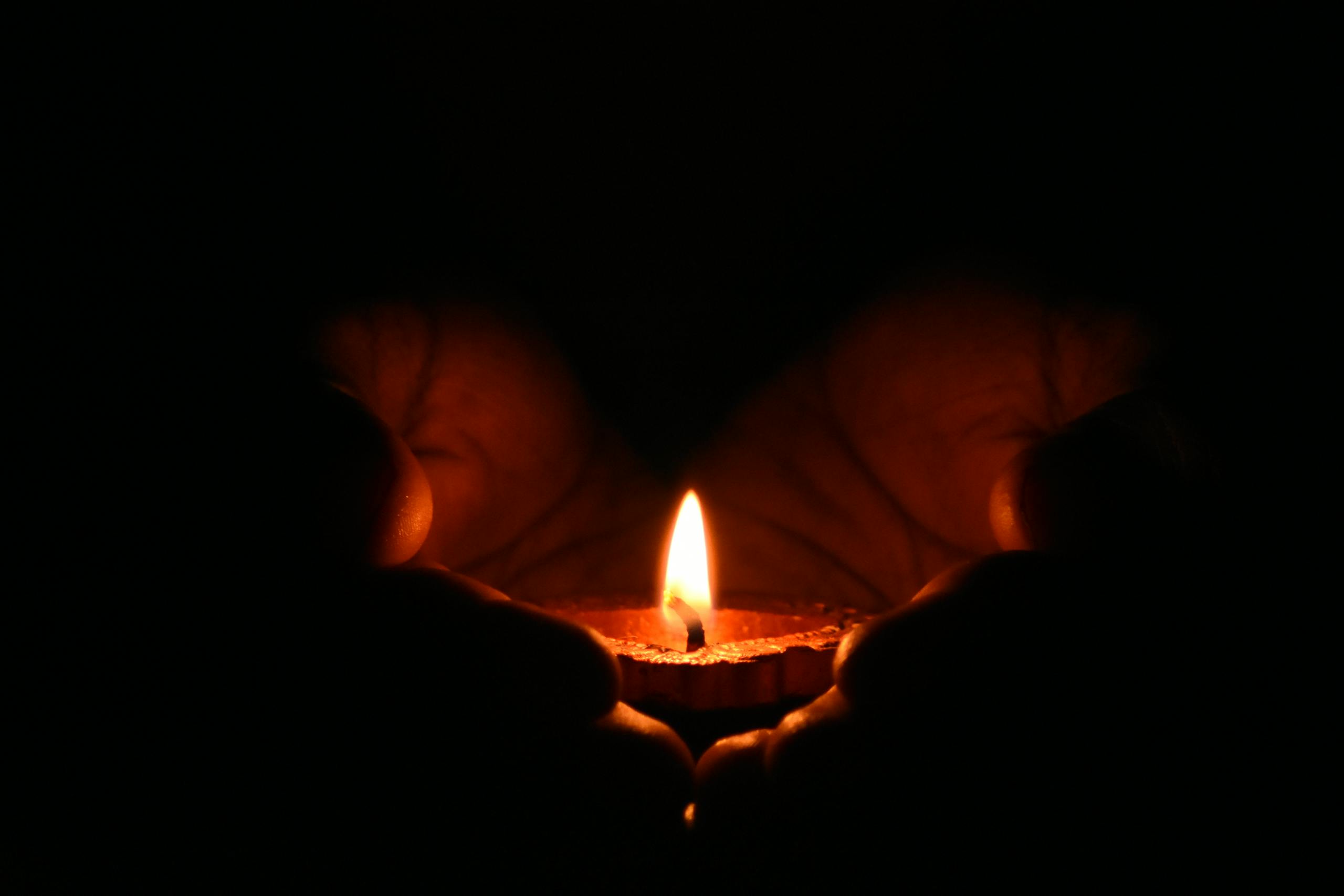
For introverts, this isn’t a philosophical abstraction. It’s lived experience. The ideas that feel most genuinely mine, the ones I actually trust, come to me in quiet. Not in brainstorms or meetings or workshops. In the early morning before anyone else is awake. On walks. In the kind of stillness that most modern workplaces treat as a problem to be solved.
The Stoics would have found the contemporary fear of solitude genuinely puzzling. They saw time alone with your own mind as prerequisite to wisdom, not a symptom of social failure. That framing matters for introverts who have spent years being told their preference for quiet is something to overcome.
The need for solitude runs especially deep for highly sensitive people. The piece on HSP solitude as an essential need gets into why this isn’t just preference, it’s how the nervous system processes and integrates experience.
What Can Introverts Learn From Stoic Emotional Processing?
One of the most practically useful ideas in Stoic philosophy is the concept of the “view from above,” sometimes called the cosmic perspective. When you’re caught in the middle of something difficult, a difficult conversation, a professional failure, a relationship rupture, the Stoics recommended mentally stepping back and seeing the situation from a wider angle. Not to minimize it, but to place it in proportion.
This is something introverts often do naturally, sometimes without realizing it has a name. The tendency to process events internally, to sit with an experience before responding, to look for the pattern beneath the surface, these are all forms of what the Stoics were prescribing deliberately. The difference is that the Stoics made it a conscious practice rather than a passive tendency.
What I’ve noticed in myself, and in the introverts I’ve worked alongside over the years, is that this capacity for internal processing is genuinely powerful when it’s intentional. When it’s not intentional, it can slide into rumination. The Stoic framework helps make the distinction clearer. Processing with a purpose, asking what you can learn, what you can control, what you need to release, leads somewhere. Circling the same thought without direction doesn’t.
Sleep is where much of this integration actually happens, and it’s worth noting that the quality of your inner life during waking hours affects your capacity to rest. The connection between emotional processing and recovery is direct. Rest and recovery strategies for highly sensitive people address this intersection in ways that align closely with what the Stoics understood about the relationship between mental clarity and physical restoration.
Did Stoicism Promote Emotional Suppression or Emotional Intelligence?
This is probably the most common misreading of Stoic philosophy, and it’s worth addressing directly. The Stoics were not advocating for suppression. They were advocating for something closer to what we’d now call emotional regulation, the ability to feel fully without being governed by feeling.
Epictetus, in particular, was clear that the goal wasn’t to become indifferent to everything. He cared deeply about his students. Marcus Aurelius grieved the loss of his children. Seneca wrote movingly about friendship and love. What they resisted wasn’t emotion itself. They resisted the tyranny of unexamined emotion, the kind that makes decisions for you before you’ve had a chance to weigh in.
There’s meaningful support for this distinction in how we understand emotional health today. Work published through PubMed Central on emotional regulation suggests that the capacity to process and contextualize emotion, rather than suppress or be overwhelmed by it, is associated with better psychological outcomes over time. The Stoics were working toward something that modern psychology has largely confirmed through different methods.
What strikes me about this is how it reframes introversion itself. The introvert’s tendency to process internally before responding isn’t avoidance. It isn’t emotional suppression. At its best, it’s a form of Stoic practice, creating that gap between stimulus and response that Seneca described as the foundation of wisdom.

How Does Nature Fit Into a Stoic and Introverted Practice?
The Stoics had a concept they called “living according to nature,” which is frequently misunderstood. They didn’t mean living simply or returning to some primitive state. They meant living in alignment with your actual nature, your rational capacity, your social bonds, your place within the larger order of things. For them, nature wasn’t just the external world. It was the organizing principle of everything, including the self.
The external natural world, though, played a real role in Stoic life. Marcus Aurelius spent significant time outdoors during military campaigns, and his writing reflects a man who found proportion and perspective in the scale of the natural world. There’s something about standing in a large landscape that does what the “view from above” exercise is meant to do cognitively. It makes your immediate problems feel appropriately sized.
Many introverts find this instinctively. I know I do. Some of my clearest thinking happens on long walks, particularly in places where there’s nothing demanding my attention. The trees don’t need anything from me. The path doesn’t require a decision. That kind of environment allows a quality of thought that’s genuinely different from what happens at a desk or in a meeting room.
The restorative effect of natural environments on sensitive nervous systems is well-documented in how practitioners and researchers describe the experience. The piece on HSP nature connection and the healing power of the outdoors explores this in depth, and it maps closely onto what the Stoics were pointing at when they wrote about proportion and perspective.
There’s also something worth noting about what Psychology Today has written about embracing solitude for your health, which is that the benefits of time alone are most pronounced when that time is spent in restorative environments rather than simply in the absence of people. The Stoics were practicing something like this when they recommended withdrawal from the crowd not as escape, but as recalibration.
What Does Stoic Practice Look Like for a Modern Introvert?
The gap between ancient philosophy and daily life can feel enormous, but the Stoic practices themselves are remarkably concrete. Morning reflection. Evening review. Journaling. Deliberate pausing before responding. Asking, in any difficult moment, what is actually within my control here. These aren’t abstract exercises. They’re habits, and habits are exactly what introverts tend to build well when they find practices that fit their temperament.
I started keeping a brief evening journal during a particularly difficult period at my agency, when we were managing a major account transition and I was fielding pressure from multiple directions simultaneously. I wasn’t calling it Stoic practice at the time. I was just trying to get the noise out of my head before bed. But what I was doing, writing down what had happened, what I could have handled differently, what I needed to release, was almost exactly what Marcus Aurelius was doing in his Meditations.
The effect on my sleep was immediate. Not because the problems went away, but because they had somewhere to go other than circling my mind at 2 AM. That’s the practical value of Stoic reflection for introverts. It completes the processing loop that our minds naturally want to run, so we can actually rest.
My dog Mac taught me something related to this, which sounds strange until you’ve spent time with an animal who has no concept of yesterday’s meeting or tomorrow’s deadline. There’s a piece I wrote about Mac and alone time that gets at this, the way animals model a kind of present-tense restoration that we could all learn from. The Stoics, in their own way, were trying to cultivate the same thing: presence without performance.
What makes Stoic practice particularly well-suited to introverts is that it’s fundamentally private. You don’t need a group. You don’t need a teacher standing over you. You need a quiet space, a willingness to look honestly at your own mind, and some consistency. Those are precisely the conditions introverts tend to create naturally when they’re given permission to do so.
The social dimension of wellbeing matters too, and it’s worth acknowledging. The CDC’s work on social connectedness makes clear that isolation and solitude aren’t the same thing, a distinction the Stoics also understood. They valued friendship and community. What they resisted was the kind of social performance that leaves you emptier than before. Introverts tend to understand this distinction viscerally.

Why Stoicism Still Resonates With People Who Think Deeply
Stoicism has had a remarkable resurgence in recent years, and I don’t think that’s accidental. We live in an environment of constant reactivity, where the speed of communication has outpaced our capacity to think carefully before we respond. Social media rewards the immediate take. Professional culture often mistakes urgency for importance. The person who pauses is sometimes read as uncertain rather than thoughtful.
Against that backdrop, a philosophy that says: slow down, feel what you feel, then choose your response deliberately, lands differently than it might have in a slower era. It’s not nostalgic. It’s corrective.
For introverts, Stoicism offers something more specific: philosophical validation for a way of being that the surrounding culture frequently misreads. The Stoics weren’t advocating for extroversion. They weren’t prescribing networking or performance or the constant management of other people’s impressions. They were prescribing depth, consistency, and the kind of self-knowledge that only comes from sustained inner attention.
There’s also something worth noting about emerging research on psychological flexibility and its relationship to wellbeing. The capacity to hold difficult emotions without being controlled by them, to act in alignment with values even when feelings pull in a different direction, is associated with meaningful improvements in how people experience their lives. The Stoics were building this capacity deliberately, through practice, long before the vocabulary existed to describe what they were doing.
What I find most encouraging about all of this is that none of it requires becoming someone different. The introverted tendency toward reflection, toward processing before responding, toward depth over breadth, these aren’t obstacles to Stoic practice. They’re head starts.
The Frontiers in Psychology research on personality and emotional regulation strategies suggests that individual differences in how people process experience matter significantly for which approaches to wellbeing actually work. What works for someone who processes externally and quickly may not work for someone who processes internally and slowly. The Stoic toolkit, built around reflection, journaling, and deliberate pausing, fits the introvert’s natural processing style in ways that many modern self-improvement frameworks simply don’t.
That’s not a small thing. Finding a philosophical framework that works with your nature rather than against it changes the experience of using it entirely. You stop fighting yourself to maintain the practice. The practice starts to feel like coming home.
If you want to go deeper on the practices that support this kind of inner life, the full collection of resources in the Solitude, Self-Care and Recharging hub covers everything from daily routines to recovery strategies to the science behind why alone time matters.
Running on empty?
Five drain profiles, each with specific triggers, warning signs, and a recharging playbook.
Take the Free QuizUnder 2 minutes · 8 questions · Free
About the Author
Keith Lacy is an introvert who’s learned to embrace his true self later in life. After 20 years in advertising and marketing leadership, including running agencies and managing Fortune 500 accounts, Keith now channels his experience into helping fellow introverts understand their strengths and build fulfilling careers. As an INTJ, he brings analytical depth and authentic perspective to every article, drawing from both professional expertise and personal growth.
Frequently Asked Questions
What did Roman Stoics believe about anger?
Roman Stoics, particularly Seneca, believed that anger was a form of temporary cognitive failure rather than a moral failing. They didn’t argue that strong feelings were wrong, but that reactive anger, the kind that bypasses reason and drives impulsive action, undermines your ability to respond wisely. The Stoic prescription was to create a deliberate pause between feeling and response, giving reason time to catch up with emotion before you act or speak.
How did Stoics distinguish between pity and mercy?
Stoics drew a careful distinction between pity and mercy. Pity was understood as an emotional distress response to another person’s suffering, one that could cloud your judgment and make you less effective at actually helping. Mercy, by contrast, was a rational and active choice to respond with compassion and leniency from a grounded place. The Stoics valued mercy precisely because it came from understanding rather than emotional overwhelm, making it more reliable and more useful.
Is Stoicism a good philosophy for introverts?
Stoicism aligns well with introverted temperament in several meaningful ways. Its core practices, including journaling, private reflection, deliberate pausing before responding, and sustained inner attention, match how many introverts naturally process experience. Stoicism also validates depth over performance and self-knowledge over social display, which runs counter to the extroversion-favoring assumptions in much of modern culture. For introverts who process internally and think carefully before acting, Stoic practice tends to feel natural rather than effortful.
Did Stoics believe in emotional suppression?
No. This is one of the most common misreadings of Stoic philosophy. The Stoics were not advocating for suppressing or eliminating emotion. Marcus Aurelius grieved, Seneca loved deeply, and Epictetus cared intensely about his students. What they resisted was being governed by unexamined emotion, the kind that makes decisions for you before you’ve had a chance to reflect. Their goal was something closer to what we’d now call emotional regulation: feeling fully while retaining the capacity to choose your response deliberately.
How can introverts apply Stoic self-control practices today?
Practical Stoic self-control for introverts looks like a set of daily habits rather than a single technique. Evening journaling, where you review the day honestly and release what you can’t control, is one of the most accessible entry points. Morning reflection, setting an intention aligned with your values before the day’s demands arrive, is another. In difficult moments, the Stoic practice of asking “what is actually within my control here?” interrupts reactive patterns and restores perspective. These practices work particularly well for introverts because they’re private, consistent, and built around internal reflection rather than external performance.