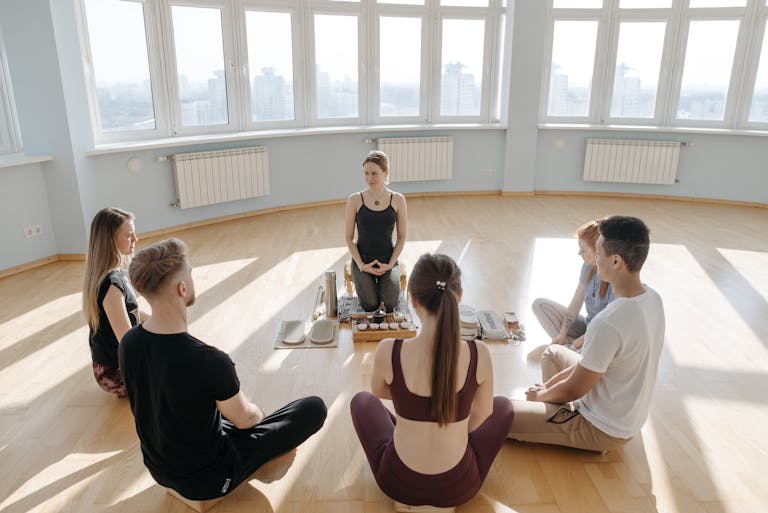
The secret lives of introverts aren’t mysterious or hidden by design. They’re simply interior. Introverts process the world from the inside out, building rich mental landscapes that rarely make it into casual conversation. What looks like silence from the outside is often a full, complex experience happening just beneath the surface.
Most people never see it. That’s not a complaint, it’s just the reality of how introverted minds work. We’re not withholding. We’re simply living in a layer of experience that doesn’t always translate into words, at least not quickly, and not without meaning.

If you’ve ever felt like your inner world was invisible to the people around you, you’re in good company. Much of what makes introversion distinctive, the depth, the deliberateness, the preference for meaning over noise, gets misread as aloofness, shyness, or disinterest. Our General Introvert Life hub covers the full spectrum of what it actually means to live as an introvert, from relationships and career to the quieter, more personal questions about identity and belonging. This article sits right at the center of that conversation.
What Is Actually Happening Inside an Introvert’s Mind?
My first year running my own agency, I sat through a lot of meetings where I said almost nothing. Not because I had nothing to offer, but because by the time I’d processed what was being discussed, the conversation had already moved on. My colleagues assumed I was disengaged. My clients sometimes wondered if I was even interested. What was actually happening was the opposite of disengagement. I was tracking every thread, every implication, every unstated tension in the room. I just wasn’t broadcasting it.
What drains your social battery?
Not all social exhaustion is the same. Our free quiz identifies your specific drain pattern and gives you personalised recharging strategies.
Find Your Drain PatternUnder 2 minutes · 8 questions · Free
That gap between internal experience and external expression is one of the defining features of introvert psychology. A 2020 study published in PubMed Central found that introverts show distinct patterns of neural processing, particularly in areas associated with internal thought, memory, and planning. The introvert brain isn’t less active. It’s differently active, with more emphasis on inward processing and less on immediate environmental stimulus.
What this means in practice is that introverts often experience a kind of parallel processing. There’s the surface conversation happening in real time, and then there’s a deeper layer of analysis, association, and meaning-making running simultaneously underneath. By the time an introvert speaks, they’ve often already considered multiple angles, discarded several responses, and arrived at something they actually believe. That’s not slowness. That’s precision.
The challenge is that most social environments aren’t built for that kind of processing. Speed is rewarded. Immediate responses signal confidence. Silence gets interpreted as uncertainty. And so introverts learn, often early, to either rush their thoughts to keep up or stay quiet and be misread. Neither option does justice to what’s actually going on inside.
Why Do Introverts Seem Like They’re Hiding Something?
There’s a perception problem at the heart of introversion. Because introverts don’t naturally externalize their inner world, people fill in the gaps with assumptions. The quiet person in the meeting must be bored. The colleague who doesn’t join after-work drinks must think they’re better than everyone else. The friend who needs a day to respond to a text must be pulling away.
None of those interpretations are usually accurate, but they’re understandable. Humans are wired to read social signals, and when those signals are minimal, we invent a story. The introvert’s story, as written by others, is almost always wrong. And the weight of those misreadings accumulates over time.
I’ve written before about how many of these misreadings are rooted in myth rather than reality. The idea that introverts are antisocial, or cold, or secretly suffering, is one of the most persistent misconceptions out there. Introversion myths do real damage, not just to how others see us, but to how we see ourselves. When you grow up being told that your natural way of being is a problem to fix, you start to believe it.
What introverts are actually “hiding” isn’t secrets. It’s depth. It’s a rich interior life that doesn’t perform itself for an audience. And there’s nothing wrong with that. The problem isn’t the depth. The problem is a cultural bias toward surfaces.

How Do Introverts Actually Experience Social Situations?
There’s a version of the introvert social experience that gets told a lot: we hate people, we dread parties, we count the minutes until we can leave. And while there’s a grain of truth in the energy-drain aspect of socializing, that framing misses the complexity of what introverts actually feel.
I’ve been to industry conferences where I genuinely enjoyed myself, not because the environment was comfortable (it wasn’t), but because I found one or two conversations that went somewhere real. That’s the thing about introverts and social situations. It’s not the people that drain us. It’s the performance. Small talk, surface-level pleasantries, the obligation to seem engaged when nothing meaningful is being exchanged, that’s where the energy goes.
A piece published by Psychology Today makes the case that introverts don’t just prefer deeper conversations, they actually need them. Superficial interaction doesn’t replenish introverts the way it might for extroverts. It costs. Meaningful conversation, the kind where something real is exchanged, is a different experience entirely. It can actually leave introverts feeling energized rather than depleted.
What this means is that the introvert’s secret social life isn’t about avoidance. It’s about selectivity. We’re not hiding from connection. We’re holding out for the kind that matters. That’s a distinction most people who haven’t lived it don’t fully grasp.
And yet, that selectivity comes at a cost. In professional environments especially, the expectation is that you show up fully in all social contexts, not just the ones that suit you. Managing that gap, between what’s expected and what’s sustainable, is something most introverts spend a significant amount of energy on. Handling life as an introvert in an extroverted world takes real strategy, not just willpower.
What Does an Introvert’s Inner World Actually Look Like?
Ask most introverts to describe their inner world and they’ll pause for a long time before answering. Not because they don’t know, but because it’s genuinely hard to translate. The interior experience of introversion is layered, associative, and often nonlinear. It doesn’t map cleanly onto words.
My own inner world, and I say this with full awareness of how it sounds, is something like a very long conversation with myself that never fully stops. Ideas connect to memories connect to observations connect to questions I’ve been sitting with for years. A client presentation I gave in 2009 might surface in the middle of a completely unrelated thought about a book I read last week. There’s a logic to it, but it’s a private logic, built from a lifetime of internal cross-referencing.
Research published in PubMed Central suggests that introverts have higher baseline cortical arousal, meaning their nervous systems are more sensitive to stimulation. This may explain why introverts often feel overstimulated in busy environments and why quiet, low-stimulation settings feel so necessary. The inner world isn’t an escape from reality. It’s where introverts do their best thinking, and their brains may be physiologically oriented toward that kind of inward processing.
That inner world is also where identity gets worked out. Introverts tend to be deeply reflective about who they are, what they value, and what they want their lives to mean. This isn’t navel-gazing. It’s a genuine orientation toward meaning. And it produces people who, when they do share themselves, tend to share something real.

How Does the Introvert’s Secret Life Show Up at Work?
The professional world is where the secret life of introverts becomes most visible, and most costly. Workplaces are built around extroverted norms: open offices, collaborative brainstorming, quick responses, visible enthusiasm. Introverts who don’t perform these things get passed over, overlooked, or quietly labeled as “not leadership material.”
I spent a solid decade trying to perform extroversion in my own agency. I hired gregarious account managers and told myself I was “balancing the team.” I pushed myself to be the loudest voice in new business pitches because I thought that’s what clients expected. I scheduled back-to-back meetings and called it productivity. What I was actually doing was burning through energy I didn’t have and producing work that was competent but not my best.
The shift came when I stopped trying to be the version of a leader I’d seen celebrated in business magazines and started leading from my actual strengths. Preparation over improvisation. Written communication over off-the-cuff remarks. Deep analysis over reactive decision-making. A piece from Rasmussen University notes that introverts often excel in marketing and leadership roles precisely because of their ability to listen carefully, think before acting, and build genuine relationships over time. The qualities that get dismissed in fast-moving environments are often the ones that produce the most durable results.
There’s also the negotiation dimension. Many introverts assume their quieter style puts them at a disadvantage in high-stakes conversations. But an analysis from Harvard’s Program on Negotiation suggests the opposite can be true. Introverts’ tendency to listen more than they speak, to think before responding, and to resist the pressure to fill silence often gives them a distinct edge. In negotiation, the person who speaks less frequently controls more of the conversation than people realize.
Still, the structural bias remains. Introvert discrimination in professional settings is real, and it’s one of the least examined forms of workplace bias. When “culture fit” means “performs extroversion convincingly,” introverts lose ground regardless of their actual contributions.
Why Do Introverts Need Solitude the Way Others Need People?
Solitude gets a bad reputation in a culture that equates aloneness with loneliness. But for introverts, solitude isn’t an absence. It’s a presence. It’s the condition under which the inner world can actually function without interference.
After a particularly grueling week of client pitches during my agency years, I used to take the long way home on Friday evenings. Not to avoid anything, just to have thirty minutes of quiet before walking into the rest of my life. My wife understood eventually. My colleagues never did. They’d invite me for drinks and read my declining as antisocial. What it actually was, was necessary maintenance.
Solitude is where introverts restore the cognitive and emotional resources that social interaction draws down. It’s also where the best thinking happens. The ideas I’m most proud of from my agency career didn’t emerge in brainstorming sessions. They came from quiet mornings before anyone else arrived, or long drives, or the kind of focused reading that’s impossible in an open-plan office.
A 2024 study published in Frontiers in Psychology explored the relationship between solitude and well-being, finding that voluntary solitude, chosen rather than imposed, is associated with positive outcomes including creativity, self-awareness, and emotional regulation. The distinction between chosen and unchosen aloneness matters enormously. Introverts who choose solitude aren’t retreating from life. They’re engaging with it on their own terms.
That peace, the kind that comes from genuinely chosen quiet, is something many introverts spend years learning to protect. Finding that introvert peace in a noisy world isn’t passive. It requires active decisions about where you spend your energy and with whom.

What Happens When Introverts Are Pushed Past Their Limits?
There’s a version of introvert burnout that doesn’t look like burnout from the outside. The introvert keeps showing up. They keep performing. They keep saying yes to the meetings and the events and the social obligations. But something underneath is quietly shutting down.
I hit that wall in my mid-forties. From the outside, the agency was doing well. We had good clients, a solid team, and a reputation I’d spent two decades building. From the inside, I was running on fumes. Every interaction felt like it cost more than I had to give. I’d come home and sit in the car in the driveway for ten minutes before going inside, not because anything was wrong at home, but because I needed those ten minutes to decompress before I could be present for anyone else.
That’s what extended overstimulation looks like for introverts. It’s not dramatic. It’s quiet erosion. And it’s completely avoidable if you understand what’s actually happening and take it seriously before the reserves are gone.
Conflict situations add another layer of complexity. When introverts are pushed past their limits and conflict arises, the typical response is withdrawal rather than confrontation. A framework outlined in Psychology Today for introvert-extrovert conflict resolution acknowledges that introverts need time to process before they can engage productively in disagreement. Forcing an immediate response doesn’t produce honesty. It produces shutdown.
Understanding your own limits isn’t weakness. It’s the kind of self-knowledge that makes sustained performance possible. The quiet power of introversion isn’t about being impervious to pressure. It’s about knowing where your actual strength lives and protecting the conditions that let it operate.
How Do Introverts Build Meaningful Connections Without Losing Themselves?
One of the most persistent misreadings of introversion is that introverts don’t want connection. The reality is more nuanced. Introverts want connection deeply. They just want it to be real.
The friendships I’ve maintained across decades of professional upheaval are all characterized by the same thing: there’s no performance required. I don’t have to be “on.” I can show up with a half-formed thought and have it met with genuine engagement rather than impatience. Those relationships are rare, and I protect them accordingly.
Building that kind of connection requires something introverts are actually quite good at: patience. Meaningful relationships don’t form in a single networking event or a team-building afternoon. They form over time, through accumulated moments of genuine exchange. Introverts who lean into that natural rhythm, rather than trying to accelerate connection to match extroverted social timelines, often build the most durable relationships of anyone in the room.
There’s also the question of professional relationships that require vulnerability. Therapy, coaching, mentorship, roles that demand emotional openness, can feel counterintuitive for introverts. Yet research from Point Loma Nazarene University suggests that introverts often make exceptional therapists and counselors, precisely because their natural capacity for deep listening, careful observation, and non-reactive presence creates the kind of space where clients feel genuinely heard. The introvert’s secret life, that rich interior experience, turns out to be excellent preparation for holding space for someone else’s.
For younger introverts still figuring out how to build those connections in structured social environments, the challenges are even more acute. Surviving and thriving in the classroom as an introvert requires a different kind of social strategy, one that works with your natural tendencies rather than against them.

What Would Change If We Understood Introverts Better?
There’s a version of the world where introvert strengths are recognized for what they are, not compensated for, not managed around, but genuinely valued. That world would look different in a lot of ways.
Meetings would include time for people to think before speaking. Open offices would have quiet zones that weren’t stigmatized. Leadership would be evaluated on outcomes rather than visibility. Hiring processes wouldn’t penalize people for not performing charisma on demand. None of these changes require introverts to become extroverts. They just require a broader definition of what good looks like.
On a more personal level, understanding introversion better changes how you treat yourself. The years I spent trying to be a different kind of leader were years I spent in low-grade conflict with my own nature. That conflict was exhausting in ways I didn’t fully recognize until I stopped. When I started working with my introversion rather than around it, the quality of my thinking improved. My relationships deepened. My decisions got better. Not because I changed who I was, but because I stopped pretending to be someone I wasn’t.
The secret life of introverts isn’t really a secret. It’s a depth that hasn’t been invited into the conversation yet. When it is, something valuable becomes available, not just for introverts, but for everyone around them.
There’s much more to explore across the full range of introvert experience. Our General Introvert Life hub is the place to keep going, whether you’re just starting to understand your introversion or you’ve been living with it consciously for years.
Running on empty?
Five drain profiles, each with specific triggers, warning signs, and a recharging playbook.
Take the Free QuizUnder 2 minutes · 8 questions · Free
About the Author
Keith Lacy is an introvert who’s learned to embrace his true self later in life. After 20 years in advertising and marketing leadership, including running agencies and managing Fortune 500 accounts, Keith now channels his experience into helping fellow introverts understand their strengths and build fulfilling careers. As an INTJ, he brings analytical depth and authentic perspective to every article, drawing from both professional expertise and personal growth.
Frequently Asked Questions
What do introverts actually think about during long silences?
Introverts are rarely thinking nothing during silences. More often, they’re processing multiple layers of a conversation simultaneously, considering implications, forming responses, and cross-referencing what’s being said against what they already know. The silence isn’t emptiness. It’s active internal work. Most introverts speak when they have something meaningful to contribute, not simply to fill space.
Why do introverts seem to live in their own world?
Introverts have rich inner lives that are genuinely compelling to them. Their minds naturally turn inward, finding stimulation in ideas, memories, and internal dialogue rather than external activity. This isn’t disconnection from reality. It’s a different relationship with it. The “world” introverts seem to inhabit is real and full, just interior rather than external.
Do introverts enjoy socializing, or do they always find it draining?
Introverts can genuinely enjoy socializing, particularly in contexts that allow for meaningful conversation rather than surface-level interaction. What drains introverts isn’t people, it’s performance. Small talk, large gatherings with no opportunity for real exchange, and extended social obligations without recovery time are what deplete introvert energy. One deep conversation can leave an introvert feeling more connected than three hours at a party.
Are introverts more creative or imaginative than extroverts?
Creativity isn’t exclusive to introverts, but the introvert’s natural orientation toward inner experience, reflection, and sustained focus does create favorable conditions for certain kinds of creative work. Introverts tend to think deeply about problems before acting, which can produce more developed ideas. Their comfort with solitude also means they’re well-suited to the kind of extended, uninterrupted work that complex creative projects require.
How can introverts feel less misunderstood in everyday life?
Feeling less misunderstood often starts with understanding yourself well enough to explain your needs clearly. Many introverts find that naming their introversion, not as an excuse but as context, changes how people interpret their behavior. Saying “I need a day to think about this before I respond” is more useful than leaving people to guess. Building relationships with people who have the patience for depth also matters enormously. The right connections make the misreadings from others much easier to carry.