
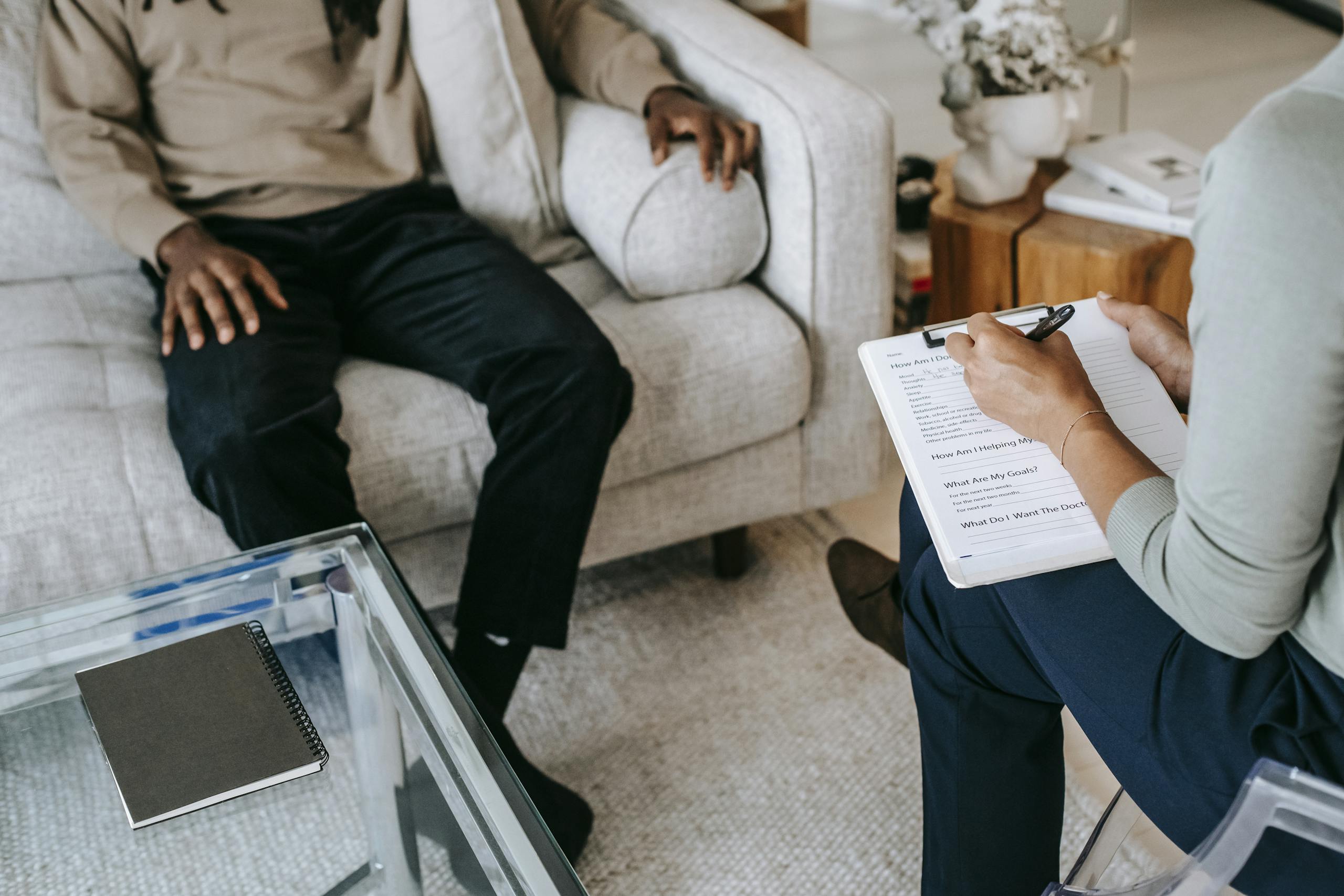
Going to therapy with a narcissist rarely produces the healing you hoped for. Instead of a neutral space where both people can grow, the sessions often become an extension of the same dynamic you’re trying to escape, with the narcissistic partner performing wellness while subtly redirecting blame.
As someone wired for deep internal processing, I’ve watched this pattern play out in ways that are genuinely hard to describe to people who haven’t experienced it. The therapy room, which should feel like solid ground, can become the most disorienting place of all when one partner is skilled at managing impressions rather than confronting truth.
What follows isn’t a clinical breakdown. It’s an honest look at what couples therapy with a narcissistic partner actually feels like, why it tends to fail, and what the more quietly wired among us, the introverts, the highly sensitive, the deep processors, need to understand before walking into that room.
If you’re exploring the broader landscape of mental health as an introvert or highly sensitive person, our Introvert Mental Health Hub covers everything from anxiety and emotional processing to sensory overload and rejection sensitivity. This article sits within that larger conversation because the toll of narcissistic relationships hits differently when you’re someone who processes everything deeply and quietly.
Why Does Couples Therapy Often Fail With a Narcissistic Partner?
Couples therapy operates on a foundational assumption: that both people want to understand each other, grow, and take honest accountability. When one partner has narcissistic traits, that foundation doesn’t hold. What you get instead is a performance.
Career Coaching for Introverts
One-on-one career strategy sessions with Keith Lacy. 20 years of Fortune 500 leadership as an introvert, now helping others build careers that work with their wiring.
Learn More50-minute Zoom session · $175
I’ve sat across from clients, colleagues, and in one uncomfortable stretch during my agency years, a business partner who had this quality in spades. He was charming in every room that mattered. Presentations, pitches, client dinners. But in closed-door conversations, the version of events he described bore almost no resemblance to what had actually happened. I remember thinking, with some bewilderment, that he genuinely seemed to believe his own revisions.
That’s the disorienting part of narcissistic behavior in a therapeutic setting. A skilled narcissist doesn’t necessarily walk in planning to manipulate the therapist. They walk in with a story that they’ve already told themselves so many times it feels true. And they tell it compellingly.
Therapists are trained to hold space for multiple perspectives. That’s a strength in most contexts. With a narcissistic partner, it can inadvertently validate a distorted account of reality. According to the clinical overview of narcissistic personality disorder from the National Library of Medicine, core features include a pervasive pattern of grandiosity, a need for admiration, and a lack of empathy, traits that make genuine therapeutic reciprocity nearly impossible without specialized intervention.
For introverts and highly sensitive people in these relationships, the therapy room compounds an already exhausting dynamic. You’ve spent months or years carefully observing, questioning your own perceptions, and absorbing emotional weight. Then you sit in a room where your partner performs vulnerability convincingly enough that even the professional across from you seems uncertain who to believe.
What Does “Gaslighting in Therapy” Actually Look Like?
Gaslighting is a word that gets used broadly now, sometimes loosely. But in the context of couples therapy with a narcissist, it takes on a very specific and damaging form.
It might look like this: you raise a concern in session, something you’ve built up the courage to say out loud. Your partner responds not with defensiveness but with what appears to be calm concern. They gently suggest that your memory of events is colored by your anxiety. They mention, softly, that they’ve worried about your emotional regulation for some time. They look at the therapist with an expression of patient, long-suffering love.
And you, sitting there having finally said the thing you’ve been afraid to say, watch the room subtly shift.
For highly sensitive people, this moment carries an almost physical weight. Those of us who process emotion deeply and notice micro-expressions, tonal shifts, and relational temperature changes are acutely aware when a room turns. The emotional processing that HSPs do happens in real time, which means we’re absorbing the shift even as we’re trying to hold our ground.
What makes gaslighting in therapy particularly corrosive is that the setting is supposed to be safe. The therapist is supposed to be a reliable witness. When that witness appears to be swayed, even momentarily, by your partner’s reframing, the ground beneath you drops away.

There’s also a phenomenon sometimes called “therapist capture,” where a therapist, usually without realizing it, begins to align more with the more charismatic or emotionally fluent partner. This isn’t a failure of character. It’s a failure of context. Without training specifically in narcissistic abuse dynamics, even experienced therapists can miss the pattern. A peer-reviewed examination of narcissistic personality and interpersonal dynamics highlights how individuals with these traits often present with elevated social competence, which can obscure the relational harm they cause.
How Does This Dynamic Affect Introverts and HSPs Differently?
Not everyone experiences couples therapy with a narcissist the same way. Extroverted partners may fight back more visibly, match energy in the room, or assert their narrative with force. That’s not better or worse, it’s just a different response to the same impossible situation.
Introverts, and especially highly sensitive people, tend to internalize. We go quiet when we’re overwhelmed. We second-guess our perceptions before we voice them. We process in layers, which means we’re often still working through what happened in the last session when the next one begins.
Running an advertising agency for two decades, I managed teams of people across every personality type imaginable. The introverts on my staff, particularly those I came to recognize as highly sensitive, consistently absorbed more ambient stress than anyone else in the room. During a particularly brutal pitch season for a Fortune 500 retail account, I watched one of my senior creatives, a deeply perceptive and quiet woman, carry the emotional weight of our entire team’s tension while saying almost nothing about her own experience. She processed it all internally. That’s a gift in many contexts. In a relationship with a narcissist, it becomes a liability.
When you’re wired to absorb and process deeply, you’re also more vulnerable to sensory and emotional overwhelm in high-conflict environments. A therapy session with a narcissistic partner is, by definition, a high-conflict environment, even when the surface looks calm. The quiet tension, the careful word choices, the monitoring of your partner’s reactions, all of it registers at a level that can be genuinely exhausting.
There’s also the anxiety dimension. Many introverts and HSPs already carry a baseline of anxiety into high-stakes interpersonal situations. The National Institute of Mental Health’s overview of anxiety disorders notes how anticipatory anxiety, the dread of a difficult event before it happens, can be as taxing as the event itself. When therapy sessions with a narcissistic partner routinely end in confusion or self-doubt, the anticipation of each new session becomes its own source of stress.
For those who also struggle with HSP anxiety, the cumulative effect of this cycle can be severe. You’re not just dealing with a difficult relationship. You’re dealing with a difficult relationship in a setting that was supposed to help, and the gap between expectation and reality adds its own particular sting.
What Role Does Empathy Play When You’re the More Sensitive Partner?
One of the cruelest ironies of being in a relationship with a narcissist, especially as a highly sensitive or empathic person, is that your empathy becomes a tool used against you.
Empathy, at its best, is the capacity to genuinely feel into another person’s experience. For HSPs, this isn’t a choice. It happens automatically, involuntarily, and often before conscious thought catches up. You feel your partner’s pain, even when that pain is being weaponized. You make room for their perspective, even when that perspective is designed to undermine yours.
In therapy, this plays out in a specific way. Your partner may share something that sounds like vulnerability. A difficult childhood. A fear of abandonment. A wound they’ve never talked about before. And your empathy fires immediately. You feel something soften in you. You wonder if this is the opening, the moment where real connection becomes possible.
What’s hard to hold onto, in that moment, is that the disclosure may be tactical rather than genuine. Not because your partner is consciously calculating, necessarily, but because narcissistic vulnerability often functions as a deflection mechanism. It redirects the emotional energy of the room toward the narcissist’s pain and away from accountability for their behavior.

The concept of empathy as a double-edged sword is real and worth sitting with. The same capacity that makes you a perceptive, caring partner is the capacity that makes you susceptible to emotional manipulation. Recognizing this isn’t cynical. It’s protective.
There’s also a perfectionism dimension that often intersects here. Many HSPs and introverts in these relationships hold themselves to impossibly high standards as partners. They believe that if they were just more patient, more understanding, more communicative, the relationship would work. That kind of perfectionism keeps you in a loop of self-blame that serves the narcissist’s narrative perfectly.
I saw a version of this in my agency years, not in a romantic context, but in a professional one. A creative director I worked with for three years was exceptionally talented and deeply empathic. She had a habit of assuming that if a client relationship was failing, she simply hadn’t tried hard enough. She’d revise, resubmit, absorb criticism that wasn’t fair, and come back with more effort. It took me longer than it should have to recognize that the problem wasn’t her effort. The problem was a client who had no interest in a genuine creative partnership. He wanted compliance, and her empathy kept delivering it.
Can Therapy With a Narcissist Ever Be Productive?
Honest answer: rarely, and only under very specific conditions.
The first condition is that the therapist has explicit training in narcissistic abuse dynamics and understands how to avoid being drawn into the narcissist’s framing. This is not a standard part of most couples therapy training. It requires a therapist who actively asks about patterns over time rather than evaluating only what presents in the room.
The second condition is that the narcissistic partner has some genuine motivation for change, not just the appearance of motivation. Clinical literature on personality disorders and treatment outcomes consistently notes that meaningful change in narcissistic patterns requires sustained individual therapy, not couples work, and even then, progress is slow and uncertain.
The third condition, and the one most often overlooked, is that the non-narcissistic partner has independent support. Going into couples therapy with a narcissist without your own individual therapist is like going into a negotiation without anyone in your corner. You need a space where your perceptions are validated, your account of events is taken at face value, and you can process what’s happening without managing your partner’s reaction to your honesty.
Many mental health professionals who specialize in this area will tell you directly: couples therapy is contraindicated when there’s ongoing emotional abuse. The session itself can become a site of abuse, with the more vulnerable partner being further destabilized in a setting that was supposed to help.
That’s a hard thing to accept, especially when you’ve invested hope in the process. But accepting it is often the first genuinely therapeutic step.
What Does Recovery Look Like After Leaving This Dynamic?
Whether you stay in the relationship or leave it, recovery from the specific damage of therapy with a narcissist requires something particular: rebuilding trust in your own perception.
That sounds simple. It isn’t. When you’ve spent extended time in an environment where your account of reality was consistently questioned, where a room full of people including a professional seemed to side with a version of events that didn’t match your experience, your confidence in your own mind erodes. This is sometimes called perceptual self-doubt, and it can persist long after the relationship ends.

For introverts, recovery often happens in the quiet. We process in solitude, in writing, in long walks, in conversations with one or two trusted people rather than many. That’s not avoidance. That’s how our minds actually work, and it’s worth honoring rather than pathologizing.
One of the most painful aspects of recovering from a narcissistic relationship is the grief that comes with realizing the relationship wasn’t what you thought it was. Not just recently, but perhaps from the beginning. For HSPs, who tend to form deep emotional bonds and process those bonds with significant intensity, this grief can feel overwhelming. The experience of rejection and loss for highly sensitive people carries a particular weight that deserves acknowledgment rather than minimization.
The American Psychological Association’s framework on resilience emphasizes that recovery isn’t about bouncing back to who you were before. It’s about integrating the experience and finding a new equilibrium that’s informed by what you’ve been through. For introverts and HSPs, that integration tends to be thorough and slow, which is not a weakness. It’s the way deep processors actually heal.
Individual therapy, with a practitioner who understands both narcissistic relationship dynamics and the particular needs of sensitive, introverted clients, can be genuinely restorative. The contrast between that experience and couples therapy with a narcissist can be striking. A good individual therapist reflects your experience back to you accurately. They don’t require you to manage their perception of your partner. They hold space for your truth without qualification.
What Should You Know Before Entering or Continuing Couples Therapy?
A few things worth knowing clearly before you decide whether to continue, begin, or exit couples therapy in this situation.
You are allowed to ask your therapist direct questions about their experience with personality disorders and narcissistic abuse. A good therapist won’t be offended. They’ll welcome the conversation. If they seem defensive or dismissive, that’s information.
You are allowed to speak to a therapist individually, even while attending couples sessions. Many people feel they need permission for this, as if seeking individual support is a betrayal of the couples process. It isn’t. It’s self-preservation.
You are allowed to name what you’re experiencing, even if your partner disputes it. Your account of your own experience is valid. The fact that someone else tells a different story doesn’t mean yours is wrong.
According to a graduate research review on narcissism and relationship outcomes, partners of individuals with high narcissistic traits consistently report higher rates of emotional exhaustion, reduced self-esteem, and confusion about their own perceptions. These are documented outcomes, not personal failures.
And perhaps most importantly: recognizing that the therapy isn’t working isn’t giving up. Sometimes the most honest and courageous thing you can do is name that a process designed to help is causing more harm. That recognition takes clarity. And clarity, for those of us who’ve spent time in these dynamics, is hard-won and worth protecting.

There’s a broader conversation about what introverts and highly sensitive people need from mental health support, and it goes well beyond any single relationship dynamic. Our Introvert Mental Health Hub is a good place to continue that conversation, with resources covering everything from emotional processing to anxiety, empathy, and healing from rejection.
About the Author
Keith Lacy is an introvert who’s learned to embrace his true self later in life. After 20 years in advertising and marketing leadership, including running agencies and managing Fortune 500 accounts, Keith now channels his experience into helping fellow introverts understand their strengths and build fulfilling careers. As an INTJ, he brings analytical depth and authentic perspective to every article, drawing from both professional expertise and personal growth.
Frequently Asked Questions
Is couples therapy ever recommended when one partner has narcissistic traits?
Most mental health professionals who specialize in personality disorders advise against couples therapy as a first step when one partner has significant narcissistic traits. The risk is that the session becomes an extension of the harmful dynamic rather than a space for genuine repair. Individual therapy for both partners, especially the non-narcissistic partner, is generally considered a safer starting point. If couples therapy is pursued, the therapist should have specific experience with narcissistic abuse dynamics.
Why do narcissists often seem to do well in therapy sessions?
Narcissistic individuals often present as articulate, emotionally fluent, and self-aware in therapeutic settings. They may appear to engage deeply with the process while subtly redirecting conversations away from accountability. Without specialized training, therapists can mistake this social competence for genuine therapeutic engagement. This is sometimes described as “therapist capture,” where the professional begins to align with the more charismatic partner’s account of events without realizing it.
How does being an introvert or HSP make this dynamic harder to handle?
Introverts and highly sensitive people tend to process deeply, absorb ambient emotional tension, and second-guess their own perceptions before voicing them. In a therapy setting with a narcissistic partner, these traits can work against you. You may be more susceptible to gaslighting because you’re already inclined to question your own account. You may feel the emotional weight of the session more intensely and carry it longer afterward. And your empathy may keep you engaged with your partner’s apparent vulnerability even when that vulnerability is being used strategically.
What should I look for in a therapist if I’ve been in a relationship with a narcissist?
Look for a therapist with explicit experience in narcissistic abuse, coercive control, or personality disorder dynamics. Ask directly about their approach to situations where partners have very different accounts of the same events. A good therapist will take your experience seriously without requiring you to prove it against your partner’s version. They should also be able to hold space for the complexity of your feelings, including grief, confusion, and self-doubt, without pathologizing your responses as the problem.
How long does recovery from a narcissistic relationship typically take?
Recovery timelines vary widely and depend on the length and intensity of the relationship, the presence of individual support, and the person’s own processing style. For introverts and HSPs, who tend to process deeply and thoroughly, recovery may take longer than for others, but it also tends to be more complete. Rebuilding trust in your own perceptions is often the central work, and that can’t be rushed. Many people find that the healing is nonlinear, with periods of clarity followed by grief, and that this is a normal part of integrating a significant experience.