
Thich Nhat Hanh meditation centers on mindfulness as a continuous, lived practice rather than a technique you perform for twenty minutes and then set aside. His teachings emphasize present-moment awareness through breathing, walking, eating, and even washing dishes, making his approach remarkably well-suited to the introvert’s natural tendency toward inner attentiveness. For those of us who already live much of our lives in reflection, his work doesn’t ask us to change how we’re wired. It asks us to trust it.
My first encounter with Thich Nhat Hanh’s writing came during one of the harder stretches of my agency years. I was managing a team of thirty people, fielding calls from Fortune 500 clients who expected instant answers, and spending my evenings in a low-grade state of mental static that I couldn’t quite name. A colleague handed me a worn copy of “The Miracle of Mindfulness” with the offhand comment that it might help. She was right, though not in the way I expected. It didn’t quiet the noise immediately. It gave me a different relationship with the noise.
What I found in those pages wasn’t a self-help system. It was a philosophy that validated something I’d always felt but couldn’t articulate: that paying close attention to ordinary moments is not a personality quirk to manage. It’s a form of wisdom.
If you’re exploring the mental health dimensions of introversion more broadly, the Introvert Mental Health Hub covers a wide range of topics that connect inner sensitivity to emotional wellbeing, from anxiety and overwhelm to processing deep emotions and building resilience.
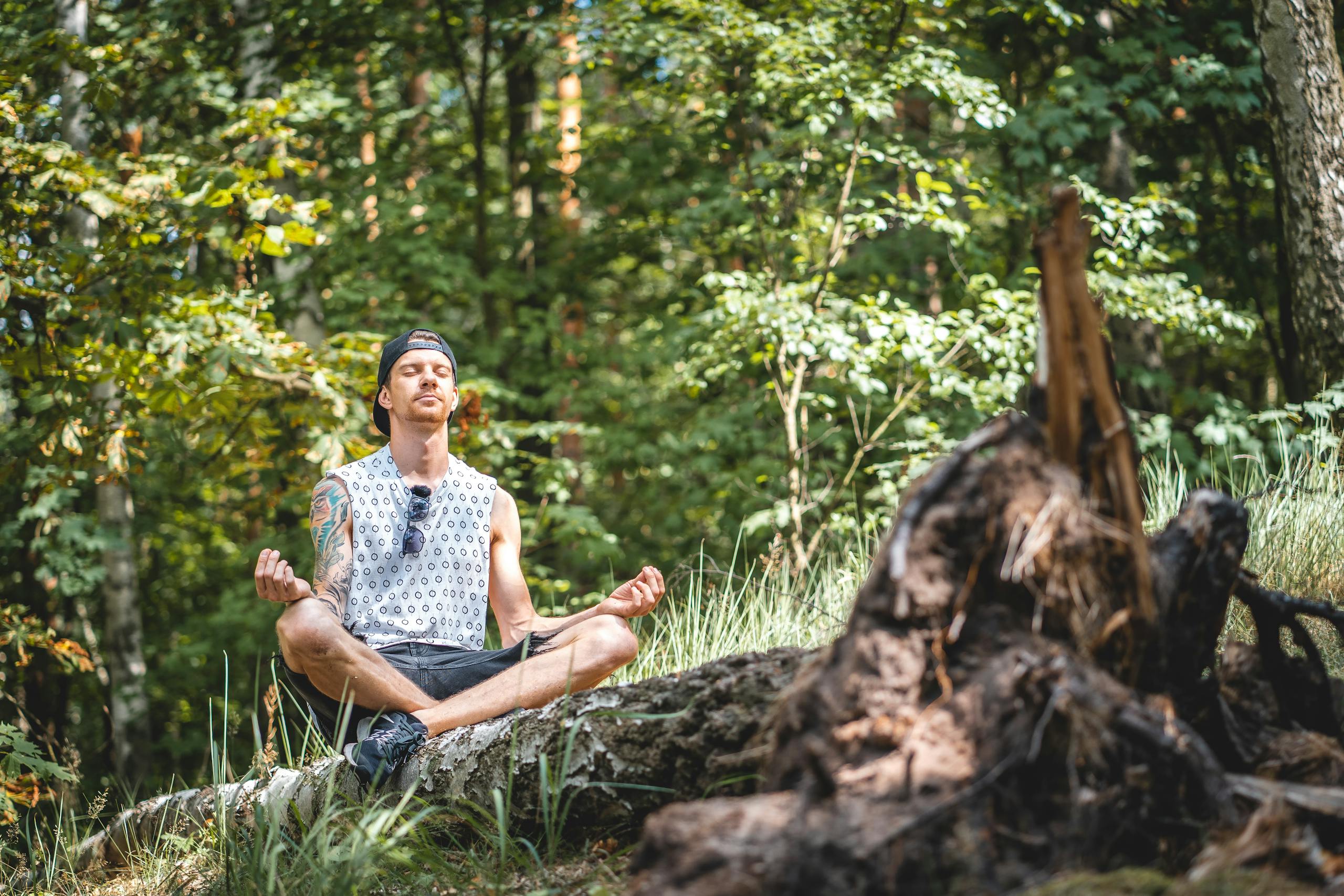
Who Was Thich Nhat Hanh and Why Do His Teachings Resonate So Deeply With Introverts?
Thich Nhat Hanh was a Vietnamese Buddhist monk, poet, and peace activist who spent decades teaching mindfulness to Western audiences. Exiled from Vietnam in 1966 for his anti-war activism, he eventually settled in France and founded Plum Village, a monastery and retreat center that became one of the most influential mindfulness communities in the world. He passed away in January 2022 at the age of 95, leaving behind more than a hundred books and a global community of practitioners.
Career Coaching for Introverts
One-on-one career strategy sessions with Keith Lacy. 20 years of Fortune 500 leadership as an introvert, now helping others build careers that work with their wiring.
Learn More50-minute Zoom session · $175
His teachings differ from many popular mindfulness approaches in a specific way: he never separated meditation from daily life. Where some traditions treat formal sitting practice as the core and everything else as secondary, Thich Nhat Hanh insisted that washing a dish mindfully carries the same weight as sitting in lotus position for an hour. He called this “interbeing,” the recognition that every action, every breath, every moment of attention is connected to something larger.
For introverts, this framing lands differently than it might for others. Many of us already move through the world with a heightened awareness of texture, tone, and nuance. We notice the shift in someone’s voice before they’ve finished their sentence. We process conversations long after they’ve ended. We find meaning in small things that others walk past without registering. Thich Nhat Hanh didn’t ask us to develop these capacities. He asked us to honor them.
As an INTJ, I’ve always processed experience through a kind of internal architecture, building frameworks from observations, looking for the pattern beneath the surface. What I found in his work was permission to slow that process down and let it breathe, rather than racing toward the conclusion.
What Are the Core Practices in Thich Nhat Hanh’s Approach to Meditation?
Thich Nhat Hanh organized his teachings around several foundational practices, each accessible to beginners and deepened by long-term practitioners. Understanding them as a connected system rather than isolated techniques makes a significant difference in how they take root.
Conscious Breathing
At the center of everything is the breath. Not controlled breathing in the clinical sense, but simply noticing the breath as it moves in and out. Thich Nhat Hanh often recommended pairing breath awareness with short phrases, something like “breathing in, I know I am breathing in” as a gentle anchor for attention. The point isn’t to achieve a particular state. It’s to return, again and again, to the present moment.
During a particularly fractured stretch of client pitches, I started using a version of this between meetings. Two minutes in the stairwell, just breathing. Not meditating in any formal sense, just pausing. It didn’t fix anything structurally, but it interrupted the accumulation of tension that built up across a twelve-hour day. Over time, that interruption became something I depended on.
Walking Meditation
Thich Nhat Hanh’s walking meditation is perhaps his most distinctive offering. Rather than walking to get somewhere, you walk to be somewhere, paying attention to each footfall, the contact between foot and ground, the rhythm of movement. He described it as “printing peace on the earth” with each step.
For introverts who find sitting still difficult or who process better while moving, walking meditation can be a more natural entry point than formal seated practice. Many people I’ve spoken with describe it as the practice that finally made mindfulness feel real rather than abstract.
Deep Listening and Loving Speech
This is where his teachings extend beyond the cushion and into relationships. Thich Nhat Hanh taught that true listening, what he called “deep listening,” means offering full presence without preparing your response while the other person is still speaking. For introverts who already tend toward careful listening, this practice affirms something we do naturally while inviting us to deepen it further.
Loving speech, its companion practice, is about speaking from a place of clarity and compassion rather than reactivity. In agency leadership, where I spent years managing creative egos and client expectations simultaneously, this was harder than any breathing exercise. But it was also more immediately useful.
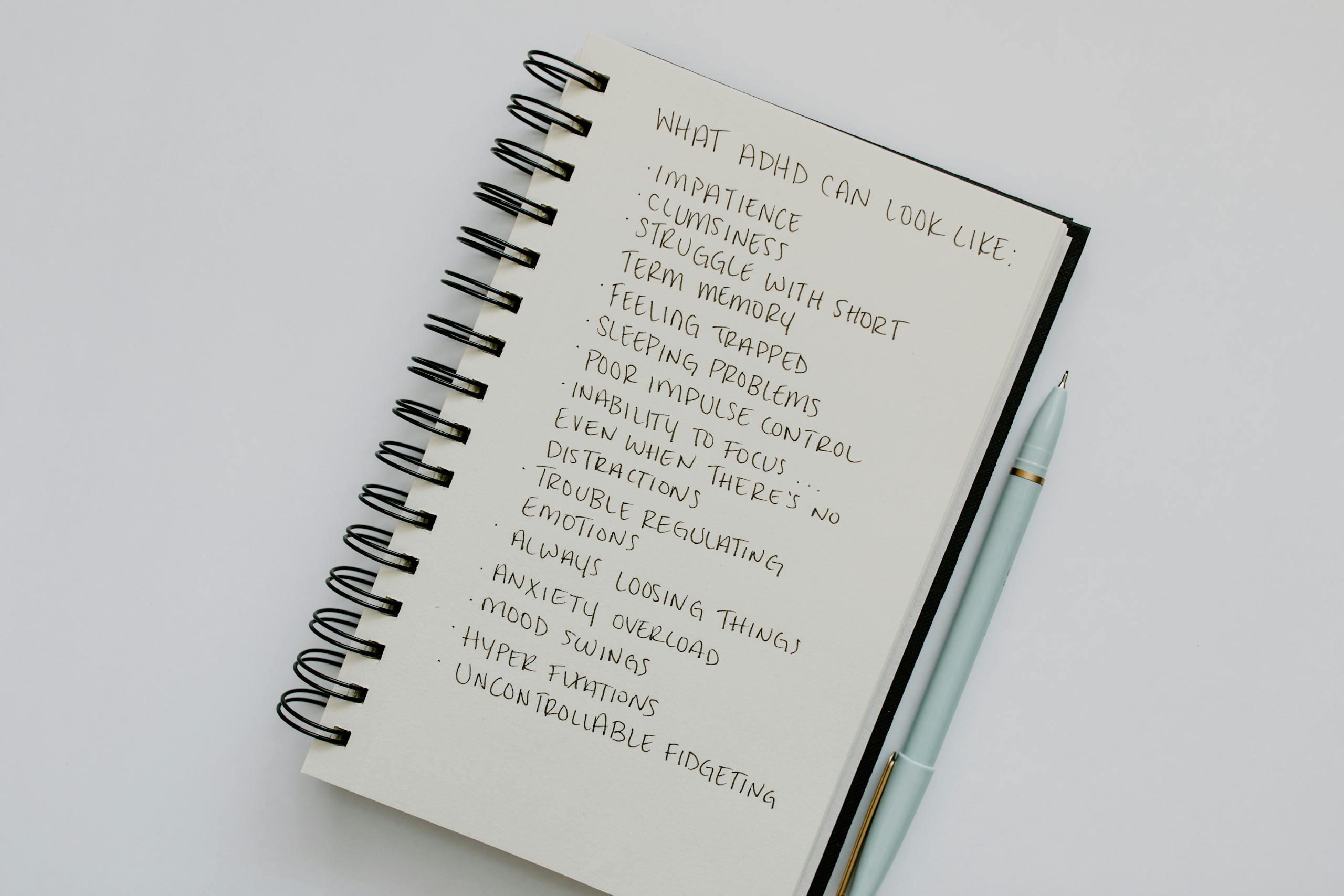
How Does Mindfulness Practice Address the Specific Mental Health Challenges Introverts Face?
Introversion and high sensitivity often travel together, and the mental health challenges that accompany them are real and specific. Thich Nhat Hanh’s approach addresses several of them in ways that feel tailored rather than generic.
Sensory Overwhelm
Many introverts, and particularly those who identify as highly sensitive, experience the world at a higher volume than others. Crowded environments, loud conversations, and constant stimulation don’t just drain energy. They can create a kind of internal overload that takes hours to recover from. HSP overwhelm and sensory overload is a well-documented experience, and mindfulness offers one of the more effective tools for working with it.
Thich Nhat Hanh’s emphasis on returning to the breath gives the nervous system a reliable anchor during moments of overwhelm. Rather than fighting the sensation or trying to push through it, the practice invites you to notice what’s happening in your body without amplifying it through resistance. Over time, that distinction between noticing and resisting becomes genuinely useful.
Anxiety and the Restless Mind
Introverts tend to be strong internal processors, which is a genuine strength. It also means the mind can run long loops on unresolved concerns, replaying conversations, anticipating outcomes, and generating worry with impressive efficiency. The National Institute of Mental Health describes generalized anxiety as involving persistent, difficult-to-control worry, and many introverts recognize that pattern in themselves even without a clinical diagnosis.
Thich Nhat Hanh’s approach to anxiety wasn’t to suppress it or reason it away. He taught that anxiety, like any mental formation, can be held with compassion rather than judgment. His image of the mind as a river, with thoughts as waves that rise and fall without disturbing the river bed, gave many practitioners a way to stop identifying with their anxious thoughts and start observing them instead. For those dealing with HSP anxiety, that shift in perspective can be genuinely significant.
Emotional Depth and Processing
One of the things I’ve noticed about introverts, including myself, is that we don’t just feel emotions. We process them, sometimes extensively, sometimes long after the event that triggered them. HSP emotional processing describes this experience well: the tendency to feel deeply and to need real time and space to work through what’s been felt.
Thich Nhat Hanh’s teachings on emotions are among his most practically useful. He described difficult emotions as “knots” in the consciousness that can be gently loosened through mindful attention rather than forced resolution. His instruction was to breathe with the emotion, name it without judgment, and allow it to move through rather than become stuck. For deep emotional processors, this is a more honest framework than “let it go,” which rarely describes how emotions actually work.
A study published in PubMed Central examining mindfulness-based interventions found meaningful reductions in emotional reactivity among participants, supporting what many long-term practitioners describe anecdotally: that regular mindfulness practice changes the relationship between stimulus and response over time.

How Does Thich Nhat Hanh’s Teaching on Compassion Connect to the Introvert Experience of Empathy?
Compassion sits at the heart of Thich Nhat Hanh’s entire body of work. He distinguished between compassion as a feeling and compassion as a practice, arguing that genuine compassion requires presence, not just emotional response. That distinction matters enormously for introverts and highly sensitive people who often carry a heavy empathic load.
Empathy is frequently described as a strength, and it is. But for those who feel others’ pain acutely, it can also become a source of exhaustion and confusion. HSP empathy captures this complexity well: the same sensitivity that allows deep connection can also make it difficult to know where another person’s experience ends and your own begins.
Thich Nhat Hanh’s teaching offered a way through this. He taught that compassion without self-compassion eventually collapses. You cannot sustain genuine care for others if you are depleted, and depletion often comes from absorbing rather than witnessing. His practice of “looking deeply” asks us to see suffering clearly without merging with it, to be present without disappearing into another person’s experience.
Managing creative teams in advertising gave me a front-row view of this dynamic. Some of the most empathically gifted people on my teams were also the most burned out. They absorbed client anxiety, absorbed team conflict, absorbed the ambient stress of deadline culture, and had no practice for setting it down. What Thich Nhat Hanh described as “the second arrow,” the suffering we add to pain through our reaction to it, was something I watched play out in real time across years of agency work.
What Does Thich Nhat Hanh’s Work Say About Perfectionism and the Inner Critic?
Perfectionism is something many introverts know intimately, often because we hold ourselves to exacting internal standards that no external observer would even notice. The gap between what we produce and what we imagined is a persistent source of quiet suffering. HSP perfectionism explores how high standards can tip from motivating into paralyzing, and it’s a dynamic I spent most of my career wrestling with personally.
Thich Nhat Hanh didn’t address perfectionism by name, but his teachings on non-striving speak directly to it. He described the tendency to push toward an idealized version of ourselves as a form of violence against the present moment, a rejection of what is in favor of what we think should be. His instruction was not to lower standards but to stop making the present moment wrong for failing to meet them.
That reframe took me years to absorb. As an INTJ, I’m wired for improvement. I see gaps, inefficiencies, and possibilities for optimization in most situations. That’s genuinely useful in a strategic leadership role. But it also meant I rarely paused to acknowledge what was working, in my work or in myself. Thich Nhat Hanh’s concept of “interbeing” helped me understand that the present moment, imperfect as it is, contains everything needed for the next step forward. That’s not a passive idea. It’s actually a more efficient way to work.
Additional perspective from research available through PubMed Central suggests that mindfulness practice is associated with reductions in self-critical thinking, which is one of the core mechanisms through which perfectionism causes distress. The practice doesn’t eliminate high standards. It loosens their grip on your sense of worth.
How Can Thich Nhat Hanh’s Teachings Help With Rejection and Social Sensitivity?
Introverts often experience social rejection with a particular intensity. A critical comment in a meeting, a relationship that ends without clear explanation, a pitch that doesn’t land after weeks of preparation: these register deeply and linger. HSP rejection is a real phenomenon, and the pain it causes is not a sign of weakness. It’s a sign of sensitivity, which is also the source of many genuine strengths.
Thich Nhat Hanh’s response to interpersonal pain was characteristically gentle and direct. He taught that suffering, including the suffering of rejection, is not something to be solved or escaped but something to be understood. His practice of “embracing our suffering” sounds counterintuitive until you experience what it actually means: not wallowing, but turning toward the pain with enough presence that you can see its roots clearly.
He also wrote extensively about the concept of “interbeing” in relationships, the idea that our pain is rarely about the single moment that triggered it. A rejection that feels devastating often carries the weight of earlier rejections, earlier experiences of being unseen or misunderstood. Mindfulness practice, in his framework, helps you distinguish between what is actually happening now and what the mind is adding from the past.
I lost a significant client account early in my agency years, a Fortune 500 brand we’d worked with for three years. The call came on a Friday afternoon, polite and final. I spent the weekend in a kind of professional grief that felt disproportionate to the business reality. Looking back, I can see it wasn’t just about the account. It was about what the account represented: proof that I belonged in rooms where I’d always felt slightly out of place. Thich Nhat Hanh’s framework for understanding suffering would have helped me see that more clearly at the time.

How Do You Actually Start a Thich Nhat Hanh Meditation Practice?
One of the most common mistakes people make when approaching his teachings is treating them as a system to master rather than a practice to inhabit. There is no correct level of achievement in Thich Nhat Hanh’s framework. There is only returning, again and again, to the present moment.
Start With the Breath, Not the Books
His writing is beautiful and worth reading, but the practice precedes the philosophy. Begin with five minutes of conscious breathing each morning. Not controlled breathing, not a technique, just noticing the breath as it moves in and out. Use a simple phrase if it helps: “in, I am here. Out, I am present.” That’s the whole practice to start.
The American Psychological Association’s work on resilience emphasizes that small, consistent practices build greater long-term capacity than occasional intensive efforts. Thich Nhat Hanh would agree. He often said that a few minutes of genuine presence is worth more than an hour of distracted sitting.
Choose One Daily Activity and Make It Mindful
Pick something you do every day: making coffee, walking to your car, eating lunch. Commit to doing that one thing with full attention for a week. Not your phone in your other hand, not planning the next task. Just that activity, fully inhabited. This is the essence of his approach, and it’s more demanding than it sounds.
For introverts who already spend significant time in their own heads, the challenge isn’t usually finding inner silence. It’s learning to be present in the body, in physical sensation, in the immediate moment rather than the ongoing internal narrative. Thich Nhat Hanh’s daily activity practice addresses exactly that.
Work With Difficult Emotions Directly
When a difficult emotion arises, whether anxiety before a presentation or irritation after a frustrating conversation, try his instruction: breathe with it. Name it without judgment (“I notice I am feeling anxious”). Stay with it for a few breaths without trying to change it. Then let it move.
This is not passive. It requires real attention and a willingness to be uncomfortable. But over time, it builds what he called “the capacity to hold our suffering,” which is a more honest description of emotional resilience than most self-help language offers.
Peer-reviewed work available through the National Library of Medicine on mindfulness-based stress reduction supports the idea that emotion regulation improves meaningfully with regular practice, particularly for individuals who tend toward rumination, a pattern common among introverts.
Use His Books as Practice Companions, Not Instructions
“The Miracle of Mindfulness” and “Peace Is Every Step” are the most accessible starting points. Read them slowly, a few pages at a time. His writing is not meant to be consumed efficiently. It’s meant to be sat with, which is itself a form of practice.
Academic analysis of contemplative traditions, including work available through the University of Northern Iowa’s scholarly archives, has examined how his teachings bridge Buddhist philosophy and Western psychological frameworks, making them accessible to practitioners without a religious background. That bridge is part of why his work has reached so many people who wouldn’t describe themselves as spiritual.

What Makes This Practice Particularly Suited to the Introvert’s Natural Strengths?
Most mainstream wellness advice is implicitly designed for extroverts. Group meditation classes, accountability partners, community retreats, these can be valuable, but they also carry a social overhead that many introverts find genuinely tiring. Thich Nhat Hanh’s practice, at its core, is solitary. It happens in the stairwell, at the kitchen sink, on a quiet walk. It requires no audience and no performance.
Beyond the format, his emphasis on depth over breadth aligns with how many introverts naturally engage with the world. We don’t want a surface-level technique. We want to understand why something works, how it connects to a larger framework, what it means in the context of a life. His philosophy of interbeing offers exactly that kind of depth, a complete way of understanding attention, relationship, and suffering that holds together under scrutiny.
There’s also something in his tone that matters. Thich Nhat Hanh never hectored or pressured. His writing is patient, almost unhurried, as if he had complete confidence that the reader would find their way in their own time. For introverts who have spent years being told to speak up faster, network more aggressively, and perform enthusiasm on demand, that patience is itself a form of relief.
Psychological research, including work on introversion and cognitive processing available through sources like Psychology Today’s introvert research coverage, consistently points to the introvert’s preference for depth of processing over speed of response. Thich Nhat Hanh’s practice honors that preference rather than working against it.
After two decades of trying to match leadership styles that weren’t mine, what his teachings gave me was a practice that fit my actual architecture. Not a workaround. Not a coping mechanism. A genuine alignment between how I’m wired and how I move through the world. That’s rarer than it sounds, and worth more than I can easily quantify.
There’s much more to explore at the intersection of introversion and mental wellbeing. The full Introvert Mental Health Hub brings together articles on anxiety, emotional processing, sensitivity, and resilience, all through the lens of the introverted experience.
About the Author
Keith Lacy is an introvert who’s learned to embrace his true self later in life. After 20 years in advertising and marketing leadership, including running agencies and managing Fortune 500 accounts, Keith now channels his experience into helping fellow introverts understand their strengths and build fulfilling careers. As an INTJ, he brings analytical depth and authentic perspective to every article, drawing from both professional expertise and personal growth.
Frequently Asked Questions
Is Thich Nhat Hanh meditation religious, and do you need to be Buddhist to practice it?
Thich Nhat Hanh’s teachings are rooted in Buddhist philosophy, but he consistently presented mindfulness as a universal practice accessible to anyone regardless of religious background. He often said that mindfulness is not a religion but a way of living. Many practitioners, including those with no spiritual framework at all, find his approach completely accessible and practically useful without engaging with its Buddhist origins.
How much time do you need to dedicate to Thich Nhat Hanh meditation each day?
His approach is specifically designed to integrate into daily life rather than requiring dedicated blocks of time. Five to ten minutes of conscious breathing each morning is a solid starting point. Beyond that, the practice happens throughout the day in ordinary activities: eating, walking, listening. The emphasis is on quality of attention rather than quantity of time spent sitting formally.
Can Thich Nhat Hanh’s teachings help with clinical anxiety or depression?
Mindfulness practice, including approaches informed by his work, has been incorporated into evidence-based therapeutic frameworks like Mindfulness-Based Cognitive Therapy, which has a meaningful body of clinical support. That said, his teachings are not a substitute for professional mental health care. If you’re dealing with clinical anxiety or depression, working with a qualified therapist alongside any contemplative practice is the more complete approach.
What is the best Thich Nhat Hanh book to start with as a beginner?
“The Miracle of Mindfulness” is widely considered the most accessible entry point. It’s short, practical, and written with beginners in mind. “Peace Is Every Step” is another strong option, organized as brief reflections that work well for readers who prefer to absorb ideas in small portions rather than sustained chapters. Either one can serve as both an introduction to his philosophy and a companion to early practice.
How does Thich Nhat Hanh’s approach differ from other popular mindfulness methods like MBSR?
Mindfulness-Based Stress Reduction, developed by Jon Kabat-Zinn, is a structured eight-week clinical program with specific session formats and measurable outcomes. Thich Nhat Hanh’s approach is less structured and more philosophical, emphasizing continuous present-moment awareness across all of daily life rather than a defined course of practice. MBSR draws on his influence significantly, but his own teaching is broader in scope and less clinically oriented. Both have genuine value, and many practitioners find them complementary.