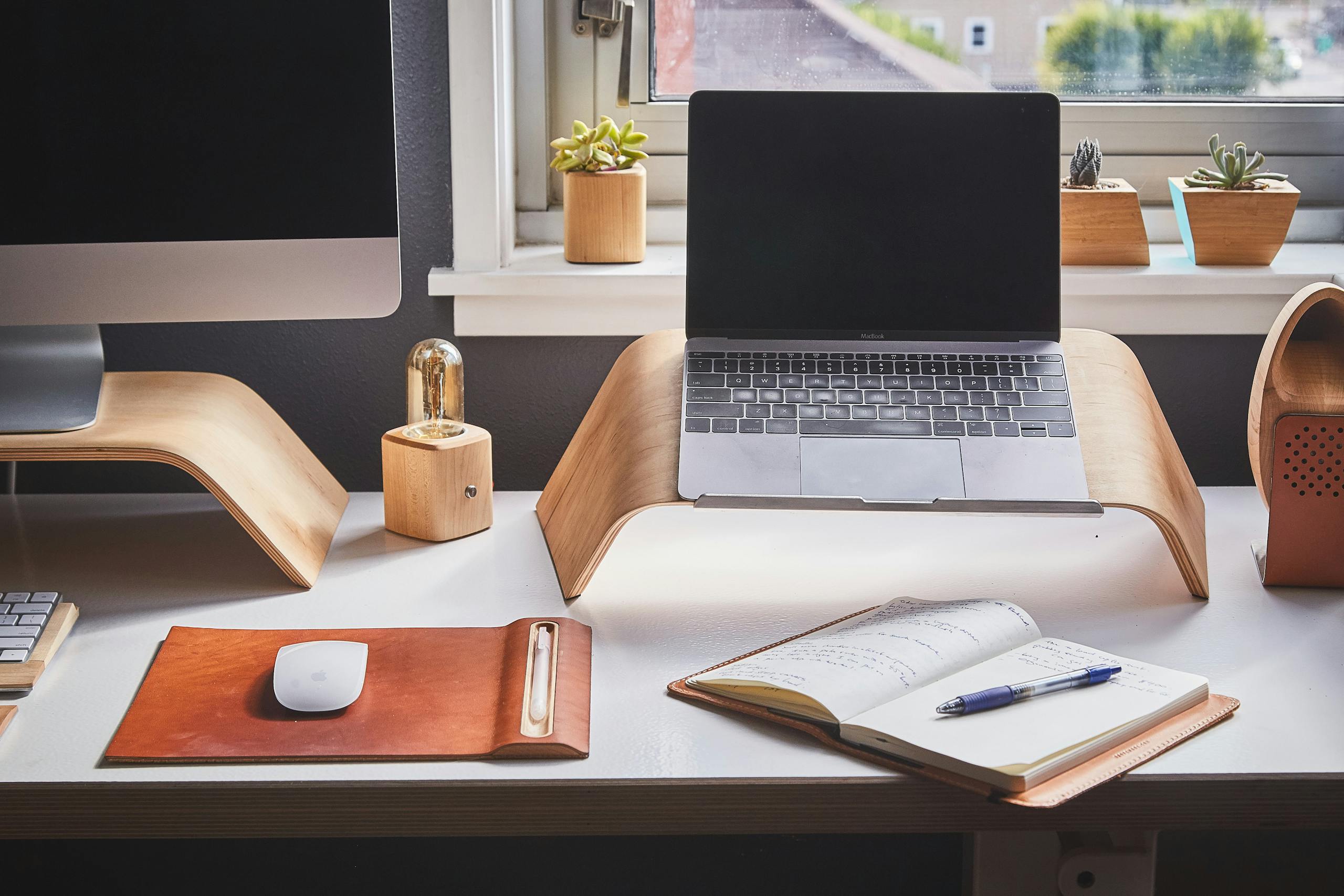

My home office became my competitive advantage long before remote work was trendy. As an INTJ who spent two decades in loud advertising agencies, I discovered something most productivity advice misses entirely: the environment that drains you is costing you more than time.
An introvert-optimized home workspace is a physical environment deliberately designed to support deep focus, minimize sensory interruption, and protect the mental energy that quiet thinkers need to do their best work. It combines intentional space design, boundary systems, and daily rhythms that align with how introverted minds actually process information, rather than forcing compliance with open-office thinking that was never built for us.
What follows isn’t generic home office advice recycled from productivity blogs. It’s what I’ve actually tested, refined, and lived across two decades of agency leadership and the quieter, more honest work I do now.

Why Does Your Environment Affect Productivity More Than Your Willpower?
Early in my agency career, I blamed myself constantly for losing focus. Client presentations would drain me for days. Open-plan offices left me mentally scattered by noon. I assumed I lacked discipline. A 2022 study published by the National Institutes of Health helped reframe that entirely: environmental stimulation directly affects cognitive load, and people with introverted nervous systems process sensory input more deeply, meaning the same environment that energizes an extrovert can genuinely exhaust someone wired differently.
What’s your personality type?
Take our free 40-question assessment and get a detailed personality profile with dimension breakdowns, context analysis, and personalised insights.
Discover Your Type8-12 minutes · 40 questions · Free
That wasn’t a personal failing. It was physiology.
At one of my agencies, we moved into a beautiful open-concept space. Glass walls, communal tables, ambient noise everywhere. The creative team loved it. My output dropped noticeably within two weeks. I started arriving an hour before anyone else just to think clearly. What I was doing instinctively, protecting my cognitive environment, is now backed by decades of environmental psychology research.
Your home is the one place where you actually control the inputs. That control isn’t a luxury. For introverts working from home, it’s the single most powerful productivity variable available.
What Makes a Home Office Actually Work for an Introverted Mind?
Most home office guides focus on ergonomics and equipment. Those matter, but they’re the surface layer. What introverts need first is a space that communicates safety to the nervous system. A place where the brain can stop scanning for interruption and start doing the deep, layered thinking that comes naturally to us.
Dedicated Space and Clear Boundaries
Separation matters psychologically, not just physically. When your workspace bleeds into your living space, your brain never fully shifts into focused mode. Even in small apartments, a consistent corner with consistent purpose trains your mind to associate that location with deep work.
After I left agency life, I worked from a converted spare bedroom for the first time in my career. The difference was immediate and almost unsettling. No ambient noise. No one stopping by my desk. No performance of busyness. My thinking became more layered, more patient. I started producing work I was genuinely proud of, not just work that met a deadline.
Lighting That Supports Rather Than Stimulates
Harsh overhead lighting is a low-grade stressor most people never identify as a problem. Natural light is consistently linked to improved mood and sustained attention. The Mayo Clinic notes that light exposure directly influences circadian rhythms and mental alertness throughout the day. Position your primary work surface near a window if possible, and supplement with warm-toned task lighting rather than bright overhead fluorescents.
Soft, controllable lighting isn’t about aesthetics. It’s about reducing the micro-stressors that accumulate across a workday and compound into exhaustion by evening.
Sound Control as a Non-Negotiable
Unpredictable noise is particularly disruptive to introverted processing. A 2021 analysis from the American Psychological Association found that noise interruptions don’t just break concentration momentarily. They fragment the deeper cognitive threads that complex thinking requires, threads that can take 20 minutes or more to rebuild.
Options worth considering: acoustic panels, a white noise machine, noise-canceling headphones for deep work sessions, or simply choosing your work hours around the quietest periods in your household. I use a combination of all four depending on the day’s demands.

How Should an Introvert Structure Their Workday at Home?
Structure is where introverts often thrive in ways that surprise people. We’re not spontaneous by nature. We’re planners, pattern-seekers, people who do better when we know what’s coming. A well-designed daily rhythm isn’t a cage. It’s the scaffolding that makes genuine freedom possible.
Protect Your Peak Hours Aggressively
Most introverts have a clear cognitive peak window, usually a two to three hour stretch where deep thinking comes most easily. For me, that’s early morning. I identified this pattern during my agency years by noticing which hours produced my best strategic work versus which hours produced polished-sounding nothing.
Guard that window. No meetings. No email. No Slack. No phone calls that could wait. Fill it with whatever requires your most careful, layered thinking. Everything else can happen in the hours that remain.
Build Recovery Into the Schedule, Not Just Work
Introvert productivity isn’t linear. We don’t sustain output at a constant rate across eight hours. We work in focused bursts and need genuine recovery between them. The Harvard Business Review has published extensively on the productivity cost of ignoring recovery time, finding that uninterrupted rest between focused sessions significantly improves both output quality and creative problem-solving.
A short walk. Fifteen minutes of reading. Sitting quietly with coffee. These aren’t procrastination. They’re part of the work itself for minds that process deeply.
Create Clear Start and Stop Rituals
One of the underappreciated challenges of working from home is that the workday has no natural edges. Without a commute or a physical office to leave, many introverts find themselves mentally on-call all day and never fully present at any point.
A start ritual signals your brain that focused work is beginning. Mine involves making coffee, reviewing my three priorities for the day, and putting my phone in a different room. A stop ritual signals that work is done. Closing specific tabs, writing tomorrow’s first task, and physically leaving the workspace all serve this function. These rituals aren’t fussy habits. They’re neurological cues that help introverts fully inhabit each mode rather than hovering anxiously between them.
What Boundaries Do Introverts Actually Need to Protect Home Productivity?
Boundary-setting is where a lot of introverts struggle, not because we don’t know what we need, but because we’ve spent years apologizing for needing it. In agency environments, I watched talented introverted team members get steamrolled in meetings, interrupted during deep work, and guilt-tripped for not being “collaborative enough” when they closed their office doors.
Working from home gives you the chance to build the boundaries that most offices never allowed. Use that chance deliberately.
Communicate Your Work Hours Clearly
People who share your home need to understand when you’re working and what that means. Not as a preference, but as a professional reality. A closed door, a specific signal, a shared calendar, whatever system works in your household, establish it and hold to it. Inconsistency trains people to test the boundary rather than respect it.
Manage Digital Interruption as Seriously as Physical Interruption
Notifications are designed by teams of engineers to be as attention-capturing as possible. The Psychology Today network has covered extensively how digital interruptions fragment attention in ways that accumulate throughout the day. For introverts who need sustained, unbroken focus to produce their best work, a constant notification stream is a genuine productivity threat.
Batch your email into two or three scheduled windows. Set specific response time expectations with colleagues. Use focus modes on your devices during deep work. These aren’t antisocial choices. They’re professional ones.

Does Minimalism Actually Help Introverts Focus Better?
Short answer: yes, and the research supports it. A study from Princeton University’s Neuroscience Institute found that visual clutter competes for attention in the brain, reducing the capacity for sustained focus. For introverts who already process environmental information more deeply than average, a cluttered workspace isn’t just aesthetically unpleasant. It’s a genuine cognitive tax.
Minimalism in a home office doesn’t mean sterile or cold. It means intentional. Every object in your workspace should either serve a function or genuinely restore you. A plant that you actually enjoy. A photograph that grounds you. Books you reference regularly. Beyond that, surfaces should be clear.
The Desk as a Thinking Surface
My most productive desk setup is almost aggressively simple. A monitor, a keyboard, a notebook, a pen, and a glass of water. That’s it. Everything else lives in a drawer or a cabinet. When I sit down, there’s nothing competing for my attention except the work itself.
This took years to arrive at. In agency life, my desk was covered in client briefs, campaign materials, sticky notes, and the general debris of a busy creative environment. I thought that visible complexity made me look appropriately busy. What it actually did was keep a low-level anxiety humming in the background of every work session.
Color and Texture in an Introvert’s Workspace
Color psychology research, including findings referenced by the American Psychological Association, suggests that cooler, muted tones tend to support focused cognitive work, while warmer tones support creativity and connection. For a home workspace, soft blues, warm grays, and natural greens tend to create an environment that feels both calm and mentally stimulating in the right way.
Texture matters too. Natural materials, wood, linen, stone, tend to feel grounding in ways that synthetic surfaces don’t. These aren’t decorating preferences. They’re environmental inputs that affect how your nervous system responds to the space.
How Can Introverts Manage Energy, Not Just Time, While Working From Home?
Time management is a framework designed for extroverts. It assumes that a productive hour at 9 AM is identical to a productive hour at 3 PM, and that the only variable is how efficiently you fill each slot. Introverts know this isn’t true. We know that some hours cost more than others, that certain tasks deplete us while others restore us, and that the quality of our thinking varies enormously based on what came before it.
Energy management is the framework that actually fits.
Map Your Energy Across the Day
Spend one week tracking not just what you do, but how you feel before and after each type of task. You’ll likely find clear patterns. For me, strategic writing and analytical work happen best in the first three hours of my day. Client calls and collaborative work are fine mid-morning. Administrative tasks go in the afternoon when my deeper thinking has naturally wound down.
Matching task type to energy level isn’t lazy scheduling. It’s working with your neurology instead of against it.
Recharge Practices That Actually Work
Genuine introvert recharge requires solitude and low stimulation. The National Institutes of Health has published research on restorative environments, finding that natural settings and quiet spaces measurably reduce cortisol and restore attentional capacity. Even brief exposure, a ten-minute walk outside, five minutes sitting in a garden, helps.
What doesn’t work: scrolling social media, watching TV, or having background noise running during breaks. These feel like rest but they’re actually continued stimulation. Your brain doesn’t get the quiet it needs to reset.

What Tools and Systems Help Introverts Stay Productive Without Burning Out?
The right tools reduce decision fatigue and eliminate the micro-interruptions that fragment introverted focus. The wrong tools add complexity and create new demands on your attention. Choose deliberately.
Task Management That Respects Deep Work
A simple system beats a sophisticated one you don’t actually use. My approach: one primary task per day that gets protected time, two or three secondary tasks that can happen in whatever order makes sense, and a running capture list for everything else. No elaborate color-coding, no multiple apps syncing across devices. One notebook or one clean digital document.
The goal is to spend your cognitive energy on the work itself, not on managing the system that’s supposed to help you do the work.
Communication Tools Set to Your Terms
Email, Slack, Teams, and similar platforms are designed for constant availability. Reconfigure them for intentional availability. Set your status to indicate focused work periods. Turn off sound notifications entirely. Check messages on a schedule you control rather than responding to every ping in real time.
When I ran agencies, I had an open-door policy that I now recognize as a productivity myth I’d internalized from extroverted leadership culture. The leaders who produced the most thoughtful strategic work were the ones who protected their thinking time, not the ones who were always immediately reachable. Availability and effectiveness are not the same thing.
Physical Organization That Reduces Cognitive Load
A place for everything and everything in its place is advice that sounds mundane until you experience the cumulative cognitive cost of a disorganized workspace. Every time you can’t find something, every time you have to clear space before you can work, every time a pile of papers catches your eye during a focused session, you’re spending mental energy that could go toward actual thinking.
Spend an afternoon organizing your workspace once, properly. Label things. Create systems that make the right behavior the easy behavior. The upfront investment pays back every single workday.
How Does Working From Home Change the Social Dynamics for Introverts?
Working from home removes the social pressure of office environments, and for introverts, that’s largely positive. No more performing engagement in meetings that could have been emails. No more ambient noise from open-plan conversations. No more managing the social energy cost of simply being physically present around large groups of people all day.
Yet, there’s a real risk on the other side: isolation that tips from restorative solitude into genuine disconnection.
Introverts don’t need constant social contact, but we do need meaningful connection. A 2023 review published through the Psychology Today network noted that social isolation, even in people who prefer solitude, is associated with measurable impacts on cognitive function and emotional regulation over time.
The difference that matters is this: choose your social contact deliberately rather than absorbing it passively. A weekly call with one colleague you genuinely respect. A monthly lunch with a friend who actually energizes you. A professional community where you can engage in writing rather than real-time conversation. These are enough. They’re often more than enough.
What Are the Biggest Mistakes Introverts Make When Setting Up a Home Office?
Experience has shown me a handful of patterns that undermine home productivity for introverts specifically, not because introverts are doing anything wrong, but because most productivity advice was written with a different neurological wiring in mind.
Underestimating the Cost of Poor Sound Control
Many introverts set up a beautiful, organized workspace and then tolerate a noisy environment because addressing sound feels too complicated or too demanding. It isn’t. A $30 white noise machine or a pair of quality headphones changes the cognitive environment dramatically. Sound control is the highest-return investment most introverts can make in their home workspace.
Treating Every Hour as Equally Available
Scheduling meetings and calls throughout the day without protecting any sustained block for deep work is a pattern I see constantly. It’s also a pattern I lived for years in agency life, where my calendar was everyone else’s property. At home, you have the chance to protect your best hours. Failing to do so is the most expensive mistake an introverted knowledge worker can make.
Confusing Busyness with Productivity
Introverts often feel pressure to demonstrate productivity through visible activity, answering emails quickly, staying online, maintaining constant communication. This is the extroverted performance of work, and it costs introverts enormously in cognitive energy. Your best work happens in the quiet hours when no one is watching. Protect those hours instead of performing availability during them.

If you’re exploring how your personality shapes the way you work, rest, and build a fulfilling professional life, the Ordinary Introvert productivity and career hub has more resources built specifically around introvert strengths.
About the Author
Keith Lacy is an introvert who’s learned to embrace his true self later in life. After 20 years in advertising and marketing leadership, including running agencies and managing Fortune 500 accounts, Keith now channels his experience into helping fellow introverts understand their strengths and build fulfilling careers. As an INTJ, he brings analytical depth and authentic perspective to every article, drawing from both professional expertise and personal growth.
Frequently Asked Questions
What is the most important element of a home office for introverts?
Sound control is typically the highest-impact element for introverts working from home. Unpredictable noise disrupts the deep, sustained focus that introverted minds rely on for their best work. A white noise machine, noise-canceling headphones, or simply scheduling work during quieter household hours can dramatically improve both concentration and output quality.
How do introverts maintain work-life balance when working from home?
Clear start and stop rituals are the most effective tool for introverts managing work-life balance at home. A consistent morning routine that signals the beginning of work, combined with a deliberate end-of-day practice like closing tabs, writing tomorrow’s priorities, and physically leaving the workspace, helps the introvert brain fully inhabit each mode rather than hovering between work and rest all day.
Should introverts work in complete silence?
Not necessarily. Many introverts focus well with consistent, non-distracting background sound like white noise, nature sounds, or instrumental music. What disrupts introverted focus is unpredictable, variable noise, particularly voices or sounds that carry meaning and demand interpretation. Consistent ambient sound actually masks those disruptive inputs and can improve concentration.
How can introverts handle video calls and virtual meetings without losing energy?
Batching video calls into a single block of time, rather than scattering them throughout the day, preserves longer stretches of uninterrupted focus. Building a brief recovery period after each call, even ten to fifteen minutes of quiet before the next task, helps introverts reset rather than carrying accumulated social fatigue into their deep work sessions. Turning off self-view during calls also reduces the cognitive load many introverts experience on video.
Is working from home actually better for introverts than office work?
For most introverts, yes, with the right setup and boundaries in place. Home environments remove the constant sensory stimulation, social performance demands, and unpredictable interruptions of office settings. That said, the benefit depends entirely on how deliberately the home workspace is designed. An unstructured, noisy, or poorly bounded home environment can actually be more draining than a well-designed office. The environment itself is what matters, not simply the location.