
The unlikable person test asks a deceptively simple question: are the qualities that make others pull away from you genuine character flaws, or are they simply traits that get misread in a world that rewards loudness and easy warmth? For introverts, this distinction matters enormously, because many of the behaviors flagged as “unlikable” are often just introversion expressed without apology.
My name is Keith Lacy. I ran advertising agencies for over two decades, and I spent a significant portion of that time quietly convinced that something about me was fundamentally off-putting. Clients liked me well enough. Campaigns performed. Yet in rooms full of extroverted creatives and boisterous account managers, I often left meetings wondering whether I’d come across as cold, disengaged, or worse, arrogant. Nobody handed me a test. But the feedback had a way of finding me anyway.
What I’ve come to understand, after a lot of reflection and more than a few uncomfortable conversations with people I trusted, is that the traits most commonly flagged on any unlikable person test often tell a more complicated story than they appear to at first glance. And for introverts specifically, that story almost always needs a second reading.

Much of what I explore in my writing connects back to how introversion shapes our relationships, not just at work, but at home, in our families, and in the ways we show up as parents and partners. If this topic resonates with you, the Introvert Family Dynamics and Parenting hub is a good place to see the full picture. The connections between how we’re perceived and how we parent, set limits, and relate to the people closest to us run deeper than most people expect.
What Does an Unlikable Person Test Actually Measure?
Most versions of the unlikable person test circulating online are informal checklists. They ask whether you interrupt people, whether you make conversations about yourself, whether you fail to make eye contact, whether you seem distracted or disinterested. Some are more psychologically grounded, drawing on research into social perception and interpersonal warmth. A few are genuinely useful. Many are not.
What’s your personality type?
Take our free 40-question assessment and get a detailed personality profile with dimension breakdowns, context analysis, and personalised insights.
Discover Your Type8-12 minutes · 40 questions · Free
The problem with most of these tests is that they measure behavior against a culturally specific template of likability, one that tends to reward extroverted expression. Animated facial responses, frequent verbal affirmations, physical openness, enthusiastic small talk. These are the signals that get coded as warm and approachable. Their absence gets coded as cold, aloof, or difficult.
A 2019 study published in PubMed Central found that social perception is heavily influenced by first impressions formed within seconds, and those impressions are shaped by cues like facial expressiveness and vocal energy. Introverts, who tend to be more reserved in their initial expressions, often score lower on perceived warmth in those first moments, even when their actual warmth, measured over time and in depth, is equal to or greater than their extroverted counterparts.
So before you take any version of the unlikable person test seriously, it helps to understand what it’s actually measuring. Is it measuring character? Or is it measuring performance of a specific social style?
Which “Unlikable” Traits Are Really Just Introversion?
There’s a meaningful difference between traits that genuinely push people away and traits that simply don’t fit the dominant social script. Introverts regularly get flagged for the latter while believing they’re guilty of the former.
Quietness in group settings gets read as standoffishness. Thoughtful pauses before speaking get read as disinterest or discomfort. A preference for one-on-one conversation over group banter gets interpreted as antisocial behavior. Not volunteering personal information quickly gets coded as secretive or cold.
I remember presenting a campaign concept to a major retail client early in my agency career. I’d prepared thoroughly, I believed in the work, and I delivered it calmly and precisely. Afterward, a colleague pulled me aside and said the client thought I seemed “a bit robotic.” I’d been focused. Measured. I hadn’t performed enthusiasm I didn’t feel in that moment. The work was strong. The delivery was apparently wrong.
That feedback stung in a specific way, because it wasn’t about the quality of my thinking. It was about the packaging. And for years, I tried to repackage myself, with mixed results and a fair amount of personal cost.
The National Institutes of Health has published research showing that introversion has biological roots, with infant temperament reliably predicting introverted traits in adulthood. This matters because it means introversion isn’t a learned habit that can simply be trained away. It’s a fundamental orientation. Treating introverted behavior as a character flaw misunderstands its nature entirely.

That said, some traits flagged on the unlikable person test do warrant honest self-examination. Dismissiveness. Condescension. Chronic lateness. Failing to acknowledge others’ contributions. These aren’t introversion. They’re habits that genuinely erode relationships, and introverts are not immune to them. The work is in learning to tell the difference.
How Does Introversion Shape the Way We’re Perceived in Families?
The workplace is one arena where these perception gaps play out. Home is another, and in some ways a more tender one. Family members, especially children, often interpret an introverted parent’s quietness through their own emotional lens. A father who processes stress by going silent can seem withdrawn or angry to a child who doesn’t yet have the vocabulary for what introversion actually means.
This is something I’ve thought about a great deal as a parent. My natural state when I’m overwhelmed or overstimulated is to go quiet and inward. I’m not shutting people out. I’m restoring. But to a child watching that happen, the distinction can be invisible. What they see is a parent who seems unavailable.
My piece on parenting as an introvert goes into this at length, because I think it’s one of the most underexamined challenges introverted parents face. We’re not cold. We’re not disengaged. We often love with tremendous depth and intention. But our expression of that love doesn’t always match the template our children, or our partners, expect.
The same perception gap that makes an introvert seem robotic in a client meeting can make a parent seem emotionally distant at the dinner table. And when family members start to internalize that perception as a verdict on your feelings for them, it creates real relational damage that has nothing to do with actual likability and everything to do with misread signals.
Understanding introvert family dynamics means recognizing that these misreadings happen in both directions. Introverted parents misread their children’s need for verbal reassurance as demanding. Children misread their parent’s quiet focus as indifference. Both interpretations can be wrong, and both cause harm when left unexamined.
Does Being Introverted Make You More Likely to Seem Unlikable to Teenagers?
Teenagers are, by developmental design, acutely attuned to social signals. They’re building their own identity and testing the social world intensively. An introverted parent who communicates through presence rather than words, who shows love through action rather than verbal expression, can seem genuinely baffling to a teenager who’s handling a world that runs on social performance.
My own teenage years involved a parent who was deeply introverted in ways neither of us had the language for at the time. I interpreted their quietness as disapproval. They were simply processing. The gap between those two realities shaped a lot of my early assumptions about what it meant to be liked or valued.
The question of how to bridge that gap is one I address directly in my writing on parenting teenagers as an introverted parent. Adolescents need explicit reassurance in ways that can feel draining for introverts. The answer isn’t to perform extroversion. It’s to find the specific, manageable ways that feel authentic to you while still being legible to your teenager.
A 2020 study in PubMed Central examining parental communication styles found that perceived emotional availability, not communication frequency, was the strongest predictor of adolescent attachment security. This means introverted parents don’t need to talk more. They need to make their available moments count more deliberately.
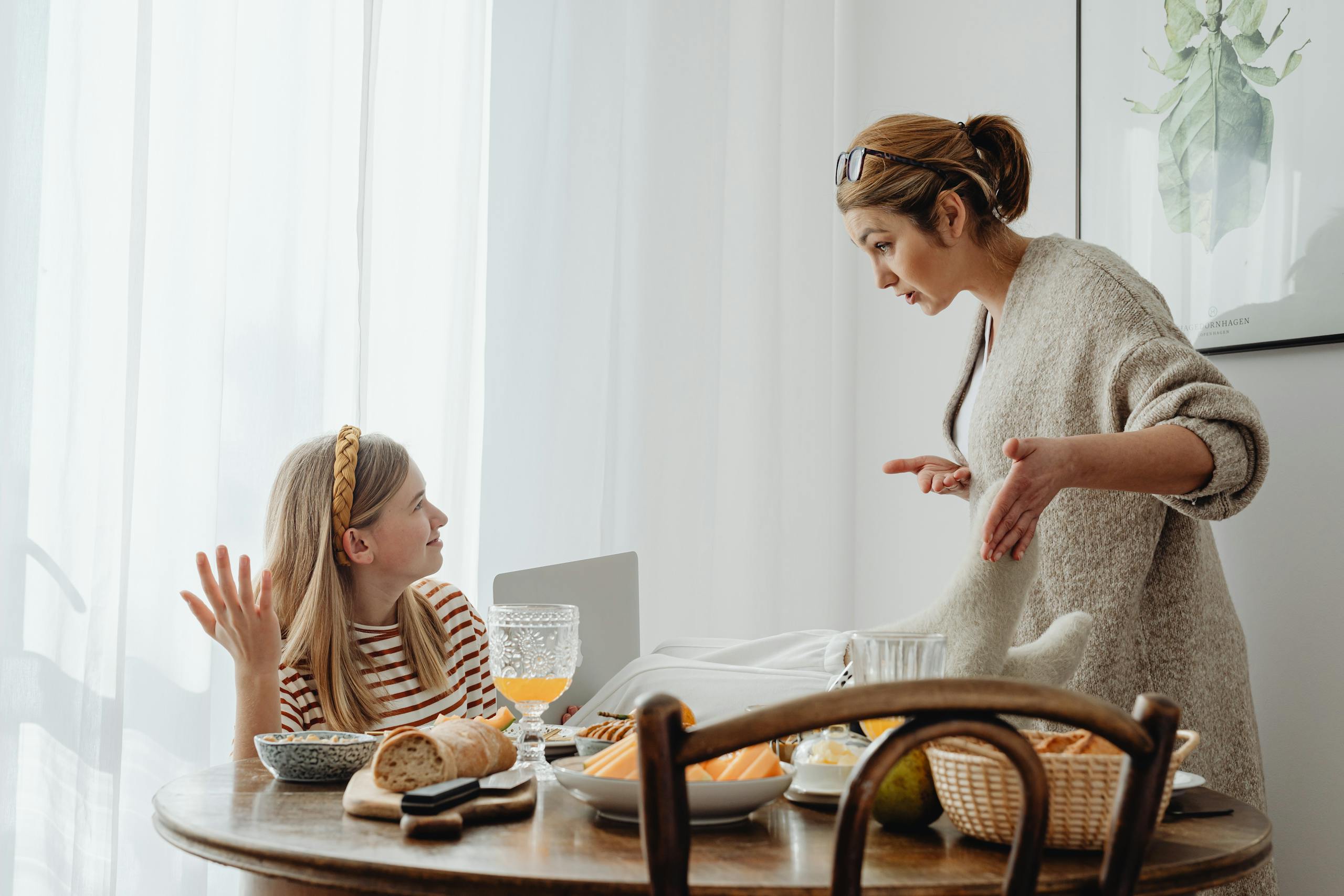
What Does the Unlikable Person Test Miss About Introverted Fathers?
There’s a specific dimension of this conversation that rarely gets addressed, which is how introverted men, and introverted fathers in particular, get evaluated against a cultural script of masculinity that prizes emotional performance in very particular ways.
Extroverted warmth is coded as emotional intelligence. Quiet steadiness gets coded as emotional unavailability. An introverted father who expresses care through reliability, through showing up consistently and paying close attention, often scores poorly on informal likability metrics that were never designed with his style of love in mind.
I’ve written about this in the context of introvert dad parenting and breaking gender stereotypes, because I think the intersection of introversion and traditional masculinity creates a specific kind of invisible pressure. Men who are introverted get doubly penalized: once for failing to perform extroversion, and again for failing to perform the emotionally expressive version of modern fatherhood.
Neither of those failures is real. They’re perception gaps. And closing them starts with understanding what you’re actually being measured against, and whether that measuring stick makes sense for who you are.
Psychology Today’s overview of family dynamics notes that family roles and expectations are heavily culturally constructed, and that what reads as “warm” or “engaged” varies significantly across family systems and cultural contexts. The standard likability template is not universal. It’s one option among many.
How Do Limits and Self-Preservation Get Misread as Coldness?
One of the most consistent patterns I see in conversations with introverts about likability is the way that setting personal limits gets interpreted as rejection. An introvert who needs to leave a family gathering early is “antisocial.” One who doesn’t answer texts immediately is “cold.” One who declines a social invitation is “difficult.”
These are not character flaws. They are expressions of a legitimate need for recovery and self-regulation. But they read as unlikable in contexts where availability and responsiveness are treated as the currency of caring.
In my agency years, I had a strict personal rule about not scheduling calls before 10 AM. My thinking was clearest mid-morning, and I needed the first hour of the day to orient myself. Colleagues occasionally interpreted this as arrogance or aloofness. One client once told my account director that I seemed “hard to reach.” I was protecting my best work. It looked like I was protecting my comfort at their expense.
The work of setting family limits as an adult introvert is genuinely complex, because it requires communicating needs in ways that don’t land as indifference. The limit isn’t the problem. The communication around it often is. When introverts learn to name their needs explicitly rather than simply acting on them, the perception gap narrows significantly.

The American Psychological Association’s work on trauma and stress response is relevant here, because chronic overstimulation without adequate recovery is a genuine stressor. Introverts who don’t protect their recovery time don’t just become less pleasant to be around. They become less functional, less present, and less able to show up in the ways that matter. Limits are not selfishness. They are maintenance.
What Happens When Introversion Meets Co-Parenting Dynamics?
Co-parenting after separation adds another layer to all of this. When two adults who once shared a home now share only the logistics of raising children, communication patterns that were once softened by proximity and shared context become stark and easily misread.
An introverted co-parent who communicates primarily through text and email because that’s where they’re most precise and thoughtful can seem cold or withholding to an extroverted former partner who reads directness as hostility. An introvert who needs time to process a co-parenting decision before responding can seem evasive or uncooperative.
The strategies that help here are largely the same ones that help in any context where introversion meets social expectation: naming your process explicitly, building in agreed-upon response windows, and finding communication formats that work for both parties rather than defaulting to the one that feels most natural to the extroverted person in the room.
My piece on co-parenting strategies for divorced introverts addresses this in practical terms, because the stakes in co-parenting are high and the margin for misinterpretation is wide. What looks like unlikability in a co-parenting relationship is often just an introvert doing their best in a communication structure that wasn’t designed for them.
Psychology Today’s resources on blended and restructured families emphasize that communication style mismatches are among the most common sources of ongoing conflict in post-divorce parenting arrangements. Understanding those mismatches as style differences rather than character indictments changes the entire frame of the conversation.
So Are You Actually Unlikable, or Just Misunderstood?
Honest self-examination matters. Taking the unlikable person test seriously, at least in its more thoughtful forms, is a reasonable exercise. There are genuine behaviors that push people away, and introverts are not exempt from developing them. Dismissiveness, condescension, and chronic self-absorption are real patterns that can develop in people who spend a great deal of time in their own heads and relatively little time attending to others’ experience.
But the more common experience among the introverts I’ve spoken with, and in my own life, is not that we have character flaws we’re blind to. It’s that we’ve spent years receiving feedback calibrated to an extroverted standard and internalizing it as evidence of something fundamentally wrong with us.
The research on personality type distribution suggests that introversion is common enough that the cultural bias toward extroverted expression is genuinely puzzling. A significant portion of the population processes the world quietly and deeply. Yet the social template for likability was clearly not built with them in mind.
What actually changes things is not performing extroversion more convincingly. It’s developing the specific communication habits that make your internal warmth legible to people who don’t share your wiring. That’s different from changing who you are. It’s learning to translate.
Late in my agency career, I stopped trying to seem warmer and started trying to be clearer. I told clients directly when I needed time to think before responding. I told my team when I was in a focused state and not available for casual conversation. I named my process instead of hiding it. The feedback changed. Not because I’d become more extroverted, but because people finally understood what they were looking at.

The unlikable person test, at its best, is an invitation to honest reflection. At its worst, it’s another instrument for measuring introverts against a template that was never designed to accommodate them. The difference lies in how you use it, and whether you’re willing to question the measuring stick itself, not just your score.
Everything I write about introversion, whether it’s about parenting, family limits, or the way we’re perceived by the people closest to us, connects back to this central idea: being wired for depth and quiet is not a deficiency. It’s a different way of being present. The full range of those connections lives in the Introvert Family Dynamics and Parenting hub, and I’d encourage you to spend time there if any of this resonates.
Curious about your personality type?
Our free MBTI assessment goes beyond the four letters. Get a full breakdown of your scores, see how your type shows up at work and in relationships.
Take the Free Test8-12 minutes · 40 questions · Free
About the Author
Keith Lacy is an introvert who’s learned to embrace his true self later in life. After 20 years in advertising and marketing leadership, including running agencies and managing Fortune 500 accounts, Keith now channels his experience into helping fellow introverts understand their strengths and build fulfilling careers. As an INTJ, he brings analytical depth and authentic perspective to every article, drawing from both professional expertise and personal growth.
Frequently Asked Questions
Is the unlikable person test a reliable psychological tool?
Most versions of the unlikable person test circulating online are informal checklists rather than validated psychological instruments. They can be useful for prompting self-reflection, but they tend to measure behavior against culturally specific norms of likability that favor extroverted expression. A more useful approach is to examine specific feedback you’ve received from people you trust, rather than relying on a generalized checklist that may not account for your personality type or communication style.
Can introverts genuinely be unlikable, or is it always a misunderstanding?
Introverts can develop genuinely off-putting habits, just as anyone can. Dismissiveness, condescension, and chronic self-absorption are real patterns that push people away, and introversion doesn’t make someone immune to them. That said, many behaviors that get flagged as unlikable in introverts, such as quietness, thoughtful pauses, or preference for one-on-one conversation, are expressions of temperament rather than character flaws. Honest self-examination means being willing to distinguish between the two.
How does introversion affect how parents are perceived by their children?
Children, especially young ones, often interpret an introverted parent’s quietness or inward focus as emotional unavailability or even disapproval. They don’t yet have the vocabulary to understand that a parent who goes quiet when overwhelmed is restoring, not withdrawing. Over time, without explicit communication about what introversion means and how it works, these misreadings can shape a child’s sense of whether they are valued and loved. Naming your process, even simply, goes a long way toward closing that gap.
What’s the difference between setting personal limits and being cold or rejecting?
The behavior itself is often identical from the outside. An introvert who leaves a family gathering early and an introvert who leaves because they genuinely don’t want to be there look the same to an observer. What makes the difference is communication. When introverts name their needs explicitly, explaining that they need recovery time rather than simply acting on that need without context, the behavior becomes legible as self-care rather than rejection. The limit isn’t the problem. The silence around it often is.
How can introverts improve their perceived likability without becoming someone they’re not?
The most effective approach is not to perform extroversion more convincingly, but to develop communication habits that make your internal warmth visible to people who don’t share your wiring. This means naming your process, being explicit about your intentions, and making your available moments count more deliberately rather than simply increasing their frequency. Clarity is more sustainable than performance, and over time it builds a more accurate picture of who you actually are rather than a borrowed version of who you think you should be.