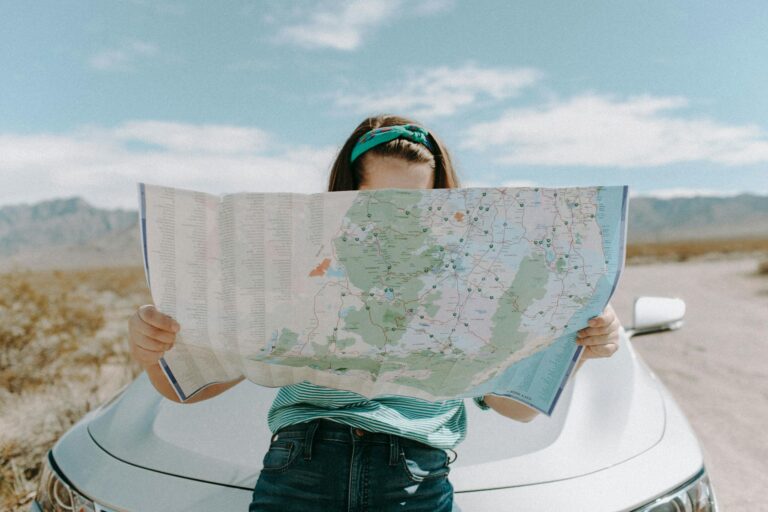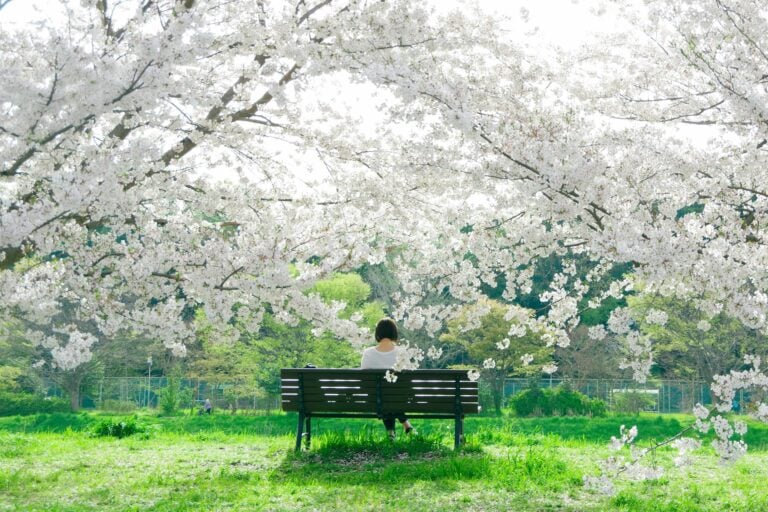
Solo adventure travel for singles is one of the most psychologically rich experiences available to people who process the world deeply. It strips away social performance, replaces familiar routines with genuine uncertainty, and forces a kind of self-reckoning that group travel rarely produces. For introverts especially, it can feel less like a vacation and more like an honest conversation with yourself.
I ran advertising agencies for over two decades, and I spent most of that time managing noise: client demands, team dynamics, pitch cycles, quarterly reviews. Adventure travel became something else entirely for me. It became the place where I could finally hear my own thinking again.
What follows isn’t a destination guide or a packing checklist. It’s a closer look at what solo adventure travel actually does to a quiet mind, and why so many introverted singles find it genuinely life-altering rather than simply enjoyable.

Solo adventure travel fits naturally within a broader set of life transitions that introverts face, including the decision to stop performing for others and start building something more authentic. Our Life Transitions and Major Changes hub covers the full range of those shifts, and solo travel sits squarely at the intersection of identity, solitude, and personal reinvention.
Why Does Adventure Travel Feel Different When You’re Alone?
Group travel has its own rhythm. Someone always wants consensus. Someone always needs to negotiate the restaurant, the departure time, the level of difficulty on the hike. For introverts, that negotiation is exhausting before the trip even begins, and it doesn’t stop once you arrive.
What drains your social battery?
Not all social exhaustion is the same. Our free quiz identifies your specific drain pattern and gives you personalised recharging strategies.
Find Your Drain PatternUnder 2 minutes · 8 questions · Free
Solo travel removes that entirely. You move at your own pace, which sounds like a logistical benefit but is actually something much deeper. Pace is how you process experience. When I took my first solo hiking trip through the Scottish Highlands after a particularly brutal agency merger, I wasn’t just choosing my own itinerary. I was reclaiming the right to absorb what I was seeing without having to narrate it for anyone else.
That distinction matters enormously for people who are wired for internal processing. Emerging work in personality and environmental psychology points to meaningful differences in how people with varying temperaments respond to novel stimuli, and introverts tend to process experiences more thoroughly, which means they need more time and space to do it well.
Adventure travel amplifies this. When you’re handling an unfamiliar trail, managing a language barrier at a remote hostel, or sitting alone at a cliffside café in the Azores watching the Atlantic, your brain is fully engaged without the social layer. You’re present in a way that’s genuinely rare in ordinary life.
For singles especially, there’s no partner to default to, no shared history to fall back on. Every decision is yours. Every observation belongs only to you. That can feel terrifying at first, and then it starts to feel like freedom.
What Happens to Your Identity When You Remove the Audience?
One of the stranger things I noticed in my agency years was how much of my personality was actually a performance. Not a dishonest one, but a calibrated one. I knew which version of myself worked in a pitch room, which version managed client anxiety, which version could hold a team together during a difficult campaign cycle. I was fluent in all of them.
What I didn’t know was who I was when none of those versions were required.
Solo adventure travel answers that question in ways that therapy, journaling, and quiet weekends at home often can’t. The combination of physical challenge, unfamiliar environment, and genuine solitude creates a kind of identity pressure test. You find out what you actually value when no one is watching. You discover what genuinely interests you versus what you’ve been performing interest in for social reasons.
There’s something worth understanding here about how personality type shapes what you need from experiences like this. If you’ve thought seriously about how your MBTI type influences your major decisions, including how you choose to spend meaningful time alone, the MBTI life planning framework offers a structured way to think through those patterns. As an INTJ, I found that solo adventure travel aligned almost perfectly with my natural preference for autonomous decision-making and long-range thinking. But the specific shape of that benefit looks different for every type.

What most solo travelers report, regardless of personality type, is a gradual shedding of performed identity. The first few days can feel disorienting. You reach for your phone to share something and realize there’s no one expecting a message. You have an experience that would make a great story and notice that you’re content to keep it entirely to yourself. That shift, from performing experience to simply having it, is where the real identity work begins.
How Does Physical Challenge Change the Internal Conversation?
Adventure travel is distinct from other forms of solo travel precisely because it involves the body in a serious way. Whether you’re cycling through Patagonia, sea kayaking in Norway, or doing a multi-day trek in Nepal, physical challenge creates a particular kind of mental clarity that sedentary travel rarely produces.
I’m not a natural athlete. I spent most of my career at a desk or in a conference room, and my relationship with physical exertion was, to put it generously, occasional. But I found that pushing my body in an unfamiliar landscape did something to my internal monologue that I couldn’t replicate any other way. The mental chatter that followed me everywhere in agency life, the unfinished strategies, the client anxieties, the team politics, it went quiet when I was genuinely focused on not falling off a ridge.
There’s a physiological explanation for this, related to how sustained physical effort affects the brain’s default mode network, the system responsible for self-referential thinking and rumination. Many introverts are particularly active in this network, which is part of why we tend toward overthinking. Physical adventure interrupts that loop in a way that’s difficult to manufacture artificially.
The relationship between physical activity and psychological wellbeing is well-documented, but the specific combination of novelty, physical demand, and solitude that adventure travel provides seems to amplify those effects considerably. You’re not just exercising. You’re exercising in an environment that demands full attention, which means the mental benefits compound.
For introverts who carry a heavy cognitive load in their daily lives, this kind of enforced presence can feel almost medicinal.
What Does Solo Travel Reveal About Your Relationship with Solitude?
Many introverts think they know how to be alone. They spend time alone regularly. They prefer it, in fact. But there’s a meaningful difference between being alone in your familiar environment, surrounded by your routines and your things and your comfortable silences, and being alone in a genuinely foreign context with no safety net of habit.
Solo adventure travel tests your relationship with solitude in a way that staying home never will. On a long solo hike, you can’t distract yourself with your usual rituals. On a week-long cycling trip through rural Portugal, you’re spending entire days with only your own company, and whatever is unresolved in your interior life tends to surface.
That’s not always comfortable. I’ve had moments on solo trips where I was confronted with things I’d been successfully avoiding for months. Sitting alone at a small restaurant in the Basque Country, I found myself thinking clearly about a professional decision I’d been deliberately obscuring with busyness. The solitude didn’t let me dodge it.
There’s real value in understanding what changes when you stop fighting solitude and start letting it do its work. The piece on embracing solitude here at Ordinary Introvert gets at something important: solitude isn’t the absence of connection. It’s a different kind of presence. Solo adventure travel makes that distinction viscerally real in a way that’s hard to achieve otherwise.
What many people discover is that they’ve been using social presence as a buffer against their own inner experience. The constant availability of other people, even people they like, has been functioning as a way to avoid sitting with themselves. Solo adventure travel removes that buffer entirely, and what’s left is often surprisingly rich.
How Do You Handle the Social Moments That Still Happen?
Solo adventure travel doesn’t mean total isolation. You’ll interact with guides, hostel staff, fellow travelers, locals at markets and trailheads. For introverts, these interactions can feel like interruptions at first, and then they start to feel like something else entirely.
Without the social scaffolding of a group, you’re forced to be more direct in your interactions. You can’t rely on a more extroverted travel companion to carry the conversation. You have to ask for what you need, express genuine curiosity, and engage on your own terms. Many introverts find this liberating rather than stressful, because the interactions are bounded and purposeful rather than open-ended and obligatory.
One of the things I’ve noticed about introverts who travel solo regularly is that they tend to have unusually meaningful brief encounters. They’re not performing sociability, so when they do engage, it tends to be genuine. A conversation with a local farmer in rural Slovenia, a long exchange with a guide in Iceland about the geology of the highlands, these moments land differently when you’re fully present and not managing a group dynamic simultaneously.
Psychology Today’s work on why depth of conversation matters resonates here. Introverts aren’t antisocial. They’re selectively social, which means the brief, genuine connections that solo travel produces often feel more nourishing than the constant low-level sociability of group travel.
The trick is managing your energy around these interactions. Knowing when you need to retreat to your room, when to eat alone at a quiet corner table, when to say no to a group excursion in favor of a solo morning hike. These are boundary-setting skills, and solo adventure travel sharpens them considerably.
What About the Fear That Keeps Introverts from Starting?
There’s a particular kind of fear that shows up before a first solo adventure trip. It’s not quite fear of danger, though that’s part of it. It’s more like fear of finding out something uncomfortable about yourself, or fear of being genuinely alone with your own experience for an extended period.
I recognize this fear. Before my first significant solo trip, I spent weeks convincing myself it was logistically complicated, that the timing wasn’t right, that I should wait until a quieter season at the agency. What I was actually doing was avoiding the prospect of being fully responsible for my own experience with no one to blame and no one to share the weight.
That fear is worth examining rather than suppressing. Many introverts who are highly sensitive find that the anticipatory anxiety around solo travel is significantly more intense than the actual experience. The imagination constructs elaborate scenarios of loneliness, danger, and social failure that rarely materialize. What materializes instead is usually something much quieter and more manageable.
This connects to something I’ve been thinking about lately in relation to how sensitivity evolves over time. The research on HSP development across the lifespan suggests that many highly sensitive people actually become better at managing their sensitivity as they age, not by becoming less sensitive, but by developing more nuanced strategies for working with it. Solo adventure travel is one of those strategies. It teaches you, through direct experience, that your nervous system can handle more than you thought.
The practical antidote to pre-trip fear is almost always the same: start smaller than you think you need to. A three-day solo hiking trip in a domestic national park is a legitimate first step. You don’t need to book a month in Patagonia to test whether solo adventure travel works for you. The psychological mechanisms are the same at any scale.
How Does Solo Adventure Travel Connect to Larger Life Changes?
The introverts I’ve spoken with who travel solo regularly tend to describe it as something that changed how they made decisions in the rest of their lives. Not because travel is magical, but because it creates a kind of proof of concept. You managed an unfamiliar situation alone. You solved problems without a team. You spent significant time with yourself and found it worthwhile. That evidence carries back into ordinary life.
I saw this in my own experience after the Scottish Highlands trip. I came back and made a decision about the agency’s direction that I’d been avoiding for almost a year. The clarity I’d found on the trail didn’t evaporate when I returned to the office. It had become part of how I was thinking.
Solo adventure travel also tends to surface questions about what you actually want from your life, questions that daily routine tends to suppress. When you’re sitting alone at altitude watching the light change over a mountain range, the usual justifications for your choices feel thin. You start to ask whether the life you’ve built actually fits the person you are, or whether you’ve been building it for an audience.
For introverts who work in roles that require significant social performance, this kind of recalibration can be genuinely important. I’ve watched colleagues at the agency, people who were clearly introverted but performing extroversion for career reasons, come back from solo trips with a different quality of presence. Something had settled in them. They were making different choices, not necessarily dramatic ones, but choices that seemed to come from a more honest place.
There’s an interesting parallel here to the work that highly sensitive academic advisors do in supporting students through major transitions. The deep listening that defines effective HSP advising is essentially the same skill that solo travel develops in you: the capacity to hear what’s actually being said underneath the surface narrative. Solo adventure travel trains you to listen to yourself that way.
That’s not a small thing. Many introverts spend years developing excellent listening skills for others while remaining surprisingly deaf to their own interior signals. Solo travel corrects that imbalance.
What Makes Adventure Travel Specifically Valuable Versus Other Solo Experiences?
Solo city travel is wonderful. Solo beach retreats have their place. But adventure travel, with its physical demands, navigational challenges, and genuine exposure to the natural world, does something specific that other solo experiences don’t quite replicate.
Physical challenge creates a particular kind of psychological reset. When your body is working hard in an unfamiliar environment, the cognitive hierarchies that dominate ordinary life, status, performance, social positioning, tend to flatten. What matters is whether you can make it to the next waypoint, whether your gear is adequate, whether you’ve read the weather correctly. These are immediate, concrete problems, and solving them produces a satisfaction that’s qualitatively different from solving abstract professional ones.
There’s also something about the scale of natural environments that recalibrates perspective in a way that urban solo travel rarely does. Standing in a genuinely wild place, whether that’s a high alpine meadow, a coastal cliff system, or a remote river canyon, produces a kind of cognitive humility that many introverts find deeply settling. The internal narrative that feels so urgent at home becomes appropriately small against a large landscape.
Recent work in environmental psychology published in Frontiers in Psychology has been examining how natural environments affect psychological restoration, and the findings consistently support what many introverted solo travelers have known intuitively: wild places restore something that urban environments deplete.
For introverts who live and work in densely social environments, this restoration isn’t a luxury. It’s maintenance.
How Do You Build a Solo Adventure Practice That Actually Lasts?
The introverts who get the most from solo adventure travel aren’t the ones who do one dramatic trip and then return to their regular patterns. They’re the ones who build it into their lives as a recurring practice, something that happens with enough regularity that the benefits compound over time.
Building that practice requires treating solo adventure travel as a genuine priority rather than an indulgence. In agency culture, taking solo time was often framed as something you did when you could afford to, when the client load lightened, when the team was stable, when the timing was right. The timing was never right. I had to decide that it was a non-negotiable part of how I operated, not a reward for good performance.
That reframing matters. Solo adventure travel isn’t a break from your life. It’s part of how you sustain the capacity to live it well. Treating it that way changes how you plan for it and how you defend it when other demands compete.
Practically, this means building a progression of experiences rather than defaulting to the same trip repeatedly. Start with something manageable and local. Add distance and duration as your confidence grows. Introduce more technical challenge once the solitude itself no longer feels threatening. Each level teaches you something the previous one couldn’t.
success doesn’t mean become an extreme adventurer. It’s to maintain a relationship with your own interior experience that ordinary life tends to erode. Solo adventure travel is one of the most effective tools available for that, and for introverted singles specifically, it offers something that social travel simply cannot: the unmediated experience of your own company in genuinely challenging circumstances.
That’s worth building a practice around.
Solo adventure travel sits alongside the other significant shifts that shape how we live as introverts. If you’re working through any of those larger transitions, including questions about identity, solitude, and what kind of life actually fits who you are, the full collection of resources in our Life Transitions and Major Changes hub is worth spending time with.
Running on empty?
Five drain profiles, each with specific triggers, warning signs, and a recharging playbook.
Take the Free QuizUnder 2 minutes · 8 questions · Free
About the Author
Keith Lacy is an introvert who’s learned to embrace his true self later in life. After 20 years in advertising and marketing leadership, including running agencies and managing Fortune 500 accounts, Keith now channels his experience into helping fellow introverts understand their strengths and build fulfilling careers. As an INTJ, he brings analytical depth and authentic perspective to every article, drawing from both professional expertise and personal growth.
Frequently Asked Questions
Is solo adventure travel actually suitable for introverts, or does it require an outgoing personality?
Solo adventure travel is arguably better suited to introverts than to extroverts. It rewards internal processing, independent decision-making, comfort with solitude, and the capacity to be fully present without social stimulation. The skills that introverts develop naturally in daily life, careful observation, deep focus, self-sufficiency in thinking, translate directly into competence on solo adventure trips. The social demands are minimal and bounded, which means introverts can engage authentically when interaction is required without the sustained performance that group travel demands.
How do I manage the loneliness that might come with solo adventure travel?
Loneliness and solitude are different experiences, and solo adventure travel tends to produce more of the latter than the former. When your body and mind are genuinely engaged with a physical challenge or a beautiful environment, the social absence that might feel like loneliness in an urban setting often feels like freedom instead. That said, the transition can be disorienting at first. Building in small social touchpoints, a check-in call with someone at home, a meal at a communal table in a hostel, can bridge the gap while you’re finding your footing. Most solo travelers report that the loneliness, when it does appear, is brief and actually productive, prompting reflection rather than distress.
What types of adventure travel work best for introverted singles who are just starting out?
Multi-day hiking trips in well-marked national parks are an excellent starting point. They combine genuine physical challenge with manageable logistics, clear navigation, and enough infrastructure that you’re not fully on your own if something goes wrong. The solitude is real but not extreme. From there, many introverted solo travelers progress to more remote trekking, cycling tours, or water-based adventures depending on their interests. The specific activity matters less than the combination of physical engagement, natural environment, and genuine solitude. Start with something that feels slightly outside your comfort zone but doesn’t require extensive technical training, and build from there.
How does solo adventure travel affect introverts differently than extroverts?
Extroverts often find solo adventure travel energizing but also somewhat depleting over time, because they derive energy from social interaction and extended solitude can feel like a deficit rather than a resource. Introverts tend to experience the opposite: the solitude itself is restorative, and the absence of social demands allows them to process experience more thoroughly and recover energy that social environments deplete. Introverts also tend to notice more on solo trips, because they’re not dividing their attention between the environment and social management. This means the psychological benefits, including clarity, self-knowledge, and perspective, often run deeper for introverted travelers than for extroverted ones.
Can solo adventure travel genuinely change how you see yourself, or is that an exaggeration?
It’s not an exaggeration, though the mechanism is more ordinary than it sounds. Solo adventure travel removes the social mirrors that most people use to construct their sense of self. Without an audience, without familiar roles, and without the routines that reinforce habitual self-perception, you’re left with more direct access to your actual preferences, values, and capacities. Physical challenge adds to this by providing concrete evidence of competence that abstract professional success often can’t supply. Many introverts return from significant solo trips with a recalibrated sense of what they’re capable of and what they actually want, not because the travel was magical, but because it created conditions for honest self-examination that ordinary life tends to prevent.