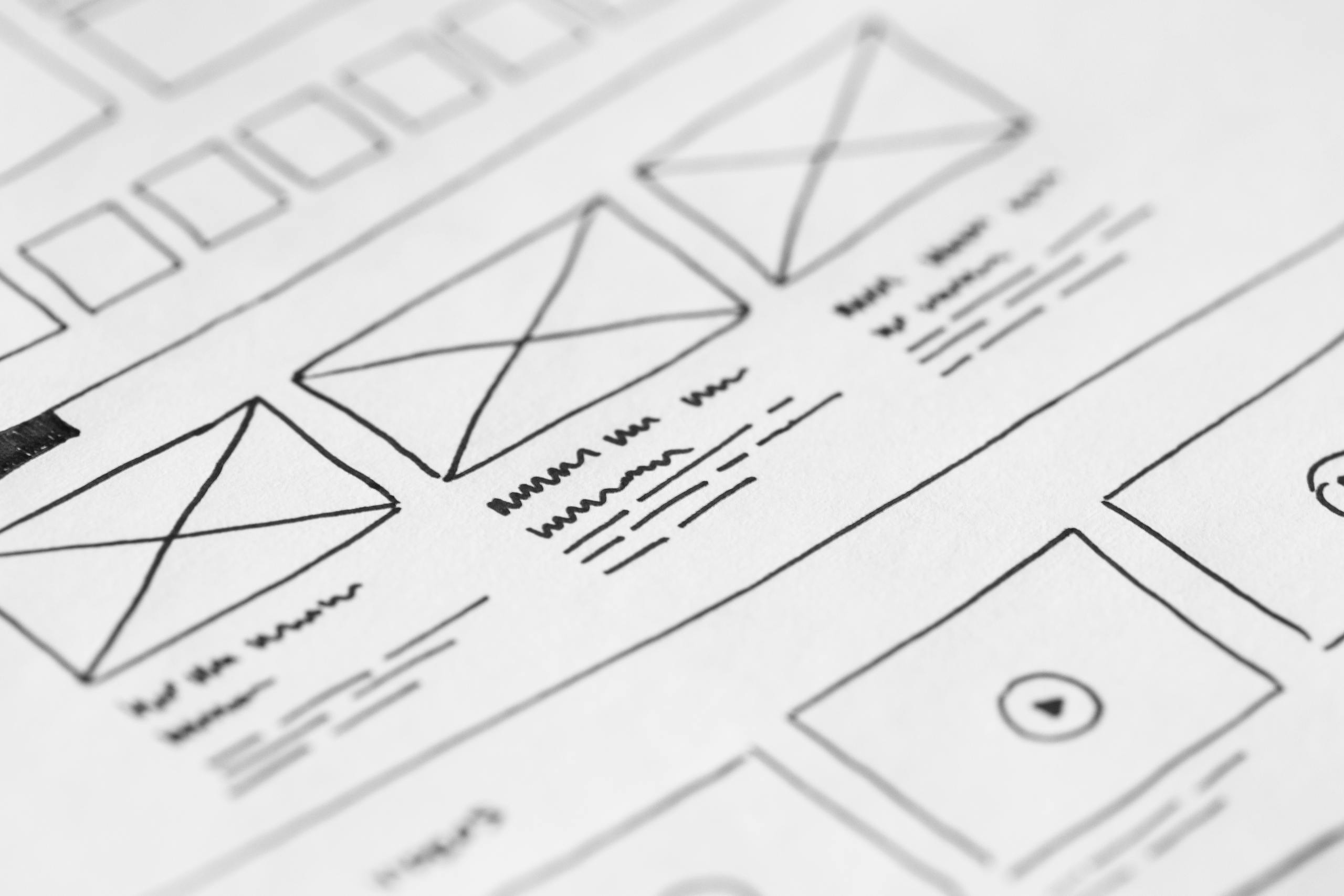

UX design rewards the introvert mind in ways most career guides never mention. The work itself, mapping user behavior, building information architecture, writing research reports that actually change product decisions, plays directly to how quiet, observational thinkers naturally process the world. Yet one persistent challenge keeps talented introvert UX designers from reaching their full potential: client interaction. Not because introverts can’t communicate, but because the industry defaults to extroverted communication styles that feel performative and exhausting rather than genuinely effective.
There’s a better way to approach client relationships in UX, and it starts with recognizing that your introvert strengths aren’t liabilities to overcome. They’re the foundation of a more credible, more persuasive design practice.
Our Career Paths and Industry Guides hub covers the full range of professional options for introverts across industries, but UX design holds a particular place in that landscape because it sits at the intersection of deep analytical work and human-centered storytelling. That tension is worth examining closely.
Why UX Design Fits the Introvert Mind So Well
My agency years taught me something that took too long to articulate: the best strategic thinking rarely happens in the room. It happens before the room, and after it. During a pitch for a major retail brand, I watched our account team dazzle the client with energy and enthusiasm. We won the business. Six months later, we nearly lost it because nobody had done the quiet, methodical work of actually understanding how their customers thought. That work fell to one person on our team, a reserved information architect named Priya, who had been in the room saying almost nothing. Her research brief changed everything.
What’s your personality type?
Take our free 40-question assessment and get a detailed personality profile with dimension breakdowns, context analysis, and personalised insights.
Discover Your Type8-12 minutes · 40 questions · Free
Priya was doing UX before most agencies called it that. And she was doing it with a set of skills that her extroverted colleagues didn’t have: sustained attention, pattern recognition, comfort with ambiguity, and the discipline to sit with data until it revealed something meaningful. A 2021 study published through the American Psychological Association found that introverted individuals demonstrate stronger performance on tasks requiring sustained attention and deep concentration, precisely the cognitive profile that high-quality user research demands.
UX design as a discipline is built around methods that favor this profile. Heuristic evaluations, competitive analysis, usability testing moderation, affinity mapping, experience mapping, accessibility audits. These aren’t social activities. They’re investigative ones. The introvert who finds small talk exhausting often finds user interviews genuinely fascinating, because the goal isn’t connection for its own sake. It’s understanding.
That said, the field also requires presenting findings, defending design decisions, and managing ongoing client relationships. That’s where many introvert UX designers hit a wall, not because they lack the capability, but because they’ve been handed communication frameworks designed for people who draw energy from those interactions.
What Is the Client Problem, Really?
Spend enough time in professional services, whether that’s advertising, consulting, or UX design, and you’ll notice a pattern. Extroverted practitioners get credit for being “great with clients” while introverted ones get labeled “brilliant but hard to work with.” I lived on the wrong side of that label for years before I understood what was actually happening.
Client management in most creative and design firms is modeled on relationship sales: high energy, frequent touchpoints, lots of verbal reassurance, enthusiasm performed in real time. That model works for some people. It’s genuinely exhausting for others. And when an introvert UX designer tries to perform that model rather than adapt it to their actual strengths, the result is communication that feels hollow, reactive, and inconsistent.
The client problem isn’t that introverts can’t build strong client relationships. It’s that the default scripts don’t fit. Introvert UX designers often communicate more effectively in writing than in impromptu verbal exchanges. They tend to give more considered, accurate answers when they’ve had time to think. They build trust through demonstrated competence and follow-through rather than through social warmth alone. None of those traits are weaknesses. They just require a different approach to client interaction.
Worth noting: many introverts also carry strengths that overlap with other cognitive profiles. If you’re exploring career paths that account for how your brain specifically works, the guide on ADHD introvert jobs offers a useful parallel framework for thinking about work environments that support rather than drain your natural processing style.

How Do Introvert UX Designers Handle Client Presentations Without Burning Out?
Preparation is the introvert’s competitive advantage in any high-stakes interaction. Not over-preparation in the anxious sense, but the kind of deliberate, structured readiness that turns a presentation from a performance into a conversation.
Late in my agency career, I stopped trying to “wing” client presentations the way some of my colleagues could. Instead, I built what I privately called a decision map before every major meeting: a clear document outlining the three or four choices the client actually needed to make, the evidence supporting each option, and the specific outcome I wanted from the room. That document rarely left my bag. But having built it meant I could hold the structure of the conversation in my head without needing to improvise under pressure.
For introvert UX designers, this translates directly. Before any client presentation, build a presentation brief for yourself, not the deck, but a one-page internal document covering: what the client believes coming in, what you need them to believe when they leave, the two or three data points most likely to shift their thinking, and the objections you’re most likely to face. This preparation doesn’t just reduce anxiety. It makes you measurably more effective in the room.
Structure your actual presentations around evidence, not enthusiasm. Clients don’t need you to perform excitement about your wireframes. They need to trust that your recommendations are grounded. Lead with user data. Show specific quotes from research sessions. Present behavioral patterns from analytics before you show a single design decision. When your argument is built on evidence, you don’t need to sell it with energy. The data does the work.
After presentations, send a written summary within 24 hours. Not a formal document, just a clear email outlining what was discussed, what decisions were made, and what the next steps are. Clients love this. It demonstrates thoroughness and creates a record. It also gives you a natural communication touchpoint that doesn’t require a phone call.
Which UX Methodologies Play Directly to Introvert Strengths?
Not all UX work is created equal in terms of how it fits different personality types. Some methodologies genuinely favor the introvert’s natural way of working. Leaning into these isn’t avoiding your weaknesses. It’s building a practice around what you do best.
User Research and Qualitative Analysis
Conducting user interviews requires a specific skill that introverts often possess naturally: genuine curiosity combined with the discipline to listen without interrupting. The best user research sessions aren’t conversations where the researcher talks. They’re structured listening exercises where the researcher creates space for the participant to reveal how they actually think.
Introverts tend to be comfortable with silence in interviews, a quality that’s more valuable than it sounds. When a participant pauses, many researchers rush to fill the gap. Introvert researchers often wait, and that pause frequently produces the most revealing answer. A 2019 analysis from Harvard Business Review noted that active listening, characterized by restraint, reflection, and follow-up questions rather than reactive responses, is one of the most consistently undervalued skills in professional settings.
Qualitative analysis, the process of reviewing interview transcripts, identifying themes, and building affinity maps, is genuinely solitary work that rewards patience. This is where introvert UX designers often produce their best output: in quiet, focused sessions where they can hold large amounts of information in mind simultaneously and find the patterns that others miss.
Analytics and Behavioral Data
Quantitative UX work, analyzing clickstream data, heatmaps, funnel drop-off rates, session recordings, and A/B test results, is another area where introvert UX designers frequently excel. This work requires the ability to sit with complex data sets, resist the temptation to jump to conclusions, and build arguments from evidence rather than intuition alone.
One of the most powerful things an introvert UX designer can do for their client relationships is become the person in the room who can read behavioral data fluently. When you can point to a specific moment in a session recording where 73% of users abandoned a checkout flow, and explain what that behavior indicates about the underlying mental model mismatch, you’ve done something no amount of social charm can replicate. You’ve made the invisible visible.
The National Institutes of Health has published research on the relationship between introversion and analytical processing styles, noting that introverts tend to engage more deeply with complex stimuli before responding, a trait that maps directly onto the kind of careful data interpretation that separates good UX analysis from superficial reporting.
This capacity for data fluency connects to a broader professional pattern worth exploring. The article on how introverts master business intelligence examines this in depth, and many of the frameworks there translate directly to UX analytics work.
Documentation and Design Systems
Few UX deliverables are as consistently undervalued and as consistently important as thorough documentation. Design system guidelines, component libraries, interaction specifications, accessibility documentation, research repositories. These are the artifacts that make design decisions scalable, consistent, and defensible.
Introvert UX designers often produce exceptional documentation because they think in systems and care about precision. Writing a clear component specification isn’t glamorous work. It requires the patience to anticipate edge cases, articulate intent clearly, and build something that will hold up when you’re not in the room to explain it. That’s exactly the kind of work that introvert minds tend to approach with genuine investment rather than reluctant obligation.
From a client relationship standpoint, strong documentation is also one of the most effective trust-building tools available. When a client can see that every design decision is documented with rationale, research citations, and implementation guidance, it signals a level of professional rigor that builds confidence over time.

How Should Introvert UX Designers Structure Client Relationships?
The mistake most introvert UX designers make with clients isn’t saying the wrong thing. It’s not establishing the right communication structure from the start. When communication defaults are undefined, clients fill the gap with their own preferences, which often means frequent calls, impromptu check-ins, and the expectation of real-time responses. That environment is genuinely draining for introverts and tends to produce worse work.
Set communication expectations at the project kickoff. Not in a way that feels defensive or limiting, but as a professional framework that serves the client’s interests. Something like: “I find that our projects run most smoothly when we have a structured weekly sync, a shared project board for ongoing questions, and a clear escalation path for anything urgent. That way you always know where things stand without needing to chase me down.” Clients almost universally respond well to this. It signals organization and respect for their time.
Asynchronous communication is an introvert UX designer’s natural habitat. Written updates, video walkthroughs recorded with tools like Loom, shared Notion or Confluence documentation, Slack threads with clear subject lines. These formats allow you to communicate with precision and thoughtfulness rather than under the pressure of a live conversation. They also create a paper trail that protects both you and the client.
Some of the most effective client management strategies I’ve seen overlap with what works in other relationship-intensive fields. The piece on introvert sales strategies covers this territory from a different angle, but the underlying principle is the same: introverts build trust through consistency, depth, and follow-through rather than through high-energy rapport.
Build a rhythm of proactive communication. Don’t wait for clients to ask for updates. Send a brief weekly status note every Friday, even if nothing major happened that week. A three-sentence email saying “Here’s where we are, consider this’s next, here’s anything I need from you” does more for client confidence than a monthly comprehensive report. It signals that you’re on top of things without requiring either party to schedule a call.
Can Introverts Lead UX Teams Effectively?
Yes. And in some ways, more effectively than the extroverted leadership model that most UX teams default to.
Introvert leaders in UX tend to create environments where deep work is protected, where individual contributors have space to think before they’re asked to perform, and where decisions are made on evidence rather than whoever spoke most confidently in the last meeting. Those are genuinely good conditions for producing excellent design work.
Managing up, which is the skill of communicating your team’s work effectively to stakeholders and executives, is an area where introvert UX leaders sometimes struggle initially. The natural inclination is to let the work speak for itself. The reality is that work rarely speaks loudly enough without someone amplifying it. I learned this in my agency years when a campaign we’d spent months developing got cut from a client’s budget because nobody had made the case for it at the executive level. The work was strong. The advocacy wasn’t.
Introvert UX leaders who excel at managing up tend to do it in writing. They build executive summaries that distill complex research into three clear insights. They create one-page impact reports that show how UX decisions affected business metrics. They frame design decisions in terms of revenue, retention, or risk rather than aesthetic preference. This approach plays to introvert strengths and tends to be more persuasive with executive audiences than verbal advocacy alone.
The broader patterns of introvert leadership in complex, cross-functional environments are worth studying. The article on introvert marketing management examines how quiet leaders build high-performing teams, and much of that framework applies directly to UX leadership. Similarly, the way introverts manage complex interdependencies in supply chain management reflects the same systems-thinking approach that makes introvert UX leaders effective at managing multi-stakeholder design processes.

What Does Burnout Look Like for Introvert UX Designers, and How Do You Recover?
UX design burnout in introverts has a specific signature that’s worth naming. It’s not usually the design work itself that causes it. It’s the accumulation of context-switching, the constant pull between deep creative work and reactive client management, the energy cost of performing extroverted communication styles in meetings and presentations, and the feeling that your best work happens in the margins of your schedule rather than at its center.
A 2020 report from the World Health Organization formally recognized burnout as an occupational phenomenon characterized by energy depletion, increased mental distance from work, and reduced professional efficacy. For introvert UX designers, the early warning signs are often subtle: a growing reluctance to open email, difficulty getting into flow states that used to come easily, and a tendency to over-prepare for interactions that previously felt manageable.
Recovery from this kind of burnout requires more than a vacation. It requires restructuring how you work. The most effective interventions I’ve seen, and experienced, involve three things: reclaiming protected deep work time in your calendar, reducing the number of communication channels you’re expected to monitor simultaneously, and deliberately reconnecting with the parts of UX work that originally drew you to it.
Many introvert UX designers find that returning to hands-on user research, sitting with real users and watching how they interact with a product, is genuinely restorative. It reconnects you to the human purpose of the work in a way that sprint planning and stakeholder meetings rarely do. The Mayo Clinic has documented the relationship between meaningful work and psychological recovery from occupational stress, emphasizing that reconnection to purpose is often more effective than simply reducing workload.
Longer term, the most sustainable path involves shaping your role to emphasize your strengths. That might mean specializing in research and strategy rather than visual design and production. It might mean moving toward a principal or staff designer role where you’re doing fewer but more complex things. It might mean freelancing, where you control your communication cadence and client load. All of these are legitimate paths, and all of them appear in the broader context of the best jobs for introverts guide, which covers how to evaluate career structures rather than just job titles.
How Do You Build a UX Portfolio That Speaks Before You Do?
One of the most powerful things an introvert UX designer can do is build a portfolio that does the persuasion work before any conversation happens. A well-constructed case study is essentially an asynchronous presentation: it tells the story of a design problem, shows your process, presents your evidence, and demonstrates the outcome, all without requiring you to be in the room.
Strong introvert UX portfolios tend to be research-heavy. They show the methodology behind decisions, not just the final screens. They include user quotes, behavioral data, and documented iterations. They explain why you made specific choices, not just what those choices were. This approach signals analytical rigor and builds the kind of credibility that extroverted portfolios, which often prioritize visual polish over documented thinking, don’t always convey.
Write your case studies the way you’d write a research report: with a clear problem statement, a methodology section, key findings, design decisions mapped to those findings, and measurable outcomes. Clients and hiring managers who read a portfolio structured this way often describe the designer as “someone who really thinks” or “clearly knows their craft.” That’s the reputation an introvert UX designer wants to build, and it’s built through documentation, not performance.
The APA’s research on personality and professional communication suggests that introverts often demonstrate higher accuracy and depth in written communication compared to verbal, which is a meaningful advantage when your portfolio is doing the first round of professional evaluation for you.

What Are the Long-Term Career Advantages for Introvert UX Designers?
Something I’ve watched happen repeatedly across industries: introverts who lean into their natural working style rather than fighting it tend to build more durable reputations over time. They become known for the quality and reliability of their thinking rather than for their presence in any given meeting. In UX design, that reputation compounds.
Senior UX roles, principal designer, UX director, VP of design, increasingly require the ability to think in systems, synthesize complex inputs from multiple stakeholders, and make defensible decisions under uncertainty. Those are introvert-native skills. The early-career pressure to perform extroversion in client meetings tends to diminish as you advance, replaced by a premium on strategic clarity and judgment.
Specialization also opens up. UX research as a standalone discipline is growing rapidly, and it’s a field that rewards exactly the profile described throughout this article: someone who listens carefully, analyzes deeply, and communicates findings with precision. UX writing, content strategy, and information architecture are adjacent specializations that similarly favor the introvert’s comfort with language, systems, and structure.
Freelance and consulting paths offer another long-term option. Working independently allows introvert UX designers to control their client load, set their own communication norms, and build deep expertise in specific domains without the social overhead of large agency or in-house team environments. Many introvert UX freelancers report that the autonomy of independent work is the single biggest factor in their career satisfaction, more than compensation, title, or project prestige.
The evidence across fields consistently points in the same direction: introverts who understand their own strengths and build careers around them, rather than spending energy compensating for perceived deficits, tend to reach higher levels of mastery and satisfaction. UX design is one of the fields where that alignment is most achievable.
Find more career frameworks and field-specific guides in the Career Paths and Industry Guides hub, where we cover the full range of professional options through an introvert lens.
About the Author
Keith Lacy is an introvert who’s learned to embrace his true self later in life. After 20 years in advertising and marketing leadership, including running agencies and managing Fortune 500 accounts, Keith now channels his experience into helping fellow introverts understand their strengths and build fulfilling careers. As an INTJ, he brings analytical depth and authentic perspective to every article, drawing from both professional expertise and personal growth.
Frequently Asked Questions
Is UX design a good career for introverts?
Yes, UX design is one of the stronger career fits for introverts. The core work, user research, behavioral analysis, information architecture, and documentation, rewards sustained attention, pattern recognition, and the ability to listen deeply. Client interaction is part of the role, but it can be structured around written communication, prepared presentations, and asynchronous tools in ways that play to introvert strengths rather than against them.
How do introvert UX designers handle client presentations?
Introvert UX designers tend to perform best in presentations when they’ve built a clear internal decision map beforehand, structured their argument around evidence rather than enthusiasm, and followed up every meeting with a written summary. Leading with user data and behavioral research rather than design aesthetics shifts the conversation from subjective debate to evidence-based discussion, which plays to the introvert’s analytical strengths and reduces the pressure to perform in real time.
What UX specializations suit introverts most?
UX research is the strongest specialization match, given its emphasis on listening, analysis, and written reporting. UX writing and content strategy are also strong fits, as they reward precision with language and systems thinking. Information architecture and design systems work appeal to introverts who think in structures and care about documentation. All of these specializations allow for deep expertise development and tend to involve fewer impromptu social interactions than visual design or product design roles.
How do introvert UX designers avoid burnout?
Burnout prevention for introvert UX designers centers on protecting deep work time, reducing the number of communication channels requiring simultaneous attention, and building client communication structures that favor asynchronous formats. Setting clear expectations at project kickoff about communication rhythms, using tools like Loom for video walkthroughs and shared documentation platforms for ongoing updates, and scheduling regular recovery time after high-interaction periods all help maintain sustainable energy levels over a long career.
Can introverts lead UX teams?
Introvert UX team leaders are often highly effective, particularly in environments that value evidence-based decision making and deep work. They tend to create conditions where individual contributors have space to think, where design decisions are documented and defensible, and where meetings are purposeful rather than performative. The primary development area for introvert UX leaders is managing up, which means communicating team impact to executives and stakeholders. Written executive summaries, one-page impact reports, and framing design decisions in terms of business metrics are the most effective tools for this.