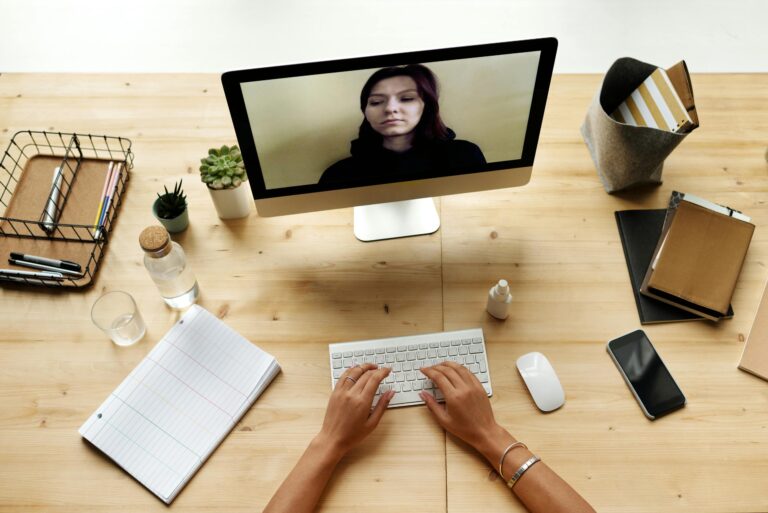

Camera aversion during video training is not shyness, and it is not a character flaw. For many introverts, the discomfort of being on screen during recorded sessions or live video calls comes from something far more specific: the feeling of being watched without the natural feedback loop that in-person conversation provides. That absence of real-time cues makes the camera feel like a one-way mirror, and the psychological weight of that can be genuinely draining.
What makes this worth talking about is that camera aversion, introversion, and shyness are three distinct experiences that often get lumped together. Understanding the difference changes how you approach the problem, and how you stop blaming yourself for something that is actually just a wiring difference.

Much of the confusion around these traits connects to broader questions about personality type and how we show up in the world. Our Introversion vs Other Traits hub covers that full landscape, but the camera situation adds its own particular layer that deserves a closer look.
What Is Camera Aversion, Really?
Camera aversion is the discomfort, avoidance, or heightened self-consciousness that some people experience when they know they are being recorded or watched on video. It shows up in video training environments, online courses, corporate Zoom calls, and anywhere a lens replaces a human face.
What’s your personality type?
Take our free 40-question assessment and get a detailed personality profile with dimension breakdowns, context analysis, and personalised insights.
Discover Your Type8-12 minutes · 40 questions · Free
At its core, camera aversion is a performance anxiety response. The camera creates a kind of artificial stage, and for people who process information internally and prefer depth over performance, that stage feels unnatural and exposed. There is no body language to read, no rhythm of conversation to lean into, and no way to gauge whether the person on the other end is engaged or distracted.
I spent over two decades running advertising agencies, and even in that world, where presenting ideas was a constant requirement, I found video recording distinctly harder than standing in a room with a client. In a room, I could read the energy. I could feel when a concept was landing and when I needed to pivot. On camera, all of that disappeared. What remained was just me, a lens, and a blinking red light.
That experience is not unique to me. Many people who are perfectly comfortable in face-to-face presentations find video training environments genuinely uncomfortable. The reason is not weakness. It is that the format strips away the social information that thoughtful, perceptive people rely on most.
Is Camera Aversion the Same as Being Shy?
No, and this distinction matters more than most people realize.
Shyness is rooted in fear of negative evaluation. Shy people want to connect but feel anxious about how they will be perceived. The discomfort is social and anticipatory. It is the worry that something will go wrong, that others will judge, that the interaction will expose some inadequacy.
Camera aversion, particularly in introverts, often comes from a different place entirely. It is not fear of judgment so much as friction with the format. The camera demands a kind of performed spontaneity that feels fundamentally dishonest to people who think carefully before they speak. You are expected to appear natural while being recorded, relaxed while being watched, and engaging while receiving no feedback. That is a strange set of contradictory demands.
Shyness tends to fade with familiarity and positive experiences. Camera aversion can persist even after dozens of successful video sessions, because the format itself remains uncomfortable, not the social stakes around it.
The psychological literature on social anxiety and introversion has long distinguished between the two. Research published in PubMed Central has examined how introversion and social anxiety represent different constructs, with introversion reflecting a preference for lower stimulation rather than a fear of social situations. Camera aversion in introverts tracks much closer to that stimulation sensitivity than to the fear-based pattern of shyness.
One of the most useful things I ever did was take a proper personality assessment rather than assuming I understood my own wiring. If you are trying to figure out where you land on the introversion spectrum, the Introvert Extrovert Ambivert Omnivert Test on this site is a solid place to start. It helped me understand that my discomfort on camera was not a social phobia. It was a mismatch between my natural processing style and the demands of the format.
Why Do Introverts Specifically Struggle with Video Training?
Video training environments are particularly challenging for introverts because they combine several things that run counter to how introverts naturally operate.
First, there is the performance element. Introverts tend to prefer considered, deliberate communication. Video requires you to appear engaged and present in real time, even when your brain is still processing what was just said. The gap between internal processing and external expression feels much more exposed on camera than it does in writing or even in live conversation.
Second, there is the lack of reciprocal energy. In a classroom or meeting room, you draw on the energy of the people around you to calibrate your own engagement. On video, that feedback loop is flattened. You are essentially performing into a void, and for people who are highly attuned to subtle social signals, that void is exhausting.
Third, there is the self-monitoring effect. When you can see yourself on screen, you become hyperaware of your own face, your expressions, your posture. That level of self-observation pulls cognitive resources away from the actual content of the training. You end up thinking about how you look rather than what you are learning.
I noticed this acutely when my agency started producing video content for client campaigns. I would coach talent through the process and watch even experienced professionals freeze the moment the record light came on. The ones who struggled most were not the least confident people in the room. They were often the most thoughtful, the ones who cared deeply about getting it right. That care, paradoxically, made the camera harder.
It is also worth noting that not everyone who struggles with camera work is at the same point on the introversion spectrum. Someone who is fairly introverted versus extremely introverted will experience this differently. A mild introvert might find video training mildly draining and manageable with a few adjustments. Someone who is deeply introverted may find the whole experience genuinely depleting in a way that affects their ability to retain the training content at all.
How Does Extroversion Factor In?
It is tempting to assume that extroverts sail through video training without a second thought. That is mostly true, but not entirely.
Extroverts draw energy from external interaction and stimulation. Video training, even when it involves other people, is a lower-stimulation environment than a live group session. Some extroverts find it flat and uninspiring for that reason. They want the energy of a room, not a grid of muted faces on a screen.
That said, extroverts are generally more comfortable with the performance aspect of being on camera. If you want to understand what drives that comfort, it helps to look at what extroverted actually means at a neurological and behavioral level. Extroverts are wired to seek stimulation and respond well to external feedback. The camera, even in its imperfect way, still provides a form of audience, and that is enough for many extroverts to feel at ease.
Introverts are not broken extroverts. They are differently calibrated, and video training as it is typically designed tends to favor the extroverted processing style: real-time response, visible engagement, performed enthusiasm. Recognizing that bias in the format is the first step toward working around it.

Where Do Ambiverts and Omniverts Fit In?
Not everyone experiences camera aversion through a purely introverted lens. Some people find their relationship with video shifts depending on context, energy levels, or the nature of the content. This is where the ambivert and omnivert categories become genuinely useful.
An ambivert sits somewhere in the middle of the introvert-extrovert spectrum and draws on both orientations depending on the situation. An omnivert swings more dramatically between the two, sometimes feeling deeply introverted and other times genuinely energized by social engagement. The distinction between these two is subtle but meaningful. The omnivert vs ambivert breakdown explains those differences clearly, and understanding which one describes you can help you predict when camera work will feel manageable versus when it will feel like too much.
Someone with omnivert tendencies might find that video training is fine on days when they are in an extroverted phase and genuinely difficult on days when they are running introverted. That inconsistency can be confusing, especially in professional settings where you are expected to show up the same way every time.
I managed a creative director at one of my agencies who described herself exactly this way. Some weeks she would present to clients with real energy and warmth. Other weeks, the same kind of presentation would visibly cost her. She was not being inconsistent or difficult. She was operating from a personality type that genuinely fluctuated, and video training, which offered no flexibility for that variation, was particularly hard for her to sustain.
If you are not sure where you fall on this spectrum, the Introverted Extrovert Quiz can help you get clearer on your baseline orientation. Knowing your type does not solve the camera problem, but it does help you stop wondering why the experience feels the way it does.
What Practical Strategies Actually Help?
Over the years, both through my own experience and through watching people I worked with find their footing on camera, a few approaches have stood out as genuinely effective.
Prepare more, not less. Introverts tend to perform better when they have had time to think through what they want to say. In video training contexts, that means reviewing content in advance, noting specific questions or responses you want to contribute, and having a rough outline of your thinking before the session starts. This is not about scripting yourself. It is about reducing the cognitive load of the camera by front-loading your preparation.
Reframe the camera as a document, not an audience. One thing that helped me was thinking of the camera as a recording device rather than a person watching me. I was not performing for anyone. I was creating a record of my thinking. That small mental shift reduced the social pressure considerably.
Hide your self-view. Most video platforms allow you to hide your own image during a call. Do it. The moment you stop watching yourself, you stop monitoring yourself, and your cognitive resources go back to the content where they belong.
Build in recovery time. Video training is more draining than in-person learning for many introverts, even when it goes well. Scheduling quiet time after a long video session is not indulgent. It is practical. You will retain more of what you learned if you give your brain space to process it.
Advocate for asynchronous options where possible. Many organizations now offer recorded training modules that participants can complete at their own pace. If that option is available, use it without apology. Asynchronous formats align naturally with how introverts process information: at their own pace, with the ability to pause and reflect.
There is also something worth saying about the relationship between depth of conversation and comfort in video settings. Psychology Today has written about why introverts crave deeper conversations over surface-level exchanges, and that preference extends to training environments. Video training that is purely informational and one-directional will always feel more draining than a format that allows for genuine exchange and reflection.
Can Camera Aversion Be Confused with Social Anxiety?
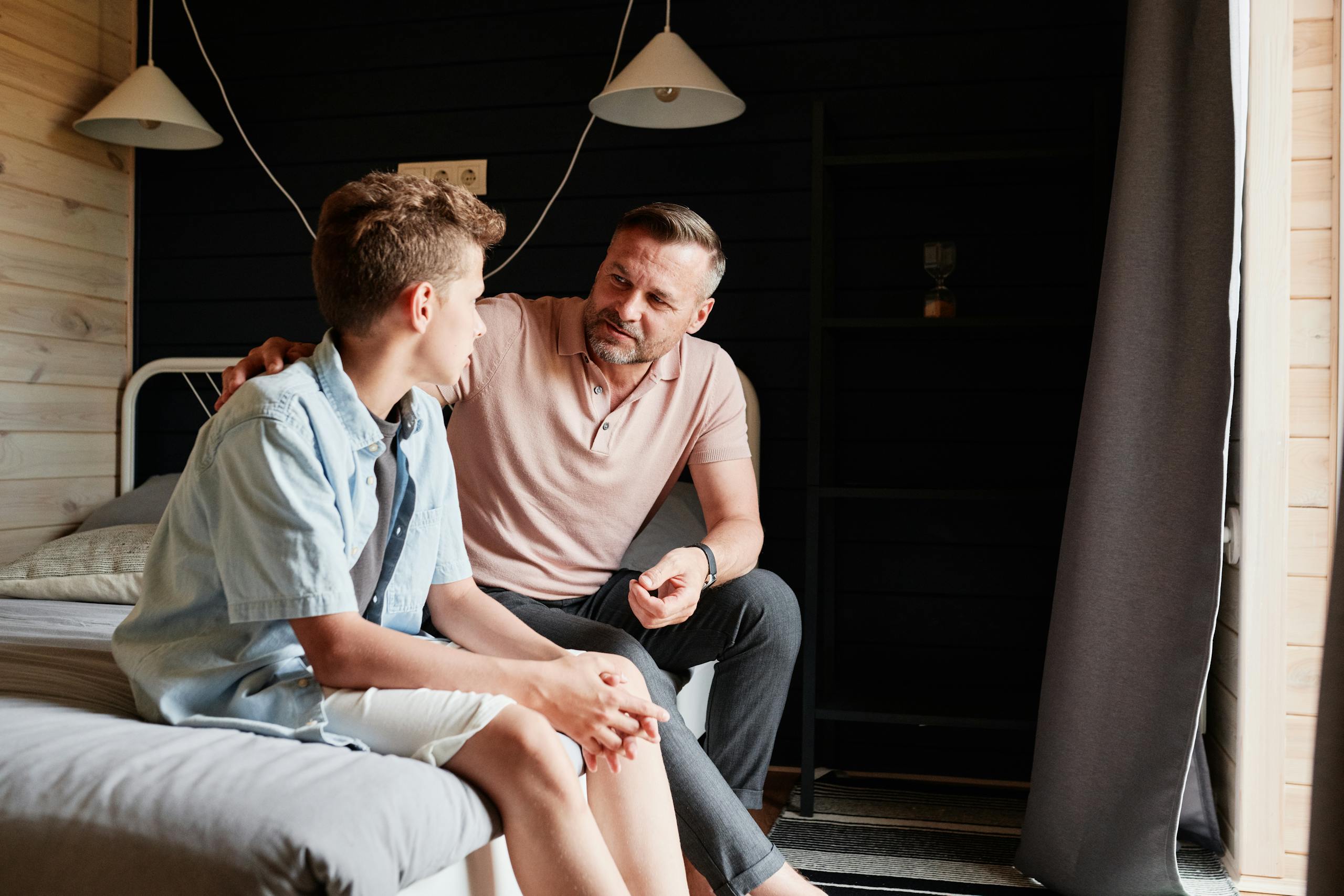
Yes, and this confusion can lead people to seek solutions that do not actually address their real experience.
Social anxiety involves persistent, often disproportionate fear of social situations and evaluation by others. It can be debilitating and typically benefits from professional support, including cognitive behavioral therapy and in some cases medication. Camera aversion in introverts is not the same thing, even though the surface behaviors can look similar.
Someone with social anxiety may avoid video calls because they are terrified of being judged. An introvert with camera aversion may avoid video calls because the format is overstimulating and the absence of social feedback makes it feel hollow and exhausting. The first person needs therapeutic support. The second person needs better environmental design and self-understanding.
The distinction is not always clean. Some introverts do have social anxiety. Some people with social anxiety are also extroverts. The categories can overlap. But conflating introversion with social anxiety tends to pathologize a personality trait that is simply a variation in how people process the world.
A body of psychological research has examined how introversion and social anxiety differ at the neurological level, finding that they involve distinct patterns of brain activation and behavioral response. Introversion is not a disorder. It is a trait, and treating it like a problem to be fixed rather than a difference to be accommodated is where a lot of organizations go wrong with their video training programs.
There is also a personality spectrum consideration here. Someone who identifies as an otrovert, a term that describes a specific blend of outward and inward orientation, may experience camera aversion differently than a classic introvert. The otrovert vs ambivert comparison gets into those nuances, and it is worth reading if you find that neither “introvert” nor “extrovert” quite captures your experience.
How Should Organizations Design Video Training for Introverts?
Most corporate video training is designed with extroverted engagement in mind: lots of real-time interaction, visible participation metrics, live polling, and group discussion. These features are not inherently bad, but they systematically disadvantage people who process internally and need time before they can contribute meaningfully.
When I was running agencies, I started noticing that my most thoughtful team members were consistently underrepresented in live video sessions. They would send detailed, well-considered follow-up emails after the meeting that contained the most valuable thinking of the entire discussion. The format had silenced them in real time, and the organization was losing their insight as a result.
Better video training design for introverts includes several elements. Providing pre-reading or pre-watch materials gives introverts time to process before they are expected to engage. Building in structured reflection pauses, moments where participants are explicitly invited to think before responding, changes the dynamic considerably. Offering written response options alongside verbal ones means that people who express themselves more clearly in writing can contribute in their natural mode. And making recordings available after the session respects the fact that some people will absorb the material more deeply on a second pass.
None of these accommodations weaken the training. They make it more effective for a wider range of cognitive styles. Frontiers in Psychology has explored how personality traits influence learning outcomes, and the evidence consistently points toward the value of flexible, multimodal approaches over one-size-fits-all formats.
Organizations that want to get the best thinking from their introverted employees need to stop designing for the person who performs best under real-time pressure and start designing for the person who thinks most clearly when given space to reflect. Those are often the same people who will give you the most considered, accurate, and creative responses, if the format lets them.
Is Camera Aversion Something You Can Work Through Over Time?
For most people, yes, though “work through” might be the wrong frame. It is less about eliminating the discomfort and more about developing a functional relationship with the format.
I never stopped finding video recording slightly uncomfortable. What changed over time was that the discomfort stopped being disabling. I learned what I needed before a session, what helped me stay grounded during one, and what I needed afterward to recover. That is not the same as becoming someone who loves being on camera. It is becoming someone who can use the camera effectively without it costing more than it gives.
Exposure helps, but only when it is structured thoughtfully. Throwing an introvert into repeated high-stakes video situations without support tends to reinforce avoidance rather than reduce it. Gradual, low-stakes practice, recording yourself privately, reviewing the footage with curiosity rather than judgment, and building familiarity with the format at your own pace, tends to produce better results over time.
It also helps to separate the skill of being on camera from the trait of introversion. Being good on camera is a learnable skill, like public speaking or writing. Introversion is a trait that shapes how you engage with the world. You can develop the skill while remaining fully yourself. Many of the most effective video communicators I have ever worked with were quiet, internally oriented people who had simply learned the craft. They did not become extroverts. They became skilled at a specific form of communication that did not come naturally to them.
The Rasmussen College blog on marketing for introverts touches on this idea in the context of professional visibility, noting that introverts can build genuine presence and credibility in visible roles without abandoning their natural communication style. The same principle applies to video training.

If you are still working out where you sit on the personality spectrum and how that affects your experience of video environments, exploring the full range of personality orientations can be clarifying. Our Introversion vs Other Traits hub brings together the research and personal insight that helps make sense of these differences in a practical way.
About the Author
Keith Lacy is an introvert who’s learned to embrace his true self later in life. After 20 years in advertising and marketing leadership, including running agencies and managing Fortune 500 accounts, Keith now channels his experience into helping fellow introverts understand their strengths and build fulfilling careers. As an INTJ, he brings analytical depth and authentic perspective to every article, drawing from both professional expertise and personal growth.
Frequently Asked Questions
Is camera aversion a sign of introversion or shyness?
Camera aversion can be connected to either, but they are distinct experiences. Shyness involves fear of negative social evaluation and tends to be rooted in anxiety about how others perceive you. Camera aversion in introverts is more often about the format itself: the absence of social feedback, the performance pressure, and the overstimulation of being watched without natural conversation flow. Many introverts who are not shy at all still find video training environments genuinely draining because the format conflicts with how they naturally process and communicate.
Why do introverts find video training harder than in-person learning?
In-person learning provides the social feedback that introverts, despite their preference for solitude, still rely on to calibrate their engagement. In a room, you can read body language, sense the energy of the group, and gauge whether your contributions are landing. Video strips most of that away. Combined with the self-monitoring effect of seeing yourself on screen and the performance pressure of appearing engaged in real time, video training creates a cognitively demanding environment that conflicts with the introverted preference for depth, reflection, and considered response.
Can camera aversion be confused with social anxiety disorder?
Yes, and this is a meaningful distinction. Social anxiety disorder involves persistent, disproportionate fear of social situations and evaluation that can interfere significantly with daily functioning. Camera aversion in introverts is typically a preference-based discomfort rather than a fear-based one. The introvert is not afraid of being judged. They find the format overstimulating and lacking in the social cues they rely on. If camera discomfort is causing significant distress or avoidance that affects your work or relationships, speaking with a mental health professional is worth considering. But camera aversion alone, in an otherwise comfortable introvert, is not a clinical concern.
What practical steps can help introverts manage camera aversion in professional settings?
Several approaches tend to help. Preparing thoroughly before video sessions reduces the cognitive load of the camera itself. Hiding your self-view during calls eliminates the self-monitoring that pulls attention away from content. Reframing the camera as a documentation tool rather than an audience reduces social pressure. Advocating for asynchronous training options where available plays to introverted strengths. Building in recovery time after video-heavy days respects the genuine energy cost of the format. Over time, low-stakes practice with recording yourself privately can also build familiarity with the medium without the pressure of a live audience.
Does camera aversion go away with experience?
For most people, the discomfort becomes more manageable with experience, though it rarely disappears entirely for deeply introverted individuals. What changes is the relationship with the format. With practice, you develop strategies that reduce the cost of being on camera and increase your effectiveness in that medium. You do not become someone who loves being recorded. You become someone who can use the camera as a tool without it being destabilizing. Many effective video communicators are introverts who have developed the skill of on-camera presence while remaining fully true to their natural orientation.