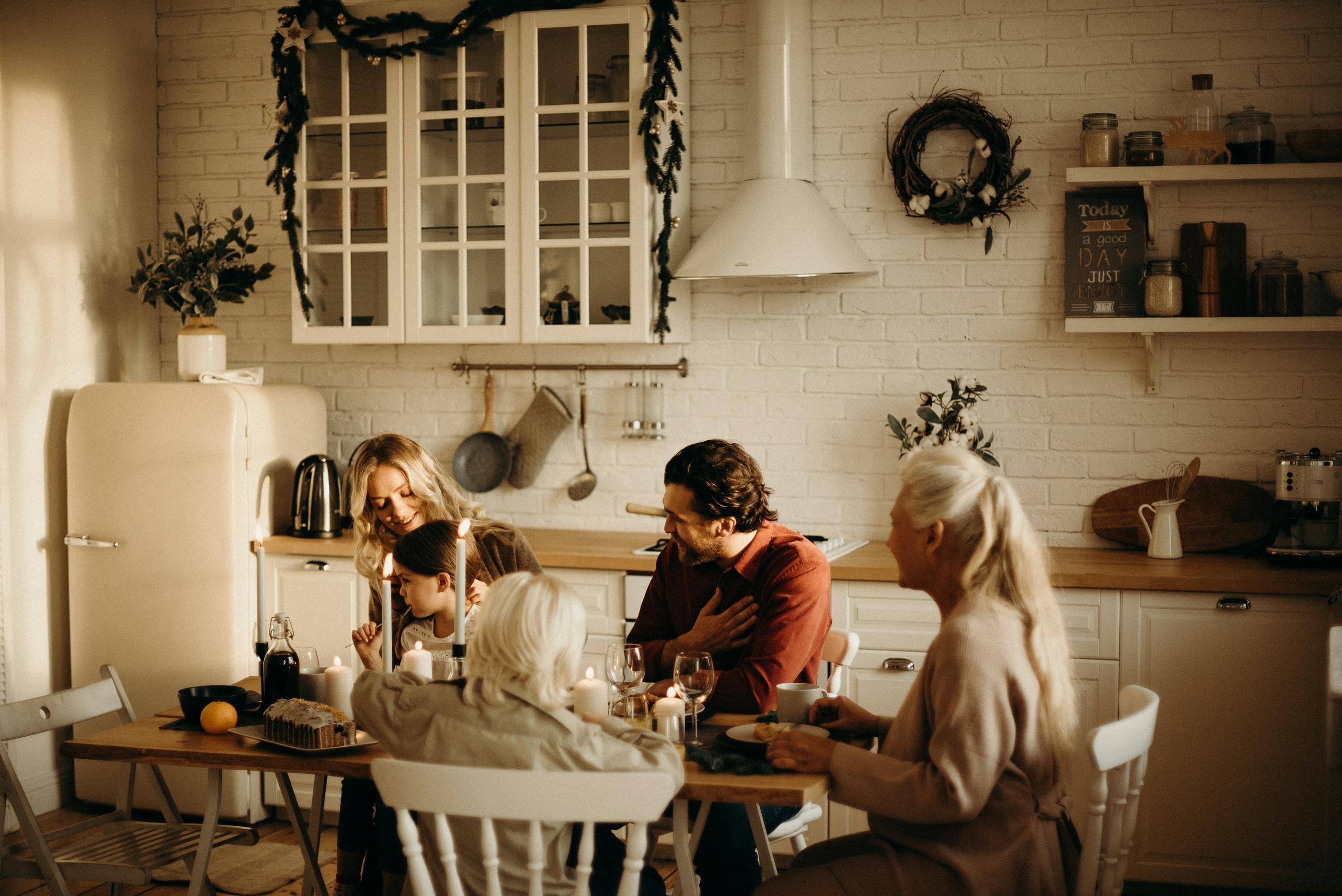
Vulnerable family meaning goes deeper than most people expect. At its core, a vulnerable family is one where members feel genuinely safe enough to show up imperfectly, to express fear or doubt without bracing for judgment, and to need one another without shame attached to that need. It’s not about a family free of conflict or difficulty. It’s about what happens in the space between people when the armor comes off.
For introverts, that definition lands differently. We already do much of our emotional processing in private, quietly sorting through what we feel before we’re ready to say it out loud. Asking us to be vulnerable in a family setting isn’t just emotionally demanding. It asks us to share the interior work before it’s finished, which can feel like handing someone a half-written letter and asking them to respond to it.

There’s a lot more to explore in this space. Our Introvert Family Dynamics and Parenting hub covers the full range of how introverts experience family life, from parenting challenges to sibling dynamics to the quiet weight of being misunderstood at home. Vulnerability in families is one thread in a much larger conversation happening there.
What Does Vulnerable Family Actually Mean?
The word vulnerable gets used loosely. In popular culture it’s been reclaimed as a strength, which it genuinely is, but that reclamation has also made it sound simpler than it is. People talk about vulnerability like it’s a switch you flip. Like you just decide to open up and suddenly the connection flows.
Career Coaching for Introverts
One-on-one career strategy sessions with Keith Lacy. 20 years of Fortune 500 leadership as an introvert, now helping others build careers that work with their wiring.
Learn More50-minute Zoom session · $175
In family systems, vulnerability is more structural than that. It’s shaped by years of accumulated patterns, the way your father responded when you cried as a kid, whether your mother made space for your quietness or tried to fix it, how conflict was handled at the dinner table when you were twelve. Family dynamics, as psychologists describe them, are the invisible rules and roles that govern how people relate to one another within a household. Vulnerability either fits inside those rules or it doesn’t.
A vulnerable family, in the truest sense, is one where those invisible rules make room for emotional honesty. Where you can say “I’m struggling” without someone immediately trying to solve it, dismiss it, or one-up it with their own struggle. Where silence isn’t treated as hostility. Where needing time alone doesn’t get interpreted as rejection.
That last part matters enormously to me personally. As an INTJ, I’ve spent a significant portion of my adult life explaining that my need for solitude isn’t a statement about how much I love my family. It’s just how I function. But in families where vulnerability means constant emotional availability, my introversion can read as coldness or distance, even when I’m deeply invested in the people I love.
Why Introverts Often Struggle With Family Vulnerability
There’s a particular kind of exhaustion that comes from being the quiet one in a loud family. You absorb everything. You notice the tension in someone’s voice before they’ve said anything significant. You catch the microexpressions, the loaded pauses, the things that aren’t being said. And then you go home, or retreat to your room, and you process all of it alone, which is exactly how you need to process it.
The problem is that families often interpret that processing time as emotional withdrawal. When you go quiet after a difficult conversation, the assumption is that you’re shutting down or punishing someone. When you decline to share your feelings in the moment, it can look like you don’t have any. The introvert’s natural rhythm, which involves feeling first and speaking second, gets misread as unavailability.
This dynamic gets even more complex for highly sensitive people within families. If you’ve ever felt like you absorb the emotional weather of an entire household, you might find this piece on HSP parenting and raising children as a highly sensitive parent speaks directly to that experience. The overlap between high sensitivity and introversion in family contexts is significant, and it shapes how vulnerability gets expressed and received.
During my years running advertising agencies, I managed teams that were almost always more extroverted than me. The emotional temperature of those offices ran high. People processed out loud, celebrated loudly, grieved loudly. I found ways to be present in that environment without losing myself, but it took years to understand that my quieter form of engagement wasn’t a deficiency. It was just a different shape of connection.
That same realization took even longer to apply at home. Professional environments gave me frameworks and distance. Family doesn’t. With family, the stakes feel existential in a way that a difficult client meeting never does. And so the introvert’s protective instinct, that careful management of what gets shared and when, can calcify into walls that weren’t meant to be permanent.
What Does Emotional Safety Actually Look Like in a Family?
Emotional safety is the foundation that makes vulnerability possible. Without it, openness isn’t brave. It’s just risky. And families, even loving ones, can have pockets of genuine unsafety that nobody talks about directly.
Safety in a family context shows up in specific, observable ways. It’s the parent who says “take your time” instead of “just tell me what’s wrong.” It’s the sibling who doesn’t weaponize what you shared during a vulnerable moment three years later. It’s the partner who can hear “I need to be alone tonight” without interpreting it as a threat to the relationship.
Psychological safety, as the American Psychological Association frames it in discussions of trauma and recovery, is closely tied to whether people feel their emotional responses will be met with acceptance rather than judgment. In families, that acceptance has to be built over time and through repeated small moments. It doesn’t arrive through a single honest conversation, though those conversations matter.
One thing I’ve noticed in my own family life is that safety often gets established or broken in the mundane moments, not the dramatic ones. It’s how someone responds when you admit you’re tired. Whether they make space or push back. Whether they remember what you said you were worried about and ask about it later. Those small responses accumulate into a felt sense of whether this is a place where you can afford to be real.
For introverts, the quality of those small moments matters more than the quantity of them. I’d rather have three genuine exchanges in a week than fifteen surface-level check-ins. And part of what makes a family feel vulnerable in the good sense is when the people in it understand that about you, when they don’t mistake depth for infrequency.
How Personality Shapes the Way We Experience Family Vulnerability
Not everyone in a family experiences vulnerability the same way, and a lot of that variation comes down to personality. Two people can grow up in the same household and have completely different memories of whether it felt safe to be honest there. One child absorbs the emotional undercurrents and finds the family’s openness overwhelming. Another craves more connection than the family’s reserved culture provides.
Understanding your own personality traits can help clarify why vulnerability feels the way it does for you specifically. Tools like the Big Five personality traits test offer a framework for understanding dimensions like emotional openness, agreeableness, and neuroticism, all of which shape how comfortable you are with emotional exposure in close relationships. Knowing where you land on those scales doesn’t excuse avoidance, but it does help you understand your starting point.
As an INTJ, my default is to intellectualize emotion rather than sit inside it. I can describe what I’m feeling with reasonable precision, but I tend to do that from a slight remove, as if narrating rather than inhabiting. That’s useful in some contexts. In family relationships, it can create the impression that I’m emotionally present when I’m actually still working things out at arm’s length.
I’ve watched this play out in the families of people I’ve worked with too. One of my senior account directors, a deeply thoughtful INFP, was extraordinarily vulnerable at work in ways that surprised me. She’d share uncertainty about a campaign direction or admit when a client interaction had rattled her confidence. But she told me once that she could never do that at home, because her family of origin had treated emotional honesty as weakness. The same person, radically different behavior, shaped entirely by what her family had taught her was safe.
It’s also worth noting that some of what we interpret as emotional unavailability in family members might be rooted in something more complex. If you’re trying to understand whether a family member’s patterns reflect a deeper psychological dynamic, a resource like the Borderline Personality Disorder test can offer some initial perspective, though it’s never a substitute for professional evaluation. Patterns that look like emotional volatility or inconsistency in family relationships sometimes have clinical dimensions worth understanding.
The Difference Between Vulnerability and Oversharing
One of the reasons introverts sometimes resist family vulnerability is that we’ve watched it go wrong. We’ve seen the family member who turns every gathering into a processing session, who needs the room to hold their emotional weight constantly, who mistakes volume for depth. That’s not vulnerability. That’s using people as emotional containers without asking their consent.
Real vulnerability is selective and relational. It happens in the context of trust that’s been established over time, and it involves some awareness of what the other person has capacity for in a given moment. It’s not dumping everything you feel onto whoever is nearby. It’s choosing to share something real with someone who has earned that kind of access to you.
Introverts often understand this distinction instinctively. We’re not indiscriminate with our inner world. We share it carefully, with people who’ve demonstrated they’ll handle it with care. That selectivity can look like emotional guardedness from the outside, but it’s actually a form of respect, both for ourselves and for the people we’re in relationship with.
What I’ve had to learn, and it took longer than I’d like to admit, is that being selective doesn’t mean being absent. There’s a version of INTJ emotional management that tips into unavailability, where the careful curation of what gets shared becomes a way of never really being known. I’ve been in that place. It feels safe. It’s also lonely in a way that’s hard to name until you’ve stepped back from it.
How Vulnerable Families Handle Conflict Differently
Conflict is where you find out whether a family’s vulnerability is real or performed. Lots of families are warm and open when things are going well. The test comes when someone is hurt, when there’s a disagreement that doesn’t resolve easily, when someone’s behavior has genuinely caused harm.
In families with genuine emotional safety, conflict doesn’t require someone to lose. There’s room for two people to both be hurt, both be partially right, and both need something from the other. That kind of conflict requires everyone involved to stay present with their own discomfort rather than deflecting it onto the other person.
For introverts, the challenge in family conflict is often timing. We need to process before we can respond well. Put us on the spot during an argument and we’re likely to either shut down or say something that doesn’t reflect what we actually mean. The families that work best for introverts are the ones that allow for the pause, that don’t interpret “I need to think about this before I respond” as stonewalling.
Some of this comes down to how likeable and approachable you are in the eyes of your family members, which sounds reductive but isn’t. How others perceive your warmth and openness shapes whether they feel safe bringing conflict to you in the first place. If you’re curious about how you come across interpersonally, the Likeable Person test offers some interesting self-reflection on the qualities that make people feel at ease around you. It’s not about performance. It’s about whether your genuine warmth is actually landing.
There’s also something worth saying about the role of repair. Vulnerable families aren’t ones where conflict never happens or where people never say the wrong thing. They’re families where repair is possible, where someone can come back the next day and say “I handled that badly, and I’m sorry.” That capacity for repair is, in my experience, the single most reliable indicator of whether a family has real emotional health underneath whatever surface dynamics are playing out.

Building Vulnerable Connection Without Losing Yourself
The concern I hear most often from introverts in family relationships is some version of this: “If I open up more, I’ll lose myself.” And I understand that fear completely. When you’ve spent years managing your energy carefully, the idea of becoming more emotionally available can feel like agreeing to be depleted on a schedule.
What I’ve found, both personally and in watching others work through this, is that genuine vulnerability doesn’t actually drain introverts the way performed openness does. When you’re sharing something real with someone who actually receives it, there’s a kind of energy exchange that happens. It doesn’t feel like giving something away. It feels more like being seen, which is replenishing in its own way.
The exhaustion comes from the performance of vulnerability, from pretending to be more emotionally available than you actually are in a given moment, from sharing things you’re not ready to share because the situation seems to demand it. That kind of performed openness is genuinely depleting, and it’s also not honest, which means it doesn’t actually build the connection you’re going for.
One practical thing that’s helped me is being explicit about my process rather than just disappearing into it. Instead of going quiet after a hard conversation and leaving my family to wonder what’s happening, I’ve learned to say something like “I need some time to think about this, and I’ll come back to it.” That small act of narrating my introversion makes it visible and non-threatening, rather than mysterious and possibly hostile.
Interestingly, some of the most effective caregiving relationships I’ve observed share this quality of honest communication about capacity and limits. Whether in professional caregiving contexts, which you can explore through resources like this personal care assistant test online, or in family caregiving roles, the people who sustain genuine connection over time are usually the ones who are honest about what they can and can’t offer. That honesty isn’t a failure of care. It’s what makes care sustainable.
When Families Make Vulnerability Feel Impossible
Not every family has the foundation for genuine vulnerability, and it’s worth being honest about that. Some family systems are structured around dynamics that actively punish emotional honesty. Shame, criticism, emotional volatility, conditional love, these are real forces in real families, and they don’t disappear because someone decides to be more open.
There’s a meaningful difference between a family that struggles with vulnerability because of introversion or communication style differences, and a family where the emotional climate is genuinely unsafe. The first is a challenge worth working on. The second may require a different kind of response, one that prioritizes your own wellbeing rather than the relationship’s comfort.
Families that have experienced significant trauma often have particular difficulty with vulnerability, because openness can feel dangerous when it has historically preceded harm. The research published in PubMed Central on attachment and family functioning points to how early relational experiences shape the nervous system’s response to emotional intimacy, often in ways that persist long into adulthood. Understanding that your difficulty with family vulnerability might have physiological roots, not just psychological ones, can be a meaningful reframe.
I’ve had my own version of this reckoning. There were patterns in my family of origin that made emotional honesty feel risky in ways I didn’t fully understand until I was well into adulthood. Recognizing those patterns didn’t immediately fix anything, but it changed the story I was telling myself about why connection felt so complicated. It moved the explanation from “something is wrong with me” to “something happened that shaped me,” which is a much more workable starting place.
What Vulnerability Looks Like Over a Lifetime of Family
Family relationships are long. They span decades and survive enormous changes in who we are, who the people we love are, and what we need from each other. The vulnerability that’s appropriate between a parent and a young child looks completely different from what’s appropriate between adult siblings, or between aging parents and their grown children.
One of the things that strikes me about families that age well together is that they’ve developed a kind of ongoing renegotiation of emotional terms. They don’t assume that the way things worked when everyone was younger still applies now. They check in. They adjust. They allow people to change without treating that change as a betrayal of who they used to be.
For introverts, this long view can actually be an advantage. We tend to be comfortable with depth over time. We’re not necessarily looking for constant emotional intensity. We’re looking for the kind of sustained, honest connection that builds quietly across years. That’s a form of vulnerability too, maybe the most durable form.
The National Institutes of Health has noted that introversion has roots in temperament that appear early in life and tend to persist. That continuity means introverts often bring a consistent emotional style to their family relationships across decades. What changes is not the core orientation, but the skill and self-awareness with which it’s expressed. Learning to be vulnerable as an introvert isn’t about becoming someone else. It’s about bringing more of who you already are into contact with the people you love.
There’s something worth noting about how physical and emotional wellbeing intersect in this context too. Families that support one another through health challenges, aging, or caretaking roles often discover new dimensions of vulnerability that weren’t accessible before. If you’re in a caregiving role within your family, whether professionally trained or not, resources like this certified personal trainer test reflect a broader point about how structured support and skill-building can help people show up more fully for the people who depend on them, even in non-fitness contexts.

The Quiet Work of Becoming More Open
Becoming more vulnerable in family relationships is rarely dramatic. It doesn’t usually happen in a single conversation where everything changes. It happens in small increments, in the moments where you choose to say the real thing instead of the safe thing, where you stay present a little longer than is comfortable, where you ask the question you’ve been avoiding.
For me, some of the most significant shifts in my family relationships have come from simply naming what I was experiencing rather than managing it silently. Saying “I’m overwhelmed right now and I need an hour” instead of just withdrawing. Saying “that conversation yesterday is still sitting with me” instead of pretending it’s resolved. Those are small acts. Over time, they add up to something that feels genuinely different.
What I’ve come to believe, after a lot of years of getting this wrong before getting it more right, is that vulnerable family meaning isn’t a fixed destination. It’s a quality of attention that you bring to the people you’re in relationship with. It’s the choice, made repeatedly and imperfectly, to let yourself be known rather than just seen. That choice is available to introverts. It just tends to look quieter than it does for everyone else, and that’s completely fine.
There’s also something worth acknowledging about the way that personality research has expanded our understanding of why people relate to vulnerability so differently. Additional research published in PubMed Central on personality and interpersonal functioning reinforces what many introverts already sense intuitively: that depth of connection matters more than frequency of contact, and that meaningful family bonds can be built on quality rather than constant availability. That’s not a rationalization for avoidance. It’s a recognition that different people build genuine closeness through different means.
And for those curious about how personality type intersects with relationship dynamics more broadly, 16Personalities has explored the particular challenges of introvert-introvert relationships, which often show up in family pairings where two quiet people are trying to connect without either one initiating the emotional opening. That dynamic is worth understanding if it sounds familiar.
If this topic resonates with you, the full collection of articles in our Introvert Family Dynamics and Parenting hub offers a broader look at how introverts build, maintain, and sometimes repair the family connections that matter most.
About the Author
Keith Lacy is an introvert who’s learned to embrace his true self later in life. After 20 years in advertising and marketing leadership, including running agencies and managing Fortune 500 accounts, Keith now channels his experience into helping fellow introverts understand their strengths and build fulfilling careers. As an INTJ, he brings analytical depth and authentic perspective to every article, drawing from both professional expertise and personal growth.
Frequently Asked Questions
What is the meaning of a vulnerable family?
A vulnerable family is one where members feel genuinely safe expressing their authentic emotional states, including fear, uncertainty, and need, without expecting judgment or dismissal in return. It doesn’t mean a family without conflict or difficulty. It means the emotional climate allows people to be imperfect and honest without losing their sense of belonging. For introverts especially, this kind of family creates space for quiet, deliberate forms of openness rather than demanding constant emotional availability.
Why do introverts struggle with vulnerability in family relationships?
Introverts tend to process emotion internally before expressing it, which can look like emotional withdrawal to family members expecting immediate openness. The introvert’s natural rhythm of feeling first and speaking second is often misread as unavailability or indifference. Additionally, many introverts grew up in family environments where their quietness was treated as a problem to fix, which creates early associations between emotional honesty and risk. Learning to be vulnerable as an introvert often means finding ways to narrate your internal process rather than hiding it entirely.
How is vulnerability different from oversharing in a family context?
Genuine vulnerability is selective and relational. It involves sharing something real with someone who has earned that level of trust, in a moment when both people have some capacity for it. Oversharing, by contrast, uses other people as emotional containers without regard for their readiness or boundaries. Introverts often understand this distinction intuitively, because they’re naturally careful about who receives access to their inner world. The challenge is ensuring that selectivity doesn’t become a permanent barrier to being known at all.
What does emotional safety look like in a vulnerable family?
Emotional safety in a family shows up in consistent, small behaviors over time. It’s a parent who makes space for a child’s feelings rather than rushing to fix them. It’s a sibling who doesn’t use a shared confidence against you later. It’s a partner who can hear “I need space tonight” without treating it as a relational threat. Safety is built through repeated moments where emotional honesty is met with acceptance rather than judgment. For introverts, those moments of acceptance are particularly meaningful because they confirm that quietness and depth are welcome, not just tolerated.
Can introverts build genuinely close family bonds without changing their personality?
Absolutely. Genuine closeness doesn’t require extroverted levels of emotional output. It requires honesty, consistency, and the willingness to let people see you as you actually are, which introverts are fully capable of, often in deeper and more sustained ways than their more outwardly expressive counterparts. What introverts may need to work on is making their internal engagement visible enough that family members don’t mistake quietness for absence. Small acts of narrating your inner process, saying “I’m still thinking about what you said,” or “this matters to me even though I’m not talking about it,” can bridge that gap without requiring a personality overhaul.