

Managing social anxiety when it comes to dating means building small, deliberate habits that reduce the emotional cost of connection without asking you to become someone you’re not. It means recognizing the difference between ordinary introvert discomfort and genuine anxiety, and responding to each with the right tools. Most of all, it means accepting that vulnerability and fear can coexist with real intimacy.
Dating is hard for almost everyone. Add social anxiety to the mix, and it can feel like you’re being asked to perform under stage lights while simultaneously managing a fire alarm going off somewhere in your chest. I know that feeling well. Not because I’ve always been good at identifying it, but because I spent a long time pretending it wasn’t there.
As an INTJ who ran advertising agencies for over two decades, I learned to project confidence in boardrooms and client pitches. I could hold a room. I could close a deal. But put me in a situation where the stakes were personal rather than professional, where the outcome wasn’t a campaign approval but someone’s genuine interest in me as a person, and something entirely different happened. The armor came off. The anxiety crept in. And I had absolutely no framework for handling it.

What I’ve come to understand, after a lot of reflection and more than a few uncomfortable dates, is that social anxiety in dating isn’t a character flaw. It’s a signal. And signals, when you learn to read them, become useful. Our Introvert Dating and Attraction hub explores the full emotional landscape of how introverts connect romantically, and managing social anxiety is one of the most honest threads running through all of it.
What’s Actually Happening When Dating Triggers Anxiety?
Before you can manage something, you need to understand what you’re actually dealing with. Social anxiety in dating isn’t simply shyness, and it isn’t the same as being introverted, though the two can overlap in ways that make them easy to confuse. Healthline offers a helpful breakdown of how introversion and social anxiety differ, and why conflating them can lead you in the wrong direction when you’re trying to address what you’re feeling.
What’s your personality type?
Take our free 40-question assessment and get a detailed personality profile with dimension breakdowns, context analysis, and personalised insights.
Discover Your Type8-12 minutes · 40 questions · Free
Introversion is about energy. Social situations drain you, and solitude restores you. Social anxiety is about fear. Specifically, it’s the fear of negative evaluation, the persistent worry that you’ll say something wrong, come across badly, or be rejected in a way that confirms your worst beliefs about yourself. Many introverts experience both, but they require different responses.
In dating, social anxiety tends to show up in specific, recognizable patterns. Overthinking every text before you send it. Rehearsing conversations in your head for days before a first date. Replaying every moment afterward, cataloguing what you said wrong. Avoiding dating apps entirely because the vulnerability feels too exposed. Canceling plans at the last minute because the anticipatory anxiety became unbearable.
I did all of these things. I was particularly skilled at the post-date replay. After a dinner that had actually gone well by any objective measure, I’d spend the drive home mentally editing my performance, identifying the moments where I’d been too quiet, or talked too much about work, or failed to ask the right follow-up question. It was exhausting, and it was completely disconnected from what had actually happened.
What I’ve come to recognize is that this kind of overthinking is the anxiety talking, not reality. And one of the most important shifts you can make is learning to tell the difference between genuine reflection (which introverts do well and which serves us) and anxiety-driven rumination (which serves nothing).
Why Does Dating Feel So Much Harder Than Other Social Situations?
Dating carries a particular kind of vulnerability that most social situations don’t. At a work event, you have a role. You know what you’re there to do. There are professional norms that create structure. A date, especially an early one, strips most of that structure away. You’re being evaluated as a whole person, not a professional or a colleague. The stakes feel personal in a way that triggers the deepest anxiety responses.
There’s also the issue of uncertainty. Introverts, and INTJs in particular, tend to feel more comfortable when they can anticipate outcomes. Dating is fundamentally unpredictable. You don’t know how the other person feels. You don’t know if a second date is coming. You don’t know what they’re saying to their friends afterward. That uncertainty creates a breeding ground for anxious thinking.
I remember pitching a major pharmaceutical company for a campaign rebranding project. The stakes were significant, the room was full of skeptical executives, and I had about forty minutes to shift their perspective. I was nervous, but I had data, preparation, and a clear structure to hold onto. Compare that to a first date with someone I genuinely liked, where I had none of those anchors, and you start to understand why the date felt harder, even though the boardroom was objectively higher pressure.
Dating asks you to be seen without armor. For people who already feel exposed in social situations, that’s a significant ask.

How Do You Prepare Without Over-Preparing?
Preparation is a double-edged tool when anxiety is involved. Some preparation reduces anxiety by giving you a sense of agency. Too much preparation feeds the anxiety by reinforcing the belief that you need to control every variable to be acceptable.
The sweet spot is what I’d call “light structure.” Choose a venue you already feel comfortable in. Suggest a first date activity that gives you something to talk about besides yourselves, a walk, a museum, a low-key event, rather than a formal dinner where the conversation has to carry everything. Have a few genuine topics you’re interested in, not scripts, but actual things you care about and could talk about naturally.
One thing that helped me enormously was shifting the internal goal of a first date. Instead of asking “Will they like me?”, I started asking “Do I actually enjoy spending time with this person?” That reframe doesn’t eliminate anxiety, but it changes the direction of your attention. You’re no longer performing for an invisible judge. You’re gathering information about your own experience, which is something you can actually control.
Cognitive behavioral approaches to social anxiety, which you can read more about at Healthline’s overview of CBT for social anxiety, are built around exactly this kind of reframing. success doesn’t mean eliminate the anxious thought, it’s to challenge its assumptions and replace catastrophic interpretations with more accurate ones.
Practically, this might look like writing down the anxious thought (“They’ll think I’m boring”) and then asking yourself what evidence actually supports that. Most of the time, the evidence is thin. What you’re dealing with is a fear, not a fact.
What Does Honest Communication Look Like in Early Dating?
One of the most counterintuitive things I’ve found is that a small amount of honest disclosure early in dating can significantly reduce anxiety over time. Not oversharing, not trauma-dumping on a first date, but a simple, grounded acknowledgment that you’re someone who values depth over small talk, or that you tend to take a little time to warm up.
What this does is remove the performance pressure. Instead of trying to seem more extroverted or more immediately engaging than you naturally are, you’re setting an accurate expectation. And the right person will find that honesty refreshing rather than alarming.
Understanding how introverts actually fall in love, including the slower, more deliberate way connection tends to build, can help you trust your own pace. The piece on relationship patterns when introverts fall in love captures this well. Introvert connection often develops through accumulated small moments rather than immediate sparks, and that’s worth knowing when you’re tempted to write off a date that felt low-key but genuine.
Honest communication also means being clear about your needs without apologizing for them. Needing a day to decompress after an intense week before a date isn’t a character flaw. Preferring a quieter venue to a loud bar isn’t being difficult. These are legitimate preferences, and someone worth dating will accommodate them without making you feel like a burden.
How Does Social Anxiety Affect Online Dating Specifically?
Online dating presents a particular paradox for people managing social anxiety. On one hand, it removes the immediate physical pressure of approaching someone in person. You have time to think before you respond. You can present yourself thoughtfully. On the other hand, it creates new anxiety vectors: the fear of being judged on a profile photo, the silence after a message goes unanswered, the endless optimization of how to present yourself.
There’s also the transition anxiety. You’ve been texting someone for two weeks and things feel comfortable. Now you have to meet in person and somehow live up to the version of yourself you’ve been curating. That gap between digital comfort and in-person vulnerability can be genuinely distressing.
A few things help here. First, don’t let the text phase go on too long. The longer it extends, the more pressure accumulates around the eventual meeting. Two weeks of good texting is enough to know if you want to meet someone. Past that, you’re often building an imaginary relationship with a screen rather than a real one with a person.
Second, remember that the anxiety you feel before meeting someone in person is almost always worse than the meeting itself. Anticipatory anxiety tends to peak in the hours before an event, not during it. Once you’re actually in the conversation, your brain has something real to process instead of something imagined, and imagined threats are almost always scarier than real ones.
Third, give yourself permission to be a little awkward. Awkwardness is human. It’s not disqualifying. Some of the most genuine connections I’ve seen begin with someone laughing at their own fumbled introduction rather than trying to recover smoothly from it.
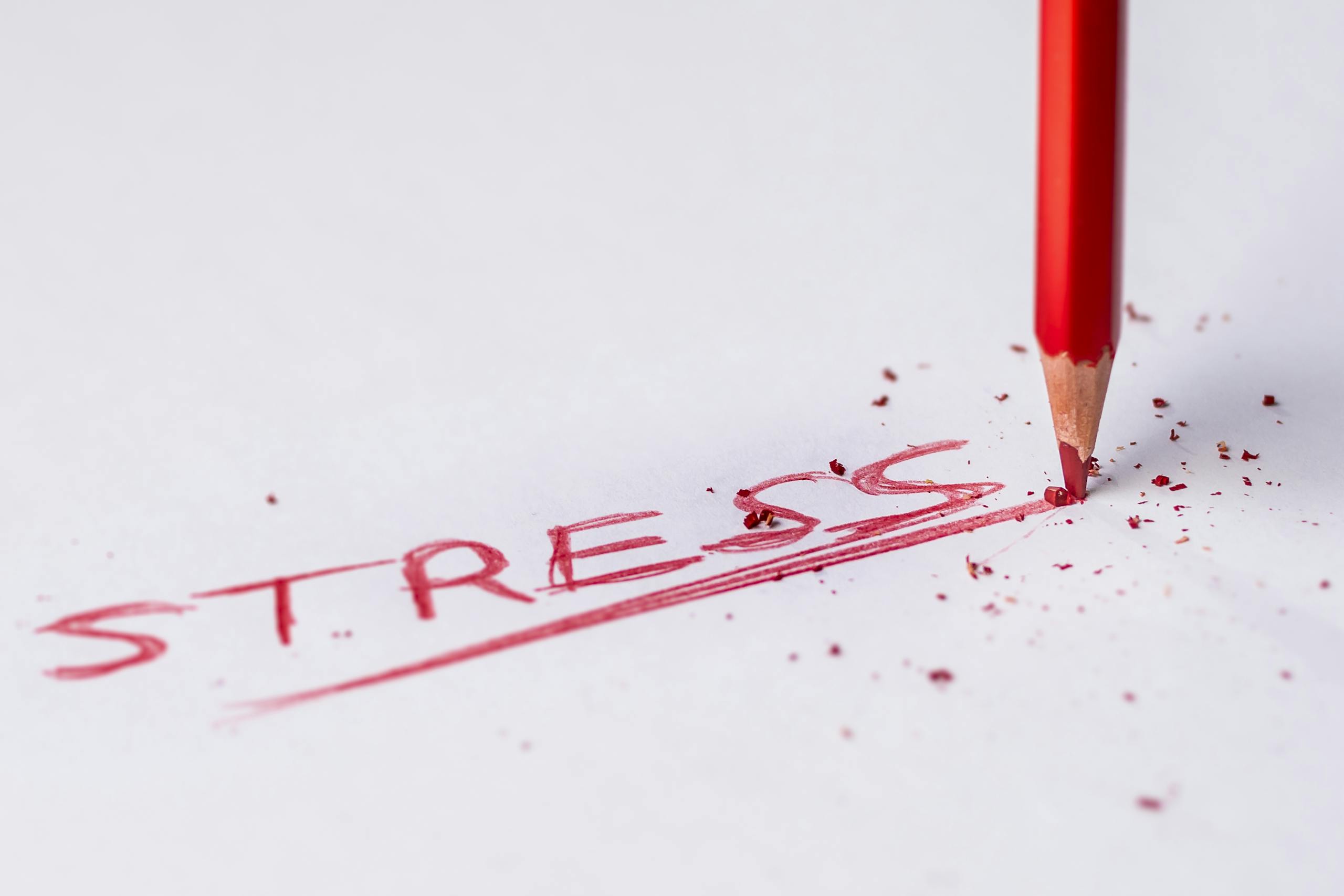
What Happens When Anxiety Meets Emotional Intensity?
Many introverts who experience social anxiety also carry a high degree of emotional sensitivity. When you feel things deeply, the potential for rejection lands harder. The fear isn’t just “they might not like me,” it’s “if they don’t like me, I will feel that for a long time.”
This is especially true for highly sensitive people, whose emotional processing is genuinely more intense than average. If you recognize yourself in that description, the complete dating guide for HSPs addresses many of the specific challenges that come with combining high sensitivity and romantic vulnerability. The overlap between HSP traits and social anxiety in dating is significant, and the strategies that work for one often support the other.
What I’ve noticed, both in my own experience and in watching people I’ve managed over the years, is that emotional intensity in dating can create a kind of preemptive grief. You start mourning the potential loss of a relationship before it’s even had a chance to form. You imagine the rejection so vividly that you begin withdrawing before anything has actually gone wrong.
Catching that pattern early is important. When you notice yourself pulling back from someone not because of something they did, but because of something you’re afraid might happen, that’s worth examining. Sometimes it’s good instinct. Often it’s anxiety masquerading as self-protection.
There’s also solid evidence that the way introverts process their feelings in relationships follows distinct patterns. The exploration of how introverts experience and handle love feelings offers a useful framework for understanding why the emotional experience of dating can feel so much more consuming for some of us than it seems to be for others.
Can Therapy or Professional Support Actually Help?
Yes, and I say that without hesitation. Social anxiety in dating isn’t something you simply push through by forcing yourself to go on more dates. That approach can sometimes make things worse by repeatedly exposing yourself to situations that feel threatening without giving you the tools to process them differently.
Cognitive behavioral therapy has a strong track record with social anxiety specifically. The core work involves identifying the distorted thought patterns that fuel anxiety, testing them against reality, and gradually building tolerance for the situations that trigger fear. Research published in PubMed Central supports the effectiveness of CBT approaches for social anxiety disorder, including the kind of interpersonal anxiety that shows up in dating contexts.
More recent work has also examined how different therapeutic models address the specific fears that come with romantic vulnerability. A paper published in Springer’s cognitive therapy journal examines some of the nuances in treating socially anxious individuals, including how fear of intimacy and fear of rejection interact in ways that standard social anxiety treatment doesn’t always address.
I’ll be honest: I didn’t seek professional support for anxiety until my mid-forties, and I wish I had done it sooner. Not because I was in crisis, but because having a structured space to examine my own patterns made me a better partner, a better colleague, and a more self-aware person. The work I did in that context directly improved how I showed up in relationships, professional and personal alike.
If therapy feels like too large a step right now, there are also well-supported self-directed approaches. Mindfulness-based practices, journaling, and structured reflection all have value. The point is to do something intentional rather than simply hoping the anxiety will fade on its own. It rarely does without some form of active engagement.
How Do You Manage Anxiety Once You’re Actually in a Relationship?
Getting through the early dating phase is one challenge. Staying present once a relationship begins to form is another. Social anxiety doesn’t automatically dissolve when someone commits to you. For many people, it shifts shape. The fear of rejection becomes the fear of abandonment. The worry about first impressions becomes the worry about being truly known and found lacking.
One thing that helps enormously is understanding your own love language, not as a personality quiz result, but as genuine insight into how you give and receive care. Introverts often express affection in ways that aren’t immediately obvious, and when a partner doesn’t recognize those expressions, both people can feel disconnected without understanding why. The piece on how introverts show affection through their love language is worth reading if you’ve ever felt like your care wasn’t being seen, or like you couldn’t tell if your partner’s care was genuine.
Communication about anxiety within a relationship is also something many people avoid because it feels like admitting weakness. In my experience, the opposite is true. Telling someone “I sometimes spiral after conflict, and I need a little time before I can talk it through productively” is not weakness. It’s information. It gives your partner something to work with instead of leaving them to interpret your silence as indifference or your withdrawal as rejection.
Speaking of conflict, it’s worth noting that people who carry social anxiety often find disagreement particularly destabilizing. The fear that conflict will end the relationship can lead to either avoidance of all difficult conversations or to over-apologizing in ways that don’t actually resolve anything. For highly sensitive people especially, the guidance on handling conflict peacefully as an HSP offers practical tools for working through disagreements without the anxiety escalating to a point where productive conversation becomes impossible.

What About Dating Another Introvert? Does That Make Anxiety Easier?
There’s a common assumption that dating another introvert automatically resolves the social anxiety problem. You both understand the need for quiet. You both prefer depth over small talk. You both need recovery time. Surely that makes everything easier?
Sometimes, yes. Shared understanding of introvert needs can reduce a lot of the friction that comes from mismatched energy. You don’t have to explain why you need a quiet night instead of a party. You don’t have to apologize for preferring dinner for two over group outings.
That said, two introverts can also reinforce each other’s avoidance patterns. If both people are managing social anxiety, there’s a risk that the relationship becomes a shared retreat from the world rather than a genuine connection that helps both people grow. The dynamics of what happens when two introverts fall in love are worth understanding before you assume that introvert plus introvert automatically equals easy.
The healthiest version of an introvert relationship, whether with another introvert or with someone on the extrovert end of the spectrum, is one where both people feel safe enough to be honest about their needs without those needs becoming the entire identity of the relationship. Anxiety is part of your experience. It doesn’t have to be the organizing principle of your relationship.
What Are the Long-Term Habits That Actually Reduce Dating Anxiety?
There’s a meaningful difference between managing anxiety in the moment and reducing it over time. Both matter, but the long-term habits are what create lasting change.
Physical regulation is often underestimated. Anxiety is a body experience as much as a mental one. Regular exercise, consistent sleep, and reducing caffeine intake (particularly before dates) all have a measurable effect on baseline anxiety levels. I know this sounds mundane compared to the psychological work, but the physical foundation matters. When I was running agencies and sleeping five hours a night on a steady diet of espresso, my anxiety was significantly higher than it is now. The correlation was direct.
Gradual exposure is another long-term habit worth building deliberately. Social anxiety tends to shrink the more you engage with the situations that trigger it, provided you’re doing so at a pace that doesn’t overwhelm your system. That might mean starting with lower-stakes social interactions, building confidence in casual conversations, before working up to the higher vulnerability of romantic dating. Work published in PubMed on exposure-based approaches to social anxiety supports the value of graduated, intentional engagement rather than avoidance or flooding.
Self-compassion is perhaps the most important long-term habit, and the one most people skip because it feels soft or unserious. It isn’t. Research available through PubMed Central has examined the relationship between self-compassion and anxiety, and the evidence consistently suggests that treating yourself with the same kindness you’d extend to a friend is not just emotionally healthy but functionally reduces the intensity of anxious responses over time.
What self-compassion looks like in dating practice is simple, even if it’s not easy. When a date doesn’t go well, you don’t add it to a running tally of evidence that you’re unlovable. You acknowledge that it was uncomfortable, you note what you might do differently, and you move on without the extended self-interrogation. That’s it. That simple shift, done consistently, changes the emotional math of dating over time.
Building a life you genuinely enjoy outside of dating also matters more than most people acknowledge. When your entire sense of meaning and worth is wrapped up in whether you’re romantically successful, every date carries unbearable weight. When you have work you find meaningful, friendships that sustain you, and interests that engage you deeply, dating becomes one part of a full life rather than the measure of your value as a person. That shift in proportion does more for dating anxiety than almost any specific technique.

Managing social anxiety in dating is a process, not a problem you solve once and move past. It requires honest self-awareness, practical tools, and a willingness to stay in the discomfort long enough to learn from it. If you want to keep exploring how introverts connect, communicate, and build relationships, the full range of that work lives in our Introvert Dating and Attraction hub.
About the Author
Keith Lacy is an introvert who’s learned to embrace his true self later in life. After 20 years in advertising and marketing leadership, including running agencies and managing Fortune 500 accounts, Keith now channels his experience into helping fellow introverts understand their strengths and build fulfilling careers. As an INTJ, he brings analytical depth and authentic perspective to every article, drawing from both professional expertise and personal growth.
Frequently Asked Questions
Is social anxiety the same as being introverted?
No, though the two can overlap. Introversion is about how you manage energy: social situations drain you, and solitude restores you. Social anxiety is about fear, specifically the fear of being negatively evaluated by others. Many introverts have no social anxiety at all, and some extroverts experience significant social anxiety. If you find yourself avoiding social situations not because you’re tired but because you’re afraid of what might go wrong, anxiety is likely part of the picture alongside or separate from your introversion.
What’s the best way to handle anxiety before a first date?
Light preparation helps more than heavy preparation. Choose a comfortable venue, have a few genuine topics you care about in mind, and shift your internal goal from “making them like me” to “finding out if I enjoy spending time with them.” Anticipatory anxiety peaks before the event, not during it, so reminding yourself of that can help you get out the door. Physical grounding techniques like slow breathing or a short walk beforehand can also reduce the physical symptoms of anxiety before they build into something harder to manage.
Should I tell someone I’m dating that I have social anxiety?
You don’t owe anyone a clinical disclosure on a first date, but honest, simple communication about your personality and needs is generally a good idea early on. Saying something like “I tend to take a little time to warm up” or “I prefer quieter settings” is honest without being overwhelming. Over time, as a relationship deepens, more specific communication about anxiety becomes both appropriate and valuable. A partner who understands your patterns can support you far more effectively than one who’s left to interpret your behavior without context.
Does therapy actually help with social anxiety in dating?
Yes, particularly cognitive behavioral approaches. CBT works by identifying the distorted thought patterns that fuel anxiety, testing them against reality, and gradually building tolerance for feared situations. Many people find that even a relatively short course of CBT produces meaningful, lasting change in how they experience social situations, including dating. If formal therapy isn’t accessible right now, self-directed CBT workbooks and mindfulness practices can also provide a useful starting point.
How do I stop ruminating after a date?
Post-date rumination is one of the most common experiences for people managing social anxiety, and one of the most draining. A few things help: setting a deliberate time limit on reflection (ten minutes of honest review, then done), distinguishing between genuine learning (“I talked over them when I was nervous, I’ll watch for that next time”) and anxiety-driven self-attack (“I was terrible and they definitely hate me”), and then actively redirecting your attention to something absorbing. Physical activity, a conversation with a friend, or any engaging task can interrupt the rumination loop before it becomes entrenched.