
Low emotional intelligence typically develops from a combination of early life experiences, neurological differences, unprocessed trauma, and environments that never modeled healthy emotional awareness. It isn’t a character flaw or a fixed trait, but rather a pattern that forms when people never develop the skills to recognize, understand, and manage emotions in themselves and others.
What makes this topic so layered is that low emotional intelligence rarely announces itself. People who struggle with it often don’t know they’re struggling. They read situations through a narrow lens, miss cues that others catch immediately, and sometimes leave a trail of confusion in relationships and workplaces without ever understanding why.
I’ve spent a lot of time thinking about this, partly because I spent years in rooms where emotional intelligence was the invisible currency, and I didn’t always know how to spend it wisely.

Before we go further, it’s worth noting that emotional intelligence doesn’t exist in isolation from personality type. How you process emotions, read social cues, and respond to others is deeply connected to how you’re wired. If you haven’t yet identified your own personality type, our free MBTI personality test is a solid starting point for understanding the emotional patterns that might be shaping your experience.
This article is part of a broader conversation I’ve been building around how introverts experience social dynamics. Our Introvert Social Skills and Human Behavior hub covers everything from reading people to managing relationships, and emotional intelligence runs through all of it like a thread.
What Does Low Emotional Intelligence Actually Look Like in Practice?
Emotional intelligence, as a concept, gets tossed around a lot in professional development circles. But the absence of it is harder to define. It doesn’t always look like anger or cruelty. Sometimes it looks like obliviousness. Sometimes it looks like someone who talks over everyone without noticing. Sometimes it looks like a leader who makes decisions that are technically sound but leave their team feeling invisible.
Career Coaching for Introverts
One-on-one career strategy sessions with Keith Lacy. 20 years of Fortune 500 leadership as an introvert, now helping others build careers that work with their wiring.
Learn More50-minute Zoom session · $175
I managed a senior account director early in my agency days who was brilliant at strategy. He could dissect a brand brief with surgical precision. But he had almost no awareness of how his communication style landed on people. He’d deliver critical feedback in team meetings without registering the shift in the room, the tightening jaws, the eyes going flat. After he left the room, I’d spend the next hour doing quiet damage control.
What he lacked wasn’t intelligence or commitment. He lacked the internal radar that tells you when you’ve said something that cut deeper than you intended. That radar is emotional intelligence, and its absence creates friction that compounds over time.
According to the American Psychological Association, emotional processing and social behavior are deeply intertwined with personality structure. Low emotional intelligence often manifests as poor impulse control, difficulty empathizing, and a limited ability to read social contexts accurately.
How Does Childhood Shape Emotional Intelligence From the Start?
The most significant roots of low emotional intelligence tend to reach back to early childhood. Children learn emotional regulation primarily by watching and experiencing it. When caregivers model healthy emotional expression, name feelings, and respond to a child’s emotional needs with consistency, they’re building the neural architecture for emotional awareness.
When that doesn’t happen, the gaps are significant. Children raised in environments where emotions were dismissed, punished, or simply never discussed often grow into adults who struggle to identify what they’re feeling, let alone communicate it. They learned early that emotions were either dangerous or irrelevant.
A child told repeatedly to “stop being so sensitive” doesn’t stop feeling. They stop trusting their feelings. That distrust becomes a habit of suppression, and suppression over time creates a kind of emotional numbness that looks, from the outside, like low empathy.
There’s also the modeling piece. Children absorb what they see. If a parent handles conflict by shutting down, deflecting, or exploding, those become the default templates. Not because the child chose them, but because they were the only templates available. The National Institutes of Health has documented how early relational experiences shape the development of emotional regulation capacities well into adulthood.

Does Trauma Directly Cause Low Emotional Intelligence?
Trauma doesn’t automatically produce low emotional intelligence, but it often disrupts the development of it. When the nervous system is chronically activated by threat, real or perceived, the capacity for nuanced emotional processing gets crowded out by survival responses.
People who’ve experienced significant trauma sometimes develop what looks like emotional flatness or disconnection. They’re not unfeeling. They’ve learned, at a physiological level, to keep their emotional responses contained because expression once felt unsafe. That containment becomes a wall that’s hard to see past, even in safe environments.
Unresolved trauma also has a way of distorting perception. Someone who experienced betrayal in a foundational relationship may read neutral situations as threatening, or interpret ambiguous behavior as hostile. That distortion makes accurate emotional reading nearly impossible. If you’ve ever found yourself spiraling after a relationship rupture, trying to make sense of someone else’s behavior while your own emotions are flooding the system, you know how hard it is to think clearly. It’s one reason I wrote about how to stop overthinking after being cheated on, because that particular kind of emotional disruption can genuinely impair your ability to read situations accurately for a long time afterward.
Healing from trauma isn’t just emotional work. It’s work that rebuilds the capacity for emotional intelligence by creating enough safety for genuine feeling to return.
Can Personality Type Contribute to Lower Emotional Intelligence?
This is where I want to be careful, because personality type and emotional intelligence are related but not the same thing. Certain MBTI types may find emotional attunement more effortful by nature, but that doesn’t mean they’re destined for low emotional intelligence.
As an INTJ, I process the world primarily through intuition and thinking. Feelings are real to me, but they’re not my first language. Early in my career, I led with analysis in situations that called for empathy. I remember a client presentation where we’d delivered genuinely strong work, and the room was quiet in a way that felt wrong. My instinct was to defend the strategy harder. What the room actually needed was for me to acknowledge that the work felt like a departure from their brand identity, and that the discomfort was valid. I missed that read entirely.
Thinking-dominant types, particularly TJ types in the MBTI framework, often have to work harder to develop emotional attunement because their natural preference runs toward logic and structure. That’s not a deficiency. It’s a starting point. The same way an introverted type might have to be more intentional about developing social skills, thinking types often need to be more deliberate about developing emotional fluency. fortunately that both are learnable. I’ve written extensively about how to improve social skills as an introvert, and the principles overlap more than you’d expect.
On the other side, feeling-dominant types aren’t automatically high in emotional intelligence either. Someone who feels deeply but can’t regulate those feelings, or who projects their emotional state onto others, may still struggle with the accuracy and management components that emotional intelligence requires.
What Role Does Chronic Stress and Mental Load Play?
Emotional intelligence isn’t just a trait you have or don’t have. It’s also a capacity that fluctuates with your mental and physical state. Chronic stress, burnout, sleep deprivation, and overwhelming cognitive load all erode the bandwidth available for emotional attunement.
I saw this clearly during the most intense growth period at my agency. We were scaling fast, managing multiple Fortune 500 accounts simultaneously, and I was running on about five hours of sleep and a lot of adrenaline. My emotional intelligence, which I’d worked hard to develop, went noticeably offline. I became more reactive, less curious about what my team was experiencing, and quicker to interpret ambiguity as a problem rather than a signal worth exploring.
What I was experiencing wasn’t a personality change. It was resource depletion. The prefrontal cortex, which handles nuanced emotional processing, is one of the first systems to suffer when we’re chronically overtaxed. The more depleted we are, the more we default to reactive, pattern-based responses rather than thoughtful ones.
This is one reason that practices like meditation and self-awareness work show up repeatedly in conversations about emotional intelligence development. They’re not soft skills add-ons. They’re maintenance systems for the mental infrastructure that emotional intelligence runs on.
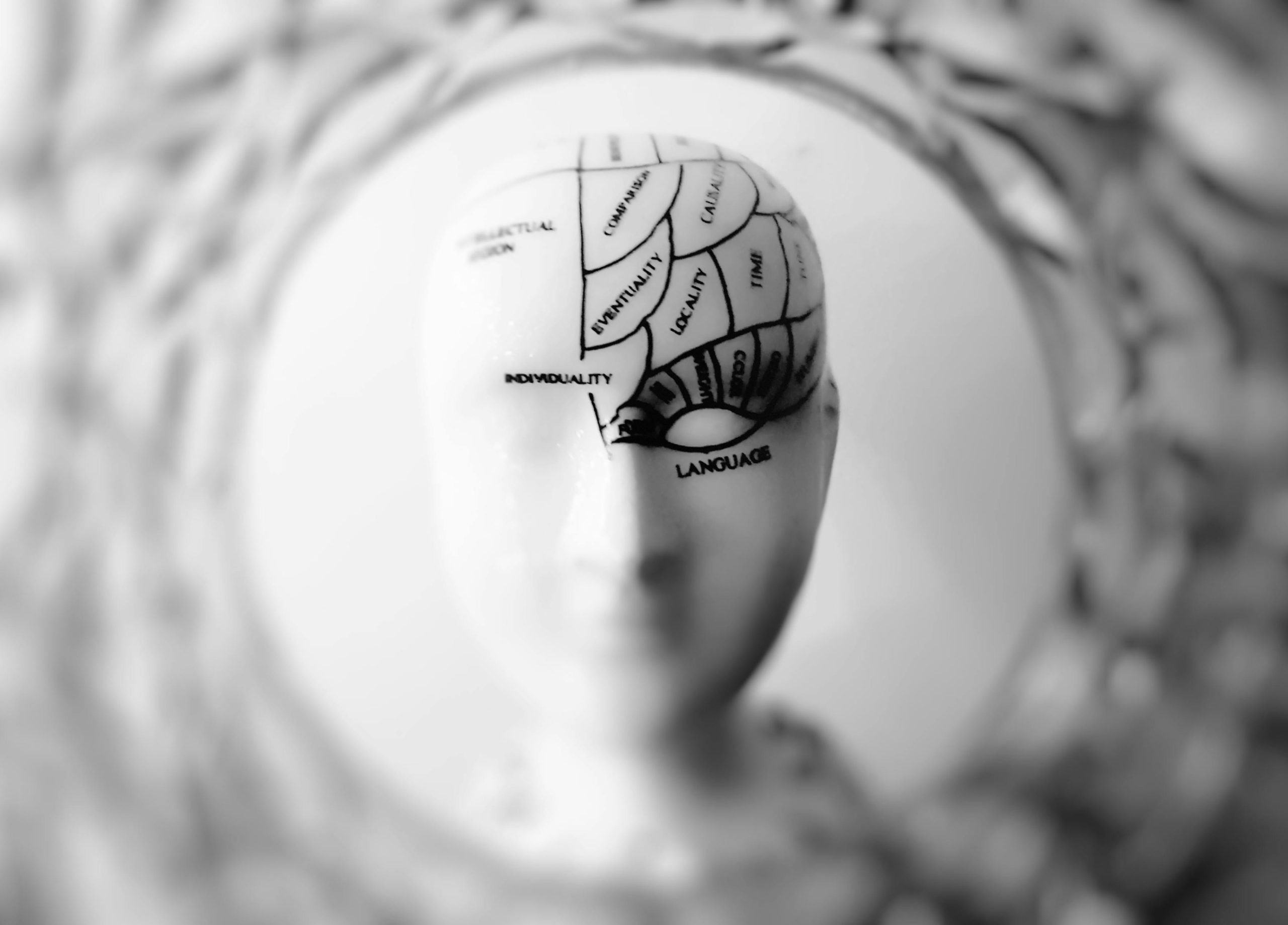
How Does Overthinking Interfere With Emotional Awareness?
There’s a particular trap that many introverts and analytical thinkers fall into: confusing overthinking with emotional processing. They’re not the same thing, and conflating them can actually suppress genuine emotional intelligence.
Overthinking tends to be circular and future-focused, spinning through scenarios, anticipating outcomes, and cataloging potential threats. Emotional processing is more present-focused and honest. It asks what am I actually feeling right now, and what does that feeling need?
When overthinking substitutes for genuine emotional processing, people can become very sophisticated at analyzing emotions intellectually while remaining disconnected from them experientially. They can explain why they feel a certain way without actually feeling it. That gap between intellectual understanding and embodied experience is one of the quieter contributors to low emotional intelligence, and it’s surprisingly common among high-achieving introverts.
Working through this pattern often requires dedicated support. Overthinking therapy approaches specifically address the way rumination cycles interfere with clear emotional perception, and they can be genuinely useful for people who find themselves stuck in analysis loops rather than genuine self-awareness.
The research published in PMC on rumination and emotional regulation supports what many therapists observe clinically: excessive self-focused thinking often correlates with reduced emotional clarity rather than increased self-awareness.
Does a Lack of Diverse Social Experience Limit Emotional Intelligence?
Emotional intelligence develops through exposure. The more varied your social experiences, the more data your emotional system has to work with. People who’ve grown up in socially homogeneous environments, or who’ve been significantly isolated, often have narrower emotional maps simply because they’ve had fewer opportunities to practice reading different kinds of people.
This isn’t a moral failing. It’s a developmental gap. Someone who grew up in a small, insular community and then entered a diverse workplace may find themselves genuinely confused by social dynamics they’ve never encountered before. Not because they lack the capacity for emotional intelligence, but because the range of their experience hasn’t yet matched the range of contexts they’re now operating in.
Introverts sometimes face a specific version of this. Because we tend to prefer depth over breadth in relationships, we can develop exceptional emotional intelligence within close, trusted relationships while remaining less practiced at reading strangers or casual acquaintances. The skills don’t always transfer automatically. Developing comfort in a wider range of social settings, even incrementally, builds the emotional vocabulary that makes broader attunement possible. Part of that work involves becoming a better conversationalist, which is why I’ve found the principles in how to be a better conversationalist as an introvert so applicable to emotional intelligence development, not just social ease.
Can Neurodevelopmental Differences Affect Emotional Intelligence?
Some people experience low emotional intelligence not because of environment or trauma, but because of neurological differences in how they process social and emotional information. ADHD, autism spectrum conditions, and certain processing differences can affect the speed and accuracy of emotional signal reading in ways that are genuinely neurological rather than learned.
This is an important distinction because it changes the approach. Someone whose emotional intelligence challenges are rooted in neurodevelopmental differences benefits from different strategies than someone whose gaps are primarily experiential or trauma-based. What helps one person may not help another, and understanding the source matters for finding the right path forward.
It’s also worth noting that many people with neurodevelopmental differences develop very high emotional intelligence in specific domains, particularly around pattern recognition and deep empathy for people they know well, while struggling in others. The picture is rarely uniform.
The National Institutes of Health has documented how neurological variation affects social cognition and emotional processing in ways that are distinct from personality-based differences. Understanding that distinction helps remove unnecessary shame from the conversation.

How Does Poor Self-Awareness Feed Low Emotional Intelligence?
At the center of emotional intelligence is self-awareness. Without accurate knowledge of your own emotional state, your triggers, your patterns, and your blind spots, the other components of emotional intelligence have no stable foundation to build on.
Poor self-awareness isn’t always obvious from the inside. Most people with limited self-awareness believe they understand themselves reasonably well. The gaps are visible to others long before they become visible to the person themselves. That’s part of what makes this particular root cause so persistent.
I spent the better part of my thirties believing I was a fairly self-aware person. I read widely, I reflected on my decisions, I thought carefully about my motivations. What I was less honest about was the emotional undercurrent running beneath all that thinking. The anxiety about being perceived as weak. The discomfort with conflict that made me avoid difficult conversations until they became unavoidable. The way I’d intellectualize my way past feelings I didn’t want to sit with.
It took a particularly honest conversation with a business partner to crack that open. He told me that my team sometimes felt like they were reporting to a strategy document rather than a person. That landed hard. And it was accurate.
Self-awareness is a practice, not a destination. It requires ongoing willingness to look at yourself honestly, ideally with some external input, whether that’s therapy, trusted feedback, or structured reflection. Harvard’s guidance on social engagement and self-knowledge points to the same conclusion: genuine self-understanding is the precondition for meaningful emotional connection with others.
Is Low Emotional Intelligence Something That Can Be Changed?
Yes. That’s worth saying clearly, because the framing of emotional intelligence as a fixed trait does real harm. People hear “low emotional intelligence” and sometimes conclude that they’re simply built that way, that there’s nothing to be done. That conclusion is both inaccurate and unnecessarily limiting.
Emotional intelligence is a set of skills, and skills develop with practice, feedback, and intention. The development isn’t always linear or comfortable, but it’s genuinely possible across a wide range of starting points.
What tends to accelerate development is a combination of honest self-reflection, exposure to diverse emotional experiences, and some form of structured support, whether that’s therapy, coaching, or consistent feedback from people who know you well. The Psychology Today piece on the introvert advantage in leadership contexts makes a related point: introverts who lean into their natural capacity for reflection often develop emotional intelligence in ways that outpace more extroverted counterparts over time, precisely because reflection is a core mechanism of emotional growth.
What doesn’t work well is the performative version. Trying to appear emotionally intelligent without doing the internal work produces a kind of social mimicry that people usually see through. Genuine emotional intelligence has a texture to it that’s hard to fake and impossible to sustain without the real thing underneath.
One of the more honest things I’ve encountered on the subject of emotional intelligence in professional settings comes from conversations with emotional intelligence speakers who work with leadership teams. The consistent message is that the leaders who grow most aren’t the ones who start with the highest EQ scores. They’re the ones willing to stay uncomfortable long enough to actually change.
The Healthline overview of introversion and social anxiety also touches on an important nuance: not all emotional withdrawal is low emotional intelligence. Sometimes what looks like emotional unavailability is actually a protective response to anxiety, and treating it as such opens different and more effective pathways for growth.

What’s the Connection Between Emotional Intelligence and Introversion?
Introverts are sometimes assumed to have lower emotional intelligence because they’re less expressive or socially engaged. That assumption is wrong, and it’s worth addressing directly.
Introversion, as the Psychology Today research on introvert friendships suggests, often correlates with deeper emotional attunement in close relationships. Introverts tend to listen carefully, process before responding, and invest significantly in understanding the people they care about. Those are high-EQ behaviors.
Where introverts sometimes struggle is in the performance of emotional intelligence in high-stimulation, fast-moving social environments. Not because the capacity isn’t there, but because the conditions don’t match how their processing works. An introvert who seems emotionally flat in a large group meeting may be deeply emotionally perceptive in a one-on-one conversation. The context changes the output, not the underlying capacity.
What I’ve found, both personally and in watching introverts I’ve worked with over the years, is that the biggest emotional intelligence gains come not from trying to become more extroverted, but from building enough self-awareness to know which contexts bring out your best emotional attunement, and being honest about which ones deplete it.
There’s more to explore on all of this. The full range of social skills, emotional patterns, and human behavior topics lives in our Introvert Social Skills and Human Behavior hub, where you’ll find connected articles that go deeper into specific dimensions of how introverts experience and process the social world.
About the Author
Keith Lacy is an introvert who’s learned to embrace his true self later in life. After 20 years in advertising and marketing leadership, including running agencies and managing Fortune 500 accounts, Keith now channels his experience into helping fellow introverts understand their strengths and build fulfilling careers. As an INTJ, he brings analytical depth and authentic perspective to every article, drawing from both professional expertise and personal growth.
Frequently Asked Questions
What is the main cause of low emotional intelligence?
Low emotional intelligence most commonly develops from early childhood environments where emotions were dismissed, suppressed, or never modeled healthily. When caregivers don’t teach children to name, process, and regulate feelings, those skills don’t develop naturally. Trauma, chronic stress, limited social exposure, and certain neurological differences can also contribute. In most cases, multiple factors are at work rather than a single root cause.
Can low emotional intelligence be improved in adulthood?
Yes, emotional intelligence can be developed at any age. It requires honest self-reflection, consistent practice in reading and responding to emotional cues, and often some form of structured support such as therapy or coaching. The people who grow most in this area tend to be those willing to sit with discomfort and take feedback seriously, rather than those who start with the highest natural aptitude.
Is low emotional intelligence the same as being an introvert?
No. Introversion and low emotional intelligence are entirely separate things. Introverts often demonstrate deep emotional attunement, particularly in close relationships and one-on-one settings. What introverts may find harder is expressing emotional intelligence in high-stimulation group environments, not because the capacity is absent, but because those conditions don’t match their natural processing style.
Does overthinking contribute to low emotional intelligence?
Overthinking can interfere with emotional intelligence by substituting intellectual analysis for genuine emotional processing. People who overthink often become skilled at explaining their feelings conceptually while remaining disconnected from them experientially. That gap between intellectual understanding and embodied emotional awareness reduces the accuracy and responsiveness that emotional intelligence depends on.
How does trauma affect emotional intelligence?
Trauma disrupts emotional intelligence by activating survival responses that crowd out nuanced emotional processing. People who’ve experienced significant trauma may develop emotional flatness, heightened reactivity, or distorted perception of others’ intentions. These aren’t permanent states, but they do require targeted healing work to address. As the underlying trauma resolves, emotional intelligence often improves alongside it.