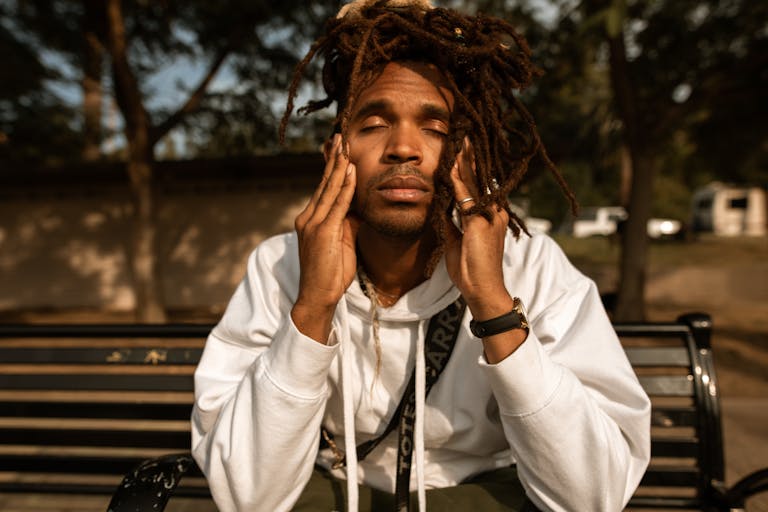
An empowered empath is someone who feels the emotions and energy of others deeply, and has learned to work with that sensitivity rather than be consumed by it. Unlike the overwhelmed empath who absorbs everything without a filter, an empowered empath has developed the self-awareness and boundaries to channel emotional attunement as a genuine strength. It is a state of being, not a personality type, and it represents one of the most meaningful forms of personal growth available to highly sensitive people.
Most of what gets written about empaths focuses on survival: how to stop absorbing other people’s pain, how to protect your energy, how to avoid emotional burnout. That framing has its place. But it stops short of something more interesting. What happens after you stop drowning? What does it look like when someone with deep emotional sensitivity actually steps into their full capacity?
That question has stayed with me for years, honestly. As an INTJ who spent two decades running advertising agencies, I was never supposed to be the emotionally attuned one in the room. INTJs are the strategists, the systems thinkers, the people who see ten moves ahead. And yet I kept noticing things others missed. The client who said yes with their mouth but communicated hesitation with everything else. The team member who went quiet in a way that meant something was wrong, not that they were fine. Emotional information was always flowing around me, and I was always picking it up, even when I didn’t have language for it.
Our HSP and Highly Sensitive Person hub covers the full landscape of high sensitivity, from sensory processing to emotional depth to the science behind why some people simply experience the world more intensely. The concept of the empowered empath lives right at the center of that territory.
What Separates an Empowered Empath From Someone Who Is Simply Overwhelmed?
Empathy, at its core, is the capacity to sense and understand the emotional states of others. But the experience of that capacity varies enormously from person to person. Some people feel it intellectually, a cognitive recognition that someone else is hurting. Others feel it somatically, in their body, in their chest, in a physical weight that settles over them when they walk into a tense room.
What drains your social battery?
Not all social exhaustion is the same. Our free quiz identifies your specific drain pattern and gives you personalised recharging strategies.
Find Your Drain PatternUnder 2 minutes · 8 questions · Free
Empaths tend toward that second category. Psychology Today notes that while highly sensitive people process sensory and emotional information more deeply than average, empaths go further, often absorbing the emotional states of others as if those feelings were their own. The distinction matters because the challenges are different, and so are the paths forward.
An overwhelmed empath has not yet built the internal architecture to process what they receive. They take in emotional data constantly, from the colleague who is silently furious, from the friend who smiles through grief, from the stranger on the subway who carries something heavy. Without structure, that intake becomes noise. It becomes exhaustion. It becomes the chronic feeling of carrying weight that doesn’t belong to you.
An empowered empath has built that architecture. They still feel everything. That part doesn’t change, and it shouldn’t. What changes is the relationship to the feeling. Empowerment here means developing the capacity to receive emotional information clearly, to understand what belongs to you and what doesn’t, and to use what you sense in ways that serve both yourself and the people around you.
I watched this play out in a particularly clear way during a difficult agency merger I managed in my early forties. The teams were anxious, territorial, and performing confidence they didn’t feel. Most of the senior leadership was focused on the operational logistics, the org charts, the client transition plans. I was tracking something else entirely: the emotional temperature of every meeting, the unspoken alliances forming, the specific individuals who were one bad week away from walking out. Because I’d started to understand my own sensitivity by then, I could use that information rather than just suffer through it. We structured the integration differently as a result, and we kept people we would have otherwise lost.
Is Being an Empath the Same as Being Highly Sensitive?
These two concepts overlap significantly, but they aren’t identical, and the distinction is worth understanding clearly.
High sensitivity, as defined by psychologist Elaine Aron’s research, refers to a trait called sensory processing sensitivity. It describes a nervous system that processes information more deeply and thoroughly than average, which means highly sensitive people are more affected by subtleties in their environment, more easily overstimulated, and more attuned to nuance in emotional and social situations. Importantly, high sensitivity is not a trauma response or a disorder. It is a trait, present from birth, found across roughly 15 to 20 percent of the population.
Being an empath is often described as a more intense expression of that same sensitivity, particularly in the emotional domain. All empaths are likely highly sensitive, but not all highly sensitive people identify as empaths. Some HSPs are more attuned to sensory input, aesthetic beauty, or intellectual complexity than to emotional absorption specifically.
A 2024 study published in Frontiers in Psychology examined the neural and psychological correlates of empathy and found meaningful individual differences in how people process others’ emotional states, suggesting that empathic capacity exists on a spectrum rather than as a binary trait. This lines up with what most sensitive people already know intuitively: the experience varies, and the degree matters.
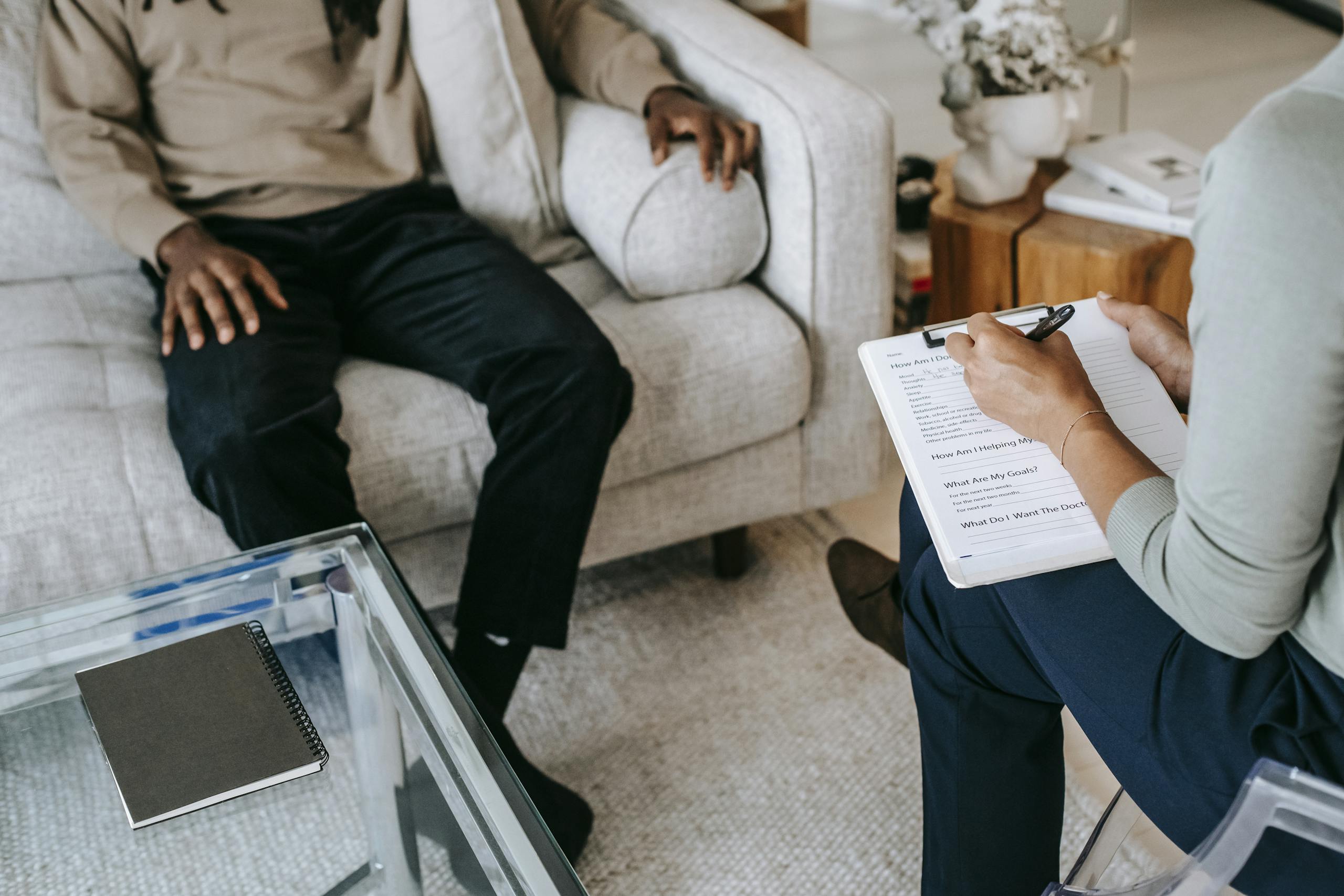
What this means practically is that the path to empowerment looks slightly different depending on where you fall on that spectrum. Someone who is primarily a sensory HSP may find that managing their physical environment, like finding the right conditions for sleep and recovery, matters enormously. My review of 8 white noise machines for sensitive sleepers came directly from my own experience with this: when your nervous system runs hot, the basics of rest and recovery aren’t optional, they are foundational to everything else.
Someone who is primarily an emotional empath, absorbing the feelings of others as their dominant experience, needs a different set of tools. Boundaries, energy management, and the ability to distinguish their own emotional state from what they’ve absorbed become the central work.
What Does Empowerment Actually Look Like in Practice?
Empowerment for an empath isn’t about becoming less sensitive. That framing is one of the most damaging myths in this space. success doesn’t mean feel less, to build walls thick enough that nothing gets through, or to train yourself into the kind of emotional neutrality that our culture sometimes mistakes for strength.
Genuine empowerment looks more like this: you feel what you feel, you understand what it means, and you choose what to do with it. That three-part sequence, feel, understand, choose, is where the power actually lives.
Early in my career, I had none of that sequence. I felt constantly, sometimes overwhelmingly. I had no framework for understanding what I was picking up or why. And I certainly had no sense that I could choose a response rather than just react. The result was that I swung between two extremes: either I absorbed everything and burned out, or I shut down emotionally and became the cold strategist who made good decisions but missed the human dimension entirely.
Neither extreme worked. The agency business runs on relationships, and relationships require emotional presence. But emotional presence without any structure for managing what you receive is a recipe for chronic depletion.
What I eventually found, through years of trial and a fair amount of error, was that the empowerment piece came from developing what I’d call emotional discernment. Not a wall. A filter. The ability to notice what I was feeling, ask whether it originated with me or came from someone else, and then decide consciously how to respond rather than simply react.
This is what empowered empaths describe across the board. A 2019 study in PubMed on emotional regulation and empathy found that individuals who could effectively regulate their own emotional responses while maintaining empathic accuracy showed significantly better outcomes in both personal wellbeing and interpersonal effectiveness. In other words, the combination of feeling deeply and managing that feeling deliberately is not a contradiction. It is a skill set.
How Does Personality Type Connect to Empathic Experience?
One of the more interesting questions I’ve sat with over the years is how personality type intersects with empathic sensitivity. The common assumption is that empaths are feelers, the F types in MBTI terms, the ones who lead with emotional values and interpersonal warmth. And many empaths do fall into that category.
But empathic sensitivity doesn’t respect type boundaries as neatly as that. My own experience as an INTJ empath is a good example. INTJs are supposed to be the least emotionally attuned of the types, the ones who live in systems and strategy. And yet the emotional attunement was always there, just expressed differently. I processed it internally, analytically, filtered through intuition rather than feeling. The data I received was emotional, but the way I handled it looked more like pattern recognition than emotional expression.
This connects to something worth understanding about MBTI development more broadly. Our types describe our default wiring, not our ceiling. As I’ve written about in depth in the MBTI development guide covering the truths that actually matter, growth as a personality type involves developing your less dominant functions, not abandoning your natural strengths. For an INTJ empath, that means learning to honor the emotional data that comes through intuition without either dismissing it as irrational or being overwhelmed by it.
There’s also an interesting conversation to be had about the people who identify as ambiverts in this context. Many people who feel caught between introversion and extroversion are actually experiencing something more specific: they’re energized by meaningful connection but depleted by surface-level social performance. That’s not necessarily a balanced personality profile. As I’ve explored in the piece on why ambiverts might just be confused rather than balanced, what looks like a middle-ground personality is often a highly sensitive person who has learned to perform extroversion when needed, at a significant energy cost.
Empaths who identify as ambiverts often discover that what they thought was social flexibility was actually emotional absorption. They felt energized by certain social situations because those situations gave them meaningful emotional connection. They felt drained by others because those situations required emotional output without any real exchange. The distinction matters for building a life that actually fits you.
Why Do Empowered Empaths Often Struggle at Work?
The workplace is where empathic sensitivity tends to create the most friction, and where empowerment matters most practically.
Most professional environments are designed around a set of implicit assumptions: that emotional neutrality is professionalism, that boundaries between personal and professional are clean and stable, that the right response to difficult feelings is to set them aside and focus on the task. For empaths, all of those assumptions create friction because the reality of their experience doesn’t match the expected performance.
An empath in a toxic workplace doesn’t just dislike the environment. They absorb it. The chronic low-level hostility between two senior leaders, the anxiety of a team under unrealistic pressure, the unspoken grief of an organization going through layoffs: these things register in an empath’s body and mind with an intensity that can be genuinely debilitating. And because most workplaces have no language for this experience, empaths often conclude that something is wrong with them rather than recognizing that they’re processing real information about their environment.
The HSP Career Survival Guide for highly sensitive professionals addresses this directly, but the empowerment angle adds something specific: the goal isn’t just to survive a difficult work environment. An empowered empath can actually improve one, because the same sensitivity that makes toxic environments painful also makes supportive ones genuinely excellent.
Some of the best leaders I’ve ever seen in action were empaths who had done this work. They could read a room with extraordinary accuracy. They caught problems early because they noticed the emotional signals before the data confirmed them. They built loyalty in their teams because people felt genuinely seen by them. These aren’t soft skills in the diminishing sense that phrase often implies. They are strategic assets, and they are disproportionately available to people who have learned to work with their sensitivity rather than against it.
The challenge, and this is something I saw repeatedly in my agency years, is that empaths who haven’t done the empowerment work often end up in support roles that underuse their capacity, or in leadership roles that burn them out because they haven’t built the emotional infrastructure to sustain that level of exposure. The research on rare personality types in the workplace suggests that people with unusual cognitive and emotional profiles face specific structural challenges in conventional environments, and empaths fall squarely into that category.
What Role Does Nature and Environment Play for Empowered Empaths?
One consistent thread across the accounts of empaths who have found their footing is the role of the physical environment, and particularly of nature, in their sense of wellbeing and grounding.
This isn’t mystical. There’s solid science behind it. Yale’s e360 coverage of ecopsychology research documents the measurable effects of time in natural environments on stress hormones, attention, and emotional regulation. For people whose nervous systems run at high sensitivity, those effects are amplified. Nature provides a particular kind of sensory input, complex, varied, and non-threatening, that allows an overloaded nervous system to process and reset.

I’ve noticed this in my own life with a consistency that’s hard to ignore. After high-stakes client presentations, after difficult personnel conversations, after the particular kind of emotional intensity that comes with running a business through a crisis, the thing that most reliably restored my equilibrium wasn’t a drink or a distraction. It was an hour outside, alone, with enough quiet to let everything I’d absorbed settle and sort itself out.
Empowered empaths tend to understand this about themselves and build it into their lives deliberately. They don’t treat nature or solitude as a luxury. They treat it as maintenance, the way an athlete treats recovery as part of training rather than a break from it.
How Does Rarity Factor Into the Empowered Empath Experience?
There’s something worth naming about the experience of being wired in a way that most people around you are not. Empaths, particularly those with deep emotional absorption rather than just heightened sensitivity, represent a minority of the population. And minority status in any domain carries its own specific psychological weight.
The research on what makes a personality type rare and why that matters is illuminating here. Rarity itself isn’t the problem. The problem is the mismatch between a person’s natural wiring and the norms of the environments they inhabit. When the gap is large enough, people start to believe that their wiring is the problem, rather than recognizing it as a difference that requires a different kind of environment and approach.
Empaths who grow up in families or cultures that have no language for emotional sensitivity often spend years, sometimes decades, trying to be less. Less affected, less reactive, less “too much.” The empowerment process often begins with the simple recognition that the sensitivity itself was never the problem. What was missing was the framework to work with it.
This recognition tends to arrive differently for different people. For some it comes through therapy or coaching. For others it comes through reading, through finally finding language that matches their experience. For me, it came gradually through the accumulation of evidence: the repeated pattern of being right about things I had no rational basis for knowing, the consistent feedback from people who felt genuinely understood in our conversations, the slow recognition that what I’d spent years treating as a liability was actually the thing that made me good at my work.
What Does the Path to Empowerment Actually Require?
No single formula works for everyone, but certain elements appear consistently across the accounts of empaths who have moved from overwhelm to empowerment.
Self-knowledge comes first. You can’t work with something you haven’t named. Understanding that you are an empath, that your emotional experience is genuinely different from most people’s, and that this difference has specific patterns and triggers, is the foundation everything else builds on. This isn’t about labeling yourself for the sake of it. It’s about having an accurate map of your own inner terrain.
Boundaries come next, and they’re worth understanding correctly. Boundaries for empaths aren’t walls. They’re more like membranes: selectively permeable, allowing genuine connection while preventing the kind of total absorption that leads to losing yourself in someone else’s emotional state. Learning to say “I can feel that you’re in pain, and I’m choosing to be present with you rather than simply absorbing your pain” is a fundamentally different relationship to empathy than either shutting down or drowning.
Recovery practices matter enormously. The research on sensory processing sensitivity consistently points to the importance of downtime, not as indulgence but as biological necessity. A nervous system that processes everything more deeply needs more time to process. Empaths who don’t build recovery into their lives don’t become less sensitive over time. They become more depleted, which actually makes the absorption worse because a depleted system has fewer resources for regulation.
Community is the piece that often gets underestimated. Finding other people who share your experience, whether in person or through reading and writing and the kinds of conversations that happen in spaces like this one, changes something fundamental. It shifts the internal narrative from “something is wrong with me” to “I am wired a particular way, and there are others who understand this.” That shift is not small. For many empaths, it is the beginning of everything.

There’s also something that I’d call purposeful use of the gift, for lack of a better phrase. Empaths who have done the work tend to find that their sensitivity serves best when it’s directed with intention. Not absorbed passively, but engaged actively. The difference between a counselor who burns out in two years and one who sustains a career of meaningful work often comes down to this: the sustainable one has learned to bring their empathy to the work deliberately, to use it as a tool, and to set it down when the session ends.
I think about this in terms of the agency work I did for years. The accounts where I was most effective were the ones where I could bring emotional attunement to the relationship, reading what the client actually needed rather than just what they said they wanted, while maintaining enough distance to give them honest strategic counsel. The accounts that were hardest on me were the ones where I absorbed the client’s anxiety and started carrying it as my own. The difference, looking back, was whether I was using my sensitivity or being used by it.
That distinction, using your sensitivity versus being used by it, might be the clearest definition of what it means to be an empowered empath. You still feel everything. You still notice what others miss. You still bring a depth of emotional presence to your relationships and your work that most people can’t access. But you are the one holding the reins. The sensitivity is yours, not the other way around.
There’s a lot more to explore across the full range of highly sensitive experience, and the HSP and Highly Sensitive Person hub is the best place to continue that exploration, with resources covering everything from the science of sensitivity to practical career and lifestyle strategies.
Running on empty?
Five drain profiles, each with specific triggers, warning signs, and a recharging playbook.
Take the Free QuizUnder 2 minutes · 8 questions · Free
About the Author
Keith Lacy is an introvert who’s learned to embrace his true self later in life. After 20 years in advertising and marketing leadership, including running agencies and managing Fortune 500 accounts, Keith now channels his experience into helping fellow introverts understand their strengths and build fulfilling careers. As an INTJ, he brings analytical depth and authentic perspective to every article, drawing from both professional expertise and personal growth.
Frequently Asked Questions
Can someone become an empowered empath, or is it something you either have or you don’t?
Empowerment is a process, not a fixed state. Anyone with empathic sensitivity can develop the self-awareness, boundaries, and emotional regulation skills that characterize an empowered empath. It requires deliberate work and often takes years, but the capacity for empathy itself doesn’t need to change. What develops is the relationship to that capacity.
Is being an empath the same as having high emotional intelligence?
They overlap but aren’t identical. Emotional intelligence refers to the ability to recognize, understand, and manage emotions in yourself and others. Being an empath describes the experience of absorbing others’ emotional states, often involuntarily. An empowered empath typically develops high emotional intelligence as part of the empowerment process, but the starting point is the felt experience of emotional absorption rather than a learned skill set.
Do empaths always need more alone time than other people?
Most empaths find that solitude is essential for recovery and regulation, particularly after significant social or emotional exposure. This isn’t a personality preference in the casual sense. It reflects the genuine biological need of a nervous system that processes more information more deeply. The amount of alone time needed varies by individual, but the pattern of needing deliberate recovery time is nearly universal among people who identify as empaths.
Can empaths be effective in high-pressure professional environments?
Yes, and often exceptionally so, once they have the tools to manage their sensitivity rather than be overwhelmed by it. Empaths in professional settings often excel at relationship management, conflict resolution, team dynamics, and reading organizational culture accurately. The challenge is building the structural supports, boundaries, recovery practices, and environments that allow their sensitivity to function as an asset rather than a liability.
How do you know if you’re an empath versus just a highly sensitive person?
The distinction isn’t always clear, and for many people it doesn’t need to be. A useful question to ask is whether your primary experience of sensitivity is emotional absorption, specifically feeling others’ emotions as if they were your own, or whether it’s broader sensory and cognitive depth. If you consistently find yourself carrying emotions that originated with someone else, losing track of where your feelings end and another person’s begin, or feeling physically affected by the emotional states of people around you, the empath description likely fits. If your sensitivity is more about aesthetic depth, sensory input, or intellectual nuance, highly sensitive person may be the more accurate frame.