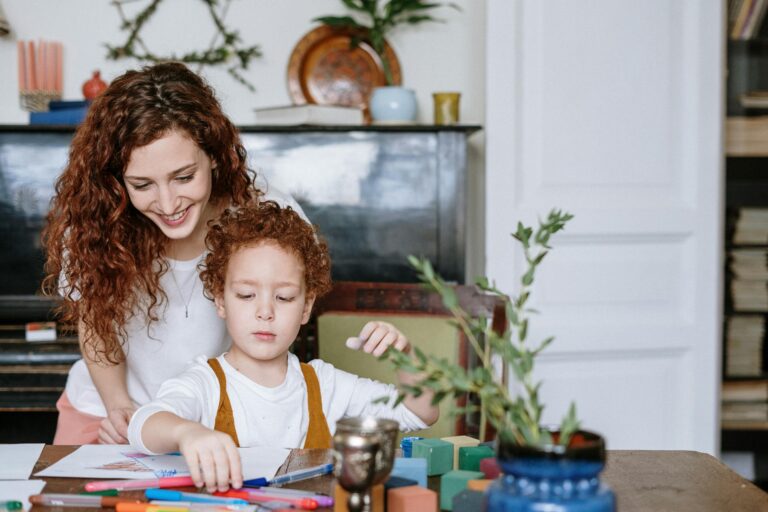

When a woman says she’s a homebody, she’s telling you something specific about how she recharges, what she values, and where she feels most like herself. It’s not a personality flaw or a phase she’ll grow out of. It’s a clear, honest statement about the kind of life that works for her.
Most people hear “homebody” and translate it as shy, antisocial, or unmotivated. That translation is wrong. A woman who identifies as a homebody has typically done the work of figuring out what genuinely restores her versus what just exhausts her. That kind of self-knowledge is worth paying attention to.

If you want to understand the broader picture of how introverts and homebodies relate to their living spaces, our Introvert Home Environment hub covers everything from designing restorative spaces to the psychology behind why home feels so essential to certain personalities. This article focuses on something more specific: what it actually means when a woman claims the homebody identity, and why that claim deserves more respect than it usually gets.
What Is She Actually Communicating When She Calls Herself a Homebody?
Language matters. When someone chooses a word to describe themselves, they’re usually reaching for something more precise than a casual label. “Homebody” carries a specific meaning that most people misread.
What’s your personality type?
Take our free 40-question assessment and get a detailed personality profile with dimension breakdowns, context analysis, and personalised insights.
Discover Your Type8-12 minutes · 40 questions · Free
She’s not saying she never leaves the house. She’s not saying she’s afraid of the world. She’s saying that home is her anchor point. It’s where her energy lives. Going out, socializing, attending events, all of that draws from a finite reserve. Home is where that reserve gets rebuilt.
I spent two decades in advertising, running agencies, managing large teams, presenting to Fortune 500 clients. From the outside, I looked like someone who thrived in high-energy environments. I was in meetings constantly, pitching campaigns, flying to client offices. What nobody saw was how carefully I managed my home time as a counterbalance. My apartment wasn’t just where I slept. It was where I could think without performing. That distinction matters enormously to people wired this way.
A woman who calls herself a homebody is making that same distinction out loud. She’s telling you that her private space isn’t just a physical location. It’s a psychological necessity. There’s a difference between someone who stays home because they’re afraid and someone who stays home because they’ve figured out what actually works for them. The homebody label, when a woman applies it to herself with confidence, almost always describes the second category.
She’s also, often, communicating something about her relationship with solitude. Solitude and loneliness are not the same thing, though people conflate them constantly. Loneliness is painful. Solitude, for the right kind of person, is genuinely nourishing. A woman who identifies as a homebody has typically made peace with being alone in a way that many people haven’t. She’s found that her own company, her books, her projects, her routines, is genuinely good company.
Does Being a Homebody Mean She’s Introverted?
Not always, though there’s significant overlap. Introversion is about energy: introverts drain in social situations and recharge in solitude. Being a homebody is about preference: a preference for home-centered activities and environments over external ones. Many homebodies are introverts. Some aren’t.
An extroverted woman could technically be a homebody if she simply prefers domestic activities, cooking elaborate meals, gardening, hosting intimate gatherings at her own place, over going out. Her energy might still come from other people, but her preferred venue is home. That’s a valid homebody identity even without introversion underneath it.
That said, most women who use the homebody label with genuine conviction are describing something deeper than venue preference. They’re describing a whole orientation toward the world where inward-facing activities feel more natural and more satisfying than outward-facing ones. That orientation tracks closely with introversion, and also with the trait of high sensitivity.
Highly sensitive people, those who process sensory and emotional information more deeply than average, often find that home environments allow them to control their stimulation levels in ways that public spaces don’t. There’s a reason that HSP minimalism resonates so strongly with this group. When you’re wired to pick up on everything around you, a simplified, controlled environment isn’t a luxury. It’s a functional need.

So when a woman says she’s a homebody, she might be describing introversion, high sensitivity, a genuine preference for domestic life, or some combination of all three. What she’s almost certainly not describing is fear, laziness, or a lack of social skills. Those assumptions say more about the person making them than the woman who spoke.
Why Does the Homebody Identity Carry So Much Baggage for Women Specifically?
This is where it gets complicated. The homebody label lands differently depending on who’s wearing it. For women, it arrives with a specific set of cultural freight that men don’t have to carry in the same way.
For generations, women were expected to be home-centered by default. Domestic life wasn’t a choice. It was an assignment. That history means that when a modern woman says she’s a homebody, some people hear an echo of that assignment, as if she’s retreating into a role rather than choosing a lifestyle. The feminist critique of domesticity, which was necessary and important, sometimes gets misapplied to women who genuinely prefer home-centered lives. Choosing to stay home is different from being confined there. The difference is agency.
At the same time, there’s a competing cultural pressure that tells women they should be ambitious, social, visible, constantly building their personal brand and expanding their network. A woman who says “I’d rather stay home this weekend” is sometimes read as falling behind, as if life is a race and she’s voluntarily dropping out. That reading is exhausting and wrong.
I watched this dynamic play out in my agencies for years. Women on my teams who preferred focused, independent work over constant collaboration were sometimes flagged as “not team players” or “hard to read.” The same preference in male colleagues was read as focused or analytical. The bias was real, even when nobody was being consciously unfair. A woman who knew her own working style and protected her energy was handling a double standard that her introverted male colleagues simply didn’t face at the same intensity.
When a woman claims the homebody identity today, she’s often pushing back against both of those pressures simultaneously. She’s saying: I’m not confined here, and I’m not falling behind. I’m exactly where I want to be. That’s a more complicated statement than it looks.
What Does Her Home Actually Mean to Her?
For a woman who identifies as a homebody, her living space is doing a lot of work. It’s not just a place to sleep and store belongings. It’s a carefully constructed environment that reflects her inner world and supports her specific way of functioning.
Think about what that means in practice. She’s probably thought carefully about her furniture, not just for aesthetics but for how it feels to spend hours in it. A good homebody couch, for example, isn’t a trivial purchase. It’s the center of a whole ecosystem of comfort, reading, thinking, resting, watching, and recovering. The details of her space are deliberate in ways that people who primarily use home as a launching pad don’t fully understand.
Her home is also where her real interests live. The projects she never gets to talk about at parties because they don’t make for easy small talk. The books she’s working through. The creative pursuits that require uninterrupted time. The homebody’s home is full of evidence of an inner life that’s rich and active, even when it’s not visible to the outside world.
There’s also a recovery function that’s hard to overstate. For anyone who processes the world deeply, whether through introversion, high sensitivity, or both, the outside world is genuinely taxing in ways that aren’t always obvious. Conversations require real cognitive effort. Sensory environments accumulate. Social performances, even enjoyable ones, drain something. Home is where that accumulation gets cleared. It’s not avoidance. It’s maintenance.
A piece published in PubMed Central on psychological restoration and environment suggests that certain spaces genuinely support cognitive recovery in ways that high-stimulation environments don’t. For people who experience the world at higher intensity, having a restorative home environment isn’t a preference. It’s a functional requirement for staying well and functioning at full capacity.

Is She Telling You Something About What She Needs From You?
Yes, almost certainly. When a woman tells you she’s a homebody, she’s often doing more than describing herself. She’s giving you information about how to connect with her well.
If she’s telling a potential partner, she’s saying: don’t expect me to be excited about packed bars, last-minute plans, or a social calendar that leaves no breathing room. She’s telling you that a quiet evening at home isn’t a consolation prize for a cancelled outing. It’s genuinely what she wants. She’s also telling you that her home environment matters to her, and that someone who respects that space, who understands why it’s set up the way it is, will mean a lot to her.
If she’s telling a friend, she’s probably explaining why she sometimes declines invitations without it meaning she doesn’t care. The homebody who loves you will show up for the things that genuinely matter. She’ll just do it selectively, and she’ll need to recover afterward. That’s not rejection. That’s honesty.
She might also be telling you something about how she prefers to connect. Many homebodies are genuinely excellent at deep, one-on-one conversation in comfortable settings. They’re not great at surface-level socializing in loud environments. Psychology Today has written thoughtfully about why people wired for depth often find shallow social interactions genuinely unsatisfying rather than just mildly boring. The homebody who seems quiet at a party might be remarkably present and engaged over coffee at her kitchen table.
Some homebodies have also found that digital connection fills a real social need without the energy cost of in-person gatherings. Chat rooms for introverts and online communities offer a way to maintain meaningful connections on terms that work better for their energy levels. That’s not a lesser form of socializing. It’s a different one, and for many homebodies, it’s genuinely preferable.
What Do the People Who Love Her Need to Understand?
The people in a homebody’s life, especially those who don’t share her orientation, often need to do some real recalibration. The most common mistake is treating her homebody preference as a problem to solve rather than a trait to understand.
Trying to “get her out of her shell” implies there’s something wrong with the shell. There isn’t. Pushing her to attend more events “for her own good” treats her self-knowledge as less reliable than your assumptions about what she needs. Both of those approaches tend to create distance rather than closeness.
What actually works is meeting her where she is. Literally, sometimes. Some of the best conversations I’ve had with introverted colleagues happened not in conference rooms or after-work bars, but in quieter settings where they felt genuinely comfortable. The quality of connection available in those settings was consistently better than what I got from pushing people into environments that didn’t suit them.
For family members, especially parents of homebody daughters, there’s often a worry underneath the pressure to socialize more. A worry that she’s lonely, that she’s missing out, that she’ll regret the time spent at home. That worry usually says more about the parent’s own relationship with solitude than the daughter’s. If she’s happy, productive, and maintaining the connections that matter to her, she’s not missing anything. She’s living her life correctly for who she is.
Showing appreciation for her lifestyle is often more meaningful than people realize. Thoughtful gifts for homebodies that support her home-centered life, a beautiful candle, a book she’d love, something that makes her space more comfortable, communicate something important. They say: I see how you live, and I respect it. That kind of acknowledgment lands differently than any number of invitations to events she’d find draining.

How Does the Homebody Identity Show Up Differently Across Life Stages?
The homebody identity isn’t static. It expresses itself differently depending on where a woman is in her life, and the pressures she faces around it shift accordingly.
In her twenties, she’s probably fielding the most external pressure. The cultural expectation that young women should be out, social, and visibly enjoying their youth is intense. Choosing to stay home on a Friday night gets coded as sad or weird in ways that would seem completely unremarkable at forty. She’s often doing real internal work during this period, figuring out whether her homebody preference is genuinely hers or something she’s been conditioned into, and learning to trust her own read on what makes her feel good.
In her thirties and forties, if she’s partnered or parenting, the homebody identity gets complicated by other people’s needs. A partner who’s more extroverted, children who need social exposure, family obligations that pull her out of her preferred rhythms. This is often when women who’ve always been homebodies start to feel genuinely depleted rather than just tired. The home that was supposed to be restorative becomes another performance space. Finding ways to carve out genuine solitude within a full household becomes a real skill.
Later in life, the homebody identity often becomes easier to hold. The social pressure eases. She’s earned the right, in most people’s eyes, to spend her time however she chooses. Many women describe their fifties and beyond as the period when they finally stopped apologizing for preferring home and started genuinely enjoying it without guilt. That’s a long time to wait for permission that was never needed in the first place.
There’s also a real conversation to be had about burnout recovery across all of these stages. For women who spend their working lives in high-demand, high-stimulation environments, the homebody preference often intensifies as a direct response to professional exhaustion. Research published in PubMed Central on burnout and recovery points to the importance of genuine psychological detachment from work demands, and for many homebody women, that detachment happens most effectively in their own carefully managed spaces.
What Does She Want You to Know That She Probably Won’t Say Out Loud?
There are a few things most homebodies would tell you if they thought you’d actually hear them.
She’s not waiting to be fixed. The people who love her most sometimes approach her homebody preference as a temporary state, something she’ll move past when she meets the right person or finds the right group of friends or gets enough confidence. She’s not waiting for any of those things. She’s already arrived.
She has a rich interior life that her external behavior doesn’t fully communicate. The quiet woman who declined your invitation is probably, at this very moment, deeply engaged in something that matters to her. A book she can’t put down. A project she’s been thinking about for months. A conversation with herself that’s more interesting than most conversations she’d have at the event she skipped. Her inner world is full, even when her social calendar isn’t.
She’s thought about this more than you have. The homebody identity, especially for women who’ve faced pressure around it, is rarely unconsidered. She’s weighed the social costs. She’s experimented with pushing herself to be more outgoing. She’s read the articles and listened to the feedback. She’s arrived at her preference through genuine reflection, not default laziness. Treating her choice as naive or unconsidered is one of the more frustrating experiences she has regularly.
She also wants you to know that her home is genuinely good. Not a compromise, not a consolation. A homebody book she’s been savoring. A corner of her apartment she’s made exactly right. An evening that unfolded exactly as she wanted it to. These aren’t lesser experiences than the ones happening at whatever event she missed. They’re the experiences she actually wanted.
If you’re shopping for the homebody in your life and want to show genuine appreciation for how she lives, a thoughtful homebody gift guide can help you find something that actually fits her world rather than nudging her toward yours.

What Does Respecting This Identity Actually Look Like in Practice?
Respecting someone’s homebody identity isn’t complicated, but it does require some conscious adjustment if you don’t share it.
Stop treating her declines as problems. When she says no to an invitation, accept it cleanly. Don’t add “are you sure?” or “you really should come.” She’s sure. She gave you an honest answer. Receiving that answer gracefully is one of the most respectful things you can do.
Bring the connection to her sometimes. Suggest dinner at her place instead of a restaurant. Offer to watch a movie at home instead of going out. Show her that you value her company enough to meet her in the environment where she’s most herself. That gesture means more than most people realize.
Ask about her home life with genuine curiosity rather than polite tolerance. What is she reading? What’s she been working on? What’s her space like right now? These questions open doors that “why don’t you come out more” closes permanently.
And finally, take her self-description seriously the first time she offers it. She’s not being modest or self-deprecating when she says she’s a homebody. She’s giving you accurate information about who she is. The Frontiers in Psychology literature on personality consistency suggests that core traits like introversion and preference for solitude remain remarkably stable across contexts and time. She’s not going to outgrow this. She doesn’t need to.
What she needs is for the people in her life to understand what she’s actually telling them, and to respond with the same care she brings to everything she does quietly, at home, on her own terms.
There’s a lot more to explore about how introverts and homebodies relate to their spaces, their boundaries, and their need for restoration. Our complete Introvert Home Environment hub brings together the full range of those topics in one place, from designing spaces that genuinely support your personality to understanding why home feels like more than just a building to people wired this way.
About the Author
Keith Lacy is an introvert who’s learned to embrace his true self later in life. After 20 years in advertising and marketing leadership, including running agencies and managing Fortune 500 accounts, Keith now channels his experience into helping fellow introverts understand their strengths and build fulfilling careers. As an INTJ, he brings analytical depth and authentic perspective to every article, drawing from both professional expertise and personal growth.
Frequently Asked Questions
Is being a homebody the same as being introverted?
Not exactly, though there’s significant overlap. Introversion is a personality trait describing how someone gains and loses energy, specifically draining in social situations and recharging in solitude. Being a homebody is a lifestyle preference centered around home-based activities and environments. Many homebodies are introverts, but some extroverts also identify as homebodies if they simply prefer domestic settings for their social and creative life. The distinction matters because it shows that the homebody identity is about genuine preference, not just personality wiring.
Why do some people judge women who say they’re homebodies?
The judgment usually comes from two directions. One is the cultural assumption that a full, successful life requires constant social activity and external visibility. The other is a misreading of the homebody preference as passivity, fear, or lack of ambition. For women specifically, there’s also a complicated history around domestic life being assigned rather than chosen, which sometimes causes people to conflate a genuine preference for home with a kind of retreat. None of these readings are accurate. A woman who identifies as a homebody has typically done real self-reflection to arrive at that identity.
Does being a homebody mean she doesn’t want close relationships?
No. Homebodies often want deep, meaningful relationships. What they tend to avoid is surface-level socializing in high-stimulation environments. A homebody woman may have a small circle of close friends she values enormously, prefer one-on-one time over group gatherings, and show up fully for the people who matter to her. She’s selective about her social energy, not closed off from connection. The quality of her relationships often reflects that selectivity in a positive way.
How should you respond when a woman tells you she’s a homebody?
Take her at her word and adjust your expectations accordingly. Don’t treat it as a problem to solve or a phase she’ll move past. Practically, that means accepting her declines gracefully, offering to connect in home-based settings sometimes, and asking about her home life with genuine curiosity. Showing appreciation for how she lives, whether through thoughtful gifts that fit her lifestyle or simply by not pressuring her to be different, communicates respect in a way she’ll notice and value.
Can someone be a homebody and still have a fulfilling social life?
Absolutely. Fulfilling doesn’t mean frequent. A homebody’s social life tends to be smaller and more intentional than an extrovert’s, but that doesn’t make it less meaningful. She might host intimate dinners, maintain deep friendships through regular one-on-one time, or stay connected through digital communities that suit her energy levels better than in-person gatherings. The measure of a fulfilling social life is whether it actually feels fulfilling to the person living it, not whether it matches an external standard of activity or visibility.