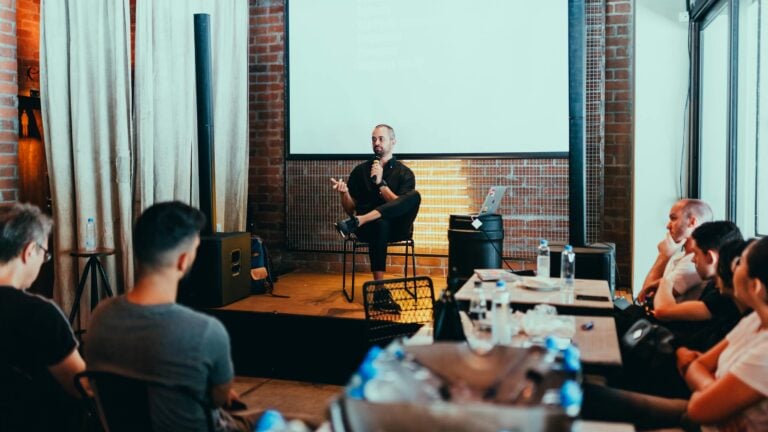
An introvert is someone whose energy comes from within. Where extroverts recharge through social interaction, introverts restore themselves through solitude, reflection, and quieter environments. It’s not shyness, and it’s not antisocial behavior. It’s simply a different way of processing the world.
Introversion sits on a spectrum, and roughly one-third to one-half of the population leans toward the introverted end. That number surprised me when I first encountered it, mostly because I’d spent years in advertising feeling like the odd one out, the person who needed to slip away from the after-party early, who did his best thinking alone in a quiet office rather than in a buzzing brainstorm session.
If you’ve ever wondered whether you’re wired this way, or you’ve known it for years but couldn’t quite put it into words, this article is for you. We’re going to look at what introversion actually is, what it isn’t, and why understanding it changes everything about how you live and work.

There’s a lot more to explore on this topic than any single article can cover. Our General Introvert Life hub pulls together a wide range of perspectives on what it means to live as an introvert, from relationships and career to everyday habits and personal identity. Think of this article as the foundation, and the hub as the place to go deeper.
What Does It Actually Mean to Be an Introvert?
The simplest way I can explain introversion is this: it’s about where your energy comes from and where it goes. Social interaction costs introverts energy. It doesn’t mean we dislike people. Many of us genuinely love connecting with others. But after sustained social engagement, we feel depleted in a way that extroverts typically don’t.
What drains your social battery?
Not all social exhaustion is the same. Our free quiz identifies your specific drain pattern and gives you personalised recharging strategies.
Find Your Drain PatternUnder 2 minutes · 8 questions · Free
A 2010 study published in PubMed Central examined how personality traits like introversion and extroversion are linked to differences in brain activity and arousal levels. Introverts tend to have higher baseline cortical arousal, meaning our brains are already running at a higher internal stimulation level. Too much external noise, social pressure, or sensory input pushes us past our optimal zone. Solitude brings us back.
I felt this acutely during my agency years. We ran campaigns for major brands, and pitch season was brutal. Back-to-back client meetings, team check-ins, creative reviews, and then the inevitable celebratory dinners. By the end of a heavy pitch week, I wasn’t tired in the ordinary sense. I was hollowed out. My wife used to say I’d come home and disappear into myself. She wasn’t wrong. I needed hours of quiet before I felt like myself again.
That experience taught me something important: introversion isn’t a flaw in my wiring. It’s just my wiring. And once I understood that, I stopped fighting it and started working with it.
How Is an Introvert Different from a Shy Person?
This is one of the most persistent misconceptions about introversion, and it matters enough to address directly. Shyness is fear of social judgment. Introversion is a preference for less stimulating environments. They can overlap, but they’re not the same thing.
Plenty of introverts are confident public speakers, charismatic leaders, and warm conversationalists. What makes them introverted isn’t discomfort in social situations. It’s that those situations cost them more energy than they cost an extrovert, and they need recovery time afterward.
I was never shy. I ran agency pitches in front of C-suite executives at Fortune 500 companies. I gave keynotes. I negotiated contracts. A Harvard Program on Negotiation piece on introverts in negotiation points out that introverts often bring genuine strengths to high-stakes conversations, including careful listening, measured responses, and the ability to read a room without broadcasting their own reactions. That described me perfectly. I just didn’t know to call it a strength at the time.
What I did know was that I preferred one real conversation to ten surface-level ones. A Psychology Today piece on why introverts need deeper conversations captures this well. Small talk feels like static to many of us. We’re not being antisocial when we skip it. We’re conserving bandwidth for something that actually means something.

What Are the Core Traits of an Introvert?
Introversion shows up differently in different people, but there are patterns worth recognizing. Most introverts share some combination of the following characteristics.
A Rich Inner Life
Introverts tend to process experiences internally before expressing them. We think before we speak, often to a degree that frustrates people who want immediate reactions. My creative directors used to joke that I’d go quiet in a meeting and come back three days later with a fully formed strategic direction. They weren’t entirely wrong. My best thinking happened away from the room, not in it.
A Preference for Depth Over Breadth
Whether it’s relationships, projects, or ideas, introverts tend to go deep rather than wide. We’d rather have three close friendships than thirty acquaintances. We’d rather master one skill than dabble in ten. This depth orientation is a genuine strength in fields that reward sustained focus and careful analysis.
Sensitivity to Overstimulation
Loud environments, crowded spaces, and constant interruptions drain introverts faster than they drain extroverts. This isn’t weakness. It’s a calibrated nervous system. A 2020 study in PubMed Central found meaningful associations between introversion and heightened sensitivity to environmental stimulation, which helps explain why introverts often perform better in quieter, more controlled settings.
The Need for Solitude as Restoration
Alone time isn’t a luxury for introverts. It’s maintenance. Without it, we run down. With it, we come back sharper, more creative, and more genuinely present. I’ve written before about how the role of solitude in an introvert’s life goes far beyond rest. It’s where we process, create, and reconnect with ourselves. Protecting that time isn’t selfish. It’s essential.
Are There Different Types of Introverts?
Yes, and this is where it gets interesting. Introversion isn’t a single fixed thing. Psychologists have identified several distinct subtypes, and most introverts recognize themselves in more than one.
Social introverts prefer small groups or one-on-one interactions over large gatherings. They’re not anxious in social settings. They simply find them less appealing than a quieter alternative. Thinking introverts are deeply introspective and self-reflective, often creative and philosophical. Anxious introverts feel self-conscious in social situations and tend to ruminate afterward. Restrained introverts are deliberate and measured, preferring to think before acting or speaking.
I identify most strongly with the thinking and restrained types. My INTJ profile on the Myers-Briggs spectrum reflects that. I’m always processing, always analyzing, always holding back a reaction until I’ve had time to evaluate it properly. In advertising, that made me a careful strategist. It also made me occasionally maddening to colleagues who wanted faster answers than I was willing to give.

How Does Introversion Show Up in Everyday Life?
Understanding introversion in theory is one thing. Seeing it in the texture of daily life is another. Here’s where it tends to show up most clearly.
At Work
Introverts often excel in roles that reward focused, independent work. Writing, research, analysis, design, strategy, and many technical fields suit the introverted mind well. Even in leadership, introverts can be extraordinarily effective, often because they listen more than they talk and think more than they react.
That said, many work environments are structured around extroverted norms: open offices, constant collaboration, back-to-back meetings. A piece from Rasmussen University on marketing for introverts touches on how introverts can build careers in fields that seem extrovert-dominated by leaning into strengths like writing, strategy, and one-on-one relationship building rather than trying to out-extrovert extroverts.
I ran agencies that way. I hired extroverted account managers to be the high-energy client faces. I stayed in my lane as the strategic thinker who shaped direction and solved the hard problems. Playing to strengths rather than fighting against nature made both me and my teams more effective.
In Relationships
Introverts tend to form deep, loyal bonds with a small circle of people. We’re not great at maintaining large social networks, but we’re often exceptional at showing up for the people who matter most. We listen. We remember details. We think carefully before we speak, which means when we do say something, it tends to mean something.
Conflict is an area where introversion can create friction. When tensions arise, introverts often need time to process before responding, which can read as withdrawal to a partner or colleague who wants immediate resolution. A Psychology Today piece on introvert-extrovert conflict resolution offers a practical framework for bridging that gap, and it’s worth a read if you’ve ever been in a relationship where your processing style created misunderstandings.
During Major Life Transitions
Change is harder to absorb when you process everything internally. New environments, new social structures, and disrupted routines hit introverts differently than they hit extroverts. fortunately that our depth of reflection often helps us adapt more thoughtfully once we’ve had time to process. Understanding how introvert change adaptation works can make a real difference when life shifts beneath your feet.
What Challenges Do Introverts Commonly Face?
Being honest about the hard parts matters as much as celebrating the strengths. Introversion comes with genuine friction points in a world built largely around extroverted norms.
Social exhaustion is real. Networking events, team-building exercises, and extended social commitments wear introverts down in ways that can affect performance, mood, and health. Early in my career, I pushed through these situations by sheer willpower, then paid for it with days of low energy and irritability. It took me years to understand that protecting recovery time wasn’t laziness. It was strategy.
Visibility is another challenge. Introverts don’t naturally self-promote. We’re more likely to do excellent work and wait for it to be noticed than to announce our contributions. In competitive environments, that can mean being overlooked. I watched talented introverts on my teams get passed over for promotions because they hadn’t made their work visible enough. That’s a structural problem with how most organizations evaluate performance, and it’s one worth naming.
Specific environments amplify these challenges. College dorms, for instance, are designed around communal living and constant social access, which can be genuinely overwhelming for introverted students. If you’re dealing with that particular situation, the practical advice in our piece on dorm life survival for introverted college students is worth reading before move-in day. Similarly, if you’re considering Greek life, our piece on Greek life for introverted college students offers a grounded look at whether and how it can work for people wired the way we are.

Can Introverts Thrive in High-Stimulation Environments?
Yes, but it requires intentionality. Thriving in a loud, fast-paced environment as an introvert isn’t about pretending to be something you’re not. It’s about building systems that protect your energy while still allowing you to engage fully when it matters.
Cities are a perfect example. New York is often held up as the ultimate extrovert’s playground, relentless, loud, and socially saturated. Yet millions of introverts live there and love it, because cities also offer anonymity, access to culture without forced socialization, and the ability to curate your environment with precision. Our piece on introvert life in NYC explores exactly how that works in practice.
The suburbs offer a different kind of fit, one that many introverts find more naturally aligned with their needs. Quieter streets, more personal space, and less constant stimulation can make daily life feel genuinely sustainable rather than something to survive. If that resonates, the piece on suburban introverts and how to actually love it offers concrete ways to make the most of that environment.
The broader principle is this: introverts can adapt to almost any environment when they understand their own needs clearly enough to protect them. That self-knowledge is the foundation of everything.
What Are the Genuine Strengths of Being an Introvert?
Introversion carries real advantages, and they tend to compound over time as you learn to lean into them rather than apologize for them.
Deep focus is one of the most valuable. In a world of constant distraction, the ability to sustain concentrated attention on a single problem is increasingly rare and increasingly valuable. Introverts often have this capacity naturally. A 2024 study in Frontiers in Psychology examined how introversion relates to certain cognitive processing styles, finding patterns consistent with more careful, deliberate information processing in introverted individuals.
Listening is another. Genuine listening, the kind where you’re absorbing what someone says rather than formulating your response, is a skill most people are mediocre at. Introverts tend to be better at it by default. In client relationships, in leadership, in therapy, and in caregiving, that skill is worth more than most people realize. Point Loma Nazarene University’s counseling program addresses this directly in their piece on whether introverts make good therapists, noting that many of the core competencies of effective therapy align naturally with introverted traits.
Careful judgment is a third. Because introverts process before acting, we tend to make fewer impulsive decisions. We’re more likely to see around corners, anticipate consequences, and avoid the kind of reactive choices that create problems down the line. In the advertising world, that made me a reliable strategic partner for clients who’d been burned by agencies that promised fast and delivered sloppy.
Is Introversion Something You’re Born With?
The evidence suggests that introversion has a significant biological component. Twin studies and neurological research point to real differences in how introverted and extroverted brains process dopamine and respond to stimulation. That said, personality exists on a spectrum and is shaped by experience, culture, and environment over time.
What this means practically is that you’re not going to “fix” your introversion through willpower or practice. You might develop skills that make social situations more comfortable. You might expand your capacity for certain kinds of engagement. But your underlying orientation, where you draw energy from and where it goes, stays fairly consistent across your life.
I spent my thirties trying to become more extroverted. I read books about networking. I forced myself into social situations that felt wrong. I performed an extroverted version of leadership that exhausted me and, looking back, probably wasn’t as effective as I thought it was. What actually changed things was accepting that my introversion wasn’t a problem to solve. It was a set of traits to understand and work with. That shift, from fighting my nature to understanding it, made everything else possible.

How Do You Know If You’re an Introvert?
There’s no blood test for introversion, but there are patterns worth paying attention to. Ask yourself honestly: Do you feel drained after extended social time, even when you enjoyed it? Do you do your best thinking alone? Do you prefer a few close relationships to a wide social network? Do you need time to process before responding to something emotionally significant? Do you find constant interruptions more costly than most people seem to?
If most of those land as true, you’re probably introverted. If some land and some don’t, you might be an ambivert, someone who sits closer to the middle of the spectrum and draws energy from both internal and external sources depending on context.
What matters more than the label is what you do with the self-knowledge. Once you understand how your energy works, you can make better decisions about how you structure your time, which environments you seek out, and what kinds of work and relationships you invest in. That’s where the real value lies.
If you’re still exploring what introvert life looks like across different contexts and life stages, the full range of articles in our General Introvert Life hub covers everything from daily habits to major life decisions, all written from the inside looking out.
Running on empty?
Five drain profiles, each with specific triggers, warning signs, and a recharging playbook.
Take the Free QuizUnder 2 minutes · 8 questions · Free
About the Author
Keith Lacy is an introvert who’s learned to embrace his true self later in life. After 20 years in advertising and marketing leadership, including running agencies and managing Fortune 500 accounts, Keith now channels his experience into helping fellow introverts understand their strengths and build fulfilling careers. As an INTJ, he brings analytical depth and authentic perspective to every article, drawing from both professional expertise and personal growth.
Frequently Asked Questions
What is the simplest definition of an introvert?
An introvert is someone who draws energy from internal experience rather than external stimulation. Social interaction and busy environments tend to deplete introverts, while solitude and quiet time restore them. Introversion is a natural personality orientation, not a disorder or a flaw, and it exists on a spectrum that includes everything from mildly introverted to strongly so.
Is being an introvert the same as being shy?
No. Shyness involves fear of social judgment, while introversion is a preference for less stimulating environments. Many introverts are confident and socially capable. They simply find sustained social engagement more costly in terms of energy than extroverts do, and they need time alone to recover. The two traits can overlap, but they’re distinct and shouldn’t be confused.
What are the main strengths of introverts?
Introverts tend to excel at deep focus, careful listening, thoughtful judgment, and forming meaningful relationships. They often perform well in roles that reward sustained concentration, strategic thinking, and independent work. Their tendency to process before acting also makes them less prone to impulsive decisions, which is a significant advantage in leadership, creative work, and high-stakes problem-solving.
Can introverts be good leaders?
Absolutely. Introverted leaders often bring qualities that extroverted leaders sometimes lack: careful listening, measured decision-making, and the ability to think strategically without being driven by the need for external validation. Research has found that introverted leaders can be particularly effective with proactive teams, because they’re more likely to listen to and implement employee ideas rather than dominate with their own agenda.
How can introverts protect their energy in demanding environments?
The most effective approach is building recovery time into your schedule intentionally rather than hoping it appears. That means blocking quiet time before and after high-demand social situations, setting boundaries around uninterrupted work periods, and being honest with yourself about how much social engagement you can sustain before your performance and wellbeing suffer. Understanding your own patterns is the starting point for managing them effectively.