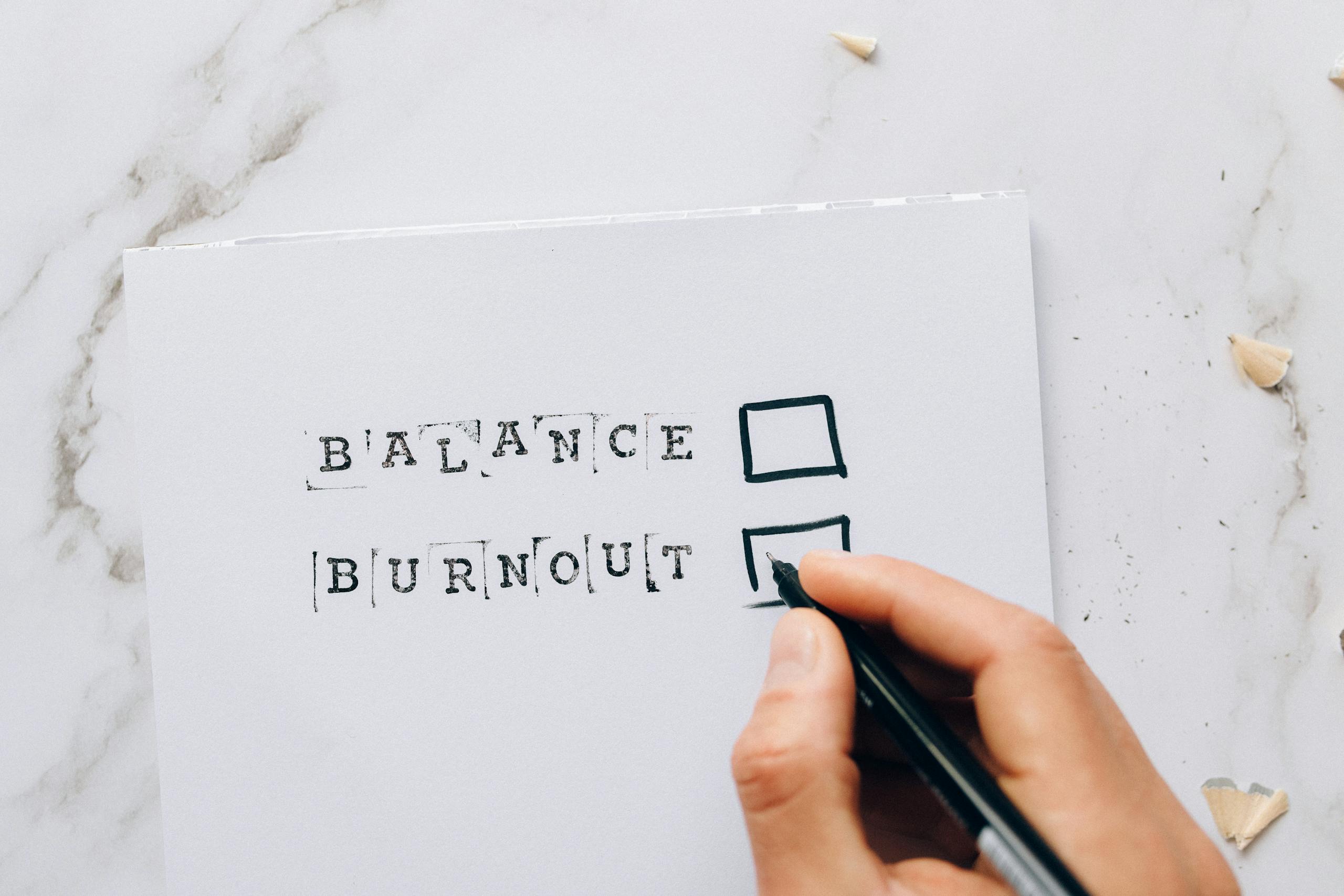
Hidden stress is the kind your body registers long before your mind admits it. It shows up as tension in your shoulders you’ve stopped noticing, a persistent low-grade fatigue you’ve labeled “just being tired,” or a jaw that aches every morning. For introverts especially, the cost of unacknowledged stress accumulates quietly, invisibly, until the body finally refuses to cooperate.
My body started keeping score long before I did. After years of running advertising agencies, managing client relationships that demanded constant performance, and leading teams through relentless deadlines, I had become remarkably skilled at overriding physical signals. I told myself I was fine. My body had a different opinion.
If any of this sounds familiar, you’re in the right place. The patterns behind hidden stress, why introverts are particularly vulnerable to it, and what it actually costs you over time are worth understanding clearly. Our Burnout & Stress Management hub covers the full spectrum of these issues, and this article goes deep on the physical dimension that often gets overlooked until it becomes a crisis.

Why Do Introverts Carry Stress So Quietly?
There’s something about the way introverts process the world that makes hidden stress almost structurally inevitable. We tend to internalize rather than externalize. We observe, filter, and analyze before we speak. We absorb the emotional texture of a room without announcing that we’re doing it. And we are extraordinarily good at maintaining a composed exterior while something more complicated is happening underneath.
Career Coaching for Introverts
One-on-one career strategy sessions with Keith Lacy. 20 years of Fortune 500 leadership as an introvert, now helping others build careers that work with their wiring.
Learn More50-minute Zoom session · $175
That composure is genuinely useful in professional environments. I relied on it constantly during high-stakes client presentations when an account worth millions was on the line. I could walk into a boardroom at a Fortune 500 company, read the room within seconds, adjust my approach, and deliver with apparent confidence. What no one saw was the hours of internal processing that preceded that moment, or the physical cost of sustaining that performance across a full day of back-to-back meetings.
The problem with carrying stress quietly is that it doesn’t dissipate on its own. It migrates. What begins as mental strain moves into the body, settling into muscle tension, disrupted sleep, digestive issues, or a persistent sense of unease that you can’t quite name. Research published in PubMed Central has documented the physiological pathways through which chronic psychological stress translates into measurable physical changes, including elevated cortisol, inflammatory markers, and cardiovascular strain. The mind-body connection isn’t metaphorical. It’s biological.
Introverts who are also highly sensitive face an amplified version of this. If you’ve read about HSP burnout and its recovery process, you’ll recognize the pattern: a nervous system that processes stimulation more deeply means that the same environment generates more internal noise than it would for someone less sensitive. That’s not weakness. It’s a different kind of wiring. But it does mean the hidden stress accumulates faster and runs deeper.
What Does the Body Actually Do With Unprocessed Stress?
Your body has one primary stress response system, and it was designed for short-term threats. When you perceive danger, whether physical or social, your nervous system activates a cascade of hormonal and physiological changes that prepare you to respond. Heart rate increases. Muscles tighten. Digestion slows. Attention narrows. The system is elegant and effective for the situations it evolved to handle.
The difficulty is that modern stress rarely arrives as a single acute threat that resolves cleanly. It arrives as a relentless stream of low-grade pressures: a difficult client relationship that never fully resolves, a workplace culture that drains you daily, financial uncertainty that hums in the background, social obligations that exceed your capacity to recharge. The stress response activates repeatedly, or never fully deactivates, and the physiological cost compounds over time.
I watched this happen to myself during a particularly brutal stretch at one of my agencies. We had taken on a major account that required near-constant client contact, and I was managing a team while also serving as the primary relationship lead. The work was intellectually engaging. I was performing well by every external measure. And I was slowly falling apart in ways I didn’t recognize until much later.
The first signals were easy to rationalize. Difficulty sleeping that I attributed to caffeine. Tension headaches I blamed on screen time. A low appetite I interpreted as being “too busy to eat.” None of these felt like stress symptoms because I associated stress with feeling overwhelmed, and I didn’t feel overwhelmed. I felt functional. What I didn’t understand then was that functional and healthy are not the same thing.

The Frontiers in Psychology journal has published work examining how chronic stress affects cognitive function and emotional regulation over time, findings that align with what many introverts describe when they finally acknowledge they’ve been running on empty for months. The cognitive effects alone, including reduced working memory, slower processing speed, and increased difficulty with perspective-taking, can make the stress harder to recognize even as it intensifies.
How Does Social Performance Drain Introverts Differently?
There’s a specific kind of stress that comes from sustained social performance, and introverts know it intimately. It’s the exhaustion of being “on” in environments that require constant outward engagement, of translating your internal experience into external expressions that meet social expectations, of monitoring how you’re being perceived while simultaneously trying to think clearly.
Even seemingly minor social rituals carry weight. Psychology Today has explored why small talk feels disproportionately taxing for introverts, and the explanation goes beyond simple preference. When your natural mode is depth and meaning, the cognitive and emotional effort required to engage in surface-level conversation with strangers is genuinely higher than it appears from the outside.
Those of us who have sat through mandatory team-building exercises know exactly what I’m describing. If you’ve ever wondered whether icebreakers are genuinely stressful for introverts, the answer is yes, and the mechanism is more physiological than most people realize. Being put on the spot in a group setting, asked to perform spontaneous social engagement, activates the same stress pathways as other perceived threats. The body doesn’t distinguish between a charging predator and a circle of colleagues waiting for you to say something witty about yourself.
Over years of agency life, I learned to manage these situations with practiced skill. I developed reliable social scripts for networking events, client dinners, and team meetings. I got genuinely good at appearing comfortable in rooms full of people. What I didn’t account for was the cumulative cost of that performance. Every hour of sustained social engagement required recovery time I rarely gave myself. The deficit grew quietly, compounding week after week.
The energy equation for introverts, as noted in Psychology Today’s Introvert’s Corner, is fundamentally different from what extroverts experience. Social interaction draws from a finite internal resource rather than replenishing it. When that resource is chronically depleted without adequate recovery, the stress response stays activated at a low simmer, and the body begins to show the wear.
What Are the Physical Signs That Hidden Stress Has Gone Too Far?
Recognizing hidden stress requires learning to read signals you may have been trained, by professional culture or personal habit, to ignore. The body communicates in a language that’s easy to dismiss when you’re focused on performance and output.
Persistent fatigue that doesn’t improve with sleep is one of the clearest indicators. When rest stops being restorative, it usually means the nervous system is staying activated even during downtime. You might sleep eight hours and wake up feeling as though you haven’t slept at all. This isn’t a sleep problem. It’s a stress problem masquerading as one.
Muscle tension that has become your baseline is another signal worth paying attention to. Many people carry chronic tension in the neck, shoulders, jaw, or lower back for so long that they’ve stopped registering it as tension. It has simply become the default state of their body. The absence of pain doesn’t mean the absence of strain.
Digestive disruption, including changes in appetite, nausea, or irritable bowel symptoms, frequently accompanies chronic stress because the gut and the nervous system are in constant communication. When the stress response is chronically activated, digestive function is suppressed as a physiological priority. Over time, this creates real gastrointestinal consequences that often get treated in isolation from their actual cause.
Emotional blunting, a kind of flatness or detachment from things that used to matter, is perhaps the most insidious signal. It can feel like stability. It can look like professionalism. What it actually represents is a nervous system that has been overwhelmed for long enough that it has started dampening its own responses as a protective measure. When I look back at certain periods in my agency years, I recognize stretches where I was operating in exactly this state, efficient, composed, and emotionally disconnected from nearly everything.

One thing worth noting: if you find it genuinely difficult to tell whether you’re stressed, you’re not unusual. Many introverts describe exactly this difficulty. Asking an introvert if they’re feeling stressed often gets a delayed or uncertain answer, not because they’re being evasive, but because the internal monitoring process takes time and the signals aren’t always obvious even to the person experiencing them.
Why Does Stress Stay Hidden So Long in High-Performing Introverts?
There’s a particular trap that high-performing introverts fall into, and I lived in it for years without recognizing it as a trap at all. When you’re productive, when you’re delivering results, when external feedback confirms that you’re doing well, it becomes very difficult to accept that something might be wrong internally. Performance becomes its own kind of evidence against stress.
I once managed a senior account director at my agency who was, by every observable measure, one of the most capable people on my team. She delivered exceptional work consistently, maintained strong client relationships, and never missed a deadline. She was also, as I learned much later, running on fumes for nearly two years before she finally left the industry entirely. The performance masked the cost until the cost became unsustainable.
INTJs in particular, and I include myself here, tend to have a strong internal narrative about competence and self-sufficiency. Admitting that stress is affecting you physically can feel like admitting a kind of failure, a breach in the self-management that the INTJ identity often prizes. So the stress gets rationalized, managed around, and in the end ignored until the body makes ignoring it impossible.
There’s also a cultural dimension. Many professional environments, especially in high-stakes industries like advertising, actively reward stress tolerance. The ability to function under pressure is treated as a virtue. People who show strain are sometimes quietly penalized for it. So you learn to perform wellness even when you’re not experiencing it, which is itself a form of stress that compounds the original problem.
Work published through PubMed Central on the relationship between emotional suppression and physical health outcomes makes a compelling case that the act of concealing stress responses, rather than simply experiencing them, carries its own physiological cost. Suppression is not the same as resolution. The body registers the difference.
What Does Recovery Actually Require for Introverts?
Recovery from hidden stress is not the same as taking a vacation, though rest matters. It requires genuinely understanding what has been depleting you and making structural changes to address it, not just adding relaxation techniques on top of an unchanged life.
Solitude is not optional for introverts in recovery. It’s physiologically necessary. The nervous system needs extended periods without social demands to complete the stress response cycle and return to a regulated baseline. This isn’t self-indulgence. It’s maintenance. I learned this the hard way after a period of particularly intense client work, when I finally took a week alone and discovered, with some shock, how far from baseline I had drifted.
Somatic practices, approaches that work directly with the body rather than just the mind, are worth taking seriously. The American Psychological Association has documented the effectiveness of relaxation response techniques in reducing physiological stress markers. Progressive muscle relaxation, diaphragmatic breathing, and body scan practices all work by interrupting the stress response at the physical level rather than trying to think your way out of it.
The 5-4-3-2-1 grounding technique from the University of Rochester Medical Center is one of the more accessible somatic tools available, and it works precisely because it redirects attention from internal rumination to immediate sensory experience. For introverts whose stress often lives in the mind, anchoring to the physical present can interrupt a cycle that thinking alone cannot break.
Addressing the sources of stress, not just the symptoms, matters enormously. If your work environment is structurally incompatible with your need for recovery time, no amount of evening meditation will fully compensate. This sometimes means making difficult decisions about workload, role structure, or environment. Exploring stress-free side hustles designed for introverts is one way some people begin building a different relationship with work that honors their actual capacity rather than fighting it.

Self-care for introverts also deserves a more nuanced understanding than the popular version suggests. It’s not about adding more activities to an already depleted schedule. Practicing better self-care without adding stress means working with your actual wiring, protecting recovery time as a non-negotiable, and being honest about what genuinely restores you versus what merely distracts you from depletion.
How Do You Build Stress Awareness Before the Body Forces the Conversation?
The goal is to develop enough self-awareness that you catch the early signals rather than waiting for the crisis. This requires building a consistent practice of internal check-ins that most high-performing introverts have never been taught and may actively resist because it feels inefficient.
Body scanning, done briefly and regularly, can be genuinely revelatory. Simply pausing once or twice a day to notice where you’re holding tension, how your breathing feels, whether your gut is relaxed or clenched, provides data that your analytical mind can actually work with. You’re not meditating. You’re gathering information.
Tracking your social and cognitive load over the course of a week gives you a clearer picture of where the depletion is coming from. After particularly draining stretches at the agency, I started keeping rough notes on what I’d done each day and how I felt physically the following morning. The patterns that emerged were sometimes surprising. Certain types of meetings were far more draining than others. Certain clients generated a stress response that persisted long after the meeting ended. Having that data made it possible to make more intentional decisions about structure and recovery.
For introverts who also experience social anxiety, the stress picture is more complex, because anxiety and stress reinforce each other in a feedback loop that can be difficult to interrupt. Developing stress reduction skills specifically suited to social anxiety addresses both dimensions simultaneously, which is more effective than treating them as separate problems.
The research on introversion and stress responses suggests that the relationship between personality type and stress is bidirectional. Introversion shapes how stress is experienced and expressed. And chronic unmanaged stress can, over time, push introverts toward even greater withdrawal, making the patterns harder to recognize and interrupt from the outside.
What changed things for me wasn’t a single insight or intervention. It was a gradual accumulation of honesty about what my body was telling me and a willingness to take that information seriously rather than optimizing around it. That shift took longer than it should have. My hope is that reading this might shorten that timeline for someone else.

There’s a lot more to explore on this topic, and if you’re working through any dimension of burnout or chronic stress, the full range of resources in our Burnout & Stress Management hub is worth spending time with. The articles there cover everything from early warning signs to long-term recovery strategies, all written with the introvert experience specifically in mind.
About the Author
Keith Lacy is an introvert who’s learned to embrace his true self later in life. After 20 years in advertising and marketing leadership, including running agencies and managing Fortune 500 accounts, Keith now channels his experience into helping fellow introverts understand their strengths and build fulfilling careers. As an INTJ, he brings analytical depth and authentic perspective to every article, drawing from both professional expertise and personal growth.
Frequently Asked Questions
Why do introverts experience hidden stress more than extroverts?
Introverts tend to internalize their stress responses rather than expressing them outwardly, which makes the accumulation less visible both to others and to themselves. Because they’re often skilled at maintaining a composed exterior, the physical and emotional cost of sustained stress can build for a long time before it becomes impossible to ignore. The tendency to process deeply and quietly means stress doesn’t get discharged through venting or social expression in the way it might for someone more extroverted.
What are the most common physical symptoms of hidden stress in introverts?
The most common physical signals include persistent fatigue that doesn’t improve with sleep, chronic muscle tension in the neck, shoulders, or jaw, digestive disruption such as changes in appetite or irritable bowel symptoms, frequent headaches, and a general sense of physical depletion that feels like a baseline rather than a temporary state. Emotional blunting, a flatness or detachment from things that used to matter, is another significant indicator that stress has been accumulating for a long time.
Can high performance at work mask the presence of hidden stress?
Yes, and this is one of the most common patterns among high-performing introverts. When external results are strong, it becomes easy to interpret performance as evidence that nothing is wrong internally. The ability to function under pressure is often rewarded in professional environments, which creates an incentive to suppress rather than acknowledge stress signals. Many people describe operating at a high level for months or even years before the physical cost became undeniable.
What recovery strategies work best for introverts dealing with hidden stress?
Effective recovery for introverts typically requires extended solitude to allow the nervous system to return to a regulated baseline, somatic practices like progressive muscle relaxation or grounding techniques that work directly with the body, and structural changes to reduce the sources of depletion rather than just managing symptoms. Self-care that aligns with introvert wiring, protecting quiet time as a genuine priority rather than a luxury, tends to be more effective than approaches borrowed from extrovert-centric wellness culture.
How can introverts build better stress awareness before reaching a breaking point?
Developing a consistent practice of brief body scans, checking in with physical tension, breathing, and gut sensations once or twice a day, provides early data that the analytical introvert mind can actually use. Tracking social and cognitive load over the course of a week helps identify which specific situations are most draining. For introverts who also experience social anxiety, developing stress reduction skills that address both dimensions simultaneously tends to be more effective than treating stress and anxiety as entirely separate problems.