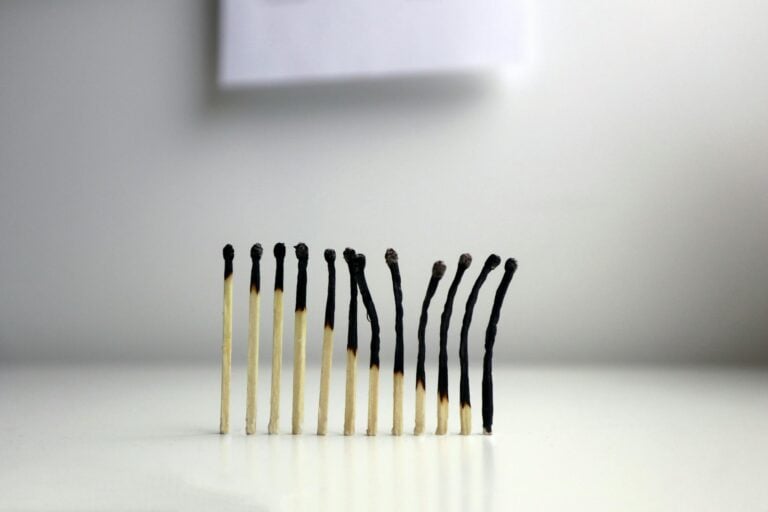

Introverts facing a mental health crisis often suffer in silence because their natural coping style, turning inward, can become a trap. The same depth of feeling that makes quiet people perceptive also makes distress harder to detect from the outside. Knowing the specific warning signs, and why they look different in introverts, is what makes early intervention possible.
There’s a particular kind of quiet that isn’t peace. I know it well. During one of the most demanding stretches of my agency career, I was managing three Fortune 500 accounts simultaneously while our team was understaffed and a major pitch was three weeks out. On the surface, I looked composed. I answered emails. I ran meetings. I kept my voice steady in rooms full of people who needed me to have answers.
Inside, something had gone very wrong. My sleep had collapsed. I was eating badly. The internal monologue I’d always relied on for clarity had turned into a fog. But because I wasn’t visibly falling apart, because I wasn’t crying in the hallway or snapping at colleagues, nobody around me registered that I was in crisis. And honestly? Neither did I, not for a long time.
That experience taught me something I’ve thought about ever since: introverts don’t always look like they’re struggling, even when they’re drowning. Our distress tends to go inward, folding into the same quiet we’re known for, which makes it easy to miss and even easier to dismiss.

Why Do Introverts Struggle with Mental Health Crises Differently?
The introvert brain processes experience deeply. A 2012 study published in the journal Frontiers in Human Neuroscience found that introverts show greater cortical activity in response to stimulation, which means we’re not just noticing more, we’re processing more. That depth is genuinely valuable. It’s what makes introverts good at reading rooms, anticipating problems, and thinking through complexity. But it also means that when stress accumulates, the internal experience can become overwhelming long before anything shows on the outside.
What’s your personality type?
Take our free 40-question assessment and get a detailed personality profile with dimension breakdowns, context analysis, and personalised insights.
Discover Your Type8-12 minutes · 40 questions · Free
Extroverts tend to externalize distress. They talk about it, seek out people, reach for stimulation to interrupt the spiral. Introverts do the opposite. We go quiet, withdraw further, and process internally, which is the same mechanism we use when we’re perfectly fine. That behavioral overlap is part of what makes mental health crises so hard to catch in people like us.
There’s also the social performance factor. Many introverts, especially those who’ve worked in leadership or client-facing roles, have become skilled at presenting a composed exterior regardless of what’s happening internally. I spent years running client presentations for major brands while carrying a level of internal pressure I never named out loud. The performance became so automatic that I stopped checking whether the person behind it was okay.
What Are the Warning Signs of a Mental Health Crisis in Introverts?
Standard mental health warning signs, things like social withdrawal, loss of interest in activities, or mood changes, can be genuinely difficult to identify in someone who already prefers solitude and tends toward emotional reserve. So what actually signals that something has shifted beyond normal introvert behavior?
Watch for withdrawal that goes beyond preference. An introvert who loves solitude will still show up for the things that matter to them. When even those disappear, when the book they were excited about sits unopened, when they cancel the one social commitment they actually wanted to keep, that’s a meaningful change. The National Institute of Mental Health identifies loss of interest in previously enjoyed activities as a core indicator of depression, and for introverts, this often shows up in the private rituals we rely on, not just social ones.
Cognitive fog is another signal that deserves attention. Introverts tend to rely heavily on internal processing, reflection, analysis, and the ability to think things through carefully. When that mental clarity deteriorates, when decisions that would normally feel straightforward become paralyzing, or when concentration collapses during tasks that used to come easily, something is wrong. During my own difficult period, I noticed I was rereading the same paragraph four or five times without retaining it. For someone whose internal life is their primary resource, losing that felt particularly frightening.
Physical symptoms matter too. The American Psychological Association has documented the strong connection between psychological distress and physical symptoms like disrupted sleep, appetite changes, fatigue, and unexplained physical tension. Introverts who are reluctant to name emotional struggles may find that their body is the first place distress becomes visible, if they’re paying attention.
A shift in the inner voice is perhaps the most introvert-specific warning sign. We spend a lot of time in our own heads, and most of us have a relationship with that internal dialogue. When it turns relentlessly critical, catastrophizing, or goes strangely silent, that’s a signal worth taking seriously. The quality of your inner life changing is data.

Why Is Asking for Help So Hard for Introverts?
Asking for help requires externalizing something that feels deeply internal. For introverts, that’s a significant act. We process privately by nature, and there’s often a strong sense that our struggles belong to us, that bringing them into a conversation means exposing something that should stay contained.
Add to that the years many of us have spent performing competence in professional settings, and the barrier gets even higher. In my agency years, I operated in an environment where showing uncertainty felt like a liability. You were supposed to project confidence, have the answer, keep the energy in the room positive. That conditioning doesn’t disappear when you walk out of the office. It follows you into the moments when you most need to say, “I’m not okay.”
There’s also an intellectual trap that introverts fall into: the belief that we should be able to think our way through this. We’re good at internal problem-solving. We trust our own analysis. So when we’re struggling, the first instinct is often to process harder, reflect more, find the insight that will resolve the discomfort. That approach works for many things. It doesn’t work well for a mental health crisis, which often requires external support precisely because the internal system is the thing that’s under strain.
This connects to what we cover in introvert-crisis-emergency-mental-health-navigation.
What I’ve found, both personally and in conversations with other introverts over the years, is that the act of naming what’s happening, even just to one trusted person, creates a kind of relief that internal processing alone can’t generate. There’s something about being witnessed that matters, even for people who spend most of their lives happily unwitnessed.
How Does Overstimulation Contribute to Mental Health Decline in Introverts?
Introverts restore energy through solitude and quiet. That’s not a preference or a quirk, it’s a neurological reality. When the conditions for that restoration are consistently unavailable, the deficit compounds. And in modern professional environments, especially in leadership roles, the conditions for restoration are often structurally unavailable.
During my years running agencies, the calendar was rarely mine. Back-to-back client calls, internal team meetings, new business pitches, industry events. Each of those things required something from me, and as an introvert, each one drew from the same internal reserve. The problem wasn’t any single meeting. It was the accumulated drain of days and weeks with no real recovery built in.
Chronic overstimulation without adequate recovery doesn’t just leave introverts tired. Over time, it can erode emotional regulation, increase anxiety, and create a persistent state of low-grade depletion that makes everything harder, including the cognitive functions we rely on most. The Mayo Clinic identifies chronic stress as a significant contributor to anxiety and depression, and for introverts, the mechanism often runs through overstimulation and inadequate recovery rather than through the social isolation that tends to affect extroverts.
Recognizing this pattern early matters. If you notice that your need for solitude is intensifying, that you’re craving quiet more desperately than usual, or that you’re feeling irritable and depleted even after what should have been a restful weekend, those are signals worth paying attention to. They may indicate that your system is running a deficit that needs addressing before it becomes a crisis.

What Coping Strategies Actually Work for Introverts in Crisis?
The most effective coping strategies for introverts tend to work with our natural processing style rather than against it. That doesn’t mean staying isolated and hoping the internal work resolves everything. It means finding approaches that match how we actually function while still moving us toward support and recovery.
Writing as a First Step
Journaling isn’t just a self-care cliché. For introverts, externalizing internal experience onto paper can be a genuine release valve. Writing forces the kind of structured reflection we’re already inclined toward, but it creates a record that can reveal patterns we might miss in the swirl of internal processing. A 2018 study from Cambridge University found that expressive writing about emotional experiences produced measurable reductions in psychological distress. For introverts who struggle to verbalize distress, this can be a meaningful first step toward identifying what’s actually happening.
Finding the Right Therapeutic Format
Not all therapy feels the same, and introverts often do better in formats that allow for depth and reflection rather than rapid-fire conversation. Many introverts find that therapists who use structured approaches, such as cognitive behavioral therapy or acceptance and commitment therapy, feel more comfortable because there’s a framework to work within rather than open-ended emotional disclosure in real time. The American Psychological Association offers resources for finding licensed therapists by specialty and approach, which can help in identifying a format that fits your processing style.
Online therapy has also been genuinely useful for many introverts because it removes the energy cost of commuting to an office, sitting in a waiting room, and managing social interaction before and after the session itself. The session can happen from a familiar, quiet space, which lowers the activation barrier.
Protecting Recovery Time Deliberately
One of the most practical things I’ve done in periods of high stress is to treat solitude as a non-negotiable appointment rather than something that happens when everything else is done. Because for introverts, if recovery time isn’t protected, it doesn’t happen. And without recovery, the capacity for everything else, work, relationships, clear thinking, emotional regulation, degrades steadily.
This isn’t about being antisocial or difficult. It’s about understanding that your energy system has specific requirements, and meeting those requirements is what makes you functional. I started blocking time on my calendar in the same way I blocked client meetings, treating it as a commitment rather than a preference. That single structural change made a measurable difference in how I operated during difficult periods.
Identifying One Trusted Person
Introverts don’t need a support network of twenty people. We need one or two people we trust deeply enough to be honest with. Identifying that person before a crisis, and occasionally checking in with them in low-stakes moments, makes it significantly easier to reach out when things get serious. The National Institute of Mental Health consistently emphasizes social support as a protective factor against mental health decline, and for introverts, quality of connection matters far more than quantity.
Are Introverts More Vulnerable to Certain Mental Health Conditions?
The relationship between introversion and mental health is more nuanced than a simple vulnerability claim. Introversion itself is not a disorder or a risk factor. Many introverts have strong mental health precisely because they’re comfortable with solitude, reflective by nature, and less dependent on external validation. Those are genuine protective qualities.
That said, certain conditions do appear more frequently in people who process deeply and spend significant time in internal reflection. Anxiety, in particular, can be amplified by the introvert tendency to anticipate, analyze, and rehearse scenarios mentally. The same cognitive depth that makes introverts good strategists can, under stress, tip into rumination and catastrophizing.
A 2020 analysis published through the National Institutes of Health found associations between introversion and higher rates of self-reported anxiety, particularly in social and performance contexts. The researchers noted, though, that these associations were moderated by factors like self-acceptance and social support, which reinforces the idea that introversion itself isn’t the problem. The problem is when introverts are operating in environments that consistently work against their nature without adequate compensation or support.
Depression can also look different in introverts. Because we’re naturally quieter and more self-contained, the classic presentation of withdrawal and reduced social engagement may not register as a change from baseline. A better frame is to watch for changes from the individual’s own baseline: less engagement with their specific interests, reduced quality of their inner life, loss of the particular kind of quiet satisfaction that introverts typically draw from their solitary activities.

How Can Introverts Build Long-Term Mental Health Resilience?
Resilience for introverts isn’t about becoming more extroverted or more visibly expressive about your emotional state. It’s about building structures and habits that work with your actual wiring, so that when difficulty arrives, you have a foundation rather than starting from scratch.
Self-knowledge is the starting point. Introverts who understand their own patterns, what drains them, what restores them, what their early warning signs look like, are significantly better positioned to catch problems early. That self-knowledge doesn’t come automatically. It comes from paying attention over time, which is something introverts are genuinely good at when they apply it to themselves rather than exclusively to the world around them.
Routine matters more than most people acknowledge. The Centers for Disease Control and Prevention identifies consistent sleep, physical activity, and social connection as foundational to mental health. For introverts, the social connection piece benefits from being intentional and specific rather than broad. A weekly call with one close friend, a regular dinner with a small group you trust, a standing commitment that keeps you connected without requiring you to perform for a crowd.
Physical movement is worth naming specifically because introverts sometimes neglect it during periods of stress, retreating further into mental and sedentary patterns. Exercise has well-documented effects on mood and anxiety regulation, and for introverts, solo activities like running, swimming, cycling, or hiking can provide both the physical benefit and the solitude benefit simultaneously. Some of my clearest thinking over the years has happened on long solo runs when I wasn’t trying to solve anything, just moving.
Finally, there’s the question of professional environment. Introverts who spend years in roles that consistently require high-stimulation performance without adequate recovery built into the structure are carrying a long-term health cost. That doesn’t mean every introvert needs to leave leadership or client-facing work. It means being honest about what the structure of your professional life is costing you, and making adjustments where you can. Sometimes that’s negotiating meeting-free mornings. Sometimes it’s choosing a role with more autonomy. Sometimes it’s a larger structural change. The point is that your working environment is a mental health variable, not just a career variable.
When Should an Introvert Seek Professional Help?
The honest answer is: earlier than feels necessary. Introverts have a particular tendency to wait until something is undeniable before naming it as a problem. We rationalize, we analyze, we tell ourselves we can work through it. And sometimes we can. But the cost of waiting too long is real, and the threshold most of us use, waiting until we’re genuinely unable to function, is set far too high.
A more useful threshold: if the quality of your inner life has deteriorated for more than two weeks, if sleep or appetite has changed significantly, if you’ve lost interest in the things that usually anchor you, or if you’re having thoughts of self-harm, those are reasons to reach out to a professional now rather than continuing to process alone.
The World Health Organization emphasizes that mental health conditions are treatable, and that early intervention consistently produces better outcomes than delayed treatment. That’s not an abstract statistic. It reflects the reality that the longer a mental health crisis goes unaddressed, the more entrenched the patterns become and the more recovery requires.
If you’re not sure whether what you’re experiencing rises to the level of professional support, that uncertainty itself is worth exploring with someone qualified to help you assess it. You don’t need to be certain you’re in crisis to reach out. Uncertainty is enough.
If you or someone you know is in immediate crisis, the 988 Suicide and Crisis Lifeline is available by call or text at 988, any time of day or night.

Mental health and personality type are deeply connected, and understanding how introversion shapes the way distress shows up, and the way recovery works, is part of building a life that actually fits you. Topics like anxiety management and building emotional resilience as an introvert are essential parts of this journey.
About the Author
Keith Lacy is an introvert who’s learned to embrace his true self later in life. After 20 years in advertising and marketing leadership, including running agencies and managing Fortune 500 accounts, Keith now channels his experience into helping fellow introverts understand their strengths and build fulfilling careers. As an INTJ, he brings analytical depth and authentic perspective to every article, drawing from both professional expertise and personal growth.
Frequently Asked Questions
Why do introverts often hide mental health struggles?
Introverts process experience internally by nature, which means distress tends to fold inward rather than becoming visible through behavior. Many introverts, particularly those in leadership or professional roles, have also developed strong habits of presenting a composed exterior regardless of internal state. That combination makes it genuinely difficult for others to detect when something is wrong, and sometimes difficult for the introvert themselves to recognize the shift from normal inward processing to something more serious.
What are the specific warning signs of a mental health crisis in introverts?
The most meaningful warning signs are changes from the individual’s personal baseline rather than general social withdrawal, which may be normal for them. Watch for loss of interest in private activities they usually enjoy, deterioration in cognitive clarity or concentration, significant changes in sleep or appetite, a shift in the quality of their inner voice toward persistent negativity or silence, and physical symptoms like unexplained fatigue or tension. Any of these lasting more than two weeks warrants attention.
Is introversion a risk factor for depression or anxiety?
Introversion itself is not a disorder or a direct cause of mental health conditions. Some research suggests associations between introversion and higher rates of anxiety, particularly in environments that consistently demand high-stimulation performance without adequate recovery. The risk is less about the personality trait itself and more about the mismatch between an introvert’s needs and their environment over time. Introverts who operate in supportive structures with adequate solitude and recovery tend to have strong mental health outcomes.
What types of therapy work best for introverts?
Many introverts find structured therapeutic approaches like cognitive behavioral therapy or acceptance and commitment therapy more comfortable than open-ended emotional disclosure, because there’s a framework to work within. Online therapy can also lower the barrier for introverts by removing the energy cost of commuting and managing social interaction around the session. The most important factor is finding a therapist whose style allows for depth and reflection rather than rapid conversational exchange.
How can introverts build mental health resilience without changing their personality?
Resilience for introverts is built by working with their natural wiring rather than against it. That means protecting solitude as a non-negotiable recovery resource, developing strong self-knowledge about personal warning signs and energy patterns, maintaining one or two deep trusted relationships rather than a broad social network, building consistent physical movement into daily life, and being honest about whether their professional environment is structurally sustainable. None of these require becoming more extroverted, they require becoming more intentional about what the introvert nervous system actually needs.