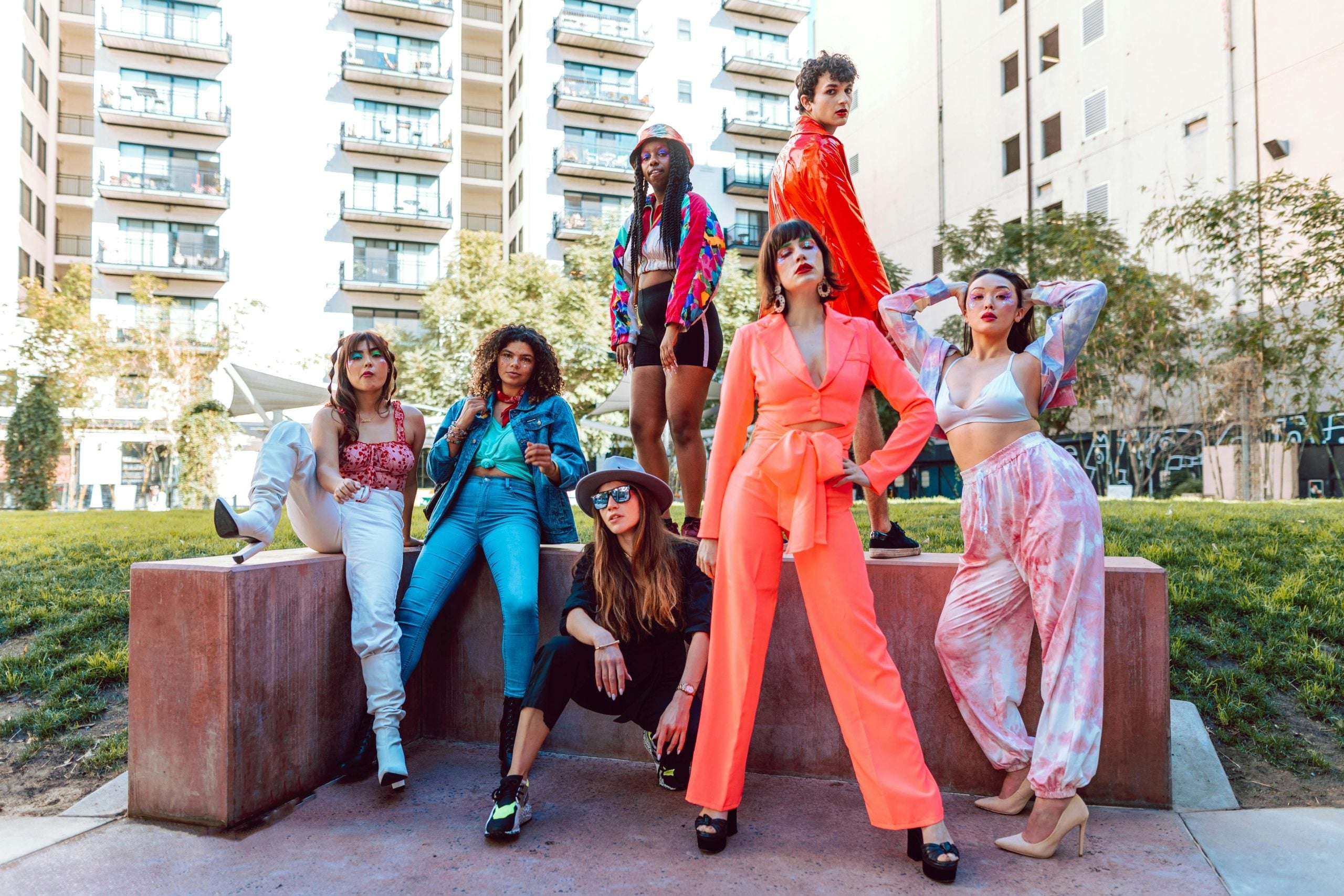
ENFP women tend to gather where ideas flow freely, where creativity is celebrated, and where genuine human connection is possible. You’re most likely to find them at community events, arts and culture spaces, social activism circles, independent coffee shops, and collaborative work environments where they can bring their signature warmth and imaginative energy to everything they do.
That’s the short answer. But if you’ve ever actually spent time around an ENFP woman, you know there’s nothing short about the experience. She’ll pull you into a conversation about climate change, pivot to recommending a novel, and somehow make you feel like the most interesting person in the room, all before your coffee gets cold.
As an INTJ who spent two decades running advertising agencies, I worked alongside more than a few ENFP women over the years. They were often the ones who transformed a tense client meeting into a creative breakthrough, or rallied a demoralized team with nothing but genuine enthusiasm and a whiteboard. I didn’t always understand them, but I respected what they brought to the table. And honestly, I’ve learned a great deal about my own wiring by watching how differently their minds work from mine.
If you want the full picture of this personality type, our ENFP Personality Type hub covers everything from cognitive functions to career paths and relationship dynamics. This article focuses specifically on where ENFP women tend to show up in life, and why those spaces attract them so naturally.
What Makes ENFP Women Tick Before You Know Where to Find Them
Before we talk locations, it helps to understand what drives an ENFP woman to choose one space over another. According to Truity’s overview of the ENFP type, ENFPs are defined by their dominant function of Extraverted Intuition, which means their energy flows outward through possibilities, patterns, and connections between ideas. They don’t just see what’s in front of them. They see what could be, and they want to talk about it with everyone around them.
Career Coaching for Introverts
One-on-one career strategy sessions with Keith Lacy. 20 years of Fortune 500 leadership as an introvert, now helping others build careers that work with their wiring.
Learn More50-minute Zoom session · $175
Their auxiliary function is Introverted Feeling, which gives them a deeply personal value system. ENFP women aren’t just socially enthusiastic, they’re ethically anchored. They care intensely about authenticity, fairness, and meaning. This combination means they’re drawn to environments that feel both intellectually alive and emotionally genuine. A sterile corporate setting with rigid hierarchies will feel suffocating to them. A messy, passionate startup working on something that matters? That’s home.
I managed a creative director at one of my agencies who I’m fairly certain was an ENFP. She could walk into a room where morale had completely collapsed after a difficult client review and somehow, within twenty minutes, have everyone laughing and sketching new ideas. What I noticed, as someone who processes things very differently, was that she wasn’t performing optimism. She genuinely believed the next idea was just around the corner. That’s dominant Ne at work. It’s not denial. It’s a fundamentally different relationship with possibility.
Understanding that cognitive wiring helps explain why ENFP women cluster in certain environments. They follow stimulation, meaning, and connection. Once you know that, finding them becomes much more intuitive.
Where Do ENFP Women Spend Their Time Socially?
Social spaces for ENFP women aren’t about small talk. They’re about the kind of conversation that makes you forget what time it is. You’ll find them in environments that reward curiosity and reward being real.
Book clubs are a natural habitat, particularly ones that lean toward literary fiction, social commentary, or speculative ideas. ENFP women don’t just want to summarize the plot. They want to argue about what the author really meant, and then somehow connect it to something happening in the news. Philosophy meetups, discussion groups, and debate-style social events attract them for the same reason.
Art gallery openings, live music venues, and independent theater productions draw ENFP women consistently. These spaces combine aesthetic experience with social interaction, which is a combination that feels deeply satisfying to someone whose dominant function is always scanning for meaningful patterns. They’re not there to be seen. They’re there because something about the creative energy genuinely excites them.
Volunteer organizations and community activism spaces are also strong draws. The ENFP’s auxiliary Introverted Feeling creates a strong pull toward causes that align with their personal values. Environmental groups, social justice organizations, community gardens, and neighborhood advocacy circles tend to attract ENFP women who want their time to mean something beyond entertainment.
I once attended a neighborhood zoning meeting for a community arts center that one of my former employees had helped organize. She was an ENFP, and watching her work that room was a masterclass in genuine connection. She knew everyone’s name, remembered details from conversations months earlier, and somehow made a city council meeting feel like a reunion. That capacity for authentic warmth isn’t a strategy. It’s just how ENFPs move through the world.

What Professional Environments Attract ENFP Women?
Over two decades in advertising, I worked with people across nearly every personality type. The ENFP women I encountered tended to cluster in specific roles and settings, and once I understood why, the pattern made complete sense.
Creative industries attract them strongly. Marketing, advertising, public relations, journalism, and content creation all reward the kind of associative, big-picture thinking that ENFPs do naturally. They’re not just good at generating ideas. They’re good at making other people excited about ideas, which is an underrated skill in any creative field.
Education is another major draw. ENFP women in teaching roles are often described by students as the teacher who changed their life. They bring genuine enthusiasm for their subject matter, they connect with students as individuals, and they have a gift for making abstract concepts feel personally relevant. You’ll find them in classrooms at every level, from elementary school through university, as well as in training and development roles within organizations.
Counseling, coaching, social work, and nonprofit leadership also attract ENFP women in significant numbers. The combination of their outward-facing energy and their deeply held personal values makes helping professions feel like a natural fit. They want to see people flourish, and they’re willing to do the hard relational work that requires.
Startup environments are worth mentioning separately. The early-stage chaos of a new company, where roles are fluid, ideas matter more than titles, and everything is being built from scratch, suits the ENFP’s cognitive style well. They thrive when they can wear multiple hats and shape something from the ground up. Rigid corporate structures with lots of bureaucracy tend to drain them over time.
If you’re curious about how ENFPs handle the more challenging dynamics of professional life, the piece on ENFP managing up with difficult bosses gets into the specific friction points that arise when their natural style collides with controlling or rigid leadership. It’s a dynamic I watched play out more than once in my own agencies.
Where Do ENFP Women Thrive in Online and Digital Spaces?
The internet gave ENFPs something extraordinary: an infinite supply of ideas, people, and conversations. ENFP women have adapted to digital spaces in ways that reflect their core drives very naturally.
Creative communities on platforms like Instagram, TikTok, and YouTube attract ENFP women who want to share their perspective, whether that’s through art, commentary, storytelling, or humor. They’re often not chasing fame. They’re chasing connection and the satisfaction of expressing something that resonates with someone else.
Reddit communities centered on ideas, philosophy, personality psychology, social issues, and creative writing tend to have strong ENFP representation. The format rewards thoughtful, expansive responses, which suits someone whose dominant function is generating connections and possibilities. You’ll find ENFP women in threads where the conversation goes three levels deeper than the original question.
Discord servers built around shared interests, particularly creative fandoms, social causes, and intellectual topics, are another common gathering place. The informal, real-time conversation format suits ENFPs well. They don’t need formal structure to engage meaningfully. They just need people who are genuinely interested in something.
Personality type communities themselves attract significant numbers of ENFP women. Places where people discuss MBTI, cognitive functions, and self-understanding resonate with the ENFP’s interest in human nature and their own inner world. If you haven’t yet identified your own type, our free MBTI personality test is a good starting point for that kind of self-exploration.
How Do ENFP Women Show Up Differently from ENFJ Women?
This distinction matters, because ENFP and ENFJ women can look remarkably similar on the surface. Both are warm, expressive, and people-oriented. Both care deeply about others. Both show up energetically in social settings. But the underlying cognitive architecture is quite different, and it shapes where and how they show up in meaningful ways.
ENFJ women lead with Extraverted Feeling as their dominant function. They’re attuned to group harmony, social dynamics, and the emotional needs of the people around them. They tend to be more structured in how they pursue connection, more aware of social roles and expectations, and more oriented toward consensus and community cohesion. Truity’s comparison of ENFP and ENFJ does a solid job of laying out these differences if you want to go deeper.
ENFP women, by contrast, lead with Extraverted Intuition. Their energy goes toward ideas and possibilities first, with their values (Introverted Feeling) providing the ethical compass underneath. This makes them a bit more unpredictable, more likely to follow an interesting tangent, and more resistant to social scripts that feel inauthentic to them.
In practice, ENFJ women often show up in leadership and facilitation roles where they’re actively managing group dynamics. ENFP women often show up as the catalytic presence who sparks something new without necessarily wanting to manage the follow-through. Both are valuable. They’re just doing different things with their energy.
If you’re interested in how ENFJs handle cross-type dynamics, the articles on ENFJ working with opposite types and ENFJ cross-functional collaboration explore those patterns in detail. And for ENFPs specifically, the piece on ENFP working with opposite types covers how they approach relationships with people whose cognitive styles are very different from their own.
What Environments Do ENFP Women Actively Avoid?
Understanding where ENFP women gather also means understanding what repels them. Knowing the environments they tend to avoid gives you a clearer picture of what they’re actually seeking.
Highly bureaucratic settings drain them quickly. Rigid hierarchies, excessive rules, and environments where creativity is consistently subordinated to process feel genuinely suffocating to someone whose dominant function is wired for open-ended exploration. I’ve watched talented ENFP employees leave otherwise good jobs simply because the organizational culture had no tolerance for improvisation or new ideas.
Environments that reward surface-level interaction without depth also tend to push ENFP women away over time. Networking events built around transactional schmoozing, social circles where vulnerability is considered weakness, and workplaces where people are expected to leave their whole selves at the door don’t align with what ENFPs are actually looking for in their connections.
Competitive environments built on zero-sum thinking can be uncomfortable for ENFP women as well. Their auxiliary Introverted Feeling is oriented toward personal values and authenticity, not dominance. They can be assertive when their values are at stake, but environments that reward cutthroat behavior over genuine contribution tend to feel misaligned with who they are.
Routine-heavy environments with little variation also tend to wear on them. The inferior function for ENFPs is Introverted Sensing, which means the careful, systematic, detail-oriented work that Si-dominant types find deeply satisfying can feel tedious and depleting for ENFPs over time. They need variety, novelty, and the sense that something new is always on the horizon.

How Do ENFP Women Approach Relationships and Connection?
If you’re looking to genuinely connect with an ENFP woman, understanding how she approaches relationships matters as much as knowing where she spends her time.
ENFP women connect through ideas and shared meaning. Small talk can feel exhausting to them not because they’re antisocial, but because it doesn’t satisfy what they’re actually hungry for. Get them talking about something they care about, something that genuinely matters to them, and you’ll see the real person emerge very quickly.
They value authenticity above almost everything else in a relationship. Their auxiliary Introverted Feeling is constantly evaluating whether interactions feel genuine. Performative behavior, social posturing, or conversations that feel hollow will register immediately. ENFP women have a finely tuned radar for inauthenticity, and it tends to make them withdraw.
At the same time, they’re generous and warm in ways that can sometimes be mistaken for romantic interest when it’s simply their natural mode of engagement. ENFP women tend to bring real presence and genuine curiosity to their interactions with everyone. That warmth is authentic, but it’s also broadly distributed. Understanding that distinction matters in any relationship context.
The way ENFPs handle negotiation in relationships, professional or personal, connects to their broader communication style. The article on ENFJ negotiation by type explores related dynamics around how feeling-dominant types approach conflict and agreement, which offers useful context for understanding the broader NF communication landscape.
One thing I noticed managing ENFP team members over the years: they respond extraordinarily well to being treated as capable adults whose ideas matter. When I made the shift from directive management to collaborative conversations, the quality of work from my ENFP employees improved significantly. They weren’t being difficult before. They were just working in a structure that didn’t fit how they think.
What Hobbies and Interests Draw ENFP Women Together?
Hobby spaces are often where ENFP women are most authentically themselves, because the pressure of professional performance is removed and they’re simply doing what they love.
Creative arts of all kinds attract them strongly. Writing groups, improv comedy classes, painting workshops, photography collectives, and music communities all tend to have significant ENFP representation. These spaces combine creative expression with social connection, which is an irresistible combination for someone wired the way ENFPs are.
Travel and adventure communities also attract ENFP women. Not necessarily extreme sports, though some are drawn to that too, but the kind of travel that involves cultural immersion, meeting local people, and experiencing something genuinely new. Language learning communities often attract them for similar reasons. The ENFP’s dominant Ne finds new cultures and languages endlessly fascinating.
Wellness spaces that combine community with personal growth, yoga studios with a strong community culture, meditation groups, and personal development workshops, attract ENFP women who are doing the work of understanding themselves more deeply. The National Institute of Mental Health’s resources on stress touch on why these kinds of community-based wellness practices matter for mental health broadly, which resonates with ENFPs’ tendency to process their inner lives through connection with others.
Podcast communities and book-to-podcast crossover spaces have also become natural gathering places. ENFP women who are deep readers often gravitate toward communities built around specific authors, genres, or ideas, where the conversation can go as deep as the material warrants.
The ENFP cross-functional collaboration piece is worth reading if you want to understand how ENFP women bring their social and creative energy into professional team settings specifically. It captures something important about how they operate when they’re at their best.

A Note on Individuality Within Type
Everything I’ve described here reflects tendencies, not certainties. ENFP is a cognitive preference profile, not a personality mold. The ENFP women I’ve worked with over the years have been wildly different from each other in their specific interests, communication styles, and life choices. What they shared was the underlying cognitive architecture: the dominant Ne constantly generating connections, the auxiliary Fi providing a strong ethical compass, and the resulting personality that tends to be simultaneously idealistic and deeply personal.
Some ENFP women are introverted in their social behavior even though their dominant function is extraverted in orientation. Some are highly organized despite the type’s reputation for scattered energy. Introversion and extraversion in MBTI describe the orientation of the dominant cognitive function, not how much someone enjoys parties. An ENFP woman who needs significant alone time to recharge isn’t a broken ENFP. She’s just a complete human being with her own specific relationship to her energy.
Personality type is a useful lens, not a complete portrait. The woman you’re trying to understand or connect with is always more than her four letters. What the MBTI framework gives you is a starting point for understanding what might drive her, what environments she’s likely to find energizing, and what kinds of connection she’s probably looking for. The rest you learn by actually paying attention to her specifically.
Personality type frameworks can also intersect with broader psychological research in meaningful ways. This PubMed study on personality and social behavior and this related research on individual differences offer context for understanding how personality traits shape real-world behavior patterns, which is the foundation of what makes frameworks like MBTI useful in the first place.
If you’re exploring the ENFP type more broadly, whether you’re an ENFP yourself or someone who wants to understand the people in your life who fit this profile, our complete ENFP Personality Type hub is the most comprehensive resource we have on the subject.
About the Author
Keith Lacy is an introvert who’s learned to embrace his true self later in life. After 20 years in advertising and marketing leadership, including running agencies and managing Fortune 500 accounts, Keith now channels his experience into helping fellow introverts understand their strengths and build fulfilling careers. As an INTJ, he brings analytical depth and authentic perspective to every article, drawing from both professional expertise and personal growth.
Frequently Asked Questions
Are ENFP women common in creative industries?
Yes, creative industries tend to attract ENFP women in significant numbers. Their dominant Extraverted Intuition makes them natural generators of ideas and connections, which suits fields like marketing, advertising, writing, design, and the performing arts. They also tend to thrive in the collaborative, fast-moving culture that many creative environments foster. That said, ENFP women show up across many professions, and their presence in creative fields reflects preference, not limitation.
How do ENFP women typically behave in social settings?
ENFP women in social settings tend to be warm, curious, and genuinely interested in the people around them. They often move between conversations with ease, ask questions that go deeper than surface level, and have a gift for making people feel seen and heard. They’re drawn to conversations with substance and may become visibly disengaged in settings where the interaction stays shallow. Their warmth is authentic rather than performed, which is something most people pick up on quickly.
What’s the difference between an ENFP woman and an ENFJ woman?
The core difference lies in their dominant cognitive functions. ENFP women lead with Extraverted Intuition, making them primarily oriented toward ideas, possibilities, and creative connections. ENFJ women lead with Extraverted Feeling, making them primarily oriented toward group harmony, emotional attunement, and interpersonal dynamics. Both are warm and people-oriented, but ENFJ women tend to be more structured in how they manage social situations, while ENFP women tend to follow their curiosity more freely, sometimes at the expense of consistency or follow-through.
Do ENFP women prefer deep relationships or wide social networks?
Most ENFP women want both, though depth tends to matter more to them in the long run. Their auxiliary Introverted Feeling creates a strong pull toward authentic, meaningful connection. They may have broad social networks because their outgoing energy attracts people easily, but they’re most satisfied in relationships where they can be fully themselves and engage with real substance. Relationships that stay permanently surface-level tend to feel unsatisfying to them over time, regardless of how many people are in their circle.
Where online are ENFP women most active?
ENFP women tend to be active in online communities built around ideas, creativity, and shared values. Reddit communities focused on personality psychology, social issues, creative writing, and philosophical discussion attract them. Discord servers built around specific interests or causes are another common gathering place. Creative platforms like Instagram and TikTok also have significant ENFP presence, particularly among women who use those platforms to share their perspective or creative work rather than simply consume content. Personality type communities specifically tend to have strong ENFP representation.