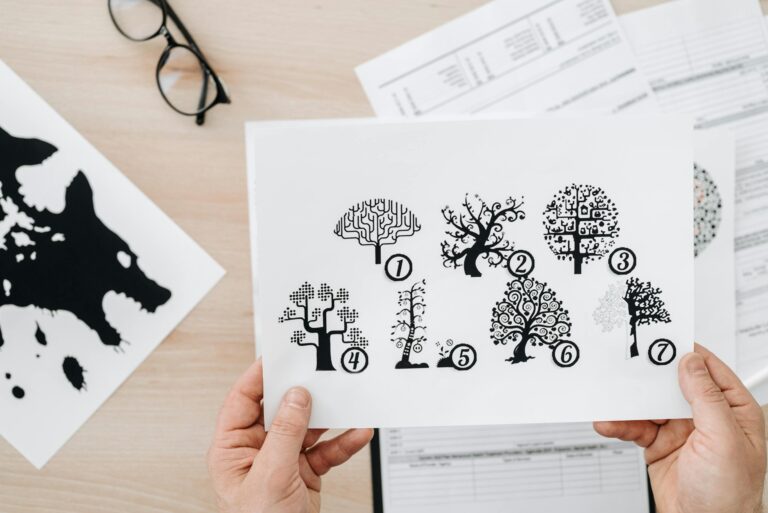

Carl Gustav Jung is the psychologist who developed the theory of introvert and extrovert, introducing these terms in his 1921 book Psychological Types. Jung proposed that people differ fundamentally in where they direct their mental energy, inward toward their own thoughts and reflections, or outward toward other people and the external world. His framework laid the groundwork for nearly every personality model that followed, from the Myers-Briggs Type Indicator to modern neuroscience research on temperament.
What most people don’t realize is that Jung wasn’t working in a vacuum. He was building on earlier observations, responding to a professional rupture with his mentor Sigmund Freud, and wrestling with his own inner life in ways that shaped the theory as much as any clinical data. The history of how these concepts came to be is richer, stranger, and more personal than most psychology textbooks let on.
Before we get into the history, a quick note: if you’re still figuring out where you fall on the personality spectrum, our Introversion vs Extroversion hub covers the full landscape, from the basics of what these traits mean to the more nuanced territory of ambiverts, omniverts, and everything in between. It’s a good companion to what we’re exploring here.

Who Actually Coined the Terms Introvert and Extrovert?
Carl Jung coined the terms in their modern psychological sense, though variations of the words had appeared in earlier philosophical writing. What Jung did that no one before him had done was build a systematic, clinical theory around them. He spent years observing patients, studying mythology, and examining his own psychology before publishing Psychological Types in German in 1921. The English translation followed in 1923, and the terms entered the broader cultural conversation from there.
What’s your personality type?
Take our free 40-question assessment and get a detailed personality profile with dimension breakdowns, context analysis, and personalised insights.
Discover Your Type8-12 minutes · 40 questions · Free
Jung described introverts as people whose psychic energy flows inward. They are energized by solitude, reflection, and inner experience. Extroverts, by contrast, direct that energy outward, drawing vitality from social engagement and external stimulation. He was careful to note that neither type was healthier or superior. Each had strengths. Each had blind spots. The goal, in his view, was integration, finding a way to access both orientations rather than being rigidly locked into one.
That nuance gets lost in popular culture constantly. People treat introversion and extroversion as fixed, binary categories. Jung’s original framework was more fluid than that. He acknowledged that most people sit somewhere along a continuum, with a dominant orientation that shapes their default way of engaging with the world. Sound familiar? It’s essentially what we now call the ambivert concept, though Jung didn’t use that word.
Speaking of which, if you’ve ever wondered whether you fit neatly into one box or straddle the line, the Introvert Extrovert Ambivert Omnivert Test is a useful starting point for sorting that out.
What Was Jung Responding To When He Developed This Theory?
Context matters enormously here, and this is the part of the story that most articles skip over. Jung didn’t develop his theory in a neutral academic setting. He developed it in the aftermath of one of the most famous professional breakups in the history of psychology, his split with Sigmund Freud.
Jung and Freud had been extraordinarily close. Freud saw Jung as his intellectual heir, the person who would carry psychoanalysis forward. Their correspondence was intense and personal. Then, over several years in the early 1910s, their theoretical disagreements widened into an irreparable break. Freud believed that the unconscious was primarily driven by repressed sexual impulses. Jung disagreed, arguing for a broader conception of the psyche that included spiritual, cultural, and archetypal dimensions.
After the split, Jung went through what he later described as a period of intense inner work, confronting his own unconscious directly. He recorded visions, drew images, and wrote obsessively in what became known as the Red Book, a private document that wasn’t published until 2009. Psychological Types emerged from that period. In the book’s preface, Jung essentially acknowledged that the introvert-extrovert distinction was partly his attempt to understand how two brilliant people, himself and Freud, could look at the same psychological data and reach such different conclusions.
His answer was that they were oriented differently. Freud, Jung believed, was fundamentally extroverted in his psychological stance, looking outward to the object, to the patient, to the external cause of neurosis. Jung saw himself as more introverted, drawn inward to subjective experience, myth, and the inner architecture of the psyche. The theory, in a real sense, was a self-portrait as much as a clinical framework.
I find that deeply relatable. Some of my clearest thinking about leadership and introversion came not from books but from moments of friction, times when I was trying to understand why I kept clashing with certain clients or colleagues who seemed to process the world from an entirely different operating system. The theory becomes personal when the stakes are personal.

Were There Thinkers Before Jung Who Noticed These Differences?
Yes, though none of them built a systematic psychological theory around the distinction. Philosophers and physicians had observed temperamental differences for centuries. The ancient Greek model of the four humors, melancholic, sanguine, choleric, and phlegmatic, captured some of the same terrain. Melancholic types, associated with inwardness and deep feeling, map loosely onto what we’d now call introversion. Sanguine types, social and energetic, overlap with extroversion.
In the 19th century, German philosopher Friedrich Nietzsche wrote about the distinction between Apollonian and Dionysian tendencies, inward contemplation versus outward expression, though he was describing artistic impulses rather than personality types. Wilhelm Wundt, one of the founders of experimental psychology, categorized temperaments along dimensions that partly anticipated Jung’s framework.
What Jung did that was genuinely new was synthesize these threads into a coherent psychological model, ground it in clinical observation, and give it vocabulary that stuck. The words “introvert” and “extrovert” are his contribution. The underlying observation that humans differ in how they orient their energy is much older.
It’s also worth noting that the spelling “extrovert” (rather than “extravert”) is the popular variant that emerged after Jung. Jung himself used “extravert,” and many academic psychologists still prefer that spelling today. If you’ve ever wondered why you see both versions, that’s the reason. The popular form drifted slightly from the original.
How Did Hans Eysenck Reshape Jung’s Original Framework?
Jung gave us the concepts. Hans Eysenck, a British psychologist working several decades later, gave us the science. Eysenck took Jung’s qualitative descriptions and built a measurable, empirically testable model around them. His work in the mid-20th century was pivotal in establishing introversion and extroversion as legitimate subjects for scientific inquiry rather than just philosophical speculation.
Eysenck proposed that the introversion-extroversion dimension was rooted in biology, specifically in differences in baseline arousal in the brain’s cortex. His theory suggested that introverts have higher baseline arousal, meaning they reach their optimal stimulation threshold more quickly. Extroverts, with lower baseline arousal, seek out more stimulation to reach that same optimal state. This is why a loud party might feel overwhelming to one person and energizing to another.
This biological framing was significant. It shifted the conversation from “which type is better” to “how are these types differently wired.” It also opened the door to decades of subsequent research exploring the neurological and physiological correlates of personality. Work published in journals like PubMed Central has continued to examine the biological underpinnings of personality traits, building on foundations that Eysenck helped establish.
Eysenck also placed introversion-extroversion within a broader personality model that included neuroticism (emotional stability) and, later, psychoticism. His work influenced the development of the Big Five personality model, which remains the dominant framework in academic personality psychology today. The Big Five includes extraversion as one of its five core dimensions, a direct lineage from Eysenck’s work and, before him, Jung’s original observations.

How Did Myers and Briggs Bring These Ideas to the Public?
Isabel Briggs Myers and her mother Katharine Cook Briggs are responsible for taking Jung’s theoretical framework and turning it into something millions of people could actually use. Their work began in the 1940s, driven by a practical goal: helping women entering the workforce during World War II find roles that matched their natural strengths.
Katharine Briggs had been independently developing a typology system before she encountered Jung’s work. When she read Psychological Types, she recognized that Jung had articulated something she’d been circling. She and her daughter spent years developing a questionnaire based on his framework, adding dimensions beyond introversion and extroversion to capture the full range of cognitive preferences Jung described.
The result was the Myers-Briggs Type Indicator, which measures four dimensions: introversion versus extroversion, sensing versus intuition, thinking versus feeling, and judging versus perceiving. As an INTJ, my profile reflects introversion, intuition, thinking, and judging. Those four letters have described my operating system with uncomfortable accuracy for as long as I’ve known about them. Running advertising agencies for two decades, I watched myself consistently gravitate toward strategic thinking over social performance, toward depth over breadth, toward systems over spontaneity.
What Myers and Briggs accomplished was democratization. They made Jung’s ideas accessible without a psychology degree. That accessibility came with trade-offs. Academic psychologists have critiqued the MBTI for its reliability and for presenting continuous traits as binary categories. Those are legitimate concerns. Yet the framework’s reach is undeniable. It brought the language of introversion and extroversion into workplaces, schools, and living rooms in a way that purely academic models never could.
If you want to get a clearer sense of where you fall, the Introverted Extrovert Quiz is worth taking. It can help clarify whether you’re leaning strongly in one direction or operating in the more blended middle ground that Jung always acknowledged existed.
What Did Jung Actually Mean by Introversion, Beyond the Social Stereotype?
This is where I want to slow down, because the popular understanding of introversion strips away most of what Jung actually meant. In popular culture, introversion has become shorthand for shyness, quietness, or discomfort in social situations. Jung’s definition was more precise and more interesting than that.
For Jung, introversion was about the direction of psychic energy, not about social behavior. An introvert, in his framework, is someone whose primary orientation is toward the inner world of thoughts, feelings, and subjective experience. That inner world is where they feel most alive, most clear, most themselves. Social interaction isn’t necessarily uncomfortable for introverts. It’s simply not where they go to recharge or find meaning.
Jung also identified different types of introverts based on which psychological function was most developed. An introverted thinker processes the world through internal logical frameworks. An introverted feeler is guided by deeply held personal values. An introverted intuitive, which maps closely to my own INTJ profile, perceives patterns and possibilities through an inward lens, often arriving at insights that seem to come from nowhere but are actually the product of extensive internal processing.
That last description resonates with something I noticed repeatedly in my agency years. My best strategic insights rarely came from brainstorming sessions. They came from the drive home afterward, or from a quiet morning before the office filled up, when my mind could finally work through what it had been quietly assembling all day. That’s introverted intuition doing its thing, exactly as Jung described it.
Understanding what extroversion actually means in this fuller sense is equally important. If you’ve never examined what that orientation really involves beyond the surface-level “outgoing person” stereotype, What Does Extroverted Mean breaks it down in a way that goes beyond the clichés.
There’s also a meaningful spectrum within introversion itself. Someone who is fairly introverted experiences the world differently from someone who is extremely introverted, and those differences matter for how you work, relate to others, and build a life that fits you. The comparison between fairly introverted vs extremely introverted personalities is worth exploring if you want to understand where your own experience sits on that range.

How Has the Science Evolved Since Jung’s Original Theory?
Modern personality psychology has moved well beyond Jung’s framework while still building on its foundations. The Big Five model, which emerged from decades of statistical analysis of personality traits, treats extraversion as one of five core dimensions. Researchers in this tradition tend to define extraversion in terms of positive emotionality, sociability, and assertiveness, a somewhat narrower definition than Jung’s but one that’s more amenable to measurement.
Neuroscience has added another layer. Researchers have examined whether introverts and extroverts show measurable differences in brain activity, sensitivity to dopamine, and responses to stimulation. The picture that emerges is consistent with Eysenck’s arousal theory in broad strokes, though the details are more complex than early models suggested. Findings published through PubMed Central have continued to explore the neurological dimensions of personality, reflecting how seriously the scientific community takes these questions.
One important development is the growing recognition that personality traits are not destiny. They describe tendencies, not fixed behaviors. An introvert can learn to present confidently in front of large groups. An extrovert can develop a rich inner life. The trait shapes your default settings, not your ceiling. That framing matters enormously for how we talk about introversion, especially in professional contexts where introverts have historically been told they need to change who they are to succeed.
Contemporary research has also complicated the binary. The ambivert concept, describing people who fall in the middle of the introversion-extroversion continuum, has gained serious traction. And more recently, the omnivert concept has emerged to describe people who swing between strongly introverted and strongly extroverted behavior depending on context, rather than sitting at a stable midpoint. The distinction between omnivert vs ambivert is subtle but worth understanding if you’ve ever felt like your personality shifts dramatically depending on the situation.
There’s also a related concept worth knowing about. The otrovert vs ambivert distinction captures another layer of nuance in how people experience and express their personality orientation. These newer terms reflect how much more textured our understanding has become since Jung first sketched the basic outline a century ago.
Why Does the Origin of This Theory Still Matter Today?
Knowing where ideas come from changes how we hold them. When I finally understood that Jung developed his introvert-extrovert framework partly as a way to make sense of his own inner life and his rupture with Freud, the theory felt more honest to me. It wasn’t handed down from some neutral scientific altitude. It was forged in the heat of personal experience and intellectual struggle. That makes it more trustworthy, not less.
It also explains some of the theory’s limitations. Jung was a product of his time, his culture, and his particular psychological struggles. His framework reflects those origins. The binary structure he proposed has been refined by a century of subsequent research. The clinical vocabulary has evolved. What remains valuable is the core insight: that people differ in how they orient their energy, and that difference is real, meaningful, and worth taking seriously.
For introverts specifically, the history of this theory is partly a history of legitimization. Before Jung named what introversion was, introverts were simply people who were too quiet, too serious, too much in their own heads. Jung gave that orientation a name and a framework. Eysenck gave it biological grounding. Myers and Briggs gave it cultural reach. And now, a century after Psychological Types was published, we have a rich, if still imperfect, vocabulary for understanding something that millions of people experience every day.
There’s a reason I started Ordinary Introvert. Spending twenty-plus years running agencies while quietly feeling like I was performing a version of myself that didn’t quite fit taught me how much it matters to have language for your own experience. When I finally understood that my preference for depth over breadth, for quiet processing over loud brainstorming, for written communication over impromptu speeches, wasn’t a deficiency but a trait with a century of theoretical backing, something shifted. Not dramatically. But meaningfully.
Understanding how introversion and extroversion interact in real relationships, negotiations, and conflicts adds another practical dimension to this history. Psychology Today’s four-step introvert-extrovert conflict resolution framework offers a grounded, practical look at how these differences play out in real interpersonal dynamics. And if you’ve ever wondered whether introverts are at a disadvantage in high-stakes situations, Harvard’s Program on Negotiation makes a compelling case that introvert strengths often become assets in exactly those moments.
The deeper question of what makes introvert conversations feel meaningful is also worth examining. Psychology Today’s exploration of why deeper conversations matter connects directly to what Jung was describing when he talked about the introvert’s orientation toward inner experience. Depth isn’t just a preference. For many introverts, it’s a need.
Recent work published in Frontiers in Psychology continues to examine how personality traits like introversion and extroversion shape behavior across different contexts, reflecting how active this area of research remains more than a hundred years after Jung first put the framework on paper.

If this history has sparked more questions about where you sit on the personality spectrum and how introversion and extroversion actually differ in practice, our Introversion vs Extroversion hub is the place to keep exploring. It pulls together the full range of what we’ve written on these topics in one place.
About the Author
Keith Lacy is an introvert who’s learned to embrace his true self later in life. After 20 years in advertising and marketing leadership, including running agencies and managing Fortune 500 accounts, Keith now channels his experience into helping fellow introverts understand their strengths and build fulfilling careers. As an INTJ, he brings analytical depth and authentic perspective to every article, drawing from both professional expertise and personal growth.
Frequently Asked Questions
Who first developed the theory of introvert and extrovert?
Carl Gustav Jung developed the theory of introvert and extrovert in its modern psychological form, publishing his framework in Psychological Types in 1921. Jung proposed that people differ in the direction of their psychic energy, inward for introverts and outward for extroverts. While earlier thinkers had observed temperamental differences, Jung was the first to build a systematic clinical theory around these orientations and give them the vocabulary we still use today.
Why did Jung develop the introvert-extrovert theory?
Jung developed the theory partly to make sense of his famous professional split with Sigmund Freud. He noticed that he and Freud approached psychological questions from fundamentally different orientations, one more inward-focused and one more outward-focused. The theory was his attempt to explain how two intelligent people could observe the same phenomena and reach such different conclusions. It was as much a personal reckoning as a clinical framework.
How did Hans Eysenck contribute to introvert-extrovert theory?
Hans Eysenck took Jung’s qualitative framework and gave it empirical grounding. He proposed that the introversion-extroversion dimension was rooted in biological differences in cortical arousal, with introverts having higher baseline arousal and therefore needing less external stimulation to feel comfortable. His work established introversion and extroversion as measurable, scientifically testable traits and influenced the development of the Big Five personality model that dominates academic psychology today.
What is the difference between Jung’s definition of introversion and the popular understanding?
Jung’s definition focused on the direction of psychic energy, not social behavior. In his framework, introverts are oriented toward their inner world of thoughts, feelings, and subjective experience. That’s different from the popular stereotype of introverts as shy or socially uncomfortable. Jung acknowledged that introverts could be socially skilled. The defining characteristic was where they found meaning and renewal, inward rather than outward, not whether they could handle social situations.
How did Myers and Briggs build on Jung’s theory?
Isabel Briggs Myers and Katharine Cook Briggs took Jung’s theoretical framework and translated it into a practical assessment tool, the Myers-Briggs Type Indicator. They added three additional dimensions beyond introversion and extroversion to capture other aspects of Jung’s typology, creating the four-letter personality profiles that millions of people now recognize. Their work democratized Jung’s ideas, bringing them into workplaces and schools in a form that required no background in psychology to use.