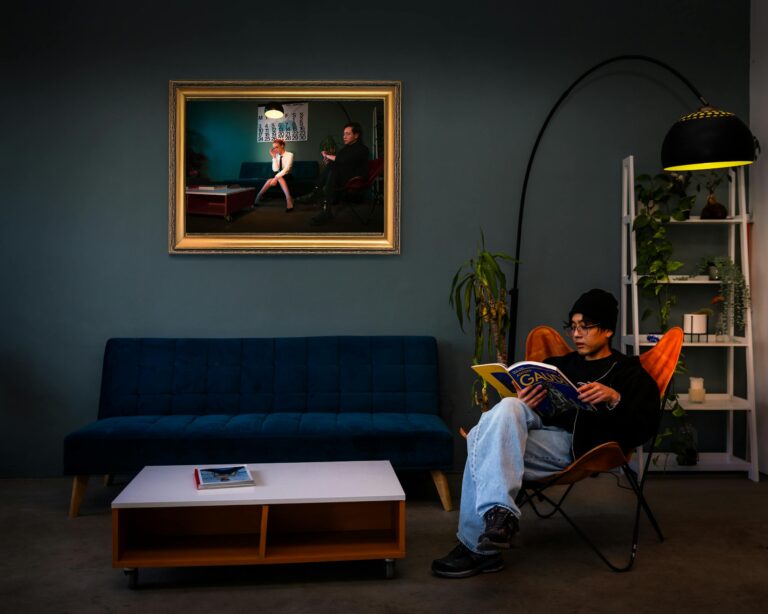

Suddenly feeling more talkative, energized by social situations, or comfortable in the spotlight can catch an introvert completely off guard. What’s actually happening isn’t a personality transplant. It’s usually a combination of context, stress, growth, or a personality trait that was always more layered than a single label suggested.
If you’ve found yourself wondering why you suddenly became extroverted, you’re asking one of the more interesting questions in personality psychology. And the honest answer is: you probably didn’t.
There’s a lot of nuance in the space between introvert and extrovert that most people never get to explore. Our Introversion vs Other Traits hub examines the full spectrum of personality orientation, and this particular question sits right at the heart of it. What looks like a sudden shift toward extroversion is almost always something more specific, more personal, and more interesting than a simple personality change.
What Does It Actually Mean to “Become” Extroverted?
Before we can answer why this seems to happen, it helps to get clear on what extroversion actually is. Most people understand it loosely as being outgoing or social, but that framing misses a lot. Understanding what extroverted means at a deeper level changes the whole conversation.
What’s your personality type?
Take our free 40-question assessment and get a detailed personality profile with dimension breakdowns, context analysis, and personalised insights.
Discover Your Type8-12 minutes · 40 questions · Free
Extroversion, in psychological terms, is primarily about where you direct your attention and where you draw your energy. Extroverts tend to process the world externally. They think out loud, they recharge through interaction, and they feel most alive when there’s something happening around them. Introversion is the opposite orientation: internal processing, energy drawn from solitude and reflection, a preference for depth over breadth in social connection.
What it is not, and this matters enormously, is a measure of social skill or social desire. An introvert can be warm, funny, engaging, and genuinely enjoy people. That’s not extroversion. That’s just being human with a different energy architecture underneath.
So when someone says they “suddenly became extroverted,” they’re usually describing something behavioral, not something fundamental. They’re talking about what they’re doing, not what they are. And those two things are worth separating carefully.
Why Does Behavior Sometimes Shift So Dramatically?
I spent more than two decades running advertising agencies. Some of my most important client relationships were built in conference rooms with eight people around a table, everyone talking over each other, pitching ideas at volume. And there were seasons, particularly when we were winning new business, when I was genuinely “on” in a way that felt almost foreign to my natural wiring.
I wasn’t becoming extroverted. I was performing at a high level in a context that demanded it, drawing on skills I’d spent years building. But the energy cost afterward was always real. The drive home after a big pitch was never triumphant noise. It was quiet. Deliberately, gratefully quiet.
Behavioral shifts toward extroverted-seeming patterns usually come from a handful of specific sources.
One is situational demand. When your environment requires social output, you produce it. A promotion, a new role, a relationship, a crisis: all of these can pull behavior outward even when the underlying wiring hasn’t changed at all. The introvert who just became a manager suddenly has to communicate constantly. That’s adaptation, not transformation.
Another source is genuine skill development. Introverts who work on social skills, public speaking, or leadership presence can become remarkably comfortable in situations that once felt draining. Comfort isn’t the same as energy replenishment, though. You can be skilled at something and still need recovery time afterward. I’ve watched this pattern in myself more times than I can count.
A third source is emotional state. Certain life phases, falling in love, landing a dream project, experiencing a creative breakthrough, can produce a kind of expansiveness that reads as extroversion. You want to share, connect, celebrate. That’s joy doing its work, not a personality shift.

Could You Be an Ambivert or Omnivert Without Knowing It?
Here’s something that genuinely surprised me when I started paying closer attention to personality research: the introvert-extrovert spectrum isn’t a clean binary. Most people already know about ambiverts, people who fall somewhere in the middle. But fewer people know about omniverts, and the distinction is worth understanding.
An ambivert maintains a relatively stable middle-ground orientation. They’re neither strongly introverted nor strongly extroverted, and that balance is fairly consistent across situations. An omnivert, by contrast, can swing significantly in either direction depending on context, mood, or circumstance. Both are real, both are valid, and both can explain why someone might feel like they “became” extroverted during certain periods of their life.
The difference between these two orientations is subtle but meaningful. The comparison between omnivert and ambivert gets into the specifics of how each type experiences energy and social engagement differently, and it’s worth reading if you’ve ever felt like your personality doesn’t fit neatly into a single box.
There’s also a related concept worth knowing about. The otrovert compared to ambivert distinction adds another layer to this conversation, particularly for people who feel genuinely torn between social engagement and the need for deep solitude. These aren’t just semantic differences. They can help explain real patterns in how you experience energy and interaction.
If you’ve spent years identifying firmly as an introvert and then found yourself energized by social situations in ways that felt unfamiliar, it’s possible you were always closer to the middle of the spectrum than you realized. Labels can create their own kind of blindspot.
What Role Does Stress Play in Personality Behavior?
This is one of the less-discussed angles on apparent personality shifts, and it’s one I find genuinely fascinating. Stress doesn’t just affect mood. It can alter behavior in ways that look like personality change from the outside, and sometimes from the inside too.
Some introverts become more talkative under stress. The internal processing that normally happens quietly gets externalized as a coping mechanism. Others seek out more social contact when anxious, not because they’re energized by it, but because solitude feels too loud when the mind is racing. I’ve been there. There were periods during agency crises when I’d find myself making unnecessary phone calls just to hear another voice, which is about as out-of-character as it gets for an INTJ.
The psychological literature on personality and stress suggests that under significant pressure, people sometimes exhibit behaviors associated with their less dominant traits. For introverts, that can manifest as uncharacteristic gregariousness. It doesn’t mean the introversion has disappeared. It means the system is under load and behaving differently as a result.
There’s also the phenomenon of social anxiety masking. Some people who believed they were introverts discover, after working through social anxiety, that they actually enjoy and are energized by social interaction more than they expected. The introversion they thought they had was partly anxiety avoidance in disguise. This is a meaningful distinction. Research published in PubMed Central has examined the overlap between introversion and anxiety, and the findings reinforce what many introverts already sense: these traits share some surface behaviors while having very different underlying mechanisms.

Can Introversion Actually Change Over a Lifetime?
Personality traits do show some degree of malleability over a lifetime. This is well-established in psychology. The traits that feel fixed in your twenties may shift gradually through your thirties, forties, and beyond, shaped by experience, relationships, deliberate effort, and the natural evolution of the brain itself.
That said, the core architecture of introversion tends to be fairly stable. What changes more readily is behavior, comfort level, and the range of situations you can handle well. An introvert at 45 who has spent two decades building social skills, managing teams, and presenting to boardrooms will behave very differently from their 22-year-old self. The underlying energy dynamics, where they recharge, how they process information, what kinds of interaction feel meaningful versus depleting, those tend to persist.
I’m in my fifties now. I’m more comfortable in social situations than I was at 30. I can work a room when I need to. I can hold a stage. None of that changed the fact that after a full day of client meetings, I need the drive home to be silent and I need the evening to be mine. That hasn’t changed. It probably won’t.
There’s an important distinction here between being fairly introverted and being extremely introverted. Someone who sits at the mild end of the introversion spectrum may find that life experience and skill-building genuinely shift their experience of social situations in meaningful ways. Someone who is deeply, constitutionally introverted will likely always have that core need for solitude and internal processing, regardless of how skilled they become in social contexts. The difference between fairly introverted and extremely introverted matters a lot when you’re trying to interpret your own personality shifts over time.
How Do You Know If You’ve Actually Changed or Just Adapted?
This is the question worth sitting with. And it requires some honest self-observation.
Adaptation looks like this: you perform well in social situations, you may even enjoy them in the moment, but you consistently need recovery time afterward. The energy cost is real, even if it’s manageable. You still do your best thinking alone. You still find large groups more exhausting than small ones. You still crave depth in conversation over breadth. The behaviors may look extroverted, but the internal experience remains distinctly introverted.
Genuine change looks different. You find yourself actually energized after social interaction rather than depleted. You seek out company when you’re tired rather than solitude. You process problems best by talking them through with others rather than sitting with them quietly. Your preferences have shifted at the level of what actually feels good, not just what you’re capable of doing.
Most people who wonder why they “suddenly became extroverted” are experiencing the former, not the latter. They’ve adapted. They’ve grown. They’ve built skills and confidence. That’s genuinely worth celebrating. But it’s worth being honest about what it is, because mistaking adaptation for transformation can lead to overextending yourself in ways that eventually catch up with you.
One of the most useful things you can do is take a thoughtful personality assessment when you’re in a neutral state, not during a high-energy period and not during a particularly withdrawn phase. The introvert, extrovert, ambivert, and omnivert test on this site is a good starting point for getting a clearer read on where you actually land on the spectrum.

What About the Introverted Extrovert Phenomenon?
There’s a term that gets used a lot in personality conversations: the introverted extrovert. It describes someone who has many of the social skills and outward behaviors associated with extroversion, but whose internal experience is fundamentally introverted. They can be the life of the party. They can lead meetings with confidence. They can be genuinely warm and engaging in social settings. And then they go home and need three days of quiet to recover.
Sound familiar? It should, because it describes a lot of people who end up in leadership roles despite being wired as introverts. The introverted extrovert quiz is worth taking if you recognize yourself in this description. It can help clarify whether what you’re experiencing is a genuine orientation or a pattern of skilled adaptation.
I managed a creative director at one of my agencies who was like this. She was magnetic in client presentations, genuinely loved the energy of a brainstorm, and had a warmth that made everyone around her feel seen. She also ate lunch alone at her desk every single day and would disappear for entire afternoons when she was working on something important. She wasn’t being antisocial. She was managing her energy with great precision. She knew exactly what she was and had built her work patterns around it.
That kind of self-knowledge is worth more than any personality label.
Why Do Major Life Transitions Trigger These Shifts?
Certain life transitions seem to reliably produce apparent personality shifts in introverts. New parenthood. A major career change. Moving to a new city. The end of a long relationship. The beginning of one. These transitions don’t change who you are at the core, but they can dramatically alter how you show up in the world.
New parenthood is a particularly interesting case. Many introverted parents report feeling more socially engaged after having children, partly because the child creates a natural bridge to other people (other parents, family members, community), and partly because the focus shifts outward in ways that can feel energizing even to someone who is fundamentally internally oriented. The Frontiers in Psychology journal has published work on how social behavior patterns shift across major life phases, and the findings align with what many introverts describe anecdotally.
Career transitions can do something similar. When I made the shift from working within agencies to running one, my social output increased dramatically out of necessity. Clients, staff, vendors, partners: suddenly I was in relationship with dozens of people in ways that required constant communication. My behavior looked extroverted to anyone watching. My internal experience was something else entirely.
The thing about major transitions is that they often require us to access parts of ourselves that don’t usually get much exercise. That’s not a bad thing. It’s how growth happens. But it can be disorienting when the person you’re presenting to the world starts to feel unfamiliar, even when that person is doing genuinely well.
A piece in Psychology Today on deeper conversations touches on something relevant here: introverts often find that the social engagement they actually crave is qualitatively different from the surface-level interaction that dominates most social environments. During major transitions, when genuine connection is available, introverts can show up with a social energy that surprises even themselves.
Is There Any Value in Leaning Into the Extroverted Behavior?
Yes, with important caveats.
There’s solid evidence that acting in extroverted ways, even for introverts, can produce positive outcomes in certain contexts. More confident communication, stronger professional relationships, greater visibility in career settings: these are real benefits. Published research in PubMed Central has explored how behavioral activation in social contexts can influence mood and engagement, even among people who are naturally more internally oriented.
The trap is in treating this as a permanent solution rather than a tool. Introverts who spend extended periods performing extroversion without adequate recovery tend to hit walls. The energy debt accumulates. Creativity suffers. Decision-making quality drops. The very qualities that make introverted thinkers valuable, depth of analysis, careful observation, the ability to sit with complexity, start to erode when the internal world doesn’t get enough space.
There’s also a professional dimension worth noting. Harvard’s Program on Negotiation has examined whether introverts face disadvantages in high-stakes professional settings, and the findings are more nuanced than you might expect. Introverted approaches to preparation and listening can be genuine advantages in negotiation, even when the extroverted style dominates the room.
The goal, if there is one, is integration rather than performance. Using your full range, including the more socially engaged parts of yourself, while staying rooted in what actually sustains you. That’s a harder balance to strike than simply “acting extroverted,” but it’s a more honest and more durable one.

What Should You Do With This Information?
Start by getting curious rather than anxious. A shift in behavior doesn’t require a crisis of identity. You’re allowed to be more complex than a single label.
Pay attention to your energy patterns rather than your behavior patterns. Behavior is visible and easy to observe. Energy is subtler and more telling. After a week of unusually social behavior, how do you feel? What do you reach for? What does rest look like? Those answers will tell you more about your actual orientation than any single interaction or phase of life.
Be honest about what you’re doing and why. Are you genuinely energized, or are you performing? Are you growing, or are you running from something? Both can look identical from the outside. Only you know the difference from the inside.
And give yourself credit for the range. The ability to show up in extroverted-seeming ways when the situation calls for it, while maintaining the depth and reflective capacity that introversion enables, is a genuine strength. It’s not a contradiction. It’s a skill set. Psychology Today’s work on introvert-extrovert dynamics consistently points to the value of understanding and bridging different personality orientations, and that capacity starts with understanding your own.
I’ve spent the better part of my adult life figuring out how to be an INTJ in environments built for people wired very differently. What I’ve found is that the introversion never went away. It just got better company. The skills grew. The confidence grew. The willingness to show up fully in situations that once felt overwhelming grew. But the need for quiet, for depth, for internal processing, that’s still exactly where it was when I was 25 and wondering why I always felt so different from everyone else in the room.
That’s not a limitation. It’s a lens. And once you stop trying to replace it with someone else’s, it becomes one of the most useful things you have.
If you want to keep exploring the full range of personality orientations, from deeply introverted to strongly extroverted and everything in between, the Introversion vs Other Traits hub is a good place to spend some time. There’s a lot more nuance in this space than most personality quizzes let on.
About the Author
Keith Lacy is an introvert who’s learned to embrace his true self later in life. After 20 years in advertising and marketing leadership, including running agencies and managing Fortune 500 accounts, Keith now channels his experience into helping fellow introverts understand their strengths and build fulfilling careers. As an INTJ, he brings analytical depth and authentic perspective to every article, drawing from both professional expertise and personal growth.
Frequently Asked Questions
Can an introvert genuinely become an extrovert over time?
Core personality traits like introversion tend to remain stable across a lifetime, even as behavior and comfort levels evolve. What often looks like becoming extroverted is more accurately described as skill-building, adaptation, or a shift in life circumstances. The underlying energy dynamics, where you recharge, how you process information, what kinds of social interaction feel meaningful, typically persist even when outward behavior changes significantly.
Why do I suddenly feel more social and energized around people?
Several things can produce this shift. Positive life events like falling in love, landing an exciting project, or entering a new community can create a temporary expansiveness that feels like extroversion. Major life transitions can pull behavior outward. Stress can externalize internal processing. And some introverts discover that what they thought was introversion was partly social anxiety, and working through that anxiety reveals a more socially engaged self underneath.
What is the difference between an ambivert and an omnivert?
An ambivert maintains a relatively stable middle-ground orientation between introversion and extroversion. An omnivert can swing significantly in either direction depending on context, mood, or circumstance. Both can experience periods that feel like sudden personality shifts. If you’ve always felt like your social energy was unpredictable or context-dependent, omnivert may be a more accurate description of your experience than introvert or extrovert.
How can I tell if I’m adapting to social demands or genuinely changing?
Pay attention to your energy patterns rather than your behavior. If you perform well socially but consistently need recovery time afterward, you’re adapting. If social interaction genuinely energizes you and you seek it out when tired rather than retreating from it, something may have shifted more fundamentally. The key signal is what happens after social interaction, not during it. Introverts who have built strong social skills often look extroverted in the moment while remaining clearly introverted in their recovery needs.
Is it healthy for introverts to act more extroverted?
Acting in more extroverted ways can produce real benefits in certain professional and social contexts, including stronger relationships, greater visibility, and more effective communication. The risk comes from treating extroverted performance as a permanent state rather than a tool. Extended periods of extroverted behavior without adequate recovery can deplete the creative depth and analytical capacity that make introverted thinkers particularly valuable. The healthiest approach is integration: accessing your full range while staying honest about what actually sustains you.