
Introverts need to be explained because the dominant culture was built around extroverted norms, making quieter, more internally focused behavior appear unusual or in need of justification. Extroversion became the assumed default, so anything that deviates from it gets labeled, questioned, and analyzed. Introverts didn’t create this dynamic. They simply inherited a world that wasn’t designed with them in mind.
Nobody ever pulled an extrovert aside after a meeting to ask if they were okay because they talked too much. Nobody ever suggested an extrovert read a self-help book to manage their enthusiasm. Yet introverts field these kinds of comments constantly, as though their natural way of being is a problem waiting to be fixed rather than a personality with genuine strengths.
That asymmetry bothered me for years before I understood where it came from. And once I did, everything changed.
Much of what I write here connects to a broader set of questions about how introversion and extroversion actually differ, and where the lines between them blur. Our Introversion vs Other Traits hub explores that full spectrum, and this particular question sits right at the center of it.

How Did Extroversion Become the Default Setting?
Somewhere along the way, modern Western culture decided that the ideal human being is outgoing, talkative, energized by crowds, and comfortable being the center of attention. Schools reward participation. Offices are designed as open-plan social spaces. Job interviews favor people who project confidence through volume. The person who speaks first is assumed to have the best idea.
What’s your personality type?
Take our free 40-question assessment and get a detailed personality profile with dimension breakdowns, context analysis, and personalised insights.
Discover Your Type8-12 minutes · 40 questions · Free
This wasn’t inevitable. It was a cultural choice, reinforced over generations, and it happened to favor one end of the personality spectrum over the other.
I spent over two decades running advertising agencies, managing teams, pitching Fortune 500 clients, and sitting in rooms where the loudest voice usually won. As an INTJ, I processed everything internally. I’d walk into a pitch meeting having already run through seventeen possible objections in my head, prepared for each one. My extroverted colleagues would walk in energized by the audience, feeding off the room’s energy. Neither approach was wrong. But only one of us was ever asked to explain ourselves afterward.
To genuinely understand why this imbalance exists, it helps to first get clear on what extroversion actually means at its core. Many people conflate extroversion with confidence, charisma, or social skill, when the actual definition is more specific and less flattering as a cultural ideal. If you want to examine that more carefully, this breakdown of what extroverted actually means is worth reading before assuming you know the full picture.
Extroversion became the default partly because it’s more visible. An extrovert’s processing happens out loud, in public, in real time. An introvert’s processing happens inside, quietly, before or after the moment. When visibility gets mistaken for competence, the quieter processor looks like they’re not doing anything at all. That misread has real consequences.
Why Does Introversion Feel Like Something That Needs Defending?
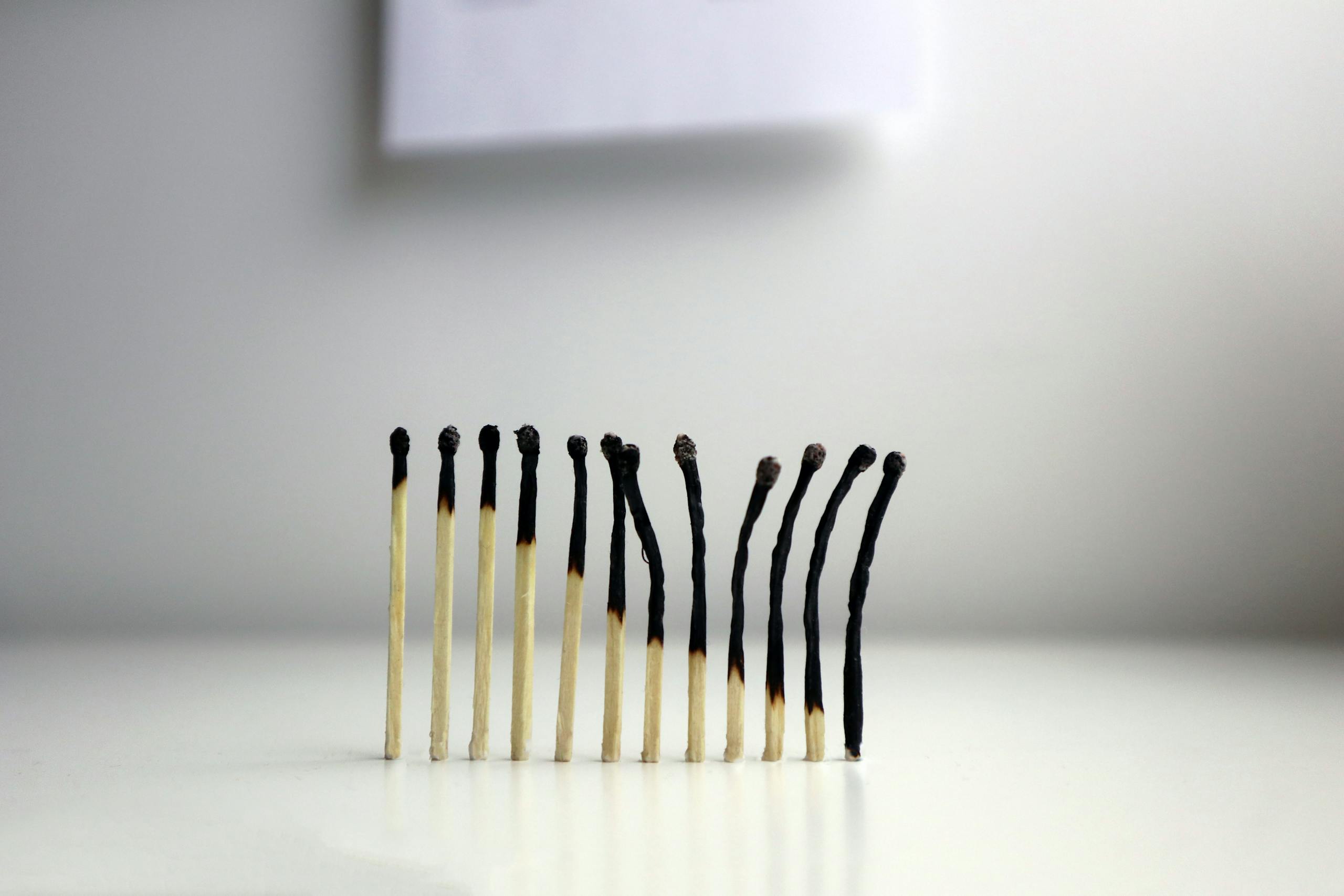
There’s a specific kind of exhaustion that comes from being asked to account for your personality. Not your behavior, not a decision you made, but the fundamental way your mind works. I felt it most acutely in my early years as an agency leader, when I’d leave a client dinner early because I’d hit my social ceiling, and someone would inevitably follow up the next day asking if I was upset about something.
I wasn’t upset. I was depleted. Those are completely different states, but because my depletion looked like withdrawal, it got interpreted through an extroverted lens as emotional distance or disengagement. I spent years developing elaborate explanations for what was actually a simple biological reality: I recharge alone.
The need to explain introversion comes from a mismatch between internal experience and external expectation. When your natural state doesn’t match what the environment expects, you’re the one who has to do the translation work. Extroverts rarely have to translate. Their natural state reads as engagement, enthusiasm, and presence, which are exactly what most environments are designed to reward.
There’s a meaningful difference, too, between being somewhat introverted and being deeply, consistently introverted in nearly every situation. The explanations required at each end of that spectrum vary considerably. If you’ve ever wondered where you fall on that range, the comparison between being fairly introverted versus extremely introverted puts some useful language around an experience that often feels hard to articulate.
What makes the defending particularly draining is that it’s often framed as concern. “Are you okay?” “You seem quiet today.” “You should put yourself out there more.” These phrases come from people who genuinely mean well, but they carry an embedded assumption: that the introvert’s state is a problem, and that the extroverted state is the standard against which everything else is measured. Concern-framed criticism is still criticism. And having to receive it repeatedly, for simply being yourself, wears on a person.
What Role Does Personality Science Play in This Imbalance?
Personality psychology has actually done a reasonable job of treating introversion and extroversion as equally valid ends of a spectrum rather than as healthy versus unhealthy orientations. The problem is that this nuance rarely makes it out of academic literature and into everyday workplaces, schools, and social settings.
What does filter through is a simplified version: extroverts are social, introverts are shy. Extroverts are confident, introverts are anxious. Extroverts are leaders, introverts are followers. None of these pairings are accurate, but they persist because they map onto the cultural narrative that was already in place. Science got recruited to confirm a bias that existed before the research did.
One area where the science is genuinely useful is in understanding the neurological basis for these differences. Research published in PubMed Central has examined how introverts and extroverts differ in their baseline arousal levels and their responses to stimulation, suggesting that the differences aren’t just behavioral preferences but reflect real variation in how nervous systems process the world. That’s not a flaw in the introvert. That’s biology.
Yet even with that understanding available, the cultural expectation hasn’t shifted much. Introverts are still regularly advised to act more extroverted, as though decades of neuroscience were a suggestion rather than a finding. I watched this play out in my own agencies. We’d hire introverted strategists who produced some of the most incisive, original thinking I’d ever seen, and then put them through presentation skills training designed to make them perform extroversion in front of clients. The training didn’t make them better thinkers. It just made their thinking harder to access.
It’s also worth noting that the introvert-extrovert binary isn’t the whole picture. Personality sits on a spectrum, and many people occupy middle ground in ways that are genuinely complex. If you’re curious about where you actually land, the introvert-extrovert-ambivert-omnivert test is a useful starting point for getting more specific than “I’m kind of both.”
Is There a Social Cost to Always Being the One Who Explains?
Yes, and it’s more significant than most people acknowledge.
Every time an introvert has to explain why they didn’t speak up in a meeting, why they left a party early, why they prefer email to phone calls, or why they need time alone after a social event, they’re spending cognitive and emotional energy that their extroverted colleagues don’t have to spend. That energy isn’t free. It comes from the same reserve that gets used for actual work, creative thinking, and meaningful connection.
Over time, the cumulative weight of constant self-explanation can erode confidence. Not because the introvert is actually deficient, but because being repeatedly asked to justify your existence in a space sends a message, even when it’s unintended. That message is: you are the anomaly here. You are the one who doesn’t fit. And anomalies are expected to adapt, not the other way around.
I’ve seen this dynamic play out in negotiations, too. Harvard’s Program on Negotiation has explored whether introverts face disadvantages in negotiation contexts, and the findings are more nuanced than the cultural assumption. Introverts often bring careful preparation, patience, and deep listening to the table, qualities that can be genuine assets. The disadvantage, when it exists, comes not from the introvert’s actual capability but from how they’re perceived by others who equate quiet with uncertainty.

What I’ve observed across two decades of managing people is that the social cost of constant explanation tends to push introverts toward one of two unhealthy places: they either mask their introversion so completely that they burn out performing extroversion, or they withdraw so far that their genuine contributions become invisible. Neither outcome serves anyone. The solution isn’t better explanation. It’s a culture that stops requiring one.
What Happens When Introversion Gets Confused With Something Else?
Part of why introverts end up explaining themselves so often is that their behavior gets misread as something it isn’t. Quiet gets called cold. Thoughtfulness gets called hesitation. Preference for depth over breadth gets called antisocial. These misreadings aren’t just inaccurate. They’re consequential, because they shape how introverts are treated, evaluated, and given opportunities.
One of the most common misreadings is conflating introversion with social anxiety. They can coexist, but they’re distinct. Social anxiety involves fear and avoidance rooted in worry about negative evaluation. Introversion is a preference for less stimulation and more internal processing, with no fear component required. An introvert might genuinely enjoy a dinner party while also feeling exhausted by it afterward. That’s not anxiety. That’s energy management.
Another common confusion involves the middle of the spectrum. Some people feel genuinely pulled in both directions, extroverted in some contexts and deeply introverted in others. This isn’t inconsistency. It reflects real variation in how personality expresses itself across situations. The distinction between an omnivert and an ambivert captures some of this nuance, and it’s a distinction worth understanding if you’ve ever felt like you don’t fit cleanly into either category.
There’s also the phenomenon of the introverted extrovert, someone who presents as socially engaged and outwardly energetic but who drains quickly and craves significant alone time. If that sounds familiar, the introverted extrovert quiz can help clarify whether that’s actually what’s happening for you. These in-between experiences are real, and they complicate the simple narrative that introversion is always obvious or always consistent.
When introversion gets confused with shyness, anxiety, arrogance, or aloofness, the introvert faces a double burden: correcting the misread while also managing the original expectation that prompted it. That’s a lot of labor for simply existing as you are. Psychology Today’s writing on introverts and deeper conversation touches on how introverts often communicate in ways that are genuinely different from extroverts, not deficient, just different, and how that difference gets misread as disengagement when it’s actually the opposite.
Why Don’t Extroverts Face the Same Scrutiny?
Extroverts don’t get asked to explain themselves because their behavior matches the script the culture already wrote. Talking a lot in meetings reads as engaged. Loving parties reads as fun. Thinking out loud reads as collaborative. These behaviors don’t trigger concern or confusion in most professional or social settings because the settings were designed by and for people who operate that way.
That doesn’t mean extroversion is without its challenges. Extroverts can struggle with impulsivity, with listening, with tolerating solitude, with the kind of deep focused work that requires sustained internal attention. Research available through PubMed Central points to real variation in how different personality types handle self-regulation and cognitive demands. Extroversion isn’t a free pass. It’s just a pass that fits the current gate.
When I ran agencies, I noticed that my most extroverted team members could say something half-formed in a meeting and have it received as a bold idea. My most introverted team members could arrive with a fully developed concept and have it dismissed because they presented it quietly. The idea quality was often reversed from the reception quality. That gap wasn’t about ability. It was about whose communication style the room was calibrated to reward.

There’s also something worth naming about how conflict gets handled differently depending on personality type. When extroverts clash, it tends to be visible and immediate, which paradoxically makes it easier to address. When introverts experience conflict, it often goes internal and unspoken, which can make it look like there’s no problem when there actually is one. Psychology Today’s conflict resolution framework for introverts and extroverts acknowledges this asymmetry and offers a structure that respects both styles rather than defaulting to one.
There’s a related concept worth examining here too. The otrovert versus ambivert distinction adds another layer to understanding how people move between social modes, and it challenges the assumption that everyone fits neatly into a single, fixed category. The more we complicate the binary, the harder it becomes to justify why one end of it gets a free pass and the other doesn’t.
What Would It Look Like If We Stopped Requiring the Explanation?
Genuinely accepting introversion as a valid default, rather than a deviation from the extroverted default, would require changes at every level: individual, organizational, and cultural. Some of those changes are already underway. Remote work has given many introverts access to environments where their processing style is no longer penalized. Asynchronous communication has made it possible to contribute thoughtfully without performing in real time. Written communication has been rehabilitated as a legitimate form of professional presence rather than a workaround for people who can’t handle meetings.
At the individual level, stopping the explanation often starts with refusing to apologize for it. That’s harder than it sounds. After years of being asked to account for your personality, the apologetic framing becomes automatic. “Sorry, I’m just an introvert.” “I know I’m quiet, but…” These phrases invite the other person to reassure you that it’s okay, which keeps the introvert in the position of seeking permission to exist as they are.
What I’ve found more effective, both personally and in coaching the introverted leaders I’ve worked with, is replacing explanation with clarity. Not “I’m sorry I left early, I’m just introverted” but “I had what I needed from the evening.” Not “I know I didn’t say much in the meeting” but “I sent my analysis in the follow-up email.” Clarity doesn’t apologize. It simply describes what actually happened.
At the organizational level, work published in Frontiers in Psychology examining personality and workplace dynamics suggests that environments designed to accommodate multiple working styles, rather than optimizing for one, tend to produce better outcomes across the board. This isn’t about giving introverts special treatment. It’s about recognizing that the current default already gives extroverts special treatment and correcting for that.
In my own agencies, the shift that made the most difference was changing how we ran creative reviews. Instead of expecting everyone to react in real time, we started sharing briefs 24 hours in advance and inviting written responses before the meeting. The quality of feedback improved dramatically. So did the participation of people who’d previously been quiet in those rooms. Nothing about their intelligence had changed. What changed was whether the process was designed for them too.

The deeper shift is cultural, and it’s slower. It requires enough people to stop treating extroversion as the neutral baseline and introversion as the variation that needs accounting for. It requires managers who don’t equate silence with absence. It requires educators who don’t grade participation as though speaking aloud is the only form intelligence takes. It requires friends who don’t read “I’d rather stay in” as rejection. These are small recalibrations, but they accumulate into something meaningful.
There’s a version of professional life where introverts don’t spend a third of their energy managing other people’s confusion about them. Where their depth of processing is seen as an asset from the start rather than something they have to prove through extroverted performance. Where the question “why are you so quiet?” simply doesn’t get asked, because quiet is understood as one of several valid ways of being present.
That version isn’t utopian. It’s just more accurate. And getting there starts with understanding why the current version is so skewed in the first place.
If you want to keep pulling on this thread, the full Introversion vs Other Traits hub covers the spectrum in depth, from the neuroscience to the lived experience to the practical implications for how we work and connect.
About the Author
Keith Lacy is an introvert who’s learned to embrace his true self later in life. After 20 years in advertising and marketing leadership, including running agencies and managing Fortune 500 accounts, Keith now channels his experience into helping fellow introverts understand their strengths and build fulfilling careers. As an INTJ, he brings analytical depth and authentic perspective to every article, drawing from both professional expertise and personal growth.
Frequently Asked Questions
Why do introverts feel like they need to explain themselves constantly?
Introverts feel this pressure because extroversion became the cultural default in most Western workplaces, schools, and social settings. When your natural behavior, such as preferring quiet, needing alone time to recharge, or processing internally before speaking, doesn’t match what the environment expects, you become the one responsible for explaining the gap. Extroverts rarely face this because their behavior already aligns with what most environments are designed to reward.
Is introversion actually less common than extroversion?
Personality research generally suggests that introversion and extroversion are distributed across the population without one being dramatically rarer than the other, and many people fall somewhere in the middle of the spectrum rather than at either extreme. The sense that introverts are the minority comes more from cultural visibility than from actual numbers. Extroverted behavior is more publicly observable, which makes it seem more prevalent than it may actually be.
Does explaining introversion to others actually help?
It can, in the right context and with the right framing. Explaining the energy dynamics of introversion to a manager or close colleague can reduce friction and create more accommodating conditions. What tends not to help is explaining it apologetically, as though it’s a flaw you’re disclosing. Clarity works better than apology. Describing what you need (“I work best when I can review materials before a meeting”) tends to be more effective than explaining what you are (“I’m introverted, so I’m not great in group settings”).
Are there professional fields where introverts don’t face this pressure as much?
Yes. Fields that value deep focus, independent analysis, written communication, and individual contribution tend to be more accommodating of introverted working styles. Research, writing, programming, accounting, and certain areas of counseling and psychology tend to attract and retain introverts more naturally. That said, even in these fields, leadership roles and client-facing work often reintroduce extroverted expectations. The pressure rarely disappears entirely. It just concentrates in different places.
What’s the most practical thing an introvert can do to stop feeling like they need to justify their personality?
The most practical shift is moving from explanation to description. Rather than framing your introversion as something that requires justification, describe your preferences and needs in neutral, practical terms. “I’ll send my thoughts in writing” is more effective than “I don’t like speaking up in meetings.” Over time, this reframes the conversation from personality deficit to working style preference, which is both more accurate and more useful for everyone involved.