
The “why don’t extroverts make a safe space for introverts” meme has been circulating for years, and every time it resurfaces, it lands differently depending on where you are in understanding yourself. At its core, the meme points to something real: the social environments most of us move through are designed around extroverted norms, and introverts are quietly expected to adapt, absorb, and perform without anyone asking whether the setup works for them.
That expectation runs deep. It shows up in open offices, in mandatory team-building events, in the assumption that someone who prefers quiet must be fixed rather than accommodated. The meme captures a frustration that many introverts feel but rarely say out loud.
Our Introvert Home Environment hub explores how introverts build spaces that genuinely restore them, but the meme raises a question that goes beyond home design. It asks who is responsible for creating conditions where introverts can function well, and why that responsibility so rarely falls on anyone other than the introvert themselves.

What Does the Meme Actually Say?
Memes work because they compress something complicated into a single image or phrase. This one, in its various forms, usually juxtaposes the cultural conversation around safe spaces with the observation that nobody seems to extend that same consideration to introverts. The joke lands because there’s truth underneath it: introversion is routinely treated as a preference to be managed rather than a wiring to be respected.
What’s your personality type?
Take our free 40-question assessment and get a detailed personality profile with dimension breakdowns, context analysis, and personalised insights.
Discover Your Type8-12 minutes · 40 questions · Free
What strikes me most about it isn’t the humor. It’s the resigned tone. Most versions of this meme aren’t angry. They’re tired. They carry the quiet exhaustion of someone who has spent years adapting to environments that were never built with them in mind, and who has stopped expecting anything different.
As an INTJ who ran advertising agencies for over two decades, I lived inside that exhaustion for a long time. The agency world is loud by design. Pitches, brainstorms, client calls, team huddles, award shows, networking events. Every structural incentive pointed toward visibility and volume. I was good at the work, and I could perform the extroverted version of leadership when I needed to. But performance is costly. By the time I got home, I had nothing left. My home wasn’t a retreat; it was a recovery ward.
The meme resonates because it names something most introverts have felt without having words for it: the absence of any structural consideration for how we actually function.
Why Are Extroverted Norms So Invisible to Extroverts?
Privilege, in any form, tends to be invisible to those who benefit from it. Not because they’re careless, but because the environment was built around their needs so long ago that it simply looks like “normal.” Extroverted social norms are no different.
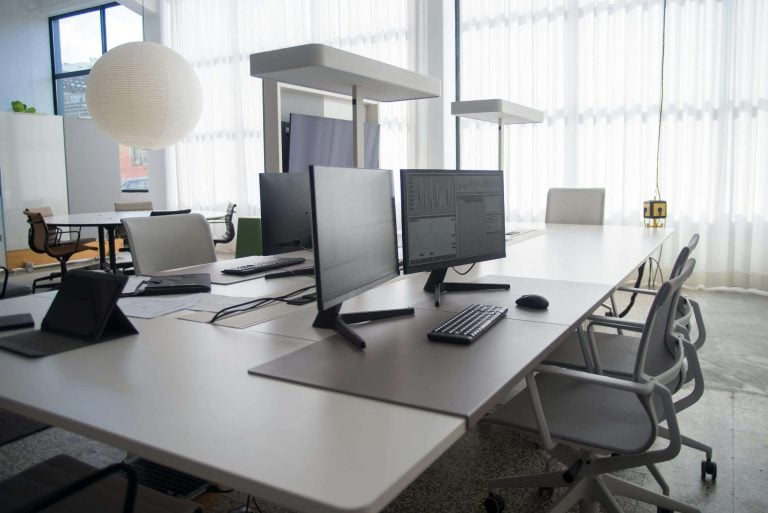
Open offices were designed with collaboration in mind. Group brainstorming sessions were built on the assumption that thinking out loud produces better ideas. Networking events assume that meeting strangers in loud rooms is a reasonable way to build professional relationships. None of these structures were designed to harm introverts. They were designed without introverts in mind at all, which ends up producing the same result.
I watched this play out in real time across every agency I ran. The most extroverted people on my teams rarely noticed when a meeting format or an office layout created friction for quieter colleagues. It wasn’t malice. They genuinely experienced those environments as energizing, so the idea that someone else might experience them as draining simply didn’t register. Personality research has long documented that introverts and extroverts process stimulation differently at a neurological level, but that science rarely makes it into how most workplaces or social spaces are structured.
One of my most talented account directors was someone I’d describe as a textbook extrovert. She was brilliant in client rooms, energized by chaos, and genuinely confused when I told her that our open bullpen was affecting the quality of work from our strategy team. “But everyone can just talk to each other whenever they need to,” she said. That was exactly the problem. The introverts on the strategy team couldn’t think.
Is the Meme Fair, or Is It Just Venting?
Both, honestly. And both matter.
Venting has a function. It signals that something is wrong. It creates community around a shared experience. When an introvert sees that meme and laughs, they’re not just laughing at a joke. They’re recognizing themselves in it, and that recognition can be genuinely grounding when you’ve spent years wondering if your need for quiet is a character flaw.
At the same time, the meme has a slightly adversarial framing that’s worth examining. It positions extroverts as a group that is choosing not to extend consideration, when the more accurate picture is usually that they’re not thinking about it at all. The solution to being unseen isn’t always to demand that others see you better, though that’s sometimes necessary. It’s also worth building environments and communities where you don’t have to fight for basic consideration in the first place.
That’s part of why the homebody lifestyle resonates so strongly with introverts. When you design your own space, you stop waiting for someone else to make room for you. A well-chosen homebody couch in a quiet corner isn’t just furniture. It’s a declaration that your need for stillness is legitimate and worth investing in.
The meme is fair as an observation. It’s less useful as a permanent stance. Chronic resentment toward extroverts as a category doesn’t serve introverts well, and it tends to flatten a genuinely complicated dynamic into something that feels satisfying but doesn’t move anything forward.
What Would a Safe Space for Introverts Actually Look Like?
This is where the conversation gets interesting. The phrase “safe space” carries a lot of cultural weight, and it means different things in different contexts. For introverts, the need isn’t usually about emotional safety in the sense of protection from harm. It’s about sensory and social conditions that allow them to function without constantly depleting themselves.
A safe space for an introvert might look like a meeting agenda sent in advance so they can process before being expected to respond. It might look like a workplace that includes private focus areas alongside collaborative zones. It might look like a social event that has a defined end time and a quiet room available. It might look like a friend group that doesn’t interpret a cancelled plan as rejection.
At home, it tends to look like intentional design. Many highly sensitive introverts find that the principles in HSP minimalism give them a practical framework for creating environments that restore rather than drain. Fewer visual inputs, quieter textures, spaces that signal rest rather than obligation. The physical environment becomes a form of self-advocacy when the external world won’t provide it.
Online, some introverts find that structured digital spaces work better than in-person socializing. Chat rooms built for introverts offer connection without the sensory overload of real-time conversation, giving people time to formulate thoughts before responding. That’s not avoidance. That’s matching the communication format to the person’s actual strengths.
What all of these have in common is that they’re built around how introverts actually work rather than how extroverts assume everyone works. That’s the core of what the meme is asking for, even if it expresses the ask through humor rather than a policy proposal.

Why Do Introverts Keep Adapting Instead of Asking for Accommodation?
Because asking feels risky. And because most introverts have been conditioned to believe their needs are unreasonable.
There’s a specific kind of social calculus that many introverts run constantly. Will asking for quiet time make me seem antisocial? Will declining the after-work drinks hurt my standing on the team? Will working from home be read as laziness? The cost of asking is weighed against the cost of not asking, and the cost of asking often feels higher because the introvert has already internalized the message that their preferences are the problem.
I did this for years. At one agency, I had a standing Friday afternoon client call that I genuinely dreaded, not because of the client but because by Friday afternoon my social reserves were empty. I could have asked to shift it to Thursday. Instead, I spent three years white-knuckling through it and then canceling my weekend plans to recover. The accommodation I needed was a one-sentence email. The story I told myself was that asking would make me look weak.
That story is worth examining. Psychology Today’s exploration of introvert communication patterns touches on how introverts often process their needs internally for a long time before expressing them, which means the people around them rarely know accommodation is needed until the introvert is already depleted.
Part of building a genuinely introvert-friendly environment, whether at home or in a workplace, is creating conditions where asking doesn’t feel like an admission of failure. That requires both introverts being willing to name their needs and extroverts being willing to receive that information without treating it as a critique.
Can Extroverts and Introverts Actually Build Shared Spaces That Work?
Yes, but it requires both parties to stop assuming their experience is universal.
The most functional mixed-personality environments I’ve been part of shared a few common features. First, there was explicit acknowledgment that different people have different working and social styles, and that neither is superior. Second, there were structural accommodations rather than just good intentions. Saying “we respect everyone’s style” doesn’t help if the entire physical and social setup rewards extroversion. Third, the quieter people in the group were actively invited into conversations rather than expected to insert themselves.
That third one took me a long time to implement as a leader. My instinct as an INTJ was to assume that if someone had something to say, they’d say it. It took watching several talented introverts on my teams consistently get talked over in meetings before I understood that the extroverts in the room weren’t being aggressive. They were just filling silence the way they naturally do. The introverts weren’t being passive. They were waiting for a gap that never came. The fix was structural: I started going around the table and asking for input directly, which gave everyone a clear moment to speak without having to compete for airtime.
Conflict resolution between introverts and extroverts often comes down to this kind of structural adjustment. A framework for introvert-extrovert conflict resolution often centers on giving introverts processing time and extroverts clarity about when and how input will be gathered. That’s not complicated, but it requires someone in the room to recognize the dynamic in the first place.

What the Meme Gets Right About Reciprocity
Underneath the humor, the meme is making a point about reciprocity. Introverts are routinely expected to stretch toward extroverted norms. They attend the parties, they participate in the open offices, they perform energy they don’t have because the social cost of opting out is too high. The meme asks, reasonably, whether that stretching ever goes in the other direction.
Reciprocity in mixed-personality relationships doesn’t mean extroverts have to become quiet. It means they occasionally choose a smaller gathering over a large one because their introverted friend will actually be present rather than just enduring. It means they don’t interpret a need for decompression time as rejection. It means they send a text instead of calling when they know the other person finds unscheduled calls jarring.
Small adjustments, consistently applied, add up to something meaningful. They communicate that the introvert’s way of being in the world is worth accommodating, not just tolerating.
That’s also why the gifts introverts give themselves matter so much. A thoughtfully chosen homebody book on a quiet evening isn’t self-indulgence. It’s self-respect made visible. And when the people around you understand that, a well-considered item from a homebody gift guide becomes a form of reciprocity too. It says: I see how you restore yourself, and I want to support that.
I’ve had colleagues and clients over the years who genuinely got this. One long-term client, a CMO at a Fortune 500 packaged goods company, always sent our meeting recaps in writing before expecting a response. She’d figured out early on that I did my best thinking on paper before a conversation, not during it. She never made a thing of it. She just did it. That small adjustment changed the quality of our working relationship entirely. It also changed the quality of the work.
Building Your Own Safe Space When the World Won’t Build It for You
Waiting for the broader culture to catch up is a reasonable frustration but an impractical strategy. Most introverts find that the most reliable path is building the conditions they need rather than hoping someone else will provide them.
At home, that means being intentional. Your living space should function as genuine restoration, not just a place where you happen to sleep. That might mean investing in the physical environment: lighting that doesn’t buzz, a reading corner that’s genuinely comfortable, surfaces clear enough that your brain can rest. If you want ideas for creating that kind of space, exploring gifts that homebodies actually appreciate can point you toward the kinds of objects and comforts that make a real difference in how a space feels.
In relationships, it means being willing to name your needs before you’re depleted. That’s harder than it sounds, especially if you’ve spent years treating your introversion as something to manage privately. But the people worth keeping in your life will adjust when they understand what you need. The ones who won’t adjust after you’ve clearly communicated your needs are telling you something important about the relationship.
At work, it means advocating for structural accommodations rather than just hoping the environment will change. That might mean requesting a quiet workspace, asking for meeting agendas in advance, or proposing that some collaboration happen asynchronously. Personality and environment research consistently points to the significance of person-environment fit for performance and wellbeing. When the environment doesn’t fit, performance suffers and so does the person.
None of this requires the world to suddenly become introvert-friendly. It requires you to stop treating your own needs as less important than everyone else’s comfort with your silence.

The Deeper Question the Meme Is Really Asking
Strip away the humor and the meme is asking something that introverts have been asking quietly for a long time: does my way of being in the world deserve the same consideration as someone else’s?
The answer is yes. Categorically. But arriving at that answer personally, and living from it rather than just knowing it intellectually, takes time. It took me the better part of two decades in a loud industry to stop treating my need for quiet as a liability and start treating it as information about how I work best.
The meme circulates because that question hasn’t been answered at a cultural level yet. Introverts are still adapting more than they’re being accommodated. The environments most of us move through still reward extroversion and treat introversion as a style choice rather than a genuine difference in how people process the world. Psychological research on personality and social behavior has documented these differences clearly, yet most institutional design hasn’t caught up.
Until it does, introverts will keep building their own safe spaces. At home, in their routines, in the relationships they choose carefully and the ones they let go. The meme is a joke, but it’s also a reminder that the expectation of adaptation has never been mutual, and that noticing that is the first step toward changing it.
There’s more on building spaces that genuinely work for introverts throughout the Introvert Home Environment hub, covering everything from sensory design to homebody culture to the psychology of restoration.
About the Author
Keith Lacy is an introvert who’s learned to embrace his true self later in life. After 20 years in advertising and marketing leadership, including running agencies and managing Fortune 500 accounts, Keith now channels his experience into helping fellow introverts understand their strengths and build fulfilling careers. As an INTJ, he brings analytical depth and authentic perspective to every article, drawing from both professional expertise and personal growth.
Frequently Asked Questions
What is the “why don’t extroverts make a safe space for introverts” meme about?
The meme points to a genuine imbalance: most social, professional, and public environments are structured around extroverted norms, and introverts are quietly expected to adapt without anyone asking whether those environments work for them. It uses humor to express a frustration that many introverts feel but rarely voice directly. The underlying observation is that consideration tends to flow one way, with introverts doing most of the adjusting.
Do extroverts intentionally exclude introverts from comfortable environments?
In most cases, no. Extroverts tend to design environments around what energizes them, and since those environments feel natural and positive to them, it often doesn’t occur to them that the same setup might be draining for someone else. The exclusion is more often the result of not thinking about introversion at all rather than actively choosing to ignore it. That said, the effect on introverts is real regardless of intent, and awareness is the starting point for change.
What does a genuinely introvert-friendly environment look like?
It varies by context, but the common thread is that the environment accommodates how introverts actually process information and restore their energy. At work, that might mean quiet focus areas, meeting agendas sent in advance, and some asynchronous collaboration options. Socially, it might mean smaller gatherings, defined end times, and space to decompress without it being interpreted as rejection. At home, it means intentional design: low sensory input, comfortable spaces for solitary activity, and an overall atmosphere that signals rest rather than performance.
How can introverts advocate for their needs without seeming difficult?
Framing matters. Requests land better when they’re connected to outcomes rather than preferences. Asking for a meeting agenda in advance because it will improve the quality of your input is more likely to be received well than asking for it because large group discussions are tiring. That said, introverts shouldn’t have to justify every accommodation through a productivity lens. Being clear, specific, and early with requests, rather than waiting until you’re depleted, tends to produce better results than either silence or last-minute cancellations.
Is it possible to build genuine introvert-extrovert friendships and working relationships?
Absolutely, and some of the most productive and meaningful relationships cross personality lines in exactly this way. What makes them work is mutual recognition that different people have different needs, combined with willingness to make structural adjustments rather than just expressing good intentions. Extroverts who occasionally choose smaller settings, give introverts processing time before expecting responses, and don’t interpret quiet as disengagement tend to build strong relationships with introverts. The same dynamic applies in reverse: introverts who communicate their needs clearly rather than withdrawing silently make it much easier for extroverts to adjust.