INTJs struggle with interruptions because their cognitive architecture depends on unbroken chains of internal reasoning. When someone cuts into that process, it doesn’t pause, it collapses entirely. Rebuilding the mental framework from scratch can take anywhere from several minutes to the better part of an hour, making interruptions far more costly than most people around them ever realize.
Quiet descended on my office every evening around six. My team had gone home, the phones stopped ringing, and I could finally think. Not the surface-level thinking I’d done all day in meetings and client calls, but the real kind. The kind where a problem I’d been circling for days would suddenly click into place. I used to joke that I did my best work after hours. It wasn’t really a joke.
Running advertising agencies for over two decades, I watched myself and other introverted leaders struggle with something nobody talked about openly. Interruptions didn’t just break our concentration. They broke something deeper. A train of thought that had been building for twenty minutes, layering context on context, would vanish the moment someone knocked on the door with a “quick question.” The frustration that followed wasn’t impatience. It was something closer to grief.
If you’ve ever wondered why this happens so intensely for INTJs specifically, or whether your own reaction to interruptions is more than just personal preference, you might want to start by understanding your personality type more fully. Our MBTI Introverted Analysts hub covers the full cognitive landscape of INTJ and INTP personalities, including how their minds are wired for deep, systematic processing that open-plan offices were never designed to support.

What Actually Happens Inside an INTJ Brain During Interruption?
Most people picture thinking as a simple, linear process. You hold a thought, someone interrupts, you pick the thought back up. For INTJs, that model is almost laughably incomplete.
What’s your personality type?
Take our free 40-question assessment and get a detailed personality profile with dimension breakdowns, context analysis, and personalised insights.
Discover Your Type8-12 minutes · 40 questions · Free
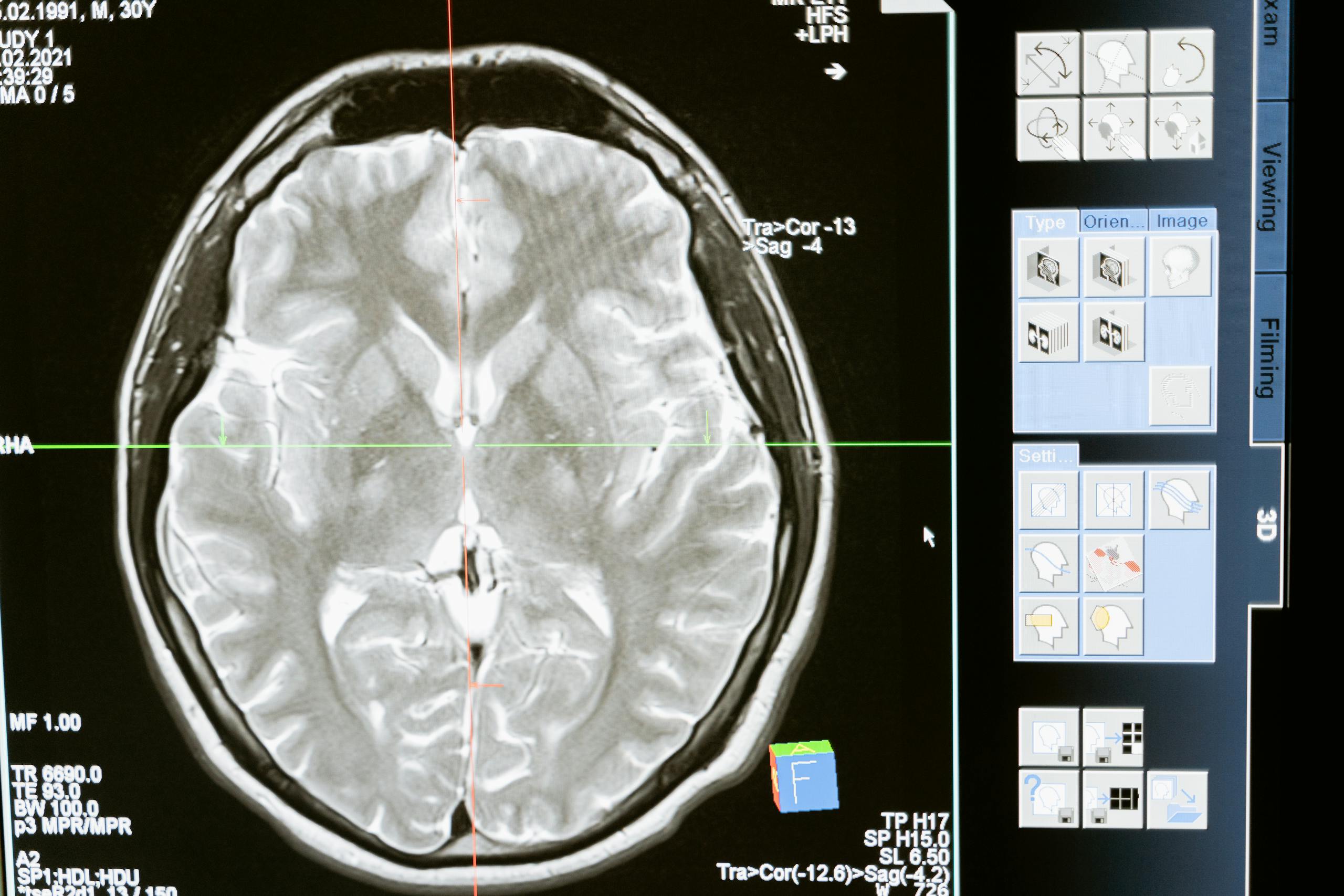
The INTJ cognitive stack leads with Introverted Intuition, a function that works by synthesizing vast amounts of information into patterns and frameworks below the level of conscious awareness. It’s not like writing on a whiteboard where you can pause mid-sentence. It’s more like developing a photograph in a darkroom. Interrupt the process, expose it to light too early, and the image is gone. You don’t get to resume from where you stopped. You start over.
A 2022 study published through the National Institutes of Health found that task-switching, even brief interruptions followed by a return to the original task, imposes significant cognitive costs, particularly for complex reasoning tasks. The researchers noted that the mental overhead of re-establishing context is often greater than the time of the interruption itself. For INTJs, whose default mode involves precisely this kind of layered, complex reasoning, those costs compound quickly.
There’s also a physiological dimension worth acknowledging. The American Psychological Association has documented how chronic interruption correlates with elevated stress responses, reduced working memory performance, and increased error rates. These aren’t personality complaints. They’re measurable neurological events.
During a particularly demanding pitch season at one of my agencies, I started tracking how long it took me to return to productive thinking after an unplanned interruption. The average was thirty-seven minutes. A two-minute conversation about a vendor invoice was costing me over half an hour of cognitive recovery. I wasn’t being precious about my focus time. My brain was genuinely doing expensive repair work.
Why Does the INTJ Response Feel So Disproportionate to Others?
One of the most isolating parts of being an INTJ in a professional environment is the gap between how you experience an interruption and how the person who interrupted you perceives your reaction.
They asked a quick question. You responded with visible irritation, or worse, a flat, clipped answer that read as cold and dismissive. From their perspective, you overreacted. From yours, you’d just watched something irreplaceable disappear.
This disconnect has real professional consequences. I’ve seen talented INTJ leaders get labeled as difficult, unapproachable, or even arrogant, not because of their work quality, but because their reaction to interruptions made colleagues feel unwelcome. The INTJ wasn’t being unkind. They were experiencing genuine cognitive distress that simply had no visible justification to anyone watching from the outside.
Part of what makes this dynamic so persistent is that extroverted thinking, the INTJ’s secondary function, is highly task-oriented and efficiency-focused. When an interruption destroys a carefully constructed mental framework, the extroverted thinking function registers that as a real loss of productive output. The frustration isn’t emotional sensitivity. It’s a logical response to genuine inefficiency.
Compare this with how INTP thinking patterns work, where the mind often follows tangents willingly and can sometimes benefit from an unexpected redirect. INTJs don’t have that same flexibility with their primary function. Introverted Intuition needs sustained, unbroken incubation to produce the insights it’s capable of delivering.

Are All Interruptions Equally Damaging for INTJs?
Not quite. The severity of the disruption depends on several factors, and understanding them helped me become significantly better at protecting my most important thinking time without burning every professional relationship I had.
Depth of processing matters enormously. An interruption that catches me checking email costs almost nothing. An interruption that catches me mid-way through building a strategic framework for a Fortune 500 client presentation costs everything. The brain’s investment in the task at the moment of interruption determines how much recovery is required afterward.
Predictability is another major variable. Scheduled check-ins, even frequent ones, are far less disruptive than unplanned intrusions. My mind can compartmentalize a known interruption point. It can’t do the same with a surprise. One agency I ran had an open-door culture that management consultants loved to praise. I quietly changed it to a signal system, a closed door meant deep work in progress, an open door meant available. Productivity in my leadership team improved measurably within a month.
Emotional charge also amplifies the damage. An interruption that carries conflict, urgency, or emotional weight doesn’t just break the thinking chain. It floods the system with stress hormones that make re-entry into focused work even harder. A 2021 article in Harvard Business Review noted that emotionally loaded interruptions can derail knowledge workers for significantly longer than neutral ones, sometimes for the remainder of a working day.
Understanding these gradations lets INTJs make smarter decisions about their environment rather than simply trying to eliminate all contact with other humans, which is both impractical and, despite what some people assume about this personality type, not actually what most INTJs want.
How Does This Connect to the Broader INTJ Identity?
Sensitivity to interruptions isn’t an isolated quirk. It’s woven into the core of how INTJs experience themselves and their work.
INTJs derive a significant portion of their professional identity from the quality of their thinking. Not the volume of their output, not their visibility in meetings, but the depth and precision of their analysis. Interruptions don’t just cost time. They threaten the thing that makes an INTJ feel capable and valuable in the first place.
Spending two decades in advertising, I watched this play out in ways that were sometimes painful to witness. Brilliant INTJ strategists who produced extraordinary work in isolation would become visibly diminished in environments that prioritized constant collaboration. Their confidence eroded not because they were wrong about anything, but because the conditions for their best thinking had been systematically removed.
There’s a parallel worth noting here with INTJ women handling professional environments, who often face an additional layer of expectation around availability and responsiveness that makes protecting focused work time even more fraught. The cognitive reality is identical, but the social pressure to override it can be significantly more intense.
Identity and cognitive style are inseparable for this personality type. When the environment respects the INTJ’s need for uninterrupted processing time, performance and satisfaction both rise. When it doesn’t, the damage extends well beyond missed deadlines.

What Practical Strategies Actually Work for Managing Interruptions?
Years of trial and error, combined with what I’ve read from cognitive science, eventually produced a set of approaches that genuinely helped. Not all of them will fit every professional context, but most are adaptable.
Protect Your Peak Processing Window
Most INTJs have a window of two to four hours when their Introverted Intuition is operating at its highest capacity. Identifying yours and defending it aggressively is the single most effective thing you can do. Mine was early morning, roughly seven to eleven. I scheduled no meetings, no calls, no check-ins during that window. My team knew it. My clients eventually learned it. The work produced in those hours was consistently better than anything I produced in the afternoon.
Create a Visual Signal System
The closed-door signal I mentioned earlier was one of my better management decisions. It required no explanation, no awkward conversations, and no one felt personally rejected. The signal was about the work, not the person. In open-plan offices, headphones serve a similar function, though their effectiveness depends heavily on the culture of the specific team.
Batch Your Availability
Rather than being theoretically available all day and actually available to no one, including yourself, designate specific windows for questions, check-ins, and collaborative work. People adjust faster than you’d expect, and the quality of those batched conversations often improves because both parties come prepared rather than operating on impulse.
Build Re-Entry Rituals
When interruptions do happen, having a consistent re-entry ritual reduces recovery time significantly. Mine involved writing three sentences summarizing exactly where I was before the interruption occurred. It sounds simple because it is. That written anchor gave my Introverted Intuition something to grab onto rather than starting from scratch. The Mayo Clinic has noted that brief written reflection can help the brain consolidate and re-access complex thought patterns, which aligns with what I found empirically in my own work.
Communicate the Why Without Oversharing
You don’t owe anyone a detailed explanation of your cognitive architecture. You do benefit from giving colleagues enough context to understand your preferences aren’t personal. Something as simple as “I do my best strategic thinking without interruptions, so I protect that time carefully” is usually sufficient. Most people respond well to honesty about work preferences when it’s framed as professional rather than personal.
How Do INTJs Compare to Other Introverted Types in This Area?
It’s worth noting that sensitivity to interruptions isn’t exclusive to INTJs. Most introverted types prefer focused, uninterrupted work to some degree. What makes the INTJ experience distinctive is the specific mechanism involved and the scale of the cost.
INFJs, for example, share the Introverted Intuition function and often experience similar disruption when their deep processing is interrupted. The difference is that INFJs typically have a stronger Feeling function that helps them manage the relational fallout of their reaction more smoothly. The cognitive disruption may be comparable, but the social recovery tends to be faster. If you want to understand more about the contradictions that come with that personality configuration, the piece on INFJ paradoxes explores some of those tensions in depth.
ISFJs experience interruptions differently again. Their dominant Introverted Sensing means their processing is more detail-anchored and sequential. Interruptions disrupt that sequence, but the recovery mechanism is different because the cognitive architecture is different. The work on ISFJ emotional intelligence touches on how this type manages the relational dimensions of workplace stress in ways that INTJs often find genuinely foreign.
ISFPs, whose dominant function is Introverted Feeling, tend to experience interruptions as emotional intrusions rather than cognitive ones. The disruption is real but differently located. Understanding how ISFPs create connection reveals just how differently their inner world is organized compared to the INTJ’s strategic, systems-focused processing.
The comparison that tends to surprise people most is between INTJs and INTPs. Both types are analytical, both are introverted, and both prefer depth over breadth. Yet their relationship with interruptions differs in important ways. If you’re uncertain which type you actually are, the guide to recognizing INTP patterns can help clarify the distinction. And if you haven’t yet confirmed your type formally, taking the MBTI personality test is a worthwhile starting point for understanding your own cognitive preferences.
Can INTJs Build Environments That Genuinely Support Their Cognitive Style?
Yes, and doing so is one of the highest-leverage investments an INTJ can make in their professional life.
The challenge is that most professional environments were designed around extroverted collaboration norms. Open offices, always-on communication tools, spontaneous brainstorming sessions, and the cultural expectation that being visibly busy and accessible are signs of commitment. None of these defaults serve INTJ cognitive needs well.
The American Psychological Association has documented extensively how chronic noise and interruption in open-plan workplaces correlates with reduced cognitive performance, higher stress, and lower job satisfaction across personality types, with introverted individuals showing stronger negative responses. This isn’t a preference issue. It’s a performance issue, and framing it that way tends to get more traction with managers and organizations than framing it as a personality accommodation.
When I was running agencies, the most productive thing I ever did for my INTJ team members wasn’t a flexible schedule or a better benefits package. It was creating explicit cultural permission to protect focused work time. Once people understood that deep work was valued and not being available every moment of the day wasn’t a sign of disengagement, the quality of strategic output improved noticeably within weeks.
Remote work has changed this landscape considerably. For many INTJs, the ability to control their physical environment has been genuinely significant. The absence of spontaneous office interruptions, the ability to close a door that isn’t metaphorical, and the freedom to structure a day around cognitive peaks rather than meeting culture has allowed many INTJs to produce work that their previous office environments never allowed.
That said, remote work introduces its own interruption patterns, primarily through digital channels. Instant messaging platforms, email notifications, and video call culture can replicate open-office dynamics in a home setting if they’re not actively managed. The National Institutes of Health has noted that digital interruptions trigger similar cognitive switching costs as physical ones, which means the same principles apply regardless of where you’re working.
What Does Embracing This Reality Actually Look Like in Practice?
There was a period in my career when I spent enormous energy trying to be less bothered by interruptions. I told myself it was a weakness I needed to overcome. I practiced staying calm when someone knocked on my office door mid-thought. I read productivity books that promised to make me more resilient to distraction. None of it worked, because I was treating a structural reality as a personal failing.
The shift that actually made a difference was accepting that my brain works a specific way, that this way produces genuinely valuable output, and that protecting the conditions for that output is a professional responsibility rather than a personal indulgence.
That reframe changed how I talked about my work style with clients and colleagues. It changed how I designed my schedule. It changed how I evaluated job opportunities and agency partnerships. Instead of apologizing for needing uninterrupted time, I started treating it as a legitimate professional requirement, the same way a surgeon treats an uninterrupted operating room or a lawyer treats client confidentiality.
The people who respected that boundary produced better work relationships with me. The people who couldn’t respect it were usually the same people who struggled with other aspects of professional boundaries as well. The filter turned out to be useful in multiple directions.
Embracing how you’re wired isn’t resignation. It’s precision. And for an INTJ, precision is the whole point.

There’s much more to explore about how analytical introverts process the world differently. Our complete MBTI Introverted Analysts resource hub brings together everything we’ve written about INTJ and INTP cognition, strengths, and professional experience in one place.
About the Author
Keith Lacy is an introvert who’s learned to embrace his true self later in life. After 20 years in advertising and marketing leadership, including running agencies and managing Fortune 500 accounts, Keith now channels his experience into helping fellow introverts understand their strengths and build fulfilling careers. As an INTJ, he brings analytical depth and authentic perspective to every article, drawing from both professional expertise and personal growth.
Frequently Asked Questions
Why do INTJs get so frustrated by interruptions compared to other personality types?
INTJs lead with Introverted Intuition, a cognitive function that builds complex, layered frameworks internally over sustained periods. When an interruption breaks that process, the entire framework collapses rather than pausing. The frustration isn’t emotional oversensitivity. It’s a logical response to genuine cognitive loss, since rebuilding that mental architecture from scratch takes significant time and effort.
How long does it actually take an INTJ to recover from an interruption?
Recovery time varies depending on the depth of processing at the moment of interruption. For surface-level tasks, recovery can be relatively quick. For deep strategic or analytical work, recovery commonly takes between twenty and forty minutes, and sometimes longer if the interruption carried emotional charge or required significant social engagement. Cognitive science research supports these timelines, noting that task-switching costs for complex reasoning are substantially higher than most people assume.
Are INTJs being antisocial when they resist interruptions?
No. The resistance to interruptions is about cognitive architecture, not social preference. Most INTJs genuinely value meaningful connection with colleagues and collaborators. What they resist is the specific pattern of spontaneous, unplanned intrusions into focused work time. Scheduled interactions, structured collaboration, and planned check-ins are typically received very differently than surprise interruptions, even by INTJs who are quite introverted socially.
What’s the most effective way for an INTJ to protect their focus time at work?
The most consistently effective approach combines three elements: identifying and protecting a daily peak processing window, creating a clear visual or behavioral signal that indicates deep work is in progress, and batching availability for questions and collaboration into specific designated windows. Communicating these preferences clearly to colleagues, framed as professional rather than personal, tends to generate more cooperation than most INTJs expect.
Does working remotely solve the interruption problem for INTJs?
Remote work helps significantly for many INTJs by removing physical office interruptions and providing greater control over the work environment. Yet it doesn’t eliminate the problem entirely. Digital interruptions through messaging platforms, email notifications, and video calls can replicate open-office dynamics if not actively managed. The cognitive switching costs of digital interruptions are comparable to physical ones, which means the same protective strategies apply regardless of whether you’re working from an office or from home.