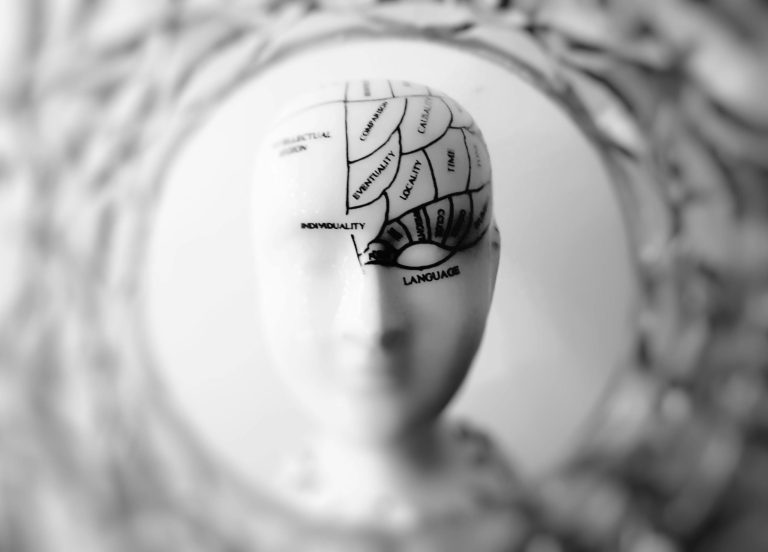
Empathizing with your user means genuinely feeling what they feel, not just guessing at it from a distance. For highly sensitive people, this capacity is wired in at a neurological level, making them naturally gifted at anticipating needs, reading emotional subtext, and designing experiences that actually resonate. When you understand why empathy matters in user-centered thinking, you stop treating it as a soft skill and start recognizing it as one of the most precise tools available.
Contrast that with the way most organizations approach user empathy: as a checkbox on a project brief, something you perform during a focus group and then file away. I watched this happen repeatedly across my twenty years running advertising agencies. Clients would commission research, collect thick binders of consumer data, and then proceed to build campaigns that spoke entirely to themselves. The users, the actual human beings on the receiving end, barely factored in.
What changed the outcomes every single time was when someone on the team paused long enough to actually feel the user’s situation. And more often than not, that someone was the quietest person in the room.
If you’ve ever wondered why your sensitivity feels less like a gift and more like a burden, our HSP and Highly Sensitive Person hub offers a grounded starting point for reframing that experience into something genuinely useful, both in your work and your personal life.
What Does It Actually Mean to Empathize With a User?
Empathizing with a user is not the same as sympathizing with them. Sympathy keeps you at arm’s length. You acknowledge that someone is struggling, but you stay in your own emotional frame. Empathy requires you to step into their frame entirely, to experience their frustration, their confusion, their delight, as if it were your own.
What drains your social battery?
Not all social exhaustion is the same. Our free quiz identifies your specific drain pattern and gives you personalised recharging strategies.
Find Your Drain PatternUnder 2 minutes · 8 questions · Free
In practical terms, this means paying attention to things most people skim past. It means noticing when a product’s language is slightly condescending, even if the product works perfectly. It means picking up on the emotional weight a customer carries into a service interaction before they’ve said a single word about their problem. It means understanding that a user’s behavior is never random. There’s always a felt experience driving it.
A 2024 study published in Frontiers in Psychology found that emotional attunement, the capacity to accurately perceive and respond to another person’s emotional state, is a measurable cognitive skill that varies significantly across individuals. Highly sensitive people tend to score higher on emotional attunement measures, which means their empathic accuracy is often more reliable than average. That’s not a personality quirk. That’s a functional advantage in any context where understanding human behavior matters.
Early in my agency career, I worked on a healthcare account where we were redesigning patient communication materials. The team had done extensive demographic research. We knew the average age, education level, and insurance status of the target audience. What we didn’t know, and what no one had stopped to feel, was how terrified those patients were. They were reading these materials in waiting rooms, in moments of acute anxiety, often alone. Once we held that emotional reality in mind, everything about the materials changed. The font size, the sentence length, the tone, the order of information. Empathy didn’t just make the materials warmer. It made them more effective.
Why Highly Sensitive People Are Wired for This Kind of Thinking
High sensitivity is a trait that affects roughly 15 to 20 percent of the population, and it shows up across species, which suggests it carries real evolutionary value. Highly sensitive people process sensory and emotional information more deeply than others. They notice subtleties. They pick up on undercurrents. They feel the emotional texture of a room before anyone has spoken.
This is not the same as being fragile or overly emotional, a distinction worth making clearly. As Psychology Today notes, high sensitivity is not a trauma response or a pathology. It’s a neurological trait, present from birth, that shapes how a person perceives and processes the world. The depth of processing that characterizes HSPs is exactly what makes empathizing with users feel natural rather than effortful.
There’s also a meaningful distinction between being highly sensitive and being an empath, though the two often overlap. Research from Psychology Today distinguishes empaths as individuals who actually absorb others’ emotions into their own bodies, while HSPs are more attuned to emotional nuance without necessarily merging with it. In a user-centered context, the HSP’s capacity for nuanced attunement is often more sustainable and actionable than the empath’s total absorption.
What does this look like in practice? An HSP reviewing a product prototype doesn’t just assess whether it functions correctly. They notice whether it feels respectful of the user’s time. They sense whether the onboarding flow creates anxiety or confidence. They pick up on the emotional message embedded in design choices that most people process unconsciously. That kind of perception is extraordinarily difficult to train. For HSPs, it’s simply how they see.

If you’re working through how your sensitivity intersects with your personality type more broadly, the MBTI Development: 5 Truths That Actually Matter piece offers some grounding context for understanding how traits like high sensitivity interact with your broader personality architecture.
How Empathy Shapes Better Decisions, Not Just Better Feelings
One of the most persistent misconceptions about empathy is that it’s primarily emotional rather than strategic. In business contexts especially, empathy gets filed under “soft skills,” which is a polite way of saying it’s nice to have but not essential to outcomes. That framing is wrong, and the evidence against it is substantial.
Consider what happens when empathy is absent from product development. Features get built around what engineers find interesting rather than what users actually need. Interfaces get designed to showcase capability rather than reduce friction. Marketing campaigns speak to aspirational identities that users don’t actually hold. The result is a gap between what organizations create and what users want, a gap that costs real money and often goes undiagnosed because the people closest to the product can’t see outside their own frame.
Empathy closes that gap. Not by making decisions feel warmer, but by making them more accurate. When you genuinely understand what a user is experiencing, you’re working with better data. You’re not projecting your own preferences onto them. You’re not relying on demographic averages that flatten individual experience. You’re responding to the actual human being, with all their emotional complexity and contextual specificity.
There’s a related concept worth considering here: personality type influences how naturally this kind of thinking comes. People who score toward certain personality profiles, particularly those with strong feeling or intuitive functions, tend to access empathic reasoning more readily. That said, understanding your own personality architecture matters too. The piece on what makes a personality type rare explores how different cognitive profiles distribute across populations, which helps explain why genuinely empathic thinkers can feel so scarce in certain professional environments.
I spent years in rooms where the loudest voice shaped the strategy. Not because that voice had better data or deeper insight, but because it was loudest. Watching campaigns built on confidence rather than understanding was genuinely painful. And the pain wasn’t just aesthetic. Those campaigns underperformed, sometimes significantly. The ones that worked, that actually moved people, were almost always built on a foundation of genuine empathic understanding of what the audience was carrying into their encounter with the brand.
The Specific Costs of Skipping User Empathy
Empathy deficits in user-facing work don’t stay abstract for long. They show up in concrete, measurable ways: high churn rates, low adoption, poor satisfaction scores, and the kind of customer feedback that makes leadership uncomfortable because it’s so specific about what went wrong.
One Fortune 500 client I worked with had a beautiful product and a genuinely confusing user experience. Their support call volume was enormous. When we did deep qualitative interviews with users, not surveys, but actual conversations, we discovered that the product assumed a level of prior knowledge that most users simply didn’t have. The company had built for their ideal user, not their actual user. Three months of genuine user empathy work, listening, observing, sitting with what users were feeling, reduced support call volume by nearly a third. That’s not a soft outcome. That’s a hard business result driven entirely by empathic understanding.
A 2019 study indexed in PubMed examined how emotional understanding in professional contexts correlates with performance outcomes, finding that individuals with higher empathic accuracy consistently produced better collaborative results. The mechanism matters: empathic accuracy means you’re working with a more complete picture of the situation, which improves the quality of every decision downstream.
For highly sensitive people in professional roles, this is worth sitting with. Your capacity for empathic accuracy is a genuine professional asset. The challenge is often that environments aren’t structured to value or protect it. If you’re managing the energy costs of deep empathic work in demanding professional settings, the HSP Career Survival Guide offers practical strategies for sustaining that capacity without burning through yourself in the process.

Why Empathy Requires Stillness, and Why That Favors Introverts
Genuine empathy is not a performance. It can’t happen in the middle of a crowded brainstorm where everyone is competing to have their idea heard. It requires a quality of attention that most high-stimulation environments actively undermine. You have to be still enough, internally, to actually receive what another person is communicating. That’s not a metaphor. It’s a cognitive requirement.
Introverts, and HSPs in particular, tend to have a natural relationship with that kind of internal stillness. Not because they’re passive, but because their nervous systems are already inclined toward depth over breadth, toward processing thoroughly rather than responding quickly. That inclination is exactly what empathic work demands.
There’s a reason so many introverts gravitate toward roles that require deep understanding of other people: counseling, research, writing, teaching, design. These aren’t coincidental preferences. They reflect a genuine alignment between how introverts process information and what these roles actually require. The connection between introversion and empathic capacity is something I’ve observed consistently across two decades of working with creative teams, and it’s something that gets systematically undervalued in cultures that equate visibility with competence.
Some people assume they’re somewhere in the middle of the introvert-extrovert spectrum, which can complicate how they understand their own empathic style. The article on ambiverts and what that label actually means challenges some of the assumptions around that middle ground in ways that might clarify where your empathic strengths actually come from.
Managing the physical and sensory environment matters too, especially for HSPs doing sustained empathic work. Deep listening is cognitively demanding, and environmental noise compounds that demand significantly. It’s one reason I’ve been deliberate about my own workspace conditions for years. The review of white noise machines for sensitive sleepers might seem tangential, but the underlying principle, that HSPs need intentional sensory management to function at their best, applies directly to professional empathic work as well.
Empathy in Practice: What It Looks Like When It’s Working
Empathizing with a user isn’t a single moment of insight. It’s a sustained practice that shapes how you gather information, how you interpret it, and how you translate it into decisions. When it’s working, certain things become visible that would otherwise stay hidden.
You start noticing the gap between what users say and what they do. People are remarkably unreliable narrators of their own behavior, not because they’re dishonest, but because so much of what drives their choices is emotional and pre-verbal. Empathic observation catches what surveys miss. You watch someone use a product and notice the micro-hesitation before they click a button, the slight forward lean when they find something they were looking for, the almost imperceptible frustration when a page loads slowly. These are emotional signals, and they carry information that no data dashboard captures.
You also start designing for emotional states rather than just functional requirements. A form that asks for personal information isn’t just a data collection mechanism. It’s an interaction that happens within an emotional context. Is the user anxious? Rushed? Skeptical? Empathic design accounts for those states explicitly, rather than assuming users arrive in a neutral, rational frame.
There’s interesting evidence from environmental psychology about how context shapes emotional states and decision-making. A feature in Yale Environment 360 on ecopsychology and how natural environments affect human cognition points to something relevant: people’s emotional and cognitive states are profoundly shaped by their surroundings. Empathizing with a user means understanding not just their preferences but the full context in which they’re encountering your product or service.
One of the most useful practices I developed over my agency years was what I called emotional scenario mapping. Before any major creative or strategic decision, I’d ask the team to describe the exact moment a user would encounter this work. Not the idealized moment, but the real one. What had they done that morning? What were they worried about? What did they need to feel, not just know, in order to respond? That exercise consistently produced better work than any amount of demographic targeting, because it forced the team to inhabit the user’s experience rather than observe it from the outside.

When Empathy Becomes Overwhelming, and How to Protect It
There’s a shadow side to high empathic capacity that deserves honest attention. For HSPs especially, the depth of emotional attunement that makes empathizing with users so natural can also make it exhausting. Absorbing the emotional states of others, even in a professional context, takes energy. Sustained empathic work without recovery time leads to a specific kind of depletion that looks like numbness, detachment, or what gets clinically described as compassion fatigue.
This isn’t a reason to suppress your empathic capacity. It’s a reason to protect it deliberately. The same sensitivity that makes you excellent at understanding users also makes you vulnerable to the cumulative weight of that understanding. Recognizing the difference between productive empathic engagement and draining emotional merger is a skill worth developing consciously.
Some people in rare personality type categories, those who are both highly sensitive and highly introverted, face an amplified version of this challenge in professional environments. The piece on why rare personality types struggle at work addresses some of the structural reasons why environments that demand constant empathic output without providing recovery space are particularly hard on people wired this way.
What I’ve found, both personally and in watching others, is that the most effective empathic thinkers are also disciplined about their own recovery. They build in quiet time after intensive user research. They create physical and cognitive space between empathic engagement and analytical decision-making. They understand that their capacity to accurately perceive others depends on not being perpetually saturated with others’ emotional content.
A 2024 study published in Nature on environmental factors affecting cognitive and emotional processing reinforces something HSPs often discover through experience: the conditions in which you do your thinking matter enormously. Protecting your environment isn’t a luxury. It’s a prerequisite for sustained high-quality empathic work.
Building a Professional Practice Around Empathic Understanding
Empathy as a professional practice is something you can develop intentionally, even if it already comes naturally. success doesn’t mean feel more, it’s to translate what you feel into clearer, more actionable insight.
Start by treating user empathy as a research discipline rather than an intuitive act. Your emotional attunement gives you a head start, but it benefits from structure. Conduct qualitative interviews with genuine curiosity rather than confirmation-seeking. Observe behavior in context rather than relying solely on self-report. Document emotional signals alongside functional data. Create internal frameworks for categorizing the emotional states your users bring to their interactions with your product or service.
Advocate for empathic methods in your professional environment, even when the culture defaults to quantitative metrics. Data tells you what users do. Empathy tells you why. Both are necessary, and the combination is more powerful than either alone. Some of the most valuable contributions I made in client meetings weren’t strategic recommendations, they were reframes. “What if we thought about what this customer is afraid of?” That single question, asked at the right moment, has changed the direction of more campaigns than I can count.
Protect your empathic capacity as a professional resource. Set boundaries around how much emotionally intensive work you take on in a given period. Build recovery into your workflow, not as an afterthought but as a structural element. Recognize that your ability to accurately perceive and respond to others’ emotional states is a finite resource that requires replenishment, just like any other form of cognitive energy.
And finally, trust what you notice. One of the most common patterns I’ve observed in HSPs in professional settings is the tendency to discount their own perceptions because no one else seems to be registering the same thing. That discrepancy isn’t evidence that you’re wrong. It’s often evidence that you’re seeing something real that others are missing. The quiet observation, the felt sense that something is off, the intuition that a user’s stated preference doesn’t match their actual need, these are data points. Treat them as such.

There’s more to explore about the full landscape of high sensitivity, including how it intersects with career choices, relationships, and daily energy management. Our HSP and Highly Sensitive Person hub brings together the most relevant resources in one place for anyone working to understand this trait more deeply.
Running on empty?
Five drain profiles, each with specific triggers, warning signs, and a recharging playbook.
Take the Free QuizUnder 2 minutes · 8 questions · Free
About the Author
Keith Lacy is an introvert who’s learned to embrace his true self later in life. After 20 years in advertising and marketing leadership, including running agencies and managing Fortune 500 accounts, Keith now channels his experience into helping fellow introverts understand their strengths and build fulfilling careers. As an INTJ, he brings analytical depth and authentic perspective to every article, drawing from both professional expertise and personal growth.
Frequently Asked Questions
Why is empathizing with your user important in design and product development?
Empathizing with your user produces more accurate decisions by grounding them in how users actually feel and behave, rather than how designers or developers assume they will. When you understand the emotional context a user brings to an interaction, you design for their real experience rather than an idealized version of it. This closes the gap between what organizations build and what users actually need, which reduces friction, improves adoption, and leads to measurably better outcomes across product and service development.
Are highly sensitive people naturally better at empathizing with users?
Highly sensitive people tend to process emotional and sensory information more deeply than average, which gives them a natural advantage in empathic accuracy. They notice subtleties in behavior, tone, and emotional context that others often miss. This doesn’t mean HSPs are the only people capable of strong user empathy, but their neurological wiring makes the kind of attunement required for genuine user understanding feel more instinctive. The challenge for HSPs is managing the energy cost of sustained empathic work, not developing the capacity itself.
How is empathizing with a user different from conducting user research?
User research is the method; empathy is the orientation that makes research meaningful. You can conduct extensive surveys, interviews, and usability tests without ever genuinely empathizing with your users, if you’re primarily looking for data that confirms existing assumptions. Empathizing with a user means approaching research with genuine curiosity about their emotional experience, staying open to what you don’t expect to find, and translating emotional signals into design and strategy decisions. Research without empathy produces data. Research with empathy produces understanding.
Can empathizing with users lead to burnout for sensitive professionals?
Yes, sustained empathic work carries real energy costs, particularly for highly sensitive people and introverts who process emotional information deeply. Absorbing users’ frustrations, anxieties, and unmet needs over time can lead to compassion fatigue if recovery isn’t built into the workflow. The solution isn’t to reduce empathic engagement but to protect it deliberately: building quiet recovery time into research cycles, setting boundaries around emotionally intensive work, and creating physical environments that support cognitive replenishment. Empathy is a professional resource that requires maintenance, not just expenditure.
How can introverts advocate for empathy-centered approaches in extroverted work cultures?
Introverts often find their empathic insights dismissed in cultures that favor loud confidence over quiet observation. The most effective approach is to translate emotional perception into business language: frame empathic findings in terms of outcomes, costs, and measurable user behavior rather than feelings. Document what you notice systematically so it carries the weight of evidence rather than intuition. Ask reframing questions in meetings that invite others to inhabit the user’s perspective. Over time, consistently connecting empathic insight to concrete results builds credibility for the approach, even in environments that don’t initially value it.